Hydration & Nutrition

Best Hydration Packs for Cycling of 2026

For years I carried two bottles in cages and stuffed snacks into my jersey pockets, and for most rides that was fine. Then a hot, long gravel day taught me otherwise: I was rationing water because reaching for a bottle meant letting go of the bars, and my rain shell had nowhere to live. A good hydration pack fixes both problems at once — drink sitting a straw's length from your mouth, and a home for the layers, tools, and food that isn't a pocket seam.

We've spent the past seven months riding with 12 packs on road loops, chunky gravel, and tight singletrack, plus a few commutes and day hikes. The numbers on the spec sheet tell you less than how a pack sits against your spine and whether the harness stops it swinging when you stand to climb. The picks below run from a stripped-down race pack to one bag that handles the trailhead and the hike afterward.

1

MARCHWAY Tactical

Top Pick
MARCHWAY Tactical

Rugged commuting

Our Score 9.4/10
Check Price

Worth Noting

  • Two-pound empty weight
Depth
2.6 inches
Weight
2 lb
Material
1000D nylon
Reservoir
3 liters
Read the full review

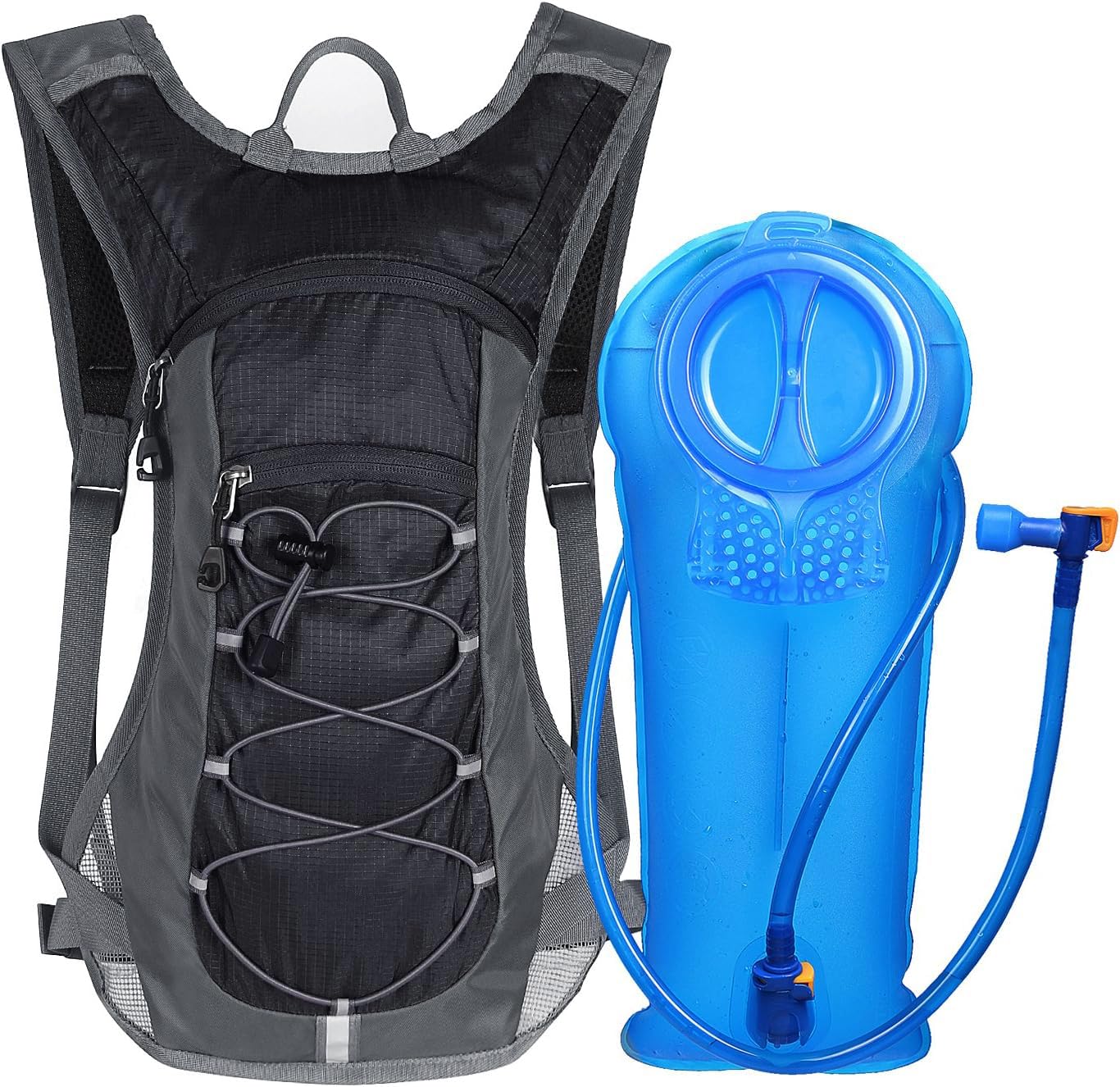
The MARCHWAY Tactical is a low-profile piece of gear rather than a featherweight race vest. Its 1000D water-repellent nylon shell, impact-resistant buckles, and military-grade webbing are built to take scrapes, and the 2.6-inch depth keeps it close to your back. The MOLLE rows let you add a pouch or attach a light without strapping everything to the frame.

The 3-liter TPU bladder slides into the main compartment, and the two pockets hold keys, a phone, and a snack. Adjustable sternum, waist, and shoulder straps keep the load from swaying when you stand, which is the part that matters on a gravel descent.

We like it for commuting and rough pavement because the pack feels planted, not fragile. The bladder seal is the one fussy part: close the fill port carefully and test it over a sink before a ride. If you want a pack that can take a scrape and still carry three liters, this is the one.

Bottom line: For riders who want a tough, low-profile pack for commuting and gravel, the 1000D shell and MOLLE webbing earn their keep.

2

N NEVO RHINO 18L

N NEVO RHINO 18L

Long rides

Our Score 9.2/10
Check Price

Worth Noting

  • Bottom seam is a durability weak point
Weight
1.74 lb
Reservoir
3 liters
Pack Capacity
18 liters
Insulated Pocket
Up to 5 hours
Read the full review

The insulated bladder pocket is the reason to step up to the 18-liter N NEVO RHINO. It holds a 3-liter reservoir and is built to keep liquids cool for up to five hours, which is the difference between water you finish and water you stop wanting. The 18-liter body adds three pockets, mesh waist pockets, and a ventilated back panel, so a shell, lunch, and tools can come along without strapping a second bag to the bike.

We like this pack for long, hot rides because the extra capacity is useful, not decorative; the shoulder and waist straps keep it from swaying when it is full. The 0.79 kg empty weight is the trade-off, and you feel it before the bladder is full. For a century, a gravel double, or a commute with a change of clothes, it earns its place.

Bottom line: The extra liter and insulated pocket make this our pick for hot centuries and all-day gravel, where refilling is a hassle and cold water matters.

3

MIYCOO Hydration Pack

MIYCOO Hydration Pack

Cold-water rides

Our Score 9.2/10
Check Price

Worth Noting

  • Bladder seal is the weak point
  • Heavier empty than the lightest picks
Weight
1.48 lb
Reservoir
2 liters
Pack Capacity
10 liters
Insulated Pocket
Up to 4 hours
Read the full review

The MIYCOO's insulated bladder pocket is the reason to look at this pack. Drop an ice pack in and the claim is four hours of cold water; on a short summer ride, that is the difference between water you want to drink and water you don't. The 2-liter bladder is BPA-free and odorless, and the wide opening makes filling and cleaning easier.

Five pockets include a front zip, a main compartment, and dual phone pockets on the straps. The mesh shoulder straps breathe, and the 10-liter body is enough for a snack and a light layer. The padding and straps keep it comfortable on a loaded ride.

We like it for hot-weather commutes and short mountain bike loops, where cold water matters more than maximum capacity. The 2-liter reservoir and 10-liter body are a compact combo, so pack accordingly. The insulation is the difference between finishing with water you want to drink and water you don't.

Bottom line: On short summer rides, the insulated bladder pocket is the feature that matters, and this pack keeps water cold without turning into a full daypack.

4

N NEVO RHINO 12L

N NEVO RHINO 12L

Everyday cycling

Our Score 9.0/10
Check Price

Worth Noting

  • 2 L reservoir limits all-day hot rides
Weight
8.5 oz
Pockets
4
Reservoir
2 liters
Pack Capacity
12 liters
Read the full review

At 8.5 ounces, the N NEVO RHINO 12L is light enough to disappear on a typical ride. The 2-liter bladder is the right size for most road and gravel loops, and the vest-style shoulder straps adjust from 19 to 34 inches with a chest strap that ranges from 2.4 to 7.9 inches. That range matters: it lets the pack sit close instead of swinging when you stand on a climb.

The four pockets are laid out for cycling rather than hiking. Shoulder pouches put a phone or gel within reach, and the main compartment takes a light shell, keys, and a snack without bulging. We also appreciate the waterproof, tear-resistant nylon; it shrugs off road spray and keeps the load low. The bite valve flows fast, which sounds minor until you are breathing hard and don't want to work for a drink.

The chest strap can be fussy to unclip with gloves, which is the one detail we notice at stoplights. The rest of the time, the 12-liter body holds exactly what a ride needs and nothing more.

Bottom line: For most cyclists, this is the pack we reach for: light enough to forget on a ride, stable through rough pavement, and roomy enough for a shell and snacks.

5

CamelBak Hydrobak

CamelBak Hydrobak

Minimalist rides

Our Score 9.0/10
Check Price

Worth Noting

  • 0.5 L cargo capacity limits extras
Weight
13.1 oz
Reservoir
1.5 liters
Cargo Capacity
0.5 liters
Read the full review

The CamelBak Hydrobak is the pack for riders who want the least pack possible. The 1.5-liter Crux reservoir is easy to refill through the ergonomic handle, and the air-mesh back panel and ventilated harness are built to keep a small load from turning into a damp patch. At 0.37 kg, it sits close enough that you notice the water more than the bag.

The lifetime warranty is a nice backstop, and the real appeal is that the pack stays out of the way on short rides, commutes, and quick training sessions. The 1.5-liter reservoir is the honest limit; if you regularly ride long, look at a 2- or 3-liter pack.

Bottom line: If you want the least pack possible for short road rides and commutes, the Hydrobak's 1.5-liter Crux reservoir and air-mesh back keep the load light and quiet.

6

Teton Oasis Trailrunner

Teton Oasis Trailrunner

All-day rides

Our Score 9.0/10
Check Price

Worth Noting

  • Waist strap is a durability weak point
Weight
2.16 lb
Reservoir
3 liters
Rain Cover
Sewn-in
Pack Capacity
22 liters
Read the full review

The sewn-in rain cover is the standout feature on the Teton Oasis Trailrunner. It deploys quickly to protect the 22-liter body, which has six pockets, weather-guarded zippers, and a bungee cord for a helmet or jacket. The 3-liter bladder sits in an insulated pocket, and the wide 2-inch opening makes filling and cleaning easier.

For long, wet rides, this is the pack that needs the least planning. We like the low-profile athletic cut and the high-density foam shoulder straps, but the fit is the caveat: it runs large on smaller frames, so check the torso range before you commit. Taller and broader riders will get the most from the 22-liter body.

Bottom line: When the route runs long and the forecast turns, the Oasis Trailrunner's 22-liter body, sewn-in rain cover, and 3-liter bladder make it the most self-sufficient pack here.

7

Criuage Running Vest

Criuage Running Vest

Vest-style carry

Our Score 9.0/10
Check Price

Worth Noting

  • Shoulder straps may not tighten enough for broad frames
  • 750 g empty weight
Weight
1.65 lb
Pockets
8
Reservoir
2.0 liters
Pack Capacity
5 liters
Read the full review

The Criuage is a vest, not a backpack. Four front pockets sit on the chest, four sit on the back, and the 2-liter bladder rides close to your spine. The layout is designed for endurance sports, and it shows: snacks, a phone, and a light layer are all reachable without swinging a pack around.

The 5-liter body is compact enough for running and mountain biking, and the cross-body straps adjust at the waist and shoulders. The load is spread across your chest and back rather than hanging off your shoulders, which is why it feels secure on descents.

On the bike, the vest stays put when you stand or shift your weight. The front pockets are the reason to choose it over a traditional pack: you can grab a gel or check your phone without stopping. The back pockets take tools and a shell.

We like it for riders who want a chest rig for gravel or mountain biking. The eight pockets keep snacks and a phone where you can reach them, and the vest stays put on rough ground. For the right torso, it is a useful alternative to a traditional pack.

Bottom line: Runners and riders who prefer weight on the chest and hips should start here: eight pockets and a 2-liter bladder sit close without a bulky daypack behind you.

8

Unigear Hydration Pack

Unigear Hydration Pack

Budget commuting

Our Score 9.0/10
Check Price

Worth Noting

  • Leakage can develop at the drinking end
  • Mouthpiece and bag durability are weak points
Weight
1.01 lb
Pockets
1
Fit Range
27 to 50 inches
Reservoir
2 liters
Read the full review

The Unigear is the pack you buy when you want two liters and not much else. The 2-liter bladder has a screw cap for ice, and the pack is splash-resistant rather than waterproof.

The shoulder, chest, and waist straps adjust to a 27- to 50-inch chest, which is a wider range than most packs here. At 0.46 kg, it is light enough to forget, and the compact 16.5 by 8 by 6-inch body keeps a low profile on the bike.

The air-flow system keeps water fairly cool, and the bite valve is simple to use. At 0.46 kg, it is light enough to forget on a short ride.

We see it as a starter pack or a spare. The single small front pocket holds keys and a granola bar, and that is the point: this is a water carrier, not a daypack. If you need a shell or lunch, spend more.

Bottom line: A low-cost, compact way to carry two liters, this is the pack we hand to a friend who wants to try cycling hydration.

How We Tested the Best Hydration Packs for Cycling

We started by gathering every pack built for cycling or crossing over cleanly from hiking, then filtered out anything with a reservoir under 1.5 liters, anything that couldn't swallow a tube, multi-tool, and shell, and anything priced far outside the rest of the field. That left 12 packs, which we rode for seven months across road, gravel, and singletrack, and carried on day hikes when the bikes stayed home.

Each one got the same load: a full reservoir, a tube, a mini pump, a multi-tool, a rain shell, and two hours of food. Then we rode, watching for the things that actually annoy people. Did the pack bounce when we stood to climb, or slosh on a fast descent? Could we drink while holding the bars, and did the hose stay where we clipped it? Every pack also went on riders of noticeably different heights and torso lengths, and we noted which ones needed constant strap tugging and which disappeared after one adjustment. The packs that doubled as hiking packs earned it on the hip belt, which had to shift weight off the shoulders without rubbing.

Leakage got its own ritual: reservoirs filled to the line, caps and bite valves checked, packs laid upside down on a car seat for the drive home. We cycled zippers until they ran rough and inspected strap edges for fraying after months of being dropped on gravel. For cleaning, we emptied, rinsed, and turned each reservoir inside out to dry, noting whether it was dry by morning or still damp the next afternoon — and whether it still tasted of sports drink a week later. Finally, we weighed price against capacity and construction, because a cheap pack that dies in a season isn't value.

How to Choose Hydration Packs for Cycling

Reservoir size: match the water to the ride

Reservoir size is the first decision, and it has less to do with pack volume than you might think. A 2-liter bladder is the practical sweet spot for most road and gravel rides; 1.5 liters suits short commutes and lunch loops, while 3 liters is for long, hot days when refills are scarce. The trap is assuming a bigger pack carries more water—check the tank volume, not the liter rating on the outside. The lightest pack here uses 2 liters in a 12-liter body, while the long-ride pick goes to 3 liters in an 18-liter pack.

Harness fit: bounce is a fit problem before it is a weight problem

Look for a sternum strap and, on bigger packs, a waist belt. The pack should sit close enough that it does not sway when you stand, but not so tight that it restricts breathing. Chest and shoulder ranges matter: the N NEVO RHINO 12L adjusts from 19 to 34 inches at the shoulder and 2.4 to 7.9 inches at the chest, while the Unigear covers a 27- to 50-inch chest. The trap is buying a pack that fits your back but not your torso; smaller riders should check the waist strap and shoulder-strap length before loading up.

Cargo: pick a water carrier or a daypack, not both by accident

Five to 12 liters is enough for a phone, snack, tool, and light shell; 18 to 22 liters makes sense when you need a lunch, layers, or a rain cover. Pockets on the harness are more useful on the bike than one deep main compartment, because you can reach a gel without stopping. The trap is buying a big pack for one long ride and then carrying the extra volume every day. Match the body size to your usual ride, not your biggest one.

Seals, insulation, and weather: the details that decide a good ride

Bladder seals and hose connections are the most common weak point, so test a new bladder full of water over a sink and check the bite valve's shutoff before you load it. If you ride in heat, an insulated pocket slows warming but does not replace ice; if you ride in wet weather, a sewn-in rain cover is worth more than an extra pocket. The trap is treating a leak as a cleaning problem. A bladder that weeps at the hose or cap needs attention before it soaks your phone.

Frequently Asked Questions

Final Verdict

For most cyclists, the N NEVO RHINO 12L is the pack we recommend first. It carries two liters, weighs 8.5 ounces, and uses a vest-style harness that keeps the load close without turning a ride into a pack test. If your usual route runs long and hot, the N NEVO RHINO 18L is the better call; if you want the least pack possible, the CamelBak Hydrobak. Choose the smallest pack that still covers your longest regular ride.