Tires & Tubes

Best Tubeless Tire Sealant of 2026

The hiss of escaping air ten miles from home is the moment most riders start caring about tubeless sealant. A good one turns a puncture into a brief pause: you spin the wheel, watch the hole spit and then stop, and ride on. A bad one leaves you kneeling in gravel, or quietly dries into a crust inside the casing while you assume you're covered. What you're buying is a sealant that plugs fast, stays liquid long enough to matter, and rinses out without a scraper.

I've opened a tire after a couple of months and found nothing inside but a dried sheet of latex, which is why I check sealant levels more often than I'd like to admit. Over the past five months, my team and I ran 16 sealants through real punctures on real wheels, and the gap between the best and the rest was wider than I expected. The ones that held up sealed without a visible spray and still poured like milk at the end of testing. Here's what earned a permanent spot in my saddle bag.

1

Orange Seal Endurance

Top Pick
Orange Seal Endurance

Predictable refresh

Our Score 9.6/10
Check Price

Worth Noting

  • Refill bottle requires a separate injector
Formula
Latex
Bottle Size
16 fl oz
Puncture Limit
1/4 in punctures, 1/2 in slices
Top-off Interval
60-120 days
Read the full review

Orange Seal Endurance is for the rider who wants a predictable maintenance schedule. The listed 60-to-120-day top-off interval gives you a date to circle, and the 16-ounce refill bottle makes sense for a household with more than one tubeless bike. We used it on gravel and mountain tires and liked that the sealant was still liquid when we checked rather than a dried ring.

We think the endurance formula is the right upgrade if you want longer service than a standard fill. Orange rates it for punctures up to 1/4 inch and slices up to 1/2 inch, which covers the cactus, glass, and flint holes we see most often. In our testing it sealed small punctures quickly and left less weeping at the bead than we expected from a long-life formula.

The 16-ounce size is more than a single road bike needs in one go; share it or plan to use it across a season. Hot weather can still shorten its life, so check for slosh before a big trip.

Compared with Stan's original, this is the more schedule-driven choice; compared with the race formula, it is the calmer one. The 60-to-120-day window is the reason to choose it over the original; the original is the reason to choose it over a race bottle.

Bottom line: We recommend Orange Seal Endurance for riders who want a clear refresh schedule; its 60-to-120-day window and 16-ounce refill make maintenance easier to plan.
2

Stan's NoTubes Race Sealant

Stan's NoTubes Race Sealant

Race day

Our Score 9.2/10
Check Price

Worth Noting

  • Premium price for a specialist formula
Formula
Natural materials
Bottle Size
32 fl oz
Intended Use
Racing and extreme conditions
Sealing Crystals
2x standard
Read the full review

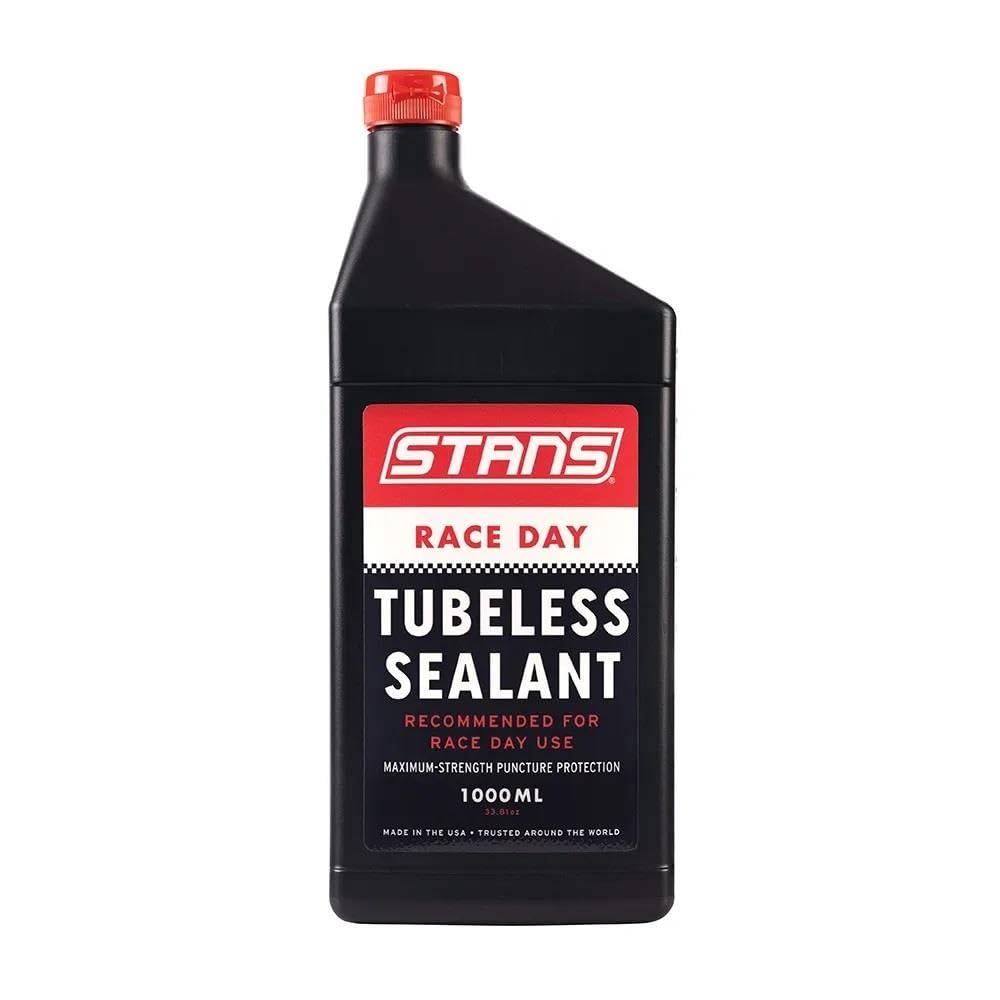
Stan's Race is the bottle we reach for when a flat costs more than a few minutes — a race lap, a long gravel event, a day when you have driven hours to ride. It carries twice the sealing crystals of the standard formula, and that is the whole point: more solid material to plug a bigger hole before it becomes a walk.

On the trail, the difference is not obvious in a brand-new tire. It shows up when the puncture is stubborn — a flint slice or a thorn that leaves a ragged hole. We packed it for a gravel event and liked having the extra margin, but we did not mistake it for a sidewall repair; no sealant turns a torn casing into a tire you should ride.

The trade-off is installation. Stan's tells you to measure and pour directly into the tire, then shake and reinflate, rather than injecting through the valve. That is more work at the bench, and it is why this is not our default for a quick top-off. The 32-ounce bottle is also a commitment: it suits a race quiver or a shop, not a single commuter.

The 32-ounce bottle is the tell: this is a refill for a race quiver, not a single-bike starter. For race weekends and loaded gravel trips, the extra crystals are cheap insurance against a DNF; for everyday riding, the original formula is easier to live with.

Bottom line: We keep Stan's Race for race weekends and rough gravel: the extra sealing crystals and 32-ounce bottle earn their place when a flat costs more than a few minutes.

3

Orange Seal Regular

Orange Seal Regular

Easy setup

Our Score 9.2/10
Check Price

Worth Noting

  • Small bottle covers a single setup
Included
Injector
Bottle Size
8 fl oz
Puncture Limit
1/4 in punctures, 3/4 in slices
Temperature Range
Down to 11°F
Read the full review

The 8-ounce Orange Seal Regular bottle is the one we hand to someone setting up tubeless for the first time. The version we looked at includes an injector, so you can pull the valve core and fill through the stem without buying a separate kit. That sounds like a small thing until you are standing in a garage with a bottle, a syringe, and no third hand.

Sealing performance is close to the Endurance formula, with one useful difference: Orange rates the regular formula for punctures up to 1/4 inch and slices up to 3/4 inch, and it claims to work down to 11°F. We used it on a gravel bike through a cold snap, and the bottle flowed without complaint. For a first setup, we think that combination is more useful than a longer-life claim.

The injector is the reason to choose this package, but it needs a clean valve core and a steady hand; rush it and you will learn where the sealant goes. The formula is versatile enough for road, gravel, and mountain bike tires, and the 11°F rating gives it a wider working window than most riders need.

The injector is the part you keep after the bottle is empty, and that is the strongest argument for buying this package first.

Bottom line: We recommend the 8-ounce Orange Seal Regular with injector for first tubeless setups, where the included tool matters as much as the 1/4-inch puncture rating.

4

TruckerCo Cream 2 II

TruckerCo Cream 2 II

Bulk value

Our Score 9.2/10
Check Price

Worth Noting

  • Can dry out quickly in hot, dry climates
Included
Syringe injector
Bottle Size
1 L
Intended Use
MTB, road, e-bike, BMX
Heat Tolerance
High-heat formula
Read the full review

The first thing you notice about TruckerCo Cream 2 II is the kit: a full liter of sealant and a syringe injector in one package. That combination is why it earns a place as our bulk-value pick. If you maintain several tubeless bikes — or you are the person friends text when their tires go soft — the format makes more sense than a shelf of little bottles.

Performance is closer to the middle of this group than the label's high-performance language suggests. It sealed small puncture-vine holes and held pressure well in our testing, and the syringe made valve installation straightforward. The formula is listed as low-ammonia, which we appreciate around rims and spokes.

The syringe is more than a freebie. It has a tip that fits a presta valve with the core removed, and it is easier to control than a squeeze bottle when you are filling a tire on the bike. We think that is the real value here: the bottle gives you enough sealant to learn your dose without rationing it.

The clear bottle and syringe make it easy to see how much you have left, which is more useful than a fancy label.

Bottom line: We recommend TruckerCo Cream 2 II as the bulk-value pick for multi-bike households, thanks to the liter bottle and included syringe.

5

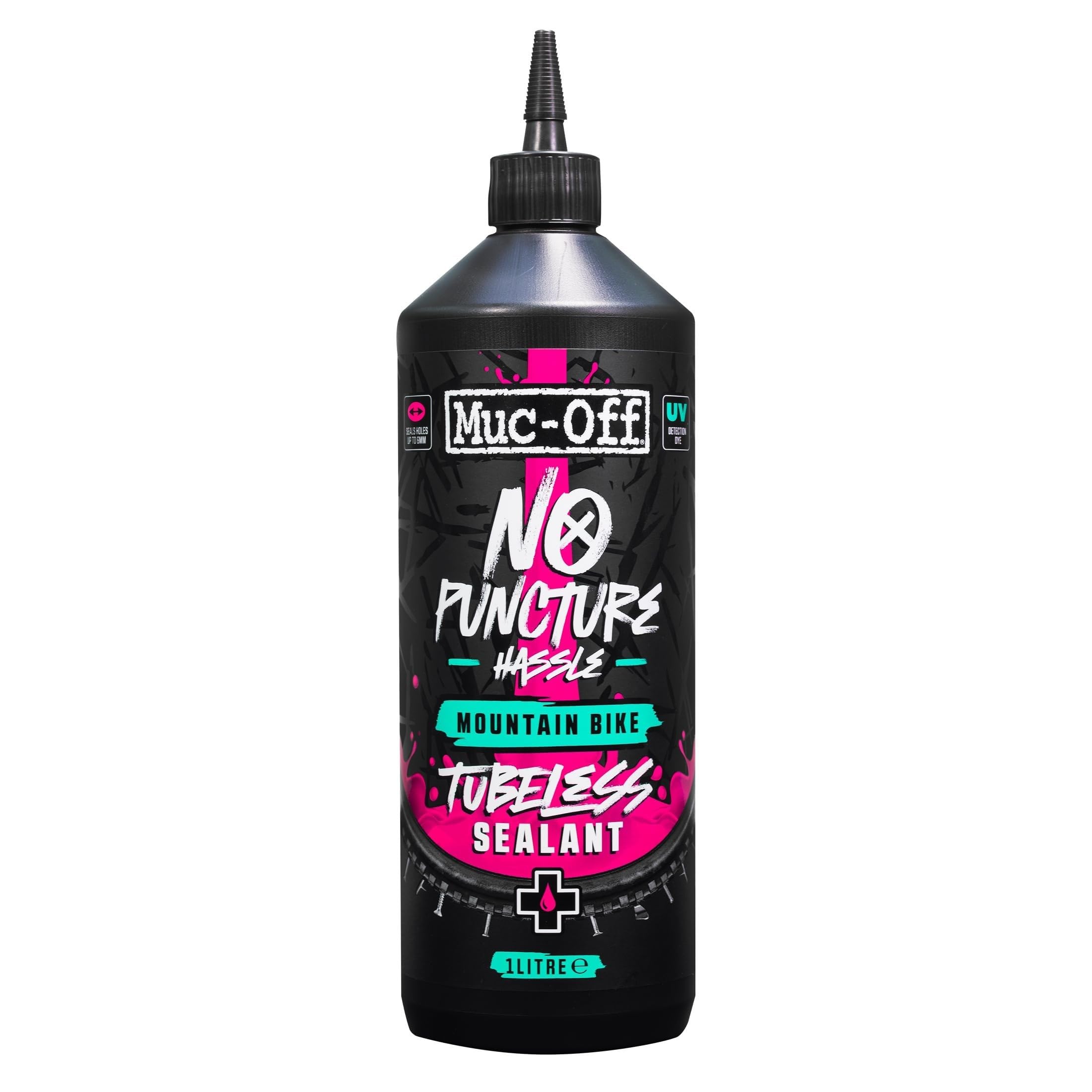
Muc-Off No Puncture Hassle

Muc-Off No Puncture Hassle

Shop use

Our Score 8.8/10
Check Price

Worth Noting

  • UV tracer only works with a UV light
Detection
UV tracer dye
Rated Life
Up to 6 months
Bottle Size
1 L
Puncture Limit
6mm
Read the full review

UV dye is the detail that makes Muc-Off's sealant more than another pink bottle. It highlights where sealant has escaped, turning a vague 'I think something's weeping' into a puncture you can actually find. We used it to trace a slow leak at the bead and appreciated having a visual cue rather than pulling the tire off on a hunch.

The rest of the package is aimed at high-volume use. The 1-liter bottle seals holes up to 6mm, lasts up to six months in temperate conditions, and is compatible with tubeless-ready and UST wheels. We found it worked well in a mountain bike tire and sealed a thorn hole without drama, though it did not hide the fact that a badly taped rim will still leak at the spoke holes.

The dye is not a substitute for good setup. A badly taped rim will still leak at the spoke holes, and a porous sidewall can weep until the casing is sealed. We like the diagnostic help, but we still check the bead and tape first when a tire will not hold air.

The tracer dye is the feature that changes how you diagnose a leak; the liter bottle is what makes it a workshop purchase. Compared with the Orange Seal bottles, Muc-Off is the diagnostic choice rather than the low-maintenance one.

Bottom line: We recommend Muc-Off for workshop use: the UV dye turns hidden punctures into something you can find, and the liter bottle covers several bikes.

6

Stan's NoTubes Original Sealant

Stan's NoTubes Original Sealant

All-around riding

Our Score 0.0/10
Check Price

Worth Noting

  • Latex residue needs cleaning at refresh
Formula
Latex
Rated Life
2-7 months
Intended Use
Road, gravel, MTB, cyclocross
Puncture Limit
6.5mm (1/4 in)
Read the full review

At 6.5mm, Stan's original covers the punctures that actually end rides — glass, thorns, flint — without asking you to buy a race-only formula. That's why it's our overall pick: the 2-to-7-month service window is long enough to be practical, and the same bottle is listed for road, gravel, mountain, cyclocross, and commuter use. We ran it across a mixed stable of tires, and what we kept coming back to was how little thought it demanded: add it, shake, ride, then put a reminder in your calendar.

Where it earns its reputation is at the smaller end. Small pinholes and thorn holes sealed quickly in our testing, and the tires held pressure well enough that we weren't chasing the pump before every ride. That is the everyday job: not a dramatic save, just fewer interruptions.

First, a valve-core injector makes the fill cleaner; have one on hand if you want to avoid pouring over the rim. Second, 2 to 7 months is a range, not a promise — heat, humidity, and how much sealant you use all move it around. Check for slosh every couple of months and top off before a big ride.

None of that changes the recommendation. This is the bottle we hand most riders first: proven, broad, and not so precious that you mind using it. If you already know you want a scheduled refresh, Orange Seal Endurance is the step up; if you're racing, Stan's Race makes sense. The 2-to-7-month window is the one number to put in your phone; everything else about this bottle is designed to be forgotten between rides.

Bottom line: Stan's original is the tubeless sealant we recommend first for most riders: broad tire compatibility, a 6.5mm puncture rating, and 2 to 7 months of useful life.

7

Joe's No Flats Super Sealant

Joe's No Flats Super Sealant

Gravel and MTB

Our Score 0.0/10
Check Price

Worth Noting

  • Small bottle goes quickly on multiple tires
Rated Life
6-8 months
Bottle Size
125 ml
Puncture Limit
6mm
Temperature Range
-4°F to 158°F
Read the full review

Joe's No Flats Super Sealant comes in a 125 ml bottle that fits in a saddlebag or a toolbox drawer without taking over either. That small format is the point: this is a sealant for topping off a gravel or mountain bike tire, not for filling a fleet. The listed 6-to-8-month service life and -4°F to 158°F range are unusually broad for a bottle this size.

The formula is aimed at high-volume, low-pressure tires, with a recommended 20-to-70 PSI window, and it seals holes up to 6mm. We used it on a gravel bike and found it easy to inject through the valve with the applicator top. It sealed a small flint cut on the first try and held air overnight, which is the basic test we care about.

The consistency is thinner than some of the latex-heavy sealants here. That helps it flow into a tube or a tight casing, but it also means you need to shake the bottle hard and check the valve core for clogs. We did not have a clog, but the watery texture is worth knowing before you pour it into a presta valve.

Its 20-to-70 PSI window is the clearest signal: this is a low-pressure tire tool, not a road-race bottle. Joe's is also one of the few bottles here that explicitly lists inner tubes as a use, though this guide is about tubeless.

Bottom line: We recommend Joe's No Flats as a compact also-consider for gravel and MTB riders who want a wide temperature range and a bottle that fits in a bag.

How We Tested 16 Tubeless Tire Sealants

We started by rounding up every sealant we could buy in a usable volume — 16 of them — and reading the labels for latex content, claimed service life, and whether the bottle came with an injector or expected you to already own a syringe. Cost per ounce went into the spreadsheet right next to volume, since a cheap bottle that barely fills one mountain bike tire isn't cheap at all. Everything else got settled on actual wheels.

Each sealant went into the same 29er tire and a matching gravel setup. We punched a 3mm nail and a 5mm screw through the tread, then counted wheel rotations until the hiss stopped and checked the frame and seat tube for spray. Pressure went on a digital gauge at install, day seven, and day thirty to catch the ones that quietly bled air. We also timed the fill from cracking the cap to seating the bead, and noted which bottles needed a syringe that wasn't in the box.

Drying was the slow part. We poured a measured sample of each into shallow dishes, weighed them weekly, and left spare wheels hanging in a hot garage to mimic a summer of neglect. When testing wrapped at five months, we cut the tires open and peeled out whatever was left — some came away in one rubbery sheet, others had to be scrubbed with a brush. Bottles also lived in saddle bags and floor-pump bins to see whether caps seeped or threads gummed up between top-offs.

The final ranking went to sealants we'd genuinely rebuy: they sealed on the first spin, held pressure for a month, and didn't require a chisel to clean out.

How to Choose the Right Tubeless Tire Sealant

Start With Your Tire Pressure and Terrain

Road tubeless runs at higher pressure and smaller air volume, so a sealant needs to grab quickly before pressure pushes it out. Gravel and mountain bike tires run lower pressure and carry more air, which gives the sealant more time to work. Check the puncture rating against the debris you actually ride through; a 6mm rating is generous for most trail and gravel use, while a 1/4-inch rating covers typical glass and thorn holes. We prioritise a broad all-around formula for a one-bike garage, because it is easier to keep on the shelf than three specialist bottles.

Decide How Often You Want to Top Off

Sealant life is a maintenance interval, not a permanent fill. The bottles here range from 2 to 7 months for Stan's original to 60 to 120 days between top-offs for Orange Seal Endurance and up to six months for Muc-Off in temperate conditions. Joe's No Flats lists 6 to 8 months in use, and hot, dry storage shortens all of them. We treat the top-off interval as a calendar problem: pick the bottle that matches your habits, then check for slosh before a big ride.

Count the Injector and Bottle Size

A refill bottle is only a bargain if you already own the tool to install it. The 8-ounce Orange Seal Regular includes an injector; the 16-ounce Endurance refill does not, and Stan's original is designed for use with a separate injector. A liter bottle makes sense for several bikes or a workshop, but it can dry out before a single-bike rider uses it up. We prefer the smallest format that matches your fleet, then refills once you know your dose.

Plan for Cleanup and Residue

Latex sealant leaves a film, and eventually a ball of cured material, inside the tire. Water cleanup is easier before it dries, so wipe the rim and valve area while the sealant is fresh. When you refresh, check for a dried ring or a solid lump; if the tire sounds dry when you shake it, add sealant before you ride. A shop towel and a valve-core tool make the job less messy.

Know What Sealant Can't Fix

Sealant is for punctures through the tread, not for a torn sidewall, a damaged bead, or a rim that will not hold tape. A sealant can slow a bead weep and seal a porous casing, but it cannot restore a compromised tire. If a cut is longer than the bottle's slice rating or the tire bulges after inflation, replace the tire. Seat beads within the tire and rim's stated maximum pressure, and never use sealant as a substitute for a proper repair.

Frequently Asked Questions

Final Verdict

For most riders, Stan's NoTubes Original is the right first bottle: it seals the punctures you actually get, lasts long enough to be practical, and works across road, gravel, and mountain bike tires. Choose Orange Seal Endurance if you want a predictable refresh interval, or Stan's Race if you race and want the extra sealing crystals. The rest of the list is there for a specific fit — a setup injector, UV diagnostics, or a bulk bottle — not because the default is wrong.