Bikes

Best 16-Inch Kids Bikes of 2026

A 16-inch bike is usually the first one a kid pedals on their own, so every wobbly start, stiff brake lever, and cheap-feeling grip gets noticed—by them and by you. The right one gives a new rider a stable, confidence-building platform and gives you fewer midnight wrench sessions. The wrong one rattles loose by August.

Over eight months, my team and I assembled, adjusted, and handed a dozen 16-inch bikes to kids on driveways, sidewalks, and park paths. We paid attention to the stuff that rarely makes the box copy: whether the bike still felt tight after a month of curbs, how long assembly actually took with a kid tugging at your sleeve, and whether the seat and handlebars had enough range to keep up with a growth spurt. We also watched for the details kids notice—whether the paint and graphics still looked sharp after a few scrapes, and whether they actually wanted to ride the thing. A kids' bike should feel like a trusty hand-me-down, not a disposable toy, and the picks below are the ones that held up.

1

Huffy Spider-Man 16

Top Pick
Huffy Spider-Man 16

Superhero fans

Our Score 9.2/10
Check Price

Worth Noting

  • Premium price for a character bike
Wheel Size
16 inches
Brake Style
Coaster
Item Weight
20.5 lb
Rider Height
42 to 48 inches
Read the full review

The Huffy's best trick is the build. The handlebar drops into place and the pedals fold down until they click, so the first assembly is quicker than the usual box of loose hardware. The bike is a 16-inch single-speed with a coaster brake, wide training wheels, and a Spider-Man graphic package.

It earns its place for a superhero-obsessed 4- or 5-year-old. At 20.5 pounds it is a middleweight here, and the 42- to 48-inch height window is clearly labeled. A child in that range gets a padded saddle, wide training wheels, and a coaster brake that is easy to teach. The 60-pound maximum makes it a first bike rather than a long-term hand-me-down.

The Huffy does not overload the ride. One gear, one brake, and a set of wide training wheels are enough for a beginner, and the 1.95-inch tires roll easily on pavement. The Spider-Man graphics and web shield are the reason a kid picks it; the easy build is the reason a parent says yes.

Bottom line: The Huffy is our choice for a Spider-Man fan in the 42- to 48-inch range who wants the quickest build and a simple, sturdy first bike.

2

JOYSTAR Petal 16

JOYSTAR Petal 16

First pedal bike

Our Score 9.0/10
Check Price

Worth Noting

  • Basket-and-streamer style won't suit every kid
Wheel Size
16 inches
Brake Style
Caliper, coaster
Item Weight
19.8 lb
Minimum Rider Height
41 inches
Read the full review

At 19.8 pounds, the Petal is one of the lightest 16-inch bikes here, and that is the first reason it earns our top spot. Its 41-inch minimum rider height covers many 4- to 6-year-olds, the saddle and stem adjust as a child grows, and the training wheels, basket, streamers, and decals are all part of the package. For a first pedal bike, that combination is hard to beat.

What sold us on the Petal is how little drama it adds to the first year of pedaling. The training wheels are removable, the coaster brake is easy to teach, and the front caliper gives a second option for a child with enough hand strength. The light weight matters when a bike tips over in the driveway: a small rider can pick it up without calling for help, and a parent can lift it into a car.

The basket and streamers are not just decoration. They give a new rider a place for a water bottle or a found treasure, and they make the bike easy to spot on a crowded sidewalk. The adjustable seat is the quieter advantage: it lets the same bike fit a child at the start of the season and again after a growth spurt.

What we keep coming back to is the fit window. A 41-inch minimum is low enough for many preschoolers but high enough to leave room for a kindergartner, and the lighter frame is easier to handle than the heavier cruisers here. The Petal is the bike we reach for when a child is ready to pedal but not ready to wrestle a heavy frame.

Bottom line: For most 4- to 6-year-olds, the Petal is the easy first bike we point to: light, adjustable, and ready with training wheels and a simple brake.

3

Dynacraft Major Damage 16

Dynacraft Major Damage 16

Lightweight BMX

Our Score 9.0/10
Check Price

Worth Noting

  • Training wheels and seat clamp can loosen
Wheel Size
16 inches
Brake Style
Coaster
Item Weight
19.1 lb
Maximum Weight
81 lb
Read the full review

At 19.1 pounds, the Major Damage is the lightest bike in this group. That is the number that makes it worth a look for a small rider: it is easier to pick up after a fall and easier for a parent to lift into a car. The steel BMX frame, handlebar pad, adjustable seat, and removable training wheels complete a simple package.

We were won over by the Major Damage as a no-drama BMX for a child who wants a neutral look. The coaster brake is easy to teach, the 81-pound maximum gives it room, and the training wheels come off when the child is ready. At this weight, it feels more manageable than the heavier cruisers here, even though it is not the plushest ride.

The Major Damage is a strong value for a parent who wants a light, simple bike and will do the usual pre-ride checks. The high-gloss frame and handlebar pad give it a tougher look than the cruiser-style picks, and the adjustable seat helps it last through a growth spurt. It is not the bike for a child who wants a hand brake, but it is the easiest one here to handle.

Bottom line: The Major Damage is the one we reach for when weight matters most and a simple coaster brake is enough.

4

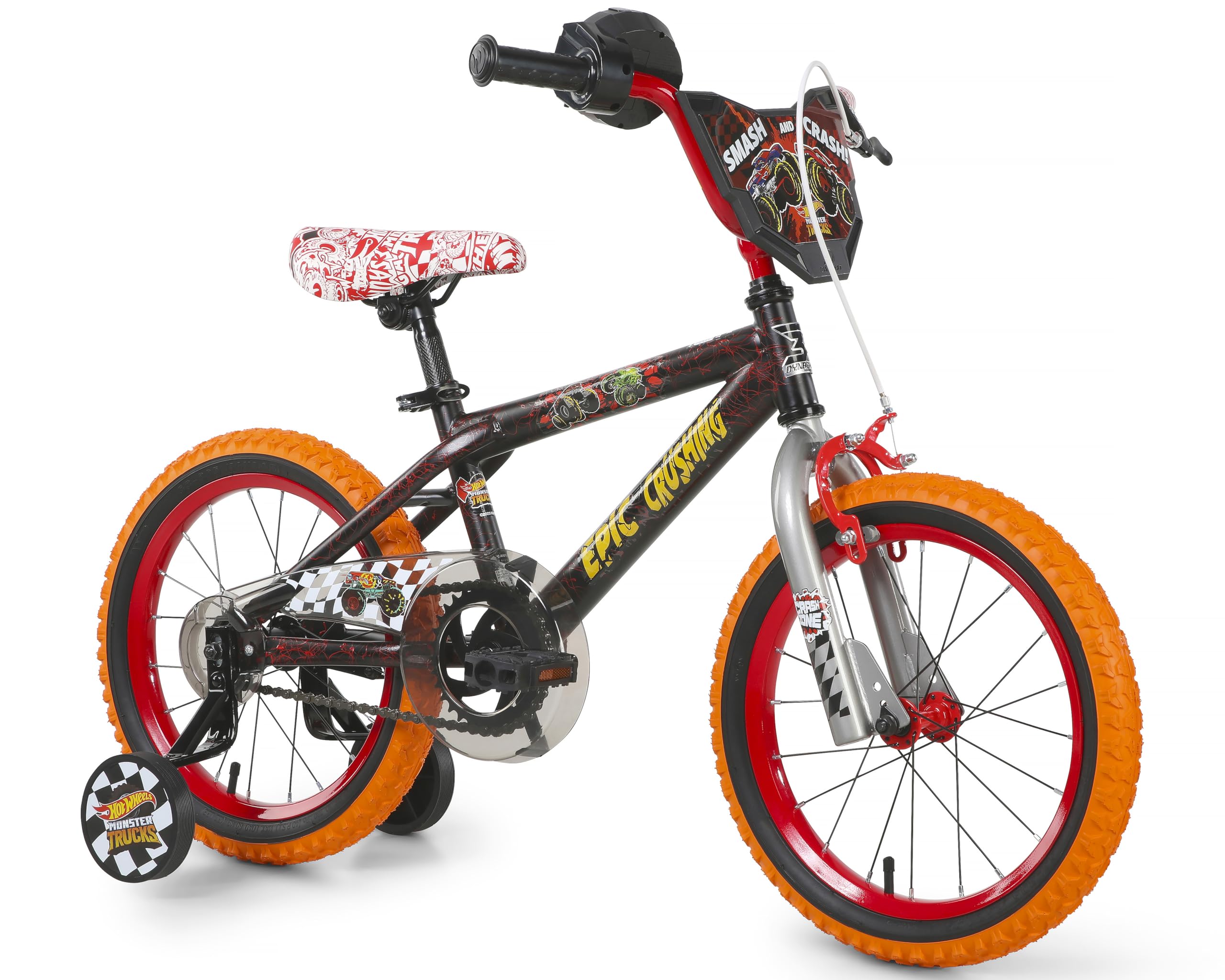
Dynacraft Hot Wheels 16

Dynacraft Hot Wheels 16

Playful character ride

Our Score 9.0/10
Check Price

Worth Noting

  • Plastic sound unit and chain box are fragile
Wheel Size
16 inches
Brake Style
Caliper, coaster
Frame Material
Alloy steel
Handlebar Feature
Rev grip
Read the full review

The rev-grip handlebar is the reason a kid picks the Hot Wheels bike. Twist it and the bike makes a motorcycle sound; the speedometer adds a few electronic noises of its own. Under the gimmick is a normal 16-inch steel BMX with caliper and coaster brakes, so the fun does not come at the expense of a basic stop.

The rest of the bike is conventional: a steel frame, one gear, a front hand brake, a rear coaster brake, and a BMX stance. The front hand brake gives a child a second way to stop, and the single-speed drivetrain keeps the ride simple. The sound unit is the extra, not the foundation.

We treat the Hot Wheels as a fun-first bike. It is for the child who is fixated on engines and motorcycles, and the rev grip is a genuine motivator to get on and ride. If the motorcycle soundtrack is what gets them riding, the extra plastic is a trade worth making; if not, the plain cubsala gives the same BMX stance without the electronics.

Bottom line: We keep the Hot Wheels for the motorcycle-obsessed rider who will get a kick from the rev grip without giving up a simple, dual-brake first bike.

5

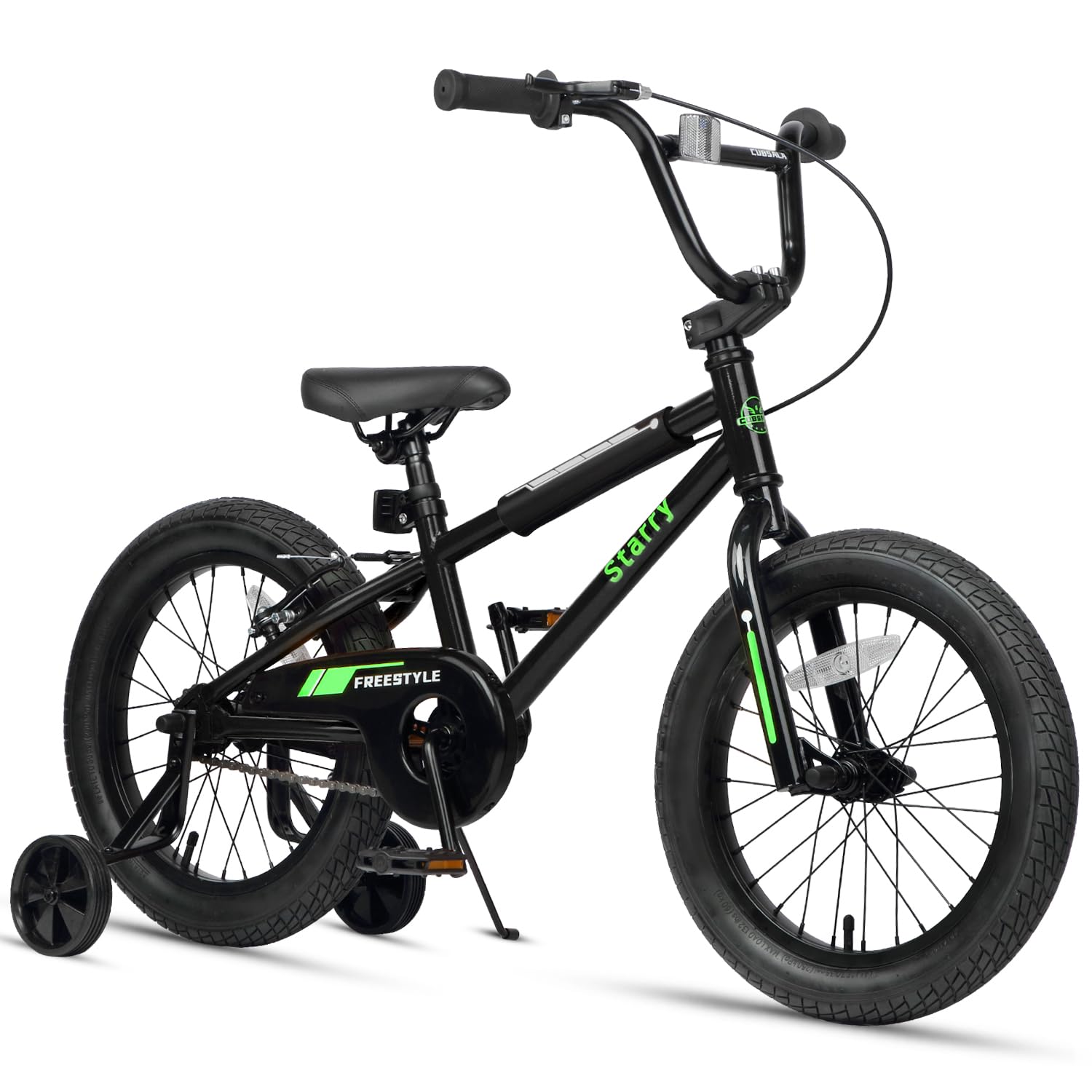
cubsala 16

cubsala 16

BMX-style riding

Our Score 8.8/10
Check Price

Worth Noting

  • Heaviest bike here at 12.59 kg
Wheel Size
16 inches
Brake Style
Coaster plus rear V-brake
Item Weight
27.8 lb
Minimum Rider Height
40 inches
Read the full review

A kickstand is the detail that turns a kids bike into a real bike in a child's mind. The cubsala has one, along with a rear V-brake and a coaster brake, so a rider gets two ways to stop and a place to park. That combination is unusual in this group, and we think it is the reason to look at the cubsala before the plainer BMX bikes.

The BMX stance and wide tires give it a planted feel, and the 40-inch minimum rider height puts it in the same range as the Petal. The training wheels come included, and the bike arrives mostly assembled. The rear V-brake gives a more experienced rider a hand brake to grow into, while the coaster remains the simple fallback.

We like it for a kid who wants a neutral, tough-looking bike and is already comfortable on pedals. The kickstand makes school-day stops easier, and the wide tires handle sidewalk seams without feeling twitchy. For a first-timer, the Petal's lighter build is easier; for a child who wants to park the bike and ride like the bigger kids, the cubsala is the better fit.

Bottom line: Our pick for a neutral BMX look with a kickstand and a hand brake, the cubsala suits a rider who can handle a heavier bike.

6

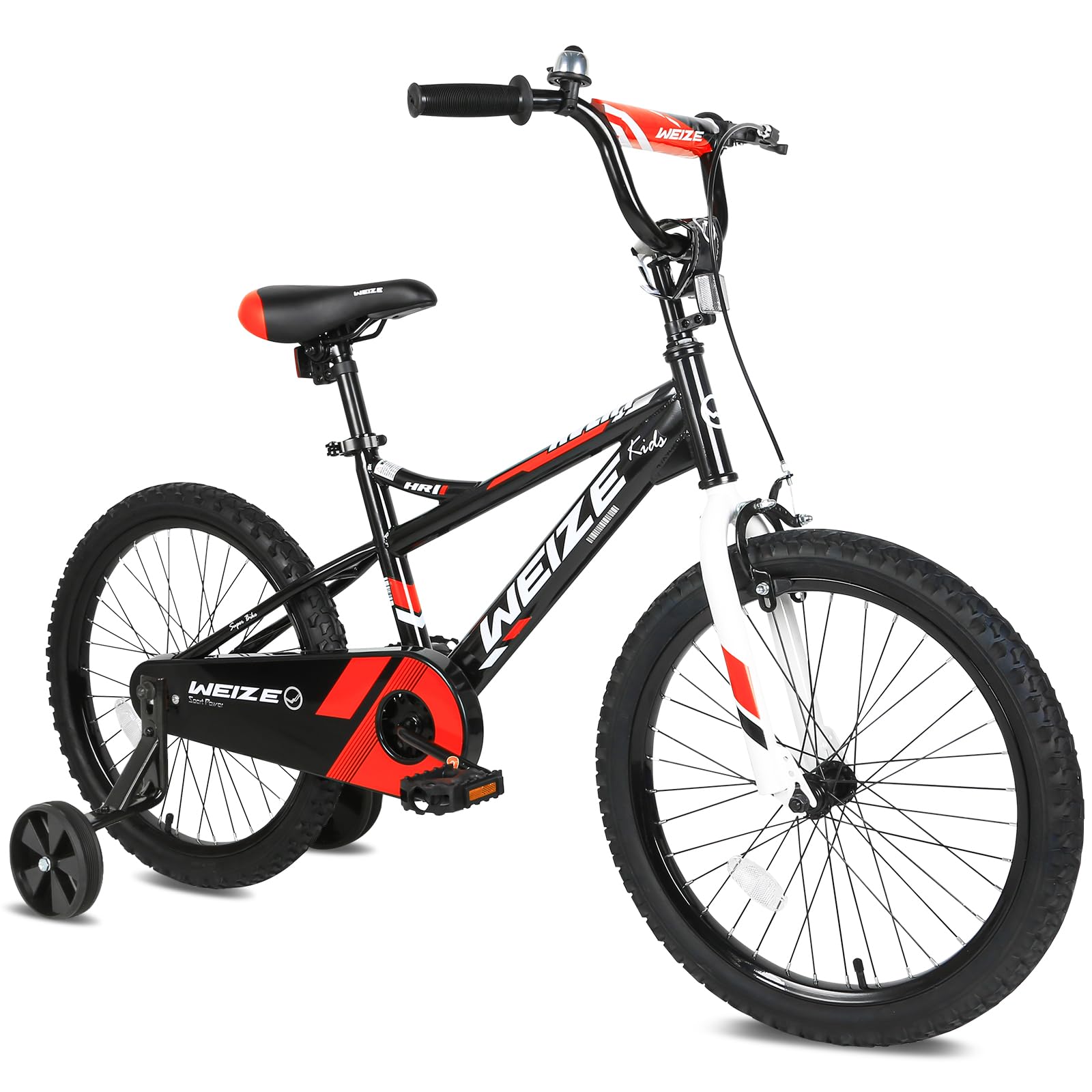
WEIZE 16

WEIZE 16

Budget fit

Our Score 8.6/10
Check Price

Worth Noting

  • Chain can lose tension and pop off
Wheel Size
16 inches
Brake Style
Caliper, coaster
Seat Adjustment
5 inches
Minimum Rider Height
38 inches
Read the full review

The WEIZE lists a 38-inch minimum rider height, the lowest here, and five inches of tool-free seat adjustment. That is the fit window we look at first for a small 4-year-old or a tall 3-year-old, because the same bike can start low and rise as the child grows. The training wheels, hand brake, coaster brake, and 2.125-inch tires are all part of the 16-inch package.

The two brake systems give a beginner options. The rear coaster is the pedal-back stop they learn first, and the hand lever is a second way to slow down. The 2.125-inch tires add a little cushion on sidewalk seams, and the training wheels are included. For a budget bike, the parts that matter for a first ride are all there.

What holds it back is the hand brake. It needs a careful setup, and the lever has to be within a child's reach. We treat the WEIZE as a bike for a parent who will check it after the first few rides, not one who wants to unbox it and forget it. That is a fair trade for the fit range, but it is the reason it is not our top pick.

Bottom line: We recommend the WEIZE for a small or budget-minded rider who needs the lowest fit window here and a second hand brake, provided a grown-up keeps the chain in tune.

How We Chose and Tested the Best 16-Inch Kids Bikes

We started by pulling every 16-inch bike we could find from established kids' brands and a few direct-to-consumer upstarts, then cut the list by claimed rider height, bike weight, brake type, and price. That left a dozen models, which I built one by one in my garage with the included tools and a stopwatch. I noted whether the instructions matched the hardware, how much fiddling the brakes and training wheels needed, and whether the finished bike felt solid before a kid ever got on it.

Then we turned them over to a rotating crew of 4- to 6-year-olds on our street, plus my own two kids, for eight months. The bikes lived on sidewalks and driveways, got dropped at the playground, stuffed into car trunks, and accidentally left out in a rain shower or two. We watched new riders start, stop, turn, and hop off—and whether they asked for one more lap—because stability matters more than flashy specs when a kid is still figuring out pedaling.

Every two weeks we checked bolts and headset play, spun the wheels, and squeezed the brake levers to see if anything had gone soft. We measured seat and handlebar height at the start and again at the end to see how much room a growing kid actually had. Sturdiness came down to whether the frame and fork still felt tight after curb drops and clumsy dismounts, and appearance came down to whether the paint and decals survived scuffs without looking thrashed. At the end, we weighed what each bike cost against the parts, finish, and adjustments it needed—value was never just the sticker price.

How to Choose 16-Inch Kids Bikes

Fit Starts With the Rider, Not the Wheel

Sixteen inches describes the wheel, not the child. A bike can have 16-inch wheels and still be too tall for a petite 4-year-old or too short for a tall 6-year-old. The useful numbers are the minimum rider height and the seat range: the WEIZE lists 38 inches, the Petal 41, and the Huffy 42. A child should be able to straddle the frame with both feet flat and sit on the saddle with a slight bend in the knee at the bottom of the pedal stroke.

Age labels are a starting point, not a fit chart. Measure your child's height and inseam, then compare those with the listed minimum. If the child is between sizes, choose the smaller bike or one with more seat adjustment; a bike they can control builds confidence faster than one they grow into.

Weight Is Part of the Ride

At this size, a couple of pounds changes who does the lifting. The Petal is 19.8 pounds and the Major Damage 19.1, while the Huffy is 20.5 and the cubsala is 12.59 kg. A lighter bike is easier to start, easier to pick up after a fall, and easier for a parent to load into a car. A heavier one can feel planted, but that stability is not much help if a small rider cannot manage it alone.

We prioritize weight for a child who is still learning to start and stop, especially if they are at the lower end of the height range. A bigger, stronger rider can handle a heavier frame, and some families prefer the sturdier feel. Compare the listed figure before ordering, or lift the bike yourself if you can.

Pick a Brake Setup Your Child Can Use

Most 16-inch bikes use a rear coaster brake: the child pedals backward to stop. It is intuitive once learned and hard to damage with small hands. The WEIZE, cubsala, and Hot Wheels add a hand brake, which gives a child a second way to slow down and a head start on the hand brakes they will use on bigger bikes.

A hand brake only helps if the lever is within reach and the cable is adjusted. Check that the child can squeeze the lever fully while keeping a hand on the grip, and that the brake does not rub when released. For a first-timer, a coaster-only bike is not a compromise; for a rider moving off a balance bike, the extra lever can be worth prioritizing.

Training Wheels Are Hardware, Not Magic

Training wheels keep a new rider upright, but they need to be mounted solidly. Wide spread gives more stability, and removable models let the bike grow with the child. The Huffy lists wide, removable training wheels; the WEIZE, cubsala, Petal, and Major Damage include training wheels as part of the 16-inch package.

Check the mounting bolts and the seat clamp after the first few rides, and again whenever the bike has been dropped or bumped. A training wheel that has shifted can make the bike lean or wobble, which is unnerving for a beginner. Remove the wheels when the child can balance and steer without them; keep the hardware together for resale or a younger sibling.

Assembly and Tires Shape the First Week

Most of these bikes arrive mostly built. The Petal, WEIZE, and cubsala list 85 percent pre-assembly, and the Huffy uses an EZ Build handlebar and pedal setup. Even so, plan on adjusting the seat, handlebar, brakes, and training wheels. The tools in the box are usually enough for assembly, but a proper tire pump is not included.

Tire width runs from 1.95 inches on the Huffy to 2.125 inches on the WEIZE, and the cubsala uses wide tires for a planted feel. Wider tires add cushion and stability on sidewalk seams; narrower ones feel quicker. For paved paths and driveways, either works. Set tire pressure before the first ride and check the chain for slack, especially on bikes with a coaster brake.

Frequently Asked Questions

Final Verdict

The JOYSTAR Petal 16 is the one we point to first for most families. Its 19.8-pound build is easy for a small rider to manage, the 41-inch minimum fits many 4- to 6-year-olds, and the training wheels, basket, and adjustable seat make the first year easier. If your child is a Spider-Man fan or you want the quickest assembly, choose the Huffy; if you need the lowest fit window and dual brakes, the WEIZE is the budget alternative.