Bikes

Best Kids Bikes of 2026

The first wobbly push down the sidewalk is the moment a kids bike earns its place in the garage—or gets abandoned for a scooter. The wrong size, a flexy frame, or a seat post that slips mid-ride can turn a birthday gift into clutter. I've learned that a bike a child has to grow into is usually one they avoid; the right one fits today, stays steady when they wobble, and makes them want another lap.

Over the past eight months, my team and I assembled 12 kids bikes and watched kids ride them on sidewalks, driveways, and park paths. We timed each build, noted which bikes felt sturdy when a child hopped a curb, and asked the real testers—the kids—which ones they reached for again. We also compared what each bike delivered against its price, since a kids bike only feels like a value if it survives hand-me-down duty. The picks below stayed reliable, pedaled smoothly, and made the neighborhood loop feel like an adventure.

1

Strider 12 Sport

Top Pick
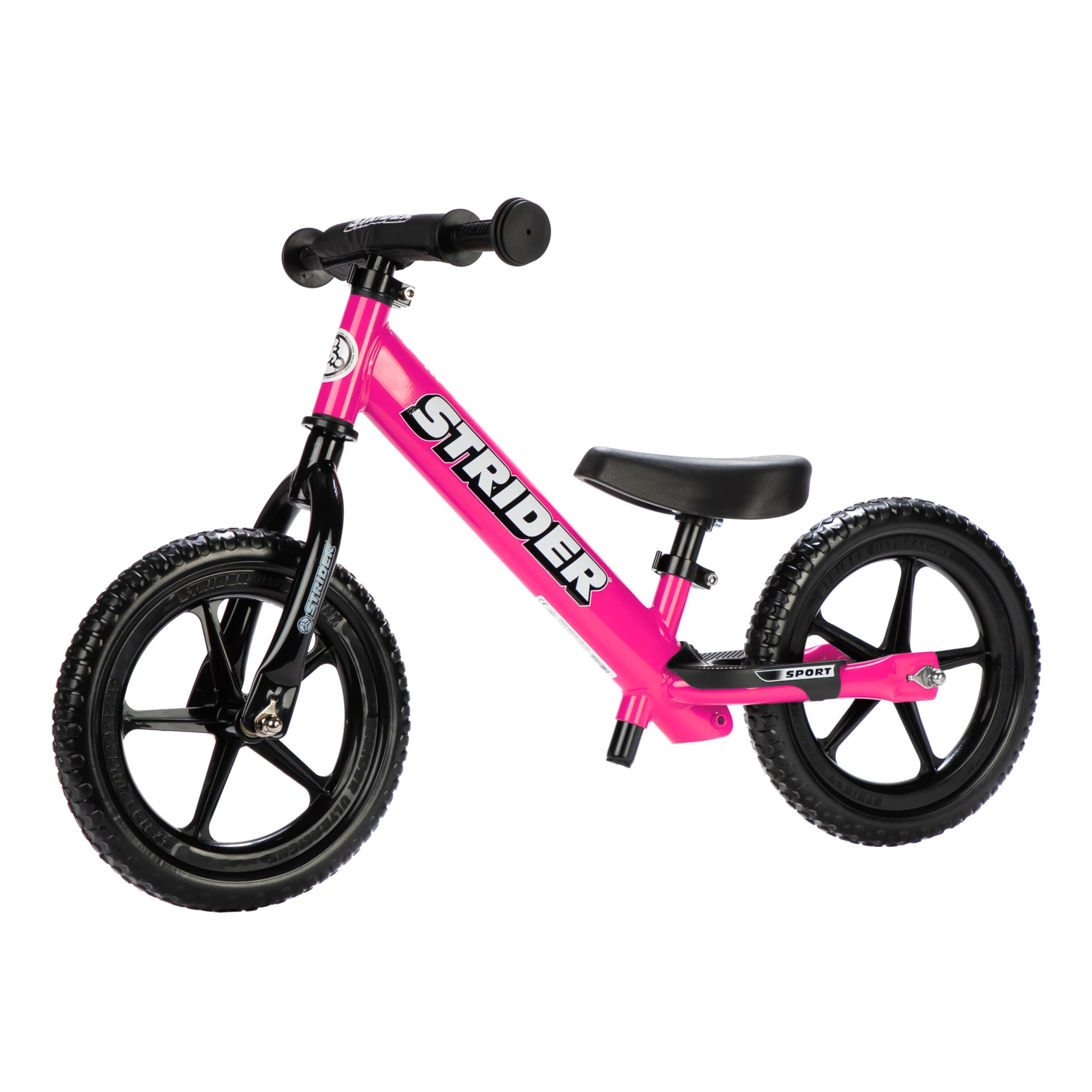
Strider 12 Sport

Ages 1 to 4

Our Score 9.6/10
Check Price

Worth Noting

  • Priciest balance bike in this set
Wheel Size
12 in.
Bike Weight
6.7 lb
Seat Height
11–17 in. (28–43 cm)
Rider Weight Limit
60 lb
Read the full review

Eleven inches is the number that matters here. That's how low the Strider's seat drops, which puts a one-year-old's feet flat on the ground with the bars in their hands. It rises to 17 inches, tall enough for a four-year-old, and the inseam range the company quotes — 12 to 18 inches — is the one measurement worth taking before you order.

That range is why it's the bike we recommend first. Most balance bikes cover a slice of the toddler years; this one covers all of them, so the same frame a small two-year-old walks along gets glided on at three and a half. The steel frame weighs 6.7 pounds, light enough for a preschooler to lift off its side without help, and the foam rubber tires can't puncture — no pump, no tube swap, no ride cut short. Assembly is straightforward and the tools come in the box.

The no-brake design is deliberate and right at this stage: feet are the brake, and learning that is the whole point. Where it costs you is the price, because this is the priciest balance bike in this set and that money buys seat range and tires rather than features. For a family planning to hand one bike down through two or three children, that's an easy trade; for one child on a tight budget, the KRIDDO does most of the same job.

Bottom line: We recommend the Strider as the default first bike: the seat drops low enough for a one-year-old, rises for a four-year-old, and the foam tires never need a pump.

2

SEREED Baby Balance Bike

SEREED Baby Balance Bike

First birthday

Our Score 9.6/10
Check Price

Worth Noting

  • Useful only from about 12 to 24 months
Age Range
12–24 months
Wheel Size
6.7 in.
Bike Weight
3.5 lb
Rider Weight Limit
55 lb
Read the full review

Four wheels and 3.5 pounds tell you the whole story: this is a bike for a child still working out walking, not one ready to glide. It's the one we point to for a first birthday, ahead of any two-wheeler — there's nothing to tip, the four wheels are spread wide enough that it stands on its own, and the fully closed wheels keep ankles and shoelaces away from the spokes.

The geometry is built around that age. The bike is rated for a minimum rider height of 18 inches, steering is limited to 135 degrees so a hard turn can't fold the front end under, and the aluminum frame carries up to 55 pounds. In practice a 12-month-old pushes it across a living room floor and learns the push-and-coast motion that a real balance bike later rewards.

The limitation is the calendar rather than the build. Twelve to 24 months is the window and the seat doesn't rise far, so a tall two-year-old will be done with it well before their third birthday. Plan on passing it down or moving to a 12-inch balance bike at the second birthday; that's the natural handoff, and it's why this is a first-bike purchase rather than a long-term one.

Bottom line: The first-birthday pick we point to: four wheels that won't tip under a wobbly walker and a 3.5-pound frame a toddler can push, for as long as the 12-to-24-month window lasts.

3

JMMD 6-in-1 Toddler Bike

JMMD 6-in-1 Toddler Bike

Toddler years

Our Score 9.4/10
Check Price

Worth Noting

  • Rider limit of 55 pounds ends it around age five
Modes
6-in-1 convertible
Brake Type
Hand brake
Wheel Size
12 in.
Rider Weight Limit
55 lb
Read the full review

A push handle on a toddler bike looks like overkill until you picture the walk. An 18-month-old can't judge speed or steer around a corner, and the handle that rotates 135 degrees lets you do both from behind without stooping; we found it does the steering work for you at walking pace, which is the difference between a bike you take out and one you carry home.

The conversion is the real trick. It arrives 95 percent assembled in push-trike form, and the same frame sheds the push rod for balance-bike duty, then takes pedals for the pedal stage — one purchase running from 18 months to about five years, with a hand brake, 12-inch rubber tires, and an aluminum frame along the way. It also folds with a press of the red button under the frame, which matters if it lives in a trunk.

The hand brake is the detail worth knowing about. It's stiff, and a three-year-old may not have the grip to work it alone, so the push handle stays useful for longer than you expect. The 55-pound rider limit caps the final stage at about age five. Neither point changes the case for a family who wants one bike instead of three.

Bottom line: This is our pick if you want one purchase for the whole toddler stretch: a parent-steered trike at 18 months that becomes a balance bike, then a pedal bike.

4

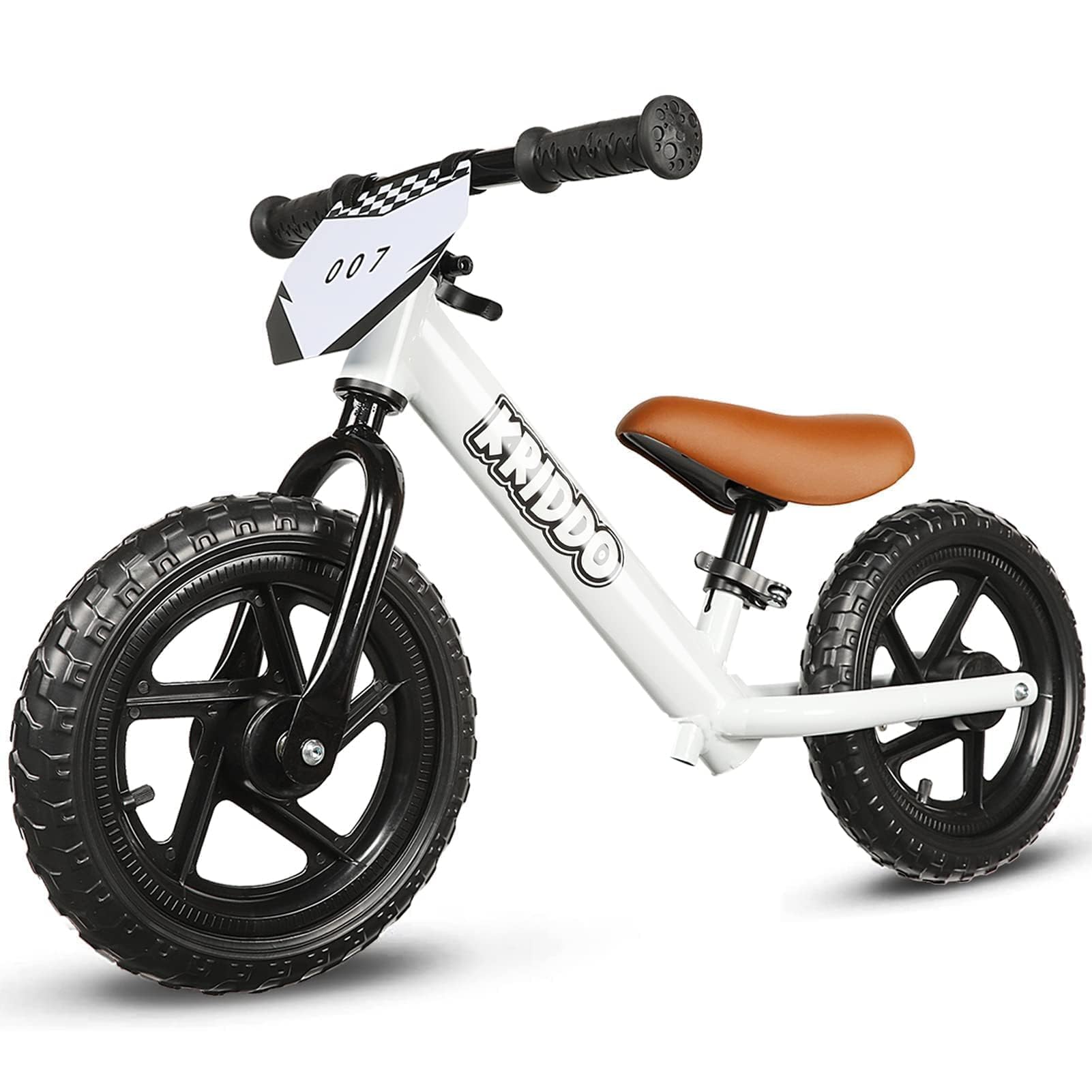
KRIDDO Toddler Balance Bike

KRIDDO Toddler Balance Bike

Ages 2 to 5

Our Score 9.2/10
Check Price

Worth Noting

  • Feels wobbly for the newest riders
Wheel Size
12 in.
Bike Weight
6.6 lb
Rider Weight Limit
110 lb
Seat And Handlebar
Quick-release adjustable
Read the full review

The number plate is the part kids care about. It clips to the front, comes with three sets of stickers, and turns a shared-hand-me-down into theirs. Underneath it is a sensible 12-inch balance bike: carbon steel frame, a stated 110-pound rider limit, and extra-thick puncture-resistant tires on both wheels.

We rate the adjustment above everything else here. Both the seat and the handlebar move on quick releases without tools, and the range stretches from about 18 months to five years, so the same bike a two-year-old walks along gets ridden properly at four. The 12-inch tires roll over sidewalk cracks and short grass far better than the small wheels on a first-birthday bike.

Two things to know. The quick-release seat can creep down over the first weeks — check the clamp after each of the first few rides and it settles. And while the 110-pound rating sounds generous, the 12-inch wheels set the real ceiling: a tall five-year-old will want the next size up whatever the weight limit says.

Bottom line: Our pick for a two- or three-year-old stepping up: the seat and bars adjust for years of growth, and the puncture-resistant tires handle gravel and sidewalk cracks.

5

RoyalBaby Stargirl 12-Inch

RoyalBaby Stargirl 12-Inch

First pedals

Our Score 9.0/10
Check Price

Worth Noting

  • Bell and basket feel flimsy
Wheel Size
12 in.
Brake Style
Caliper and coaster
Rider Weight Limit
77 lb
Minimum Rider Height
34 in.
Read the full review

Twelve-inch wheels are a short stop on the way up — roughly one riding season for a child around 34 inches tall — and the Stargirl is built for exactly that window rather than pretending to cover more. The step-through frame drops low enough that a small rider gets a leg over without help, and that single detail decides whether the bike gets climbed onto or left in the garage.

The brakes are the other reason it earns a place. Short-reach levers are shaped for small hands and work alongside a rear coaster brake rather than replacing it, so a child who instinctively back-pedals still stops. We paid close attention to that pairing, because it's where most kids' bikes leave a small rider dependent on an adult. Training wheels, a basket, a bell, and the assembly tools come in the box, and 95 percent of the bike is already built.

Where the money shows its limits is the trim. The front brake can arrive needing adjustment, so squeeze the lever and spin the front wheel before the first ride, and the bell and basket are the flimsiest parts of the package. None of that touches the two things that matter for a new rider: the low frame and levers their hands can actually reach.

Bottom line: For a rider around three feet tall who is ready to pedal, this is the fit we look for first: a low frame, short brake levers, and training wheels in the box.

6

Dynacraft Hot Wheels 18-Inch

Dynacraft Hot Wheels 18-Inch

Big kids

Our Score 9.0/10
Check Price

Worth Noting

  • Sound unit and chain guard fail first
  • Plastic grips instead of rubber
Wheel Size
18 in.
Brake Style
Coaster
Handlebar Feature
Rev grip with engine sounds
Rider Weight Limit
89 lb
Read the full review

This is the only 18-inch bike in the set, and that alone gives it a job. Once a child has outgrown a 14- or 16-inch frame, 18-inch wheels with 1.95-inch tires put them in a normal riding position instead of a knees-up one, and the 89-pound rider limit covers most six- to nine-year-olds.

The Hot Wheels part is more than paint. The right grip twists and makes an engine noise, a speedometer-style button adds sound effects, and the red-and-black graphics get a kid onto the bike without being asked twice. That's worth something when the alternative is a bike that sits in the garage all summer.

Assembly is straightforward and the alloy steel frame absorbs the knocks a learning rider gives it. The add-ons are the soft spots: the plastic sound unit and the chain guard are the parts that fail first, and the grips are plastic rather than rubber, which gets slippery in hot weather.

So we recommend it for the kid who wants the noise and the graphics and will ride daily for a couple of years — not for the family buying a frame to hand down through three children. If longevity is the priority, a plain 18-inch frame without electronics is the safer spend; if you want the bike that actually gets used, this is it.

Bottom line: Our pick for a big kid who wants a bike that looks and sounds the part: 18-inch wheels, engine noise, and a frame that takes a fall, though the gadgets go first.

7

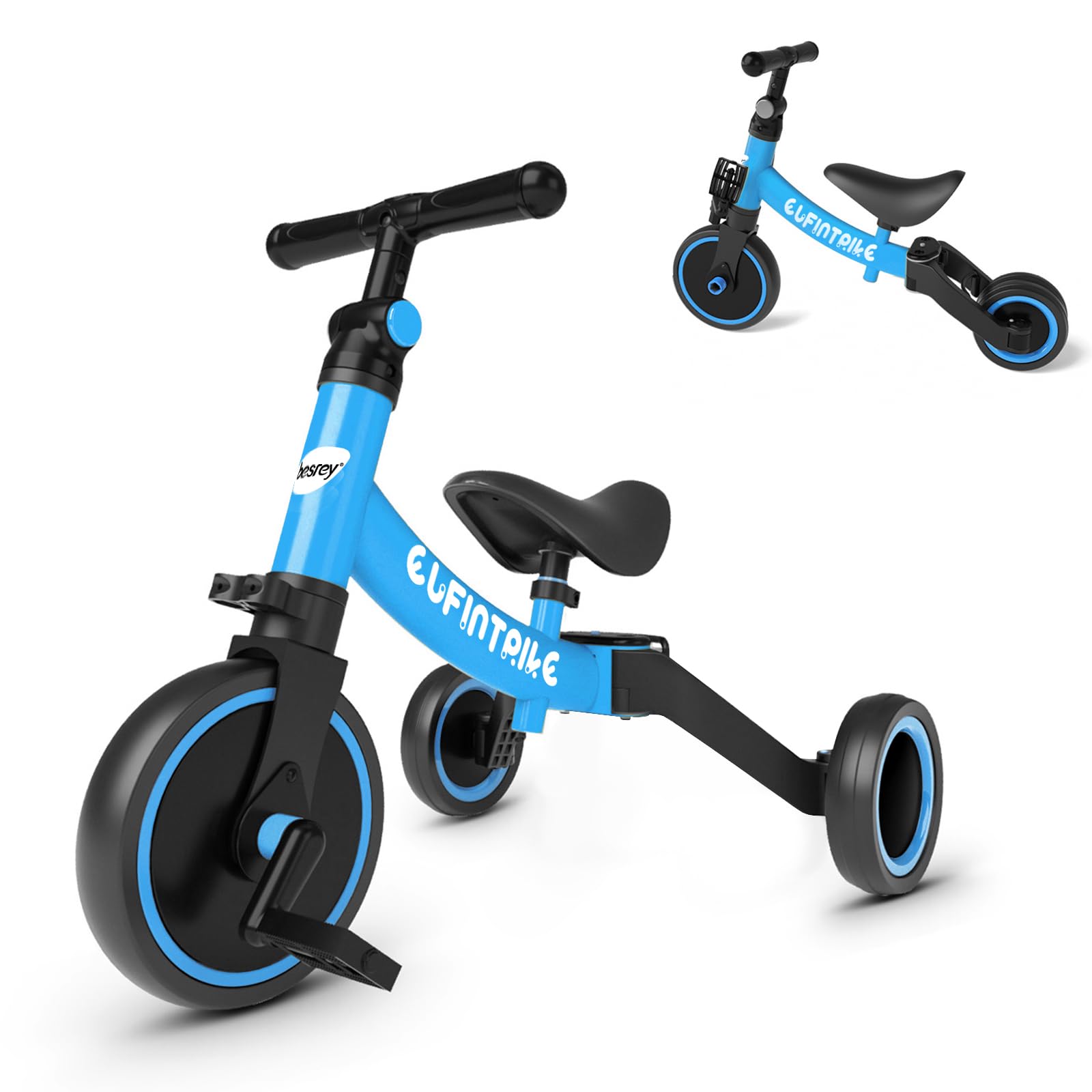
besrey 5-in-1 Toddler Bike

besrey 5-in-1 Toddler Bike

Trike first

Our Score 9.0/10
Check Price

Worth Noting

  • Compact frame outgrown before age four
  • Rear axle and handlebar clamp work loose
Age Range
12 months–4 years
Frame Material
Carbon steel
Steering Limit
70°
Rider Weight Limit
55.1 lb
Read the full review

The five configurations are the pitch, and here's what we make of them: it's a tricycle that sheds parts until it becomes a balance bike. Pedals unclip, the seat drops, the frame stays. That works for a toddler who wants to sit and be pushed, and it works as a first balance bike, but it never turns into the bike a four-year-old pedals down the block — for that stage you need the JMMD or a proper 12-inch pedal bike.

For the stage it does cover, the safety thinking is sound. Steering is limited to 70 degrees, the wheels are fully enclosed so small feet stay clear, and the curved frame has no sharp edges to catch a shin. At 3 kg it lifts into a car easily, and the conversion is a one-click job rather than a toolbox session.

Size is where it gets awkward. The frame is compact, an average three-year-old already looks big on it, and the useful life is shorter than the age range on the box suggests. For a 12- to 24-month-old it's a reasonable way to start riding; past three, it runs out of room and the next bike is a real balance bike.

Bottom line: A sensible first ride for a toddler who wants to be pushed, with a balance-bike stage built in, as long as you don't expect it to carry a four-year-old.

How We Tested the Best Kids Bikes

We started by pulling together kids bikes in the most-shopped sizes and price bands, then narrowed the list by reading spec sheets and owner reviews for recurring complaints: frames that arrived dented, brakes that needed constant adjustment, and assembly instructions that skipped steps. We ended up with 12 bikes, from first-pedal models to 20-inch options for older riders, and spent eight months living with them the way families do—not on a test bench but on sidewalks, driveways, cul-de-sacs, and park paths.

Assembly came first. I timed each unboxing and build at my kitchen table, noted whether the included tools were enough, and checked that seats, handlebars, and training wheels stayed put after the first few rides. Out on the pavement, kids practiced starting, stopping, turning, and pedaling up a gentle slope; I watched for wobble at low speed, whether a bike tracked straight, and how easily a child could get a foot down. We also did the unglamorous durability work: dropping each bike on its side, bumping it off curbs, and checking welds, grips, chain guards, and brake pads after repeated use.

To judge balance, we had kids coast with feet off the pedals and practice starting from a dead stop; to judge pedal performance, we paid attention to whether the cranks turned smoothly, whether the chain stayed on, and whether the gearing (or lack of it) made hills feel harder than they should. We tracked enjoyment by the simplest measure: which bikes the kids asked to ride again. And we compared value by what each bike came with—decent tires, a cushioned seat, reliable brakes—against what a family pays, since a cheap bike that fails in a season is no bargain.

How to Choose Kids Bikes

Fit Comes From Inseam, Not the Age on the Box

A balance bike works only when both feet sit flat on the ground with the child in the saddle. If their heels lift, they can't push off or catch a wobble, and the bike gets abandoned. Pedal bikes are the opposite — a rider on tiptoe is correctly sized. Measure the inseam from floor to crotch with shoes on, then compare it with the seat range: the Strider's 11-to-17-inch seat suits a 12-to-18-inch inseam, and the Stargirl wants a rider at least 34 inches tall.

The trap is the age band on the box. Children the same age can be half a foot apart in height, so a bike bought for a birthday rather than a body ends up parked in the garage. When a child sits between two sizes, take the smaller frame — one they can handle gets ridden, and one they have to grow into does not.

Balance Bike First, Pedals Later

Training wheels teach pedaling, not balancing. Take them off and the child still has to learn to stay upright, which is why that transition so often stalls. A balance bike reverses the order: they walk the bike, then coast, then lift their feet, and balance arrives before pedaling does. Children who glide on a balance bike usually move onto a pedal bike without training wheels at all.

Go straight to pedals when the child already scoots confidently or is five and riding with friends who pedal. Otherwise the faster route is a 12-inch balance bike from about 18 months to four, then a pedal bike. If buying twice doesn't appeal, the JMMD covers both stages in one frame.

What the Bike Weighs Matters More Than What It's Made Of

A preschooler is not heavy, and a 19-pound 12-inch pedal bike is a large share of what they weigh. When the bike goes down — and it will — the child either lifts it or waits for you. The balance bikes here run from 3.5 pounds on the four-wheel toddler design to 6.6 and 6.7 pounds on the 12-inch two-wheelers, and that gap decides how far a small rider gets on their own.

Check the listed weight rather than the frame material on the badge. Steel and aluminum both appear in this set, and the number on the scale is the one a child feels. A bike they can pick up themselves gets ridden further and put away without an argument.

Brakes and Tires: What Wears and What Fails

Balance bikes have no brake by design — feet do the stopping, which is part of how balance is learned. Pedal bikes usually pair a rear coaster brake with a front hand brake, and lever reach decides whether a child can use it at all: short-reach levers like the Stargirl's sit closer to the grip for small hands. A lever that's stiff or far from the bar means the adult does the braking for another season.

Tires split two ways. Foam and EVA can't puncture but grip less on wet pavement; pneumatic tires ride better on grass and gravel but need air, and tubes eventually need patching. For a first bike that lives on the sidewalk, foam is the simpler choice. If the bike will spend its life on dirt and lawns, take the pneumatic and keep a pump in the garage.

Buy for the Adjustment Range, Not the Maximum Weight

A generous rider weight limit sells bikes, but height is what retires them: a frame rated to 110 pounds with a 17-inch maximum seat is finished for a tall five-year-old regardless. Quick-release seat posts and tool-free handlebar adjustment earn their keep, because you'll be moving the saddle as the child grows.

Look at the seat and handlebar range rather than the top of the weight range; that's what tells you how many seasons a bike gives you. Buying one size up rarely works — a rider who can't reach the ground doesn't ride, and the bike sits until they can.

Frequently Asked Questions

Final Verdict

Buy the Strider if you want one bike for the balance years: the seat range fits a one-year-old through a four-year-old, and the foam tires mean it's always ready to roll.

Change the requirement and the answer changes. For a first birthday, the four-wheel SEREED is the safer, cheaper start. If you want a single purchase that runs from 18 months to five years, the JMMD converts instead of being outgrown. And when the child is ready to pedal at three, the Stargirl's low frame and short brake levers fit a small rider better than a bigger bike they'll grow into.