Bikes

Best Kids Mountain Bikes of 2026

A kids’ mountain bike has one job a photo can’t show: it has to feel stable and predictable under a rider who is still figuring out where the roots are. Too many look the part but arrive with binding brakes, a derailleur that won’t index after a clumsy build, or a frame so heavy the climb turns into a negotiation. I’ve watched kids light up at a glossy paint job, then quietly stop riding because the bike fights them. The right one fixes that—it fits now, shifts cleanly, and survives being dropped on the driveway.

Over eight months, my team and I rode and wrenched on 10 kids mountain bikes, from 20-inch starters to 24-inch models. We paid attention to what kids notice—paint, stance, how cool it looks parked—and what parents notice later: whether the brakes hold adjustment and whether the bike is worth handing down. Fit mattered more than the number on the tire; a bike that’s too long or tall kills confidence. The picks below are the ones that held up and felt good on dirt, not just in the driveway.

1

RoyalBaby Kids Mountain Bike

Top Pick
RoyalBaby Kids Mountain Bike

Lightweight build

Our Score 9.0/10
Check Price

Worth Noting

Frame
Aluminum
Brakes
Front and rear disc
Drivetrain
7-speed
Suspension
Front fork
Read the full review

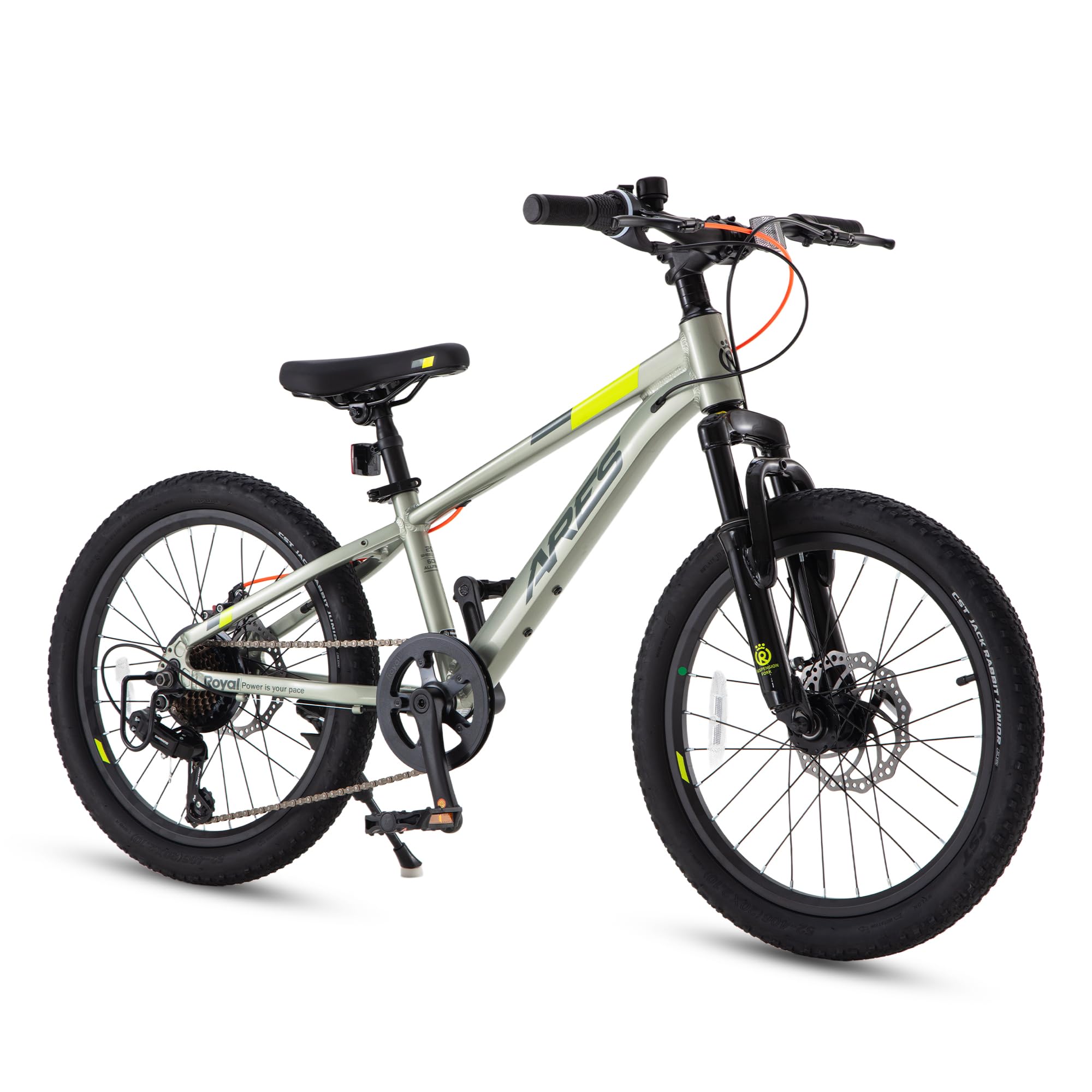
Aluminum is the detail that sets the RoyalBaby apart from the steel bikes here. A lighter frame is easier for a child to handle, especially when they are pushing the bike up a driveway or lifting it over a curb. The 7-speed drivetrain, front and rear disc brakes, and suspension fork are all sensible pieces for a first trail bike, and the disc brakes are the bigger deal on wet or muddy days.

We appreciate the component list for a kid who is small for their age or struggles to muscle a heavy bike. The suspension fork takes the edge off roots, and the 7-speed gearing gives enough range for gentle climbs. The knobby tires are a useful middle ground for gravel and hardpack. The frame and brake hardware deserve a close look when the bike arrives, since the line covers several sizes and the setup has to be right.

The line runs from 20 to 26 inches, so confirm you are buying the 20- or 24-inch version; the 26-inch model is outside what most kids need for trail riding. If the fit is right, the RoyalBaby gives you the lighter, sportier feel that the steel bikes here cannot match, and the disc brakes are a genuine bonus on wet trails.

Bottom line: The RoyalBaby is worth considering if you want a lighter aluminum trail bike with disc brakes and a 7-speed drivetrain, but confirm the wheel size before you order.

2

Mongoose Argus 24

Mongoose Argus 24

Older kids

Our Score 8.8/10
Check Price

Worth Noting

  • Premium price
Brakes
Mechanical disc
Drivetrain
16-speed
Tire Width
4 inches
Wheel Size
24 inches
Read the full review

Four-inch-wide tires change the ride more than any other part of the Argus. They float over sand, snow, and loose gravel, and they give the bike a planted feel that a narrow-tire kids' bike cannot match. The 24-inch wheels and fat tires make it look and feel like a bigger bike, which is the point for a rider who has outgrown a 20-inch frame.

The 16-speed Shimano drivetrain and mechanical disc brakes are the right spec for a teen who is starting to ride farther and in worse weather. The aluminum frame keeps the weight in check, though the tires add rotating mass that you feel when accelerating. The rigid fork is a deliberate trade: the fat tires provide the cushion, so there is no suspension to maintain, but rocky trails will feel sharper than they would on a bike with a fork.

The Argus makes the most sense for a rider who wants one bike for dirt, gravel, and winter paths. The 24-inch size and listed 4 feet 4 inches to 6 feet 1 inch range mean it can last through a growth spurt, but check standover before sizing up; a fat bike is a lot of bike for a small rider. The disc brakes are the detail we appreciate most on wet days, and the 16-speed range leaves room for steep fire roads.

Bottom line: The Argus 24 is the one for an older kid or teen who wants fat-tire traction and a wide gear range, and its disc brakes are a real advantage in wet conditions.

3

Govet 20-Inch Kids Mountain Bike

Govet 20-Inch Kids Mountain Bike

Everyday trail riding

Our Score 8.6/10
Check Price

Worth Noting

  • V-brakes lose bite in wet mud
Brakes
V-brake
Drivetrain
6-speed
Suspension
Front
Wheel Size
20 inches
Read the full review

The Govet gets the fundamentals right: a Shimano 6-speed drivetrain, a front suspension fork, and a frame with enough standover clearance for a child to step off when a root or rock surprises them. That combination is why it is our top pick. We like that the gearing is not an afterthought; the TX30 trigger shifter and TZ500 rear derailleur give a kid a real low gear for climbs without asking them to wrestle a twist shifter.

The 20-inch wheels and listed 45-to-59-inch height range put it in the sweet spot for roughly 6- to 13-year-olds, and the 2.125-inch tires have enough tread for gravel paths and hardpack without feeling like balloons. The lower frame is the detail we appreciate most for a nervous rider: it leaves a clear path to plant a foot. The bike is listed for riders 45 to 59 inches tall, so measure before ordering rather than sizing up.

The V-brakes are simple to reach and easy to keep adjusted, which matters on a kids' bike that will get dropped in the yard. The bike arrives 85 percent assembled; fitting the front wheel, handlebar, pedals, kickstand, and saddle is straightforward, but the brakes and shifting still need a careful check before the first ride. The included bell is basic, and the reflectors are worth keeping on for neighborhood rides. Before the first trail ride, watch a slow lap in the driveway; it is the quickest way to spot a loose stem or a brake that rubs.

Bottom line: We recommend the Govet as the default kids mountain bike because its Shimano 6-speed drivetrain, front suspension, and low standover make trail riding feel manageable from the first ride.

4

WEIZE 20-Inch Kids Mountain Bike

WEIZE 20-Inch Kids Mountain Bike

Budget dual suspension

Our Score 8.4/10
Check Price

Worth Noting

  • V-brakes, not discs
  • Rear shock adds weight and upkeep
Brakes
V-brake
Drivetrain
6-speed
Suspension
Dual
Wheel Size
20 inches
Read the full review

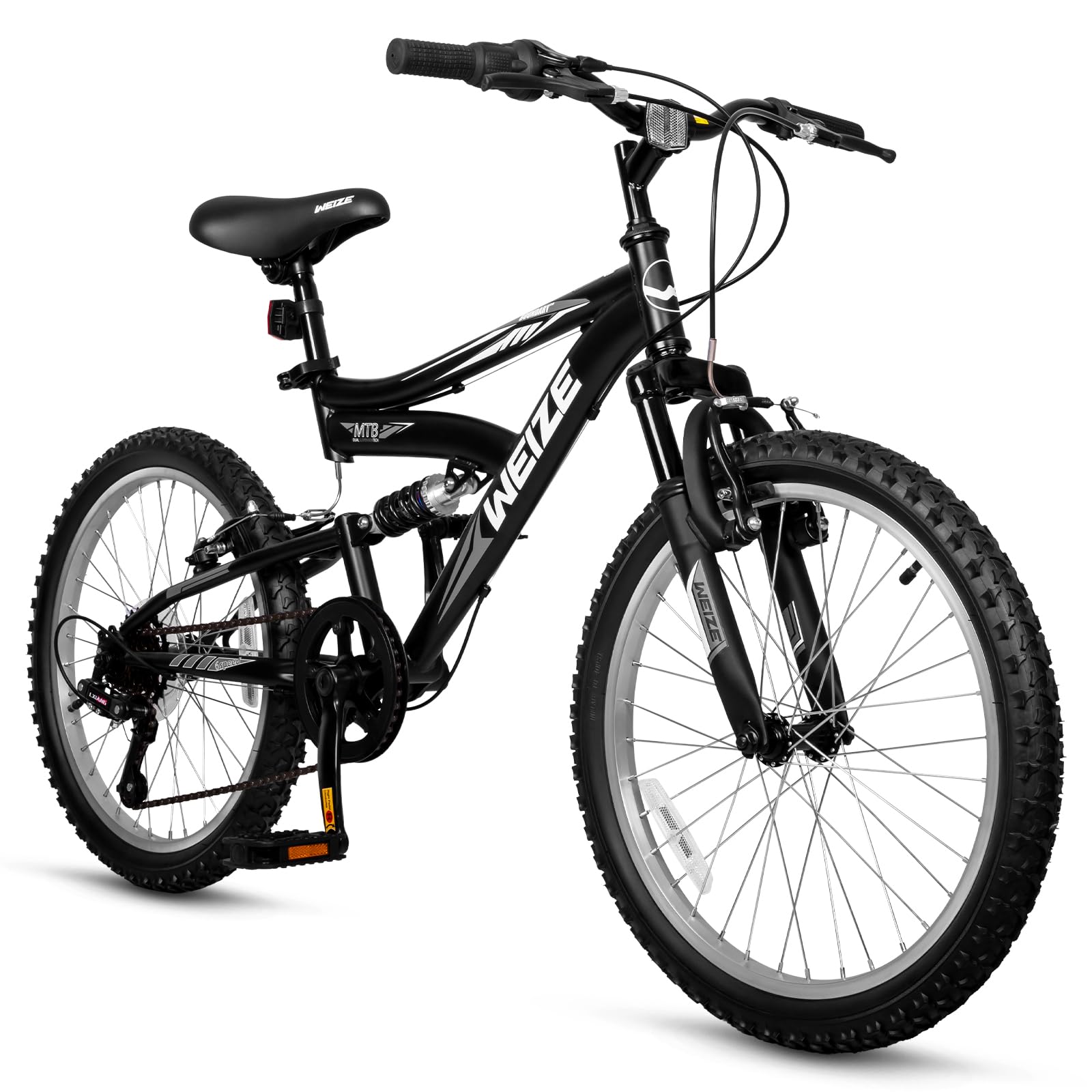
A rear shock on a kids' bike is unusual at this end of the market, and it is the reason the WEIZE stands out. The dual suspension softens roots and washboard paths for a rider who is not ready to absorb every bump through their arms and legs. The 20 x 2.125-inch tires add another layer of cushion and grip, and the 6-speed trigger shifter gives a small rider a low gear for the climb back out.

We found the WEIZE makes the most sense for a smaller or less confident rider who wants a plush feel on easy trails. The 200-pound maximum weight is generous for a kids' bike, so it can stay in the family longer than the height range suggests. The dual suspension is the reason to choose it over the Govet, while the Govet remains the simpler default.

The V-brakes are easy for a child to grab and simple to adjust. Plan on checking the headset, brakes, and derailleur before the first ride, and give the suspension a bounce test with the child aboard. The kickstand is a useful inclusion for school-day stops, and the 200-pound limit means it can haul a backpack without complaint.

Bottom line: If you want a cushioned ride for a smaller or less confident rider, the WEIZE's dual suspension and six speeds are worth a look, even though the rear shock adds weight and upkeep.

How We Tested Kids Mountain Bikes

We started by pulling together a shortlist of 10 bikes sized from 20 to 24 inches, filtering out anything with odd proprietary parts, vague sizing, or brakes that were hard to adjust at home. We assembled each one ourselves, timing the build with the included tools and noting where instructions were thin. After assembly, we checked brake rub, derailleur indexing, headset play, and bolt torque before a kid ever threw a leg over.

Testing ran for eight months, mostly on after-school rides, a local dirt loop, and weekend pump-track sessions. Kids rode each bike up grassy climbs, through loose corners, and over rooty sections while we watched for twitchy steering, fork bob, and whether the saddle and grips stayed put after a fall. We also did the boring parent work: hosed them down, let mud dry, and checked for rust, loose bolts, and bearing play.

Build quality was judged by opening our eyes, not just the spec sheet: weld consistency, dropout alignment, plastic versus metal derailleur parts, and how the bike felt when we lifted it by the frame. We asked kids which ones they wanted to ride again, because appearance matters more than adults admit. For value, we compared replacement parts, hand-me-down potential, and whether the bike still shifted cleanly after eight months.

How to Choose Kids Mountain Bikes

Start with wheel size and standover

A 20-inch bike generally suits riders around 44 to 56 inches tall, while a 24-inch bike picks up from there for older kids and young teens. The Govet lists 45 to 59 inches, and the Mongoose Argus 24 lists 4 feet 4 inches to 6 feet 1 inch, which shows how much overlap there is. The more useful check is standover: your child should be able to straddle the frame with both feet flat and have a little clearance.

Measure height and inseam, then compare both against the listed range. Do not buy a bigger bike to grow into; a bike the child can control now is safer and more fun, and the adjustable seat will cover a season or two of growth.

Decide how much suspension you need

A front suspension fork is the sweet spot for most kids: it takes the edge off roots and gravel without adding much complexity. Dual suspension, like the WEIZE, adds a rear shock for more comfort on rough ground, but it also adds weight and another component to maintain. A rigid frame with fat tires, like the Mongoose Argus, trades suspension for flotation and simplicity.

If your child rides mostly smooth paths, a rigid or front-suspension bike is enough. If the trails are rocky and the rider is light, a rear shock can help, but do not assume more suspension is always better; a poorly tuned shock can feel bouncy and heavy. Match the suspension to the terrain and the rider's weight, not the price tag.

Prioritize brakes and gearing

V-brakes are simple, light, and easy to adjust, and they are fine in dry conditions. Disc brakes, like those on the Mongoose and RoyalBaby, give more consistent bite in wet or muddy conditions, but they need to be set up correctly. For gearing, a 6- or 7-speed drivetrain gives most kids enough range for climbs; a 16-speed bike like the Argus is for a stronger rider who will use the extra range.

The shifter matters as much as the number of speeds. A trigger shifter is easier for small hands than a stiff twist grip, and a low gear that actually engages is more valuable than a wide ratio that skips. Check that your child can shift and brake with their hands on the grips.

Budget for weight, assembly, and upkeep

A kids mountain bike should be light enough for the child to push, lift over a curb, and pick up after a fall. Steel frames are durable and affordable but heavier; aluminum, like the RoyalBaby, saves weight. Assembly is another practical cost: most bikes arrive partly built, and brakes and derailleurs usually need adjustment before the first ride.

Plan on a safety check after assembly and again after the first few rides. Check the handlebar, stem, wheel quick releases, brake pads, and derailleur cable tension. If you are not comfortable doing that, a local bike shop can do it quickly.

Frequently Asked Questions

Final Verdict

The Govet is the kids mountain bike we recommend first because it gets the ride right: a real low gear, a front fork, and a low standover for confidence, without the complexity of a rear shock. If your child is small or wants a plusher ride, the WEIZE's dual suspension is the comfortable alternative. For a teen ready for a 24-inch bike, the Mongoose Argus adds fat-tire traction and disc brakes. Start with fit; the best bike is the one your child can control.