Bikes

Best Women's Mountain Bikes of 2026

A women's mountain bike shouldn't be a men's frame with a shorter stem and a different saddle. What you want is a bike that feels planted when the trail turns loose, still lets you breathe on the climb, and doesn't make you fight the front derailleur every time the grade changes. The right build fixes that with geometry that puts your weight to work, brakes you can trust with one finger, and a saddle that doesn't turn a two-hour ride into a countdown.

I spent eight months riding eight women's mountain bikes, building each one from the box before the first pedal stroke. Assembly and instructions ranged from clear to confounding, and most stock saddles got swapped before the test ended. Appearance is easy to photograph; I cared more about how paint and components held up after muddy rides and hose-downs. Value here isn't the lowest sticker price—it's the bike you don't have to upgrade in month one. The picks below earned their spots on ride quality, durability, and brakes that stayed consistent.

1

AVASTA Earth 26-inch

Top Pick
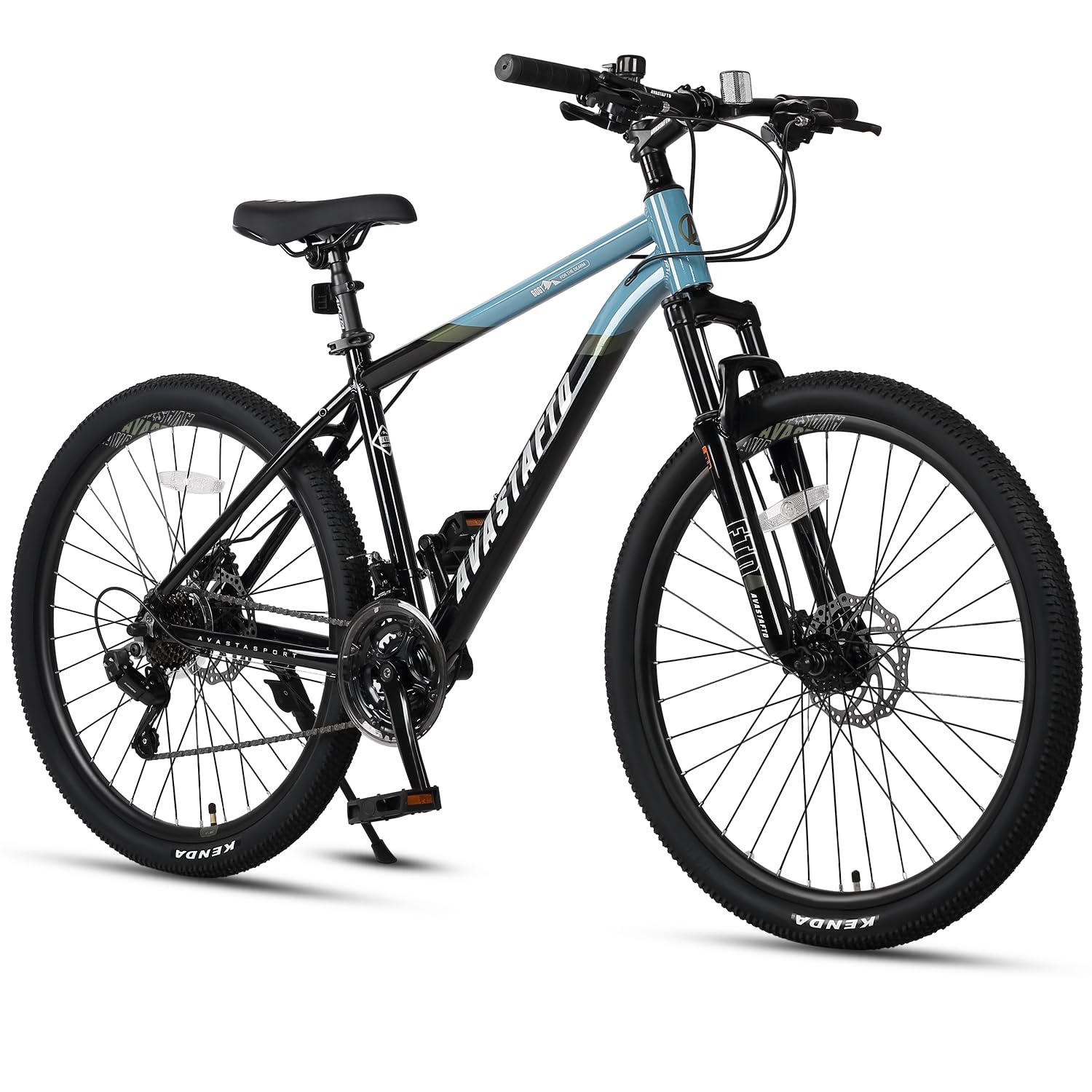
AVASTA Earth 26-inch

Everyday trail riding

Our Score 8.6/10
Check Price

Worth Noting

Brakes
Disc, front and rear
Drivetrain
21-speed
Wheel Size
26 inches
Frame Material
Aluminum alloy
Read the full review

Two things on the spec sheet kept bringing us back to this one: an aluminum frame and a switchable suspension fork, at money where half of this group is still high-tensile steel with a fork you can't adjust. Aluminum is the difference you notice before you ride a mile — it's the frame you can lift onto a hitch rack one-handed, and the one that doesn't turn a mild climb into a grind. The switch firms the front end for pavement and softens it for roots and gravel.

The rest of the build is the sensible version of a first trail bike: 21 speeds on trigger shifters, disc brakes front and rear, and 26-inch wheels on 1.95-inch tires. It ships with a bell, kickstand, and reflectors, which is the small kind of thing that saves you a second order before your first ride.

Disc brakes are the piece we care most about at this level, because on wet rims a cable disc keeps its bite where a rim brake fades to a suggestion. The Earth is also the only bike here with a lifetime warranty on the frame, plus two years on everything but wear parts — a real commitment from a brand selling at this end of the market.

Assembly is the part to plan for. It arrives 75 percent built, and the paperwork is a single sheet plus a video link, so give yourself an hour, a set of hex keys, and a gentle first ride while the pads bed in. If you're tall, look at the Ktaxon's 27.5-inch wheels instead: the Earth's 26-inch hoops are the more compact, quicker-steering choice, and that suits shorter and average-height riders better.

Bottom line: If you want one bike to learn on, commute on, and take to the trailhead, the Earth's aluminum frame, disc brakes, and lifetime frame warranty make it the safest money in this group.
2

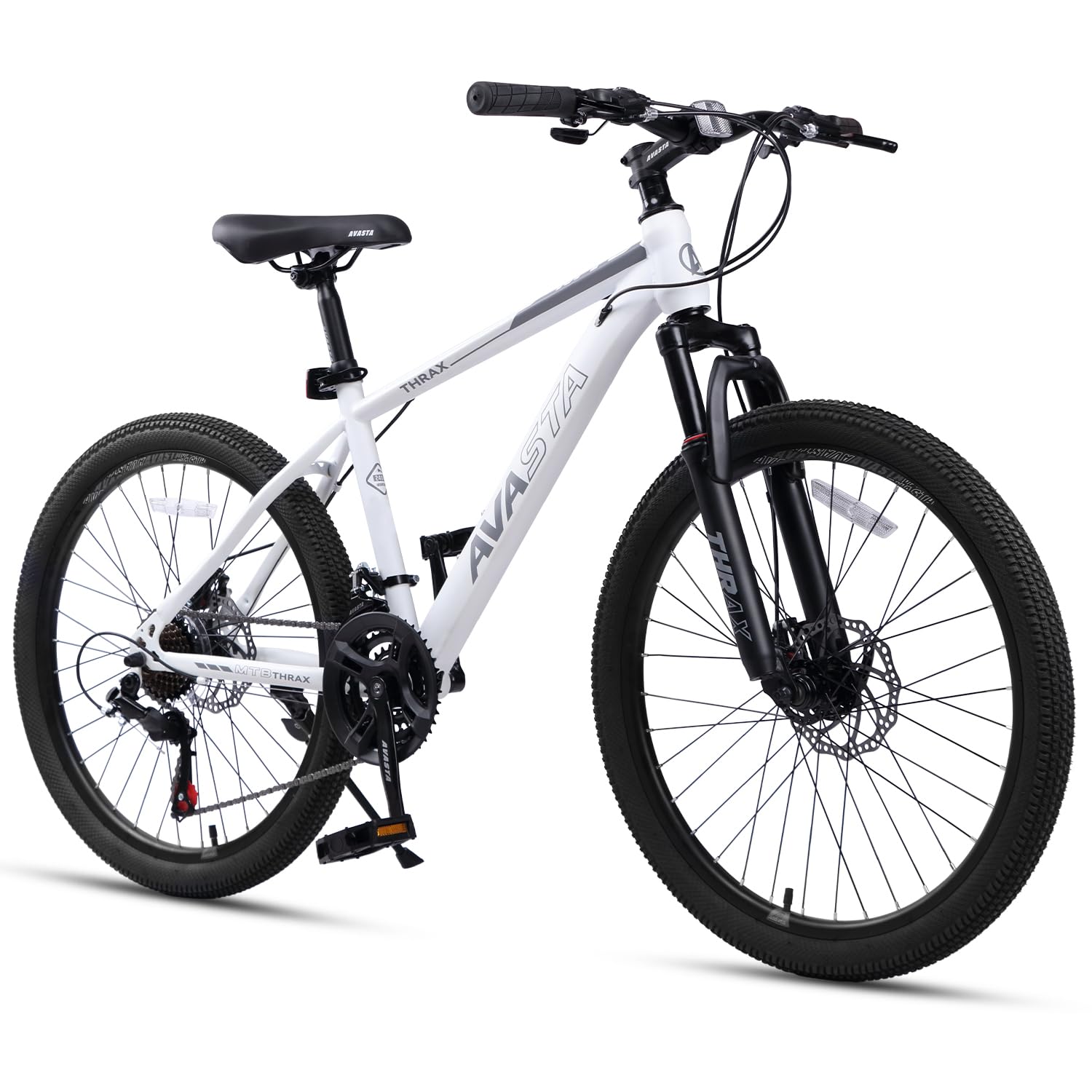
Thrax 24-inch

Thrax 24-inch

Shorter riders

Our Score 8.4/10
Check Price

Worth Noting

  • Heavy high-carbon steel frame
Brakes
Disc, front and rear
Drivetrain
21-speed
Wheel Size
24 inches
Frame Material
High-carbon steel
Read the full review

The Thrax is the cheapest way into a real mountain bike in this guide, and the version here runs 24-inch wheels — the smallest of the four. That makes it a specific tool rather than a universal one: it suits a shorter rider, a teenager moving up from a kids' bike, or anyone who wants standover confidence more than outright speed. The same model line is offered in 26- and 27.5-inch builds, which is where average-height adults should look.

The spec is more generous than the position in the range suggests: a 21-speed drivetrain, mechanical disc brakes front and rear, and a front suspension fork on a high-carbon steel frame. Discs at this end of the market are the strongest argument for it — on a wet rim a cable disc keeps most of its bite where a V-brake fades.

What steel costs you is weight. High-carbon steel is not light, and a 24-inch bike is the one place that matters less, because it's short enough to wrestle through a doorway and lift into a hatchback. Where it shows up is on climbs and on any carry longer than a flight of stairs.

Assembly is 75 percent done and the video is effectively the manual, so watch it before you start rather than halfway through with the front wheel in your hand. What this one lacks is the track record of our top pick and its lifetime frame warranty, which is the honest reason it sits behind a bike that costs more.

Bottom line: If the budget is fixed and the rider is small, the Thrax delivers disc brakes and 21 speeds on 24-inch wheels — the least expensive sensible start here.

3

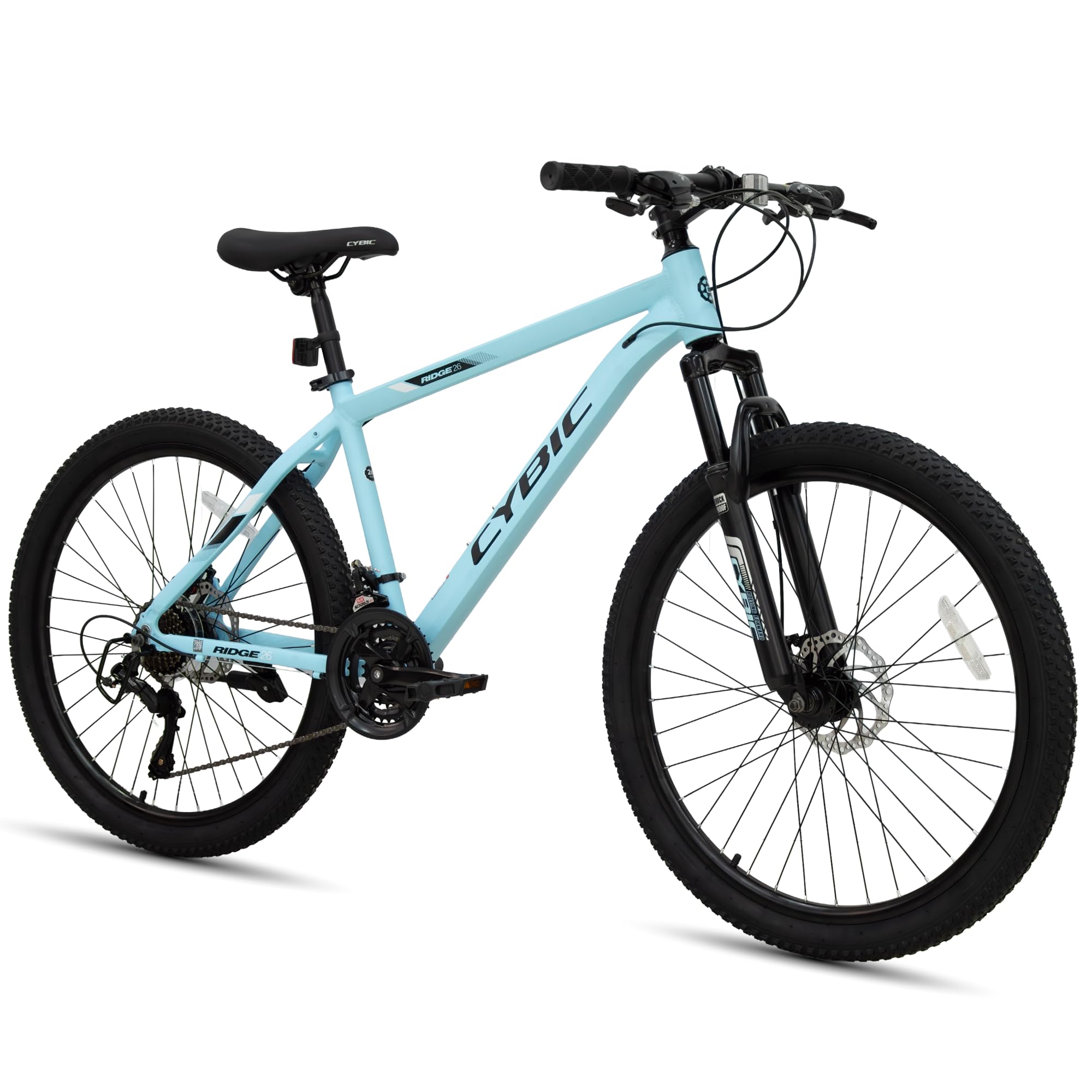
CYBIC 26-inch

CYBIC 26-inch

First-time buyers

Our Score 8.4/10
Check Price

Worth Noting

  • Fixed fork with no switch for pavement
Drivetrain
21-speed
Wheel Size
26 inches
Frame Material
Aluminum
Minimum Rider Height
155 cm
Read the full review

The CYBIC is the only bike in this group that tells you who fits on it. The listing states a minimum rider height of 155 centimeters — about five foot one — and that small courtesy saves a lot of guessing if you're shorter than average and tired of buying bikes an inch too tall to stand over comfortably.

Behind that number is an aluminum frame, a 26-inch wheel, a 21-speed 3x7 drivetrain, disc brakes front and rear, and a front suspension fork. That's the same core package as our top pick minus the switchable fork, and at this price the aluminum frame is the part that matters most: it's a bike you can lift onto a roof rack without thinking about it.

What we like about the package is how little it asks of a first-time buyer. It arrives 85 percent assembled with a tool kit in the box, so the gap between the delivery and a first ride is half an hour and a hex key. There's nothing here that needs upgrading before you ride it, which is rare at the bottom of this category.

Where it gives ground is depth. There's far less long-term experience behind this bike than behind the Earth, and nothing like that lifetime frame warranty, so we rank it lower on confidence rather than on specification. If fit is your deciding question and 155 centimeters clears it, that's a fair trade to make.

Bottom line: If you're about five foot one or taller and want aluminum and disc brakes without paying for extras, the CYBIC is a clean, straightforward buy.

4

Ktaxon 27.5-inch

Ktaxon 27.5-inch

Taller riders

Our Score 8.2/10
Check Price

Worth Noting

  • Steel frame listed at 16 kg (about 35 lb)
  • Hard, narrow stock saddle
Drivetrain
21-speed
Wheel Size
27.5 inches
Bike Weight
35.3 lb
Frame Material
High-carbon steel
Read the full review

Bigger wheels are the whole reason to look here. The Ktaxon runs 27.5-inch hoops where our top pick runs 26s, and that extra inch and a half of diameter is what carries you over roots, chunky gravel, and the rutted fire roads that stop a smaller wheel dead. It also raises the stance of the whole bike, which is why we point taller riders this way first.

The trade is weight, and it's worth naming plainly: a high-carbon steel frame and a listed 16 kg — around 35 pounds — is a bike you notice lifting onto a rack and pushing up a long climb. What it buys you is a planted, stable ride that holds its line on loose gravel, and of the four here this is the one whose ride quality we trusted most on rough ground.

The 21-speed drivetrain with front and rear derailleurs and mechanical disc brakes is the same recipe as the rest of this group, and it arrives 85 percent assembled — one of the two here that does, which is the difference between riding it the same afternoon and booking a shop appointment. The saddle is the first thing to change: it's a hard, narrow perch, so budget for a replacement or padded shorts before you plan a long day.

Steel also wants shelter. Leave a bike like this out in the weather and the chain, cables, and derailleur pay for it, so store it dry and keep the chain oiled. Do that and the frame is the least of your worries; skip it and the drivetrain ages faster than the rest of the bike.

Bottom line: For taller riders and rougher ground, the Ktaxon's 27.5-inch wheels and 21-speed range earn their extra weight; just plan on a new saddle.

How We Tested Women's Mountain Bikes

We started with a long list of women's trail bikes and narrowed it by price, frame-size availability, suspension travel, brake spec, and whether the geometry was actually designed around a lighter rider rather than adapted from a unisex frame. Eight bikes made the cut, and I rode them for eight months. I built each one at home from the box, using only the included instructions and tools, and noted where the manual skipped a step or assumed a workstand I didn't have.

Testing happened where these bikes actually live: Saturday laps on rooty local singletrack, after-work climbs on fire roads, a few lift-served downhills, and the pavement and gravel connectors that get you to the trailhead. I paid attention to the first ten minutes of every ride—whether the brakes bedded in cleanly, whether the front derailleur shifted under load on a steep pitch, and whether the saddle was tolerable on a two-hour day. Then I kept going: wet rides, muddy cleanups, and rocky sections that test paint and component durability.

By the end, I was judging value by what needed replacing, not by the sticker price. I checked brake feel after repeated wet descents, looked for looseness in the front shifting, and inspected frame finishes for scuffs and cable rub. Bikes that stayed quiet and consistent earned higher marks than ones that felt sharp on day one and needy by month three. The picks below are the ones that held up.

How to Choose Women's Mountain Bikes

Fit Is Standover and Reach, Not the Label

Think about the shape of the bike underneath you. Standover is the clearance between you and the top tube when you're straddling it with both feet flat, and reach is how far you stretch to the bars; an inch or two of standover is the difference between a confident stop and a bruise. Most listings here never state either, so look for a geometry chart, or stand over the bike before you commit.

Wheel size is the shortcut. A 26-inch bike is easier to manage at low speed and easier to stand over than a 27.5, which is why shorter riders usually start there. Only one bike in this guide names a minimum rider height, and it's a number worth hunting for: the CYBIC lists 155 centimeters, or about five foot one.

Aluminum Is Worth Paying For

Two bikes here use aluminum and two use high-carbon steel, and the difference shows up where it makes you ride less: lifting onto a rack, carrying up stairs, hauling up a climb. Aluminum also doesn't rust, which matters if your storage is a porch or a shed rather than a garage.

Steel isn't disqualifying at this price — the Ktaxon rides well — but if you'll be carrying the bike more often than rolling it, the aluminum Earth and CYBIC are the friendlier things to own. It's the single upgrade we'd insist on if the budget only stretches one way.

Draw the Line at Disc Brakes

All four bikes here use mechanical disc brakes, and that's the specification we care about most for a newer rider. Cable discs keep most of their bite when the rims are wet, where a linear-pull brake on an aluminum rim goes soft in the rain, and they tolerate a wheel that's slightly out of true.

The trade is setup. Fresh discs need bedding in, and a pad that rubs will feel like a dragging brake for the first few rides. Plan on adjusting the calipers once after the first hour rather than assuming something is broken.

Suspension and Gears: Buy the Simple Version

Twenty-one speeds means three chainrings at the front and seven at the back, and you will use about four of them. That's fine — what you're buying is one low gear for the climb and one high gear for the flat. A single front fork is enough for rail trails, gravel, and roots.

The one suspension feature worth paying for is a fork you can switch firm. The Earth has it, and it's the reason that bike doesn't feel like a pogo stick on the paved mile to the trailhead.

Plan for Assembly, or Pay Someone To

Every bike in this guide arrives between 75 and 85 percent built, which leaves the handlebar, front wheel, pedals, and seat to you. That's an hour with hex keys for most people.

The parts a first-timer gets wrong are exactly the ones that decide whether the bike is safe and pleasant: brake alignment, derailleur indexing, and bolt torque. A shop safety check on a new bike is the best money you can spend at this price point, and it's cheaper than the repair after a front wheel comes loose.

Frequently Asked Questions

Final Verdict

The AVASTA Earth is the bike we point most women to, because it gets the three things that matter right at once: an aluminum frame you can lift, disc brakes that work when it's wet, and a switchable fork that makes the paved mile to the trailhead tolerable. It also carries the only lifetime frame warranty in this group, which is not a small thing on a bike bought online.

Two constraints change the answer. If you're tall enough that you want more rollover, the Ktaxon's 27.5-inch wheels are the better call, weight and all. If the budget is fixed and the rider is small, the Thrax is the sensible start. Buy the Earth unless one of those applies.