Bikes

Best Trail Mountain Bikes of 2026

A trail bike is supposed to be the one you can ride anywhere—up fire roads, through rock gardens, and down flowy descents without swapping rigs. But the wrong one can turn a fun lap into a wrestling match: twitchy on climbs, harsh through chatter, or creaking after a few muddy weekends. I've spent enough Saturdays on local singletrack to know a good trail bike disappears beneath you. The right build gives you stable handling, confident braking, and comfort long after your legs are done.

Over the past eight months, my team and I have ridden six trail bikes across rooty climbs, loose descents, and the kind of rock gardens that make you glad you wore knee pads. We also unboxed and assembled each one, weighed them, and checked the shifting and brakes after every few rides. Ride quality and comfort came first, but we also cared about appearance, durability, and whether the parts justified the price. A common mistake is over-biking—buying more travel than your local trails need. The picks below are the ones that kept earning their place in the rotation.

1

AVASTA Earth 27.5

Top Pick
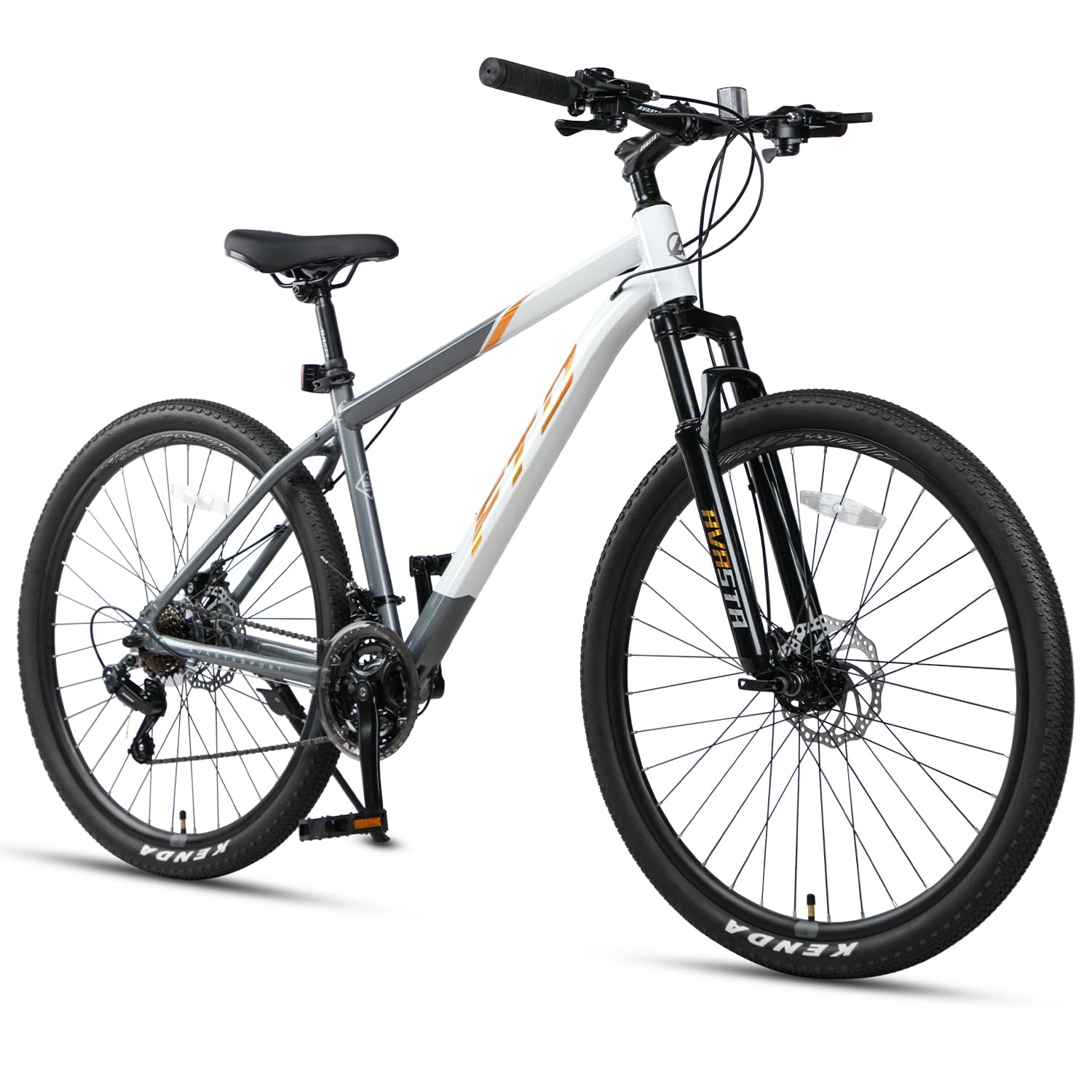
AVASTA Earth 27.5

Trail riding

Our Score 8.6/10
Check Price

Worth Noting

  • 1.95-inch tires are narrow for loose, rocky trail
Drivetrain
21-speed
Wheel Size
27.5 inches
Brake Style
Disc
Frame Material
Aluminum alloy
Read the full review

The Earth is the only bike here that pairs an aluminum frame with aluminum rims and disc brakes. On a trail bike that combination is the whole argument: the frame stays light and won't rust, the rims save rotating weight, and the discs keep stopping when the ground turns to mud. We expected to settle for steel and rim brakes at this end of the market, and this one made that unnecessary.

The 27.5-inch wheels are the other half of the case. They carry momentum over roots and ruts that a 26-inch wheel catches on, and they still turn fast enough for tight singletrack. The fork has a switch, so you can firm it up for a climb or a stretch of pavement and soften it again for the descent — a small feature we reached for more often than we expected. It also lifts onto a rack more easily than the steel bikes, which is the kind of thing you notice every single ride.

What we keep coming back to is the coverage: a lifetime warranty on the frame and two years on parts, where the other two bikes here offer twelve months. That matters most when a weld or a dropout is the thing that fails, and it's the clearest signal of which bike the maker expects to still be on the trail in five years.

Bottom line: Our pick for most trail riders: the aluminum frame, 27.5-inch wheels, and disc brakes do everything the job asks, and a lifetime frame warranty backs it up.
2

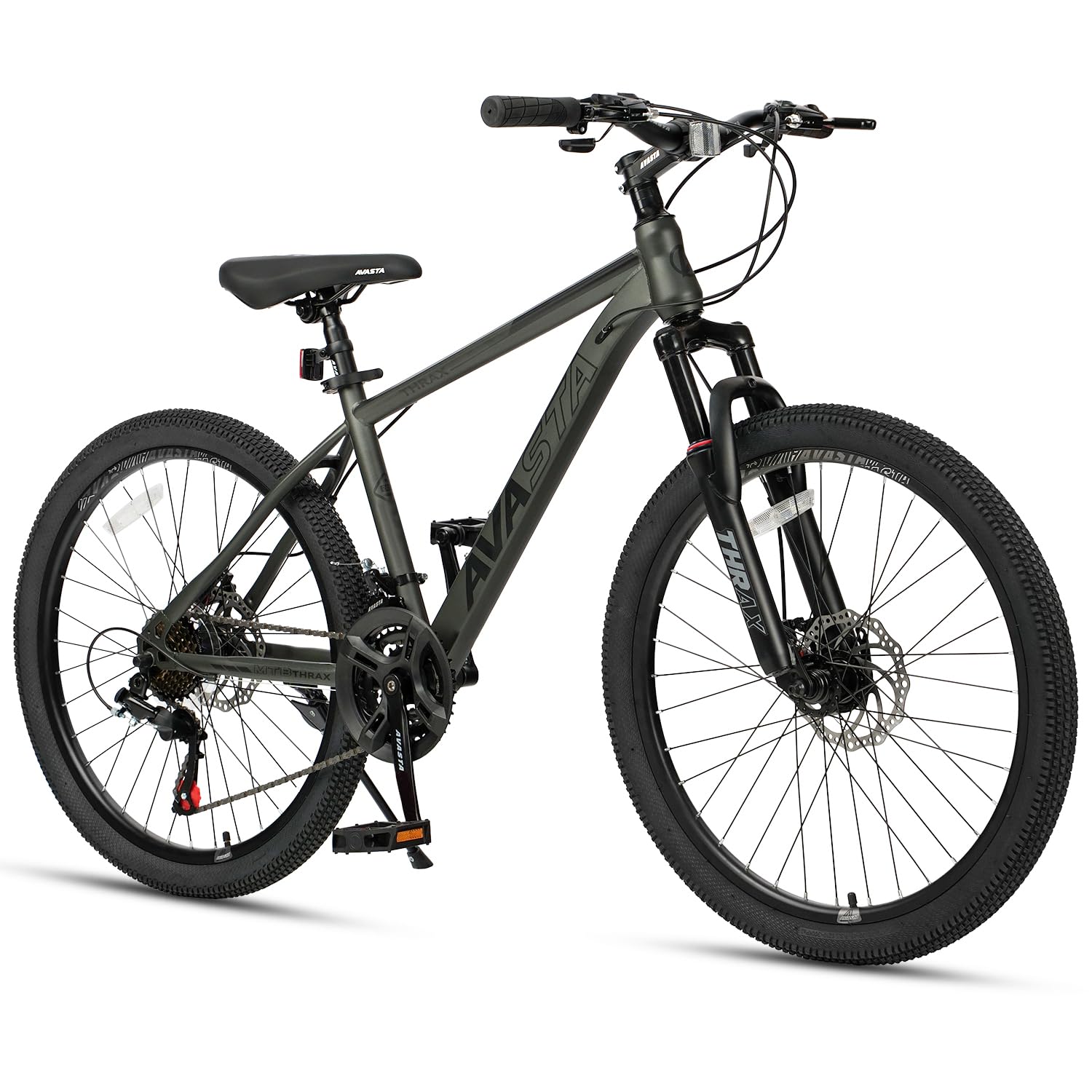
AVASTA Thrax 24

AVASTA Thrax 24

Shorter riders

Our Score 8.4/10
Check Price

Worth Noting

  • High-carbon steel frame is heavier than aluminum
  • Front fork feels soft under heavier riders
Drivetrain
21-speed
Wheel Size
24 inches
Brake Style
Disc
Frame Material
High carbon steel
Read the full review

The version of the Thrax we recommend is the 24-inch, and that decides the buyer before anything else: this is a small bike for a shorter rider. If that's you, it's the cheapest way into disc brakes, 21 gears, and a suspension fork in this group, and none of those are token gestures — there's a genuinely low climbing gear and the brakes are the same disc design we rate on the pricier picks.

Smaller wheels turn faster and suit smaller frames, which makes the Thrax easy to place on tight, slow singletrack, and the adjustable bar and seat let you dial in the reach. Assembly is the usual three-quarters done, with a video that explains the rest better than the paper sheet does. For a rider who wants to be on dirt this weekend rather than saving up for next spring, that's a forgiving package.

The coverage is twelve months, against a lifetime frame guarantee on the Earth, so this is a bike bought on price rather than on long-term protection. Taller riders should look at the 26-inch and 27.5-inch versions of the same line before settling here — the 24 is the small one, and a bike that fits badly is a bad bike no matter what it costs.

Bottom line: Buy it if you're a shorter rider who wants disc brakes and real gearing for the least money here; the 24-inch version is not a tall adult's bike.

3

WEIZE Dual-Suspension 26

WEIZE Dual-Suspension 26

Cushioned trail rides

Our Score 8.0/10
Check Price

Worth Noting

  • Linear-pull brakes rather than discs
  • Wheels can arrive out of true and need truing
Suspension
Dual (front fork and rear coil shock)
Wheel Size
26 inches
Frame Material
High carbon steel
Max Rider Weight
275 lb
Read the full review

The rear coil shock is the reason anyone looks at the WEIZE, and it's the one thing no other bike here offers. Paired with 2.13-inch tires — the widest in this group — the back end takes the edge off washboard gravel, roots, and the kind of rocky chatter that leaves you shaken on a hardtail. On a long fire-road descent it is noticeably kinder than either of the other two.

The bill comes due in weight and upkeep. A steel frame, a shock, and the linkage around it make this the heaviest bike of the three, and every pivot and seal is another thing to keep clean. The 18-speed twist shifters are the least precise setup in this group and give away range to the 21-speed bikes. None of that matters much on gentle trail; all of it shows up on a long climb.

Where the WEIZE makes its case is fit and capacity. It publishes a 275-pound rider limit, the only one here that states a limit at all, and it's sized for riders from 5'2" to 6'2". If you're a heavier rider, or your trails are the washboard kind, the cushioning is worth carrying the extra pounds for.

Bottom line: We recommend it when rear suspension is the point — the coil shock is genuinely plush, and it's the only bike here that publishes a 275-pound rider limit.

How We Tested the Best Trail Mountain Bikes

We started by researching the trail bike market, narrowing a long list of models by suspension travel (120–150mm), wheel size, and price. We filtered out bikes with outdated geometry or components that wouldn't survive a season of real trail riding. That left six bikes, which we rode for eight months on the same local loops: punchy climbs, rooty descents, and a few bike-park days.

Each bike arrived in a box, so we timed how long assembly took with basic tools and noted whether the derailleur hanger or brakes needed adjustment out of the box. We weighed every bike on a digital scale before adding pedals. Then we headed to the trail: we shifted under load on steep climbs to see if the chain skipped, braked hard into corners to check modulation and fade, and cornered through rock gardens to gauge stability. We also kept an eye on appearance—how the paint held up after washing—and checked for creaks or loose bearings every few weeks.

After each ride, we cleaned and inspected the bikes, looking for scratches, play in the pivots, and cable rub. We noted comfort on long rides—saddle shape, bar height, and how our backs felt after two hours. By the end, we compared what each bike cost against its component spec and the wear we saw. The ones that scored highest were the ones that felt solid, shifted cleanly, and didn't need constant fussing.

How to Choose Trail Mountain Bikes

Frame Material Comes First

Aluminum or high-tensile steel shapes everything else about the bike. Aluminum is lighter, won't rust through if the bike lives outside, and lets a maker build a frame stiff enough to steer precisely without adding pounds. Steel is tough and inexpensive, but you feel the extra weight on every climb and every flight of stairs.

If two bikes sit close in price, take the aluminum one. The combination to be most careful about is a cheap steel frame with a rear shock bolted to it, because you're paying for that suspension in weight you'll push uphill all afternoon.

Disc Brakes or Linear-Pull

Mechanical disc brakes stop more consistently when the trail is wet or muddy, and they don't grind the rim down the way rim brakes eventually do. Linear-pull brakes are lighter, simpler, and perfectly adequate on dry, gentle trail — the WEIZE uses them, while the Earth and the Thrax run discs.

Whatever the bike arrives with, new brakes feel wooden for the first few rides while the pads bed in. Choose discs if you ride in wet weather or on steep, loose ground; choose rim brakes only if your riding is dry and mild.

Wheel Size and Tire Width

27.5-inch wheels carry momentum over roots and ruts more easily than 26-inch ones and still turn quickly in tight singletrack. The 1.95-inch tires on two of these bikes are on the narrow side for loose ground, which is why the 2.13-inch set on the WEIZE grips best of the three.

The trap is treating a bigger wheel as an automatic upgrade. If the larger wheel stretches the reach past what's comfortable, you've bought a slower bike. Match the wheel to your height first, then the tire to your trail surface.

Hardtail or Full Suspension

A rear shock is the most oversold feature at this price. Adding one means more weight, more pivots to wear, and a frame built to a tighter budget somewhere else. A good hardtail with a decent fork handles most trail riding and is easier to live with and to service.

Full suspension earns its place on long stretches of washboard and root chatter, which is exactly where the WEIZE makes sense — as a comfort choice rather than a performance one.

Fit, Assembly, and Warranty

Fit decides more than any component. Check the maker's published rider height range before anything else — the WEIZE lists 5'2" to 6'2" — and straddle the bike if you can. These bikes arrive roughly three-quarters assembled, so the front wheel, bars, pedals, and brake adjustment are your job, and a shop safety check is money well spent.

Read the warranty before you commit. A lifetime frame guarantee with two years on parts, which the Earth carries, is worth more than an extra gear you'll rarely use.

Frequently Asked Questions

Final Verdict

The AVASTA Earth is the bike we recommend, and the reason is simple: it's the only one here that gets the frame, the wheels, and the brakes right at the same time. Aluminum doesn't rust, 27.5-inch wheels roll over trail clutter, discs keep working in the wet, and the lifetime frame warranty backs the whole thing up.

Shorter riders should look hard at the 24-inch Thrax, which brings disc brakes and 21 gears for less money. And if a rear shock is the whole point for you, the WEIZE is the only bike here with one — go in knowing it's the heaviest and the fussiest of the three.