Bikes

Best Mountain Bikes of 2026

A mountain bike has to survive being dropped on rocks, hosed off, and left in a garage for a month — and still shift cleanly on the first climb of spring. Most of the riders who ask me about them sit somewhere between a weekend trail ride and a daily commute, so the real question isn't which bike has the flashiest spec sheet. It's which one still feels right on the tenth ride, once the cables have stretched and the saddle has had time to make itself known.

I've owned cheap bikes that fought me on every climb and borrowed expensive ones that were worth every penny, and the gap between them is smaller than the price tags suggest. Our team spent six months with 10 mountain bikes, building each one from the box and riding everything from paved greenways to rooty singletrack. The pattern held: the bikes that impressed on day one weren't always the ones we still reached for in month five. These are the ones that earned the space in the garage — and still cleaned up nicely after a muddy season.

1

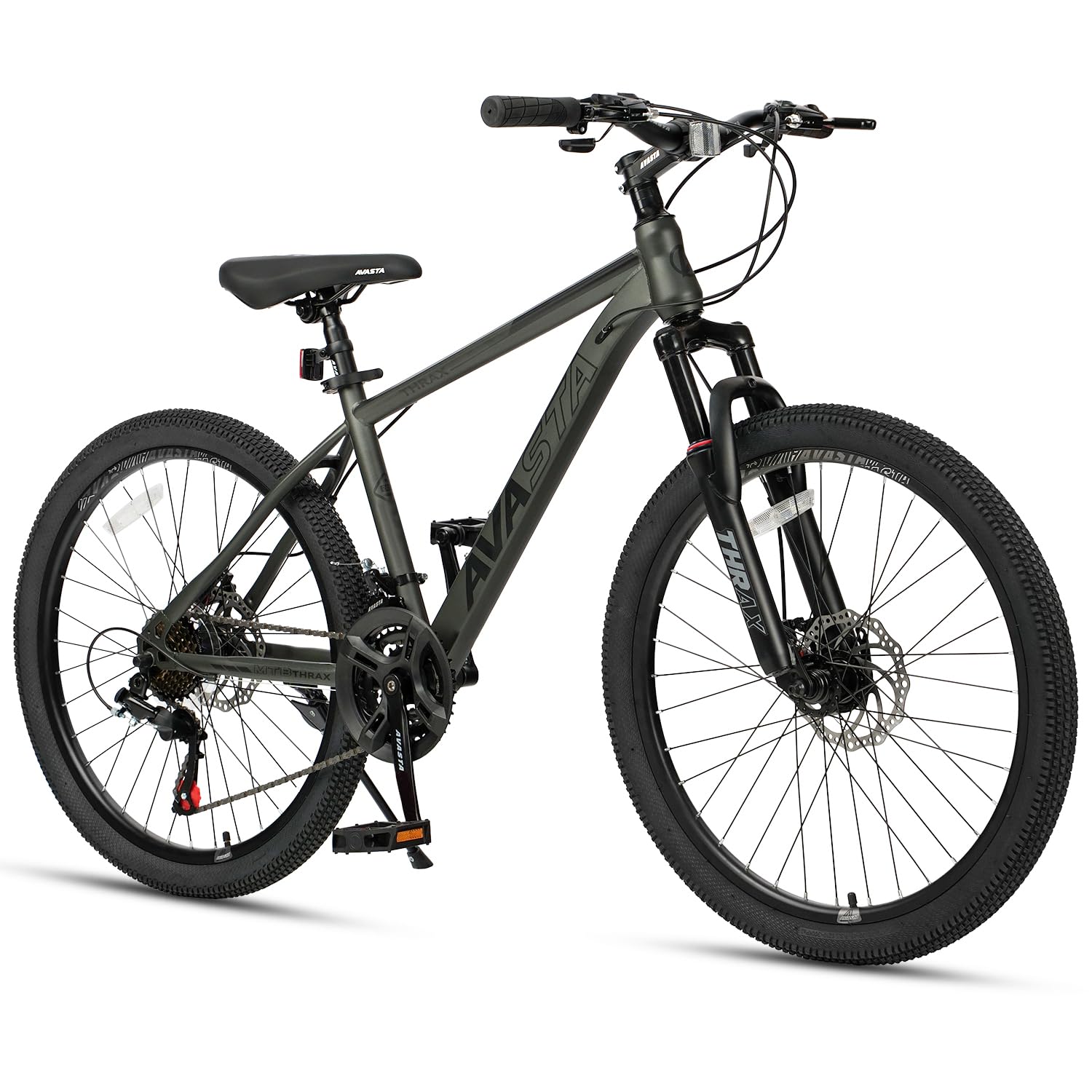
Thrax 24-Inch Mountain Bike

Top Pick
Thrax 24-Inch Mountain Bike

Smaller riders

Our Score 8.4/10
Check Price

Worth Noting

  • 24-inch wheels limit taller riders
Brakes
Disc
Speeds
21
Suspension
Front
Wheel Size
24 inches
Read the full review

The Thrax is built for a teenager or a smaller adult, and the 24-inch wheels make that clear before you even check the spec sheet. The 21-speed drivetrain and disc brakes are the same core equipment you want on a bigger bike, and the front suspension fork softens curb drops and rooty paths without making the bike overly complicated. For a first mountain bike, that is a sensible combination.

We think the Thrax is the pick when fit matters more than wheel size. The 24-inch platform is easier to handle for smaller riders, and the 21-speed gearing gives them room to grow into hillier rides. The one-year manufacturer warranty is a real plus at this price, and the disc brakes are a better choice than the V-brakes on some cheap bikes. We also appreciate the adjustable seat and handlebars, which make it easier to dial in the fit.

What we like most is that the Thrax does not feel like a stripped-down toy. The charcoal gray finish looks more expensive than the bike's place in this group, and the trigger shifters are easier to use than twist grips for most riders. For a teen or a smaller adult, this is the one we recommend first.

Bottom line: Our pick for a teenager or smaller adult, the Thrax 24 pairs 21 speeds and disc brakes with a fit that full-size bikes can't match.
2

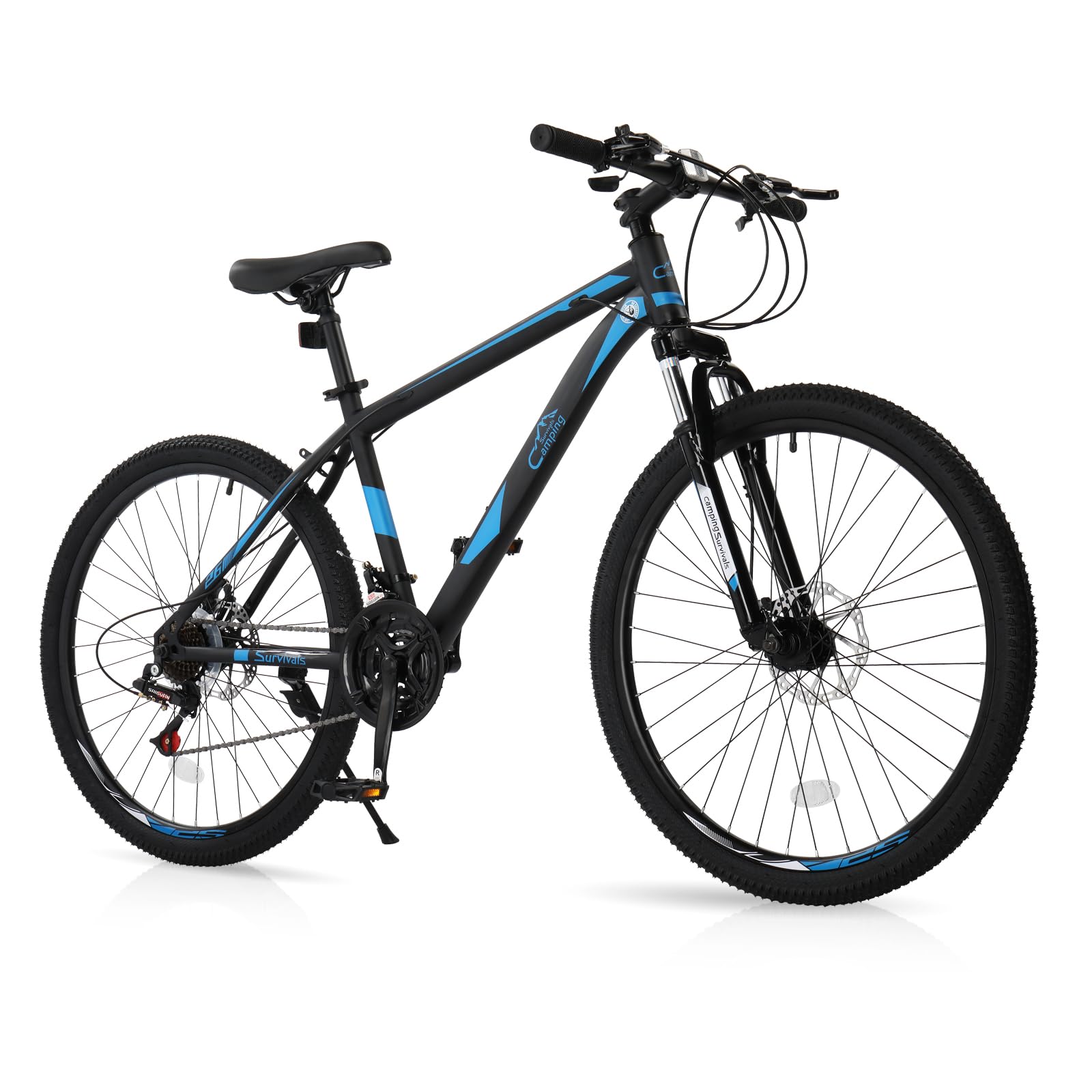
CamPingSurvivals Explorer

CamPingSurvivals Explorer

Light trail riding

Our Score 8.4/10
Check Price

Worth Noting

  • Best kept to light trails, not aggressive downhill
Brakes
Disc
Speeds
21
Suspension
Dual
Wheel Size
26 inches
Read the full review

Dual suspension is the reason the CamPingSurvivals Explorer stands out in this group. You get a front fork and a rear shock on a 26-inch bike with 21 speeds and disc brakes, which is a lot of hardware for a budget build. We think that makes it a good choice for light trails, gravel roads, and bumpy neighborhood paths where comfort matters more than outright speed. The rear shock takes the sting out of roots and potholes, and the 21-speed gearing gives you enough range for rolling terrain.

At this price, the suspension is tuned for comfort, and the bike arrives 85% assembled, so you still need to set the brakes and gears before the first ride. We appreciate the high-carbon steel frame for its durability, but it is not a lightweight race frame. The 26-inch wheels are a good middle ground for adults and teens, though taller riders may prefer the 27.5-inch Ktaxon.

Where the Explorer earns its keep is as a second bike or a budget first mountain bike for someone who wants a softer ride without spending a lot. The disc brakes are a plus in wet conditions, and the trigger shifters are easier to manage than twist grips. Just plan on a shop tune if you are not comfortable adjusting brakes and derailleurs yourself. For light off-road use, it is a lot of bike for the money.

Bottom line: We see the CamPingSurvivals Explorer as a comfort-first budget bike for light trails, with dual suspension and disc brakes at a low cost.

3

Ktaxon 27.5 Mountain Bike

Ktaxon 27.5 Mountain Bike

Adult trail riding

Our Score 8.2/10
Check Price

Worth Noting

  • Short 30-day warranty
  • 264-pound rider weight limit
Brakes
Disc
Speeds
21
Wheel Size
27.5 inches
Max Rider Weight
264 lb
Read the full review

The 27.5-inch wheels are the first thing that makes the Ktaxon feel like a proper adult trail bike. They roll over roots and ruts more easily than the 24- and 26-inch options here, and the larger diameter gives taller riders a more natural stance. The 21-speed drivetrain and mechanical disc brakes are the right combo for mixed terrain: you get low gears for climbs and reliable stopping in wet or dusty conditions. We also like that the front suspension fork takes the edge off washboard paths without adding the weight and maintenance of a rear shock.

Assembly is one of the areas where this bike earns its place. It arrives mostly built, and the remaining handlebar, front wheel, and pedal install is straightforward if you have basic tools. We did find the seat on the basic side, but that is an easy swap if you plan to ride often. The 21-speed gearing gives you a wide enough range for rolling trails, and the disc brakes are a clear upgrade over the V-brakes on some budget bikes.

At 16 kg, the Ktaxon is reasonable for a steel hardtail, but it is not a featherweight climber. We think it makes the most sense for a rider who wants one bike for green trails, gravel paths, and neighborhood rides, and who will take it to a shop for a final brake and gear check. For the money, it is the most complete package here.

Bottom line: We recommend the Ktaxon 27.5 for adult riders who want one versatile hardtail for mixed trails, thanks to its larger wheels, 21 speeds, and disc brakes.

How We Chose and Tested These Mountain Bikes

We started with a shortlist of about 30 bikes sold both direct-to-consumer and through bike shops, then filtered it by frame material, brake type, gearing range, and whether the brand published real geometry numbers and a warranty worth reading. Ten made the cut and spent six months with us.

Every bike arrived in a box, and we assembled each one at a driveway workstand using only the tools packed in the carton, timing the job and noting whether the wheels, brakes, and front derailleur came out of the box straight. Two needed a derailleur tweak before the first ride, and one had a wheel that rubbed no matter how we adjusted it — a detail that says a lot about how the rest of the build holds up.

From there the bikes went where bikes actually go: rooty singletrack, loose gravel fire roads, a paved commute, and one very muddy weekend. We shifted the front gear under load on standing climbs to see whether it dropped the chain, rode 90 minutes without padded shorts to judge the saddle, and hosed each bike down after every wet ride before checking bolts, spoke tension, and paint for chips. We also tracked the boring stuff — whether the same rattle came back, whether the brakes still felt firm in month five, and how each frame looked after a season of scratches, since appearance is part of what you're paying for.

How to Choose Mountain Bikes

Match Wheel Size to the Rider

Wheel size is a fit decision before it is a performance one. A 24-inch bike like the Thrax suits teens and smaller adults, while a 26-inch model is a versatile middle ground and a 27.5-inch bike like the Ktaxon rolls over roots and ruts more easily for taller riders. Check standover height with both feet flat, and make sure you can straddle the top tube without discomfort. If you are between sizes, choose the smaller frame and raise the seat rather than stretching for a larger bike.

Decide How Much Suspension You Need

A front suspension fork is the sweet spot for most entry-level trail riding: it takes the edge off bumps without adding the weight and maintenance of a rear shock. Dual suspension, like the CamPingSurvivals Explorer, is more comfortable on rough paths, but at a budget price think of it as comfort equipment rather than a downhill upgrade. If your rides are mostly smooth gravel or pavement, a rigid fork and wider tires can be simpler and lighter. We prioritise a good front fork over a cheap rear shock.

Prioritise Brakes and Gearing

Disc brakes are worth having if you ride in wet weather, mud, or steep terrain; they cost more than V-brakes but give you more consistent stopping power. For gearing, 21 speeds with a front and rear derailleur give you a wider range for hills than a 7-speed setup, though fewer gears mean less to adjust. Look for trigger shifters if you want easier, more precise changes; twist shifters are simpler but can be clumsy on rough ground. Match the gearing to the hills you actually climb.

Budget for Assembly and Upkeep

Most bikes in this category arrive 75 to 85 percent assembled, which means you still need to install the front wheel, handlebar, and pedals and adjust the brakes and gears. If you are not comfortable with that, factor in a shop tune before the first ride. Warranties in this group range from 30 days to a year, so read the terms and inspect the bike thoroughly during the return window. Check the maximum rider weight before you order; a bike that fits you but is over its limit is not a safe choice.

Frequently Asked Questions

Final Verdict

For most adult riders, the Ktaxon 27.5 is the one we point to. It has the larger wheels, 21 speeds, and disc brakes that make mixed-trail riding easier, and its assembly and ride quality are the strongest of the picks here. If you need a smaller frame for a teen or a shorter adult, the Thrax 24 is the better fit. If you want full suspension on a tight budget, the CamPingSurvivals Explorer is the comfort-first choice for light trails.