Bikes

Best 20-Inch Kids Bikes of 2026

The jump from a 16-inch bike to a 20-inch one is bigger than the numbers suggest. It's the first bike that feels like a real ride, with room for longer legs and brakes a kid can reach without stretching. That leap also brings the worries: Is the frame sturdy enough for curb hops? Will it go together without a fight? We've spent the past six months with 11 20-inch bikes, from the first box opening to the end of the driveway, to sort out which ones are worth the space in the garage.

The winners weren't the flashiest. They were the ones that felt solid under a 7-year-old after weeks of school runs, park loops, and clumsy dismounts, and the ones whose paint and decals still looked good after being dragged through the yard. Value mattered too, but not as a sticker price—more as fewer trips to the toolbox for a loose bolt. If your kid is ready for the next size up, the right pick below is the one that makes that jump feel easy.

1

Glerc Little Molly 20

Top Pick
Glerc Little Molly 20

Retro cruising

Our Score 9.2/10
Check Price

Worth Noting

  • About 31 pounds is heavy
Brake Type
Coaster
Wheel Size
20 in
Bike Weight
31 lb
Rider Height
50–61 in
Read the full review

The Little Molly is the 20-inch bike that makes a kid want to ride to the corner store. The wicker basket, fenders, and brown faux-leather saddle give it a retro cruiser look, and the step-through steel frame is easy to mount. Glerc lists the 20-inch for 50 to 61 inches, which puts it in the older kid range rather than the first-bike range.

The bike arrives 85 percent assembled, and the manual and online video are worth using together; the video shows a few steps differently from the printed sheet. The steel frame feels solid, and the coaster brake is simple to explain. The low step-through and stable geometry make it feel less intimidating than a cruiser with this much metal might.

What sold us was the combination of a stable ride and the details a kid notices: the bell, the basket, the color, and the fenders. It is the best style-led pick here for a rider who wants a cruiser, not a BMX or a trail bike. The basket is the detail that gets used every day, not just the one that looks good in photos.

Bottom line: The best retro-style 20-inch bike here for a rider who wants a basket, fenders, and a stable cruiser feel.

2

RoyalBaby Freestyle 20

RoyalBaby Freestyle 20

Ages 8+

Our Score 9.0/10
Check Price

Worth Noting

  • Pedal and coaster-brake parts can wear over time
Brake Type
Caliper and coaster
Bike Weight
29.6 lb
Rider Height
53.2 in minimum
Max Rider Weight
130 lb
Read the full review

The RoyalBaby Freestyle 20 is the bike we hand to a rider who is ready for a bigger frame but still wants simple controls. Dual handbrakes and a coaster brake give two ways to stop, and the short-reach levers matter for smaller hands. The 53.2-inch minimum height puts it in the older half of the 20-inch market, so measure before you order. That combination is why it is our top pick: it gives a growing rider handbrake control without making the bike feel like a miniature adult road bike.

The box is 95 percent assembled, and the remaining steps are the familiar ones: front wheel, handlebar, pedals, and seat. We appreciated that the bell and kickstand come in the box, because those are the pieces that usually turn a birthday-morning build into a scavenger hunt. The steel frame and 2.4-inch tires give it a planted feel on pavement, and the single-speed drivetrain keeps the ride uncomplicated.

At 29.6 pounds, it is not the lightest bike here; the Huffy is easier to lift and the Dynacraft is easier still. What the weight buys is a steady ride for a rider who is past the wobble stage. The 130-pound rider limit is worth checking if your child is on the bigger side for a 20-inch bike. The 20-inch version does not include training wheels, so it suits a rider who can already balance. What we keep coming back to is the control layout: the levers are close enough to the grips that a kid can learn handbraking without stretching.

Bottom line: Our top pick for most 7-to-9-year-olds: dual handbrakes, a stable steel frame, and easy assembly make it the default 20-inch bike here.

3

Huffy Illuminate 20

Huffy Illuminate 20

Younger riders

Our Score 9.0/10
Check Price

Worth Noting

  • Rear coaster brake only
Brake Type
Rear coaster
Bike Weight
26 lb
Rider Height
44–56 in
Max Rider Weight
80 lb
Read the full review

The Illuminate is the 20-inch bike we point to when the rider is at the smaller end of the range. Huffy lists it for 44 to 56 inches, and the EZ Build frame takes the handlebar and pedal assembly out of the equation. That lower standover is the real story: a confident 5- or 6-year-old can get a foot down without fighting the frame.

We like it as a first 20-inch bike because the single rear coaster brake is easy to teach: pedal backward to stop. The trade-off is that there is no handbrake, so a rider who is ready for lever control should look at the RoyalBaby instead. The 80-pound maximum is the other boundary; this is not the bike for a tall 9-year-old who is already near the top of the height range.

The steel frame and 26-pound build feel stable, and the padded saddle and adjustable seat post are welcome on longer neighborhood rides. The pearl blue finish, holographic streamers, and crossbar pad give it a look that a kid notices. We also appreciated that the build is genuinely tool-free at the handlebar and pedals; the less time spent hunting for a wrench, the sooner the bike gets ridden.

Bottom line: A smart first 20-inch bike for a smaller rider, with tool-free assembly and a stable ride, as long as the coaster brake suits your child.

4

cubsala Crossea 20

cubsala Crossea 20

Street and park

Our Score 9.0/10
Check Price

Worth Noting

  • Front brake setup is fiddly
  • Pedals and chain can break under hard BMX use
Tire Size
20 x 2.4 in
Brake Type
U-brake
Bike Weight
31.4 lb
Rider Height
51 in minimum
Read the full review

The Crossea 20 is the BMX-shaped option here. The 20 x 2.4-inch tires, 19.5-inch top tube, and U-brake give it a street-and-park stance that the cruisers and trail bikes do not have. It is not the bike we hand to a tentative first-timer; it is the one for a rider who wants to stand up, pump, and try a curb.

The Hi-Ten steel frame and 165 mm crank are built for that kind of riding. The 14.24 kg weight is noticeable when you lift it, but it feels solid on the ground. The 85 percent preassembly means the front wheel and handlebar are the main jobs.

The BMX tires and U-brake are the details that make it feel like a real park bike rather than a kids' bike with a BMX sticker. The single-speed drivetrain keeps maintenance low, and the wide tires take the edge off rough pavement. It is a focused bike, and that focus is the appeal.

We recommend it for a confident rider who wants that BMX feel, not for a tentative beginner. The wide tires and U-brake are the reasons it earns a spot, and the single-speed setup is one less thing to adjust. If your rider is still learning to balance, the RoyalBaby or Huffy is the safer starting point.

Bottom line: A convincing BMX-style 20-inch bike for a confident rider who wants wide tires and a U-brake for street and park riding.

5

Dynacraft Major Damage 20

Dynacraft Major Damage 20

Light budget pick

Our Score 9.0/10
Check Price

Worth Noting

  • Seat can work loose
  • Chain can pop off
Rider Age
6–10 years
Brake Type
Coaster
Wheel Size
20 in
Bike Weight
25.1 lb
Read the full review

The Major Damage is the lightest 20-inch bike in this group at 25.1 pounds, and that shows up when a kid has to push it up a driveway or you have to lift it onto a rack. The single-speed steel frame and coaster brake keep it simple, and the yellow finish is bright enough to spot across a playground.

The 20-inch wheels roll over sidewalk cracks without drama, and the coaster brake is the easiest kind to teach: pedal backward to stop. The steel frame feels solid for the weight, and the single-speed setup means there is no derailleur to adjust.

We see it as a budget pick for a rider who wants a simple coaster-brake bike and does not need handbrakes or gears. It is the lightest bike here, and that is the advantage you feel every time the bike has to be moved. If your rider is ready for one speed, this is the simple choice.

Bottom line: A light, simple 20-inch bike for a rider who wants a coaster brake and a bright frame without spending much.

6

Glerc Skyline 20

Glerc Skyline 20

Trail riding

Our Score 8.8/10
Check Price

Worth Noting

  • Derailleur setup can arrive out of adjustment
Gears
21-speed
Brake Type
Disc
Bike Weight
30 lb
Rider Height
45–55 in
Read the full review

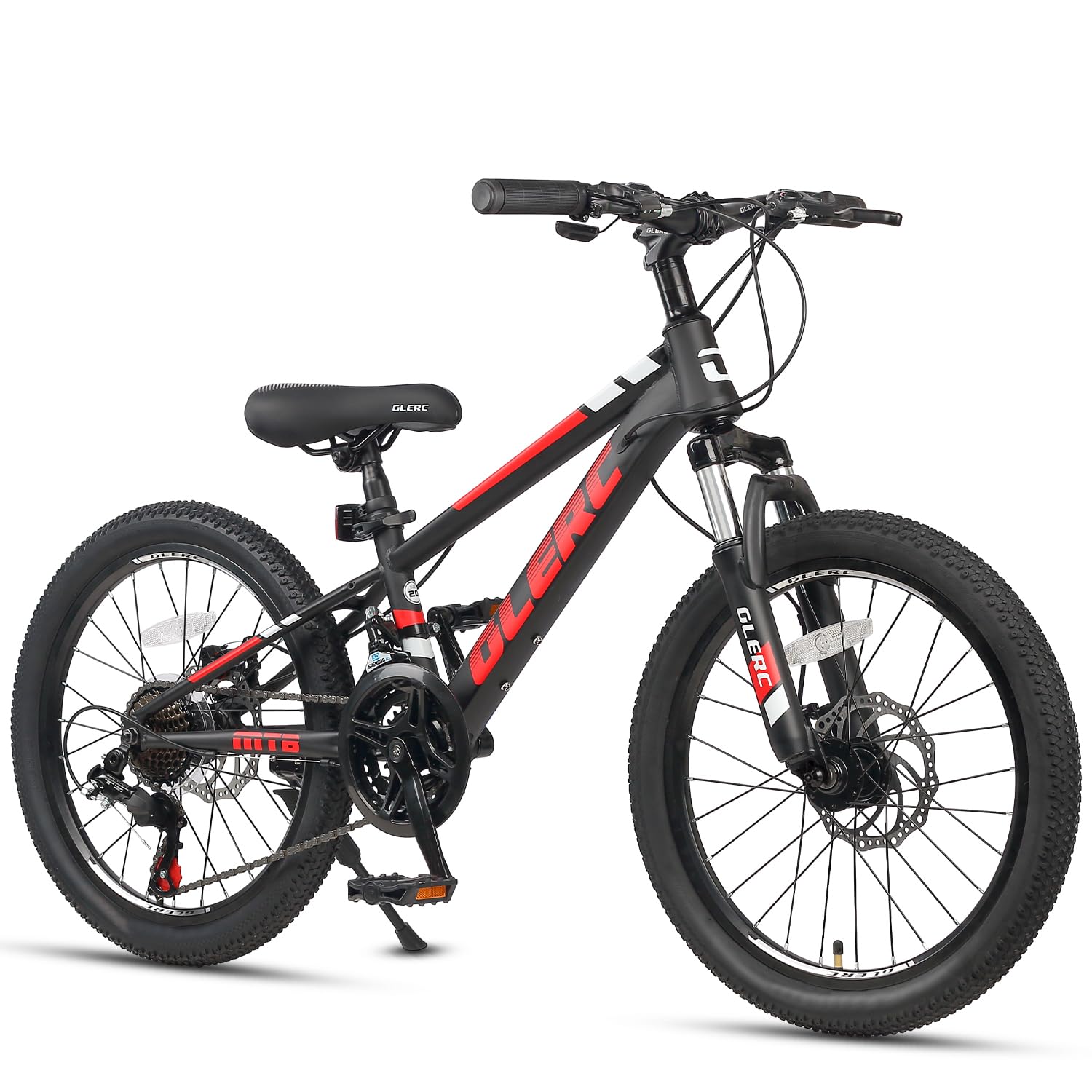
The Skyline is the only 20-inch bike here with a 21-speed drivetrain and disc brakes, and that changes what a kid can do on a dirt path. We recommend it for the family whose rides regularly leave the pavement, because the gears and suspension make climbs and roots less of a fight than they are on a single-speed cruiser.

The high-carbon steel frame and front suspension fork are a trail-ready package, and the 20-inch wheels roll over loose gravel with more confidence than the narrower tires on the Little Molly. The 21-speed trigger shifters are the part that needs a tutorial; plan to spend a few minutes showing a kid how to shift before the first climb.

The disc brakes are the upgrade that matters most on wet or dusty ground, and they are the reason this bike is worth considering over a coaster-brake 20-inch. The 30-pound build is the cost of the suspension and gears, so it is not the bike for a rider who struggles to lift it onto a rack. What we like most is that the Skyline does not treat a kid like a passenger: the gears give them something to learn and use.

Bottom line: The trail-ready choice here for a kid who needs gears, disc brakes, and suspension, not just a neighborhood cruiser.

7

WEIZE 20 Kids Bike

WEIZE 20 Kids Bike

Budget first bike

Our Score 8.6/10
Check Price

Worth Noting

  • Hand-brake lever can need adjustment
Tire Size
20 x 2.125 in
Brake Type
Hand and coaster
Rider Height
48–62 in
Training Wheels
Not included
Read the full review

The WEIZE 20-inch is the budget pick that assumes your rider can already balance. It comes without training wheels, and the 48-to-62-inch height range covers a wide spread of older kids. That range is the reason it stays on the list: it can fit a 7-year-old who is tall for the grade and a 10-year-old who is not.

We like it for families who want a simple bike without paying for extras. The dual hand and coaster brakes are the feature that lifts it above a basic coaster-brake bike, and the saddle adjusts without tools, which matters when the bike is shared or handed down. The 20 x 2.125-inch tires are wide enough for pavement and packed dirt paths, though this is not a trail bike.

The main caveat is the chain, which can jump off under hard pedaling; check tension after the first few rides and again when the bike starts to feel loose. That is a maintenance step, not a dealbreaker at the budget end, but it is worth planning a short shakedown ride before a longer one.

Bottom line: The budget 20-inch bike we recommend for a rider who can balance and wants dual brakes without paying for extras.

How We Put These 20-Inch Bikes to the Test

We started by pulling together 20-inch bikes sold without training wheels, then narrowed the field by frame material, claimed weight, brake type, price, and whether replacement parts were easy to find. We ended up buying 11 ourselves so we could build them the way a parent would: in the garage, with the included tools, following the manual. We timed each build and noted where instructions were vague, which bolts needed re-torquing, and whether fenders or handlebars arrived out of alignment.

Every bike went to a 7- and 9-year-old test rider for six months of everyday use—school runs, park paths, driveway laps, and a few grassy shortcuts that were harder on the bikes than on the kids. We checked frame and fork welds after curb hops, looked for paint chips and loose decals, and re-tightened every stem, seatpost, and axle at the start and end of each month. Fit got checked at the saddle and grips, not just by age: could each kid touch the ground with a slight lean, reach the brake levers comfortably, and stand over the top tube without stretching? Stability showed up in slow turns and wobbly starts, while pedal function got tested on hills and after the chain had been kicked loose a few times.

Braking was the most important thing we watched. We ran repeated stops on pavement and wet sidewalk, from slow rolls and faster downhill runs, noting whether small hands could pull the levers and whether the bike stopped straight. Value came down to what stayed tight and true after six months; appearance was judged by how the finish held up to scrapes, not by how it looked in the box. The bikes that scored best were the ones that were easy to assemble, felt sturdy under a growing rider, and still brought a grin when the garage door opened.

How to Choose 20-Inch Kids Bikes

Fit Comes Before Age

A 20-inch wheel does not mean one size. The bikes here span 44 to 62 inches of rider height, and the smaller Huffy is built for a 44-to-56-inch child while the RoyalBaby starts at 53.2 inches. Measure height and inseam, then check standover: your child should be able to straddle the frame with both feet flat. Do not buy by age alone; a tall 6-year-old may fit a bike that a shorter 8-year-old cannot. When between sizes, choose the bike whose saddle and handlebar can be raised without exceeding the minimum-insertion marks.

Decide How Much Brake Control You Want

A coaster brake is easy to teach, but a 20-inch bike is often where kids learn handbraking. Dual hand and coaster brakes, like the RoyalBaby and WEIZE, give a rider two ways to stop and let them practice lever control. Check that the levers are close enough to the grips for small hands and that the front brake does not grab harder than the rear. A coaster-only bike, like the Huffy or Dynacraft, is simpler and fine for a younger rider, but it limits how much brake control they learn before the next bike.

Match the Bike to the Terrain

Most 20-inch kids bikes are pavement bikes, and that is fine for sidewalks, bike paths, and the school run. A BMX-style bike like the cubsala has wide tires and a U-brake for street and park riding; a cruiser like the Little Molly is stable and comfortable on pavement; a mountain bike like the Skyline adds 21 gears, disc brakes, and suspension for dirt paths. Match the bike to where it will actually be ridden. A heavy trail bike is extra work on a flat neighborhood street, and a coaster cruiser is the wrong tool for a rocky path.

Weigh the Bike Against the Rider

A 20-inch kids bike usually lands between 25 and 32 pounds, and that range matters when the rider is 45 to 55 inches tall. A lighter bike is easier to push, lift, and recover if it tips; the Dynacraft at 25.1 pounds is the easiest to handle here, while the RoyalBaby at 29.6 pounds and the 30-pound Skyline feel more planted. Do not assume lighter is always better: a very light bike can feel twitchy on rough pavement, and a heavier one can be steady but hard to haul. Pick the weight your child can manage on the climb to the driveway.

Plan for Assembly and the First Month

Most bikes here arrive 85 to 95 percent assembled, but the last steps are the ones that matter: front wheel, handlebar, pedals, seat, and brakes. Huffy's EZ Build is the simplest, with tool-free handlebar and pedal installation; the RoyalBaby and Glerc bikes are close behind. Plan on 20 to 30 minutes, check that the front wheel is seated, the brakes do not rub, and the chain has a little slack. Recheck the bolts after the first ride, because new bikes settle.

Frequently Asked Questions

Final Verdict

Choose the RoyalBaby Freestyle 20 if your rider is at least 53.2 inches tall and you want dual handbrakes, a stable steel frame, and easy assembly. It is the strongest all-around 20-inch bike here for a 7-to-9-year-old, and the control layout is the reason it earns the top spot.

If your child is smaller or still relies on a coaster brake, the Huffy Illuminate's lower standover and tool-free build make more sense. For dirt paths, the Glerc Skyline's gears and disc brakes are the upgrade that changes what the bike can do.