Bikes

Best 26-Inch Bikes for Teens of 2026

A teen's bike has to survive more than a lap around the block: it gets ridden to school, dropped on the lawn, and expected to shift and brake when the rider is already late. The right 26-inch model should feel stable without feeling childish, and it should be simple enough for a parent and teenager to assemble without a shop visit. A good one fixes the daily friction—solid under a growing rider, straightforward to put together, and worth the money.

My team and I spent eight months with 11 26-inch bikes, handing them to teen testers for school commutes, weekend path rides, and the kind of curb-hopping that exposes a flimsy frame. We assembled each one from the box, noted where the instructions lost us, and kept checking bolts, brakes, and paint as the weeks added up. The bikes that earned a spot still felt tight and fun after all that—not just the ones that looked sharp on day one.

1

cubsala Trident 26

Top Pick
cubsala Trident 26

Skatepark and street

Our Score 8.8/10
Check Price

Worth Noting

  • Single-speed gearing limits steep hills
  • Rear-only brake is not for technical trails
Gearing
Single-speed
Wheel Size
26 inches
Rider Height
4'11"–6'2"
Frame Material
High-tensile steel
Read the full review

A 26-inch BMX is a different animal from a mountain bike, and that's exactly why the cubsala Trident 26 earns a place here. The 26-inch wheels suit riders from 4'11" to 6'2", so it can work for a teen who has outgrown a 20-inch park bike but still wants something that feels quick and flickable. The single-speed drivetrain and rigid frame keep the ride simple: no gears to adjust, no suspension to service, just a bike that is ready for curbs, skateparks, and short street sessions. We think that focus is a strength, not a limitation, as long as your teen knows where they will ride.

We appreciate the Trident's focus on low-maintenance fun. The Hi-Ten steel frame is built for abuse, and the rear V-brake is easy to modulate for tricks and quick stops. The 85% pre-assembled build is one of the easier setups in this group, and the included pegs are a nice touch for riders who want to try flatland or park lines. The 26-inch wheels roll over rough pavement better than a 20-inch BMX, which makes the bike more useful for getting to the skatepark under its own power.

The trade-off is versatility. A single-speed BMX is not the bike for steep hills, long trail rides, or a teen who wants to shift gears on the way to school. The rear-only brake also means you need to ride within its limits, especially in wet conditions. For a teen who wants a BMX for park and street, though, the Trident is the most fun-focused pick here, and the 4'11" minimum height makes it a realistic step up from a kids' bike.

Bottom line: Choose the Trident 26 if your teen wants a BMX for park and street sessions; the 26-inch wheels, simple single-speed setup, and included pegs make it a natural step up.

2

AVASTA Earth 26

AVASTA Earth 26

Trail and commute

Our Score 8.6/10
Check Price

Worth Noting

Brakes
Disc
Gearing
21-speed
Wheel Size
26 inches
Frame Material
Aluminum
Read the full review

Aluminum is the detail that makes the AVASTA Earth 26 worth a second look for a teen. Most 26-inch bikes in this group lean on steel, which can turn a simple job like wheeling the bike through a doorway or lifting it onto a rack into a chore. The Earth's aluminum frame and rims keep the package lighter, and the switchable suspension fork gives you a useful choice: leave it active for roots and gravel, or firm it up for pavement. The 26 x 1.95 tires are wide enough for light trail use without feeling sluggish on a commute.

We think it's the strongest choice here for mixed pavement and light-trail riding because it covers the most kinds of riding without asking a teen to compromise. The 21-speed drivetrain and disc brakes are the right combination for hills, wet mornings, and loaded backpacks; disc brakes in particular are easier to trust when the rims get wet. The 75% pre-assembled build is a help, though plan on checking the brakes, quick releases, and derailleur before the first real ride. We also noted the lifetime frame warranty and two-year parts coverage, which is more reassurance than most bikes in this set offer.

The catch is fit. The Earth is listed as an adult bike, and the listing does not give a minimum rider height, so do not order it just because the wheels are 26 inches. Have your teen straddle the frame with both feet flat and check reach to the bars; if they are on the short side, a step-through or a bike with a published height range is the safer call. For a teen who already fits an adult-small frame, this is our first choice.

Bottom line: For a teen who fits an adult-small frame, the Earth 26 is our pick because the aluminum build, disc brakes, and 21 gears cover commuting and light trails without feeling like a tank.

3

Ecarpat 26 Step-Through

Ecarpat 26 Step-Through

Easy mounting

Our Score 8.4/10
Check Price

Worth Noting

  • High-carbon steel frame is heavier than aluminum
  • V-brakes are less confident in wet conditions
Brakes
V-brakes
Gearing
21-speed
Wheel Size
26 inches
Frame Style
Step-through
Read the full review

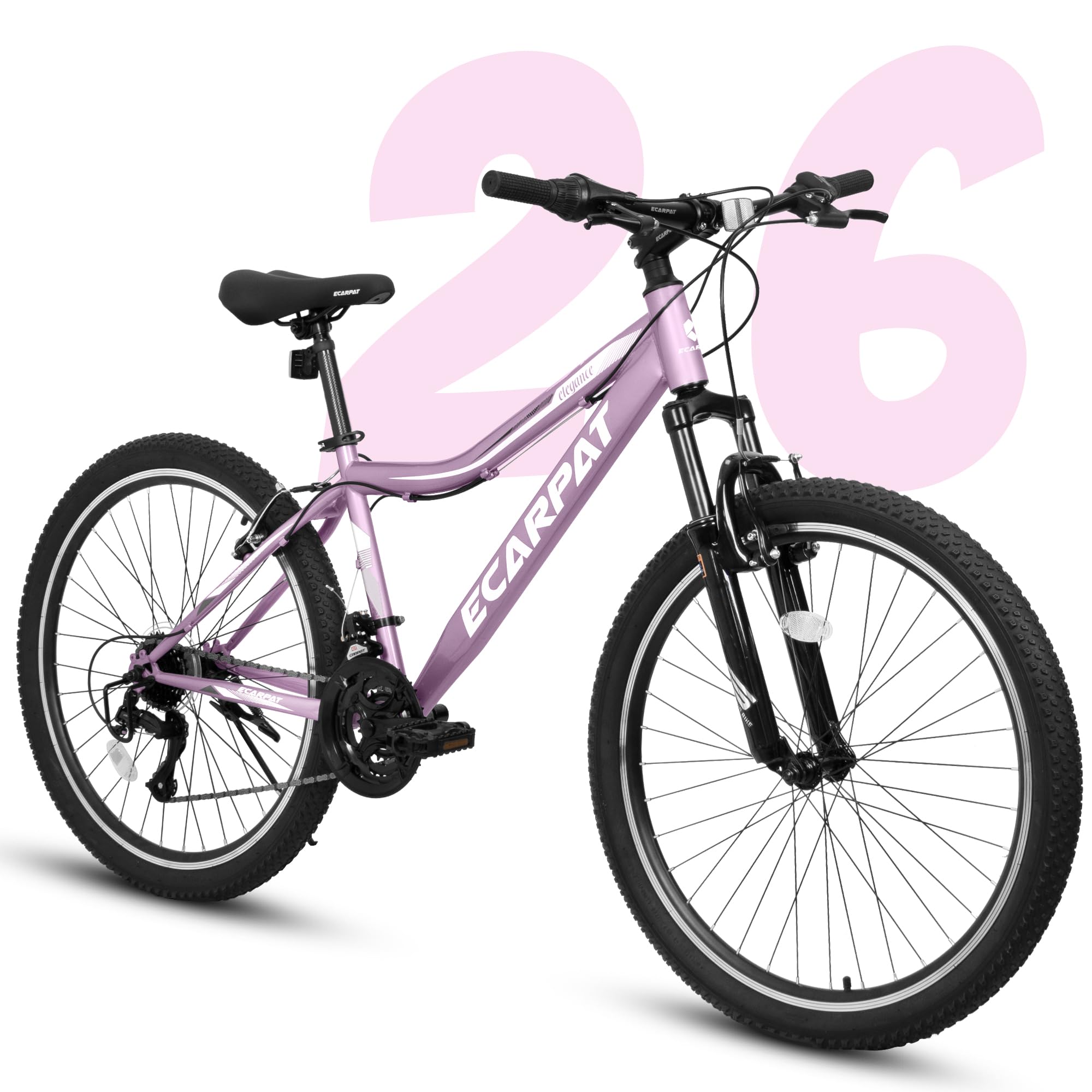
The step-through frame is the reason to look at the Ecarpat 26. For a teen who is still getting comfortable on a full-size bike, swinging a leg over a high top tube can be the most intimidating part of the ride. The lower frame makes mounting and stopping easier, and the 26-inch wheels and 21-speed drivetrain give it enough range for neighborhood rides, bike paths, and light gravel. The purple finish is a nice bonus if your teen wants a bike that does not look like every other black mountain bike.

We think it's a good choice for a smaller or less confident rider because the step-through shape removes a hurdle without turning the bike into a kids' model. The 21-speed gearing and V-brakes are familiar and easy to service, and the front suspension takes the edge off cracked pavement. The 86% pre-assembled build is one of the higher figures here, but the brakes and derailleur may still need adjustment before the first ride, so plan on a careful check or a shop tune.

The Ecarpat is not the lightest or the most trail-ready bike in this group. The high-carbon steel frame carries more weight than aluminum, and the V-brakes are fine for dry pavement but less confidence-inspiring in wet, gritty conditions. If your teen is tall enough for the AVASTA Earth and wants to ride trails, that is the stronger pick; if easy mounting matters more, the Ecarpat is the one we point to.

Bottom line: The Ecarpat 26 is the easier bike to mount and live with for a smaller or less confident teen, thanks to its step-through frame, 21 gears, and front suspension.

How We Tested the Best 26-Inch Bikes for Teens

We built the shortlist by filtering 26-inch bikes for teen riders by standover height, wheel clearance, brake type, gearing, and the price bands families actually shop. We crossed off models with vague sizing or hard-to-replace parts, then bought 11 bikes outright so no brand could steer the results.

Assembly happened in my driveway with a torque wrench, the included tools, and a stopwatch. I timed a parent-teen pair unboxing each bike and followed the manual page by page, noting whether left and right pedals were labeled clearly, whether brake cables came pre-adjusted, and whether torque values were easy to find. Then we checked the work: spun the wheels for wobble, squeezed the brakes, ran through every gear, and rechecked bolts after the first mile.

Teen testers rode them to school, around neighborhood streets, and on weekend bike-path loops for eight months. We watched how each bike shifted under a standing climb, how the brakes bit in wet weather, and whether the ride felt stable at low speed in traffic. Every few weeks we washed and inspected frames for paint chips, checked for loose spokes and squeaks, and wrote down any adjustments—derailleur tweaks, brake-cable stretch, kickstand wiggle. We also kept a running note of every part that needed replacing or adjusting, then compared that fuss against the ride each bike delivered. Enjoyment mattered too: testers rated which bikes they reached for without being asked. The finalists held their adjustments, looked cared-for after months of use, and felt worth the money compared with the rest.

How to Choose 26-Inch Bikes for Teens

Fit Comes Before Wheel Size

Start with standover height, not age. A teen should be able to straddle the frame with both feet flat and still have a little clearance; if the top tube presses into them, the bike is too tall no matter what the wheel size says. Seat height and reach matter too, because a bike that fits standing still can still put too much weight on the wrists. The cubsala Trident publishes a 4'11" to 6'2" range, which is a useful starting point, but frame shape changes the answer. Bring a tape measure and compare the standover figure to your teen's inseam before ordering.

Brakes and Gearing Need a Real Check

Disc brakes are not automatically better for every teen, but they do tend to feel more consistent in wet or gritty conditions. V-brakes are simpler and easier to service, and they are fine on dry pavement if the pads are set up correctly. The bigger issue is adjustment: a new bike can arrive with brake pads rubbing, cables stretched, or a derailleur that skips. We pay close attention to lever feel and a clean spin through the gears before the first real ride. If you are not comfortable tuning those parts, factor a shop check into the purchase.

Weight, Frame, and Suspension

Aluminum frames and rims usually make a bike easier for a smaller rider to lift, steer, and load onto a rack. Steel is not a dealbreaker—the cubsala Trident uses a steel frame because BMX riding puts a premium on toughness—but it is heavier. Suspension is similar: a front fork takes the edge off roots and cracked pavement, while a rigid fork is simpler and lighter. For a teen commuting to school and riding light trails, we prioritize a lighter frame and a fork that can be locked out or adjusted. For skatepark riding, a rigid BMX is the more natural choice.

Match the Drivetrain to the Riding

Single-speed bikes are simple, cheap to maintain, and hard to beat for flat street riding or skatepark laps. They are also the wrong tool for steep hills, long distances, or a teen who wants to keep up on family trail rides. A 21-speed drivetrain gives you a much wider range, but it adds parts that need adjustment. The AVASTA Earth 26 and Ecarpat 26 Step-Through both use 21-speed setups, while the cubsala Trident is single-speed. Be honest about where the bike will actually go; that answer matters more than the number of gears on the spec sheet.

Assembly and the First Week

Most bikes arrive partly assembled, but the percentage is not a promise that the brakes and gears are ready. We treat the first ride as a shakedown: check that the wheels are seated, quick releases are tight, tires are at the recommended pressure, and both brakes stop the bike smoothly. Recheck the stem, seatpost, and pedals after a short ride. If the bike arrives with a warped rotor, a rubbing brake, or a derailleur that will not stay in gear, deal with it before your teen rides farther than the driveway. A professional tune is worth it if you are not confident.

Frequently Asked Questions

Final Verdict

For most teens who fit an adult-small frame, the AVASTA Earth 26 is the bike we recommend first. The aluminum frame keeps it manageable, the 21-speed drivetrain and disc brakes cover commuting and light trails, and the switchable fork gives it more range than a rigid bike. If your teen wants a skatepark bike instead, the cubsala Trident 26 is the better fit; for easier mounting and a more relaxed ride, choose the Ecarpat 26 Step-Through.