Tools & Maintenance

Best Bike Chain Tools of 2026

A chain tool has one job: push a pin out cleanly and press a new one back in without bending the link. Most riders ignore theirs until a chain snaps on a commute or a cassette swap turns into a wrestling match. That's when a flimsy press shows its colors—misaligned pins, chewed-up plates, and a tool that flexes under pressure. A good one makes chain repair a five-minute job, not a trip to the shop.

I've carried a chain tool in my saddlebag for years, but the details only became obvious after my team and I spent five months testing 14 of them. Some felt great in the hand but wandered off the pin; others were chunky yet rock solid. Compact size is lovely until you're leaning on a stubborn pin, and value isn't just the sticker—it's whether the tool survives a second chain and comes with instructions a first-timer can follow. We tracked pin alignment and build quality closely, and the picks below are the ones I'd trust roadside and in the garage.

1

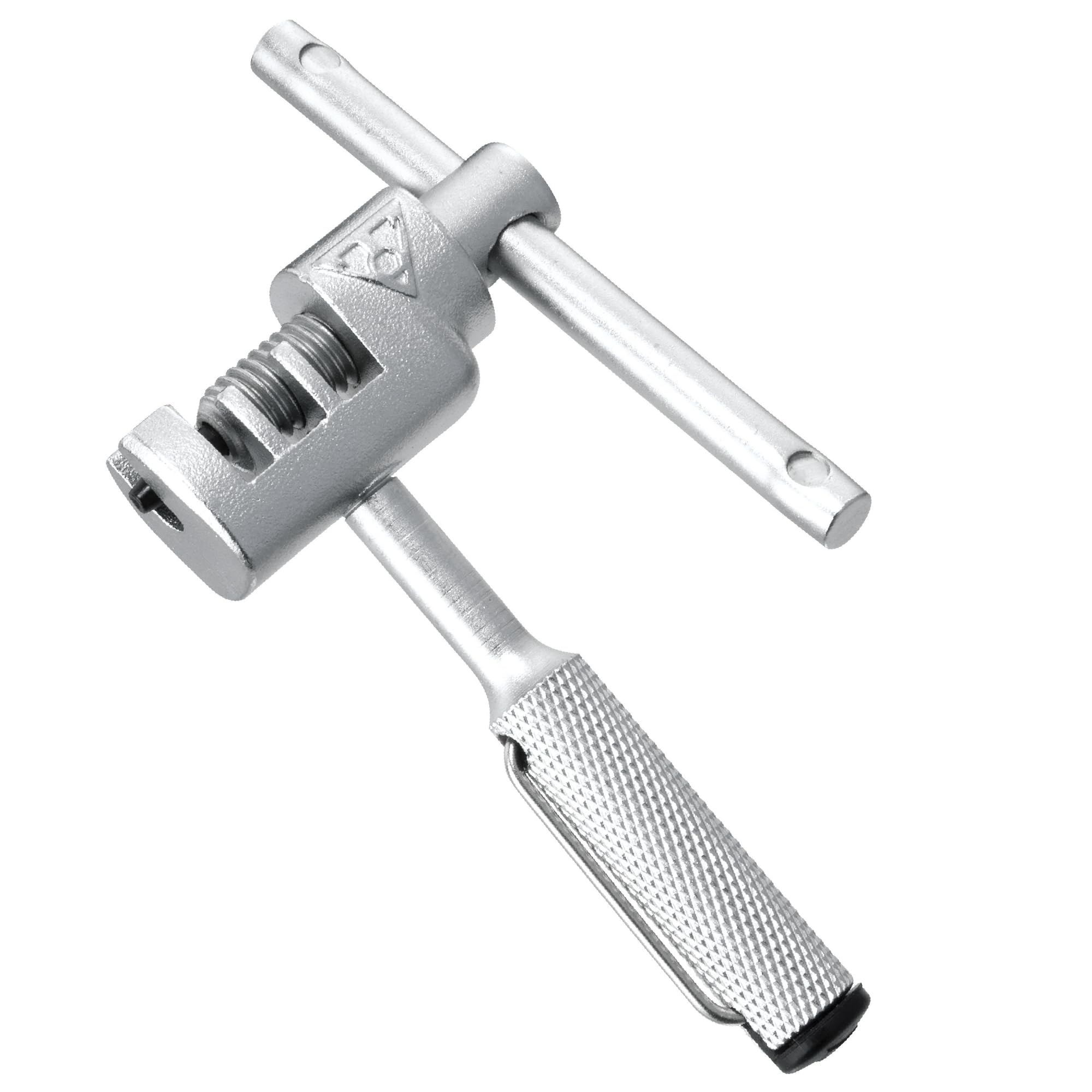
Park Tool CT-3.3

Top Pick
Park Tool CT-3.3

Home workshop

Our Score 9.4/10
Check Price

Worth Noting

  • Premium price for occasional use
Handle
T-handle
Warranty
Limited lifetime
Chain Support
Adjustable locating shelf
Chain Compatibility
5- to 12-speed and single-speed
Read the full review

The CT-3.3 is the tool we keep on the workbench, and the reason is simple: the T-handle lets us lean into a stiff pin without the body skating around. That control matters more than any single specification, because a chain tool only works when the pin stays square to the rivet.

Park builds the body from investment-cast steel and adds an adjustable locating shelf. In use, the shelf does the quiet, important job of backing the chain so the pin pushes through the plates instead of deflecting. It is rated for 5- to 12-speed and single-speed chains, so it covers most of the bikes that come through a home shop. The T-handle is long enough to give real leverage, and the whole tool sits stable on a bench.

None of the budget tools here feel as settled under load. The CT-5 is easier to carry, and the ATLIN is easier to justify for an older 7-10-speed bike, but neither gives you the same bench-side control. That is why this is our default recommendation for anyone who does their own chain swaps at home.

It is also the one we reach for when a pin is stubborn and the chain is already off the bike. The extra mass and the shelf give you somewhere to put your effort, rather than fighting the tool and the chain at the same time. For a home workshop, that composure is the feature that matters.

Bottom line: We recommend the CT-3.3 for home mechanics who want a stable, long-handled chain tool and can accept the premium price.

2

Park Tool CT-5

Park Tool CT-5

Roadside repairs

Our Score 9.2/10
Check Price

Worth Noting

  • Short handle needs firm pressure on stubborn pins
Weight
2.72 oz
Chain Support
Tight-link shelf
Replacement Pin
CTP replaceable pin
Chain Compatibility
5- to 12-speed and 1/8-inch single-speed
Read the full review

At 77 grams and 60 by 55 by 15 millimeters, the CT-5 is small enough to disappear into a saddle bag until you need it. That is the whole point of this tool: a dedicated chain breaker you can carry on every ride without noticing the weight.

We like it because it is not a toy-sized novelty. It handles 5- to 12-speed and 1/8-inch single-speed chains, has a shelf for loosening tight links, and uses a replaceable CTP pin. The folding body gives you something to grip, and the shelf helps keep the chain from climbing out of the tool while you turn the pin in. In a roadside repair, that is enough to get a broken chain sorted and get rolling again.

If you do most of your chain work at home, the CT-3.3 is the calmer choice; if you want one tool that is always with you, this is the one. It is also the tool we hand to a rider who has a long commute and no interest in walking home.

Bottom line: We recommend the CT-5 for riders who want a proper chain breaker in a saddle bag and do not need full workshop leverage.

3

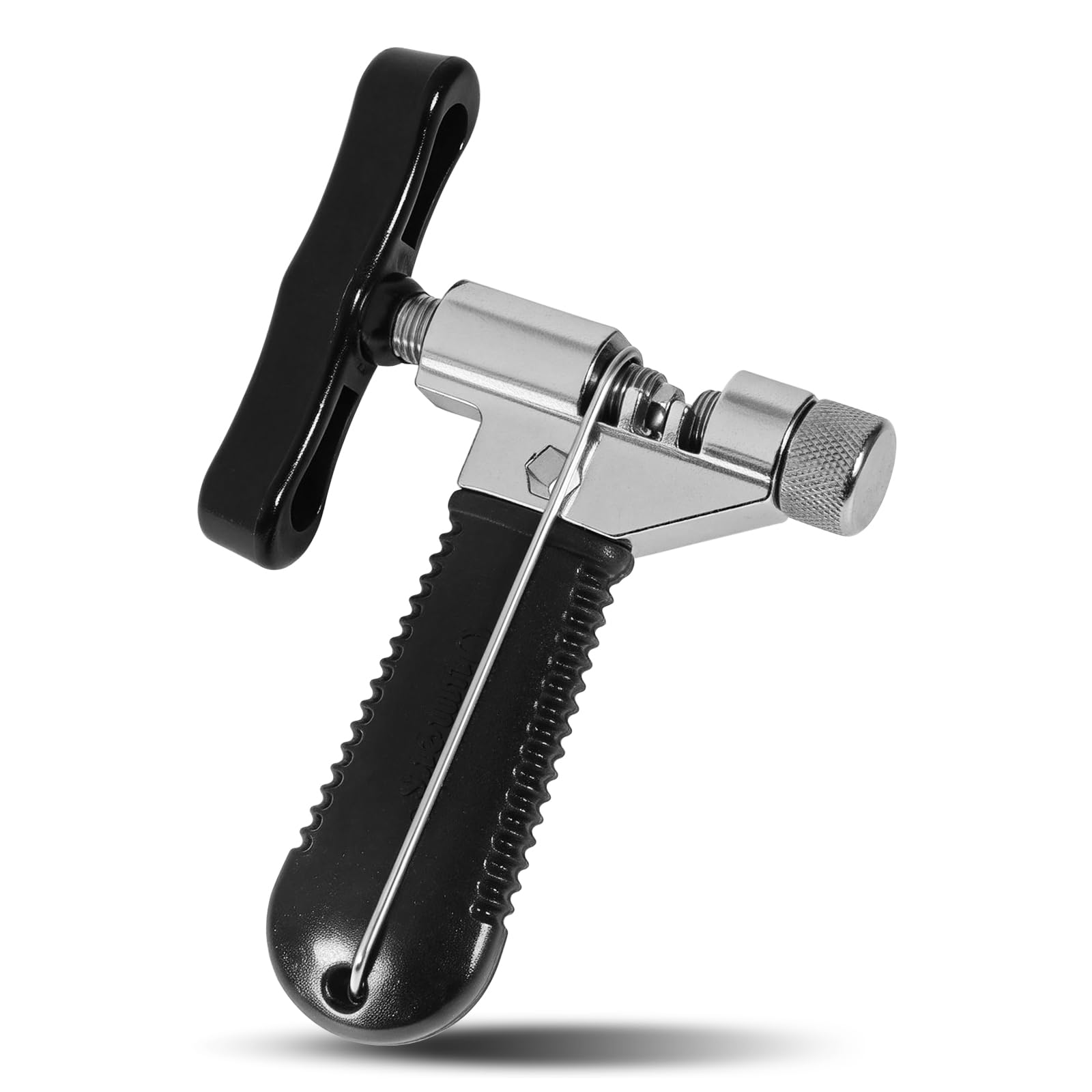
ATLIN Bike Chain Tool

ATLIN Bike Chain Tool

7-10 speed bikes

Our Score 9.0/10
Check Price

Worth Noting

  • Pin alignment takes a few tries
Included
Spare push bolt and instructions
Dimensions
3.2 x 0.6 x 5 inches
Chain Holder
Built-in hook
Chain Compatibility
7-, 8-, 9-, 10-speed and single-speed
Read the full review

The ATLIN is the budget pick for the rider with an older drivetrain. It is built for 7-, 8-, 9-, 10-speed and single-speed chains, so it is the wrong tool for a modern 11- or 12-speed setup, but it is right at home on a commuter, a kids' bike, or a well-used mountain bike.

What we appreciate is how complete it feels for the money. The chain breaker has a built-in hook to hold the chain while you work, a spare push bolt, and printed instructions. The hook is the detail that makes the biggest difference: it keeps the chain from sliding away while you line up the pin, which is exactly when a cheap tool usually turns frustrating.

The body is compact and light enough to keep in a drawer or a small toolbox, and the handle gives you a reasonable grip for occasional chain sizing. It is not the tool for a seized e-bike chain or a daily shop, but it does not pretend to be. For a first chain tool or a spare for the family fleet, it covers the basics without asking much.

The ATLIN is the easier budget recommendation for a 7-10-speed bike; the Oumers is the one that adds 11- and 12-speed coverage. For a first chain breaker or a spare for the family fleet, the ATLIN's hook and included guidance make it the more coherent buy.

Bottom line: We recommend the ATLIN for budget-minded riders working on 7- to 10-speed bikes who want a hook and printed guidance included.

4

Oumers Universal Chain Tool

Oumers Universal Chain Tool

Budget spare

Our Score 9.0/10
Check Price

Worth Noting

  • Not rated for 5- or 6-speed chains
Handle
Rubber-coated grip
Pin Guide
Top alignment groove
Chain Holder
Integrated hook
Chain Compatibility
7- to 12-speed
Read the full review

The Oumers is the cheapest way into a dedicated chain tool here, and it throws in a chain hook and a top groove that shows how far the pin has traveled. For a rider who does one chain a year, that is a tempting package.

We think it is a sensible emergency tool, not a lifetime shop tool. The metal frame and rubber-coated grip feel secure in the hand, the hook holds the chain while you work, and the groove helps you judge pin depth without guessing. It is rated for 7- to 12-speed chains, so it covers a wide range of modern bikes for very little outlay.

The compromise is the pin and its alignment. A stubborn or rusty chain can overwhelm the push pin, and getting the pin centered takes more care than it does on the Park tools. The compact body is easy to stash in a trail bag, but it is not the tool we reach for first when a chain is properly stuck. Treat it as a spare or a budget starter, and it makes sense.

The ATLIN is the easier budget recommendation for a 7-10-speed bike; the Oumers is the one that adds 11- and 12-speed coverage. For a spare tool or a first chain breaker on a tight budget, that wider range is the reason to pick it.

Bottom line: We recommend the Oumers as a cheap spare for 7- to 12-speed bikes, as long as you accept a fussier pin and budget durability.

5

Topeak Universal Chain Tool

Topeak Universal Chain Tool

Ultralight trail kit

Our Score 8.8/10
Check Price

Worth Noting

  • Pin can wander in its guide
Weight
2.89 oz
Material
Chromoly steel
Functions
Six functions
Chain Compatibility
9- to 12-speed
Read the full review

The Topeak is the smallest chain tool here that still has a proper pin breaker, and it adds a mini hammer, link fence, and storage compartment to the same 2.89-ounce body. Six functions in a tool that size sounds like a recipe for compromise.

We were skeptical of the six-function pitch, because a chain tool lives or dies by pin alignment. The Topeak's CrMo body feels more solid than its size suggests, and the chain tool itself handles 9- to 12-speed chains. The extra functions are genuinely useful in a trail kit: the hook holds a link, the storage compartment keeps a spare pin or quick link, and the mini hammer is there for the awkward jobs.

It is not as forgiving as a bench tool, and a badly rusted or badly mushroomed pin is the wrong job for it. For an emergency repair on a maintained chain, though, the size is the point. It takes up less room than an energy bar and weighs about as much as a couple of tire levers, so it can live in a pack without a second thought.

For a pure road kit, the CT-5 is the more focused choice; for a pack that has to cover more than chains, the Topeak is the better all-rounder. It is the one we hand to a rider who wants a single small tool for trailside fixes.

Bottom line: We recommend the Topeak for riders who want one tiny trail tool that covers chain repair and a few other roadside jobs.

How We Tested the Best Bike Chain Tools

We started with a shortlist of more than 30 chain tools sold for home and roadside use, then narrowed it by pin design, replaceable parts, handle size, and price. The goal was a mix you'd actually buy: pocket-sized models for commuters, bench-top styles for home mechanics, and a few budget picks that didn't look disposable. We ended up with 14 tools and used each one for five months.

Testing happened where chains actually fail: in my garage during cassette swaps, at the roadside after a commute, and at the trailhead after muddy rides. I broke and rejoined chains on 9-, 10-, 11-, and 12-speed drivetrains, noting whether the pin started straight, whether the tool walked off the link, and how much hand force it took to push a stubborn pin. I also checked each replacement pin for a clean seat, then re-riveted and flexed the link to see if it held.

For compact models, I packed them into a saddlebag and timed how long they took to set up on a cold morning; bulky bench tools got judged on whether they stayed put in a vise. I read every set of instructions—or noted the lack of them—and had a first-time rider try a chain break using only what came in the box. To judge durability and value, I ran each tool through at least three chains and checked for flex, stripped threads, and whether replacement pins were easy to source. The tools that scored best made pin alignment almost boring, which is exactly what you want when you're fixing a chain in the dirt.

How to Choose Bike Chain Tools

Start with chain speed and pin type

A chain tool is a pin pusher, and the pin has to line up with the rivet on your chain. The tools here are rated for different ranges: 5- to 12-speed and single-speed on the Park CT-3.3, 5- to 12-speed plus 1/8-inch single-speed on the CT-5, 7- to 12-speed on the Oumers, 7- to 10-speed and single-speed on the ATLIN, and 9- to 12-speed on the Topeak. Check your chain's speed count before you buy. A tool rated for 7-10 speeds is not the one to force onto an 11-speed chain, and a 9-12-speed tool is not the automatic choice for an old 6-speed.

The joining method matters too. Many modern chains use a quick link, but you still need a chain tool to shorten a new chain to the right length. If your chain uses a replacement pin, make sure the tool is rated for that chain and that you have the correct pin on hand.

Choose bench leverage or pack weight

A T-handle and a longer body give you leverage and keep the tool steady when a pin is tight. The Park CT-3.3 is the bench tool in this group; its 9-inch handle and heavier body are built for workstand use. The CT-5, at 77 grams, and the Topeak, at 2.89 ounces, are the opposite end: small enough to carry, but not as planted when a chain is corroded.

If you do your own chain swaps at home, start with the bench tool and keep a mini for rides. If you only have room for one, decide where the chain is more likely to fail: in your workshop or on the road.

The shelf or hook is the alignment tool

The locating shelf or chain hook is not an extra. It holds the chain so the push pin meets the rivet square. The CT-3.3's adjustable shelf backs the chain up; the CT-5 has a shelf for tight links; the ATLIN and Oumers use a hook. Set the chain against that support before you turn the pin in.

If the tool starts to twist or the pin wanders, stop and reset. Forcing a misaligned pin is how tools get bent and chains get damaged. A moment spent lining up the chain saves the rest of the job.

Check the pin and spare parts

The push pin is the part that takes the load, so check whether it can be replaced. The CT-5 uses a replaceable CTP pin; the ATLIN includes a spare push bolt; the Topeak has a small storage compartment for a spare pin or quick link. A budget tool with no replacement pin can still be useful, but treat it as an occasional tool rather than a lifetime purchase.

Before you need it, find the replacement pin or push bolt for your tool and keep one in your kit. A snapped pin in the middle of a chain job turns a simple task into a wait for parts.

Frequently Asked Questions

Final Verdict

After testing the set, we recommend the Park Tool CT-3.3 as the default for a home workshop. Its T-handle and adjustable shelf turn a stubborn pin into a controlled job, and it covers the 5-12-speed and single-speed chains most of us actually run. The CT-5 is the better choice if the tool lives in a saddle bag, while the ATLIN is the budget answer for older 7-10-speed bikes.

The Topeak earns a place in a pack for riders who want one small tool to cover more than chain repair; the Oumers is the cheap spare for 7-12-speed bikes, provided you treat its pin gently. For most home mechanics, though, the CT-3.3 is the one that makes chain work feel less like a fight.