Tools & Maintenance

Best Bike Chain Lubes of 2026

A chain is the one part of your bike that quietly pays for every shortcut you take. A lube that goes on thick and tacky can turn into a grinding paste after a dusty ride, while a thin one that disappears by mile 30 leaves you with a noisy drivetrain and a fresh shopping list. The right chain lube is less about a magic formula than about matching the stuff to where and how you ride, then applying it so your chain stays clean, quiet, and cheap to maintain.

I have spent years wiping goo off my fingers after chain cleanings, and my team has now put 14 lubes through six months of commutes, weekend gravel, and wet-weather errands. We noted how each one went on—whether a dripper hit the rollers or a spray can misted the frame—how long it stayed quiet, whether it attracted grit or flung off, and whether the bottle went the distance. The best were not the priciest or the most dramatic; they were the ones I forgot about until maintenance day.

1

Boeshield T-9

Top Pick
Boeshield T-9

Wet winters

Our Score 9.6/10
Check Price

Worth Noting

  • Applicator can gum up between uses
  • Thin film, not a deep-mud lube
Base
Waterproof wax film
Format
Drip bottle
Volume
4 fl oz
Formulated For
Wet, salty, humid
Read the full review

Winter on a gritted road is the hardest thing most of us ask a chain to survive. Salt, slush, and a bike that sits outside overnight will rust bare steel in days, and that is the problem Boeshield's T-9 was built for. It started life as a Boeing specification for protecting metal, which is a more useful origin story than most lubes can offer.

It goes on thin and wet, so it creeps into the rollers and behind the plates, then dries to a wax film rather than staying oily. That film is the useful part: it does not hold road grime the way a wet lube does, and it keeps water off the metal between rides. Chains treated with it run quietly, which is the other thing you notice first on a wet bike.

The 4 ounce bottle gets used on more than the chain in our workshop. A drop on derailleur pivots, cable ends, and cleat hardware keeps the small steel parts moving through a wet season, and the formula is explicitly intended for cables and drivetrain components as well as chains.

For a bike that lives outdoors through a wet winter, this earns its place ahead of everything else here. Apply it the day before you ride rather than ten minutes before, and the wax has time to set into something that shrugs off a wet commute. It is also the lube in this group least likely to leave a mark on a trouser leg.

Bottom line: For salted roads, coastal air, and a bike that lives outside, T-9 is the lube we trust to keep a chain from rusting solid.

2

Squirt Chain Lube 500 ml

Squirt Chain Lube 500 ml

All-round use

Our Score 9.4/10
Check Price

Worth Noting

  • Wax residue can build up on jockey wheels
Base
Wax and water emulsion
Format
Drip bottle
Volume
500 ml
Formulated For
All-weather
Read the full review

Squirt goes on looking like watery milk and dries down to a film you can barely see. That is the mechanism, not a quirk: a wax-and-water emulsion carries the lubricant into the rollers, the water evaporates, and what is left is a dry film with nothing tacky for dust to grab. On gravel in summer the chain stays bright metal while everything else on the bike turns pale with dust.

It is the bottle we point most riders to first, because it is the hardest one here to get wrong. The label says all-weather rather than dry-only, so a damp morning or a shallow ford does not wipe out the application, and the film keeps the drivetrain quiet well past the point where a thin dry lube has given up. The picks that beat it on pure friction, SILCA's Super Secret above all, ask more of you in return.

Preparation is the one thing that decides whether you get that result. Wax does not bond to oil, so dripping it onto a chain that has been running a wet lube produces a grey sticky paste that collects everything you ride through. Squirt is unusually forgiving about the clean-up, since soap, water, and a stiff brush will do where other waxes want a full degrease, but the chain has to be dry before you apply and the film needs time to cure before you ride.

Where it stops being the right answer is a genuinely wet winter, when the film washes out faster than a true wet lube and you will be back with the bottle constantly. From dry singletrack to a summer commute, though, this is the one we reach for, and the 500 ml workshop size means we are not rationing it.

Bottom line: We recommend Squirt as the default because it handles dry dust and damp mornings equally well, and the wax film leaves a chain you can touch without gloves.

3

SILCA Super Secret

SILCA Super Secret

Low friction

Our Score 9.4/10
Check Price

Worth Noting

  • Most expensive lube per ounce here
  • Needs a full dry before riding
Format
Drip bottle
Key Additive
Tungsten disulfide
Formulated For
All-weather
Read the full review

Super Secret is the most convincing performance lube in this group. It is a liquid wax carrying nano-scale tungsten disulfide, an additive that turns up in high-end hot-melt blends, and it goes on from a drip bottle rather than a slow cooker. That means most of a dipped chain's smoothness without the ritual.

The first thing we noticed was the silence. A chain treated with it runs quietly enough that tire noise takes over, and it stays dry to the touch, so there is no oily stripe on a calf and no black rag at the end of the ride. We also found it sheds water rather than holding it, which counts for something on a damp start.

Where it makes the most sense is a bike that already runs wax: a coat between hot-melt dips rebuilds the film and keeps the chain in that quiet, slick state without pulling it off the frame. It is a small bottle doing a specific job, and the returns show up in friction and drivetrain life rather than in the bottle itself. Riders who simply want a clean chain and a fair price will get better value elsewhere on this list.

Bottom line: For a waxed road chain and a rider chasing the last few watts, Super Secret is the bottle worth the extra money.

4

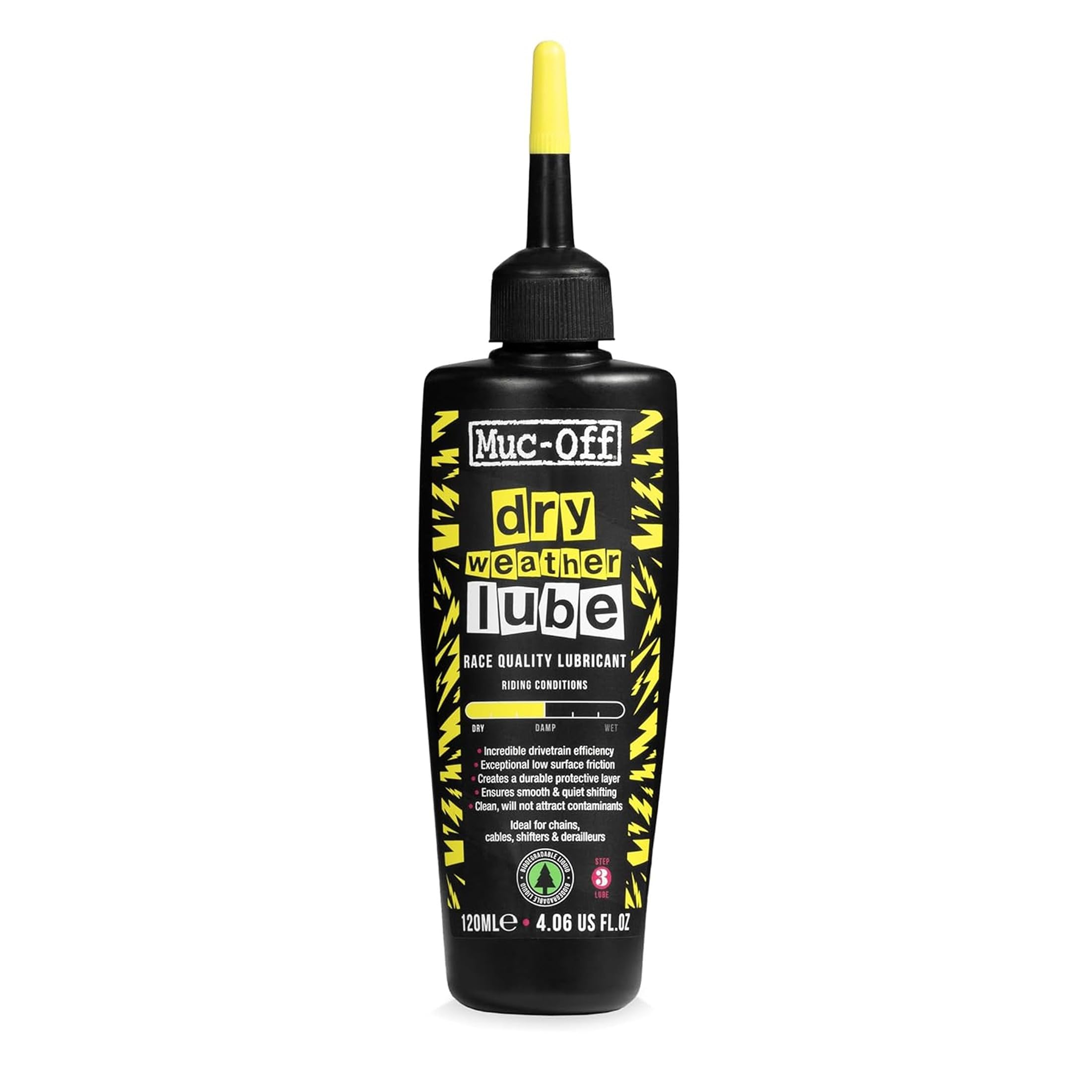
Muc-Off Dry Chain Lube

Muc-Off Dry Chain Lube

Dusty trails

Our Score 9.4/10
Check Price

Worth Noting

  • Reapply often in loose, dry dust
  • Flip cap can crack if the bottle is dropped
Base
Biodegradable wax
Format
Drip bottle
Volume
120 ml
Formulated For
Dry and dusty
Read the full review

Crack the cap and the first thing you meet is banana. Muc-Off's dry lube is heavily scented, which is either a small pleasure or an odd thing to find on a bike part, and it is fully biodegradable as well. That combination has kept this bottle on a lot of workshop shelves.

The formula itself is thin and penetrating, so it works its way into the rollers instead of sitting on the plates, and the wax film it leaves is barely visible. We found chains stay clean enough in dry, sandy conditions that you can handle one without a rag, and the same bottle gets along fine with e-bike drivetrains and wide-range mountain bike gearing.

Among the dry lubes here it is the one we suggest to someone whose bike is dusty more often than it is wet, and who wants a chain that looks like metal rather than tar. The film sits a little heavier than Finish Line's ceramic coating and leaves the drivetrain quieter on loose gravel, which is why it is the bottle we take to a trailhead.

Bottom line: For dry, dusty trails, this is the dry lube we hand people first: it goes on thin, dries clean, and leaves almost nothing for grit to stick to.

5

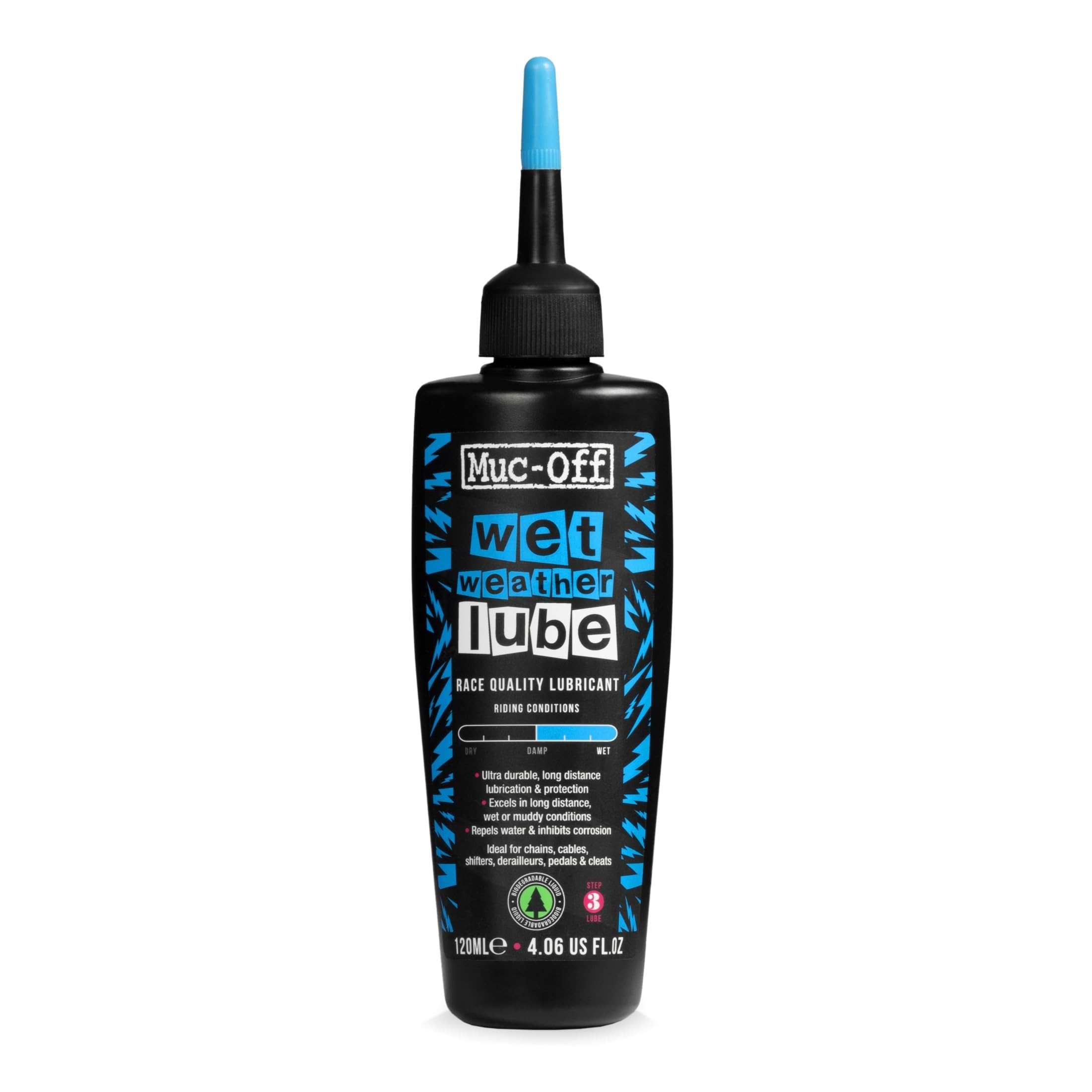
Muc-Off Wet Chain Lube

Muc-Off Wet Chain Lube

Mud and rain

Our Score 9.4/10
Check Price

Worth Noting

  • Holds onto grit, so the chain needs cleaning more often
Base
Biodegradable wet oil
Format
Drip bottle
Volume
120 ml
Formulated For
Wet and muddy
Read the full review

Wet lube earns its keep on the days you would rather not be riding. Muc-Off's version comes in the same 120 ml bottle and uses the same biodegradable base as the dry formula, built to repel water and stay put. It is the one we keep for the wet season: mud, standing water, slush, and the kind of ride where the chain is the least of your problems.

What it does well is stay on. Through a flooded bridleway or a churned-up field, the oil holds its place and the chain does not start shrieking halfway round. That is the whole job description of a wet lube, and this one manages it without needing half the bottle to do so.

Application is the same drill as the rest of the range: a drop on each link of a wiped chain, spin the cranks, then a rag over the outside so the plates are not carrying a coat. We like that the 120 ml bottle fits in a jersey pocket, which is more than you can say for most of the workshop sizes here.

Bottom line: When the trails are mud and the forecast is wrong, Muc-Off's wet lube is the one that stays on the chain and keeps it quiet.

6

Finish Line Dry Lube

Finish Line Dry Lube

Budget dry lube

Our Score 9.4/10
Check Price

Worth Noting

  • Short-lived in dry dust
Format
Drip bottle
Volume
4 fl oz
Additive
Ceramic
Formulated For
Dry and dusty
Read the full review

Finish Line's dry lube has been in bike shops for decades, and the bottle has not changed much because it has not needed to. It is the least expensive lube in this group and the simplest to use, which counts for a lot on a Saturday morning when you would rather be riding.

Ceramic additives leave a dry, wax-like film once the carrier evaporates, and the film is genuinely dry: a finger run over the chain comes away grey rather than black. In dust and on dry roads it keeps the drivetrain clean for several rides at a stretch. We found the tip flows quickly, so a short squeeze per link is plenty and anything more drips straight off the chain onto the floor.

For a summer road bike and a rider who does not want to think about maintenance, this is the bottle we hand over. It cures fast, leaves the chain looking cleaner than most, and the low price means keeping a second bottle in a saddlebag is not really a decision at all.

Bottom line: The cheapest dry lube here is still one of the best for a summer road bike: fast to apply, clean to the touch, and quiet.

7

WD-40 All-Conditions Chain Lube

WD-40 All-Conditions Chain Lube

Mixed weather

Our Score 9.4/10
Check Price

Worth Noting

  • Wears off faster than the wax lubes
  • Spray mists the frame and floor
Format
Spray can
Volume
6 oz
Additive
Corrosion inhibitors
Formulated For
Dry, wet, and varying
Read the full review

WD-40's all-conditions bike lube is a spray can rather than a drip bottle, and it is built to cover dry, wet, and everything in between. The formula is wax-free, so it will not build up inside the links, and it carries corrosion inhibitors for the bare metal a chain picks up on a wet road.

For a commuter that lives outdoors and gets lubed in a hurry, we have stopped reaching for anything else. You point, you spray, you wipe, you leave, and the chain is protected well enough for a week of wet rides. That is a different job from what SILCA or Squirt does, and it is a job somebody has to do.

The corrosion inhibitors are doing real work here, and a bike stored outside benefits from a lube that prioritizes protection over friction. It also keeps the chain reasonably clean, so a commuter that never gets a full drivetrain clean does not quietly turn into a black mess over a winter.

Bottom line: If you want one can that handles a wet commute and a dry weekend without thinking about it, this is the one to keep by the door.

8

White Lightning Clean Ride

White Lightning Clean Ride

Clean commuter

Our Score 9.4/10
Check Price

Worth Noting

  • Short interval between applications
Base
Oil-free wax
Format
Drip bottle
Volume
8 fl oz
Formulated For
Dry and dusty
Read the full review

Clean Ride's trick is that the wax does not just sit on the chain; it sheds. As you ride, the film flakes away and the dirt it has picked up goes with it, which is what White Lightning means by self-cleaning. It is an oil-free formula, so there is no tacky layer left behind to collect fresh grit.

What that feels like in use is a chain that is dry to the touch and oddly pleasant to handle. There is no black stripe on a calf, no rag that has to be thrown away, and the drivetrain stays quiet between applications. On a bike used for errands and a weekend path, it is the least offensive lube here.

The formula is thin and runny, so it moves into the rollers quickly. The bottle needs a shake first, and the tip has a habit of clogging between uses, which a pin sorts out in a second. It also wants a genuinely clean chain, since wax over grime simply seals the grime in.

For dry-weather riding at an easy pace, we suggest it when someone wants a clean chain without a workshop routine. It is the oldest idea in the wax group and no longer the slickest, but nothing else here visibly cleans as it goes.

Bottom line: For a fair-weather bike ridden in everyday clothes, Clean Ride keeps the chain dry, clean, and quiet enough to forget about.

How We Tested Bike Chain Lubes

To build the shortlist, we read spec sheets and rider feedback for drip, wax, and spray formulas, then filtered for bottles that could be applied without stripping the chain or buying extra gear and that would not leak in a saddlebag. We ruled out anything that demanded a full immersion setup or was impossible to reapply at the roadside, and kept a mix of bottle sizes and price points. That left 14 lubes, which we ran for six months across a commuter bike, a weekend gravel bike, and a town bike used for errands.

Every lube got the same start: a degreased chain, a measured application per the label, and time to cure. We noted whether the bottle dripped cleanly onto the rollers or sprayed past the chainstay, how tacky the side plates felt after setting, and whether a dry rag came away clean or black after a dusty ride. On wet mornings, we listened for the first chirp and counted the miles until shifting felt dry or noisy.

At the end of each stretch, we compared how much product we had used against miles ridden, checked chains with a wear gauge, and looked at rims and chainstays for flung-off residue. The lubes that scored best were not the ones that felt stickiest on application; they were the ones that stayed quiet, stayed put, and left the drivetrain easy to wipe down. We will keep rotating them through another season of foul-weather commuting and update this list if anything changes.

How to Choose Bike Chain Lubes

Dry Film, Wet Oil, or Wax

There are three families on this page and they behave differently. Dry-film lubes such as Finish Line's and Muc-Off's carry the lubricant in a carrier that evaporates, leaving a wax or ceramic layer dust cannot stick to. That is what you want on dry rock, summer roads, and sandy trails. Wet lubes stay oily and push water off the chain, which is exactly right in mud and standing water and also why the chain turns black. Wax emulsions like Squirt, SILCA, and Clean Ride dry hardest and run cleanest of the three.

Match the bottle to the worst conditions you actually ride in, not the best. If your chain only gets wet from the hose, a dry or wax formula keeps everything cleaner. If winter means mud, a wet bottle earns its place beside it. An all-weather lube sits in the middle and is the right first purchase if you only want to own one.

Wax Will Not Bond to an Oiled Chain

The most common wax mistake is dripping it onto a chain that has been running oil. Wax cannot bond to oil; what you get is a grey paste that picks up every bit of grit you ride through and wears the chain faster than either product would alone. Squirt is unusually forgiving and will work after soap, water, and a stiff brush, but most waxes want a genuine degrease, a rinse, and a completely dry chain before anything goes on.

Then give it time. A wax film that has not cured is a wax film that flings off in the first mile, so apply it after a ride rather than before one. The same goes for solvent-based dry lubes: they need a few minutes to flash off, and the chain should look dry before you put load through it.

Reapplication Is Part of the Design

Every lube here has a rhythm, and the label rarely tells you what it is. A thin dry film in loose dust may want a top-up after a couple of rides. A wet lube holds on longer but collects grit while it does, so the chain needs a wipe and a fresh coat more often than the mileage suggests.

The interval matters less than the habit. A chain that gets a light coat every week lasts longer than one that gets a heavy coat every month, and a fussy formula you avoid applying is worse than a simple one you actually use.

Drip Bottles, Spray Cans, and Overspray

A drip bottle puts the lube on the chain and nowhere else, which is why almost everything here comes in one. Aerosols are quicker on a filthy commuter chain and reach awkward spots, but they mist the frame, the rim, and the floor, and you spend more product than the job needs. Whichever you choose, keep lubricant well away from disc rotors and pads, because contaminated pads glaze and braking suffers until they are replaced.

Size is the other practical decision. A large workshop bottle is the economical way to keep a household of bikes going, and a small one lives in a pack or saddlebag for top-ups on the road. Owning both sizes of the same lube is rarely a mistake.

Frequently Asked Questions

Final Verdict

Most riders should buy Squirt and stop there. It copes with dry dust and a damp morning without changing its behavior, it keeps the chain clean enough to handle without a rag, and the workshop size means you will actually use it rather than save it.

Spend the extra on SILCA Super Secret only if you are chasing friction on a chain that already runs wax. If your winters are mud, add Muc-Off's wet lube to the shelf and leave Squirt for the dry months.