Bikes

Best BMX Bikes of 2026

A BMX bike looks almost defiantly simple: two wheels, one gear, a frame built to take a beating. The differences show up when you compare—how the bars feel in your hands, whether the brakes bite evenly, and whether the box on your doorstep contains decent hardware or fasteners you'll be cursing by nightfall. The right bike should feel solid under a grown rider, stop predictably, and be fun enough that you keep grabbing it for a lap around the block. It also has to survive assembly without a shop mechanic hovering over your shoulder.

I've built enough boxed bikes to know a clean weld and sharp paint can hide a lot, so appearance alone doesn't sway me. Over six months, we've ridden nine BMX bikes through street loops, skatepark sessions, and curb-heavy neighborhood rides, watching for creaks, loose hardware, brake rub, and whether each still felt tight weeks later. Value and purchase experience mattered too—what arrived, what was missing, and how clearly sizing was described. The picks below are the ones that earned a spot by the door.

1

cubsala Trident BMX

Top Pick
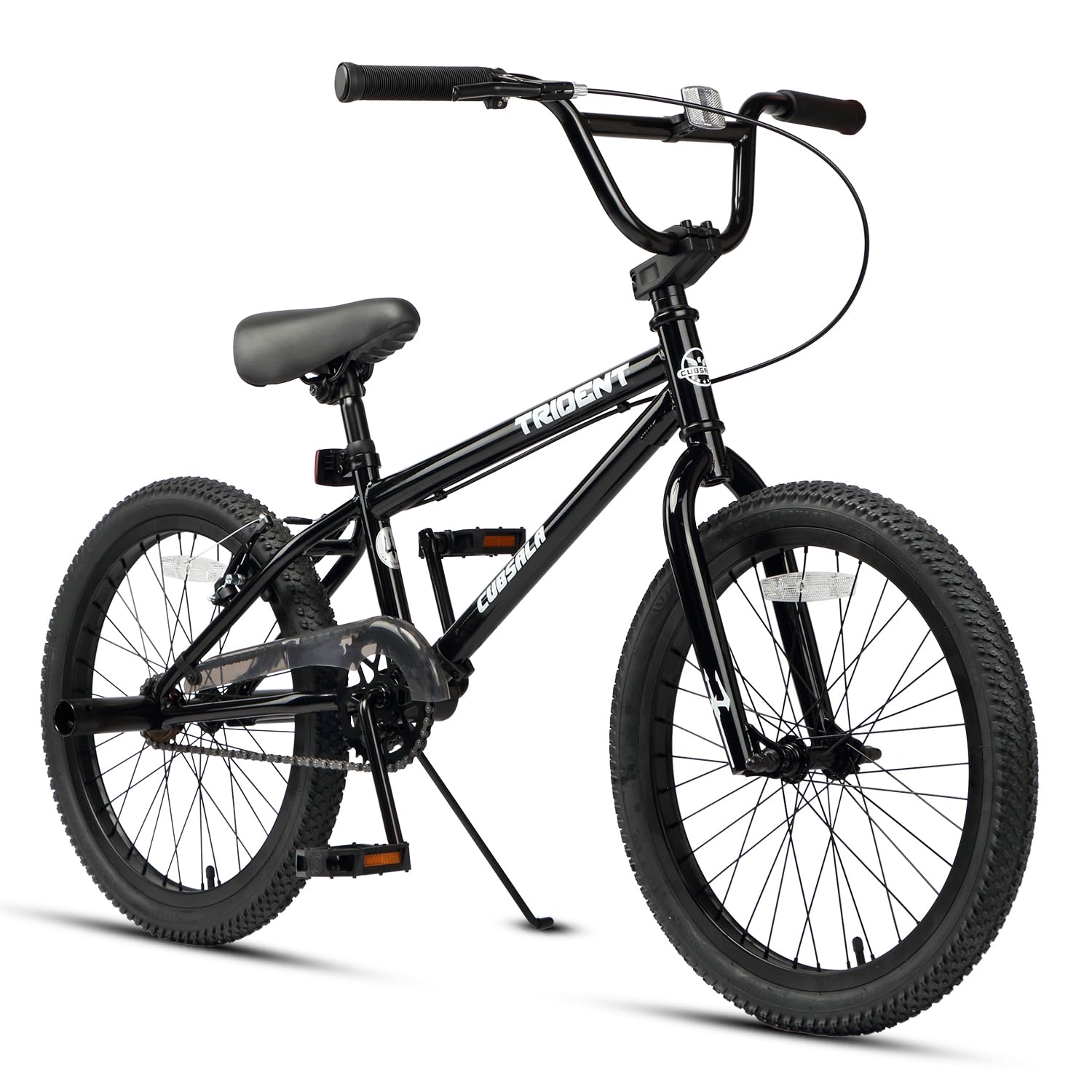
cubsala Trident BMX

Street and race

Our Score 8.8/10
Check Price

Worth Noting

  • Race-style build without a freestyle rotor
Brake
Rear linear-pull V-brake
Frame
Steel
Extras
Two pegs and kickstand
Wheel Sizes
20, 24, or 26 inches
Read the full review

The cubsala Trident's biggest advantage is the size range. It comes in 20-, 24-, and 26-inch wheels, so the same model line can fit a young teen and an adult, and the 20-inch version is listed for riders from 4 feet 0 inches to 6 feet 2 inches. That's a wide spread, so check standover and saddle height rather than buying by age alone. We like the simple spec sheet: a steel frame, a single-speed drivetrain, a rear linear-pull V-brake, and two pegs. It's not a freestyle bike with a 360-degree rotor, but it is a clean, easy-to-live-with BMX for street rides, pump tracks, and race-style laps.

The brake choice is the detail we paid closest attention to. A rear V-brake is easy to adjust and service, and it keeps the handlebar uncluttered. It is also the only brake on the bike, which is normal for race-style BMX but worth knowing if you're buying for a beginner who wants extra stopping confidence on steep pavement. Set the pads close to the rim and test the lever before the first ride. The Trident's steel frame is built for abuse, but the bike is not a featherweight; a smaller rider may notice the heft when lifting the front wheel.

Durability is the area to watch. The finish looks sharper than the budget build suggests, but the handlebar is the part to inspect after a hard landing, and the stem, seat clamp, and peg bolts are worth checking after the first few rides. Keep the kickstand out of trick practice. The two pegs are a useful bonus for learning to grind, and the kickstand makes it easy to live with between sessions.

Bottom line: We recommend the cubsala Trident for riders who want one simple BMX for street, park, and race-style riding without paying for a rotor they may not use.

2

WEIZE Freestyle BMX

WEIZE Freestyle BMX

Budget freestyle

Our Score 8.8/10
Check Price

Worth Noting

  • 76-pound listed weight is very heavy
Frame
High-tensile steel
Tires
20 x 2.40 inches
Wheel Size
20 inches
Freestyle Setup
360-degree rotor and four pegs
Read the full review

A 360-degree rotor and four pegs are the reasons to look at the WEIZE. The rotor lets the handlebar spin without twisting the brake cable, and the pegs give a rider more places to stand for grinds. At this price, that's a lot of freestyle hardware, and the 20 x 2.40-inch tires add grip and cushioning that a narrow race tire won't. We like the simple single-speed drivetrain, with a 32T front ring and 16T rear sprocket; it's easy to maintain and geared for neighborhood speeds rather than climbing.

The frame is high-tensile steel, which is the budget-friendly choice for a bike that will take a beating. The freestyle geometry and wide tires make it feel more at home in the park than on a race course. We paid attention to the brake setup because that's where a rotor bike can get fiddly: the rear V-brake has to be centered and adjusted so the cable doesn't bind when the bars spin. Plan on a careful adjustment session, or a shop tune, before the first real ride. If you're not comfortable setting brakes, that's the main cost of entry.

The listing's 76-pound item weight is the one figure that gives us pause. A 20-inch freestyle BMX should be much lighter, so confirm whether that number is the bike or the shipping box before you buy; if it's the bike, a younger rider will struggle to throw it around. The wide tires and steel frame point to a usable park bike, but the weight and brake setup are the two things to settle before you commit. The four pegs and rotor separate it from the Trident; the rest is a simple steel bike that asks for a little setup patience.

Bottom line: We recommend the WEIZE Freestyle BMX for budget-minded riders who want a 360-degree rotor and four pegs, provided the brake setup and listed weight check out.

How We Tested Nine BMX Bikes

We started by researching the BMX market—reading spec sheets, rider forums, and warranty language—then filtered the shortlist by frame material and geometry, wheel size, brake type, and price band so we were comparing bikes meant for similar riders and uses. We bought nine complete bikes and built each one from the box in the same garage bay, using only the tools and instructions included. We noted how clear the assembly steps were, whether the hardware threaded cleanly, how much of the bike arrived pre-adjusted, and if any small parts were missing or easy to mix up.

Over six months, those nine bikes lived where BMX bikes actually live: neighborhood street loops, curb hops, skatepark sessions, and short daily errands. I checked brake lever feel and pad alignment before the first ride, then did repeated hard stops from speed in an empty parking lot to see whether each bike stopped evenly and stayed quiet. We also watched how each bike felt over rough pavement and during curb hops, and checked bolts, headset play, spoke tension, and chain slack after the first week, then again every few weeks.

At the end, we compared what each bike delivered against its price—not just the spec sheet, but how much re-tightening and parts replacement it needed. Purchase experience got the same treatment: how the box arrived, whether anything was missing, how clearly the sizing chart was written, and how easy the maker's warranty and contact information were to find. Enjoyment was the simplest test: which bikes did we reach for when there was no testing agenda? The ones that stayed tight, stopped cleanly, and still looked good after six months earned the top spots.

How to Choose BMX Bikes

Fit Comes Before Features

A 20-inch BMX is the default for teens and adults; an 18-inch model suits smaller riders, while 12- and 16-inch bikes are first bikes rather than trick bikes. The cubsala Trident's 20-inch version is listed for riders from 4 feet 0 inches to 6 feet 2 inches, and the WEIZE is listed for 4 feet 0 inches to 5 feet 8 inches. Those ranges are broad, so stand over the bike with both feet flat and check that you can reach the bars and pedals comfortably. Buy for the rider in front of you, not the age on the box.

Brakes and Assembly Decide the First Ride

Most budget BMX bikes arrive mostly assembled, but the brakes are the part that separates a good first ride from a frustrating one. A rear V-brake or U-brake should stop the wheel without rubbing; a coaster brake is simpler but limits trick riding. The Trident uses a rear V-brake, and the WEIZE pairs a rear V-brake with a rotor. After assembly, spin each wheel and squeeze the lever; if the pads rub or the lever pulls to the bar, adjust before riding. Rear-only braking is common on BMX bikes, so practice using it before you rely on it in traffic.

Freestyle Hardware: Rotor and Pegs

A 360-degree rotor lets the handlebar spin without twisting the brake cable, which is why it matters for barspins and other freestyle tricks. Pegs give you a place to stand for grinds, but they also add width and weight. The WEIZE has both a rotor and four pegs; the Trident has two pegs but a race-style build without a rotor. If your riding is mostly street, park, and trick practice, the rotor is worth having. If you want a simpler bike for pump tracks and race-style laps, skip it.

Steel Frames, Weight, and Durability

High-tensile and carbon steel frames are common at this price because they're tough and affordable, but they're heavier than chromoly. A heavier bike is stable on jumps but harder for a smaller rider to lift and throw around. Check the listed item weight, not just the wheel size, and inspect the handlebar, stem, and peg bolts after the first few rides. A 20-inch freestyle bike should be light enough to maneuver; if a listing gives a weight that seems closer to a shipping box, confirm it before you buy.

Budget for the Whole Bike

The purchase price is only part of the cost. Budget BMX bikes often need a brake adjustment, a new tube, or a shop tune in the first month, and wear parts like tires and brake pads are not covered by most warranties. The Trident carries a limited lifetime frame warranty, and the WEIZE has a one-year limited warranty; check what each one excludes. If you're buying for a rider who will be hard on the bike, put the saved money toward a tune and a spare tube.

Frequently Asked Questions

Final Verdict

For most riders, the cubsala Trident is the pick: it comes in 20-, 24-, and 26-inch sizes, uses a simple rear V-brake, and gives you a straightforward BMX for street, park, and race-style riding. The WEIZE Freestyle is the better choice if you want a 360-degree rotor and four pegs for trick practice, but confirm the listed 76-pound weight and plan on a careful brake adjustment. Neither is a boutique race bike; both are sensible budget starting points.