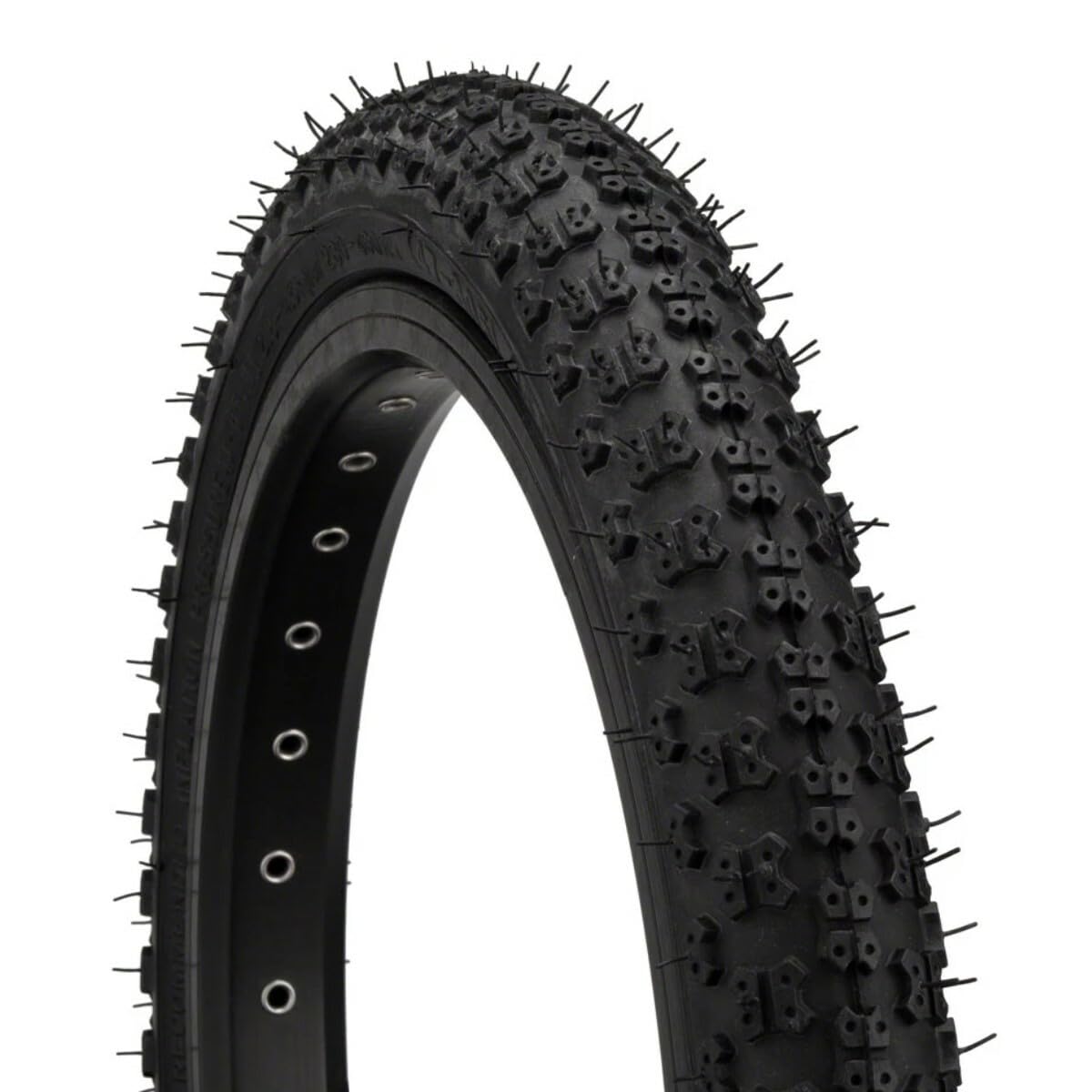
Tires & Tubes

Best BMX Tires of 2026

A BMX tire is a negotiation between grip and weight. The sticky rubber that holds a line on damp concrete is often the same rubber that drags on the pedal to the skatepark, and a light casing that spins up fast can feel twitchy in a hard lean. I’ve ridden cheap knobbies, heavy park tires, and everything between, and the difference is rarely one spec—it’s whether the tire does what you ask without making you think about it. The right set quietly fixes the small stuff: fewer slips, fewer pinch flats, a smoother ride, and less money wasted on rubber that wears out early.

Over the past five months, my team and I have ridden 14 BMX tires on commutes, park sessions, and weekend dirt jumps. We weighed each one, mounted them on the same 20-inch wheels, and ran the pressures we actually ride. I’ve learned: fit matters as much as tread—a tire that won’t seat evenly will wobble no matter how good the rubber feels. The picks below are the ones that stayed on our bikes.

1

Maxxis Hookworm

Top Pick
Maxxis Hookworm

Urban durability

Our Score 9.6/10
Check Price

Worth Noting

  • Heavy at 720 g per tire
Pack
2 tires
Size
20 x 1.95
Weight
1.59 lb
Max Pressure
110 psi
Read the full review

A two-tire pack of 20x1.95 Hookworms is the practical buy if you commute, skate curbs, and hate changing tubes. The tread wraps well around the casing, and the 110-psi rating gives you a firm platform for pavement. The casing is the durability story here, not a weight claim.

We like the Hookworm most for urban abuse. The bead-to-bead tread and sturdy construction are aimed at glass, rough asphalt, and the kind of curb cuts that chew up thinner tires. It is not the tire we choose for a light park build; for commuting and cruiser duty, the sturdier casing buys flat resistance and a longer wear window.

The 1.95-inch width is on the narrow side for modern 20-inch BMX. It suits older frames, cruisers, and urban builds more than a wide park setup. If you want a 2.4-inch footprint, the Odyssey Path Pro is the better starting point. What the Hookworm gives you instead is a matched pair and a casing that shrugs off city mileage.

Bottom line: Choose the Hookworm for 20-inch street and urban riding when flat resistance and a two-tire pack matter more than low weight.

2

Odyssey Path Pro

Odyssey Path Pro

Street and park

Our Score 9.4/10
Check Price

Worth Noting

  • Sold as a single tire
Size
20 x 2.4
Tread
Directional
Weight
16 oz
Max Pressure
100 psi
Read the full review

The 2.4-inch width and 100-psi rating are the two numbers that make the Odyssey Path Pro our top pick for 20-inch BMX riders. That width is the modern street-and-park size, with enough air volume to soften hard landings without the balloon feel of a cruiser tire. We like that the casing is listed at 16 ounces, light enough for a freestyle bike you actually throw around. The directional tread is a street and park choice, not a dirt knob, so it rolls cleanly on concrete and ramps.

Odyssey lists this as a clincher with a wire bead and a 100-psi maximum. That ceiling suits park riders who like a firm tire, but it is a ceiling, not a starting point; run the pressure that gives you grip and still protects the rim. The single-tire listing is worth noting if you are replacing both ends, so order two. The 2.4-inch width can be tight on older frames and forks, so check clearance before you mount it. Spin the wheel and look for daylight on both sides; if the casing rubs under load, go narrower.

What we appreciate most is the focus. This is not a tire trying to be a dirt knob and a commuter slick at once, and that makes it easier to set up a bike that feels consistent. If your BMX sees mostly concrete, ramps, and the occasional curb hit, this is the one we point to first. Riders who want a two-tire pack or a heavier casing for urban abuse should look at the Hookworm.

Bottom line: Buy the Path Pro for 20-inch street and park riding: it pairs a 2.4-inch footprint with a 100-psi casing and a listed 16-ounce weight.

3

Maxxis DTH

Maxxis DTH

26-inch dirt jump

Our Score 9.4/10
Check Price

Worth Noting

  • Light casing is more exposed to sharp debris
Size
26 x 2.30
Weight
11.1 oz
Protection
EXO sidewall
Max Pressure
65 psi
Read the full review

The DTH is a 26-inch tire, so it belongs on a dirt-jump, pump-track, or cruiser build rather than a 20-inch BMX. That distinction matters: the 26x2.30 casing is listed at 315 grams, light for a tire this wide, and the grooved slick tread is designed to keep speed on hardpack and pavement.

We like the DTH for riders who want a fast, almost smooth tire with just enough groove to bite on a pump track. The EXO sidewall protection is a sensible addition on a tire this light, especially if your local spot mixes dirt, gravel, and pavement. The tan sidewall is a look, but the practical appeal is the low rotating weight and the quick acceleration it gives a dirt jumper.

The 2.30-inch width is the other thing to check. It fits many 26-inch dirt-jump frames, but older frames with tight stays can be close. Mount it, spin the wheel, and look for clearance before you commit to a muddy day.

Bottom line: For 26-inch dirt jump and pump track builds, the DTH's 315-gram casing and grooved slick tread make it a sharp, fast choice.

4

Kenda K-Rad

Kenda K-Rad

Value all-around

Our Score 9.4/10
Check Price

Worth Noting

  • Sidewall can wear through with road commuting
Size
20 x 1.95
Tread
Inverted knurled
Bike Type
BMX
Tire Type
Clincher
Read the full review

The K-Rad is the value play in this group: a 20x1.95 BMX tire with an inverted tread that rolls quickly on pavement and still has enough bite for hardpack. We like it for riders who use one bike for school, street, and the odd dirt path, because it does not force a choice between a slick and a knobby.

The inverted knurled tread is the reason it works across surfaces. On asphalt it rolls with low resistance; on hardpack it has more edge than a pure slick. It is not a loose-dirt tire, though—sand, mud, and pine needles are outside its comfort zone.

For a 20-inch BMX that does a bit of everything, the K-Rad is an easy tire to live with. It is not as wide or as aggressively reinforced as the Path Pro, and it does not have the Hookworm's tank-like casing, but it is the lower-cost way into a name-brand BMX tire. That makes it the sensible choice for a rider who wants one dependable set without spending premium money.

Bottom line: The K-Rad is our value pick for 20-inch riders who split time between pavement, hardpack, and the skatepark.

5

Schwalbe Billy Bonkers

Schwalbe Billy Bonkers

Dusty pump tracks

Our Score 9.2/10
Check Price

Worth Noting

  • Heavier 500 g casing
Size
26 x 2.10
Tread
Knurled
Casing
67 TPI
Weight
1.1 lb
Read the full review

Schwalbe built the Billy Bonkers for pump tracks, dirt jumps, and slopestyle, and the tread reflects that: a knurled pattern with fine blocks and small ramps. The 26x2.10 casing uses a 67 TPI construction, which gives it a more supple feel than a basic wire-bead tire.

The micro-serrations are the detail we appreciate most. On dusty hardpack and crushed sand, a slick can feel vague; the fine edges on this tire are there to multiply the gripping points without turning it into a mud tire. The small ramps in the tread are meant to keep speed, so it still rolls into a jump instead of dragging. That makes it a better fit for a groomed dirt line than for glassy street riding.

We see the Billy Bonkers as the grip-first 26-inch option here. The DTH is lighter and faster feeling on hardpack; the Schwalbe is the one we choose when the dirt is dry, loose, and polished. The 2.10 width is narrower than the DTH's 2.30, so check clearance if you are moving up from a skinny tire. The extra tread texture is the reason to pick it, and the weight is the price.

Bottom line: The Billy Bonkers is the 26-inch pick for dusty pump tracks and dirt jumps, where micro-serrated grip matters more than low weight.

6

Bell BMX Bike Tire

Bell BMX Bike Tire

Budget flat protection

Our Score 9.2/10
Check Price

Worth Noting

  • Heavy at 1.8 pounds
Size
20 x 1.75-2.25
Weight
1.8 lb
Protection
Flat Defense
Max Pressure
35 psi
Read the full review

Flat Defense and a 20 x 1.75-2.25 fit range are the useful parts of the Bell BMX tire, not the low price. The protective layer adds puncture resistance, and the broad size range lets it replace a range of 20-inch BMX tires without hunting for an exact width. The 35-psi rating is low compared with the street tires here, so it is a softer, more casual ride than a 100-psi park tire.

The tread is an aggressive knobby pattern, which makes it a better match for dirt, grass, and rough pavement than for smooth skatepark concrete. We like it for a kid's BMX, a neighborhood bike, or a repair where flat protection matters more than rolling speed. The carbon steel bead can be folded for storage, but it is still a wire-bead tire at heart, so installation takes normal tire-lever care.

The low pressure gives it a slower feel on pavement. That is the trade-off for the puncture layer and the broad fit. If you are building a lightweight park bike, this is not the tire we reach for; if you are patching up a bike that sees curb cuts and gravel, the extra rubber makes sense.

What we appreciate most is the lack of fuss. The Bell covers a width range that many single-size tires do not, and it is set up for flat resistance, which is exactly what a budget replacement should do. It will not match the Path Pro's park focus or the Hookworm's urban durability, but it costs less and fits more frames. For a 20-inch bike that does not need a race tire, that is enough.

Bottom line: The Bell BMX tire is the budget pick for 20-inch riders who want flat protection and a fit range that covers 1.75 to 2.25 inches.

7

Sunlite MX3

Sunlite MX3

Low-cost replacement

Our Score 9.0/10
Check Price

Worth Noting

  • Narrow 1.75-inch width limits cushion
Size
20 x 1.75
Tread
Knobby
Weight
10.6 oz
Tire Type
Clincher
Read the full review

A narrow 1.75-inch casing and a listed 10.56-ounce weight define the Sunlite MX3. This is the simplest tire here: a 20x1.75 knobby with a wire bead and an entry-level casing. That narrow width suits older BMX frames, kids' bikes, and casual riders who are not chasing a 2.4-inch contact patch. The low weight is appealing if you are replacing a heavy original tire on a small bike.

We like it as a low-cost replacement because it does the basic job without asking much: install it, inflate it, and ride. The knobby tread has enough bite for grass and dirt paths, and the casing is built to resist pinch flats. It is not a high-pressure street tire, though; the simple construction is not built for aggressive park riding.

The MX3 is the one we suggest when the goal is keeping an older 20-inch BMX rolling on a tight budget. It is not the tire for a rider who wants a 100-psi park setup or a modern 2.4-inch footprint; the Odyssey Path Pro and Kenda K-Rad cover those roles better. What the Sunlite offers is a familiar, narrow replacement that fits frames the wider tires may crowd.

Bottom line: The Sunlite MX3 is a low-cost 20-inch replacement for older BMX bikes and casual riders, not a high-pressure park tire.

How We Tested the Best BMX Tires

We started by gathering every 20-inch BMX tire we could find in the common widths—20 x 2.1, 2.25, and 2.4—then narrowed the field by construction, intended use, and price. That left 14 tires, which we rode for five months on the same handful of bikes. We mounted each on the same rim, checked that the bead seated evenly, and measured the actual width with calipers before any ride.

Testing happened where BMX tires actually live: a daily pedal across town, after-work sessions at a concrete skatepark, and weekend laps on hardpack dirt jumps. On pavement, we noted whether the tire rolled smoothly or felt slow and buzzy; in the park, we leaned into turns and braked hard on damp concrete to see where grip let go. We also rode a few wet mornings after rain, because a tire that only works in dry weather is a tire you stop trusting.

Weight went on a kitchen scale before mounting, and we noted how each tire spun up and felt in the air—lighter isn’t automatically better if it skips across a landing. To judge wear, we rotated tires across bikes and checked the tread and sidewalls every few weeks; we noted cracking, bald center knobs, and sidewall scuffs. We also looked at how each tire sat on the rim and whether the sidewall graphics and shape looked right on the bike. Value came down to how the tire performed against its price, not just the sticker.

How to Choose BMX Tires

Start With Wheel Size and ETRTO

A 20-inch BMX tire is not every 20-inch tire. Standard 20-inch BMX uses a 406mm bead seat, while some 20-inch tires are 451mm and will not fit the same rim. Check the sidewall for an ETRTO number and match it to your rim before anything else. The 26-inch picks here are for dirt-jump, pump-track, and cruiser frames, not a 20-inch BMX. If you are moving between sizes, measure frame and fork clearance, not just the wheel.

Width and Frame Clearance

Width changes the ride more than most shoppers expect. A 2.4-inch tire gives a bigger contact patch and more cushion for park and dirt, while a 1.75-inch tire suits older frames and lighter riders. The catch is clearance: wide casings can rub chainstays, fork legs, or brake hardware. Mount the tire, inflate it to riding pressure, and spin the wheel; you want visible daylight on both sides. If it is close, go narrower rather than relying on a trim.

Tread for Street, Park, and Dirt

Street and park tires usually have a smoother or inverted tread so they roll fast on concrete and resist folding under hard cornering. Dirt-jump and pump-track tires add knobs or micro-serrations for grip on dusty hardpack. A knobby tire that looks aggressive can feel slow and vague on smooth pavement, while a slick can wash out on loose dirt. Pick the tread for the surface you ride most of the time, then accept the compromise on the rest. The Odyssey Path Pro is a street-first shape; the Schwalbe Billy Bonkers is the opposite.

Pressure, Casing, and Puncture Protection

Max pressure is a ceiling, not a recommendation. A 100-psi tire can run softer for dirt or firmer for park, but stay within the sidewall range and adjust in small steps. Casing and protection layers matter just as much: EXO, Flat Defense, and thick bead-to-bead tread add cut resistance at the cost of weight and sometimes a stiffer ride. If you ride glass-strewn streets, that trade is usually worth it; if you are chasing airs, a lighter casing may be the better call.

Weight, Durability, and What You Get

Rotating weight is noticeable on a BMX, especially when you spin, manual, or lift the front wheel. A heavier tire can last longer and shrug off curb cuts, but it takes more effort to accelerate. Also check whether the listing is one tire or a pair. A two-pack can be the better value for a commuter, while a single premium tire may be the right buy for one end of a park bike. Match the count to what you actually need.

Frequently Asked Questions

Final Verdict

Start with the Odyssey Path Pro if you ride 20-inch street and park. Its 2.4-inch width, 100-psi casing, and 16-ounce weight make it the most direct BMX tire here for modern freestyle riding, and it does not ask you to compromise on the tire's primary job.

If durability and a two-tire pack matter more than low weight, the Maxxis Hookworm is the alternate we point to; it is heavier and narrower, but built for urban abuse. For 26-inch dirt-jump and pump-track builds, the Maxxis DTH is the lighter, faster choice.