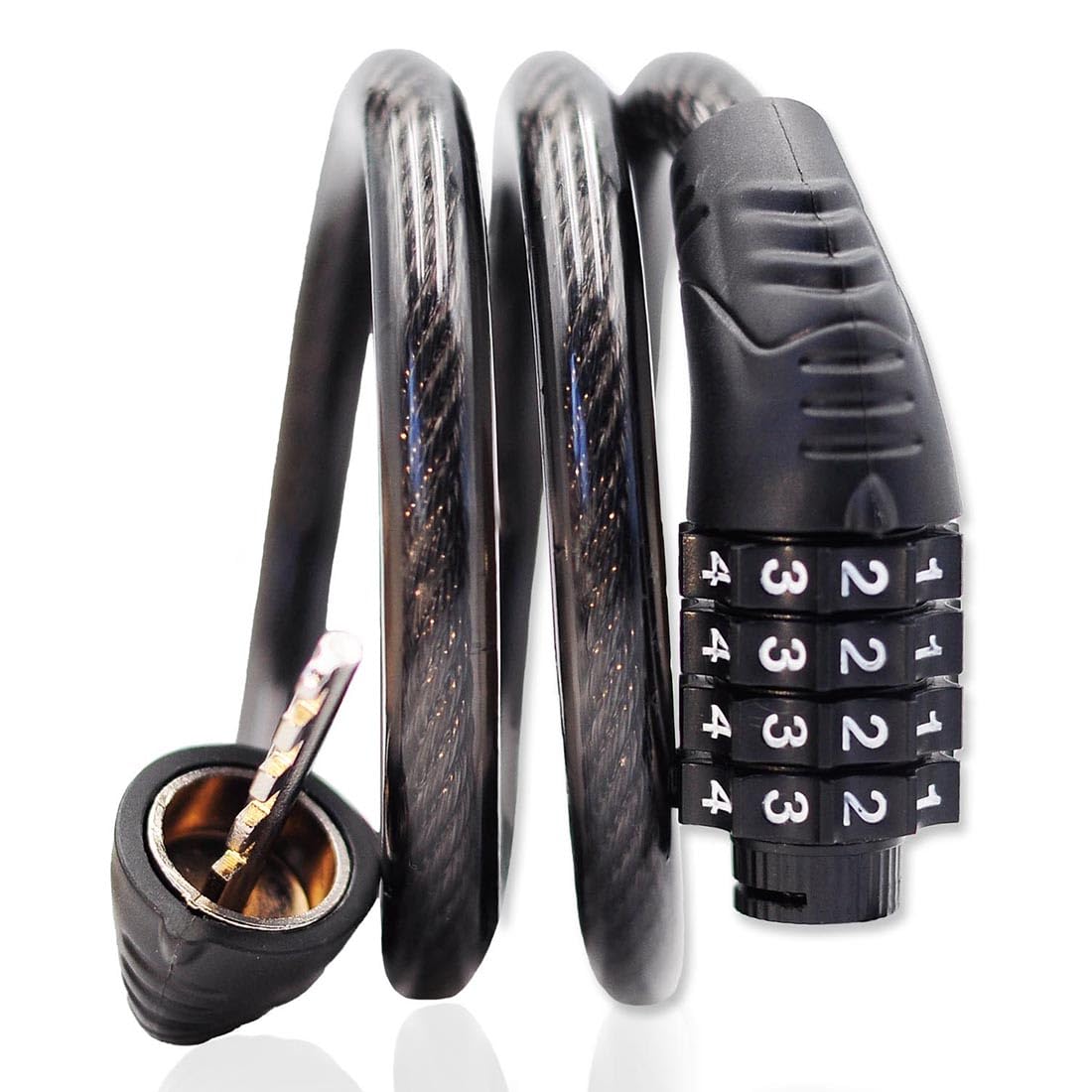
Security & Locks

Best Combination Bike Locks of 2026

A combination lock makes a deal with you: lose the key, keep the bike. That's the appeal — no keychain to forget, no spare rattling in a saddlebag — and it's also where cheap versions fall apart, with resin wheels that seize after a wet week and shackles a bolt cutter walks through. A good one locks up in seconds with cold hands, still clicks cleanly after a season outdoors, and gives you enough cable to reach the rack you actually found.

I've commuted and run errands by bike long enough to know the lock you carry is the lock you use, and a fiddly code is the fastest way to talk yourself out of stopping at the store. Over six months my team and I worked through 12 combination locks on commutes, around fat rack posts, and left out in the rain. What first-time buyers underestimate is length: a few extra inches decide whether you reach the rack, the frame, and the back wheel at once. The picks below don't all give up the same ground on security.

1

GRIFEMA 5-Digit Chain

Top Pick
GRIFEMA 5-Digit Chain

Heavy-duty everyday

Our Score 9.0/10
Check Price

Worth Noting

  • 3 ft reach is tight for two bikes
Length
3 ft
Lock Type
Chain
Combination
5-digit resettable
Chain Thickness
7 mm
Read the full review

Seven millimeters is the number that sets the GRIFEMA apart from the other chains in this group. The links are thicker than the six-millimeter chains, and the lock carries a five-digit resettable combination with more than 100,000 codes. Those are the two numbers that matter: more metal in the links and more possible codes.

What we like is the balance: the chain is heavy enough to feel like a serious deterrent at 1.6 pounds, but not so heavy that it dominates a backpack. The nylon sleeve keeps the links from scratching the frame, and the five-digit dial is easier to live with than a four-digit code if you ride the same route every day. Three feet is the catch. It is enough for one bike close to a post; it is not the chain for two bikes and a fat rack.

The GRIFEMA works best as an everyday chain for a single bike, not a long-reach lock. If you routinely lock two bikes together, choose a longer cable or chain. For one bike and a predictable rack, the extra link thickness is worth the modest weight.

Bottom line: The GRIFEMA earns its place as our heavy-duty chain: seven-millimeter links, a five-digit code, and a three-foot reach that suits one bike close to a post.
2

NDakter Key-or-Code Chain

NDakter Key-or-Code Chain

Key backup

Our Score 9.0/10
Check Price

Worth Noting

  • 3 ft reach is short for two bikes
Length
3.2 ft
Lock Type
Chain with key backup
Combination
4-digit resettable
Chain Thickness
6 mm
Read the full review

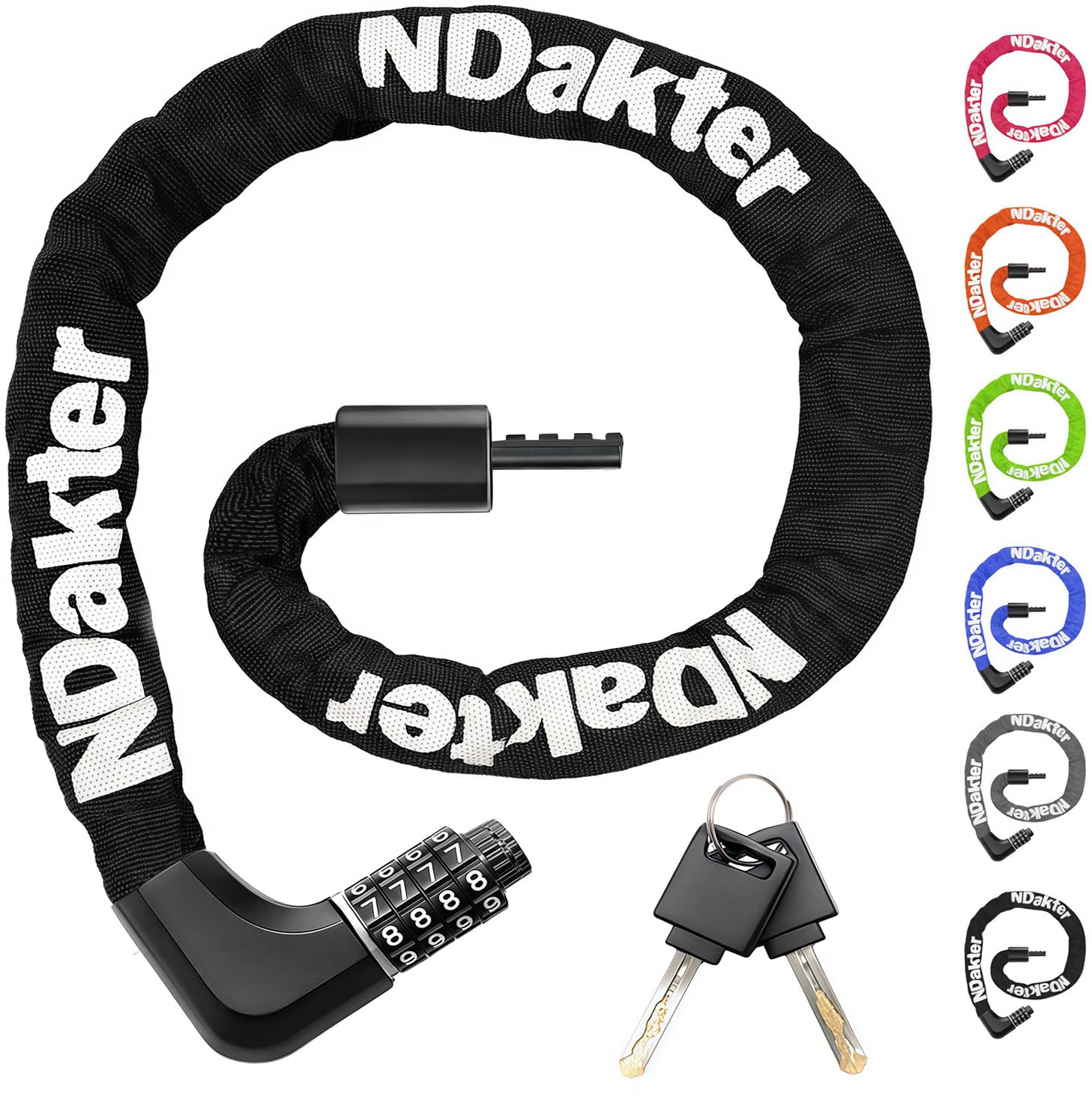
Two brass keys sit in the box alongside a four-digit dial, and that is the whole reason to look at this NDakter chain. Most combination locks ask you to trust your memory; this one lets you carry a backup without giving up keyless convenience.

The business end is a six-millimeter alloy steel chain, three feet long, wrapped in a fabric cover that keeps the links off your paint. At 1.59 pounds it is lighter than the U-lock kit, and the 1.3-inch lock head is the number to check before you buy: it needs a rack or post with a generous opening.

That key-or-code choice is what earns it a place for commuters who have fumbled a dial in the rain. We appreciate that the four-digit code is easy to reset, and the keys make a forgotten code an inconvenience rather than a ride-ending problem. The 6 mm chain is a commuter deterrent, not a match for a determined thief, but the backup key is the detail that sets it apart.

Bottom line: We keep this NDakter chain for riders who worry about forgetting a code: a four-digit dial, two brass keys, and a six-millimeter chain.

3

DocksLocks Straight Cable

DocksLocks Straight Cable

Long reach

Our Score 9.0/10
Check Price

Worth Noting

  • Straight cable is bulkier to carry than a coil
Length
5 ft
Lock Type
Straight cable
Combination
4-digit resettable
Cable Diameter
10 mm
Read the full review

Five feet of straight cable is a different tool from a U-lock or a coiled cable. It is built to reach around both wheels, a rack, and a post without the memory of a coil fighting you. The 10-millimeter marine-grade steel is vinyl coated, and the straight run threads through tight openings more easily than a coil.

The lock body is electro-galvanized zinc alloy, and the cable is meant for outdoor use. The care note is simple: rinse after saltwater and lubricate the lock occasionally. That is useful advice for a cable that may live on a rack or in a truck bed.

The four-digit combination is resettable, and the straight design makes it easy to wrap around multiple objects. We found it most useful when the rack is the awkward part: a short U-lock may not span the post and both wheels, but five feet of cable will.

The trade-off is security. A 10-millimeter cable is a deterrent, not a U-lock replacement, and a prepared thief with the right tool can defeat it. That is why we treat it as the long-reach option for two bikes or an awkward rack, not the lock we choose for an expensive bike left all day. If you want one lock for high-theft parking, the U-lock is the better anchor.

Bottom line: Five feet of straight, weatherproof cable makes this the DocksLocks we choose for two bikes or an awkward rack, with a resettable four-digit code.

4

NDakter Combo U-Lock

NDakter Combo U-Lock

Urban commuting

Our Score 8.8/10
Check Price

Worth Noting

  • Cable can be short for two bikes and a thick post
Weight
2.82 lb
Lock Type
U-lock with 5 ft cable
Combination
4-digit resettable
U-lock Opening
7.5 x 4.5 in
Read the full review

The NDakter combo is really two locks in one kit: a 1.96-pound U-lock for the frame and a five-foot cable for a wheel or a second bike. That pairing is why it works so well as a primary lock. A cable alone is a convenience lock; a U-lock alone can leave a quick-release wheel unprotected. This kit closes both gaps without asking you to carry two separate locks.

The U-lock's interior is 7.5 by 4.5 inches, which leaves room to catch a frame and a rack without twisting the bike into a bad angle. The five-foot cable is the flexible half: it reaches a front wheel, a second bike, or a post that the U-lock cannot span. The cable is there for coverage rather than as the main lock, which is the right division of labor.

At 2.82 pounds together, it is not a lock you forget in a jersey pocket. It belongs in a pannier, backpack, or frame bag, and that is the trade-off for the extra security. The four-digit code resets easily, so you can choose a number you will remember, and the keyless design means there is no key to lose.

The one thing we keep an eye on is the dial. A combination lock that lives outdoors needs clean, dry treatment, and a quick test before a ride is cheaper than a stuck lock. The U-lock does the hard work; the cable is there to extend coverage, not to replace the anchor.

Bottom line: For public bike parking, the NDakter combo is the default we recommend: a U-lock for the frame, a five-foot cable for the wheel, and no key to lose.

5

Master Lock 8143D

Master Lock 8143D

Light travel

Our Score 8.8/10
Check Price

Worth Noting

  • Preset code cannot be changed
Length
4 ft
Weight
4.8 oz
Combination
4-digit preset
Cable Diameter
5/16 in (8 mm)
Read the full review

At 4.8 ounces, the Master Lock 8143D is the lock that disappears into a backpack. The cable is four feet long and five-sixteenths of an inch thick, with a vinyl coating that protects paint. That combination makes it a natural choice for a school bike, a scooter, or a quick errand where you want a lock in hand, not in a locker.

The code is a preset four-digit combination, so you cannot choose your own number. The braided steel cable is flexible enough to thread through a frame and a rack, and the lock is backed by a limited lifetime warranty.

The 8-millimeter cable is the limit. It is a deterrent for short stops, not a lock for an expensive bike left overnight, and the low weight is only an advantage if you use it. We treat it as the lock we keep in the bag for a café stop or a child's bike, and we reach for the U-lock when the bike will be out of sight for longer.

Bottom line: At 4.8 ounces, the Master Lock is the cable we keep in the bag for quick stops, best treated as a deterrent rather than serious security.

6

Büchel Kids Bike Lock

Büchel Kids Bike Lock

Kids' bikes

Our Score 8.6/10
Check Price

Worth Noting

  • Basic cable security for unsupervised parking
Weight
7.8 oz
Lock Type
Kids' cable lock
Combination
4-digit resettable
Read the full review

Bright color is not a gimmick on a kids' lock. It makes the lock easy to spot in a bike basket, and it gives a child a reason to actually use it. The Büchel leans into that with a colorful body and a four-digit resettable code, so there is no key to lose on the way to school.

We think the dial is simple enough for children to operate, and the keyless design means a lost key does not strand the bike. The lock is light enough for a child to handle without help, which matters when they are learning the routine. It is a first lock, not a hand-me-down security anchor.

The routine matters as much as the lock: teach your child to loop the cable through the frame and around a fixed rack, not just the handlebar, and to scramble the dial before walking away. A visible rack and a short stop suit this lock better than an isolated overnight spot.

Bottom line: The Büchel is the kids' lock we choose when a child needs to work it alone: bright, keyless, and simple for short trips.

7

Jokmae Combination Cable

Jokmae Combination Cable

Packable backup

Our Score 8.6/10
Check Price

Worth Noting

  • 32 in reach is short for racks and two bikes
  • Simple build is not for daily abuse
Length
32 in
Weight
5.4 oz
Combination
4-digit resettable
Cable Diameter
10 mm
Read the full review

Thirty-two inches is the whole story with the Jokmae. The self-coiling cable is short by design, and at 5.4 ounces it takes up very little room in a seat bag or backpack. The 10-millimeter cable is thick for its size, and the four-digit code resets without a key.

That short length is useful when the rack is close and the job is simple: one frame, one fixed object, one quick stop. It is not the cable for two bikes or a thick post, and the simple zinc-and-ABS body is not built for daily abuse. The PVC coating protects paint, and the self-coiling design keeps the cable tidy between uses.

We see the Jokmae as a backup lock or a kids' lock rather than the only lock on a valuable bike. The short reach is the trade-off, but it is also what makes the lock easy to carry. If you want one lock for a commute and you have room for a little more weight, the Master Lock gives you four feet for a similar carry.

Bottom line: The Jokmae is the compact cable we keep for a seat bag or a quick stop, as long as you do not expect it to replace a full-size lock.

How We Chose and Tested Combination Bike Locks

We started with roughly 40 combination locks from brands that make locks and bike gear and little else, then filtered by the specs that decide whether a lock works at all: shackle and cable diameter, number of code digits, usable length, and price. Anything with a cable thin enough to slip into a jacket pocket went back on the shelf. That left 12 locks, which we bought at retail rather than accepting samples.

Each one went onto a real bike and into a real week — a commute with a fixed rack, grocery runs where the cable had to catch a wheel and the frame, and a stretch of being left outdoors in rain and grit instead of carried in a bag. We timed locking and unlocking with bare hands, then again in winter gloves, and handed the reset instructions to a roommate and a neighbor who'd never seen the lock to see how many tries it took them to set a working code in low light.

Security and build quality we judged by feel and by measurement: calipers against the advertised cable and shackle sizes, a check for slop in the locking head, and a look at how much of the mechanism a shim could reach. Durability showed up over the six months — whether the wheels still clicked cleanly, whether the numbers stayed legible, whether the cable coating cracked at the bends, and whether the cable coiled flat again instead of holding a kink. Length got measured in use, not on the box: how far the cable actually reached around a thick rack post plus a frame plus a wheel.

For value, we weighed what each lock cost against the hardware in hand and how much of the above it got right. The ones that scored best weren't the cheapest or the heaviest; they were the ones whose convenience didn't cost you much in protection.

How to Choose Combination Bike Locks

Start With the Lock Type

U-locks give you the stiffest resistance to cutting and prying, but they need a rack or post they can close around; a cable or chain is the flexible half that catches a wheel or a second bike. A chain sits between the two: more cut resistance than a thin cable, more reach than a U-lock. If your bike sits in public all day, start with a U-lock and add a cable. If you lock to odd racks or need to secure two bikes, a chain or long cable makes the job easier.

Check Diameter and Reach Together

A thick cable is not automatically better if it is too short to reach the rack. For a single bike and a standard rack, a three-foot chain or four-foot cable can work; for two bikes or a thick post, five feet gives you more options. Diameter tells you about cut resistance, but it also adds weight. A 6- to 7-millimeter chain is a sensible everyday compromise; a 10-millimeter cable is thick for a cable but still a cable. Measure the distance around your usual rack and post before you choose. A 32-inch cable is a backup, not a primary lock.

Decide How Much Combination You Need

Four digits are easy to remember and fast to spin; five digits add combinations and a little more security, but they are slower in the dark and easier to misread. A resettable code is worth having because you can choose a number you will actually use. A preset code cannot be changed, which is a real limitation if the number becomes known. If you worry about forgetting a code, a chain with a key backup gives you a second way in without carrying a separate keyring.

Plan for Weight and Weather

Light locks get carried; heavy locks get left at home. A sub-one-pound cable is fine for a quick stop, but a U-lock or thick chain that weighs two to three pounds is the better choice for a bike left unattended. Look for a vinyl or fabric cover that keeps the lock off your paint, and keep the dial clean and dry. A quick spray of lubricant and a test before a ride are cheaper than a stuck lock.

Frequently Asked Questions

Final Verdict

Our default is the NDakter combo U-lock because it solves the two most common weak points at once: the frame gets a U-lock and the wheel gets a five-foot cable, all with a four-digit code instead of a key. It is heavy, and that is the honest trade for city parking. If you need to reach two bikes or an awkward rack, choose the DocksLocks straight cable; if a forgotten code is the worry, the NDakter key-or-code chain is the more forgiving commuter choice.