E-Bikes

Best Commuter E-Bikes of 2026

The first time I rode an e-bike to work, I got there eleven minutes early and not especially sweaty, and I have not seriously considered the bus since. That's what a good commuter bike buys you: a trip that happens the same way on a 90-degree Tuesday as it does into a headwind, with a laptop and a change of clothes on board. The trouble is that the category is full of bikes that look identical on a spec sheet and behave nothing alike at 7:45 in the morning.

Here's something I wish I'd known sooner: quoted range is largely fiction, and motor torque matters far more than top speed once you're hauling groceries up a hill. My team spent the past seven months riding eight commuter e-bikes on real commutes and errands, and the differences came down to assembly, ride quality, and whether a bike still felt solid at month six — a battery that fades in the cold or a rack that won't take your panniers ruins the whole idea. The picks below are the ones worth the money.

1

Funhang EB-C2

Top Pick
Funhang EB-C2

Daily paved commutes

Our Score 8.8/10
Check Price

Worth Noting

  • 62-pound build is hard to manage on stairs
Weight
62 lb
Battery
48V 374.4Wh removable
Commuter Kit
Rear rack, fenders, headlight
Assisted Range
40-50 miles
Read the full review

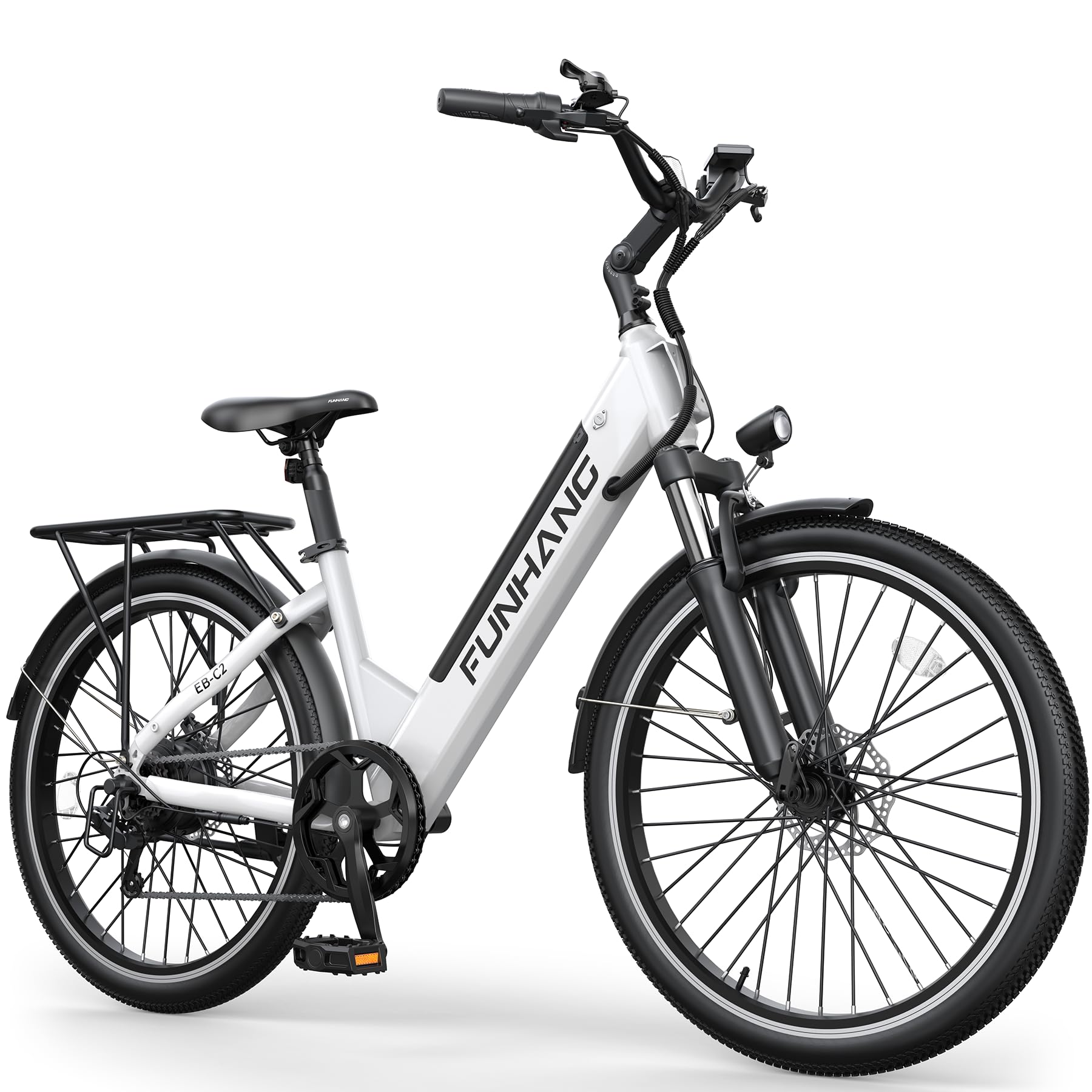
The Funhang EB-C2 opens with the right commuter shape: a step-through frame that is easy to mount with a bag on your shoulder, plus a rear rack, fenders, and a headlight. The 500W motor (1000W peak) and 20 mph top speed keep it within the rhythm of bike lanes, and the front suspension takes the edge off patched asphalt. We also like seeing UL 2849 certification on a bike at this end of the price range; it speaks to the electrical system, not just the frame.

The 48V 374.4Wh battery is removable, which matters if you park in a garage without an outlet or live in a walk-up. Funhang claims 40-50 miles in pedal assist; we treat that as a best-case number. Throttle use, cargo, and headwinds all pull it down. For a typical 10-15-mile round trip, though, the buffer is comfortable.

The ride is more upright than sporty, which is what we want in traffic: the adjustable stem lets you raise the bars without changing cables, and the wide tires feel settled over gutter seams. We came away thinking of it as a bike that removes excuses—the rack holds a pannier, the fenders keep road spray off, and the step-through frame means you can wear ordinary clothes. It is not the most exciting e-bike here, but it is the one we trust to make a Tuesday commute simpler.

Bottom line: We recommend the Funhang EB-C2 as the best all-around commuter here: it pairs a step-through frame and rack with UL 2849 certification, useful range, and a price that undercuts the lighter city bikes.
2

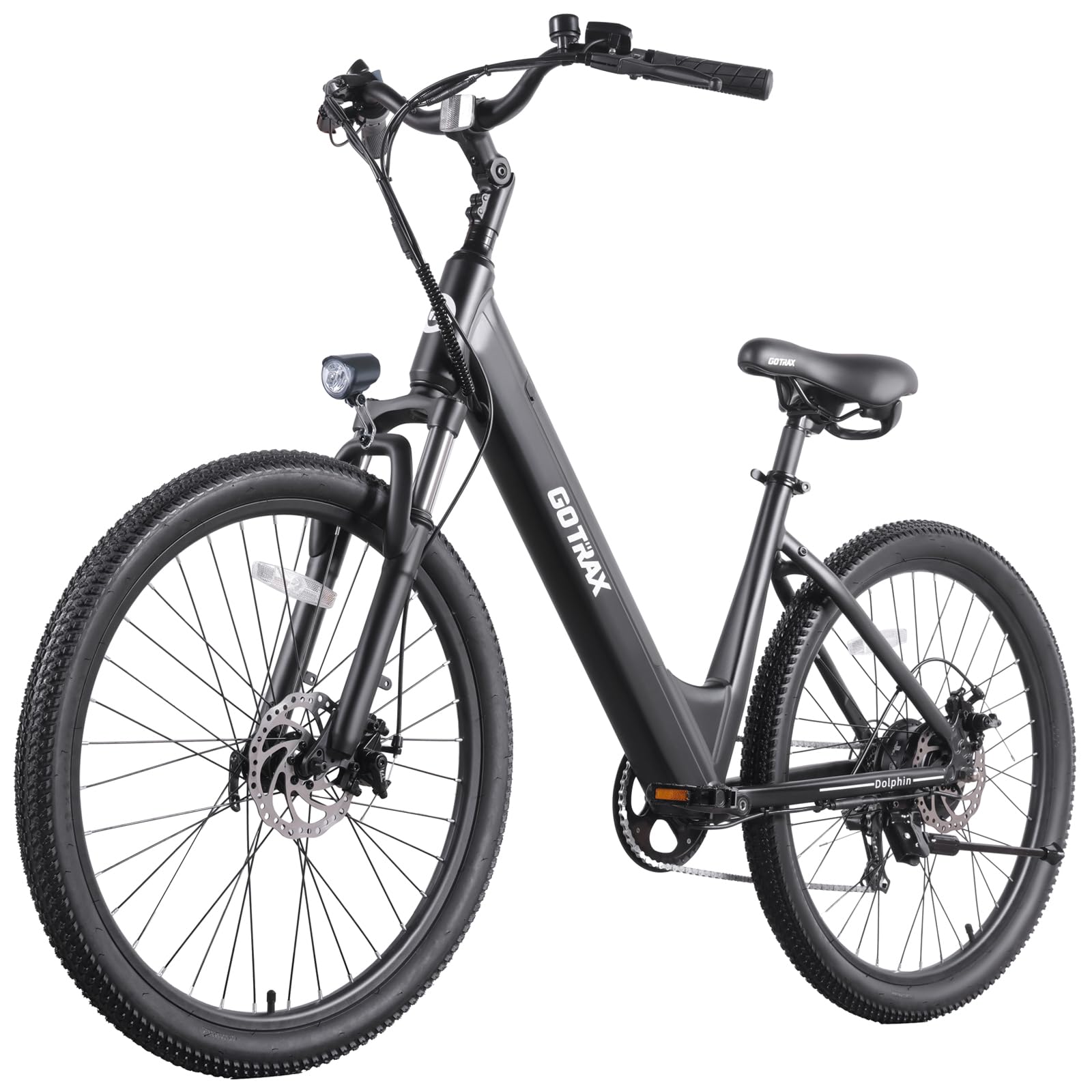
Gotrax Dolphin

Gotrax Dolphin

Stairs and storage

Our Score 8.6/10
Check Price

Worth Noting

  • No rack or fenders included
Motor
350W, 500W peak
Weight
48.9 lb
Battery
280.8Wh removable
Assisted Range
Up to 30 miles (PAS 1)
Read the full review

The Gotrax Dolphin is the bike we reach for when the commute includes a flight of stairs. At 22.2 kg—about 49 pounds—it is noticeably easier to lift than the full-size bikes with bigger batteries, and the 26-inch wheels still roll like a proper city bike. The 350W motor (500W peak) tops out at 20 mph, and the Shimano 7-speed gearing gives you something to do with your legs when you want to go farther.

We think it is the right choice for a short, flat commute where the bike has to be carried or parked in a hallway; the lighter weight and narrower footprint make that daily routine easier. The 280.8Wh battery is the smallest here, though, and the 30-mile range is measured in the lowest pedal-assist setting. If your round trip runs longer than that, the ANCHEER or Funhang gives you more margin.

What we appreciate about the Dolphin is how normal it feels. The upright bars, front suspension, and light weight add up to a bike you can ride in work clothes without thinking about it. The throttle is there when you want a rest, but the bike is at its best when you pedal. It is the city bike we choose when we want to arrive without feeling like we fought the machine.

Bottom line: We recommend the Gotrax Dolphin for commuters who regularly lift or store their bike, because its lighter build makes the daily routine easier than the larger-battery bikes here.

3

ANCHEER 26" Commuter

ANCHEER 26" Commuter

Longer assisted rides

Our Score 8.6/10
Check Price

Worth Noting

  • 66-pound build is hard to manage on stairs
Motor
350W
Weight
66 lb
Battery
48V 10.4Ah removable
Commuter Features
Cruise control, LCD, 7-speed
Read the full review

The ANCHEER's 48V 10.4Ah battery is the largest in this group, and the cruise control is the feature that makes it feel purpose-built for a long, flat commute. The 350W hub motor and 7-speed gearing are modest, but the bike is set up for steady miles rather than sprinting. An LCD display, front suspension, and disc brakes round out a practical package.

Range is the reason to choose it. The bigger battery should hold a higher assist level for longer than the 280.8Wh and 374.4Wh bikes here, which matters if your route has a headwind or you do not want to arrive sweaty. The aluminum frame is also a sensible choice for a bike that lives outside; it resists corrosion better than the steel frames on several folders.

We think the ANCHEER makes the most sense for a rider with a long, gentle route and a secure place to park. The motor feels happier spinning than surging, and the 7-speed drivetrain lets you keep pedaling if the battery runs low. The caveat is electronic consistency: test the motor, lights, and charger thoroughly during the return window, because those are the systems that have been less predictable than the mechanical package.

Bottom line: We recommend the ANCHEER for longer assisted commutes: its 508.8Wh battery and cruise control make flat, steady routes less tiring, and the 7-speed drivetrain adds flexibility.

4

LELEKUAI T1

LELEKUAI T1

Folding commutes

Our Score 8.6/10
Check Price

Worth Noting

  • 14-inch wheels feel harsh on rough pavement
  • Battery range drops at high assist
Weight
48 lb
Battery
48V 10Ah removable
Wheel Size
14 in
Assisted Range
32 miles
Read the full review

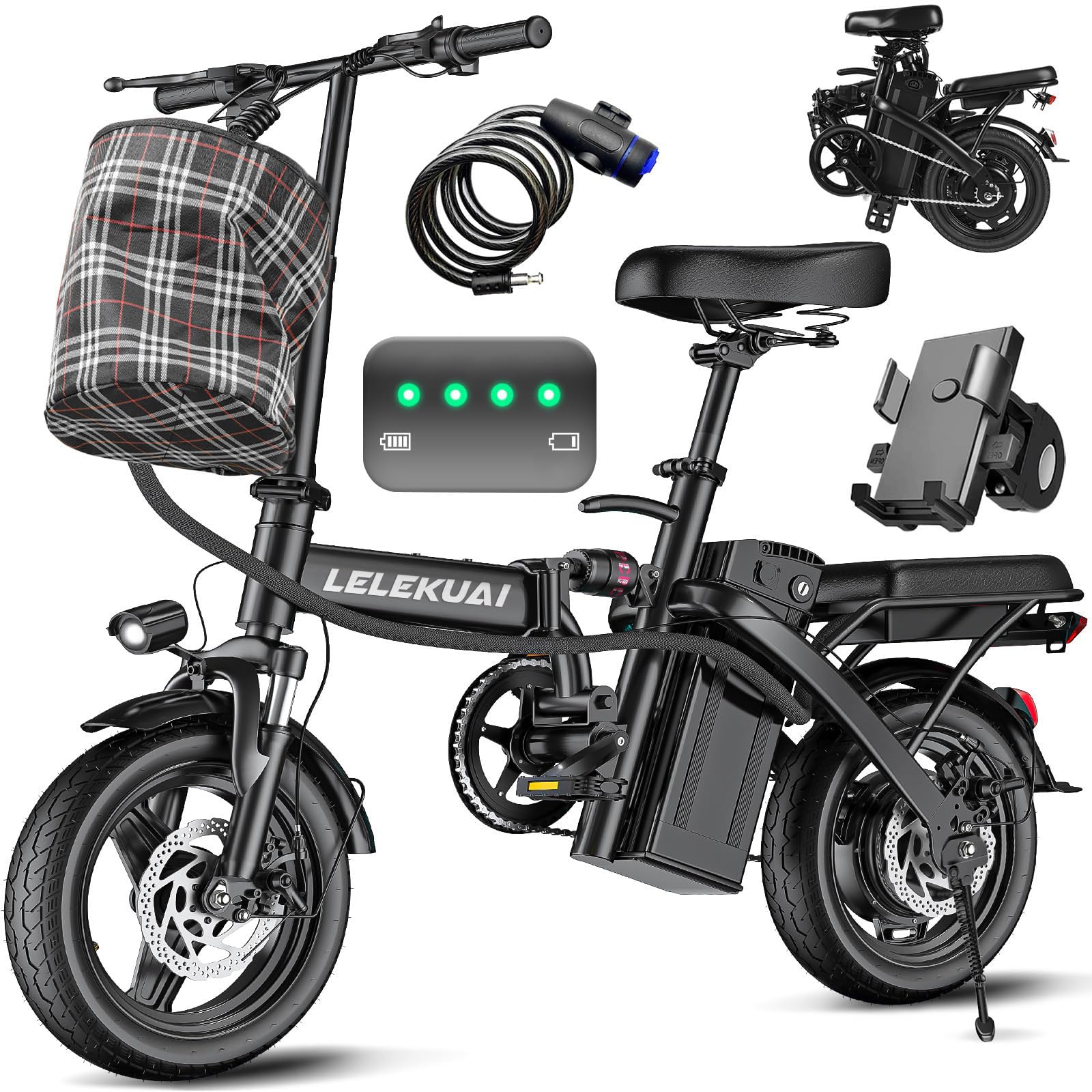
The LELEKUAI T1 is a 14-inch folding bike with a 750W peak motor and a 24 mph top speed, a combination that sounds odd until you ride it. The small wheels make it feel nimble in traffic, and the quick-fold frame lets it disappear into a trunk, closet, or under a desk. At 48 pounds it is not a featherweight, but it is manageable for a folder with this much battery.

We think it earns its spot as the folding pick because it does not ask you to give up much speed. The 48V 10Ah battery is removable, the fold is simple enough to repeat twice a day, and the included basket and lock make it useful straight away. For a train-to-office trip or a short ride to a café, the trade-off between wheel size and storage is easy to accept.

The 3-speed gearing is the compromise we noticed most. It is fine on a flat river path, but a steep bridge ramp will have you reaching for the highest assist. The bike is also heavy enough that carrying it up a long flight of stairs is a chore, even though it folds. We think most riders will still choose it for the storage size, not for the carry.

Bottom line: We recommend the LELEKUAI T1 for commuters who fold and store their bike every day; the 14-inch package is genuinely compact, quick, and easy to live with.

5

Jasion EB5

Jasion EB5

Tight budgets

Our Score 8.2/10
Check Price

Worth Noting

  • Durability is the weakest in this set
Motor
1000W peak
Weight
49.6 lb
Battery
360Wh removable
Assisted Range
25-40 miles
Read the full review

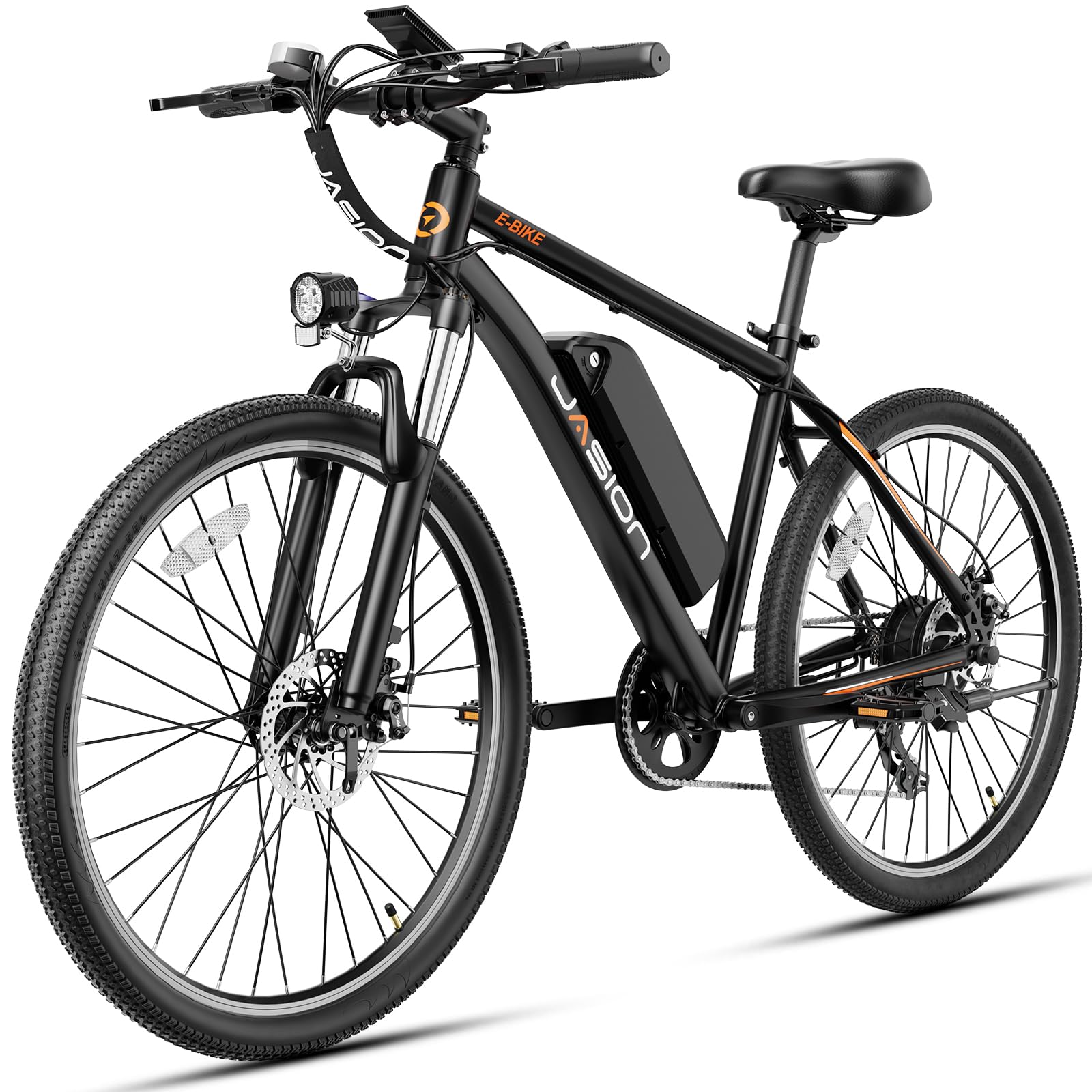
The Jasion EB5 is the lowest-priced full-size bike in this group, and we judge it on that basis. The 26-inch tires and front suspension give it a more familiar ride than the 14-inch folders, and at 49.6 pounds it is light enough to muscle onto a rack. The 1000W peak motor and 20 mph top speed are more than adequate for bike-lane commuting.

The 360Wh battery is on the small side, with a claimed 25-40 miles per charge. In practice, the low end of that estimate is the number to plan around if you use higher assist or carry a load; the removable battery makes charging easier, but it does not add capacity. The 7-speed gearing is a real plus on gentle grades, and the puncture-resistant tires are a sensible choice for glass-strewn bike lanes.

The EB5 is not trying to be a premium bike, and we appreciate that it spends its money on the parts you notice: the 7-speed drivetrain, the removable battery, and the front suspension. The display is simple, the lights are basic, and the ride is more upright than sporty. For a first commuter or a backup bike, that is a sensible set of priorities.

Bottom line: We recommend the Jasion EB5 for budget-limited commuters who want a full-size bike and can handle basic upkeep; it is the lowest-priced route into 26-inch e-bike riding.

6

URLIFE F1L

URLIFE F1L

Short multimodal trips

Our Score 8.0/10
Check Price

Worth Noting

  • 265-pound rider limit is on the low side
  • 14-inch wheels are less stable at speed
Battery
375Wh
Wheel Size
14 in
Rider Limit
265 lb
Assisted Range
20-40 miles
Read the full review

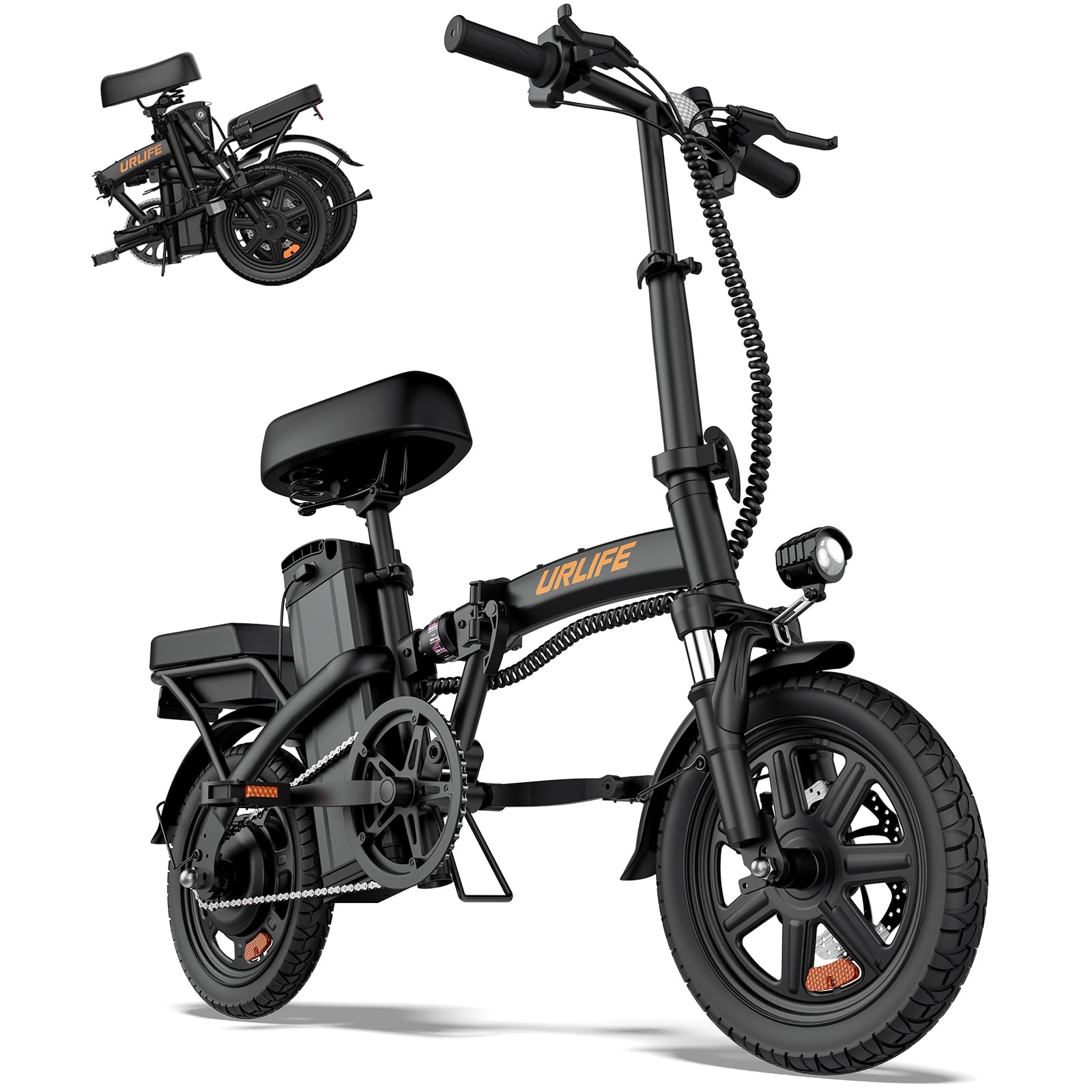
The URLIFE F1L is a 14-inch folder with a 375Wh battery and a claimed 20-40 mile range. It is built for the kind of commute that mixes a short ride with a train, bus, or car trunk, not for a long solo haul. The dual suspension and 500W peak motor make it feel more substantial than its compact size suggests.

We see it as a value folder for short hops: the compact size is the feature you notice, and the 20-40 mile range is best treated as a low-assist estimate. The three riding modes are easy to understand, and the battery comes out for desk-side charging. For a mile or two each way, that is a useful package.

We still think it is a sensible short-hop folder, but the main thing to manage is electrical reliability: test the motor, lights, and charger during the return window. That is a reasonable precaution on any budget e-bike, but it matters more here because the assist is the whole point. The F1L rewards a rider who keeps trips short and stays in the lower assist levels.

Bottom line: We recommend the URLIFE F1L for short multimodal trips and closet storage, as long as you accept basic components and a compact ride.

How We Tested Eight Commuter E-Bikes Over Seven Months

We started by pulling every commuter e-bike we could find under a set price ceiling and reading the specs for the things that matter at 7 a.m.: torque rather than top speed, battery capacity in watt-hours rather than a claimed range, eyelets for a rear rack and fenders, and whether the bike used a torque sensor or the cheaper cadence sensor. Anything that couldn't take a rack, or came in only one frame size, was cut early. That left eight, a mix of direct-to-door and bike-shop names.

Each one was assembled at home using only the tools in the box, and we timed it — most took about 40 minutes, one took two hours because the front brake dragged and the derailleur hanger arrived bent. Then we rode them for seven months: a 4.5-mile each-way city commute with one honest hill, an 11-mile suburban run with a child seat bolted on, weekly grocery hauls, a deliberately rainy week, and a run of 25-degree mornings to see what the cold did to range.

We logged distance on a fixed loop at each assist level and compared it with the claimed figure, timed a full recharge, and tried to change settings while wearing winter gloves. At 50 miles we checked bolt torque and spoke tension; at 300 and 600 we listened for new rattles and squeezed the brakes hard from speed. A bike can feel fast in the first week and loose by the third month, so we kept notes on both.

How to Choose Commuter E-Bikes

Match the Battery to the Round Trip

Published range is usually measured in the lowest pedal-assist mode, with a light rider on flat ground. Treat it as a ceiling, not a promise. A larger battery gives you more margin for hills, headwinds, cargo, and the temptation to use the throttle, but it also adds weight and cost. If your commute is short and flat, the Gotrax Dolphin's smaller pack may be enough; for a longer assisted ride, the ANCHEER's larger battery is the safer bet.

Decide Whether You Need to Carry It

Weight matters most at the two ends of the trip: the stairs at home and the rack or hallway at work. A 62-pound bike feels stable on the road but awkward to haul; a 49-pound bike is easier to lift without feeling fragile. Folding bikes solve storage, not necessarily carrying—the LELEKUAI T1 folds small but still weighs 48 pounds. If you have ground-floor parking, put weight lower on your list and use the freedom on a larger battery.

Choose a Frame and Fit You Can Live With

Step-through frames are easier to mount in work clothes, especially with a bag or a child seat on board, while high-step frames can feel stiffer and more traditional. Check the minimum rider height and the standover clearance before you order; the Gotrax Dolphin lists a 5.2-foot minimum, which rules it out for shorter riders. An adjustable stem is a small feature with outsized value because it lets you sit more upright without swapping parts.

Look at the Commuter Kit, Not Just the Motor

A rack, fenders, and lights are the difference between a fair-weather toy and a bike you use on a wet Tuesday. The Funhang EB-C2 includes a rear rack, fenders, and a headlight; the Gotrax Dolphin comes with reflectors, so budget for accessories. Check the rack's weight limit before you strap on panniers or a child seat, and make sure the fenders clear the tires you plan to run.

Treat Brakes and Electrical Safety as Non-Negotiables

Look for UL 2849 certification on the battery and electrical system, and do not accept a bike that arrives with a damaged charger or loose wiring. Mechanical disc brakes are common at this price, and they work well when adjusted; hydraulic brakes offer more power but are not essential for a paved commute. After assembly, check the quick releases, stem, and brake pads before the first ride.

Frequently Asked Questions

Final Verdict

Start with the Funhang EB-C2 if your commute is a daily paved round trip and you want the rack, fenders, step-through frame, and UL 2849 certification in one package. It is the most complete commuter here, even if it is not the lightest.

If you carry your bike up stairs, choose the Gotrax Dolphin; its lighter build makes the routine easier, and its smaller battery is a fair trade for short trips. For a train-to-office fold, the LELEKUAI T1 is the one we reach for.