Bags & Storage

Best Cycling Backpacks of 2026

The wrong backpack makes itself known about ten minutes into a ride: a strap slips, the load shifts, and you're tugging at the shoulder harness at every stoplight. A good cycling pack fixes that by hugging your back without clamping your ribs, keeping a day's gear in pockets you can reach one-handed, and shrugging off drizzle on the way home. Over the past eight months, my team and I have pedaled with 12 backpacks on commutes, weekend trail rides, and a few off-bike hikes to see which ones actually stay put.

Capacity is the easy part to advertise and the hardest to live with — a 20-liter pack can still bury your keys under a rain shell. We noted pocket layout, how the load sat when full, and whether a hydration bladder leaked into the main compartment. We also wore each pack on a hike to judge its trail-daypack potential, and checked zippers, seams, and padding after months of sun, sweat, and pavement drops. The picks below are the ones that earned a permanent spot by the door.

1

Arvano 6L MTB

Top Pick
Arvano 6L MTB

Compact trail rides

Our Score 9.2/10
Check Price

Worth Noting

  • Strap stitching and buckles are weak points
Carry
Chest and waist straps
Pockets
Tool and bottle pockets
Capacity
6 liters
Hydration
Bladder not included
Read the full review

Six liters does not sound like much until you pack the Arvano the way it expects: a spare tube, tire levers, a mini pump, a multitool, snacks, phone, and a light shell all disappear into separate pockets without turning the bag into a lump. That is the ride it is built for, short and technical and self-supported, and it is why the pack has a place here.

We like the chest and waist straps because they pull the load close to your back, so the pack does not swing when you shift weight. The padding is comfortable against a jersey, and the narrow profile leaves your arms free. For a 6-liter pack, it carries a surprising amount of trail clutter without feeling bulky.

The obvious catch is hydration: the Arvano does not include a bladder, so you need to supply your own or carry bottles. It is also a 6-liter pack, which is right for a trail ride but not for a commute with a laptop. The main compartment can take a filled 2-liter bottle, so you can skip the bladder if that is your preference.

Bottom line: For short, technical rides where tools and a tube matter more than a bladder, the Arvano 6L is the compact pack we choose.
2

Teton Oasis Trailrunner 18L

Teton Oasis Trailrunner 18L

All-day rides

Our Score 9.0/10
Check Price

Worth Noting

  • Waist strap is the weak point
Weight
2 lb
Capacity
18 liters
Reservoir
2 liters
Rain Cover
Included
Read the full review

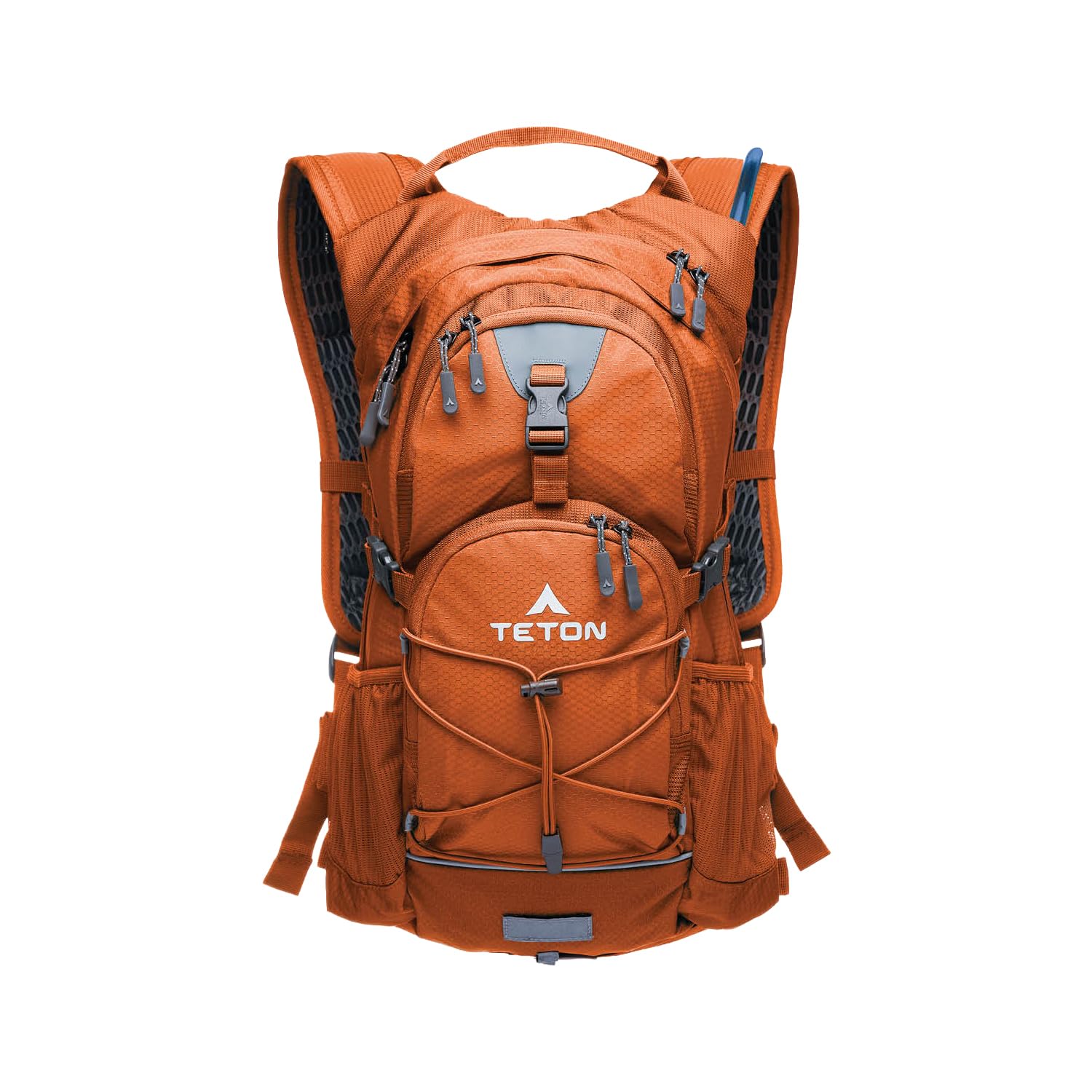
The Teton Oasis Trailrunner is the pack we reach for when a ride needs more than a bottle and a multitool. Its 18-liter body takes a jacket, lunch, tools, and a first-aid kit, while the included 2-liter bladder sits in an insulated pocket. That combination is why it is our top pick: it covers a long trail ride, a commute, and a wet-weather day without making you choose a different bag.

The sewn-in rain cover is the detail we appreciate most. It stays with the pack instead of getting left at home, and the bungee cord gives you a place to stash a helmet or a shell when the climb warms up. The high-density foam straps and mesh backing are comfortable against a jersey, and the pocket layout keeps small items from migrating to the bottom.

The fit is the part to check. The pack is adjustable for men, women, and youth, but the torso runs long enough that smaller riders may find it sits low. Load it with your usual gear before a long ride; if the waist strap lands on your ribs rather than your hips, size down or choose a 6-liter pack.

The 18-liter body is more pack than a short trail ride needs, but it is the one here that keeps a full day's gear organized. For a rider who wants one bag for gravel, commuting, and mellow singletrack, that versatility is worth the extra bulk.

Bottom line: We recommend the Teton Oasis Trailrunner for riders who want one pack for long trails, commutes, and wet weather; it is the most complete package here.

3

Unigear 2L Hydration Pack

Unigear 2L Hydration Pack

Minimalist hydration

Our Score 9.0/10
Check Price

Worth Noting

  • Bladder hook and mouthpiece can break
Weight
1.01 lb
Pockets
1
Pack Size
16.5 x 8 x 6.0 inch
Reservoir
2 liters
Read the full review

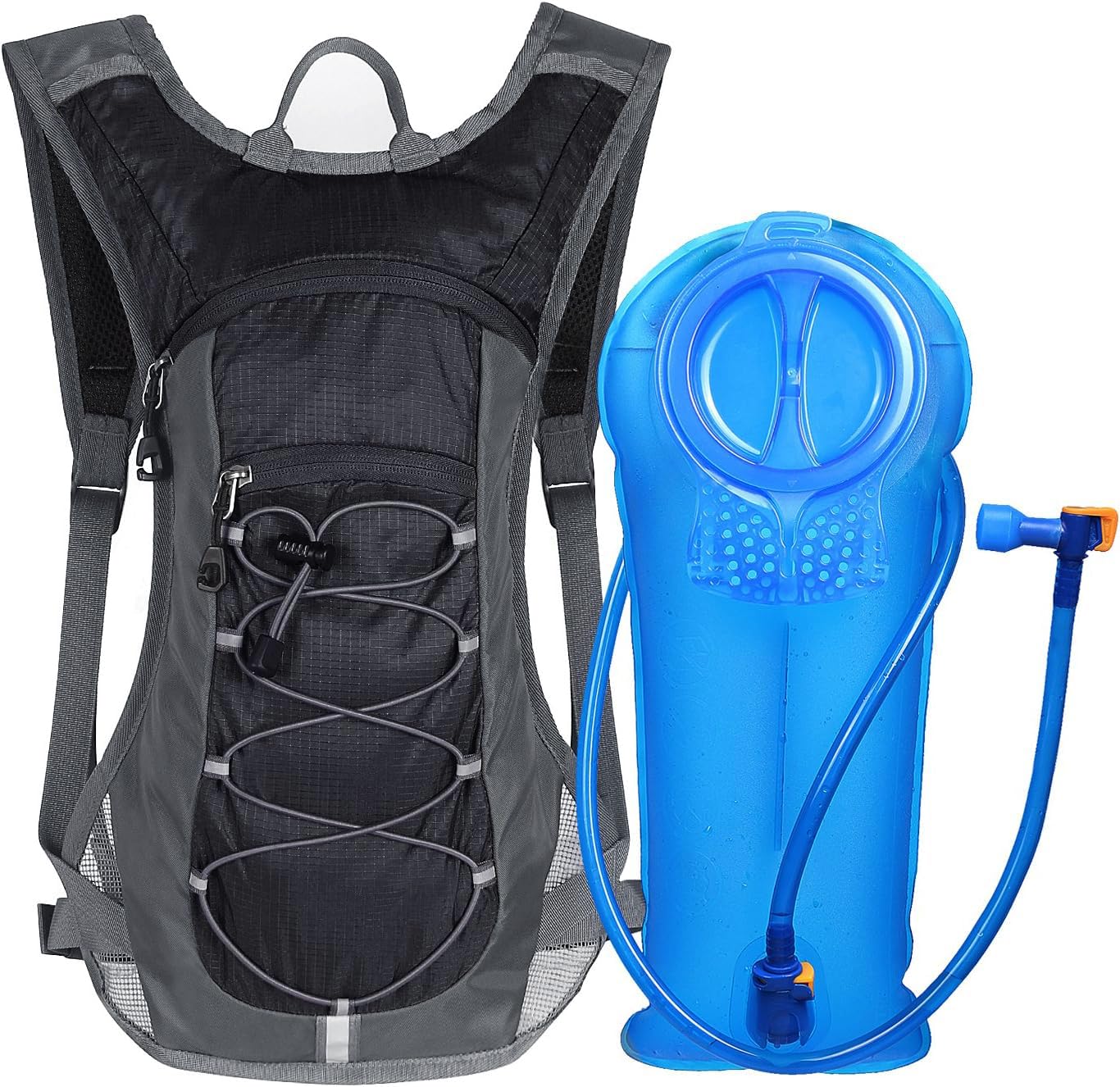
The Unigear is the least expensive way to get a pack and bladder together, but the bladder is also the part to scrutinize. It is a 2-liter reservoir in a pack that weighs about 1.1 pounds, with a small front pocket for keys and a snack. That is a race-day kit, not a commuter bag: there is no room for a jacket, tools, or a lunch. We see the appeal for short rides where you want water and almost nothing else.

The bladder has a screw cap and an on/off bite valve, and the pack is splash-resistant. The drinking end and cap are the weak points: fill it, close it, and test the seal before you put it in the pack. The shoulder, chest, and waist straps adjust over a wide range, so it fits teenagers through adults.

The single main pocket fills quickly: if you carry a phone, keys, and a gel, it is enough; if you need a tube or a layer, choose a larger pack. The pack is at its best when you fill the bladder, add a key and a gel, and leave the rest at home.

Bottom line: For a minimalist race-day pack with a bladder included, the Unigear is a cheap option, provided you check the bladder seals.

4

Windchaser 6L Bike Pack

Windchaser 6L Bike Pack

Budget trail rides

Our Score 8.8/10
Check Price

Worth Noting

  • Bladder not included
  • Runs small for larger frames
Weight
1 lb
Capacity
6 liters
Reservoir
Fits 2L reservoir
Water Resistance
Water resistant
Read the full review

The Windchaser 6L is one of the least expensive packs here, but the detail that matters on the bike is the reflective strip across the shoulder strap. It is not a token patch; it sits where drivers and trail users catch it in low light, which makes the pack feel more considered than its price suggests.

We like that it keeps a narrow shape on the back. The 6-liter main compartment has a sleeve and port for a 2-liter reservoir, three pockets separate tools from snacks, and the water-resistant nylon shrugs off road spray. The shoulder and waist straps adjust far enough for most adults, and the whole pack is light enough to forget you are wearing it on a short ride.

The main compromise is capacity: six liters is enough for a tube, tools, phone, and a light layer, but not for a laptop or a full day's food. The fabric is water-resistant rather than waterproof, so it handles road spray but not a sustained downpour. The reflective strip is the detail that keeps it in the rotation for early starts and winter afternoons.

Bottom line: If you want a cheap, reflective pack for short rides and already own a bladder, the Windchaser 6L is the value pick we recommend.

How We Tested Cycling Backpacks on the Road and Trail

To build the shortlist, we started with packs marketed for cycling and filtered out anything that lacked a secure sternum or hip strap, a dedicated hydration sleeve, or a water-resistant base. We cross-checked capacity claims against real-world loads, stuck to a $50–$250 range so the group stayed comparable, and read through hundreds of owner reviews to flag the models that kept coming up. That left 12 backpacks, which we tested over eight months.

Each pack went on at least a dozen commutes, two weekend trail rides, and one local hike of three to five miles. We loaded them with a standard commute kit — 15-inch laptop, lunch box, change of clothes, mini pump, and tool roll — and a separate trail kit with a hydration bladder, shell, snacks, and a first-aid pouch. We noted what fit without a fight, what had to be crammed, and which pockets were reachable with the pack still on.

Fit and weight got judged on the bike: we rode with each pack loaded, stood on the pedals during climbs, and checked for sway or shoulder-strap creep at speed. For leakage, we filled every hydration bladder to its marked line, sealed it, and squeezed it inside the pack to see if water seeped through seams or into the main compartment. Durability was a months-long observation — we checked zipper pulls, bar-tacked stress points, and base fabric after every few weeks of being set down on pavement, hung on hooks, and rained on. We also compared each pack's price against its hardware and stitching, since a cheap pack with flimsy buckles is no bargain.

How to Choose Cycling Backpacks

Capacity: Match the Ride, Not the Biggest Number

A cycling backpack has to carry what the ride demands and nothing more. Six liters is enough for a tube, levers, a mini pump, a multitool, snacks, phone, and a light shell; that is the sweet spot for short trail rides and fast commutes. An 18-liter pack like the Teton Oasis adds room for a jacket, lunch, first-aid kit, and a change of clothes, but it also sits larger on your back. We prefer sizing down for technical riding and sizing up for all-day distance. If you routinely carry more than a layer and a snack, go larger.

Hydration: Included Bladder or Reservoir Sleeve?

A pack that includes a bladder is ready to ride, but the bladder is also the component most likely to leak. Check the cap, bite valve, and hose connection before your first ride, and test the seal with water over a sink. If you already own a reservoir, a sleeve-and-port pack like the Windchaser saves money and lets you use the bladder you trust. If you want one purchase that covers everything, the Teton's included 2L bladder is the simpler route.

Fit and Stability Beat Extra Padding

The best pack is the one that does not move when you shift weight. Look for a chest strap and a waist strap, then check that the torso length puts the load between your shoulder blades rather than at your lower back. Smaller riders often find a pack that fits a 5-foot-10 rider swims on their frame; check the strap range before you buy. We pay more attention to a close, adjustable harness than to thick padding, because padding cannot fix a pack that swings.

Weather Protection and Durability

Water-resistant nylon handles road spray and a short shower; a sewn-in rain cover is the better choice for commutes and long days where the weather can turn. Strap stitching, buckles, and zippers are the parts that fail first, so inspect them before you load the pack heavily. If you ride technical terrain, check the waist strap and hose port regularly. A pack that keeps its shape when loaded is worth more than one with extra pockets.

Frequently Asked Questions

Final Verdict

The Teton Oasis Trailrunner is the pack we recommend first. It has the capacity for a long ride or a commute, includes a 2L bladder, and adds a rain cover that most packs here lack. Its torso fit is the one thing to check. If your rides are short and technical, the Arvano 6L is the better shape: it carries tools and a tube without bulk. For the lowest spend, the Windchaser 6L is the budget call.