Cycling Apparel

Best Cycling Base Layers of 2026

A base layer has one of the odder jobs in cycling: warm enough for the first ten minutes, when your legs haven't woken up yet, and thin enough that you forget it's there by mile thirty. I once pulled on a beefy winter layer for a mild morning and spent the rest of the ride damp and chilled under my jersey — the fabric that saves you at the start is usually the one that soaks you by the coffee stop. A good one moves sweat off your skin, sits flat under bib straps, and doesn't bunch at the wrists. Get that right and every layer above it works better.

Fit matters more here than in most of your kit, which is why sizing and sleeve length come up in nearly every customer review I read. My team and I have ridden in 14 base layers over the past six months, from open mesh to brushed winter weights, and the gaps in softness, fabric thickness, and how they held up after a dozen washes were wider than the price tags suggested. Here's what earned a permanent spot in the rotation.

1

Under Armour ColdGear Fitted Mock

Top Pick
Under Armour ColdGear Fitted Mock

Cold-weather rides

Our Score 9.4/10
Check Price

Worth Noting

  • Fitted rather than a true compression fit
  • Seams can fray with repeated washing
Fit
Fitted
Fabric
ColdGear
Sleeve
Long sleeve
Neckline
Mock neck
Read the full review

A mock collar looks like a minor detail in a photograph and turns out to be the difference on a cold morning. This one sits close without pressing on the throat, and the body runs long — long enough to stay inside bib tights when you are bent over the bars instead of riding up into a gap at the lower back. That length is what we noticed first, because it is the thing most crew-neck base layers get wrong.

ColdGear is Under Armour's cold-weather fabric, and of the insulated options here it is the one that feels most like a garment and least like a plastic film. We wore it under a jersey and a shell on a raw morning and never got the clammy, over-bundled feeling that comes from stacking two ordinary long sleeves. It is the one we take for winter commuting and hard, cold training alike.

The warmth is also the limit. This is a cold-weather top, full stop — in mild conditions it is more layer than you want, and it will sit in the drawer from spring to autumn. For the riding it is built for, we have not found much to argue with.

Bottom line: For genuinely cold rides, we take the mock neck and the long body here over anything else in this guide — it seals the throat and stays tucked when you're stretched out.

2

TELALEO Women's Thermal 4-Pack

TELALEO Women's Thermal 4-Pack

Women's winter rides

Our Score 9.4/10
Check Price

Worth Noting

  • Runs small, so take the larger size
Lining
Fleece lined
Sleeve
Long sleeve
Pack Size
4 pack
Department
Women's
Read the full review

Four fleece-lined tops, one purchase, and a winter wardrobe solved. They are snug without being restrictive, the lining is soft rather than scratchy, and the crew neck sits close without feeling like a turtleneck you are fighting — which is more than we can say for a lot of thermal layers that bunch at the throat.

On the bike they behave. The body runs long, which in a riding position is exactly right: it stays down over the lower back instead of leaving a strip of skin above your shorts. Fleece-lined fabric can turn clammy once you sweat, but these breathe better than their weight suggests, and we were comfortable on steady cold rides rather than only on gentle ones.

The fleece is thinner than it looks in the photographs, so they layer under a jersey without a visible ridge across the shoulders, and the colors have held up in the wash. Four of them means you are never waiting on laundry in the coldest week of the year, which is worth more than a marginally better fabric.

Bottom line: It's the women's thermal set we point to first: four snug, non-itchy tops that fit under a jersey and make a winter laundry rotation painless.

3

32 Degrees Lightweight Crew

32 Degrees Lightweight Crew

Lightweight layering

Our Score 9.4/10
Check Price

Worth Noting

  • Thin enough to go sheer in light colors
Fit
Form fitting
Sleeve
Long sleeve
Stretch
4-way
Department
Men's
Read the full review

The first thing you notice is how little there is of it. This is a genuinely thin layer — thinner than a cotton t-shirt, close to a second skin — and that is the design rather than a shortcut: it fits under a jersey with no ridge at the shoulder and rolls into a pocket when the morning warms up.

For cool starts and shoulder-season rides, that is exactly the right amount of top. We have worn it under a jersey on windy mornings and it took the edge off without turning a climb into a sauna, and the four-way stretch moves with you in the drops instead of pulling across the back. Of the light options here, it is the one we reach for most often.

The limit is warmth. This is a cool-morning layer, not a winter one, and in real cold you want one of the fleece-lined picks instead. For the money, though, you can own three of them and stop thinking about laundry altogether.

Bottom line: The least expensive way into this list, and still warm: we keep coming back to it for shoulder-season rides and anything where bulk under a jersey is the enemy.

4

Under Armour HeatGear Long-Sleeve

Under Armour HeatGear Long-Sleeve

Warm-weather rides

Our Score 9.2/10
Check Price

Worth Noting

  • Runs small, so size up from your usual
Fit
Compression
Fabric
HeatGear
Sleeve
Long sleeve
Department
Men's
Read the full review

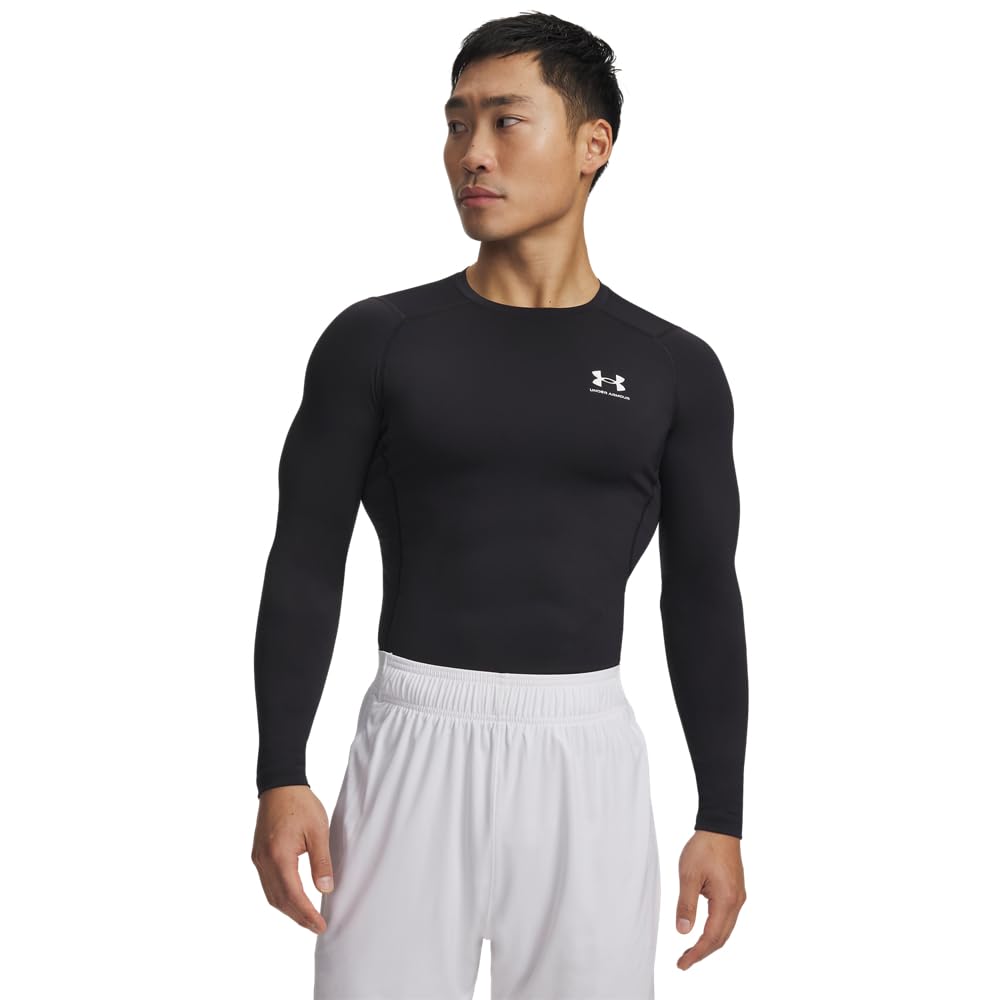
Ask us which base layer to buy first and this is the answer. It is a proper compression cut — close enough to the skin that nothing wrinkles under bib straps, thin enough that you forget you are wearing it, and built for warm weather rather than deep cold. We used it as a first layer on mild mornings and for trainer sessions, and it does the unglamorous job that matters: keeps damp fabric off your skin and moves sweat outward instead of holding onto it.

What we appreciate is how little it asks of you. No itch, no seam that announces itself under a jersey, no lump at the elbow where a sleeve doubles up. The compression fit is the part to underline: it is genuinely tight, which is what stops it twisting when you are on the drops, and it also means this is not the layer for someone who wants a loose undershirt.

It doubles as a shirt, too, which takes some of the sting out of a garment you mostly see in the mirror before a ride. Where it stops is warmth — in genuinely cold air it adds almost nothing, and that is the job of the thermal picks below rather than a fault in this one.

Bottom line: This is the base layer we hand to riders who want one top for most of the season: snug under a jersey, quick to move sweat, and far cheaper than wool.

5

DEVOPS 2-Pack Thermal Compression

DEVOPS 2-Pack Thermal Compression

Budget winter riding

Our Score 9.2/10
Check Price

Worth Noting

  • Too warm for mild-weather riding
Fit
Compression
Lining
Fleece lined
Sleeve
Long sleeve
Pack Size
2 pack
Read the full review

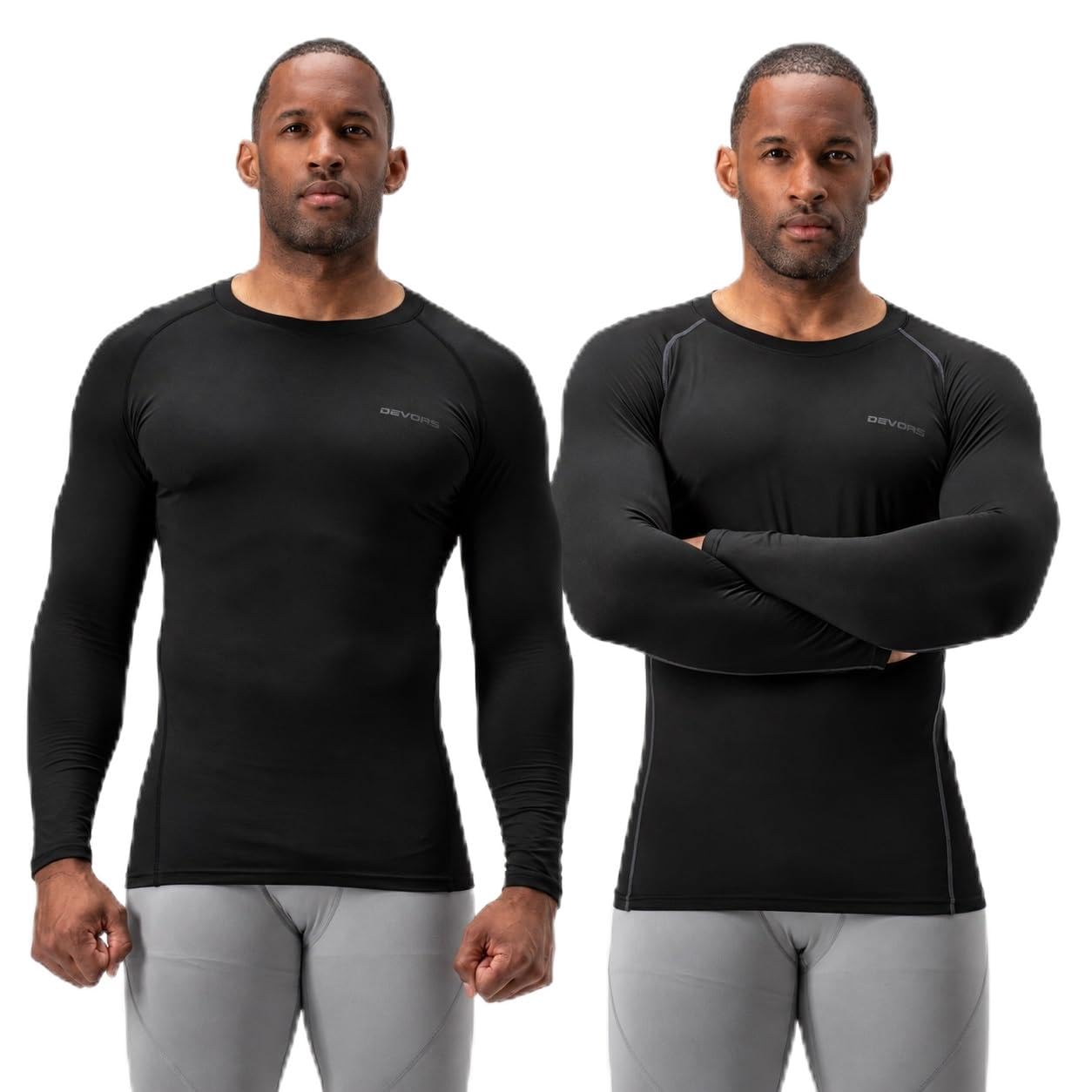
Compared with the brand-name cold-weather layers here, this pair does the same basic job for a lot less. You are buying a pack rather than a single garment, and that changes the arithmetic: one to wear, one in the wash, no panic on a Sunday night.

The fleece lining is the story. It sits softly against the skin — no itch, which is not a given with brushed synthetics — and traps warm air without the bulk of a sweatshirt. Under a jersey and a shell we were comfortable on cold mornings, and the compression cut means it stays where you put it rather than riding up over your back.

Fit is where these need attention. They run small, and the step between sizes is noticeable, so take the size above what you wear in a t-shirt — and if you sit on the line between two, take two sizes up. Sleeves also run a little short for taller riders, which is worth knowing before you commit to a pack.

For a commuter who rides through winter, this is the value pick: warm, soft, and cheap enough that losing one to a laundry mishap does not ruin the month. Two of them also means one is always dry, which matters more in February than any fabric technology.

Bottom line: Two fleece-lined tops for roughly the price of one premium layer, warm enough for real winter, and the way we kit out a cold-weather commute on a budget.

6

Dalavch Compression Long-Sleeve

Dalavch Compression Long-Sleeve

Multipack training

Our Score 9.2/10
Check Price

Worth Noting

  • Sizing varies from pack to pack
Fit
Compression
Sleeve
Long sleeve
Pack Size
1 or 5 pack
Department
Men's
Read the full review

Sold as a single top or a five-pack, this is the option for riders who want a drawer of layers rather than one precious garment. The five-pack is where the value sits — five long-sleeve compression tops for not much more than a single premium wool layer — and that is the version that makes sense for anyone riding four or five days a week.

What you get is a soft, stretchy compression top that does the basic job well. It is tight enough to stay put under a jersey, smooth against the skin, and it held its shape through repeated washing in our testing — no sag at the neck, no bagging at the elbows. As a next-to-skin layer for training and commuting, that covers most of what anyone needs.

The compression is the caveat. It is mild — a snug shirt rather than a support garment — which is fine for layering under a jersey but will not satisfy anyone chasing the squeeze of a proper compression top. Nothing about these is precious, and that is the point of a five-pack.

For a rider building a rotation on a budget, this is a sensible buy: the kind of layer you can sweat through, wash hard and not mourn. It will not match the merino for temperature range or the Under Armour for a true compression fit, but it wins the arithmetic.

Bottom line: If owning five decent layers sounds better than owning one good one, this pack is the sensible way to do it — snug, soft, and cheap per top.

7

Merino.tech Merino Wool Base Layer

Merino.tech Merino Wool Base Layer

Multi-day riding

Our Score 9.0/10
Check Price

Worth Noting

  • Can develop small holes with washing
  • Sleeve length runs long in larger sizes
Fabric
100% merino wool
Sleeve
Long sleeve
Department
Men's
Read the full review

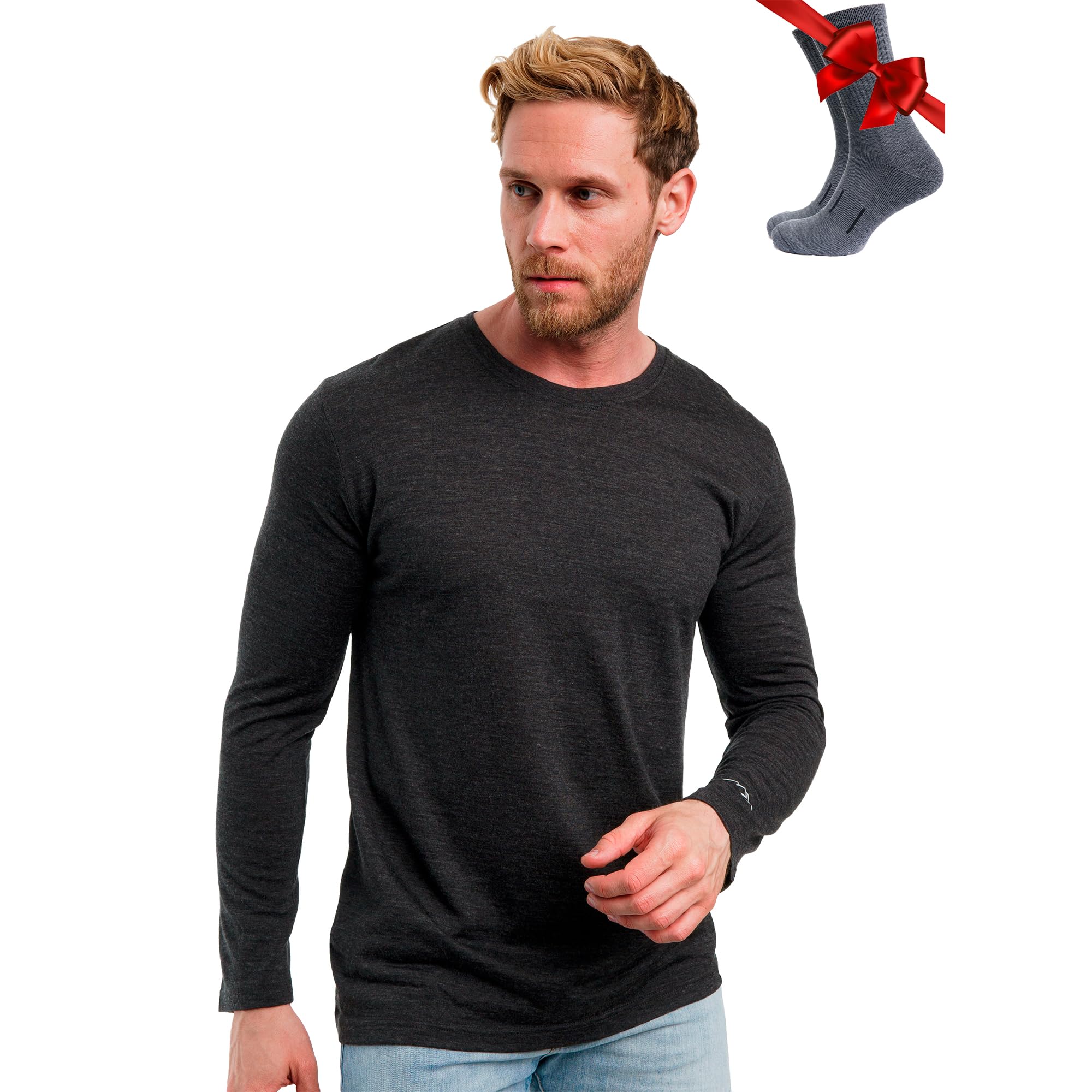
This is the priciest top in this guide, and the money goes somewhere real. Merino does something synthetics do not: it holds warmth when the effort drops, breathes when the effort rises, and does not turn sour after a couple of hours inside a jersey.

Against the skin it is the nicest fabric here — no itch, no cling, and none of the chill you get pulling on a thin synthetic on a cold morning. The fit is close without being compressive, which suits riders who want a base layer rather than shapewear, and it is light enough to sit under a jersey without adding a layer's worth of bulk.

Where we are cautious is longevity. Fine wool is thin, and this one can develop small holes and strained shoulder seams with repeated washing. We wash it cool and skip the dryer, and it has held up so far, but it is a layer to look after rather than to throw in with the rest of the kit. For long days, multi-day trips and weather that cannot make up its mind, it is still the one we pack.

Bottom line: We recommend this one when a ride swings from a cold start to a warm afternoon — merino handles both, and it's still wearable the next day.

8

Opna Long-Sleeve Wicking Shirt

Opna Long-Sleeve Wicking Shirt

Hot-weather rides

Our Score 9.0/10
Check Price

Worth Noting

  • Sleeve length is inconsistent
Fabric
Polyester
Sleeve
Long sleeve
Department
Men's
Listed Weight
3.8 oz
Read the full review

In real heat, a base layer stops being about warmth and starts being about coverage and airflow. This one is built for that end of the spectrum: a light, smooth synthetic with a wicking finish, long sleeves for sun coverage, and enough room through the body that air moves instead of sticking.

We have used it as a summer base layer and as a standalone riding shirt, and it does both jobs. It dries quickly after a climb, does not cling the way a compression top does when you are soaked, and the fabric is smooth enough that it does not chafe under a jersey or a pack strap. Of the hot-weather options here, it is the one we take when the forecast is brutal.

The cut is the thing to check. This is a loose athletic shirt rather than a compression layer, so it can bunch under a race-fit jersey even though it sits fine under a club cut or a gravel jersey. Pair it with a jersey that has some room in it and the problem disappears.

Bottom line: On the hottest rides this is what we want: light, fast-drying coverage that keeps the sun off your arms without adding a layer you notice.

How We Tested 14 Cycling Base Layers

To build the shortlist, I started with what cyclists actually wear: layers from the brands that turn up on club rides, plus a handful of well-reviewed budget options, then filtered by fabric (merino, polyester mesh, and blends), sleeve length, and a spread of price points rather than a spread of logos. That left 14 pieces.

Each one got worn the way base layers really get worn — on an early commute in 40-degree fog, on a three-hour weekend ride, and on the indoor trainer, where overheating shows up fast. Testers wore their usual size and, where a brand ran small, one size up, noting whether shoulders rode up under a jersey, whether hems stayed tucked into shorts, and exactly where cuffs landed; a sleeve that stops short of a glove leaves a cold stripe on your wrist.

Warmth and thickness were logged separately. I noted whether I was shivering in the first mile and whether I was unzipping by mile twenty, then checked how small each layer packed into a jersey pocket and how fast it dried when hung over a chair afterward. Comfort came down to softness against bare skin on the first wear and again after ten trips through the wash, plus any seam that pressed under bib straps.

Durability is where the field thinned out: after repeated laundering we looked for pilling, stretched-out cuffs and collars, and hems that had lost their shape. The layers that made the list are the ones I kept reaching for after testing officially ended.

How to Choose Cycling Base Layers

Buy for your riding temperature, not the calendar

The most useful split is warm-weather fabric versus cold-weather fabric. A thin synthetic layer — the Under Armour HeatGear or the 32 Degrees crew — exists to move sweat and keep damp cloth off your skin on mild and hot rides, and it adds almost no warmth. A fleece-lined thermal like the DEVOPS pack or the TELALEO set traps air, is genuinely warm, and is miserable in July.

Merino sits between the two and covers the widest range: warm when you're cold, breathable when you're not. The trap is the word thermal on a listing — it means the garment is built for cold, not that it is a better base layer. Buy one step warmer than the jersey you plan to wear over it and you will rarely go wrong.

Fit and length matter more than fabric weight

A base layer works by sitting still. Anything that wrinkles under a jersey will bunch, rub and hold sweat against your skin, so err snug: compression fits are the safest, and a loose athletic shirt is the riskiest under race-fit kit.

Length is the detail shoppers skip. Cycling puts you in a long, low position, and a top that covers your waist standing up can leave a strip of bare back above your shorts. Test the body length by reaching overhead in it; if it rides above your waistband, it is too short for the bike. A mock neck earns its place on cold mornings by closing the gap a jersey collar leaves at the throat.

Sweat, smell and how many you need

Synthetics dry fast and handle sweat well, but they hold odor, so plan on washing after every ride. Merino resists smell enough to wear more than once, which is why it gets packed for touring and multi-day events. If you commute five days a week, two or three tops is the practical minimum, and a four- or five-pack takes laundry out of the equation entirely.

Sizing is where these go wrong

Almost every top here runs small, and some run very small. Compression layers are meant to be tight, which makes a bad size hard to spot until you are pulling it over your head, and multi-packs are painful to return. Measure your chest against the size chart rather than trusting the size you wear in a t-shirt, and take the larger option when you sit between two.

If you are unsure, buy one and ride in it before committing to a pack. Sleeve length is the other variable — several of these run long or short of the mark — and it is the difference between a layer that disappears under a jersey and one you tug at all ride.

Frequently Asked Questions

Final Verdict

For most riders, the Under Armour HeatGear Compression Long-Sleeve is the one to buy: tight enough to stay flat under a jersey, quick to move sweat, and cheaper than the wool route. Step up to the ColdGear mock if your rides start cold and stay there, or to the Merino.tech if a single ride swings from frosty to warm and you want to wear it again tomorrow.

If the deciding factor is the budget, the DEVOPS two-pack gets a winter commute done for the price of one premium layer, and the TELALEO set does the same job for women riders.