Cycling Apparel

Best Cycling Rain Jackets of 2026

Rain shells all promise to keep you dry; the ones that fail usually do it from the inside. A cycling jacket has to shed a downpour while you're producing heat like a small engine, and the fabric that blocks the rain will trap sweat if the cut and membrane aren't right — you finish soaked anyway, just from the other direction. Add a hem that flaps or a cut that only looks right hunched over the bars, and most riders leave the jacket at home. The right one keeps rain out, vents what you generate, and disappears once you're moving.

I've ridden through enough sodden commutes to be picky about what earns a place on my handlebar roll. Over the past eight months, my team and I have ridden in 12 jackets on commutes and wet weekend rides, and the gaps in fit and fabric are wider than the price tags suggest. Sizing in this category is all over the place, so measure your chest and trust each brand's own chart over the label in your jersey. The picks below earned theirs.

1

The North Face Antora

Top Pick
The North Face Antora

Everyday wear

Our Score 9.4/10
Check Price

Worth Noting

  • Roomy cut can flap at speed
  • Long sleeves can bunch off the bike
Fit
Standard and big sizing
Hood
Attached
Pockets
Large hand pockets
Waterproofing
Waterproof
Read the full review

The Antora is less a dedicated cycling jacket than a very good everyday rain shell that happens to work on a bike. It has a roomy cut, big hand pockets, and a clean look that does not shout rain gear. We recommend it for commuters who want one jacket for the ride and the rest of the day.

The waterproof shell shrugs off wind and steady rain, and the hood gives solid coverage. The fabric is light enough to carry in a bag, and the roomy body layers easily over a sweater. It is also an uninsulated shell, so warmth comes from what you wear underneath rather than the jacket itself.

The cut is the main thing to weigh. A roomier jacket is comfortable in cold rain and easy to layer, but it does not have the close, quiet fit of the baleaf. The Antora is best when your ride is a commute or a mixed day, not a race.

Bottom line: We recommend the Antora to riders who want a rain shell that looks at home off the bike and has room for a fleece.

2

Helly Hansen Raincoat

Helly Hansen Raincoat

All-day rain

Our Score 9.2/10
Check Price

Worth Noting

  • Not insulated for freezing temperatures
Hood
Attached
Lining
Cloth-lined
Construction
Workwear-grade shell
Waterproofing
Waterproof
Read the full review

The Helly Hansen is the jacket here that feels most like a piece of workwear. The outer has a thick, rubbery hand and the cut is straightforward: full zip, deep pockets, hood, and cuffs that close around the wrist. We noticed the cloth lining right away because it keeps the inside from feeling slick and clammy next to the skin.

In rain, that construction is the point. Water beads and runs off, and the hood and collar give good coverage without feeling like a neck brace. The jacket is not insulated, so it works as a shell over a fleece rather than a winter coat. It also runs warm on a hard ride; for a slow, wet commute that is fine, but it is not the jacket we choose for a muggy summer shower.

Off the bike, it feels more workwear than cycling kit, and it does not pack down small. We kept it on for a wet commute rather than carrying it just in case. The practical trade is clear: more protection and less fuss, in a package that expects to be worn for the whole ride.

Bottom line: If you ride through long, heavy rain, the Helly Hansen is the jacket we trust for protection and durability, though it is not the one to pack for a maybe.

3

33,000ft Women's Rain Jacket

33,000ft Women's Rain Jacket

Active women riders

Our Score 9.2/10
Check Price

Worth Noting

  • Generous cut can feel loose at speed
Hood
Attached, adjustable
Venting
Underarm vents
Packability
Storage bag included
Waterproofing
Waterproof
Read the full review

Underarm vents are the detail that makes the 33,000ft women's jacket worth a look for a rider who runs warm. The shell is waterproof, the hood adjusts, and the jacket comes with a storage bag. Zippered hand pockets and an internal zip pocket keep a phone and keys from sliding around. The fabric has a soft hand rather than the stiff, shiny feel of a basic rain slicker.

We recommend it as a do-it-all women's shell because it balances weather protection with the kind of ventilation a climb demands. The hood stayed on over a cap in our wet-weather rides, and the longer body gave good coverage without feeling like a cape. It has a roomy cut, so it layers over a fleece without binding through the shoulders.

That roomy cut is also the thing to think through: if you want a close, race-fit jacket, this one may feel loose at speed. The storage bag is handy for travel, though it is small enough to misplace. For commuting, touring, and wet weekends, those are minor trade-offs.

Bottom line: For women who want one rain jacket for commuting, travel, and wet weekend rides, this is our default: the vents make hard efforts more comfortable and the hood stays put.

4

33,000ft Fleece-Lined Rain Shell

33,000ft Fleece-Lined Rain Shell

Cold commutes

Our Score 9.2/10
Check Price

Worth Noting

  • Sleeves run narrow through the arms
Fit
Men's
Hood
Attached
Lining
Fleece
Waterproofing
Waterproof
Read the full review

A fleece lining changes what a rain jacket is for. The 33,000ft men's shell traps warmth in a way the unlined jackets here do not, so it feels more like a cold-weather layer than a pure rain shell. The hood, full zip, and roomy body are simple and effective.

We recommend it for winter commuting, wet walks, and rides where you are not working hard enough to overheat. It keeps the chill off in cold rain and layers comfortably over a hoodie. The body is roomy, but the sleeves are the place to check before you commit to a thick midlayer.

The lack of vents is the bigger catch. On a climb or a fast commute, the warmth turns clammy, and there is no pit zip to dump heat. That is the trade for a jacket that feels cosy when you are standing around in the rain. If your rides are short and stop-start, it makes sense; if you ride hard, choose a vented shell.

Bottom line: We recommend the fleece-lined 33,000ft for short, cold, wet rides; just do not expect it to breathe on a hard effort.

5

Outdoor Ventures Women's Rain Jacket

Outdoor Ventures Women's Rain Jacket

Travel and commuting

Our Score 9.2/10
Check Price

Worth Noting

  • Sizing is inconsistent through shoulders and sleeves
Lining
Mesh
Weight
1.13 lb
Pockets
Multiple zippered
Waterproofing
Waterproof
Read the full review

The mesh lining is the first thing we noticed on the Outdoor Ventures women's jacket. It sits away from the skin instead of clinging like a basic nylon shell, and the jacket has zippered pockets in the places you want them. The hood is large enough to shield your face without pulling down your collar.

Waterproofing is solid for light to moderate rain. The shell blocks wind, and the cuffs adjust with Velcro to close around the wrist. It is not the jacket we choose for an hour of driving rain, but for a commute or a drizzly trip it does what you need. The mesh lining also keeps it from feeling like a plastic bag on a muggy day.

The body is roomy enough for a fleece, and the pockets are well placed for gloves and a phone. The jacket has more of a regular-coat look than a technical race shell, which makes it easy to wear into a cafe or onto a train. It packs into a bag without taking over the space.

What tips it for us is the combination of that mesh lining and the pocket layout: it feels pleasant on a mild, wet day rather than merely tolerable. It is not a technical storm shell, but it is an easy one to live with.

Bottom line: For women who want a roomy, pocket-rich rain jacket for commuting and travel, we think this is a strong value; the mesh lining makes mild, wet weather more comfortable.

6

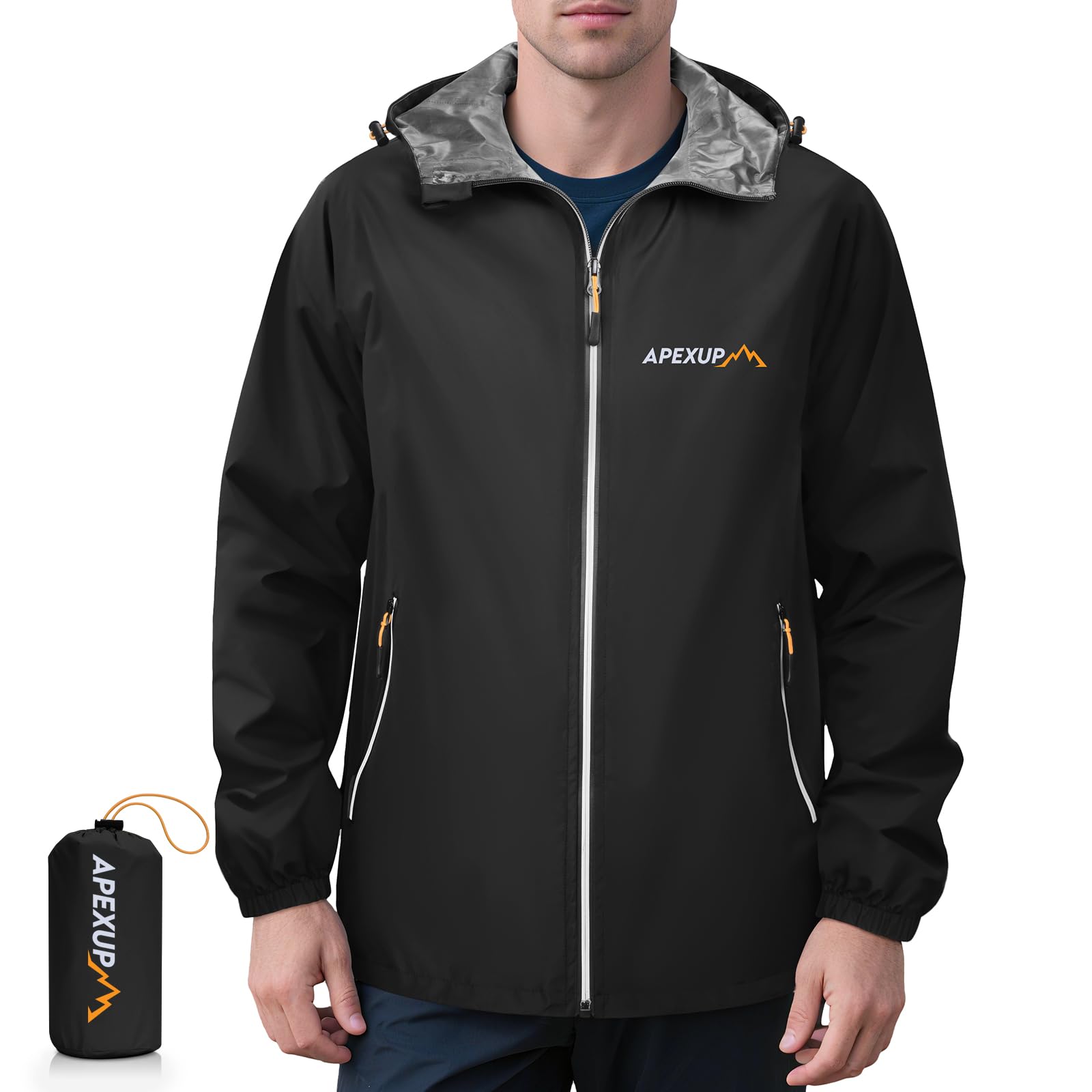
APEXUP Packable Rain Jacket

APEXUP Packable Rain Jacket

Emergency showers

Our Score 9.2/10
Check Price

Worth Noting

  • Limited breathability on hard efforts
Hood
Attached
Weight
8.82 oz
Packability
Stuff pouch included
Waterproofing
Waterproof
Read the full review

At 8.82 ounces, the APEXUP is a jacket that disappears into a bag until you need it. It comes with a stuff pouch, rolls down small, and has reflective accents that help on a grey commute. The hood and cuffs are simple, and the whole thing is easy to put on at the side of the road.

It handles a passing shower well. The waterproof shell keeps off moderate rain, and the fit is roomy enough to go over a jersey or a light jacket. The fabric is thin, so it has little structure; on a windy descent it moves around more than a heavier shell.

The limits show up in sustained rain. In an extended downpour, moisture eventually finds its way in, and the thin fabric starts to feel like a plastic layer. It is a shower jacket, not a storm shell, and that is the right way to use it.

What makes it worth carrying is the combination of weight, packed size, and reflective trim at the budget end of this group. It earns its place as a spare layer for commutes, touring, and variable weather. The thin fabric is the trade; keep it for the rides where you need an emergency shell, not your only wet-weather kit.

Bottom line: We recommend the APEXUP as a jacket to keep in a commuting bag for sudden showers; just do not rely on it for an all-day soak.

7

baleaf Men's Rain Jacket

baleaf Men's Rain Jacket

Road commuting

Our Score 9.0/10
Check Price

Worth Noting

  • Runs small through the shoulders
Hood
Attached, oversized
Visibility
Reflective details
Packability
Packable
Waterproofing
Waterproof shell
Read the full review

The reflective detailing and dropped back are the details that make the baleaf jacket feel like it belongs on a bike. It is the one we reach for on grey commuting mornings, when being seen matters as much as staying dry. The hood is cut generously, so it covers a cap and keeps rain off your face; it also cinches down when you do not need that much coverage.

The waterproof shell handles steady rain well, and the zippered pockets are big enough for gloves, a phone, and a snack. It packs into a commuting bag or a jersey pocket without much fuss. The long back is the detail we notice most on the bike: it keeps spray from creeping up your backside, and it does not feel like a poncho when you are walking.

Breathability is where the baleaf shows its limits. There are no pit zips, and on a fast, humid climb the inside turns clammy; that is the trade for a simple, packable shell. For commuting, cool-weather rides, and mixed conditions, it is easy to live with. It earns its place because the road-specific details are the ones that matter when the rain starts.

Bottom line: For most riders, this is the rain jacket we recommend first: reflective, roomy over layers, and packable enough to carry when the weather turns.

8

Columbia Glennaker Lake II

Columbia Glennaker Lake II

Short commutes

Our Score 9.0/10
Check Price

Worth Noting

  • Stiff, noisy fabric at first
Fit
Roomy
Hood
Stows in collar
Packability
Packs into pocket
Waterproofing
Water-resistant shell
Read the full review

Columbia's Glennaker Lake II is the jacket we reach for when the sky looks uncertain and the ride is short. The hood stows into the collar, the jacket packs into its own pocket, and the cut leaves room for a sweater. It is a neat, low-bulk layer to keep in a commuting bag.

In drizzle and light rain, it does the job. The shell blocks wind, the hood comes up quickly, and the Velcro cuffs close the wrists. In steadier rain, it is closer to water-resistant than fully waterproof; we noticed the difference on longer wet rides. That is the line to understand before you buy.

For a short commute, a dog walk, or a just-in-case jacket, those are easy compromises. We recommend it when packability and a low price matter more than all-day protection. It is a useful jacket with a clearly defined limit, not a do-everything shell.

Bottom line: For short commutes and changeable weather, we think the Glennaker Lake II is a sensible packable layer, provided you treat it as a light-rain jacket rather than a storm shell.

How We Chose and Tested 12 Cycling Rain Jackets

We started with a list of about 40 jackets from brand catalogs, bike shop racks, and rider forums, then narrowed it to 12 by comparing fabric specs, claimed waterproof ratings, packed weight, and price against what each one promised. Sizing range eliminated more than a couple of contenders — if a shell stopped at a men's large or offered no women's equivalent, we left it off.

For eight months, those 12 jackets went on commutes, wet gravel loops, and long weekend rides, and each one got the same treatment: five minutes under a garden hose with paper towels taped inside the seams to see where water actually pushed through, followed by 40 minutes of hard riding to find out whether the inside stayed dry or turned into a sauna.

Fit and sizing caused the most arguments. We logged the actual chest, waist, and sleeve measurements of every jacket against the brand's own size chart, then had riders of different heights and builds wear the same shell over a jersey and over a jersey plus a light vest, noting where the sleeves ended, whether the hem crept up out of the saddle, and if the collar left room for a cap without pressing on the throat.

The rest came down to living with them: we counted every zip, taped seam, and pocket, weighed each jacket folded into its own pocket, checked cuffs and hem grippers after repeated washing, and wore the brighter ones off the bike to see how they read in a café. Price mattered, but only as price per wear — a shell that fits badly never gets worn, no matter what it costs.

How to Choose Cycling Rain Jackets

Waterproofing, Breathability, and the Ride You Do

A waterproof shell that doesn't breathe turns into a sauna on a climb. For commuting and steady riding, a simple waterproof shell with a hood and closed cuffs is enough; for hard efforts, underarm vents or a lighter fabric matter more. Pit zips are the simplest fix, and the women's 33,000ft shows why: the vents make a noticeable difference when you're working.

The trap is assuming a heavier, more waterproof jacket is always better on a bike. A shell that keeps out more rain but traps sweat can leave you wet from the inside. If you ride short distances or run cold, that trade can be fine; if you climb, prioritize ventilation.

Fit, Hood, and Bike Position

On a bike, a jacket that fits well off the bike can still flap at the shoulders or ride up at the back. Look for enough room to layer without a parachute effect, sleeves that stay put when you reach for the bars, and a back hem that covers your waistband. The baleaf's longer back matters more in rain than another pocket.

Hoods are the other fit point. A generous hood can cover a cap and keep rain off your face, but it needs a cinch that holds it in place. Try the hood over your helmet or cap before you ride; if it blocks peripheral vision, it is too big for road use.

Packability and Visibility

Rain jackets are often carried more than worn, so packed size matters. A jacket that fits a jersey pocket or a commuting bag is the one you actually bring. The Columbia packs into its own pocket, while the APEXUP lists at 8.82 ounces; both make sense for variable weather, though neither is a storm shell.

Visibility is not a luxury on a grey road. Reflective trim, bright colors, and a cut that doesn't hide your lights matter. The baleaf's reflective details are a big part of why it works for road riding; if your jacket is dark and plain, plan to add lights and high-visibility layers.

Warmth, Layers, and Wet-Weather Comfort

Most cycling rain jackets are shells, not insulated coats. That is usually right: you can add a fleece or a merino layer for cold rain and strip it back when you warm up. The 33,000ft fleece-lined shell is the exception here; it is cosy for short, cold commutes but lacks vents for hard riding.

Check the cuffs and collar too. Water runs down sleeves and into the neck if they don't close well, and a high collar can feel restrictive. A close cuff and a hood that cinches are worth more than a bulky lining for most riders.

Frequently Asked Questions

Final Verdict

The baleaf is our pick for most cyclists because it gets the road-specific details right: a longer back, reflective trim, a hood that covers your face, and a shell that packs away when the weather clears. It is not the most breathable jacket here, but for commuting and cool-weather rides, that is a trade we can live with.

If your rain is heavy and persistent, the Helly Hansen is the more protective choice; if you run hot, the women's 33,000ft's underarm vents are worth the switch. Choose for the rain you ride in most, not the longest feature list.