Cycling Apparel

Best Sunscreen for Cycling of 2026

Halfway up a long climb on a July morning, the sweat finally wins: it rolls down your forehead, picks up whatever sunscreen is left, and delivers it straight into your eyes. That stinging, blurry descent is usually when a cyclist starts taking sun protection seriously. What you need on the bike isn't what you need at the beach — it has to hold through wind and steady sweat, sink in rather than ghost your skin white, and feel light enough that you'll actually bother reapplying at the coffee stop.

I've burned the backs of my hands and the part in my hair more times than I care to admit, so I've stopped judging a tube by its SPF alone. Over the past four months I've ridden with 16 different sunscreens on commutes, long weekend routes, and a few genuinely scorching afternoons, and the differences in how they wear are not subtle. One thing worth knowing before you buy: nothing survives four hours of heavy sweating, so the formula you'll actually reapply beats the one with the better label.

1

Sun Bum Original SPF 70

Top Pick
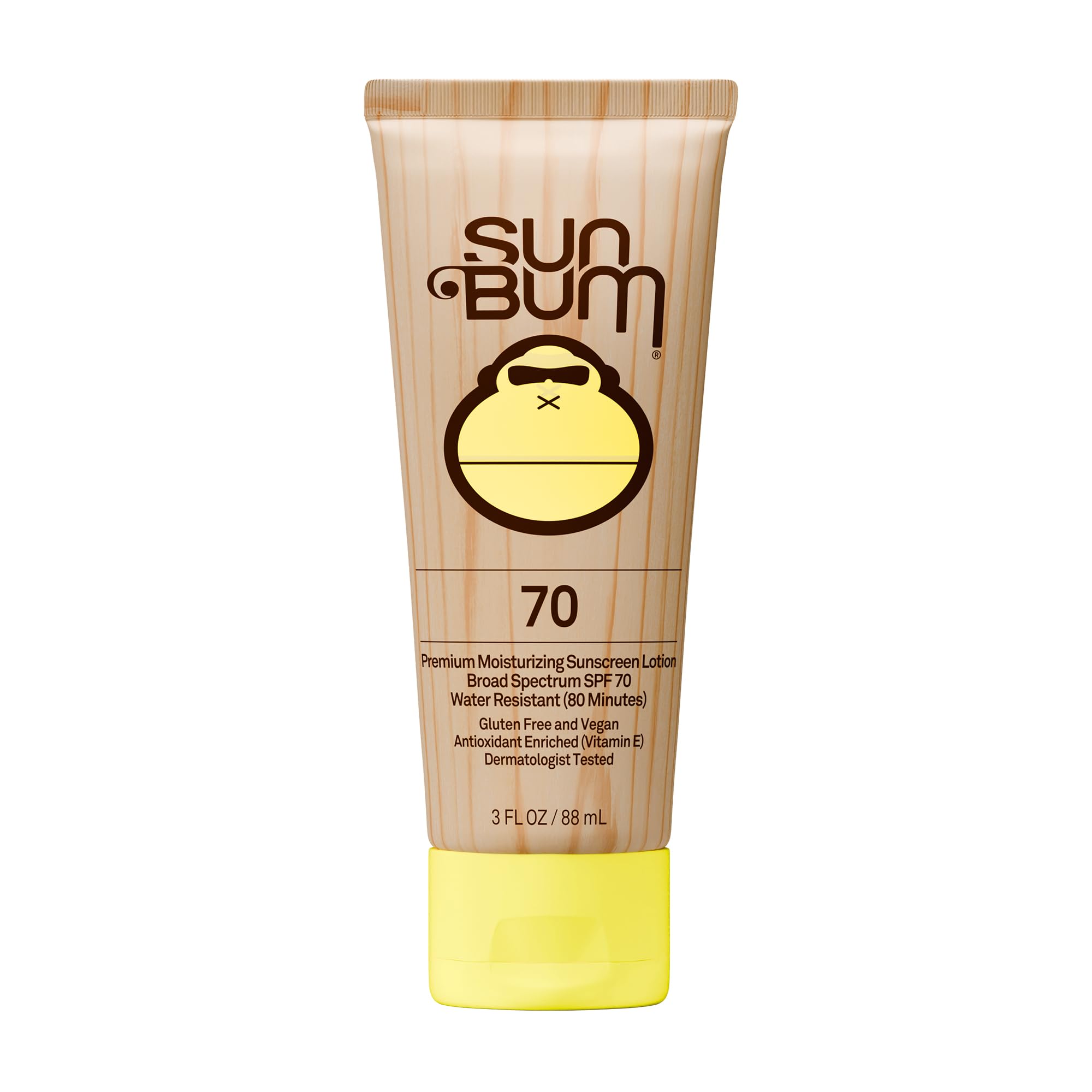
Sun Bum Original SPF 70

Everyday body lotion

Our Score 9.6/10
Check Price

Worth Noting

  • Fragrance is strong out of the bottle
SPF
70
Size
3 oz
Free From
Oxybenzone, octinoxate, parabens
Water Resistance
80 minutes
Read the full review

You can smell Sun Bum before you see it. The Original lotion carries the coconut-and-beach scent the brand built its name on, and it's part of the product in a way most sunscreens aren't — on a group ride, people will know what you're wearing. Whether that's charming at seven in the morning is a personal matter.

Underneath the scent is a competent body lotion: SPF 70, 80 minutes of water resistance, oil-free and non-comedogenic, with vitamin E and no oxybenzone, octinoxate or parabens. The three-ounce travel size is the version worth buying for cycling — it fits a jersey pocket, and it's the size that actually gets finished before it expires.

Our take is that it's the everyday body lotion in a rotation rather than the one thing you rely on. It spreads easily, leaves no cast, and doesn't leave your skin tacky once it dries. If fragrance on your face bothers you, keep it below the neck — that's where it earns its place anyway, and the label tells you to avoid the eye area regardless.

Bottom line: A well-behaved, oil-free body lotion with a beach-day scent and 80 minutes of water resistance — easy to like if you don't mind smelling like vacation.

2

EltaMD UV Sport SPF 50

EltaMD UV Sport SPF 50

Sweat-heavy rides

Our Score 9.4/10
Check Price

Worth Noting

  • Premium price for a three-ounce tube
  • Faint tint on deeper skin tones
SPF
50
Size
3 oz
Formula
Zinc oxide, fragrance-free
Water Resistance
80 minutes
Read the full review

Two things sold us on UV Sport for cycling, and neither is the SPF number. The first is the rating: 80 minutes of water and sweat resistance, which is as long as a US label can claim. The second is that it spreads on wet or dry skin. You are almost never dry when you top up mid-ride — you're at a junction with sweat running off your brow — and a lotion that goes over that instead of balling up is worth more than another ten points of SPF.

The formula is zinc oxide based and fragrance free, and it rubs in without the heavy film a mineral filter often leaves behind. What we watched most closely was the eyes. Sweat carries whatever sits on your forehead straight down, and once that starts on a descent you're riding half-blind. This is the one that stayed comfortable for us, including on the hot, exposed climbs where we expected to notice it most.

In practice it earns its keep on the parts of you that face the sun and sit near your eyes: face, ears, the back of your neck, the tops of your hands. We paired it with a cheaper body lotion for arms and legs, which is how a three-ounce tube stretches across a season of weekend rides instead of a month.

Bottom line: If you want one bottle that handles sweat, sun and a mid-ride top-up without your eyes watering, this is the one we hand to friends before a long day out.

3

La Roche-Posay Anthelios SPF 100

La Roche-Posay Anthelios SPF 100

Burn-prone skin

Our Score 9.4/10
Check Price

Worth Noting

  • Premium purchase price
  • Rich cream feels heavy on hot climbs
SPF
100
Use
Face and body
Free From
Oxybenzone, octinoxate
Water Resistance
80 minutes
Read the full review

SPF 100 is the whole argument for this one, and it's a narrow one. It's for the rider who comes home pink after an hour of direct sun even when they reapply properly — the pale, the freckled, the ones with a dermatologist on speed dial. The rating is the highest on this list, and it comes with the same 80 minutes of water resistance as everything else here.

What we noticed first was the texture. It's a rich cream that melts into skin rather than a thin lotion, and it leaves your face feeling moisturized instead of tight, which is genuinely pleasant on a cold morning start. The thing to test is your eyes: it's a fuller formula than the EltaMD, and on a hot climb sweat eventually carries whatever is on your forehead downward. Try it on a short ride before you commit to a long one.

Coverage is the other reason to reach for it. The label is written for face and body and for skin that burns easily, so it's the one we put on the back of the neck and the tops of the ears as well as the face. If you have ever finished a ride with a red stripe where your jersey collar sits, that's the use case.

Bottom line: For riders who burn through a normal sport formula, this is the highest protection on the list — just give it a short test ride before your eyes trust it.

4

Banana Boat Light As Air SPF 50

Banana Boat Light As Air SPF 50

Value two-pack

Our Score 9.4/10
Check Price

Worth Noting

  • Scent is noticeable on application
SPF
50
Size
6 fl oz, 2-pack
Moisturizing
8 hours
Water Resistance
80 minutes
Read the full review

Light As Air is the one that doesn't feel like sunscreen. It goes on like a moisturizer, dries down in a couple of minutes without a cast or a tacky film, and — the part we noticed most — it doesn't leave your forearms shining under a short sleeve. For something you spread over two legs and two arms before every ride, that matters more than it sounds.

The two-pack is what makes it the value pick: two six-ounce bottles, one for the gear bag and one for the shelf by the door. The label claims eight hours of moisture on top of the 80 minutes of water resistance every product here carries, and SPF 50 is plenty for a morning ride as long as you're honest about topping up on a long one.

Its place is below the neck. This is a body lotion, and we kept it there — arms, shoulders, the back of the neck, the strip above the knee that never gets covered. For a full day of climbing in high sun you'll want a stick or a small tube in the pocket as well, because one application won't get you to the afternoon.

Bottom line: Two light, non-greasy bottles that vanish into skin and cover a season of legs and arms — the value pick for everywhere below the neck.

5

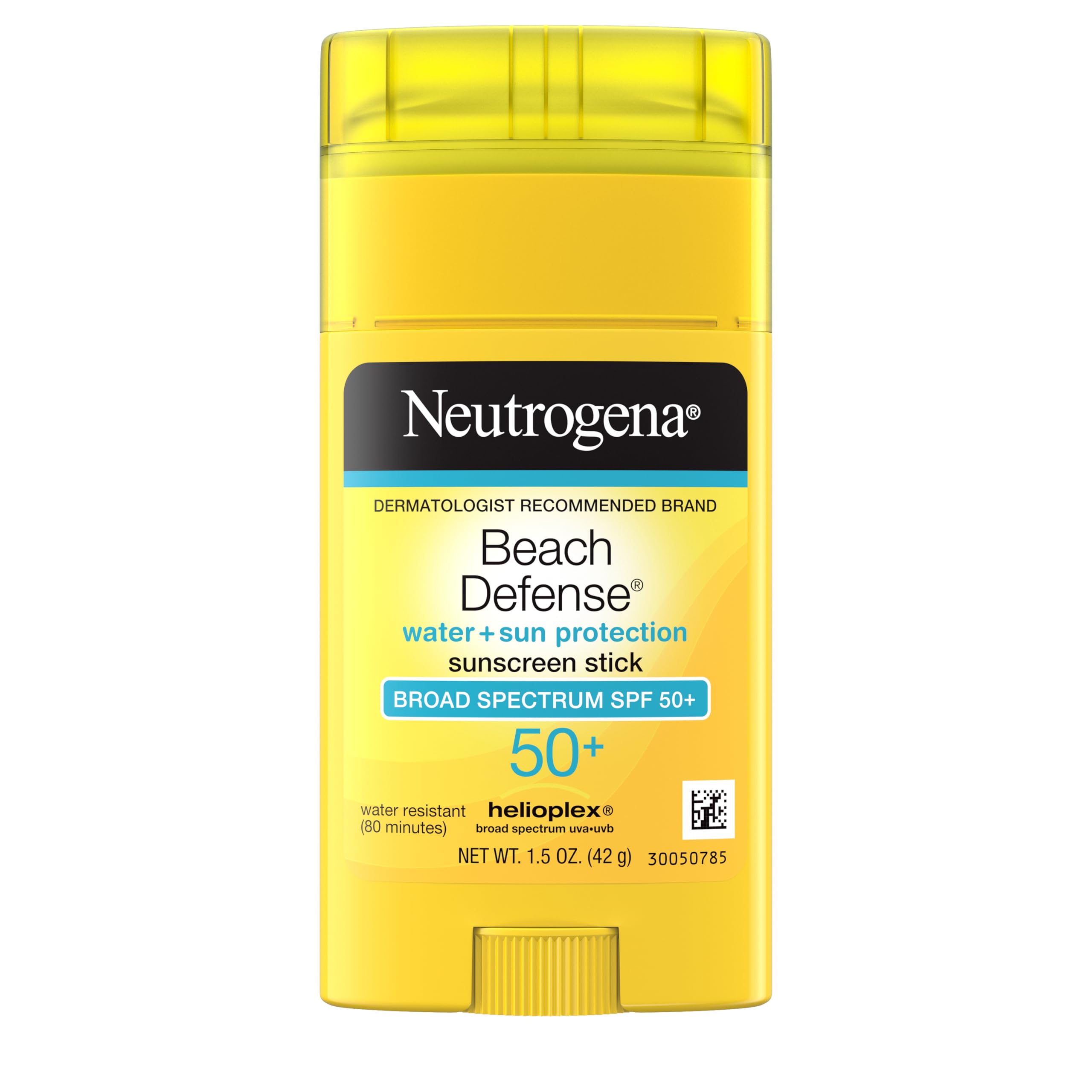
Neutrogena Beach Defense Stick SPF 50

Neutrogena Beach Defense Stick SPF 50

Mid-ride touch-ups

Our Score 9.4/10
Check Price

Worth Noting

  • Feels slick until it absorbs
SPF
50
Size
1.5 oz
Format
Stick
Water Resistance
80 minutes
Read the full review

The moment a stick earns its place is a mid-ride stop with gritty hands and no mirror. You're not going to squeeze lotion into a palm that has chain grime on it and then pat your own face; you can drag a stick across your cheeks, nose and ears in about ten seconds and put it back in the pocket it came from. That's the entire case for this one, and it's a strong one.

The numbers hold up: SPF 50, broad spectrum, 80 minutes of water resistance with Helioplex, and a 1.5-ounce stick that weighs almost nothing in a jersey. It goes on clear rather than white, which is more than most sticks manage, and it doesn't need rubbing in — a couple of passes and you're done.

We keep it in the pocket rather than on the shelf, because reapplying is the job. It isn't a replacement for a base layer of lotion at the door — a stick laid over dry skin on a hot day gives you thin, uneven coverage — but as the thing that fixes your nose and ears at hour three, it's the format that actually gets used.

Bottom line: The stick we actually carry: clear, quick, and easy to apply with gloves half off at a junction — the reapplication tool every jersey pocket wants.

6

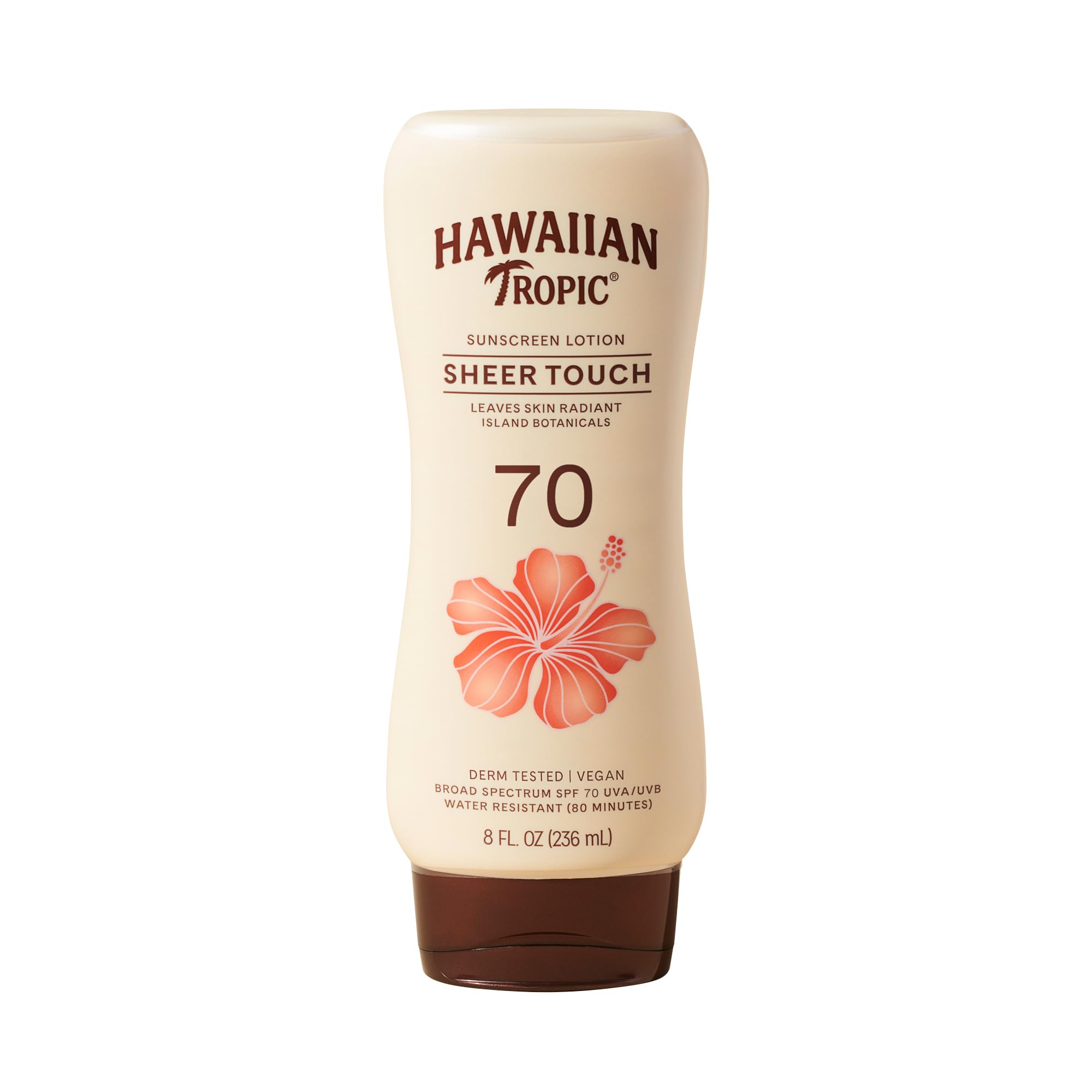
Hawaiian Tropic Sheer Touch SPF 70

Hawaiian Tropic Sheer Touch SPF 70

Legs and arms

Our Score 9.4/10
Check Price

Worth Noting

  • Fragrance is strong and lasts
  • Leaves a subtle shimmer on skin
SPF
70
Size
8 fl oz
Finish
Luminous, non-greasy
Water Resistance
80 minutes
Read the full review

Eight ounces is the number that matters here. This is the bottle that lives by the door and gets used on both arms, both legs and the back of your neck before you wheel the bike out — the volume product in a routine that also includes a small, careful face sunscreen. Buying protection in this size is the difference between using enough and rationing it.

The formula is oil-free with vitamins C and E, and it spreads like a lotion rather than a cream, so it covers a calf in a couple of strokes. It dries down without a white cast and leaves skin with a low sheen rather than a matte finish — which is a look, and on a hot day it's a reasonably flattering one.

The scent is the brand's signature and it is not subtle. If you like the coconut-and-tropical thing, this is the most pleasant application in the entire group; if you don't, it's the reason to look at the Banana Boat instead. The other detail worth knowing before you buy is the shimmer — it's subtle, and it is definitely there.

What it's for, then, is volume: the bottle that lives by the door and handles everything the jersey doesn't cover, while a stick or a small tube takes care of your face. Judged that way — as the workhorse rather than the hero — it's easy to recommend.

Bottom line: A big, non-greasy bottle that covers legs and arms without a cast — the one to buy when volume matters more than a pocket-sized tube.

7

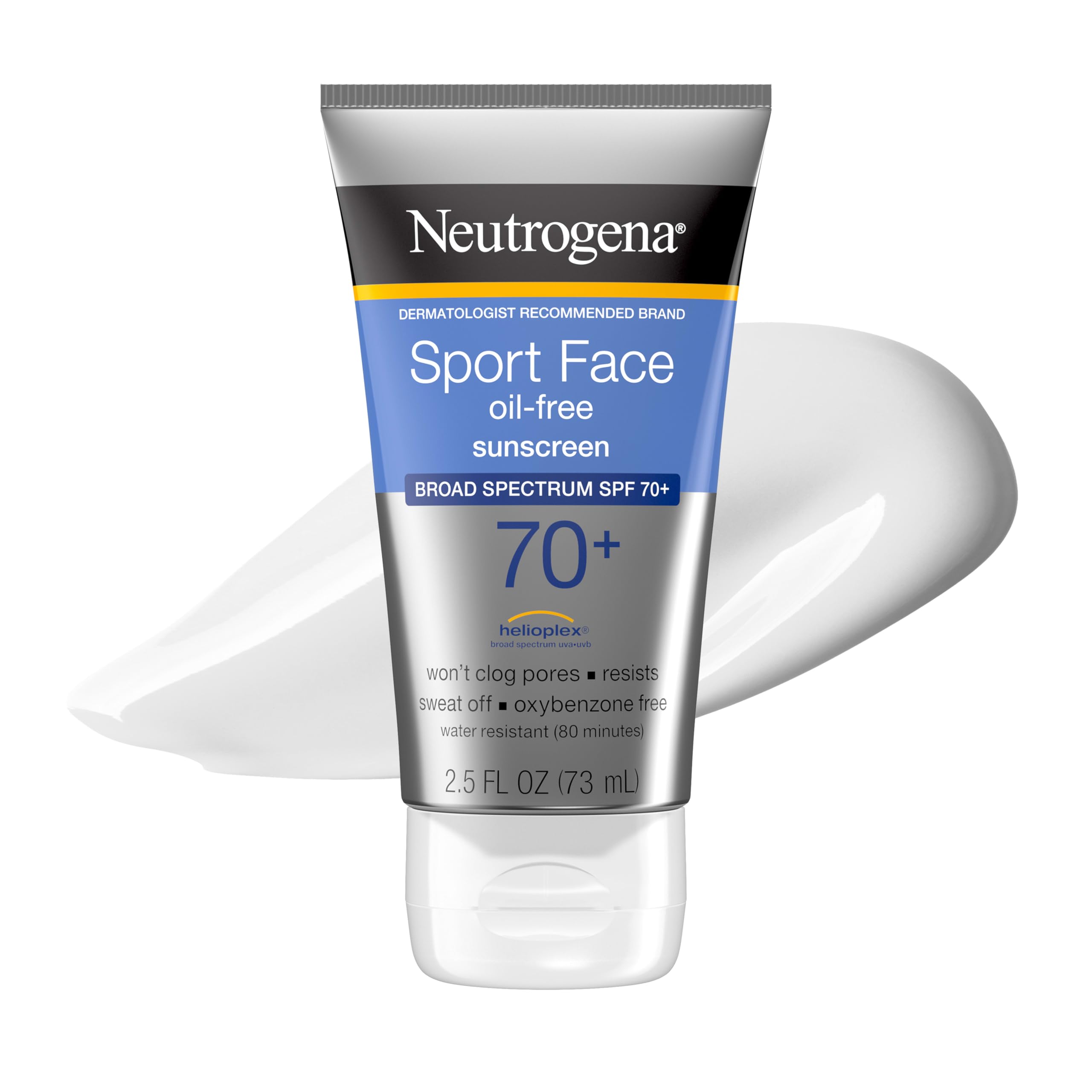
Neutrogena Sport Face SPF 70+

Neutrogena Sport Face SPF 70+

Budget face coverage

Our Score 9.2/10
Check Price

Worth Noting

  • Leaves a pale cast on some skin tones
  • Can sting when sweat reaches the eyes
SPF
70+
Size
2.5 fl oz
Formula
Oil-free, oxybenzone-free
Water Resistance
80 minutes
Read the full review

Sport Face is the only sunscreen here built for the face first, and that's the reason it made the list. It's oil-free, rated SPF 70+, water resistant for 80 minutes, and made without oxybenzone or PABA — a combination that's unusual in a drugstore face formula. If you want a dedicated face sunscreen and don't want to think about it much, this does the job.

The finish is the part we appreciated. It sinks in fast and dries down without the shine that makes a sweaty forehead look worse than it is, and the 2.5-ounce tube disappears into a jersey pocket. Neutrogena loads it with vitamins C and E, which is nice to see but not the reason it's here. It's here because it behaves.

It's also the most straightforward of these to live with: no pump, no stick to lose, no ritual. Squeeze, spread, ride, and put the tube back in the pocket it came from. That ordinariness is the point — it's the sunscreen you'll actually reach for on a Tuesday evening training ride, which is most of the riding most of us do.

Bottom line: A no-drama, oil-free face sunscreen that handles a sweaty hour and disappears into a jersey pocket — our pick for weekday rides.

8

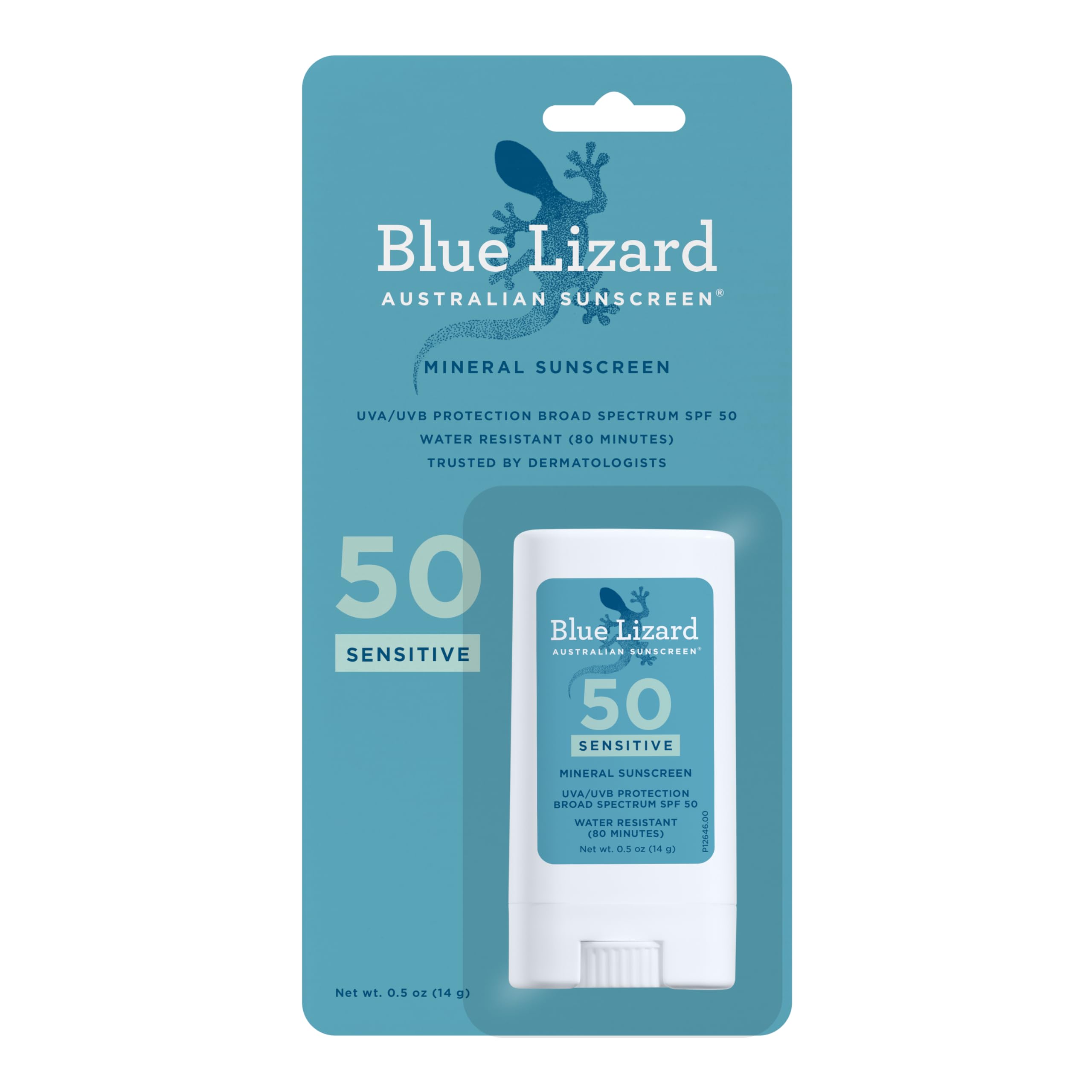
Blue Lizard Sensitive Stick SPF 50+

Blue Lizard Sensitive Stick SPF 50+

Sensitive skin

Our Score 8.8/10
Check Price

Worth Noting

  • Leaves a visible white cast
  • Thick formula takes real rubbing to spread
SPF
50+
Size
0.5 oz
Active Filter
Zinc oxide only
Water Resistance
80 minutes
Read the full review

Blue Lizard's stick is zinc oxide and nothing else in the filter department — no oxybenzone, no octinoxate, no fragrance, no parabens. That short list is the reason to consider it. If your skin reacts to chemical filters, or you're buying for a kid or a riding partner whose face goes red at the drop of a hat, a single-filter mineral stick narrows the variables to almost nothing.

The comfort case holds up. It's the pick for skin that reacts to chemical filters, and it doesn't sting, which is usually the thing that sends someone looking for a mineral formula in the first place. On a long, hot climb, a sunscreen that your face simply tolerates is worth more than one with a nicer texture.

Water is where it holds its own. The stick is rated for 80 minutes of water resistance and it stays where you put it — this is not a formula that beads off in the first sweat. It's also small enough for a saddle bag, which is the other half of why it suits a long ride rather than just a lawn chair.

Our verdict is that it's a specialist's tool: excellent for the rider whose skin limits what they can use, less appealing for everyone else, who will get easier application and a more invisible finish from a chemical formula. Buy it for the ingredient list, not for the experience.

Bottom line: If your skin reacts to chemical filters, this zinc-only stick is the one to carry: fragrance free, water resistant for 80 minutes, and steady through sweat.

How We Tested (and Reapplied) 16 Sunscreens for Cycling

We started with roughly 40 formulas marketed for sport, water resistance, or daily facial wear, then narrowed that to 16 based on ingredient lists, price per ounce, and whether the format — lotion, stick, or spray — actually suited a jersey pocket. Those 16 went through four months of riding: weekday commutes, two- to five-hour weekend routes, a couple of brutally hot afternoons, and one long charity ride with a midday start. We applied before rolling out, again at stops, and once more at home, keeping notes on each application.

Application got timed: I noted whether I could cover my face, ears, neck, and the backs of my hands in under a minute, and whether that was manageable one-handed at a red light. On the bike, the real test was sweat — how a formula held at hour two versus hour four, whether it ran into my eyes on descents, whether it smudged my sunglasses, and whether road grit stuck to my forearms. White cast was checked in a bathroom mirror at 6 a.m. and again in direct sun, along with whether any of them left pale marks on helmet straps and black shorts.

Under a helmet for three hours, greasiness shows up fast, so I logged which formulas stayed tacky, which made my grip feel slick on the bars, and which clogged pores along the strap line or triggered forehead breakouts. Fragrance was judged on whether it faded or lingered, and whether it pulled in bugs on wooded routes. Last, we tracked cost per use by counting the applications we got out of each tube or stick — the cheap one you have to reapply every hour isn't actually cheaper.

How to Choose the Right Sunscreen for Cycling

Start with the water-resistance rating

Every product here carries an 80-minute water-resistance rating, which is the longest claim a US sunscreen label can make. It tells you how long a formula is designed to hang on through sweat before it needs replacing, and on a ride it's a more useful number than the SPF. What the rating doesn't cover is your jersey sleeve. Wiping your face removes sunscreen, and that's the most common way a good product fails halfway through a ride.

Keep it out of your eyes

Eye sting is less a formula defect than a plumbing problem. Sweat runs from your forehead down over your brow, picks up whatever sunscreen is sitting there, and takes it straight into your eye. Fragrance-free formulas and sticks help because they sit where you put them instead of migrating. Apply above the eyebrows with a light hand, and keep a stick in your pocket so your first top-up doesn't involve a palmful of lotion on a windy descent.

Match the format to the ride

A big bottle lives in the driveway, a tube lives in the jersey pocket, and a stick is for the hand you can't spare. Riders doing short, frequent outings get more from one good face product plus a body lotion; riders doing long days want a stick for the café stop, because it's the only format you can apply with gritty hands and no mirror. Gel formulas suit hot, humid rides where a cream starts to feel like a layer.

Look past the finish claims

Zinc oxide formulas are the kindest to reactive skin and the most likely to leave a pale film, which is a real consideration on deeper skin tones. Chemical formulas rub in more invisibly but can feel slick on a sweaty forehead. Judge a sunscreen in daylight rather than in a bathroom mirror, and check that it doesn't pill where a helmet strap or cap rubs — that's the failure nobody warns you about.

Budget for two products, not one

The sensible spend is a face formula you trust and a plain body lotion you don't think about. Face sunscreens cost more per ounce because they're built to be lighter and kinder, and you use far less of them, so a tube can last a season of weekend rides. Arms and legs take volume. Buy those in the largest bottle you'll actually carry to the car.

Frequently Asked Questions

Final Verdict

The EltaMD UV Sport is the sunscreen we recommend first for cycling, because it handles the two things that actually end a ride badly: sweat and your eyes. It's rated for 80 minutes in water and sweat, it spreads over damp skin at a junction, and it stays comfortable where plenty of formulas don't. If you burn easily and want the highest rating here, take the La Roche-Posay. If your budget is tight, the Neutrogena Sport Face does the face job for less.