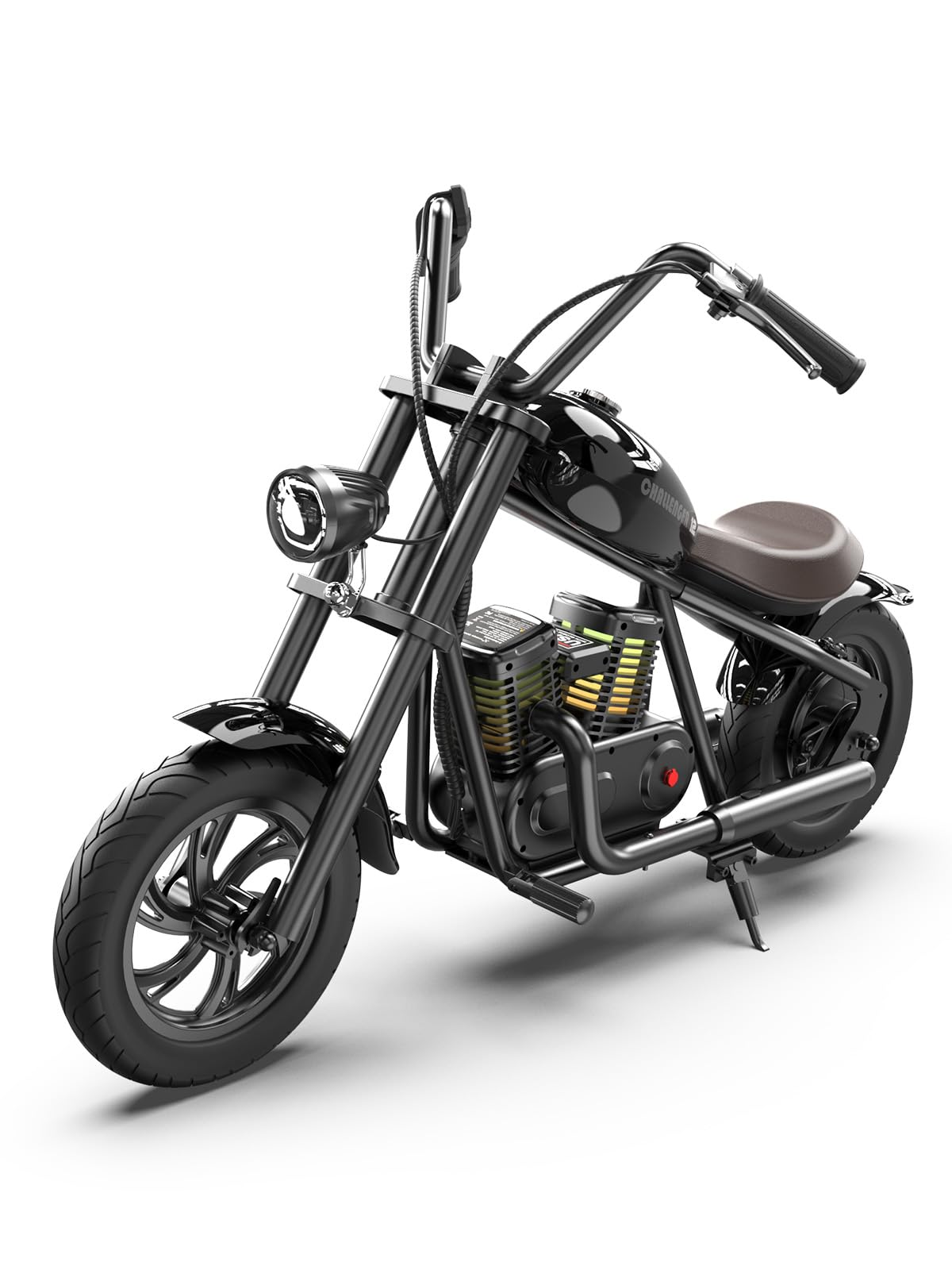
E-Bikes

Best Electric Bikes for Kids of 2026

A kids' electric bike should feel like a treat, not a gamble. The worry is real: a battery that dies two blocks from home, a frame too heavy for small hands, or a throttle that feels twitchy. A good one gives a kid just enough speed to keep up on family rides, without turning every outing into a safety lecture. It also survives driveway drops and grass-and-gravel shortcuts.

Over the past six months, my team and I have put eight kids' e-bikes through after-school rides, driveway practice, and weekend park loops. We watched battery life on longer rides, whether bolts and brakes stayed tight, how each bike fit growing kids, and how the tires handled grass and gravel—plus what kids vote on with their feet: speed, fun, looks, and whether the price feels fair. Don't chase the highest top speed. A bike your kid can stop, steer, and lift is the one they'll ride more, and the picks below reflect that balance.

1

Razor Dirt Rocket MX350

Top Pick
Razor Dirt Rocket MX350

Older riders

Our Score 9.0/10
Check Price

Worth Noting

  • Sealed lead-acid battery needs careful charging
  • Chain can loosen with hard use
Ride Time
Up to 60 minutes
Top Speed
14 mph
Recommended Age
8 years and up
Rider Weight Limit
200 lb
Read the full review

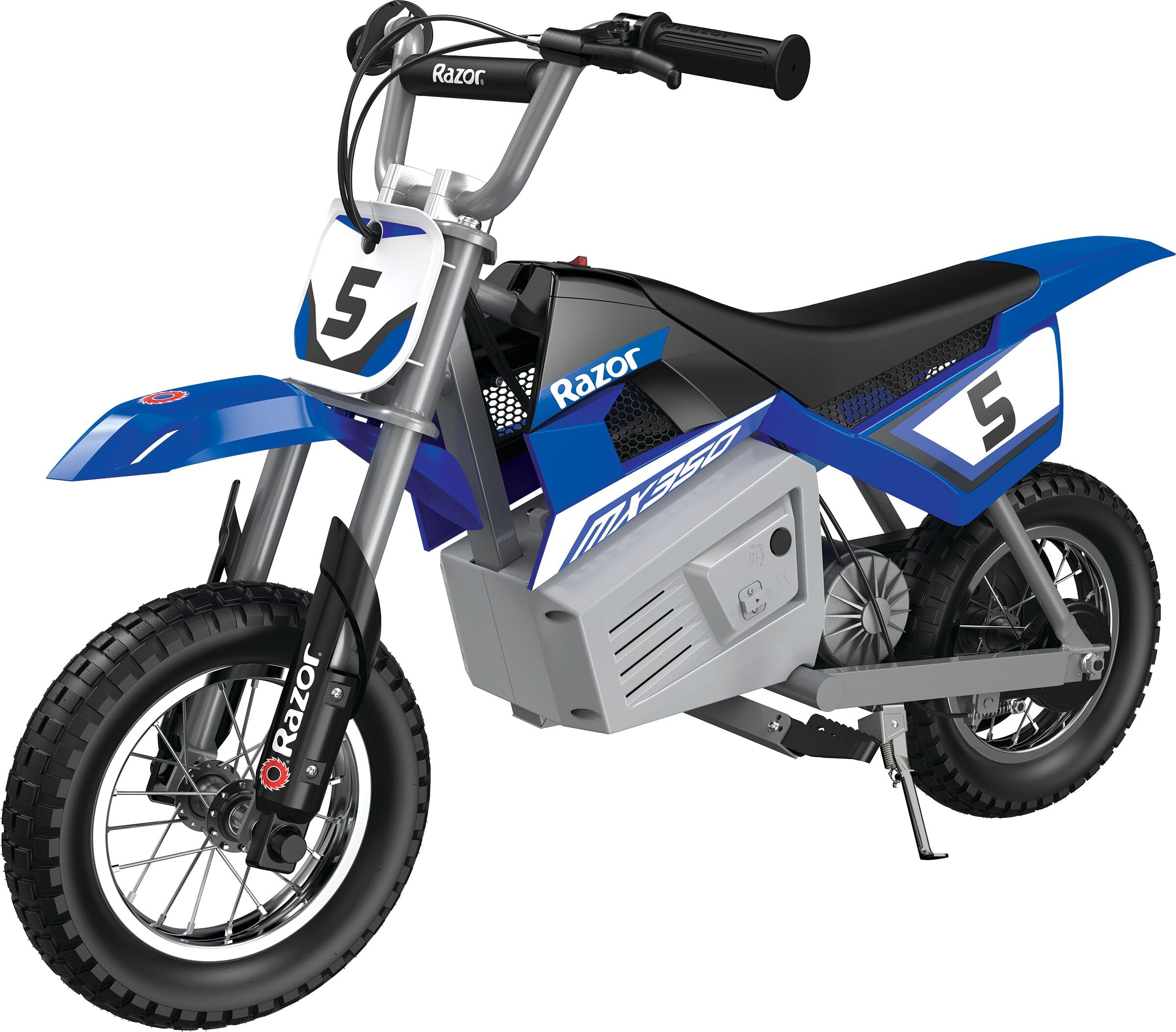
A handlebar switch is the most useful feature on the MX350. High mode reaches 14 mph; low mode gives a new rider a shorter leash. We put it first because the 200-pound rider limit and 12-inch wheels make it the broadest fit in this group, with enough room for a child to grow into the bike instead of out of it.

The rest of the package is proper dirt-bike geometry rather than a plastic scooter with a seat. Riser bars, a chain-driven motor, pneumatic tires, and a hand-operated rear brake teach real habits: sit forward, steer with the bars, and use the brake before the turn. The retractable kickstand is a small thing we appreciate at the end of a ride.

Weight is the trade-off. At 25 kg, roughly 55 pounds, the MX350 is not something a young rider can pick up alone after a spill, so a parent ends up righting it. The 60-minute low-speed run time is fine for short sessions; it is not an all-afternoon battery. Razor's recommended age of 8 and up matches the high mode.

Bottom line: The MX350 is our default kids' electric dirt bike because the high/low switch, 200-pound limit, and 12-inch wheels leave room to grow.

2

STACYC 12eDRIVE

STACYC 12eDRIVE

First powered bike

Our Score 9.0/10
Check Price

Worth Noting

  • Premium price and short electrical warranty
Ride Time
Up to 60 minutes
Product Weight
17 lb
Recommended Age
3 to 5 years
Rider Weight Limit
75 lb
Read the full review

Seventeen pounds is the first number we look at on the 12eDRIVE. The aluminum frame and BMX-style fork keep the bike light enough for a preschooler to handle, and the 12-inch wheels keep it small. That matters more at this age than a bigger battery or a longer spec sheet.

The smarter part is the power delivery. The 12eDRIVE starts in non-powered mode, then adds three levels of assist, so a child can push, balance, and coast before using the throttle. We put it at the front of this set for 3-to-5-year-olds because that progression matches how small riders actually learn.

The 2Ah battery is rated for up to 60 minutes, and the quick-disconnect pack is easier to manage than a built-in battery. The rigid fork and drum brake suit low-speed learning, not rough trail riding. The 75-pound weight limit is the other reason it stays a small-kid bike.

Bottom line: For a small beginner, the 12eDRIVE earns its premium price by starting unpowered and adding three gentle modes as confidence grows.

3

Hiboy DK1

Hiboy DK1

Growing siblings

Our Score 8.6/10
Check Price

Worth Noting

  • Chain guard and tires may not take hard use
  • Battery can stop accepting a charge
Ride Time
Up to 90 minutes
Top Speed
15.5 mph
Recommended Age
3 to 10 years
Rider Weight Limit
140 lb
Read the full review

The DK1's three modes—5, 7.5, and 15.5 mph—are its best trick. A cautious 5-year-old can stay in low while an older sibling uses the top setting, and the 140-pound rider limit means the bike can stay in the family longer than a single-speed starter.

Hiboy also gives it a hydraulic fork and a spring shock, which is more suspension than most kids' bikes at this size. The 12-inch tires and 38-pound build make it manageable for a parent to load, while the 90-minute rating is based on a light rider at low speed. Expect less time if your child rides hard at the top end.

The ride position is more dirt bike than balance bike, so a child should be comfortable with a throttle and hand brake before moving up. The 3-to-10 age range is broad, but the 15.5-mph high mode still needs a clear rule about where it is allowed.

Bottom line: The DK1 suits families who want one bike to last from age 3 to 10, with three clear speed modes and a 90-minute low-speed run time.

4

Hyper GoGo Electric Dirt Bike

Hyper GoGo Electric Dirt Bike

Style and play

Our Score 8.6/10
Check Price

Worth Noting

  • Light and sound effects can fail
Ride Time
Up to 60 minutes
Top Speed
10 mph
Rider Height
3'11" to 4'9"
Rider Weight Limit
143 lb
Read the full review

The Hyper GoGo is the only bike here that arrives with a light show, a Bluetooth speaker, engine sounds, and simulated fog. That is either the reason to buy it or the reason to pass; for a kid who wants a toy with a personality, it is a lot of fun before the ride even starts.

The basics are more sensible than the theatrics suggest. Three modes cap speed at 5, 7, and 10 mph, and the bike has a speeding alarm. The 143-pound rider limit and adjustable bars fit a wider range of children than the compact stance implies.

The 12-inch solid tires need less air-pressure fuss than pneumatic tires, but they are the wrong choice for loose or wet ground. The 60-minute run time is in the same range as the others; the LED and sound systems are the parts that can steal attention and, eventually, need service.

We recommend it for the child who wants the look and the soundtrack, and for parents who value the speed alarm. The 3-foot-11 to 4-foot-9 fit window is the number to check before buying; a tall rider will run out of room before the weight limit.

Bottom line: The Hyper GoGo is for the kid who wants a showpiece: lights, engine sounds, and simulated fog, with a manageable 10-mph top speed.

5

Hiboy BK1

Hiboy BK1

Young beginners

Our Score 8.4/10
Check Price

Worth Noting

  • Battery and power-on faults can sideline it
Top Speed
9 mph
Product Weight
20.1 lb
Recommended Age
3 to 5 years
Rider Weight Limit
77.2 lb
Read the full review

The BK1 asks the child to kick off the ground before the motor engages. That one design choice makes it a better first electric bike for a 3-year-old than a pure throttle toy: the child starts with balance and momentum, then adds power.

At 20.1 pounds, it is light enough for a small rider to straddle and for a parent to carry when interest fades. We put it near the front for ages 3 to 5 because the 9-mph top speed and 77.2-pound limit keep it honest about who it serves. The front V-brake gives small hands a real stopping lever, too.

The low step-over and 12-inch tires suit pavement and packed paths. There is no kickstand, which is annoying at the playground, but the bike is light enough to lay on its side without drama. The 3-to-4-hour charge is a session-planning detail, not a deal-breaker.

Bottom line: The BK1 is the balance bike we point to for ages 3 to 5: light, low, and capped at 9 mph, with a kick-off start that keeps the child in control.

6

Razor Dirt Rocket MX125

Razor Dirt Rocket MX125

Cautious starters

Our Score 8.4/10
Check Price

Worth Noting

  • Struggles on grass and inclines
Ride Time
Up to 80 minutes
Top Speed
8 mph
Product Weight
29.7 lb
Rider Weight Limit
110 lb
Read the full review

The MX125 is the smaller, slower Razor in this group, and that is exactly its job. An 8-mph top speed and a 110-pound rider limit put it below the MX350 in size, power, and physical bulk, so a younger or more cautious child has less bike to manage.

The 12-inch knobby tires and rear-wheel drive give it the same motocross stance as its bigger sibling. The twist throttle and hand brake are real controls, not buttons, which is useful for teaching. The 29.7-pound build is heavy enough to feel planted but light enough for a parent to lift into a trunk.

The 8-mph cap is the right call for a cautious rider, but it also means the MX125 runs out of headroom sooner than the MX350. For a 5- or 6-year-old learning throttle control, that is an easier trade to accept than a heavier, faster bike. Check the 110-pound limit against the child's growth before you commit.

Bottom line: The MX125 is the right first dirt bike for a cautious younger child: an 8-mph ceiling, a 110-pound limit, and a smaller package than the MX350.

7

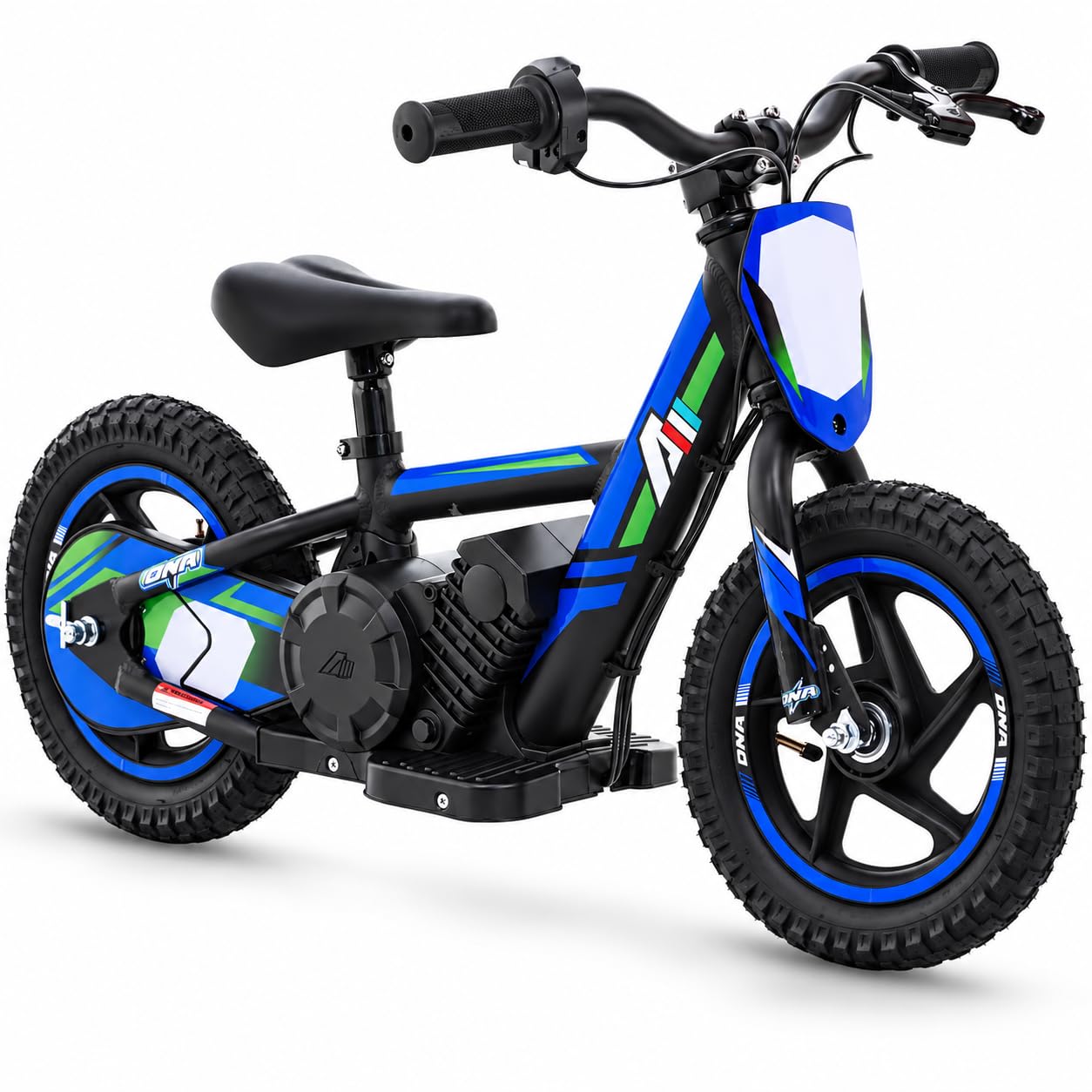
AIII Kids Electric Dirt Bike

AIII Kids Electric Dirt Bike

Easy charging

Our Score 8.4/10
Check Price

Worth Noting

  • Battery can stop holding a charge
Battery
24V 2.6Ah
Ride Time
40 to 60 minutes
Wheel Size
12 inches
Product Weight
23.2 lb
Read the full review

The AIII's battery slides out of the frame, so charging does not require a garage outlet or an extension cord across the yard. The seat also adjusts, which is the feature that makes a budget kids' bike last through a growth spurt.

At 23.2 pounds, it is one of the lighter dirt-bike-styled options here, and the 12-inch inflatable tires take the edge off pavement seams better than solid tires. The rear drum brake and hand lever give a small rider a familiar bicycle-style stop. The 24V 2.6Ah pack is rated for 40 to 60 minutes.

We choose the AIII when easy charging and a low standover matter more than top speed. It is a budget bike, and the speed ceiling reflects that. For a 3-to-6-year-old who is just learning, the removable pack and light build are worth more than another mile per hour.

Bottom line: The AIII is our budget pick because it pairs a removable battery and adjustable seat with a light-enough 23.2-pound frame for ages 3 to 6.

How We Tested Kids' E-Bikes in Real Family Life

To build the shortlist, I started with the kid-specific stuff parents actually ask about: age and height ranges, weight limits, top speed in each mode, throttle versus pedal assist, replacement battery availability, and whether the company publishes clear safety and warranty information. Then my team and I narrowed that pool to eight models that spanned the size and price spread most families shop, from first-pedal-assist bikes to slightly more capable trail-adjacent options.

Over six months, we turned those bikes over to a rotating crew of young riders ages 6 to 11 and watched them ride after school, practice starts and stops in the driveway, and join weekend park loops. We timed how long the batteries lasted on mixed routes, how quickly they recharged, and whether the assist cut out on hills. We kept a log of loose bolts, brake adjustments, display glitches, and anything that felt flimsy after a drop on the lawn. We adjusted seats and handlebars to each kid and noted who could reach the ground, lift the bike onto a curb, and manage the throttle without a wobble.

Traction got its own messy test: grass, loose gravel, wet pavement, and one slick driveway after a hose fight. We also paid attention to the fun factor—which bikes kids begged to ride again, which ones they showed off to friends, and whether the looks matched the ride. Value came down to what came in the box and what held up without extra fuss.

How to Choose Electric Bikes for Kids

Fit comes before horsepower

A child should be able to plant both feet on the ground at a stop and reach the brake lever without stretching. Check the stated age range against height and weight, too: the STACYC 12eDRIVE is a 3-to-5 bike with a 75-pound limit, while the Razor MX350 carries up to 200 pounds and suits older riders. An adjustable seat, like the AIII's, buys some growing room, but it does not make an oversized bike safe.

The trap is buying a bike to grow into. A rider who cannot flat-foot it or work the brake is managing the machine instead of riding it. Choose the smaller bike now and move up when the child can start, stop, and dismount cleanly.

Speed modes are a safety feature

A low mode is only useful if it is genuinely low. The Razor MX350 uses a high/low switch, the Hiboy DK1 has three settings from 5 to 15.5 mph, and the STACYC 12eDRIVE starts with no power at all. Those are different approaches to the same job: give a new rider a speed they can manage while they learn throttle control.

The trap is assuming a 15-mph bike is beginner-friendly because it has a low setting. Check the actual low-mode figure and how the throttle engages; a kick-off start or a twist throttle that ramps in gently is easier for small hands than an on/off trigger.

Weight, tires, and brakes

Weight is the spec parents feel most: a 17-pound STACYC is easy for a preschooler to handle, while a 55-pound Razor MX350 is a parent's lift. Lighter is better for a first bike, provided the frame and wheels are sturdy enough for the child's riding.

Tire type changes where the bike works. Pneumatic tires, on the Razor and Hiboy dirt bikes, absorb bumps and find grip on packed dirt; solid tires, on the Hyper GoGo, shrug off punctures but feel harsh and lose grip on loose ground. Check that small hands can reach the brake lever and pull it firmly.

Battery, runtime, and charging

Runtime claims usually assume a light rider and a low speed. The Hiboy DK1's 90-minute figure is based on an 88.2-pound rider at 9.3 mph, so a heavier child at full throttle will see less. The Razor MX350 uses a sealed lead-acid pack; the others use lithium-ion, and some, like the AIII, make the pack removable for easier charging.

A removable battery is convenient, but it is not a substitute for good charging habits. Use the supplied charger, charge after a ride rather than leaving a pack drained for weeks, and follow the manual for storage temperatures. If a bike lives outside, a removable pack is the easier ownership story.

Plan for upkeep and parts

Kids' electric bikes take more maintenance than a pedal bike. Chains need tension and lubrication, tires need pressure checks, and brakes need adjustment as cables stretch. The first month is when small faults show up, so check the chain guard, tire condition, and throttle response after each ride.

Warranty coverage varies enough to affect the purchase. The STACYC 12eDRIVE has a 90-day electrical warranty, while Hiboy lists a one-year parts warranty. Keep the receipt and register the bike if the maker asks; a clear record makes a battery or motor claim much easier.

Frequently Asked Questions

Final Verdict

The Razor MX350 is our first recommendation because its high/low switch and 200-pound rider limit cover more children than any other bike here, and its 12-inch wheels make it useful beyond the driveway. For a 3-to-5-year-old, the STACYC 12eDRIVE is the better start: lighter, slower to ramp up, and easier to manage. The Razor MX125 is the fallback when the MX350 feels like too much bike but you still want the dirt-bike look.