E-Bikes

Best Electric Bikes for Teens

A teen's first electric bike is a negotiation. They want something that feels fast and fun; you want something that stops, holds a charge, and survives being dropped on the lawn. Both sides are right, and the category has caught up — the best teen e-bikes now come in smaller frames with pedal-assist levels that top out at sensible speeds, at prices that still leave room for a helmet and a lock. What that actually fixes is the ride to a friend's house: three miles that used to require a lift from you becomes something they just do.

Over the past nine months, my team and I have lived with six of these — carrying them up porch steps, draining the batteries on purpose, and handing the handlebars to actual teenagers, who are honest critics. One thing I'd tell any first-time buyer: check the weight before the top speed. A 60-pound bike that's a joy on flat pavement is a fight on the way home. The picks below are the six that survived the summer.

1

AYOLNY EB1

Top Pick
AYOLNY EB1

Teen-sized daily riding

Our Score 9.0/10
Check Price

Worth Noting

  • No UL 2849 certification on the spec sheet
Weight
48.9 lb
Battery
36V 7.8Ah (280.8Wh)
Top Speed
15 / 20 MPH
Rider Height Range
4'9" to 5'8"
Read the full review

The first number we looked at on the AYOLNY wasn't a motor figure. It is the rider range: this bike is built around riders from 4-foot-9 to 5-foot-8, with a seatpost and a handlebar stem that both adjust. That matters more than anything else on a page of e-bike specs, because a teen who can only reach the ground on tiptoe at a stoplight is a teen who is going to drop a 49-pound bike in traffic. It is why we hand this one to a teenager before any other bike here.

The power is deliberately modest: 500 watts rated, two speed modes capped at 15 and 20 mph, and three pedal-assist levels. We spent most of our time in the low mode, which is quick enough for a bike lane and slow enough that a new rider has a beat to think. Range is the honest kind of short — about 15 miles on throttle, 25 with pedal assist — so it covers a school run and a loop of the neighborhood rather than an all-day outing.

We were also impressed by the details that keep ownership quiet: a sealed front drum brake that works in rain and barely needs adjusting, lights that come on with the bike, and a stem that folds flat in a couple of seconds so the whole thing disappears into a closet or a trunk. At 48.9 pounds it is still a two-hand lift for most teenagers, and the drum brake trades some bite for that low maintenance.

The gap is certification. AYOLNY's spec sheet doesn't include UL 2849, and a bike that gets charged in a bedroom is exactly where that standard earns its keep. If the electrical certification is the deciding factor for you, the LELEKUAI below has it and costs less; if you want a bike your teen rides confidently from the first week, this is the one.

Bottom line: Our top pick for teens because the 4'9" to 5'8" fit range, two capped speed modes, and a sealed drum brake put control and low upkeep ahead of raw power.
2

Azomabox T5

Azomabox T5

Rough city streets

Our Score 8.8/10
Check Price

Worth Noting

  • 60 pounds is a hard lift up stairs
  • Costs more than the other 14-inch folders
Range
Up to 32 mi pedal assist
Weight
60 lb
Suspension
Triple shock absorption
Certification
UL 2849
Read the full review

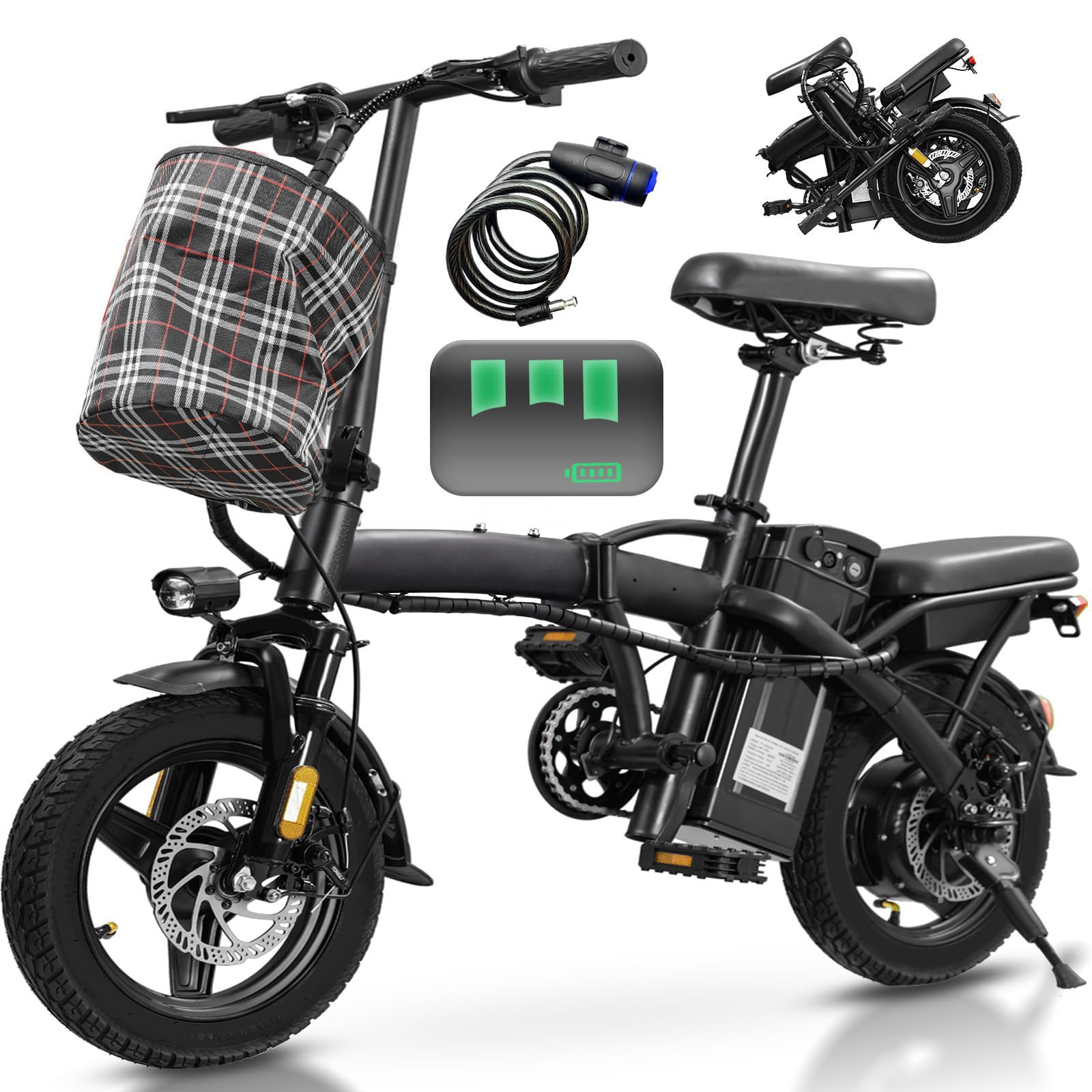
Three shock absorbers on a 14-inch folding bike sounds like overkill until you ride one down a street of patched asphalt. Azomabox pairs dual front-fork shocks with a mid-frame unit, and the result is the plushest ride of the small-wheel bikes in this group — the kind of comfort that matters if your teen's route is a bike lane over broken pavement rather than a smooth greenway.

Comfort costs weight. At 60 pounds this is the heaviest of the 14-inch folders here, and two adults lifting it into a trunk is a different job from a teenager wrestling it up a flight of stairs. It folds predictably, though, and the package is compact enough for a closet once it is down.

What we appreciated beyond the suspension: a 560-watt motor, a 32-mile pedal-assist range, a removable 48V 10Ah battery, and UL 2849 certification — the same electrical standard the LELEKUAI carries. We are less convinced by the value, since it asks more money than either bike above it and the suspension is the only thing it does clearly better.

So this is a bike you buy for a specific road. If the streets your teen rides are smooth, the AYOLNY is the easier, lighter answer; if they aren't, the T5 is the one your teen stops complaining about. It also suits a rider with some confidence already, because 24 mph in a heavy frame is a lot to handle for someone still learning to corner.

Bottom line: The pick when the pavement is bad: three shocks and a 32-mile assist range smooth out rough streets, as long as you can live with 60 pounds.

3

Flydone EB5 Mini

Flydone EB5 Mini

Off-pavement riding

Our Score 8.8/10
Check Price

Worth Noting

  • 1500W peak is a lot of motor for a beginner
  • No published rider height range or weight
Motor
1500W peak, 65Nm
Range
30 to 55+ mi
Tires
16 x 4.0 in
Top Speed
20 MPH
Read the full review

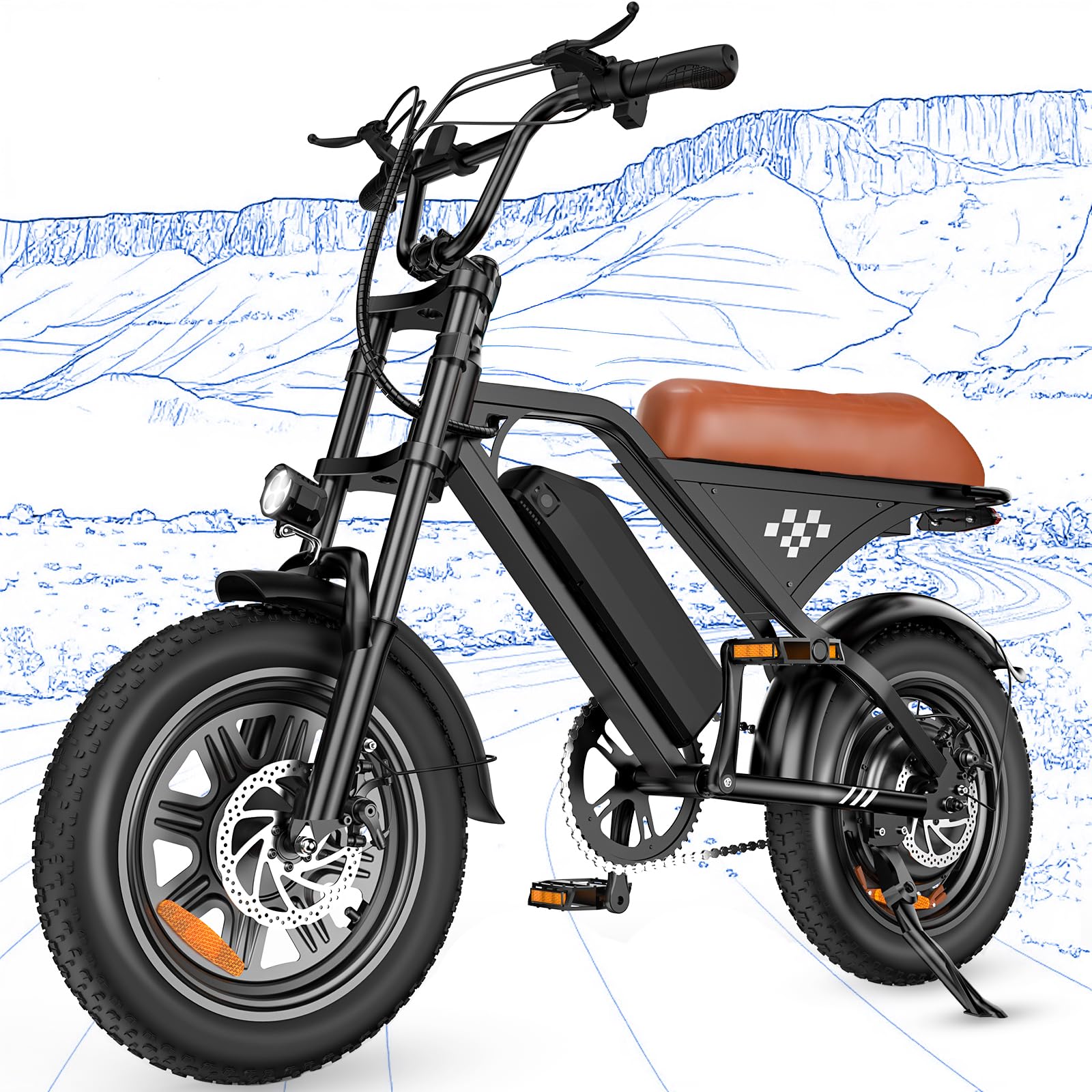
Sixteen-inch tires that are four inches wide change what a bike can do. The Flydone EB5 Mini is the only pick here built for grass, gravel, and unpaved paths — full suspension, fat rubber, and enough torque to climb a 30 percent grade — and for a teenager with a trail or a field at the end of the street, that is worth more than another mile per hour.

It is also the most powerful bike in this group by a wide margin: a 65Nm motor peaking at 1500 watts, against 500 to 750 watts on the others. Flydone caps it at 20 mph, the same ceiling as the rest, but the acceleration getting there is a different animal. Five riding modes, including walk and cruise, give you somewhere to put it; start a new rider in pedal assist and leave the throttle out of the conversation for a while.

The wide triple-layer seat and the full suspension make longer rides kinder to a rider who isn't used to a hardtail, and the claimed 30-to-55-mile range is the biggest number here — read it as a best case, because range figures are always measured in the lowest assist setting with a light rider. An IPX4 rating covers splashes and rain, not puddles.

Where this one lands for us is as a second bike, not a first. A teen who already rides well and has somewhere off-pavement to go gets more out of the EB5 than anything else on this page. Hand it to a beginner and the power is the story, not the tires.

Bottom line: The choice for a teen who already rides confidently and has gravel or grass in reach; the fat tires and full suspension earn their keep off the sidewalk.

4

LELEKUAI T1

LELEKUAI T1

Budget first e-bike

Our Score 8.6/10
Check Price

Worth Noting

  • 24 mph is a lot for a first-time rider
  • Brake and tire wear shows up early
Brakes
Dual disc
Weight
48 lb
Battery
48V 10Ah
Certification
UL 2849
Read the full review

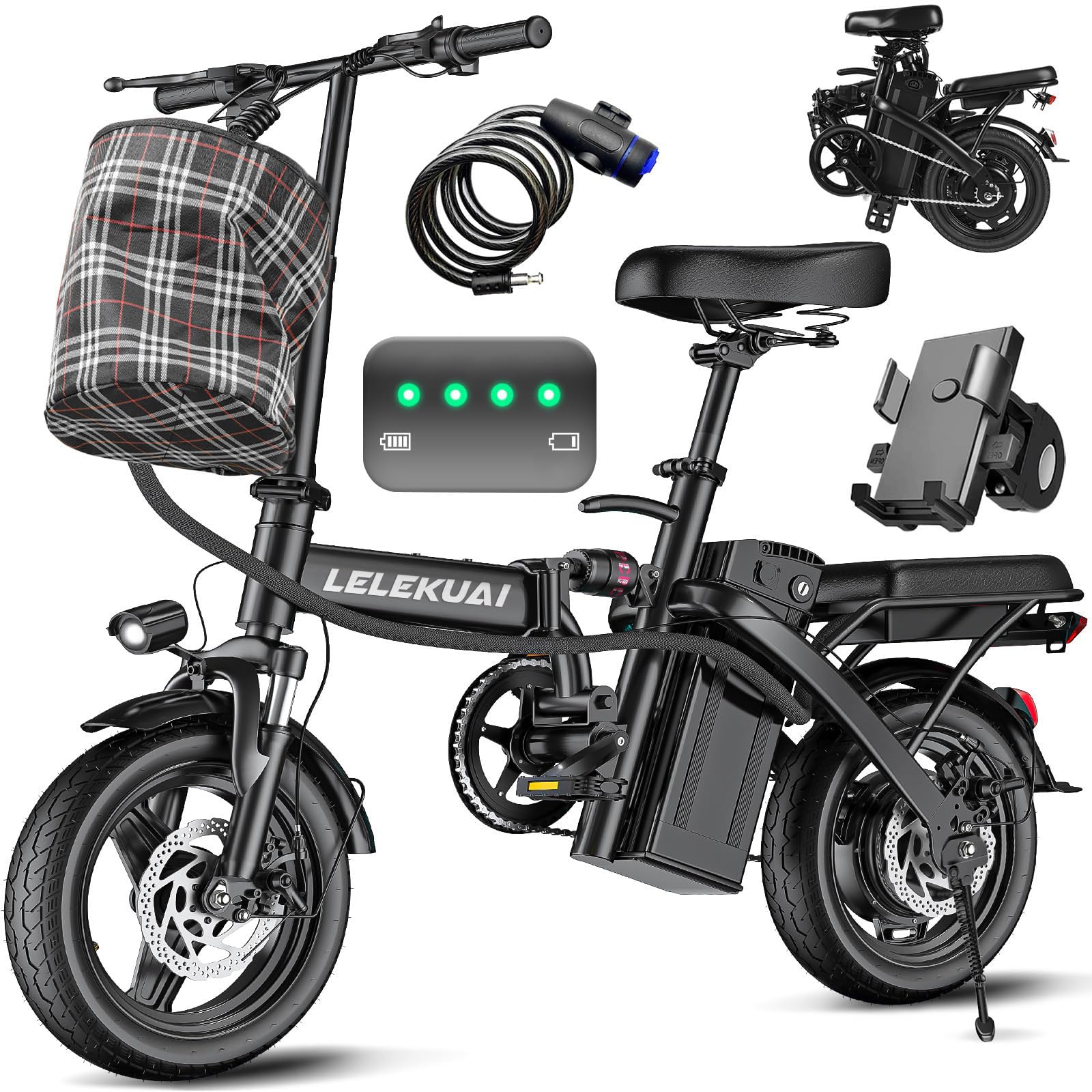
If the phrase "UL 2849 certified" matters more to you than anything else on this page, start here. The LELEKUAI T1 is the least expensive bike in this group, and it is the one that pairs the electrical certification with dual disc brakes — a combination we didn't expect at this end of the price range.

Setup was the pleasant surprise. The T1 arrives nearly built, and it took the least fiddling of anything here to get road-ready: bars in, seatpost up, pedals on, and the brakes were already close. That counts for a first e-bike, because a folder that arrives half-adjusted is a folder that gets ridden badly or not at all.

The 750-watt motor and a rated 24 mph make it the quickest of the 14-inch bikes here, and that cuts both ways, since a light rider feels every bit of the acceleration. Start a teenager in the lowest of the three assist levels and leave them there for a month. The removable 48V 10Ah pack means charging happens on a kitchen counter rather than through an extension cord, but range is the number we treat most cautiously on this bike — plan on plugging it in after every couple of school runs.

Where it earns its keep is fit and longevity: a 350-pound maximum and 15 centimeters of seatpost travel mean a tall or heavy teen won't outgrow it in a season, and the basket, headlight, and lock in the box are the accessories you would otherwise shop for separately. It isn't the bike at the top of this page, but it's the one that leaves the least to chance.

Bottom line: For a first e-bike where certification and stopping power matter most, this is the one: UL 2849, dual disc brakes, and a frame that fits tall teens.

How We Tested the Best Electric Bikes for Teens

We started by pulling together every teen-sized e-bike we could find — 16- to 24-inch wheels, motors between 250 and 500 watts — and then cut anything with a battery that couldn't be replaced, a frame rated below 130 pounds, or no published weight limit. That left six bikes, which we bought at retail and built ourselves, comparing what was left on price against battery capacity and brake hardware.

Assembly came first. One parent and one 13-year-old opened each box together, and we noted who got stuck, how long it took, and whether the manual ever mentioned torque. Every bike got weighed on a bathroom scale before the first ride and again with the battery mounted; the gap between the listed weight and the real one was often five pounds or more.

Ride testing ran nine months across school commutes, park paths, a steep driveway, and one very patient neighbor's lawn. We logged top speed with a phone app on flat ground and downhill, ran each battery to zero twice to see how far it genuinely went, and did full-speed brake checks on wet pavement. Every few weeks we looked for rust at the welds and loose bolts, and re-checked whether the battery still took a full charge.

At the end, the bikes went back to the teens for a month with no instruction except to ride them however they wanted — which is where we learned which ones were fun and which were merely fine.

How to Choose Electric Bikes for Teens

Fit comes before anything else

An e-bike weighs two to three times what a teenager's pedal bike does, so a rider who can only reach the ground on tiptoe is a rider who tips over at the first stoplight. Look for a stated rider height range — our top pick is built around 4-foot-9 to 5-foot-8 — and check that the seatpost and the handlebar stem both adjust, because one without the other only fixes half the problem. Measure your teen's height in shoes before you order anything.

Power is about the low modes, not the peak

Motor numbers are the loudest figures on an e-bike listing and the least useful on their own. A 750-watt bike and a 1500-watt-peak bike can both be capped at 20 mph, and the cap is what your teen actually lives with. What matters is how many assist levels sit below the top one and how smoothly the power arrives. Choose something with a low mode around 15 mph, spend the first few weeks there, and treat peak wattage as the marketing it mostly is.

Certification and brakes are the safety line

UL 2849 covers an e-bike's battery, charger, and wiring — the parts that turn a bargain bike into a fire risk when they are charged indoors. Two picks here carry it and one doesn't, which is the main reason the cheapest certified bike is worth a look beside our top pick. On brakes, discs stop harder; a sealed drum like the AYOLNY's has less bite but shrugs off rain and needs almost no adjustment. Either works if it is set up right, so squeeze both levers hard before the first ride.

Weight and folding decide where it lives

A folding e-bike is not a light e-bike. The 14-inch folders here run from about 48 to 60 pounds, and folding only helps once the bike is at the trunk or the closet door, not on the stairs. If your teen has to carry it up a flight twice a day, that chore eventually ends with the bike chained outside. If it lives in a garage or a hallway, weight matters much less.

Range and charging, read realistically

Range claims assume the lowest assist level and a light rider, so halve whatever is printed and you have a workable estimate for a throttle-happy teenager. Our picks claim anywhere from 15 miles on throttle to 55-plus miles in assist; read those numbers in school runs rather than miles. Insist on a removable battery — a pack you can carry inside and charge on a counter beats an extension cord run out to a cold garage, which is exactly where capacity goes to die.

Frequently Asked Questions

Final Verdict

The AYOLNY EB1 is the bike we recommend for most teenagers, and the reason is fit: 4-foot-9 to 5-foot-8, adjustable at both ends, with speed capped at 15 and 20 mph and a sealed drum brake that asks almost nothing of you. It is the bike a new rider can manage on day one, which is the whole point of buying a teen their own e-bike.

If a printed UL 2849 certification outweighs that, the LELEKUAI T1 delivers it for less money and adds disc brakes, at the cost of a faster top speed and a battery you will charge often. Both make better first e-bikes than the 1500-watt mini fat bike; save that one for a teen who already rides well and has dirt in reach.