E-Bikes

Best Electric Bikes of 2026

Two e-bikes can list the same motor wattage, the same battery capacity, and the same claimed range and still feel like completely different machines the first time you point them at a hill. The spec sheet won't tell you whether the assist surges or eases in, whether the brakes feel sure with a loaded pannier, or whether the battery holds its charge after a few hundred miles. What a good one fixes is simpler than any of that: it turns the rides you'd normally talk yourself out of into the easy part of the day.

I've spent the past eight months commuting, hauling groceries, and grinding up a hill I used to avoid, on six e-bikes that run from folding commuters to budget direct-to-consumer models. The gap between a well-built bike and a cheap one shows up within the first fifty miles. Something first-time buyers rarely factor in: the battery is most of what you're paying for, and a replacement can run a third of the bike's cost, so check that the company will still be around in five years. The picks below are the ones we'd ride again.

1

Funhang EB-C2

Top Pick
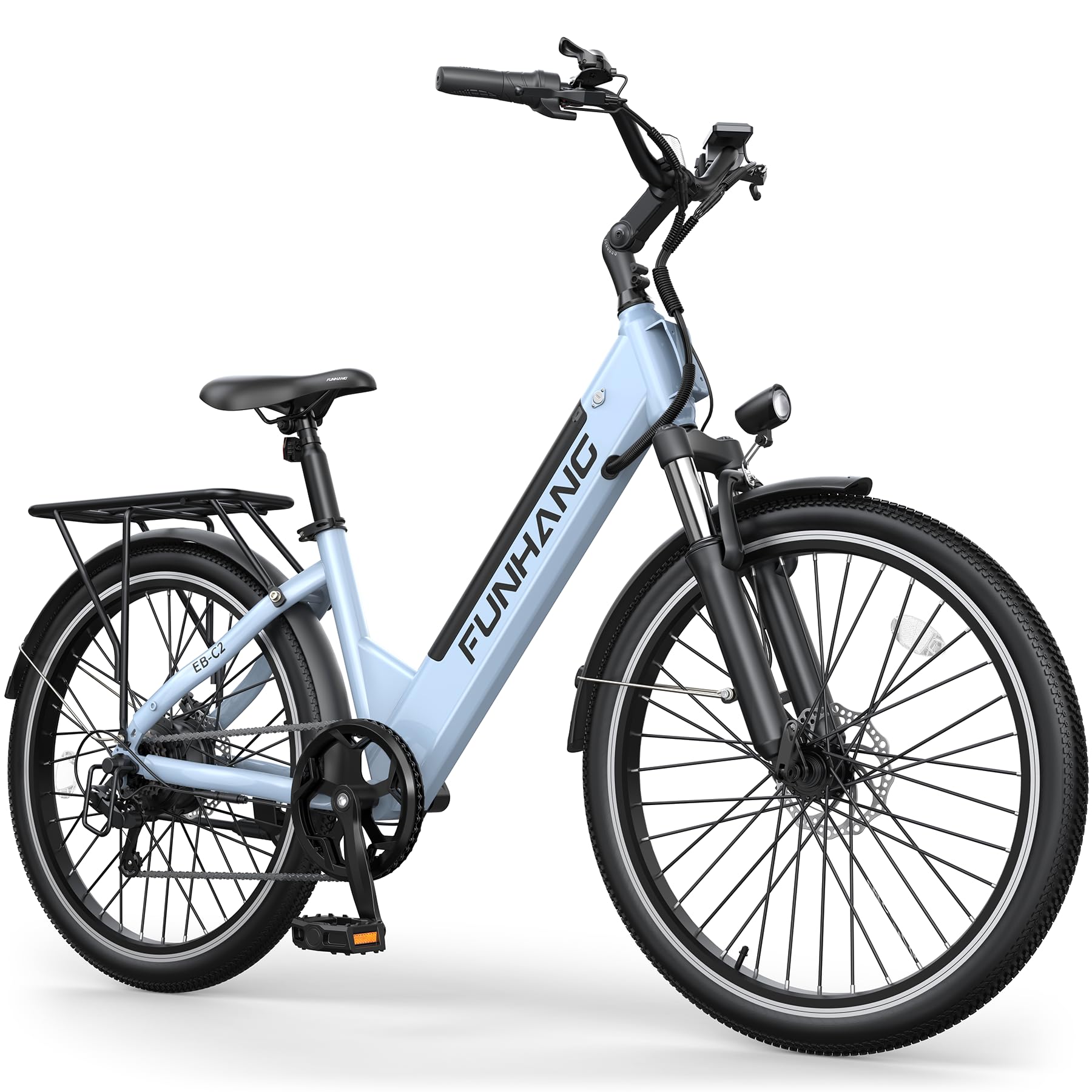
Funhang EB-C2

Everyday commuting

Our Score 8.8/10
Check Price

Worth Noting

  • 62 pounds is a two-trip lift upstairs
  • Front suspension only; rear wheel transmits bumps
Motor
500W rated, 1000W peak
Battery
48V 374.4Wh, removable
Certification
UL 2849
Claimed Range
40-50 miles, pedal assist
Read the full review

The mark we looked for first on the Funhang was not the motor badge — it was UL 2849, the electrical certification that matters when a lithium pack charges in your hallway. It is one of only two bikes in this group that carries it. Add a step-thru frame, a rear rack, fenders, and a 500-watt motor (1000 peak), and you have the bike we point most riders to first.

The 26-inch wheels and adjustable stem put the bars where you want them whether you are 5-foot-3 or well over 6 feet, and the step-thru frame means you are not swinging a leg over a rack full of groceries. The 374.4 watt-hours is mid-pack here, and the 40-to-50-mile claim assumes you are pedaling in a low assist level. At full assist, plan on about half that — which is still a real commute.

Assembly is the usual front wheel, bars, pedals, and a brake check, and the rack and fenders arrive already mounted. What we appreciated in the details is the trigger-shifted 7-speed gearing: it makes the bike genuinely rideable with the motor off, which stops being a spec-sheet nicety the day the battery runs flat three miles from home.

The low assist levels feel soft before the motor picks up, so step up a level rather than waiting for it — that is the one habit this bike asks you to learn. Everything else about it is deliberately unremarkable, and for something that charges in your hallway, unremarkable is exactly the goal.

Bottom line: For most riders this is the e-bike to buy: certified electrics, a step-thru frame that takes a rack and groceries, and enough motor for a hilly commute.
2

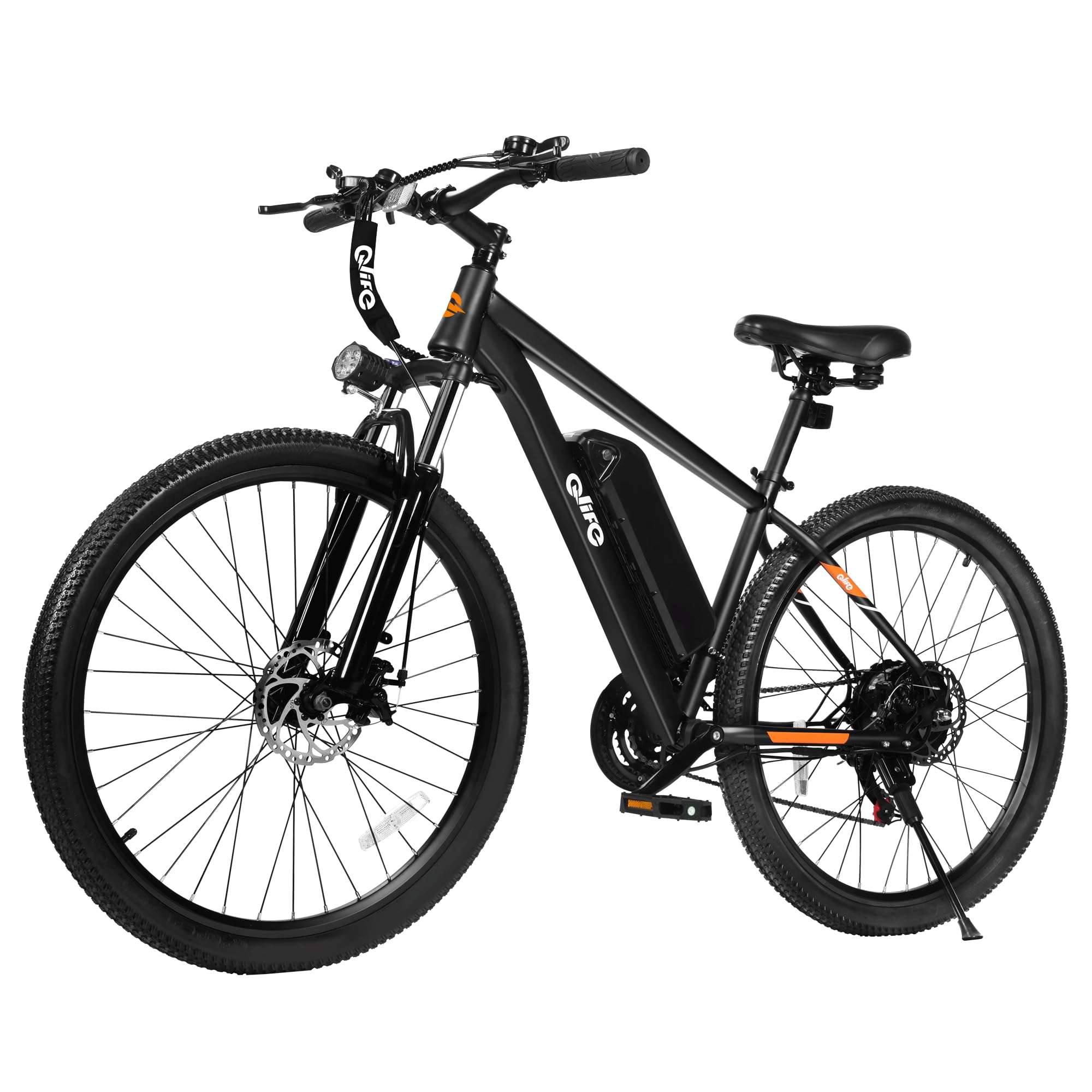
Qlife Racer

Qlife Racer

Budget hill riding

Our Score 8.8/10
Check Price

Worth Noting

  • No rack, fenders, or lights included
  • Small 375Wh pack limits throttle range
Motor
1000W peak
Weight
48.1 lb
Battery
48V 7.8Ah (375Wh), removable
Drivetrain
21-speed
Read the full review

Twenty-one gears on an e-bike sounds like overkill until you ride one with a small battery and decide to save the juice for the climb. The Racer is the only bike in this group with a drivetrain that deep, and paired with 26 x 2.1-inch tires and a 48.1-pound frame it is the closest thing here to a normal bicycle that happens to have a motor.

That is why we keep it in the guide at the lowest price of the eight. It suits someone who wants to pedal, use assist on the climbs, and not worry much about range because they are not leaning on the throttle. The 1000-watt peak motor gives a genuine shove when asked, but the 375 watt-hours cap assisted range in the mid-teens on motor alone.

What you give up is equipment: no rack, no fenders, and a fork that handles small bumps and not much else. The gearing is the compensation — drop into a low gear and this bike still climbs when the battery is empty, which is more than most of this group can say.

Bottom line: The cheapest bike here, and the one that still pedals like a bicycle — buy it if you plan to work for your miles and save the motor for hills.

3

DTTZH F6

DTTZH F6

Fat-tire trails

Our Score 8.8/10
Check Price

Worth Noting

  • Advertised 30 mph is not what it delivers
  • 22 miles of throttle range at best
Motor
2000W peak
Unlock
NFC card or 4-digit code
Battery
48V 15.6Ah, removable
Suspension
Full, hydraulic front fork
Read the full review

The keyless ignition is the feature that made us look twice: tap the NFC card or punch a four-digit code and the bike powers up. No key to lose, and nothing left in the ignition while you are inside a shop. On a bike two people share, that alone is worth something.

The rest is a serious fat-tire build for the money — 2000-watt peak motor, 48-volt 15.6-amp-hour removable battery, 3-amp charging, full suspension with a hydraulic front shock, and one-piece 20 x 4-inch wheels. It goes together easily, and the battery, charger, and manual all arrive in the box.

What we tell anyone asking is that the speed claim is marketing, not the bike. Thirty miles an hour shows up on the page; the bike tops out around 20 unless you go out of your way to unlock more. If that number is why you are buying, you will be disappointed. Everything else — the suspension, the keyless start, the color display — is more than the money suggests.

Bottom line: A well-equipped fat-tire bike with keyless start, as long as you are buying it for the suspension and not the top-speed claim.

4

Azomabox T5

Azomabox T5

Apartment storage

Our Score 8.8/10
Check Price

Worth Noting

  • Harsh, twitchy ride on 14-inch wheels
  • Three-speed gearing limits unassisted riding
Motor
560W
Weight
60 lb
Battery
48V 10Ah, removable
Certification
UL 2849
Read the full review

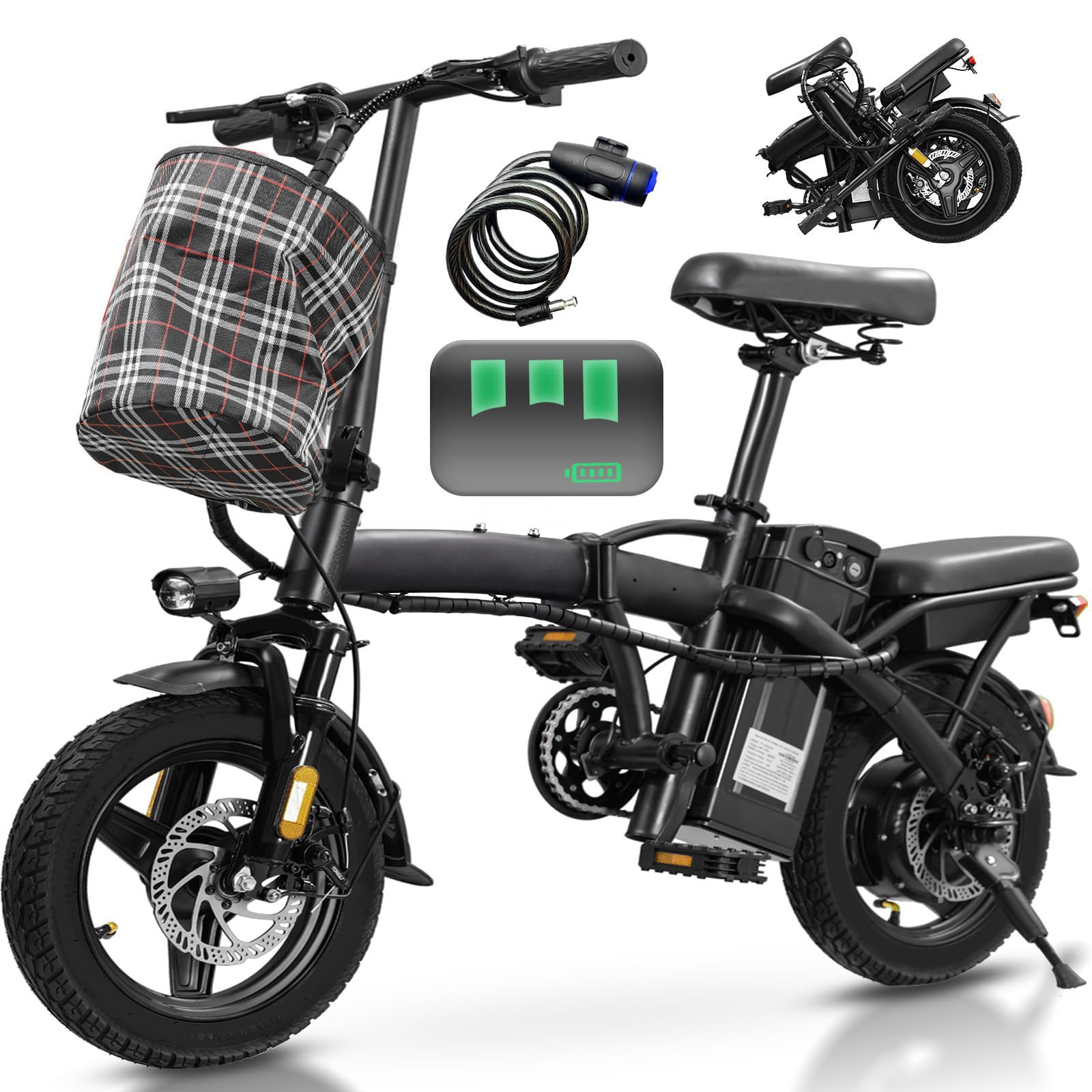
Sixty pounds on 14-inch wheels is the tension built into this bike. The small wheels and folding frame exist so it disappears into a closet; the weight means it is not going up a flight of stairs on your shoulder, and it is not the folder you toss into a trunk one-handed either.

What the weight buys is a high-carbon steel frame, a 560-watt rear hub motor, a 48-volt 10-amp-hour removable battery worth about 32 miles in pedal assist, three speeds, triple shock absorption, disc brakes, and a front basket in the box. It also carries UL 2849 certification, as does only one other bike in this group.

Twenty-four miles an hour is quick for a 14-inch bike, and the short wheelbase is what we noticed at speed — this is a machine that prefers a bike lane to a fast descent. The triple shocks do their job on curbs and patched asphalt, though they cannot invent rolling diameter.

As an apartment bike that folds into a closet and rides an elevator, it makes sense, and the included basket means errands do not need a rack. If your building has stairs, the Gotrax R1 is the better answer: 45 pounds and 20-inch wheels.

Bottom line: The folder for apartment dwellers who store rather than carry — certified, quick, and light enough for an elevator, not a staircase.

5

Gotrax R1

Gotrax R1

Folding commutes

Our Score 8.6/10
Check Price

Worth Noting

  • Small 374.4Wh battery limits throttle range
  • Rigid fork and small wheels ride firm
Motor
350W
Tires
20 x 2.6 in.
Weight
45 lb
Battery
48V 7.8Ah (374.4Wh)
Read the full review

A folding e-bike only earns its hinge if the folded package is something we can actually lift into a trunk, and at 45 pounds the R1 is the one here that clears that bar. It folds at the frame, the bars and seat drop, and the pedals fold in as well, so it goes into a hatchback or a hall closet without a second person.

On the road it behaves like a small-wheel city bike rather than a toy: the 20 x 2.6-inch tires roll over curb cuts and gravel far better than the 14-inch folders here, dual disc brakes haul it down, and the 350-watt motor tops out around 20 mph, in line with the rest of this group.

The five-speed gearing is enough for gentle grades but not for a long climb without assist, and it arrives with little beyond the charger — no rack, no fenders. Keep the tires at pressure and pick your line, because there is no suspension to cover for you.

The thing to know before you buy is electrical. If the electronics fail, Gotrax's answer is a year of parts support rather than a dealer down the street, so buy from somewhere with a return window, register the bike on arrival, and keep the box for the first month.

Bottom line: The folder here that is light enough to lift and big-wheeled enough to ride — buy it where returns are easy and register the warranty on arrival.

6

TST R004

TST R004

Heavier riders

Our Score 8.6/10
Check Price

Worth Noting

  • Rim brakes are a weak match for the rating
  • Range at full assist falls well short of 60 miles
Motor
749W rated, 2000W peak
Tires
20 x 4.0 in.
Battery
48V 15Ah (720Wh), removable
Max Rider Weight
450 lb
Read the full review

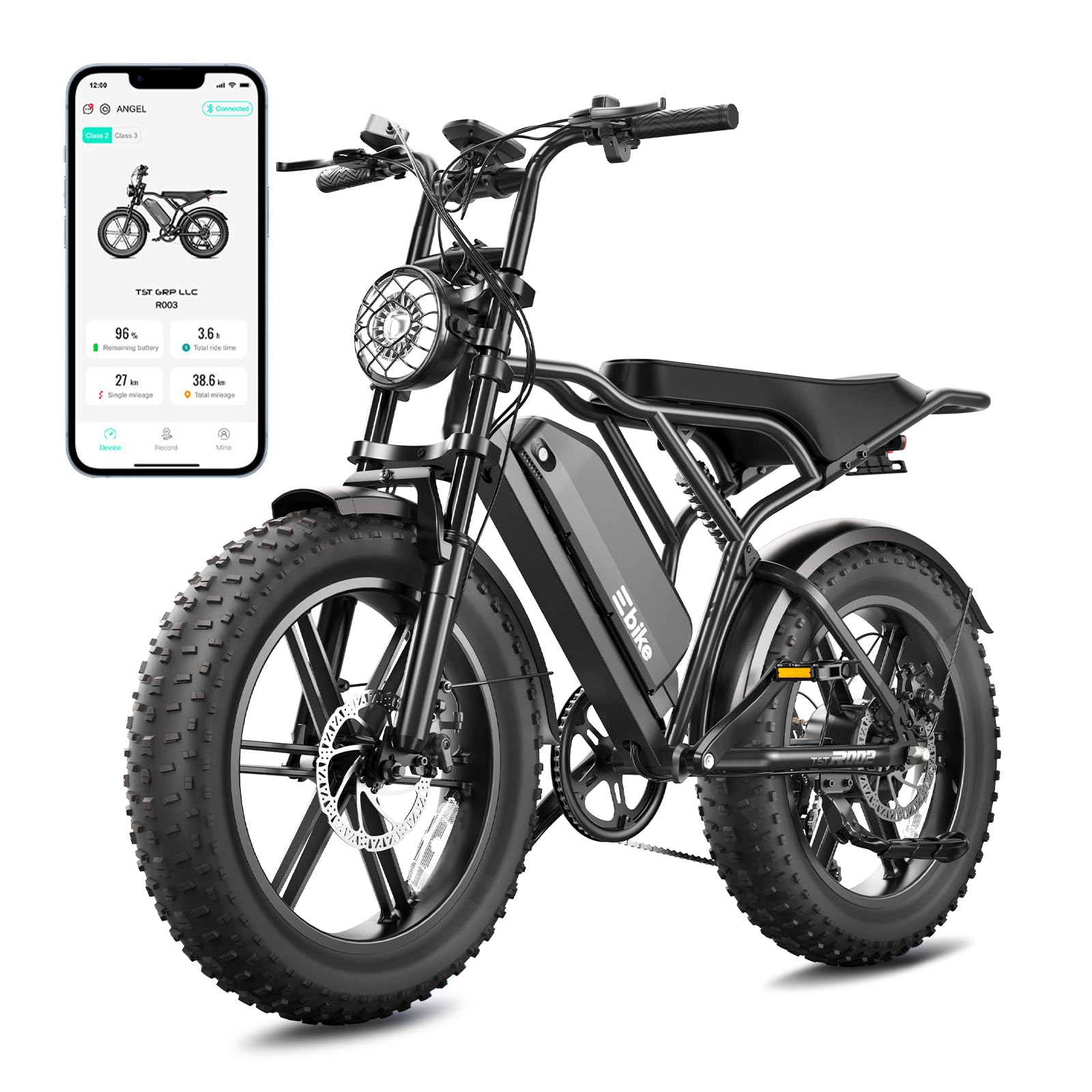
Four hundred and fifty pounds is the number that separates the TST from everything else here — most of this group stops at 264, and the ones that go higher do it with a stiffer frame and a heavier motor. The R004 pairs that rating with 20 x 4-inch tires, dual suspension, a 749-watt rated motor (2000 peak), and one of the two biggest batteries in this guide.

For a rider north of 250 pounds, or anyone hauling a loaded trailer of groceries, the extra motor and battery matter more than the frame material. This is the bike here that does not feel like it is asking you to lose weight first, and the 7-speed gearing means you can still contribute on a climb instead of riding the throttle.

Where it gives ground is brakes. Linear-pull rim brakes on a 450-pound-rated bike is a mismatch, and they want adjusting more often than the discs elsewhere in this group. The rest is unremarkable in the way a workhorse should be — the battery lifts off for charging, and the LCD stays legible in direct sun.

Bottom line: The e-bike for riders the rest of this list turns away: a 450-pound rating, a big battery, and a motor with something left for hills.

7

Gotrax Dolphin

Gotrax Dolphin

City commutes

Our Score 8.6/10
Check Price

Worth Noting

  • Small 280.8Wh battery limits range
  • Step-over frame is harder to mount loaded
Motor
350W rated, 500W peak
Battery
280.8Wh, removable
Rider Height
160-195 cm
Claimed Range
Up to 30 miles
Read the full review

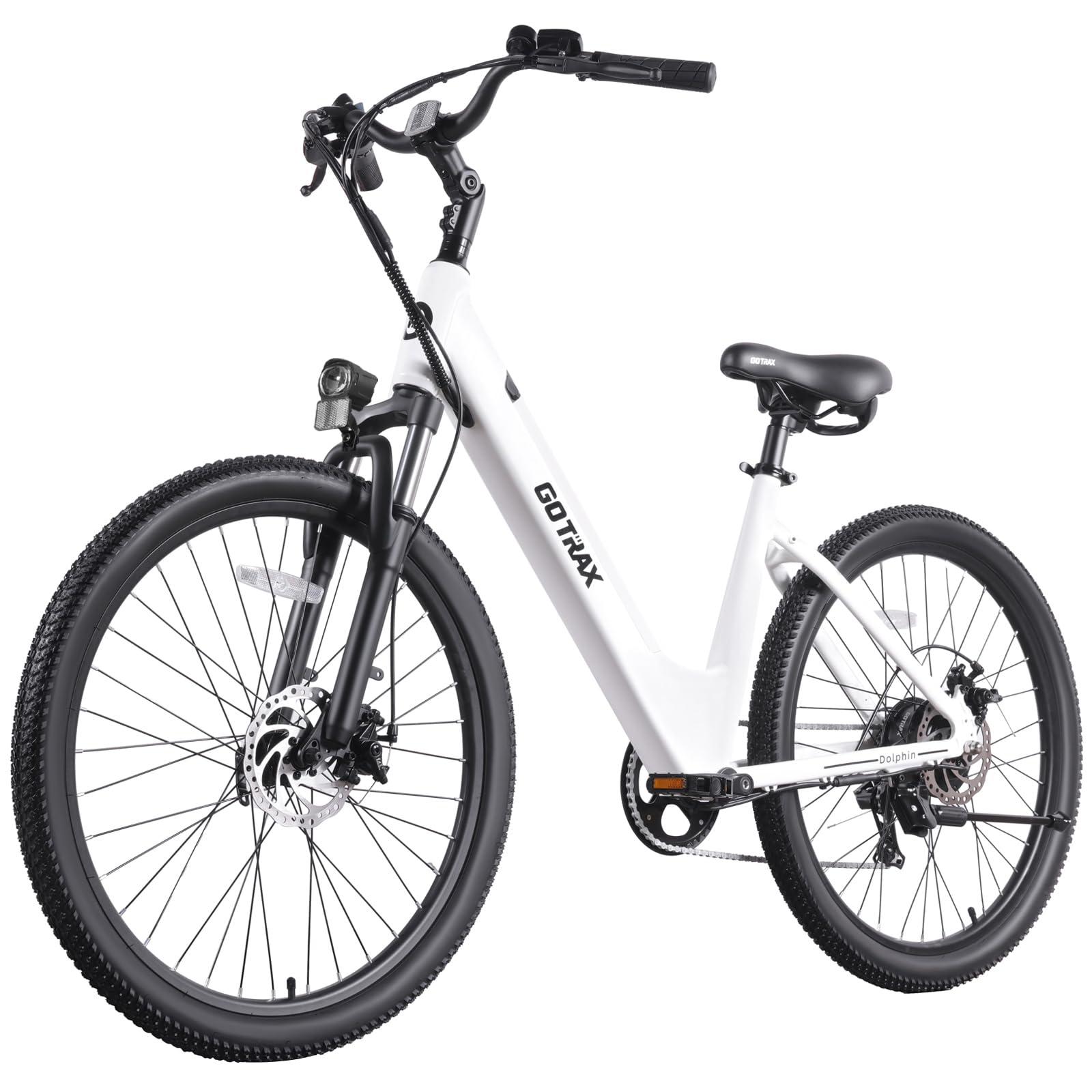
Take our top pick, shrink the motor to 350 watts, cut the battery to 280.8 watt-hours, and you have the Dolphin — same 26-inch wheel, same upright bars, same seven-speed trigger shifting, but a step-over frame and a higher price. That comparison is the most useful thing we can tell you about it.

On its own terms it is a light, simple city bike: 20 mph, dual disc brakes, a front suspension fork, and an adjustable stem and seat that Gotrax fits to riders from about 5-foot-3 to 6-foot-5. There is a 6 km/h boost mode for walking it through a crowd, and the battery comes off so you can charge it at a desk.

The battery is the soft spot. Thirty miles is the pedal-assist claim, and at higher assist you will see a good deal less of it. A pack that quits early or stops accepting a charge is the failure worth reading the warranty for before you commit.

If you want the lightest, most upright 26-inch commuter here and your round trip is under ten miles, the Dolphin does the job, and the step-over frame flexes less under a heavy rider. If you want more motor, more battery, a rack, and certified electrics for less money, the Funhang wins that comparison every time — which is why this one lands here rather than higher.

Bottom line: A light, simple city bike for short commutes that loses the head-to-head with our top pick on motor, battery, and price.

8

Jasion RetroVolt

Jasion RetroVolt

Long-distance rides

Our Score 8.4/10
Check Price

Worth Noting

  • Saddle runs out of comfort past an hour
  • Printed instructions weaker than the video
Motor
2000W peak, 99Nm
Battery
48V 15Ah, removable
Payload
330 lb
Claimed Range
Up to 70 miles
Read the full review

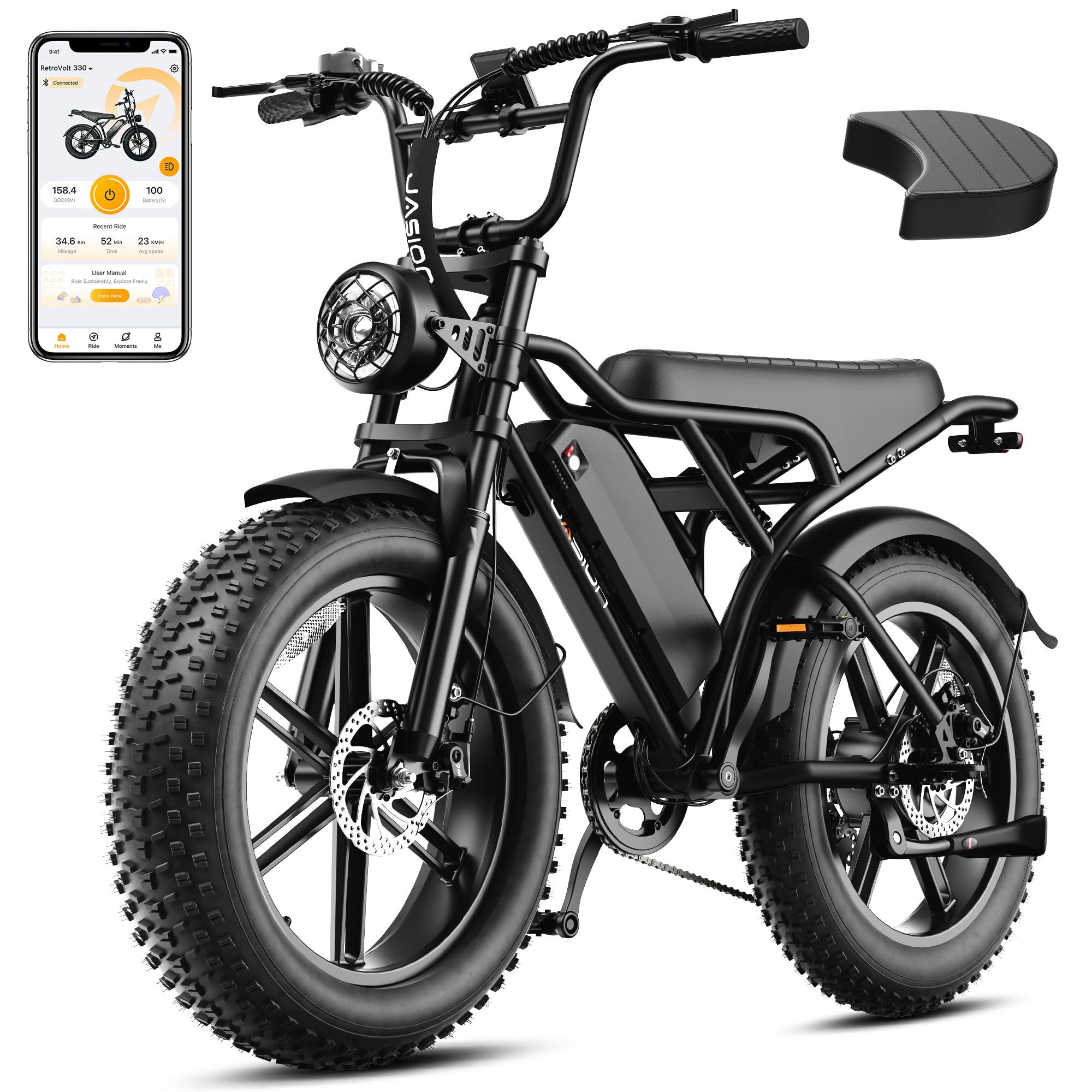
A rear seat pad is an odd thing to lead with until you notice how few e-bikes at this end of the market will carry a second person at all. The RetroVolt pairs that padded perch with a 330-pound payload, 20 x 4-inch tires, and dual suspension, so a short passenger hop does not mean bouncing off a hardtail.

The 48-volt, 15-amp-hour battery is one of the two biggest in this guide, and Jasion claims 70 miles. Treat that as the low-assist number; at mixed assist, plan on roughly 40, which still makes this the long-distance pick. A 2000-watt peak motor with 99 newton-meters pulls a loaded bike up a bridge ramp without drama.

The ride is what we keep coming back to: fat tires and dual suspension swallow brick and broken asphalt in a way the hardtails here cannot, and the upright position suits traffic. What surprised us is how little the motor notices a loaded bike — 99 newton-meters stops being a number and starts being the reason you are not late.

Bottom line: For long rides and carrying a second person, this is the pick — just plan on replacing the saddle and watching the assembly video.

How We Tested Six E-Bikes Over Eight Months

We started with every e-bike we could find that had a year of owner reviews, a battery with a stated safety certification, and a parts page we could actually reach. From there we narrowed to six models across formats and price points — a folder, two commuters, a cargo-capable cruiser, and two direct-to-consumer budget bikes — and rode each for eight months.

Every bike got the same rotation: a weekday commute with a laptop bag, a Saturday grocery run with a pannier loaded to about 30 pounds, and a standing-start hill loop in the same gear. We reset the trip meter before each ride and logged miles against battery percentage used, so claimed range got checked against real riding rather than the display's estimate. We also timed a full recharge from empty and noted how much charge each pack lost sitting unused for a week.

Build quality and durability were hands-on. We checked bolt torque and spoke tension after the first 50 miles, listened for rattles over broken pavement, and looked for cable rub on the frame a few hundred miles in. In the rain we measured stopping distance from a set speed in an empty lot, then repeated it with a loaded pannier. Every bike got lifted onto a wall hook and carried up a flight of stairs, which is where weight stops being a spec and becomes the reason a bike stays in the garage.

We confirmed where the motor cut out on a measured flat stretch, then watched how the assist behaved on a long climb. Value came down to assembly time out of the box, whether the tools were included, and what a replacement battery would cost later. Two bikes developed small faults over the eight months — a loose display connection and a brake that needed bleeding early — which told us more about reliability than any spec sheet.

How to Choose Electric Bikes

Range Is Watt-Hours, Not Miles

Multiply volts by amp-hours and you get watt-hours, the only range figure that compares honestly across bikes. The Qlife and the Gotrax R1 carry about 374 watt-hours; the Azomabox carries 480; the Jasion and the TST carry 720 or more. A 374-watt-hour bike is a 15-to-20-mile bike once you lean on the motor, no matter what the listing promises.

Match the pack to your round trip with margin for cold mornings and headwinds, and read any 60- or 70-mile claim as the lowest-assist version of the truth. If your commute is under ten miles and you pedal, a small pack is fine; if you want to cruise at speed, buy watt-hours.

Rated Watts Beat Peak Watts

Peak wattage is a momentary burst; rated wattage is what the motor can sustain up a grade with a loaded rider. A 350-watt rated motor, as on the Gotrax Dolphin and R1, is a flat-city motor — pleasant for a short commute, tiring on a long climb.

Step up to 500 or 560 watts rated, or shop on torque instead: the Jasion's 99 newton-meters is the figure that explains why it hauls a passenger without complaint. If your route has a real hill in it, buy on rated watts and torque, not the peak number in the title.

Weight and Folding Decide Where the Bike Lives

The lightest full-size bike here is 48.1 pounds, and the fat-tire models run well past that. Folding buys storage, not portability: a folded bike fits a closet or a hatchback, but it does not get lighter, and a 60-pound folder is still a two-hand carry.

Before you order, decide where the bike sleeps and whether you can carry its folded weight up your stairs on a bad day. If the answer is no, a ground-floor spot and a lighter bike beat a folder you dread lifting.

Brakes, Standover, and Support

Disc brakes are the default here for good reason: they shed water and heat better than the linear-pull rim brakes on the TST, and heavier riders feel the difference on a descent. Mechanical discs are fine; hydraulics are nicer if the budget stretches.

Then check standover and fit — a step-thru frame like the Funhang's is easier to mount with a loaded rack, and the listed height ranges (from about 5-foot-3 on the Funhang, 5-foot-3 to 6-foot-5 on the Dolphin) matter more than the color. Finally, compare warranty length, which runs from 180 days to a year, and favor a seller who stocks batteries.

Frequently Asked Questions

Final Verdict

The Funhang EB-C2 is the e-bike we point most riders to: UL 2849 certified, step-thru, racked and fendered, with a 500-watt motor that handles a commute and a battery that gets you there and back. It is the safest default in this group, and the one least likely to end up parked.

Spend more only for a specific reason. The TST if you are over 250 pounds, the Gotrax R1 if the bike has to live in a trunk, the Jasion if a second seat or a 40-mile day is the whole point.