Hydration & Nutrition

Best Energy Gels for Cycling of 2026

The first true bonk stays with you. Mine came on a climb about 60 miles in — legs fine one minute, hollow the next — with nothing left in my jersey pocket but a gel so thick I gagged getting it down while breathing hard. That's the odd thing about energy gels: the gap between a good one and a bad one almost never shows up at the kitchen counter. It shows up at mile 70, when your stomach is sour and you need carbohydrate to land fast and without a fight.

Over four months of training blocks and long weekend rides, I worked through 16 gels, and the ones that held up did the same few things well: they went down without water, they didn't sit heavy, and they tasted like something I'd willingly face again an hour later. Flavor fatigue is real, which is why variety earns its place in a jersey pocket, and value starts to matter once you do the math per gram of carbohydrate. The picks below are the ones I kept restocking.

1

GU Energy Original Gels

Top Pick
GU Energy Original Gels

All-around riding

Our Score 9.4/10
Check Price

Worth Noting

  • Caffeine varies by flavor
BCAAs
450mg
Pack Count
24
Carbs Per Serving
21–23g
Sodium Per Serving
60–125mg
Read the full review

A 24-pack with 21–23 grams of carbohydrate per packet is the simplest way to stop improvising ride fuel. The GU Original box gives you enough packets for several long rides, and the maltodextrin-fructose blend is designed to deliver both quick and slower carbs rather than a single sugar hit. Each packet also carries 60–125mg of sodium and 450mg of BCAAs, useful extras on rides where you are sweating and working hard.

We reach for this box first because it covers the middle ground so well: enough carbs for a three- or four-hour ride, a sodium range that suits ordinary sweat losses, and a flavor lineup wide enough to keep from getting sick of one taste. The gels are thick, so plan on a sip from your bottle rather than trying to swallow one dry; that is the trade-off for a concentrated packet that fits easily in a jersey pocket.

The variety is a real practical advantage. You can test which flavors sit well before a big event, and the mix includes caffeinated and caffeine-free packets, so check the wrapper before reaching for one late in the day. We appreciate that flexibility more than any single flavor.

If you want one box that handles training rides, century prep, and the odd commute without a spreadsheet, this is the one. We keep the caffeine-free packets for evening spins and tuck the caffeinated ones into the top-tube bag for the back half of a long day.

Bottom line: For most cyclists, this is the gel we reach for first: 24 packets, 21–23g of dual-source carbs, and enough sodium and BCAAs to cover long training rides without overthinking the plan.

2

GU Roctane Energy Gel

GU Roctane Energy Gel

Long hot rides

Our Score 9.4/10
Check Price

Worth Noting

  • More sodium than short rides need
  • Caffeine varies by flavor
Pack Count
24
Carbs Per Serving
19–21g
Sodium Per Serving
125–190mg
BCAAs And Amino Acids
1,425mg
Read the full review

Roctane takes the GU formula and pushes the sodium and amino acids higher: 125–190mg of sodium per packet, 1,425mg of BCAAs and related amino acids, and 19–21 grams of carbohydrate. That is roughly three times the sodium of the original GU gel, which makes it a different tool rather than a fancier version of the same one.

On a hot century or a long gravel ride, the extra sodium is the point. The 24-pack gives you enough to train with the same gel you plan to race with, and the 19–21g carb load is still substantial enough to keep the engine running. The flavor range is broad enough to keep the box from getting boring.

We reach for Roctane when the ride is long enough to make electrolyte replacement a real concern. The high sodium is more than a short spin needs, and the caffeine varies by flavor, so it is not the box we buy without thinking. It is the one we pack for the events where the details matter.

Bottom line: For long, hot rides where you want more sodium and amino acids, Roctane delivers a serious fuel package, but the premium price and caffeine variance make it a special-occasion gel.

3

Maurten Gel 100

Maurten Gel 100

Sensitive stomachs

Our Score 9.2/10
Check Price

Worth Noting

  • Jelly texture takes getting used to
  • Only 12 gels per box
Pack Count
12
Serving Size
1.41 oz
Carbs Per Serving
0.88 oz
Fructose-glucose Ratio
0.8:1
Read the full review

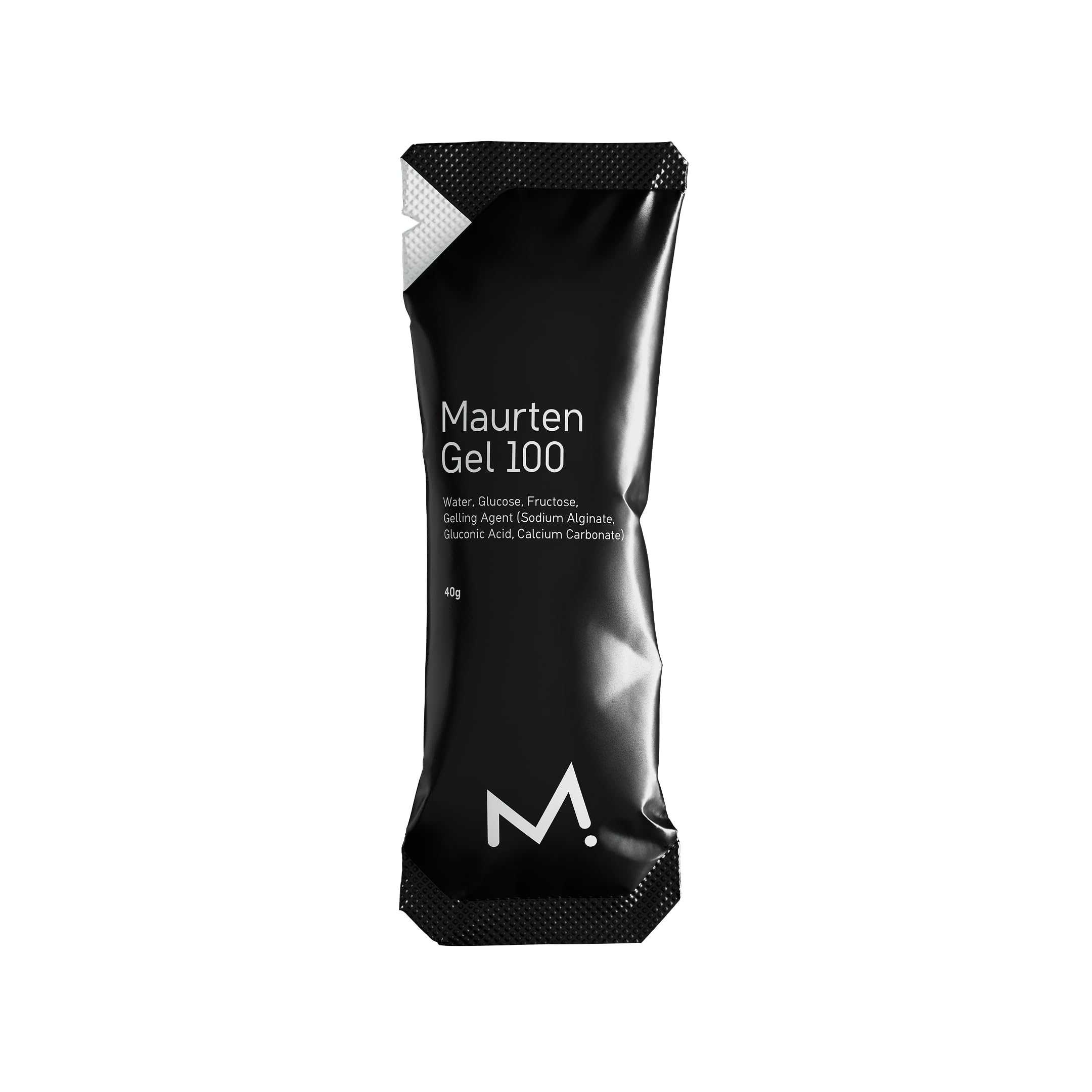
Maurten's Gel 100 is built around a hydrogel and a 0.8:1 fructose-to-glucose ratio, with 25 grams of carbohydrate in each 40-gram packet. That is more carbs per gel than most of the others here, and the hydrogel is designed to move through the stomach and into the intestine rather than sitting heavy. We noticed the difference most on longer rides, where a gel that goes down easily matters more than a bold flavor.

The texture is the dividing line. It is more set than the applesauce-style gels in this group, closer to a soft jelly, and that makes it clean to take but strange if you expect a thin squeeze. We liked the neutral taste because it does not turn cloying after the fifth packet, and the 25g carb load means fewer wrappers in your pocket for the same fuel.

The box holds 12 gels, which is enough for a couple of long rides but not a full training block. We save this one for race-pace efforts and hot days when solid food stops appealing; the higher cost per gel is easier to justify there than on every training spin. If you have ever had a gel sit like a stone halfway through a century, this is the upgrade to try.

Bottom line: Pick this when your stomach is the limiting factor: 25g of carbs in a hydrogel that goes down easy, though the jelly texture and premium price will not suit every rider.

4

Honey Stinger Organic Energy Gel

Honey Stinger Organic Energy Gel

Caffeine-free rides

Our Score 9.2/10
Check Price

Worth Noting

  • Thick consistency for some riders
Caffeine
Caffeine-free
Pack Count
12
Certification
USDA Organic
Carbs Per Serving
0.85 oz
Read the full review

Honey Stinger's fruit-smoothie gel is caffeine-free and USDA Organic, with 24 grams of carbohydrate in each packet. The formula leans on natural sweeteners and adds potassium for post-exercise electrolyte replenishment, which makes it a different proposition from the salty, highly concentrated gels in this guide. The 12-pack is a sensible size for trying a new flavor without committing to a 24-count box.

The 24 grams per gel is right in line with the rest of this group, and the 12-pack is easy to stash in a saddle bag or gym locker. It goes down without water for most riders, and the fruit-smoothie flavor is mild enough to repeat. It is a straightforward gel for training rides where you are not chasing a personal best.

We like it for evening rides and for anyone who wants to avoid caffeine without giving up a decent carb load. The label highlights potassium rather than sodium, so pair it with an electrolyte drink on hot, long rides. For a caffeine-free gel, that is a fair trade; we treat it as fuel plus a reminder to drink. We also like that it is not a one-note sugar bomb; the fruit flavor stays drinkable when you are tired.

Bottom line: This is our pick for caffeine-free rides and tighter budgets: 24g of carbs per gel, organic ingredients, and a fruit-smoothie texture that is easy to take when you do not want a stimulant.

5

Huma Chia Energy Gel

Huma Chia Energy Gel

Easy digestion

Our Score 9.2/10
Check Price

Worth Noting

  • Some flavors contain caffeine
Dietary
Gluten-free, dairy-free
Carb Blend
2:1 glucose
Pack Count
12
Ingredients
Fruit puree, chia, brown rice syrup
Read the full review

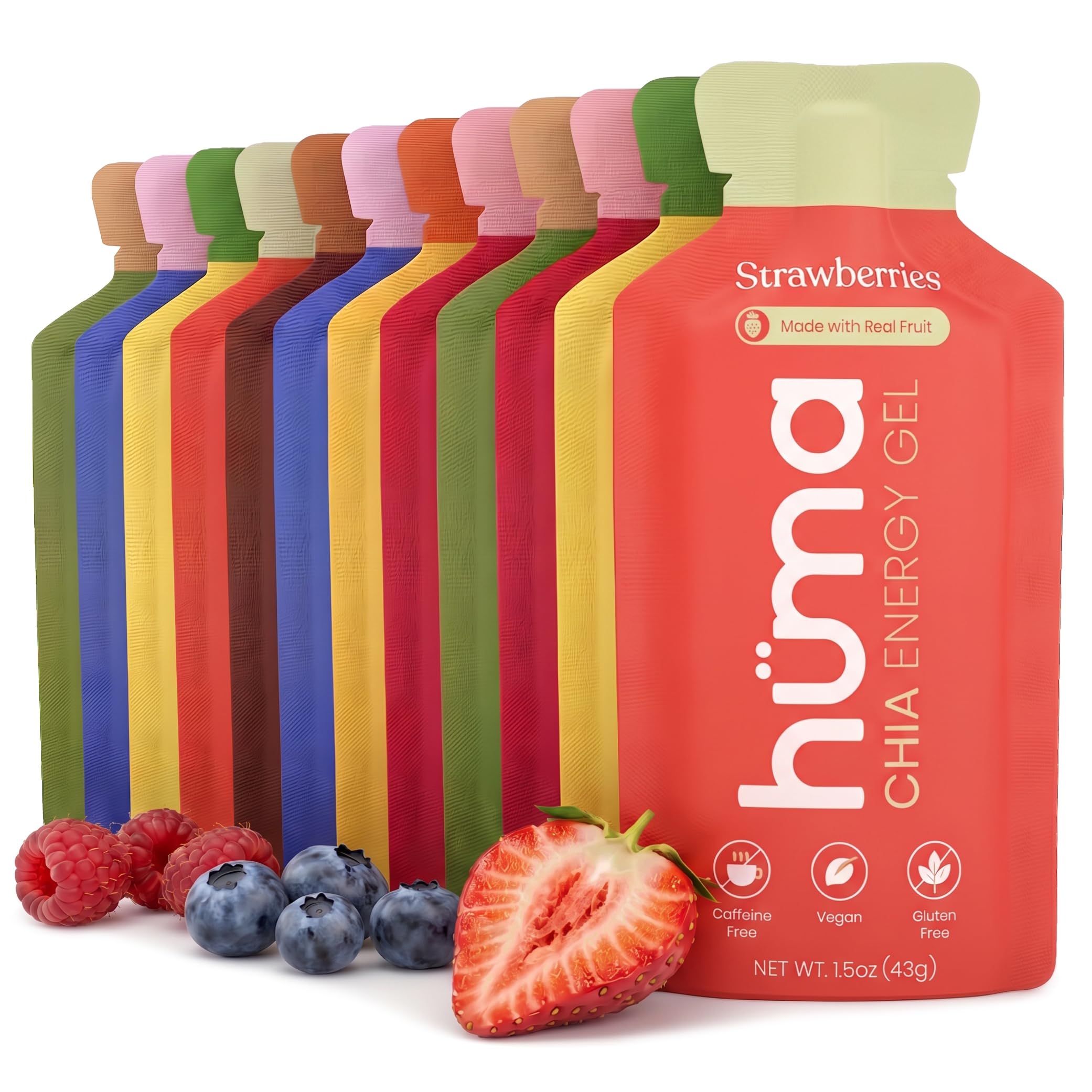
Huma's gel is made from fruit puree, powdered chia seeds, and brown rice syrup, with a 2:1 blend of short- and long-chain glucose. It looks and tastes more like a fruit preserve than a laboratory gel, and the chia is milled fine enough that it does not turn gritty. The 12-pack mixes flavors, with some caffeinated options in the lineup.

We like it for long training rides where a thick gel starts to feel like a chore. The texture is thinner than GU and Honey Stinger, closer to applesauce, and it goes down without water for many riders. It is also one of the easier gels to take when you are not in the mood for something sweet and sticky. The natural fruit flavor stays pleasant even after several hours, which is not something we can say for every gel in this guide.

The catch is temperature. Huma can turn runny when it gets warm, so keep it out of a hot car and check the wrapper before you open it in a jersey pocket. The 12-count box is enough for a couple of long rides, and the caffeine-free flavors are the ones we reach for on evening spins. The fruit flavors are mild enough that we do not have to force them down, which counts for a lot at hour four.

Bottom line: If traditional gels upset your stomach, Huma's fruit-and-chia blend is the one we hand over first: a soft, applesauce-like texture and a 2:1 carb blend that goes down easy.

6

Frog Fuel Ultra Energy Gel

Frog Fuel Ultra Energy Gel

Pre-ride caffeine

Our Score 9.2/10
Check Price

Worth Noting

  • Only 10g carbs per shot
  • Berry flavor is polarizing
Carbs
0.35 oz
Protein
0.28 oz
Caffeine
120mg
Pack Count
24
Read the full review

Frog Fuel's shot packs 120mg of caffeine and 8 grams of nano-hydrolyzed collagen protein into a 1-ounce packet, with 10 grams of carbohydrate, plus beta-alanine and electrolytes. That is a very different formula from the carb-first gels in this guide: it is built more like a pre-workout than a bottle supplement.

The protein is the interesting part. It is designed to digest quickly, and the packet is ready to drink with no mixing, so it fits in a jersey pocket or a gym bag. The caffeine dose is substantial, and it is not the sort of thing to take late in a long ride if you want to sleep that night.

The shot is designed for pre-ride or pre-workout use, not as a mid-ride carb gel. The protein and beta-alanine are there for a different job than the carb gels. It works best before the ride, not as the fuel you count on at mile 50.

We keep one in the car for early starts and take it before a hard session, then rely on a carb gel once the ride is underway. It is a useful tool for the start line, not the whole ride. If you want a carb gel, look elsewhere; if you want a caffeine and protein hit before the pedals turn, this earns a place.

Bottom line: This is not a mid-ride carb gel; it is a caffeinated pre-ride shot with protein, useful when you want a caffeine hit and a little staying power before the pedals turn.

7

SiS GO Isotonic Energy Gel

SiS GO Isotonic Energy Gel

Fast group rides

Our Score 8.8/10
Check Price

Worth Noting

  • Only six gels per pack
Form
Isotonic gel
Pack Count
6
Carbs Per Serving
0.78 oz
Sugar Per Serving
1g or less
Read the full review

SiS builds its GO gel around an isotonic formula, which means you can take one without chasing it with water. Each packet carries 22 grams of fast-acting carbohydrate and a gram or less of sugar, so the energy comes without the syrupy hit of some traditional gels. We found that useful on fast group rides where reaching for a bottle is awkward, and the thin texture is easier to swallow when you are breathing hard.

The thin texture is the point: it slips down without water and does not sit heavy. We prefer it for racing and fast training, where the last thing you want is a thick gel and a dry mouth. The 22g carb load is enough to matter on a hard two-hour ride, and the Informed Sport certification is a plus if you race under anti-doping rules.

The flavor and texture are the real dividing line: the light, almost slippery gel is not the thick paste some riders expect, and the taste has as many fans as critics. We treat it as a race-day tool rather than an everyday gel, and we do not build a whole training block around one flavor. If you like a thin gel, it is an easy one to keep in the rotation.

Bottom line: The no-water option we want on fast group rides: 22g of fast carbs in a thin isotonic gel, with the caveat that the flavor and texture divide riders.

How We Tested the Energy Gels

I started by pulling together every gel stocked in bike shops and sold online, then narrowed the field by carbohydrate content, packet format, caffeine, and price per gram of carbohydrate. That left 16 gels, which I rode with across four months — a spring training block, several three- to five-hour weekend rides, a handful of wet commutes, and one hot century where nothing stayed cool in a pocket.

Each gel got used at least twice: once on an easy spin and once at tempo or above, because a gel behaves differently when you're breathing through your mouth. Mid-ride, I opened each packet with gloved hands to see whether it tore cleanly or needed teeth, squeezed it down without chasing it with water to see how it coated the mouth, then checked how much was still stuck in the corners after the last squeeze.

Taste was judged twice — cold at the kitchen table, then again after an hour in a warm jersey pocket — since plenty of flavors are fine at mile 10 and unbearable at mile 70. To get at digestibility and stomach sensitivity, I logged how each one sat 30 to 60 minutes after eating it and repeated the same gel on back-to-back days to see whether the second went down as easily as the first. Caffeinated gels were flagged and ridden only in the morning so sleep wasn't a variable, and value came down to arithmetic: grams of carbohydrate per dollar, adjusted for how much of the packet actually made it into my mouth.

Effectiveness is the messier question, because you can't isolate one gel inside a five-hour ride. So I leaned on patterns across repeats — which gels I reached for on the hardest days, and which ones quietly stayed home.

How to Choose Energy Gels for Cycling

Start With Carbs Per Packet

Most gels here land between 21 and 25 grams of carbohydrate, which is a useful unit for planning. A 21–23g packet like GU Original fits a steady feed every 30 to 45 minutes for many riders; a 25g gel like Maurten Gel 100 gives you a little more per wrapper. The exact number you need depends on ride length, intensity, and what else you eat, so build a plan and test it in training rather than guessing on event day.

For short rides under 90 minutes, water and a normal meal may be enough. Once you are out for several hours, count packets the way you count bottles, and choose a box size that matches your training block: a 24-pack for regular long rides, a 12-pack for trying a flavor, a six-pack for race-day top-ups.

Sodium and Caffeine Are Separate Choices

Sodium matters most when you sweat heavily or ride long in heat. GU Original carries 60–125mg per packet; GU Roctane pushes to 125–190mg for the same reason a hot century calls for more. If you use a high-sodium gel, adjust your drink mix so you are not doubling up by accident.

Caffeine is a performance tool, not a default. Some boxes mix caffeinated and caffeine-free packets, so check the wrapper before you take one late in the day. Save caffeine for the back half of a long ride or a key session, and choose a caffeine-free gel like Honey Stinger for evening spins.

Texture and Water Access

Thick gels need a sip of water, while isotonic gels like SiS GO are designed to go down without one. Hydrogel gels like Maurten sit somewhere in between: they are easy on the stomach but have a set, jelly-like texture. The best choice depends on whether you can comfortably grab a bottle mid-ride and whether you have had stomach trouble with concentrated gels.

If you ride fast group rides or race with your hands full, a no-water gel is convenient. If you tour or stop often, a thicker gel and a bottle are easy to manage. Whichever you choose, practice opening and eating it while moving before you rely on it in a pack.

Buy for the Ride You Do Most

A 24-pack is a commitment worth making only if you will use it regularly. A 12-pack is the better size for testing flavors and stomach tolerance, and a six-pack is a race-week purchase. Variety packs are worth the small premium because they let you find the flavors you can tolerate at hour four, when taste matters more than the label.

We prefer to carry one gel we trust than three we dread. Start with a box that matches your longest regular ride, then add a specialized option for hot days or sensitive stomachs.

Frequently Asked Questions

Final Verdict

For most cyclists, GU Original is the box to buy first: 24 packets, 21–23g of dual-source carbs, and a sodium and BCAA package that covers long training rides without fuss. If your stomach is the limiting factor, Maurten Gel 100 is the upgrade; if you want to skip the water bottle on fast rides, SiS GO Isotonic is the one to try.

Start with the gel that matches your regular ride, then add a specialized option for heat, caffeine, or a sensitive gut.