E-Bikes

Best Folding Electric Bikes of 2026

The moment that sells a folding electric bike is small and specific: you pedal to the train, fold the thing in about fifteen seconds, and wheel it aboard instead of chaining it to a rack and hoping. The catch is that every fold adds a hinge, and every hinge is a place where a bike can flex, rattle, or quietly loosen over a few hundred miles. That tradeoff — compact and convenient on one side, ride quality and stability on the other — is the whole game here. Get it right and the bike disappears into your routine; get it wrong and you're steering a folding chair with a motor.

I've been commuting on folders for a few years, and the gap between a good one and a cheap one shows up fast: in the welds, in how the battery locks into the frame, in whether the bike still feels tight after a season of daily use, and yes, in whether you'd be happy rolling it into a lobby. Our team rode eight folding e-bikes for ten months to sort that out. Top speed is easy to advertise; a solid hinge at mile 400 is harder.

1

EUYBIKE 20" Fat Tire

Top Pick
EUYBIKE 20" Fat Tire

Long distance

Our Score 9.2/10
Check Price

Worth Noting

  • Long folded package needs a large trunk
Tires
20 x 3 inches
Weight
63 lb
Battery
48V 20Ah
Max Range
80 miles
Read the full review

The EUYBIKE is the long-range outlier in this group: a 48V 20Ah battery, 960Wh of capacity, and a stated 80-mile maximum. That is a different kind of folding bike from the 14-inch commuters. The 20 x 3-inch fat tires and dual suspension give it a planted, almost motorcycle-lite stance, and the 750W motor has enough torque to make hills feel less like a negotiation.

We like the seven-speed gearing and the removable battery, which lets you bring the pack inside to charge. The 80-mile figure is a pedal-assist best case; throttle use and loaded rides cut it. Even so, the EUYBIKE has more range headroom than anything else here, and that is the reason to choose it. The 20-inch tires roll over rough pavement without the twitchiness of the 14-inch bikes.

The cost is weight. At 63 pounds, this is a two-hand lift for many riders, and that makes it a poor match for stairs or a crowded train. We do not see it as a stair-friendly bike. If your commute is long and the bike lives in a garage, the EUYBIKE earns the space. If you need to carry a folder onto transit, the Gotrax or ANCHEER makes more sense.

Bottom line: We recommend the EUYBIKE for riders who need range more than an easy lift; its 960Wh battery and 20-inch fat tires cover long rides that leave the smaller folders behind.

2

AYOLNY EB1

AYOLNY EB1

Smaller riders

Our Score 9.0/10
Check Price

Worth Noting

  • Battery is the smallest in this group
  • Small wheels feel busy on rough pavement
Range
15 miles throttle; 25 miles pedal assist
Weight
48.9 lb
Battery
36V 7.8Ah
Rider Height
4'9"-5'8"
Read the full review

Most folding e-bikes are sized for a generic adult; the AYOLNY EB1 starts with a narrower fit. The seatpost and handlebar stem adjust for riders from 4-foot-9 to 5-foot-8, and the 48.9-pound frame is one of the easier lifts here. For a shorter commuter or a teen moving up from a standard bike, that fit is the reason to look.

The 500W motor and 36V 7.8Ah battery are sized for short trips, with a 15-mile throttle range and a 25-mile pedal-assist range. The two speed modes top out at 15 and 20 mph, which is sensible for bike lanes and campus paths. We like the sealed front drum brake for low maintenance, and the automatic lights are a useful touch on a commuter. The rear suspension takes the sting out of curbs.

The EB1 is not the bike for a rider who needs long range or fast acceleration. What it does well is fit smaller riders without making them feel perched on a toy. The adjustable stem and seatpost give the bike a more natural reach than the one-size 14-inch folders here. If you are at the taller end of the range, measure your inseam and check the handlebar height before you buy.

Bottom line: We recommend the AYOLNY EB1 for riders from 4-foot-9 to 5-foot-8 who want a simpler, lighter folder with a sealed drum brake and modest power.

3

Gotrax R1

Gotrax R1

Commuting

Our Score 8.6/10
Check Price

Worth Noting

  • Rigid fork is firm on broken pavement
  • Electrical faults can appear early
Weight
45 lb
Battery
48V 7.8Ah
Max Range
40 miles
Wheel Size
20 inches
Read the full review

A folding e-bike only earns its keep if the folded package fits the place you need to put it. The Gotrax R1 gets that part right: 45 pounds, 20-inch wheels, and a frame that folds into a shape one adult can wrestle into a hatchback or hall closet. That balance is why it is our top pick. The 20-inch wheels are the bigger win for commuting, because they roll over seams and potholes with less drama than the 14-inch bikes here, while the aluminum frame keeps the weight from climbing into fat-tire territory.

The 350W motor is paired with five gears and a 48V 7.8Ah battery. On flat commutes, that combination feels natural: you pedal, the assist fills in, and the 20 mph ceiling is enough for bike lanes. The 40-mile maximum is a best-case pedal-assist figure, so plan your longest regular trip with margin. We also appreciate the dual disc brakes and the UL 2849 certification, which matter once you are riding in traffic.

The rigid fork keeps the front end simple and the bike lighter than a suspension model, and the five-speed gearing gives you something to do when the battery runs down. It is a city bike first, not a trail bike. If you want a folding bike that feels like a bike rather than a scooter, this is the one we point to first.

Bottom line: We recommend the Gotrax R1 for commuters who want 20-inch stability and a folded package one adult can manage without giving up a useful 40-mile ceiling.

4

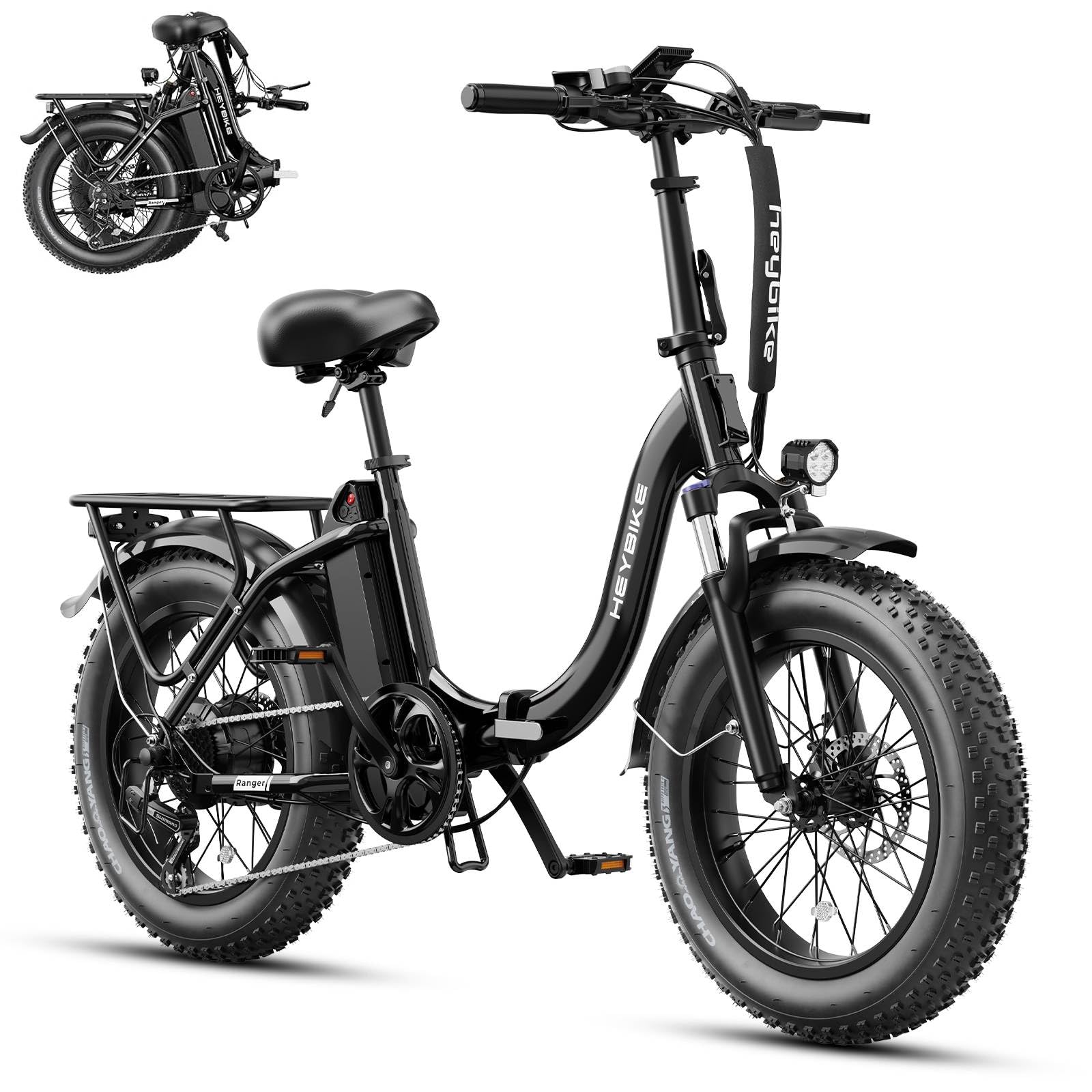
Heybike Ranger 2.0

Heybike Ranger 2.0

All-terrain

Our Score 8.6/10
Check Price

Worth Noting

  • Range drops sharply with throttle use
Gears
7-speed
Motor
1400W peak
Tires
20 x 4 inches
Battery
600Wh
Read the full review

The Ranger 2.0 feels like a compact fat-tire bike that happens to fold. The 20 x 4-inch tires are the first thing you notice, and they change the ride: gravel, curb cuts, and patched asphalt feel less sketchy than they do on the 14-inch folders here. The 1400W peak motor backs that up with more shove than the 350W and 500W bikes in this group, and the seven-speed drivetrain lets you keep pedaling when the assist cuts out.

Heybike builds in a front suspension, a rear rack, and front and rear lights, so the Ranger 2.0 is closer to a ready-to-ride errand bike than a bare frame. The 600Wh battery is second only to the EUYBIKE here, and with pedal assist it can cover a long day. We like the oversized seat and the stable feel. The fat tires make the folded package wide, so it is not the bike we choose for tight apartment halls.

The Ranger 2.0 is the one we choose when the route is mixed-surface and the bike needs to feel planted. The 20-inch fat tires and steel frame give it a solid, almost small-utility-bike character. If your commute is mostly smooth pavement and a flight of stairs, the Gotrax is the more sensible shape. For gravel roads and rough bike paths, the extra rubber and power are worth the space.

Bottom line: The Ranger 2.0 is our all-terrain pick: the 20 x 4-inch tires and 1400W peak motor make gravel and broken pavement feel less like a compromise.

5

ANCHEER 14" Folding

ANCHEER 14" Folding

Comfort

Our Score 8.6/10
Check Price

Worth Noting

  • Seatpost can slip under a heavier rider
Weight
48.5 lb
Battery
374Wh
Max Range
20-50 miles
Suspension
Dual
Read the full review

The ANCHEER StreetRider is built around comfort rather than speed. The 14-inch wheels are small, but the dual suspension, seat spring, and cushioned saddle take the edge off cracked pavement in a way the rigid 14-inch bikes do not. The seat adjusts through seven inches and the bike fits riders from about 4.5 to 5.9 feet, so it is one of the few folders here that feels deliberately sized for shorter adults.

The 374Wh battery and 20-50 mile range claim are modest, and the single-speed drivetrain makes the motor do most of the work. On flat city streets, that is fine: the pedal assist is smooth, the LCD is easy to read, and cruise control is a nice touch for longer straightaways. The 48.5-pound weight is manageable for one person, and the aluminum frame keeps it from feeling like a tank. We also like that ANCHEER lists UL 2849 compliance.

The ANCHEER is a short-commute bike, not a hill climber or a long-distance machine. The small wheels and single-speed gearing suit campus paths, errands, and flat city streets. For a rider who wants suspension and a lower standover without a heavy fat-tire package, the ANCHEER is the comfort pick. It is the one here that makes a rough bike path feel less punishing without adding a lot of bulk.

Bottom line: The ANCHEER is our comfort pick for shorter riders, with dual suspension and a 48.5-pound frame that take the edge off city pavement without making storage a chore.

6

LELEKUAI T1

LELEKUAI T1

Budget

Our Score 8.6/10
Check Price

Worth Noting

  • 14-inch wheels are twitchy on rough pavement
  • Small battery limits full-throttle range
Motor
750W peak
Weight
48 lb
Battery
48V 10Ah
Max Load
350 lb
Read the full review

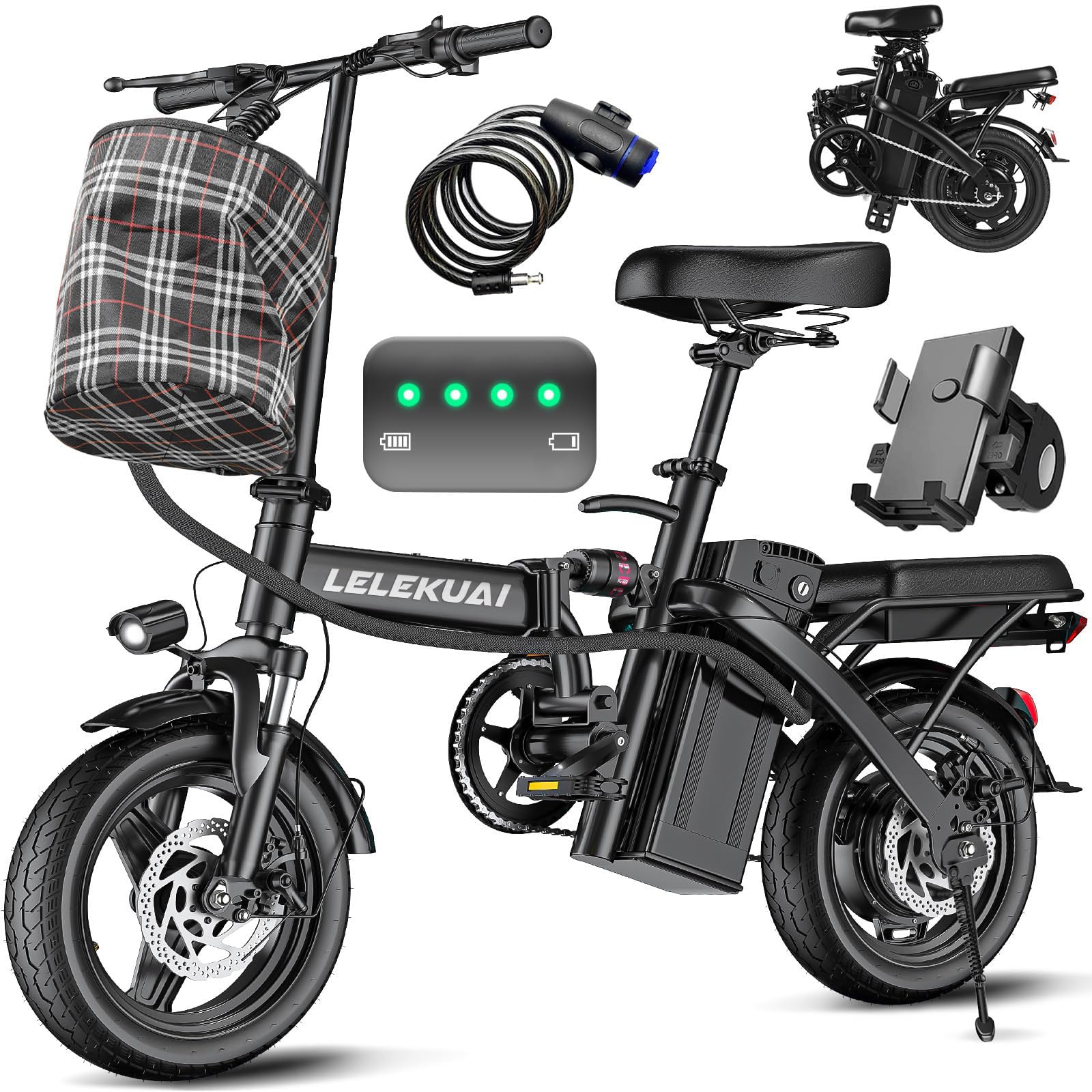
The LELEKUAI T1 is the budget folder that does not feel like a toy. The 14-inch wheels and compact frame fold down small, but the 350-pound maximum rider weight is the number that stands out in this price range. It also comes with a basket, headlight, and lock, which is more equipment than most budget bikes include.

The 750W peak motor gives it more acceleration than the 500W AYOLNY, and the 48V 10Ah battery is removable. We found the 48-pound weight manageable for a short lift. The 24 mph top speed is more than enough for bike lanes, and the three-speed gearing helps on gentle grades. The T1 is at its best on short errands, campus paths, and flat commutes where the folded size matters more than the ride quality.

For a heavier rider who needs a compact bike and a low entry price, it is the value pick here. The 350-pound limit is rare at this end of the market, and the included basket and lights make it useful right away. Just do not expect it to feel like a 20-inch commuter. The T1 is a short-trip tool, not a distance bike.

Bottom line: We recommend the LELEKUAI T1 as the budget choice for heavier riders and short errands, with the caveat that its 14-inch wheels and small battery suit the city better than the open road.

7

URLIFE F1L

URLIFE F1L

Compact trips

Our Score 8.0/10
Check Price

Worth Noting

  • Small wheels feel busy on rough pavement
Battery
375Wh
Max Load
265 lb
Max Range
40 miles
Wheel Size
14 inches
Read the full review

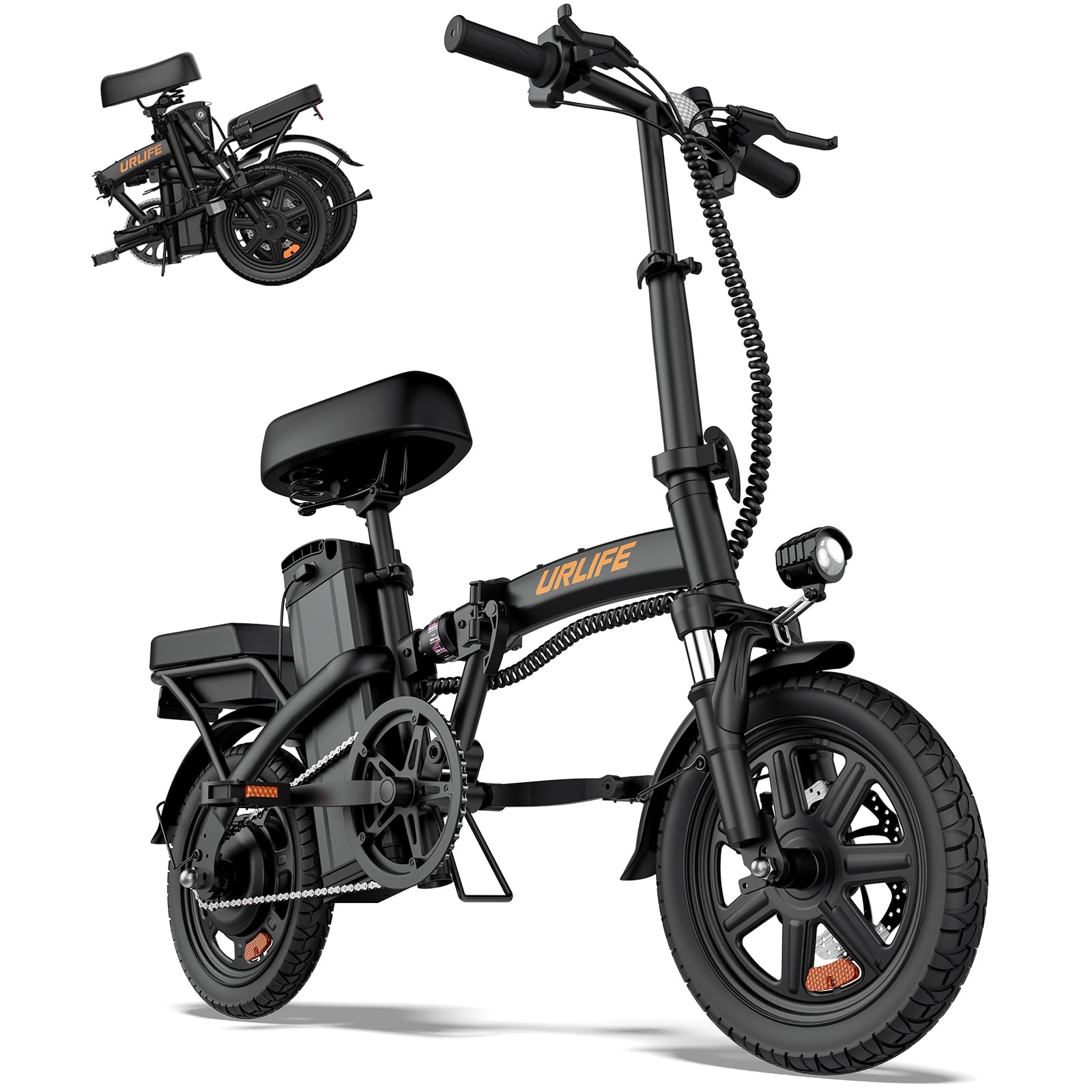
The URLIFE F1L is the smallest-feeling bike in this group: 14-inch wheels, a compact fold, and a 375Wh battery. It is built for short trips and tight storage, not for long commutes. The 500W peak motor and 20-40 mile range claim are modest, but the folded package is easy to tuck under a desk or into a small trunk.

We like the 265-pound weight limit and the simple three-mode setup, which makes the F1L easy to understand for a first-time e-bike rider. The 14-inch wheels and dual suspension soften some bumps. The 40-mile maximum is a pedal-assist best case; throttle use will cut it significantly.

The electronics are the reason this one sits in also-consider rather than higher. Some F1Ls stop powering on or develop charger problems, so test the motor, display, and charger immediately and buy from a seller with a straightforward return policy. If the bike works, it is a useful compact runabout for errands and short commutes. If you need reliability first, spend more on the Gotrax or LELEKUAI.

Bottom line: We recommend the URLIFE F1L for short, compact trips, where its small fold and budget price outweigh the electronics risk.

How We Tested the Best Folding Electric Bikes

We started by gathering every folding e-bike we could find that's genuinely supported in the U.S., then read spec sheets side by side: motor wattage and battery capacity against claimed range, folded footprint, stated weight, and whether a replacement battery, brake pads, and spare charger could be ordered domestically. Anything too bulky for a closet or too heavy for us to lift onto a train rack got cut before we ever plugged it in.

Eight bikes made the final list, and we've lived with them for ten months. Each arrived boxed and was assembled exactly as a buyer would get it: we timed the build using only the included tools, then noted whether the brakes rubbed, the derailleur skipped, or the folding latch needed adjusting before the first ride. Assembly quality varied more than we expected, and so did the instructions.

Every bike went on a five-mile commute loop with a mile-long climb, plus grocery runs, weekend errands, and a lot of folding and unfolding — we timed the fold each time and carried each bike up a flight of stairs and onto a platform to feel the weight rather than just read it. We weighed them on a luggage scale, ran the battery from full to motor cutoff with a timer running, then repeated the drain on throttle only to see how far the range claims held up. Speed was checked against GPS on flat pavement, and each one got pointed down the same chip-seal hill to see whether the small wheels tracked straight at speed or wandered.

Ten months in, durability is what separates the picks: hinge play, spokes that needed truing, paint worn through at the fold, new rattles, displays that fogged in the rain. We kept running notes on looks and on value, too — what each bike gave back relative to what it cost — since a folder you don't want to be seen with is one you'll leave in the closet.

How to Choose Folding Electric Bikes

Start with the folded package

A folded frame is not automatically portable. A 20-inch fat-tire bike can fold, but the tires and steel frame make a wide, heavy package; a 14-inch commuter folds smaller but feels busier on rough pavement. We check the lift before the wheel size: 45 to 50 pounds is a one-person lift for most adults, while 60 pounds and up is a two-hand job. If the bike lives in a garage, weight matters less than if it lives in a third-floor walk-up.

Match wheel size and tires to the route

14-inch wheels make a smaller folded package and suit smooth bike paths and short errands, but they are twitchy over seams and potholes. 20-inch wheels roll better and feel more planted, especially with 3- or 4-inch fat tires, at the cost of a larger folded footprint. Suspension helps, but it does not turn a 14-inch bike into a 20-inch commuter. We prefer 20-inch wheels for mixed pavement and 14-inch wheels only when storage is the hard constraint.

Read battery and motor claims together

A big motor number is not a range guarantee. The 350W Gotrax and the 1400W-peak Heybike both use pedal assist, but the Heybike's 600Wh battery and the EUYBIKE's 960Wh pack give them more headroom. Headline range figures assume low assist, flat ground, and a lighter rider; throttle use, hills, and cold weather cut them. For a daily commute, decide the distance you need on your worst day, then choose a battery with margin. If you can remove the pack, charging inside becomes easier.

Check fit, brakes, and the parts that wear

Folding bikes are not one-size. The AYOLNY fits riders from 4-foot-9 to 5-foot-8, while the ANCHEER covers about 4.5 to 5.9 feet; taller riders should look at 20-inch models with adjustable seatposts. Disc brakes are the norm here and are easier to modulate than the sealed drum on the AYOLNY. Before you buy, check the folding latch, seatpost quick release, and charger. A latch that loosens or a seatpost that slips turns a convenient bike into a fussy one.

Frequently Asked Questions

Final Verdict

The Gotrax R1 is the folding e-bike we recommend first because it gets the commuter balance right: 20-inch wheels, a 45-pound frame, and a 40-mile pedal-assist ceiling without the bulk of a fat-tire folder. If your route is mostly gravel or broken pavement, the Heybike Ranger 2.0 is the better all-terrain choice. For long-distance riders with garage storage and no stairs, the EUYBIKE's 960Wh battery earns the extra weight.