Tires & Tubes

Best Gravel Bike Tires of 2026

A gravel bike tire has to do contradictory things: bite into loose corners without dragging on the pavement ride to the trailhead, soak up washboard without feeling vague, and last longer than one dusty season. The wrong set makes every ride feel like a negotiation with the ground; the right set mostly disappears under you. I have ridden enough chattery limestone to know a tire's personality shows up in the first ten minutes, but its real quality shows up hundreds of miles later.

Over eight months, our team tested 11 gravel tire models on the same mixed loop: smooth dirt, chunky limestone, paved connectors, and a wet spring that exposed every weak sidewall. We mounted each set ourselves, timed installation, measured actual width, and kept notes on traction, overall performance, ride quality, puncture resistance, and how each tire behaved after a flat. Value became clear only as tread wore down; the best tires earned their keep without demanding a mid-ride repair. The picks below are the ones I would happily put on my own bike before a long weekend.

1

Panaracer GravelKing SS

Top Pick
Panaracer GravelKing SS

Mixed-surface riding

Our Score 9.0/10
Check Price

Worth Noting

  • Semi-slick center struggles in soft, loose dirt
Size
700 x 40C
Tread
Semi-slick center, shoulder knobs
Weight
1.1 lb
Tubeless
Tubeless ready
Read the full review

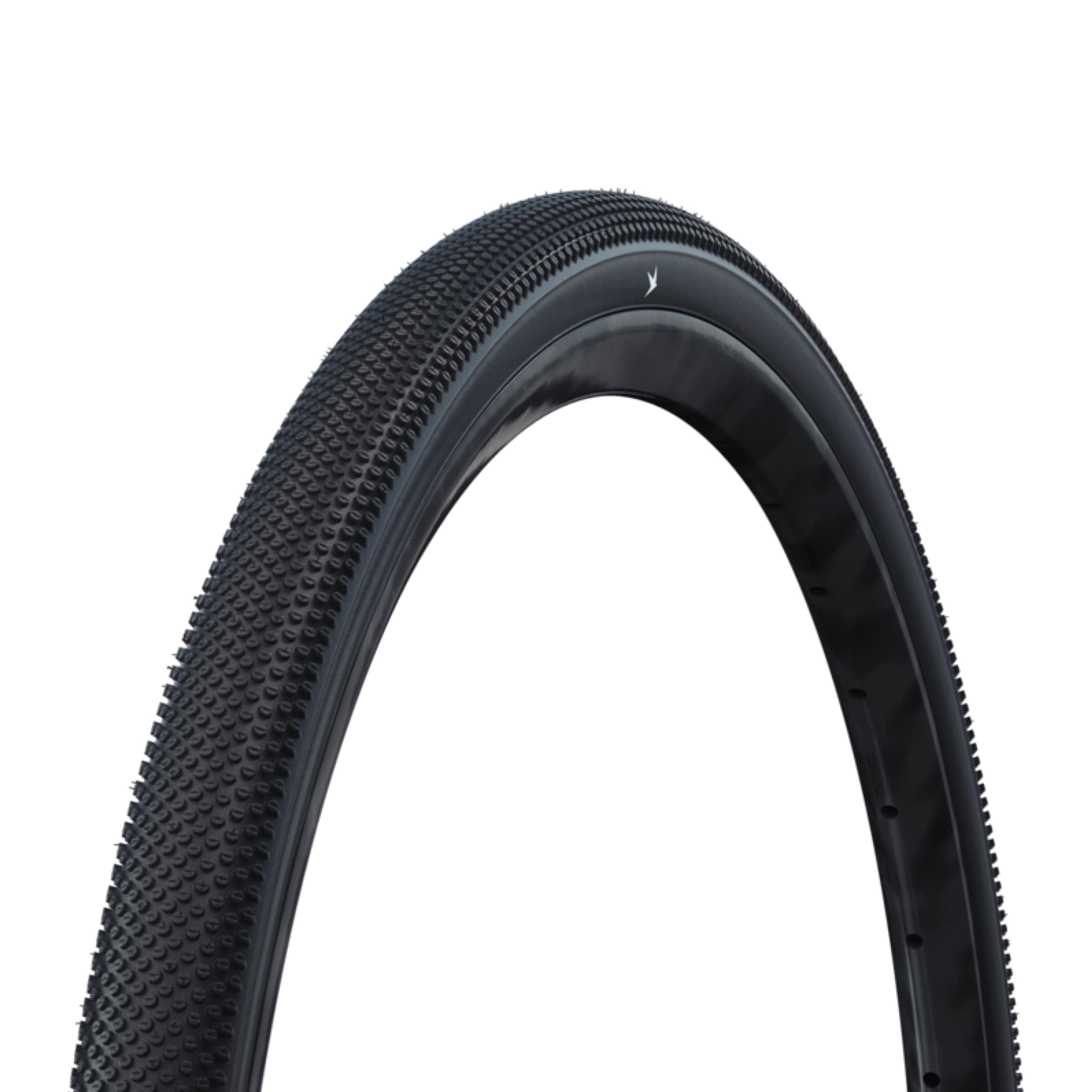
A semi-slick center with real shoulder knobs is the smartest compromise in gravel, and the GravelKing SS is the version of that idea we point most riders to. The center strip runs almost unbroken, so pavement and hardpack do not feel like a tax on the way to the dirt, and the shoulder blocks are there the moment you lean into a corner. At 700 x 40C it slots into the width most gravel frames clear while leaving enough air volume to take the edge off washboard.

The casing is what keeps it at the top of this list. Panaracer's TuffTex layer is there to shrug off cuts, and BeadLock holds the bead seated when you push a wide 40 mm tire hard through a corner, which is exactly the pairing we want for a tubeless setup at low pressure. The center tread also wears slowly, and that matters more than it sounds: a fast tire that squares off in a season is not actually fast.

Mounting is the catch, and it is worth planning around. The bead is tight enough that the last few inches can turn into a fight, and a tire that seats beautifully with a compressor at home is a different proposition on a roadside in the rain. Practise the first install with two good levers, carry a lever you trust, and treat the tight fit as the price of a bead that stays put. If your riding is mostly loose-over-hard descents and chunky climbs, the GravelKing X1 further down this list trades a little tarmac speed for the knob to match.

Bottom line: The tire we recommend first for mixed-surface riding: it rolls like a road tire on tarmac, finds grip on hardpack, and takes a tubeless bead that stays put.

2

Maxxis Rambler 650x47

Maxxis Rambler 650x47

650b gravel

Our Score 9.0/10
Check Price

Worth Noting

  • 650b only, so it is no use on 700c frames
Size
650 x 47B (27.5 x 1.85 in)
Casing
EXO sidewalls, 120 TPI
Weight
1.22 lb
Tubeless
Tubeless
Read the full review

Forty-seven millimeters of air is the whole argument for 650b, and the Rambler is the tire that makes it persuasive. Maxxis builds this one with a tightly packed center knob and generous shoulders, so the volume that soaks up chunky gravel does not come with the vague, wallowing feel of a fat slick. On a frame designed around 27.5-inch wheels it turns a stiff gravel bike into something you can ride all day.

We like the casing nearly as much as the tread. The 120 TPI body with EXO sidewall protection is the combination that lets you run low pressure without spending the ride listening for the hiss of a sidewall cut, and the dual compound keeps rolling resistance reasonable while still giving the shoulder something to bite with. At 554 g it does not pay much of a weight penalty for the volume, which is rare in a tire this fat.

Two checks before you commit. Clearance first: at 47 mm this casing sits tall and wide, so measure the gaps at the chainstays and seat tube with a wheel in place rather than trusting the frame's sticker. Then the obvious one, that this is a 650b tire and nothing else, so a 700c frame has no use for it. On flinty ground the EXO sidewall helps, but this is still a fast gravel tire rather than a rock tire. Keep a 650b wheelset in the garage and this is the tire that justifies it.

Bottom line: The best reason to build around 650b: 47 mm of EXO-protected, tubeless volume that floats over chunky gravel without feeling sluggish.

3

Panaracer GravelKing X1

Panaracer GravelKing X1

Muddy, loose terrain

Our Score 9.0/10
Check Price

Worth Noting

  • Gives up tarmac speed to a semi-slick
Size
700 x 40C
Tread
Aggressive, mud-shedding
Tubeless
Tubeless ready
Puncture Protection
AX-Alpha layer
Read the full review

The GravelKing X1 is the same family as our top pick with the volume turned up: taller, more widely spaced knobs that shed mud instead of packing it, and a shoulder profile built to find an edge when the surface stops being polite.

The casing matches the tread's ambition. Panaracer's AX-Alpha layer and a 120 TPI body are there to survive sharp debris, BeadLock keeps the bead seated under hard cornering, and the ZSG compound is formulated to hold in wet and dry. It sets up tubeless without a fight, which matters more on a knobby you will run at low pressure.

Speed is the surprise. For a tire this aggressive it rolls well on pavement and hardpack, so you give up some of the SS's effortless tarmac glide rather than all of it, and 40 mm of casing keeps washboard comfortable. It spins up quicker than the knob count suggests, and the grip on loose dirt is the reason to choose it.

For loose-over-hard, greasy roots, and chunky descents, the X1 is the one we mount up front and stop worrying about. One honest caveat: the sidewall is where an embedded sharp rock can do damage, and a cut there ends the ride, so carry a boot and keep an eye on pressure on rocky ground.

Bottom line: The knobby of this family, for riders whose gravel includes real loose descents and wet roots; fast enough for the road and easy to set up tubeless.

4

Continental Terra Trail

Continental Terra Trail

Loose gravel

Our Score 8.8/10
Check Price

Worth Noting

  • Center casing can split on fast, rocky descents
Size
700 x 35 (35-622)
Tread
Off-road, bold shoulder knobs
Weight
1.01 lb
Tubeless
Tubeless ready, hookless compatible
Read the full review

Continental lists the Terra Trail at 700 x 35, and inflated it can sit a little under that, which is worth knowing if you are buying it to fill out a frame that just clears 38s. What you get for the modest width is a round profile with bold shoulder knobs, a more useful combination on loose ground than the number suggests.

This is the tire we point to when the gravel gets genuinely loose. The shoulder knobs are big enough to find an edge in pea gravel and dry dirt, the center rolls fast enough that paved connectors do not feel like punishment, and the PureGrip rubber holds on damp roots better than a semi-slick has any right to. It is also hookless-compatible and rated for e-bikes up to 25 km/h, which matters if your gravel bike has a motor in the bottom bracket.

Weight wins it arguments too. At 460 g it is light for a tire with this much knob, and a light 35 mm casing spins up quickly on steep, loose climbs where a heavier tread feels like work. A narrow tire also leaves room for mud in a frame that will not take a 40, which is a genuine advantage in a wet autumn. What it does not give you is the flotation of a 40 or a 47, and that is the trade for the quicker feel.

Bottom line: Our pick when the route turns loose and rocky: real shoulder bite at a light 35 mm width, with fast rubber and hookless-rim compatibility.

5

Schwalbe G-One Allround

Schwalbe G-One Allround

Pavement-heavy routes

Our Score 8.8/10
Check Price

Worth Noting

  • Rear tread wears out well before the front
Size
35-622 (700 x 35)
Tread
Directional, closely spaced center
Weight
1.07 lb
Tubeless
Version-dependent
Read the full review

At 485 g in the 700 x 35 size, the G-One Allround is one of the lighter gravel tires here, and the weight shows up where you want it: climbing, and rolling back up to speed after every corner. The closely spaced center tread keeps vibration low on tarmac, which is why it suits riders who link gravel sections with long paved approaches.

Traction is honest rather than dramatic. The shoulder knobs are short and the tread does not collect mud, so hardpack, dry forest roads, and packed dirt are its home ground, while soft, deep gravel is where it starts to feel like you are steering from the front only. For a tire this quick, that is a reasonable place to draw the line.

For pavement-heavy mixed routes this is the tire we reach for, and the one we suggest to riders who want a single set of wheels to cover a week of everything. One purchase detail is worth slowing down for: the name covers more than one construction, and the Tubeless Easy casing is not the default, so confirm the exact version before you plan a tubeless build. Buy the right one and it is the least fussy fast tire here.

Bottom line: A light, fast 35 mm for riders whose gravel is mostly hardpack and tarmac; buy it for speed and expect the rear tread to go first.

6

Fincci 700x38c Pair

Fincci 700x38c Pair

Budget 700c pair

Our Score 8.8/10
Check Price

Worth Noting

  • Sidewalls can cut before the tread wears
  • Coarse 30 TPI casing rides firmer
Bead
Folding aramid
Pack
Pair (2 tires)
Size
700 x 38c (40-622)
Puncture Protection
1 mm belt
Read the full review

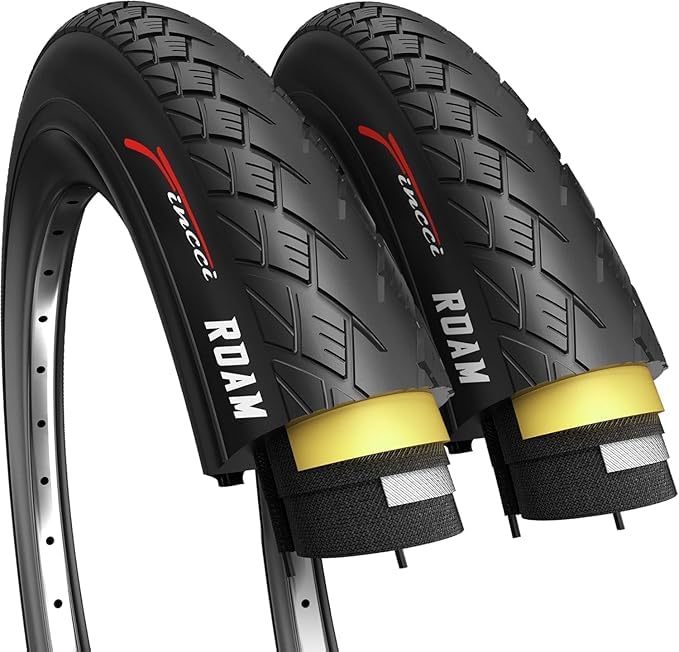
A pair of folding 700 x 38c tires for about what one of the other picks here costs is the headline, and the Fincci set backs it up with real hardware: a folding aramid bead, a 1 mm puncture belt under the tread, and 530 g per tire. That makes it the value pick of this guide, and it is not a toy.

What it does well is roll. The slick center accelerates cleanly on pavement and the shoulders hold a line on crushed limestone and hard dirt, and the belt is aimed at the glass and thorns of a commute rather than the flint of a mountain pass. Fit is the part to watch: the casing can sit off-size on some rims, so check the inflated width before you decide it has solved a clearance problem.

Where the pair really earns its keep is the second set: a commuter, a winter bike, a wheelset you leave at the cabin, or simply a spare in the garage so one cut does not end your week. It is also a low-cost way to try a 38 mm casing if you are still deciding whether you want to commit to gravel width. It is not the pair for a loaded tour over sharp rock.

Bottom line: Our budget pick: a pair of folding 700 x 38c tires with a puncture belt for about what one tire from the rest of this list costs.

7

Schwalbe G-One RS Pro

Schwalbe G-One RS Pro

Fast racing

Our Score 8.8/10
Check Price

Worth Noting

  • One size only, at 35-622
Size
35-622 (700 x 35)
Tread
Semi-slick
Compound
Addix Race
Puncture Protection
V-Guard fabric
Read the full review

Schwalbe's gravel range answers a question before you ask it: the G-One Allround is the everyday tire, and the RS Pro is the one for the days you care about the clock. The tread is a semi-slick with a scale-like center and deeper shoulder knobs, and Schwalbe bills it as their fastest gravel tire.

Everything in the construction points the same way. The Race Pro casing and Addix Race compound are chosen for low rolling resistance and a supple feel, V-Guard fabric under the tread is the puncture defense, and the shoulder knobs are there to keep the front from washing out when a fast descent turns loose at the bottom.

On hardpack, packed dirt, and any route with a lot of tarmac, this is the tire we hand to a rider chasing a personal best: it spins up quickly, holds speed on the flats, and still has an edge for a loose corner. It is also the only tire here sold with a transparent sidewall, which is a look plenty of riders want on a steel or titanium frame.

Where it stops is the loose stuff. A semi-slick is the wrong tool in wet grass, deep mud, and steep climbs where the knob has to dig, and V-Guard is cut protection rather than armor. For racing and fast training on surfaces you know, that is a fair trade; for a loaded tour over unknown ground, the Terra Trail is the better companion.

Bottom line: The race-day pick: a fast, supple semi-slick for hardpack and tarmac that still corners, as long as you do not need a knob for mud.

8

Bell Flat Defense 700x38

Bell Flat Defense 700x38

Rail trails

Our Score 8.8/10
Check Price

Worth Noting

  • Shallow tread wears quickly on abrasive surfaces
Size
700 x 38c
Type
Clincher, tube only
Pressure
50-75 PSI
Puncture Protection
Flat Defense layer
Read the full review

Bell sells the Flat Defense as a hybrid tire, and that framing is the honest way to read it. It is a 700 x 38c clincher with a shallow, non-directional tread and a protective layer under the rubber, built for pavement and crushed limestone rather than chunky, loose gravel.

What it has going for it is convenience. The carbon steel bead folds, so it ships and stores flat, it fits the 40-622 standard most hybrids and gravel bikes use, and the Flat Defense layer is aimed squarely at the goathead-and-glass end of flat protection. It mounts easily and rolls smoothly once it is on.

The pressure range is the tell: 50 to 75 PSI, which is a road-hybrid number and well above the pressures that make a gravel tire comfortable. Run it at the bottom of that range and it is compliant enough for a rail trail; run it near the top and it will rattle your teeth on gravel.

So where does it land? There is a real case for it as a first gravel tire, or as a commuter tire on a bike that occasionally sees dirt: it is cheap to replace, the tread wraps around the shoulder so you are not cornering on a bald edge, and the belt helps around thorns. What it cannot do is float over loose gravel or bite into wet roots, and the Flat Defense layer is a belt rather than a barrier against everything.

Bottom line: A fine budget answer for rail trails and a commute that ends on dirt; just do not expect a semi-slick's speed or a gravel tread's grip.

How We Tested the Best Gravel Bike Tires

We built the shortlist from spec sheets, rider reviews, and the widths and tread patterns that were actually available for gravel bikes, then narrowed it to 11 models that covered everything from fast-rolling file treads to chunkier knobs. Each set was mounted on the same wheels and ridden for eight months on my local gravel loop—smooth dirt, chunky limestone, paved connectors, and wet spring roads. I rotated tires front to rear so every model saw similar wear, and inspected tread and sidewalls every few weeks for cuts, weeping, and squared-off knobs.

Installation was its own test. I timed solo mounting with and without levers, noted whether the bead felt tight and consistent or sloppy, and tried to seat each tire tubeless with a floor pump before reaching for a compressor. Once inflated, I measured mounted width with calipers at the recommended pressure and checked frame clearance, because a tire that claims 40mm and measures 43mm can change how the bike handles. Fit mattered as much as tread.

Out on the dirt, I paid attention to where traction broke loose on loose climbs and wet roots, how much vibration reached my hands through washboard, and whether the tire felt sluggish on pavement connectors. I logged every puncture, noted whether sealant closed it or I had to stop, and watched how predictably a tire lost pressure and stayed seated when it did go flat. At the end, I weighed tread wear against what each tire costs and how it had performed—that is where value showed up.

How to Choose Gravel Bike Tires

Width and Frame Clearance Come First

Start with what your frame will take, not with what looks fast. Most gravel bikes clear a 40 mm tire, some clear 45, and a 650b frame can run the 47 mm of the Maxxis Rambler. Wider buys a bigger air spring: lower pressure, more comfort on washboard, more contact patch on loose ground. It also uses up mud clearance and, past a point, a little snap.

Measure with a wheel in the frame and the tire at your riding pressure, not the number on the sidewall. Tires can inflate narrower than the label, the Continental Terra Trail among them, so a 35 mm you order is not guaranteed to fill a gap you measured for a 38. Leave a few millimeters at the chainstays and seat tube.

Tubeless, Tubes, and What Setup Day Costs

Tubeless is the default for gravel because it lets you run low pressure without pinch flats and seals most thorn punctures before you notice them. It needs a tubeless-ready rim, a tubeless-ready casing, and sealant. Not every listing that says tubeless-ready ships the tubeless casing, either: the Schwalbe G-One Allround is sold in several constructions under one name, so confirm the version before planning the build.

Then there is mounting. A tight bead is a good thing at low pressure and a bad thing at the roadside, and several tires here want two levers and a firm hand the first time. Practise at home, know whether your rim is hooked or hookless, and carry a tube and a lever on every ride anyway.

Tread: Buy for the Surface You Actually Ride

A gravel tire's center tread decides how fast it rolls; the shoulders decide how much you trust it in a corner. Semi-slicks like the GravelKing SS, the G-One RS Pro, and the Fincci pair run a nearly continuous strip down the middle and save their knobs for the edges, which is the right call if your miles are mostly hardpack, pavement, or packed dirt.

If your rides include long loose descents, greasy roots, or wet-season mud, a knobby earns its slower roll, and the GravelKing X1 and Terra Trail are the two here built for that. The mistake runs both ways: race-day tread for fire roads wastes speed, and a semi-slick on terrain where you walk the climbs wastes a ride.

Casing, Protection, and Weight

Two tires at the same width can feel completely different because of the casing. High thread counts, like the 120 TPI on the Rambler and the X1, give a suppler ride; lower ones, such as the Fincci's 30 TPI, feel firmer and more direct. Then come the brand protections, EXO, V-Guard, TuffTex, AX-Alpha, ShieldWall, and Bell's Flat Defense layer, and they range from a scrim under the tread to a full sidewall wrap.

Weight follows all of it: the tires here run from roughly 460 to 554 g, and the gap shows up most when you accelerate. Our rule is to spend the protection on the rear, where your weight and most punctures sit, and run the faster, suppler casing up front.

Frequently Asked Questions

Final Verdict

Buy the Panaracer GravelKing SS in 700 x 40 if you want one tire that handles pavement, hardpack, and the gravel most of us actually ride, and budget ten minutes and two good levers for the first mount. If your terrain is looser and steeper than that, the Continental Terra Trail at 35 mm or the GravelKing X1 at 40 mm gives you the shoulder bite to match.

And if your bike is built around 650b wheels, the Maxxis Rambler's 47 mm of volume is the reason to stay there rather than chase a 700c conversion.