Accessories

Best Mountain Bike Goggles of 2026

Dust, mud, and low branches are part of a good ride—until they hit you in the eye. Goggles are the simplest fix, but the wrong pair makes itself known fast: foam that digs into your cheekbones, a lens that fogs on the climb, a strap that won't sit under your helmet. I've ridden with goggles that checked every box on paper and still ended up in my pack before the first descent. Over five months, my team and I tested 11 pairs on local singletrack, bike park laps, and muddy spring rides, and the differences came down to fit, clarity, and durability.

A few things I wish I'd known: lens shape matters more than tint for trail clarity, and no amount of ventilation saves a goggle that doesn't fit your helmet. We paid attention to scratch protection, too—how lenses survived gear bags and dirty-glove wipes. Appearance counts since you wear these all day, so we noted which frames looked good with different helmets without blocking your view. The picks below are the ones we kept reaching for.

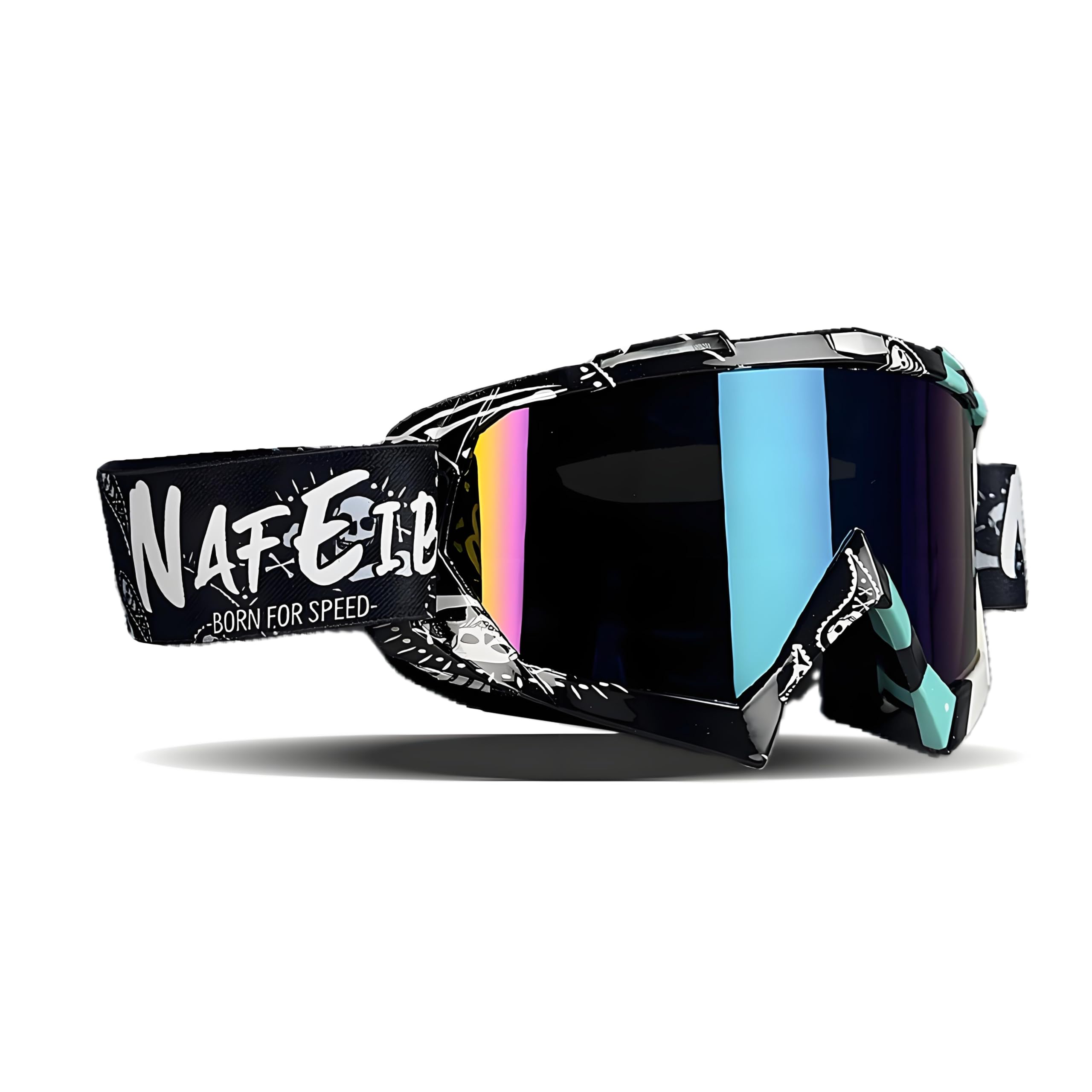
1

Fox Racing Main Stray

Top Pick
Fox Racing Main Stray

Shaded trails

Our Score 9.6/10
Check Price

Worth Noting

  • Ships with the clear lens only
Lens
Clear Lexan with UV protection
Strap
Non-slip silicone with tear-off post
Viewport
Wide peripheral view
Face Foam
3-layer with fleece liner
Read the full review

Clear lenses look like the boring choice until you're riding under a canopy, where the light swings from glare to shade every few seconds and a dark lens turns the trail into a guess. That's the case for the Fox Main as our default trail goggle: a clear Lexan lens with UV protection, so your eyes are covered without the view going dim, set in a wide viewport that keeps the edges of the trail in sight.

What we didn't expect at this price is the detailing. The face foam is three layers with a fleece liner against your skin, which seals the frame without the sticky, sweaty feel of a plain foam strip, and the strap carries a silicone bead that grips the helmet shell instead of relying on overtightening. There's even a third tear-off post — a small thing that matters the first time you race in mud.

The Variable Lens System is the part that makes it a long-term buy: the frame accepts both standard and injection-molded lenses, so a tinted lens for exposed, sun-blasted terrain becomes a swap instead of a new goggle. We've also found the clear lens easier to live with on gray days and early starts than any tint we've ridden, which is why it's the pair that stays on the shelf hook rather than in the gear bin.

Bottom line: For tree-lined trails we point people to this one: a clear, wide view, fleece-lined foam that seals without pressing, and a frame that takes a tinted lens later.

2

100% Strata 2

100% Strata 2

Bright open trails

Our Score 9.6/10
Check Price

Worth Noting

  • Top of the price range here
Brand
100%
Model
Strata 2
Intended Use
Motocross and mountain biking
Read the full review

The Strata 2 is the pair that moves between helmets without complaint. We've had it sit properly in a half-shell eyeport and in a full-face, which is more than a lot of goggles manage when the frame is shaped for one or the other, and the foam is soft enough that a long day doesn't leave a deep line across your cheeks.

The tint is what earns it a place here. It's dark enough to take the sting out of open sun and, crucially, not so dark that the trail disappears the moment you drop into the trees — the balance most tinted goggles get wrong, and the reason this is the pair we hand someone heading for exposed, sunlit trail rather than deep forest.

The catch is glasses. The frame sits close, so it leaves room for a small prescription pair and not much more, and if your frames are wide you'll feel them against your face by the bottom of the first descent. That's a specific rider rather than a flaw — for everyone else, this is a goggle that quietly does everything.

Bottom line: For sunny, open riding we take the Strata 2: a tint that cuts glare without blacking out the trees, soft foam, and a shape that works in a half-shell or a full-face.

3

BATFOX 816

BATFOX 816

Riders in glasses

Our Score 9.4/10
Check Price

Worth Noting

  • REVO lens is a separate version, not a swap
Frame
Bendable TPU, PC lens
Strap
Anti-slip silicone
Weight
3.52 oz
Warranty
1 year
Read the full review

At 3.52 ounces, the BATFOX is the pair we hand someone who's been riding in a borrowed goggle that leaves dents. The frame bends, so it goes into a hip bag without cracking, and the strap has a silicone bead that keeps it on the shell instead of creeping upward as you ride.

It's the glasses part that earns the recommendation. The frame sits wide enough that a prescription pair fits underneath without the bridge pressing into your nose, and that holds even inside a helmet — which is the difference between goggles you wear all day and goggles you push onto your forehead at the first fire road. The one-year warranty is longer than most here, and it covers the part that usually fails first.

Bottom line: If you wear glasses on the trail, we start here: a wide frame that leaves your prescription pair alone, a silicone-backed strap, and 3.5 ounces you forget about.

4

YOHOG Dirt Bike Goggles

YOHOG Dirt Bike Goggles

Wide frames

Our Score 9.4/10
Check Price

Worth Noting

  • Lens marks up with dusty wipes
Lens
UV400 PC, colorful tint
Frame
TPU, over-the-glasses
Weight
4.94 oz
Glasses Cavity
6.1 x 2.55 in
Read the full review

Most over-the-glasses goggles ask you to hope. YOHOG puts a number on it: the interior is listed to take frames up to 6.1 by 2.55 inches, which you can check against your own glasses with a ruler before you order. That's a small thing that saves a return, and almost nobody publishes it.

The rest of the build is what you'd want at this price. The TPU frame bends, the polycarbonate lens carries UV400 protection and a colorful tint, the strap adjusts across adult and youth heads, and it's listed at 0.14 kg. It's built to work with half helmets and full-face helmets both, and the adjustable strap is easy to work with gloves on.

Where it lands for us: this is the pair to order if your frames are wide and OTG goggles have failed you before, and a sensible second pair for a kid or a passenger who rides along. It's here for the fit rather than the finish, and the fit is genuinely the reason.

Bottom line: If wide prescription frames have defeated every OTG goggle you've tried, start here: the interior is sized at 6.1 by 2.55 inches, so you can measure before you buy.

5

XYOP 2-Pack

XYOP 2-Pack

Changing light

Our Score 9.2/10
Check Price

Worth Noting

  • Tinted pair is a daylight lens
Lens
UV400, anti-fog, anti-scratch
Pack
Two pairs, clear and color
Frame
Bendable TPU
Weight
4.9 oz
Read the full review

Two goggles arrive: one clear, one tinted, each with a bendable TPU frame and a UV400 lens, each a touch under five ounces. That pairing is the whole reason to buy it. A dawn start in valley fog and an afternoon on exposed singletrack want different lenses, and swapping goggles takes a second rather than a lens change at the trailhead.

Small design decisions hold up. The lens vents are backed with foam, so grit that gets past the frame doesn't come straight through to your eyes, and the wide adjustable strap sits over a helmet without pressure points. We've used the clear pair for low-light duty more than once — that's where a clear lens earns its keep and where a tinted goggle sends you home early.

Both frames flex enough to survive being stuffed in a pack, and the clear pair has become the one we leave in the car for the just-in-case ride. Two pairs also means a knocked lens doesn't end a weekend, which is more reassurance than any single goggle at this price can offer.

Bottom line: We recommend the two-pack for anyone riding from dawn into bright sun: a clear lens for the first hour, a tinted one for the rest, and a spare in the pack.

6

4-FQ Motorcycle Goggles

4-FQ Motorcycle Goggles

Budget first pair

Our Score 9.2/10
Check Price

Worth Noting

  • Plain elastic strap can creep on smooth shells
Lens
PC reflective, anti-fog, 100% UV
Frame
Bendable polyurethane, OTG
Width
5.09 in temple to temple
Weight
4.59 oz
Read the full review

The mirrored lens is the first thing you notice and the first thing to understand: it's a bright-day lens. Once the sun drops behind the ridge you're looking through dark glass, so it suits summer laps in open country and not the dusk lap or the deep-woods descent. Buy it knowing which of those you ride.

Everything else about this pair is more than the price suggests. The polyurethane frame bends rather than cracks, the polycarbonate lens is rated for 100% UV, and it's cut as an over-the-glasses goggle — 5.09 inches across at the temples — so it sits over a medium prescription frame instead of pressing it into your face. The anti-fog coating is there too, and the color range is wide enough that matching a helmet isn't hard.

It's the pair we keep for dusty afternoons and for anyone who isn't ready to spend on a primary goggle, and it has held up in a glovebox and a gear bag without complaint. Treat the lens as a wear item and it'll do everything a first goggle needs to.

Bottom line: For a first pair or a bright-day spare, we like this one: a bendable OTG frame, full UV protection, and a mirrored lens at the value end of this group.

7

JAMIEWIN Dirt Bike Goggles

JAMIEWIN Dirt Bike Goggles

Inexpensive spare

Our Score 9.2/10
Check Price

Worth Noting

  • Fogs in cold, damp conditions
  • Lens scratches easily
Frame
Bendable polycarbonate
Weight
3.52 oz
Venting
Full-channel, top and bottom
In The Box
Goggle, pouch, cloth
Read the full review

A pouch and a cleaning cloth come in the box, which most goggles at this end of the market don't bother with, and it means the lens has somewhere to live between rides instead of rattling around a gear bag. The prints are loud — camo, pink, mirrored blue — and if you're matching a helmet or buying for a kid, that's half the appeal.

The frame is bendable polycarbonate at 3.52 ounces, and the venting runs full channels along the top and bottom of the frame rather than a couple of slots. On a hot day with the bike moving, that's the difference between a clear lens and a fogged one.

It's also the pair that gets handed around: the size range covers adults and kids, the foam doesn't dig in, and nobody minds if it ends up in the sand. Colors are the loudest in this group, which is either the reason you buy it or the reason you don't.

What we tell people: buy it as the spare that lives in the car, the pair for a passenger, or a first goggle for a kid who's still growing out of things. It's the third pair in a quiver, not the one you pack for a weekend of changeable weather.

Bottom line: We keep this one for spares and kids: it arrives with a pouch and cloth, bends into a pack, and costs less than anything else in this guide.

How We Tested (and Abused) 11 Pairs of Mountain Bike Goggles

We started by scanning lens options, foam densities, strap designs, and replacement-lens availability, then narrowed the field to 11 pairs that covered the shapes and price points riders actually buy. Over five months, those goggles went on local singletrack, lift-served bike park laps, and sloppy spring rides. Every pair went through the same routine: a sweaty climb, a fast descent, and at least one dust cloud or mud splatter.

Fit came first. We wore each goggle with both a half-shell and a full-face helmet, checking whether the strap sat flat, the frame sealed against different face shapes, and the nose bridge left room to breathe. Comfort was judged on four-hour rides, not the first ten minutes, and we noted where foam pressed, whether sweat dripped into the lens, and how the strap felt after repeated adjustments. For clarity, we rode the same tree-lined section at midday and dusk, looking for distortion, glare, and how well the lens picked out roots and rocks in shade.

To test scratch protection, we skipped the microfiber bag on some rides, stuffed goggles into gear bags, and wiped lenses with dirty gloves before checking for fine scratches under a headlamp. Functionality meant living with the lens-swap system and strap hardware—whether they worked with cold hands or left us fiddling on the trail. Appearance got a real-world check too: we wore each pair with different helmets and asked riding buddies for blunt opinions. The goggles that made the list stayed comfortable, clear, and scratch-free through all of it.

How to Choose Mountain Bike Goggles

Match the lens to your light, not to the photo

Most trail riding happens under trees, flicking between glare and deep shade, and a clear or very lightly tinted lens is the default that keeps the trail readable all day. Save the mirrored and dark tints for exposed, sunlit terrain; a dark lens that looks fast on the shelf can turn a shaded descent into a guess.

If you ride both, buy two goggles rather than one premium pair with a spare lens. When a listing gives a visible light transmission figure, use it: around half the light is a daylight lens, and a high figure is close to clear.

Fit is a helmet question first

A goggle has to do two things at once: seal against your face and sit properly inside the helmet's eyeport. A pair that feels perfect bare can be pushed down by a full-face opening until the frame rests on your nose, and a half-shell with a short eyeport can leave the top of the frame catching wind.

Take your helmet into the decision, and look for a strap with a silicone bead rather than plain elastic — it grips the shell instead of relying on tension. A third tear-off post is worth having if you race in mud.

Foam and venting decide how long you can wear them

The seal is foam, and layers matter. Three-layer foam with a fleece backing sits against the skin without the tacky feel of a single strip and holds its shape over a season; a thin single layer is the first thing to flatten.

Venting covers the rest. Fog forms when you stop moving — at the gate, on the push back up — so top and bottom channels earn their place, and an anti-fog coating is a bonus rather than a plan. If you ride cold, damp country, treat fogging as the thing you're shopping for.

If you wear glasses, get a number

Over-the-glasses is a claim, not a size. A goggle can be sold as OTG and still press a wide frame into your face, and the difference is the cavity behind the lens. Where a listing publishes the internal width and height, measure your frames and compare; where it doesn't, you're guessing.

Our pick for glasses wearers is the one that leaves the bridge of your nose alone, and the alternative is the pair that publishes a 6.1 by 2.55 inch interior you can check before ordering.

What the extra money buys

Above the cheapest goggles here you're paying for three things: a lens that survives a season, foam that keeps sealing, and a strap that holds. Below it you still get a bendable frame and a usable tint, with a lens you'll treat as a wear item.

Neither is wrong. Buy cheap if the goggle is a spare or a kid's, and spend if it's the pair that goes on every ride — the top of this group sits only a little above the middle.

Frequently Asked Questions

Final Verdict

Buy the Fox Racing Main if you want one goggle for tree-covered trail riding: the clear lens keeps the view usable in and out of shade, the fleece-lined foam seals without pressing, and the frame will take a tinted lens when you want one.

If your riding is mostly open and sunlit, the 100% Strata 2 is the better first buy. If you wear glasses, start with the BATFOX — or measure your frames against the YOHOG's published cavity.