Cycling Apparel

Best Mountain Bike Knee Pads of 2026

The crash that finally sold me on knee pads happened at about five miles an hour: a root I'd ridden a hundred times, a front wheel that washed out, and my kneecap into a granite rock. The slow, unglamorous falls do the most damage, and they almost always land on your knee. A decent pair turns a two-week limp into a shrug.

Protection, though, is the easy part — any hard shell with a slab of foam will stop a rock. What separates a pair you'll actually wear from one that lives at the bottom of the gear bag is whether it stays put on a climb, breathes on a summer grind, and doesn't rub a raw spot behind the knee. I've ridden everything from minimalist sleeves to burly park shells, and over the past six months our team put 12 pairs through dusty flow trails and rooty descents in every kind of weather. Fit and comfort decide whether the pads come out of the bag; the rest is what saves your knee when they do. The picks below are the ones we kept reaching for.

1

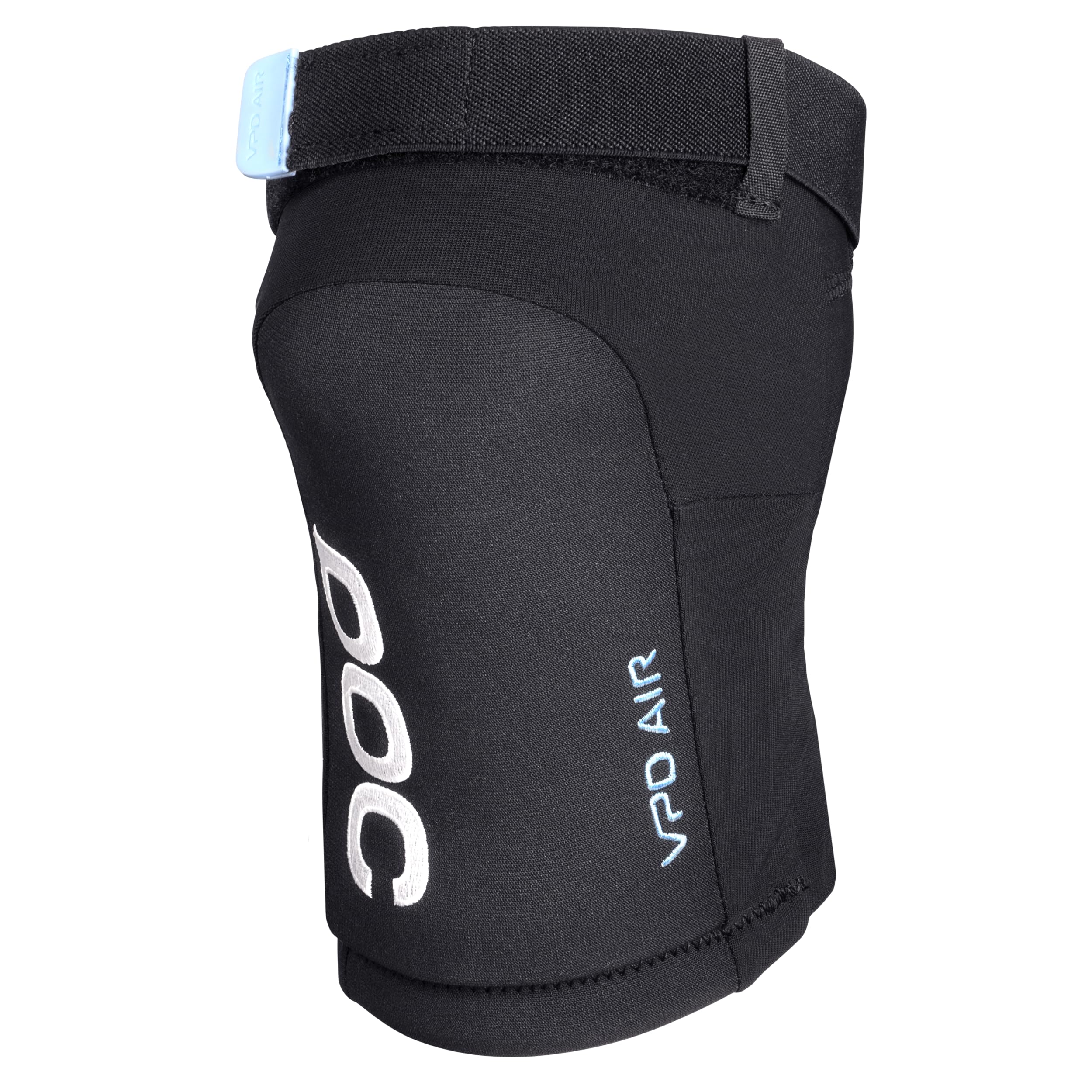
POC Joint VPD Air Knee

Top Pick
POC Joint VPD Air Knee

Trail and enduro

Our Score 9.2/10
Check Price

Worth Noting

  • Sizing isn't forgiving; measure before ordering
Size
L
Closure
Elastic strap with Velcro
Padding
VPD Air
Sold As
Pair
Read the full review

Knee pads earn their keep on a trail ride by disappearing, and the Joint VPD Air is the closest thing in this group to that. The VPD Air padding is soft and flexible, the sleeve sits low and close, and there's no shell to catch on your frame or your shorts. We kept them on through climbs that had us standing on the pedals, which isn't something we can say for the heavier pads here.

Retention comes from reinforced stretch fabric, an anti-slip rubber print, and a single elastic strap with a Velcro closure. The strap is the part that matters, because it lets you set the top cuff above the kneecap where it belongs instead of trusting compression alone. Worth knowing: the rubber grip runs across the front of the opening rather than all the way around, so on legs that taper sharply below the knee the back of the cuff can work loose on a long descent. Re-seating them at the top of a run sorts it.

Two ownership notes. The tail of the Velcro strap sits proud enough to catch on baggy shorts, so press it flat once it's closed. And they arrive as a pair, which sounds obvious until you're comparing listings where the price is for one guard, so read the quantity line before deciding a single pad is a steal.

Bottom line: Our default for most riders: the VPD Air pedals like a light sleeve but covers the knee properly, so it's the pair we're happiest leaving on for a whole ride.

2

Demon Hyper X D3O V3

Demon Hyper X D3O V3

Aggressive trail riding

Our Score 9.2/10
Check Price

Worth Noting

  • Seam stitching is the weak point on hard-used pairs
Size
X-Large
Weight
1.3 lb
Closure
Dual hook-and-loop straps
Padding
D3O with Kevlar panel
Read the full review

D3O behind a Kevlar front panel is the most abrasion-resistant pad stack in this group, and it's the main reason to pick the Hyper X over a plain foam sleeve. The D3O stays soft while you pedal and firms up on impact, while the Kevlar face is there to stop the cover shredding the first time you slide on gravel. Perforated neoprene and a terry cloth lining handle the side that sits against your skin.

Where this beats the POC Air is in a proper crash: more material over the kneecap, more wrap around the sides, and the confidence that comes with it. Where it loses is everywhere else. At 1.3 pounds it's one of the heavier pads here, and we felt the bulk on long climbs in a way we didn't with the top pick. That's a fair trade if the descents are why you're out there.

Sizing takes a decision before you order. Demon's own listing tells you to go a size up from your measurements, and with a deliberately tight fit that's the right call; the two hook-and-loop straps then take up whatever slack is left. Comfort is the surprise here, since the terry lining is soft against bare skin and the dual straps spread pressure instead of pinching behind the knee.

Bottom line: If your riding is more rock garden than groomed singletrack, this is the pad we point you to: D3O behind a Kevlar face, held by two straps that don't wander.

3

IXS Flow Evo+ Padded Knee Guard

IXS Flow Evo+ Padded Knee Guard

All-day pedaling

Our Score 9.2/10
Check Price

Worth Noting

  • Sizing runs small; size up if between sizes
Size
M
Weight
10.6 oz
Padding
Reactive polymer
Material
Mesh
Read the full review

IXS builds the Flow Evo+ around a breathable elastic zip, which the brand calls FlexZip, plus a heavy-duty Velcro LoopLock strap. The zip is the useful part: it opens the sleeve instead of making you drag a tight cuff over the widest part of your calf at the trailhead.

We treat this as a trail pad, and it's honest about that. The reactive polymer insert is enough for the kind of moment where you dab a knee on roots or wash out at low speed, and it's the reason the guard disappears on a five-hour ride. If you're hitting gaps and rock gardens, the Demon or the VPD 2.0 is the right sort of armor; this one is for people who pedal.

The fabric behind the knee is where a well-used pair goes first, since the sleeve creases there with every stroke, so it's worth checking that seam now and then. Everywhere else the mesh does its job, and the guard is light enough that you stop noticing it partway up a climb.

Bottom line: A light, breathable pad for long pedaling days; we reach for it on cross-country rides where a hard shell would be more armor than the trail asks for.

4

Alpinestars Bionic Plus Knee Protector

Alpinestars Bionic Plus Knee Protector

Budget protection

Our Score 9.0/10
Check Price

Worth Noting

  • Sold only in L/XL, so smaller riders are out
Size
L/XL
Weight
10.2 oz
Closure
Dual strap closure
Certification
CE certified
Read the full review

A hard-shell knee guard usually feels like a bucket strapped to your leg. The Bionic Plus is the exception here. The shell has a flexion channel molded into it so it bends with the knee instead of fighting it, and the asymmetric panels wrap around the sides rather than sitting flat on the cap, which is exactly where a soft pad runs out of coverage.

Two straps do all the work, one above the knee and one below, and there's no sleeve to peel over a shoe, which makes these the pair we take when we're gearing up at the car. The back is vented panels and 3D mesh, so airflow is better than the solid front suggests, and the whole thing is light enough that you stop thinking about it on a climb.

Placement matters more than usual because the shell is rigid: get the top strap above the kneecap rather than across it, or it will dig with every pedal stroke. Once it's set, the two-strap layout does what a single elastic cuff can't, holding the pad from above and below at the same time.

Bottom line: We think it's the best value here: a CE-certified hard shell with real side coverage, and the quickest pair in this group to get on and off.

5

G-Form Pro-X3 Knee Guards

G-Form Pro-X3 Knee Guards

Pedal-heavy rides

Our Score 9.0/10
Check Price

Worth Noting

  • Soft pad is trail protection, not park armor
Care
Machine washable
Size
Adult Large
Closure
Pull on
Padding
Smartflex
Read the full review

There's no strap and no zip on the Pro-X3, just a nylon-and-spandex sleeve with a Smartflex pad bonded to the front of it. That's the entire design, and it explains both the low weight and the way the guard disappears under a pair of riding pants.

Fit is the whole risk with a pull-on sleeve, because there's nothing to cinch. The cuff has to grip by itself, and on some legs it works its way down over a long ride; sizing it snug against bare skin or over a tight bib short is what keeps it where you put it. Measure rather than guessing, because this is not a pad that forgives a loose size.

What we appreciate most is how little maintenance it needs. The ventilated foam layer and moisture-wicking fabric keep it from turning into a swamp on a hot climb, and the guard is machine washable, which counts for a lot on something that sits against your skin every ride. The UPF 50+ fabric is a small bonus on long, exposed fire-road climbs.

Bottom line: A sleeve, not a guard: nothing to strap, nothing to adjust, machine washable, and the pad we grab for hot days and pedal-heavy rides.

6

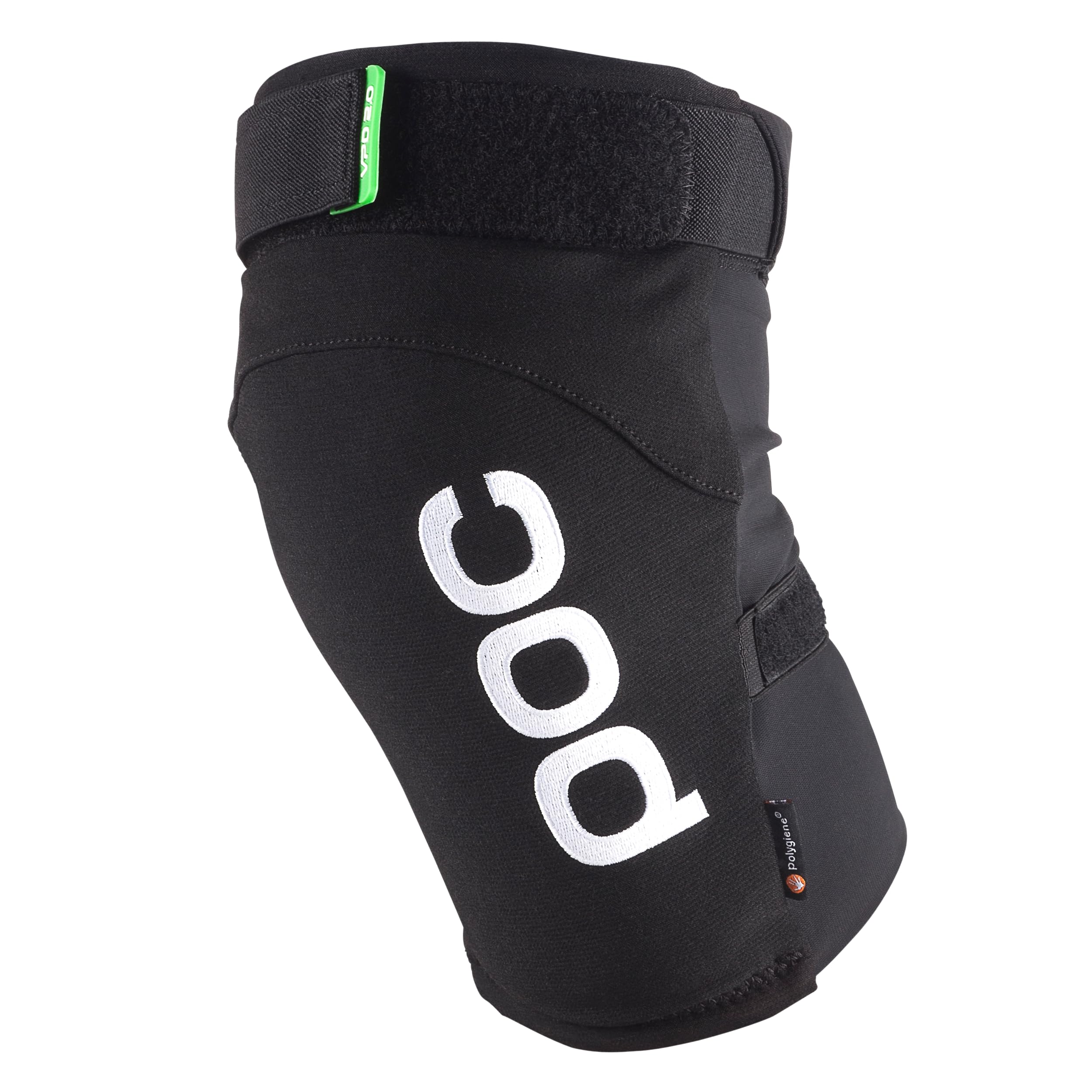
POC Joint VPD 2.0 Knee

POC Joint VPD 2.0 Knee

Bike park

Our Score 8.8/10
Check Price

Worth Noting

  • 1.45 pounds is a lot to pedal uphill
Weight
1.45 lb
Padding
VPD 2.0
Dimensions
14 x 10 x 6 inches
Read the full review

The VPD 2.0 is the burliest pad in this group, with more material around the knee than anything else here and padding that carries on around the sides. It's built for riding where you aren't counting grams on the way up because something else is doing the work.

Coverage is the whole argument. Where the VPD Air stops just past the kneecap, this one keeps going, and the extra material on the sides is what you notice when the ground is loose and fast. It holds position too: the longer cuff and the lower strap keep it from rotating around the leg on rough descents, which is the failure that makes a heavy pad worse than a light one.

The trade is everything else. At 1.45 pounds it's the heaviest pad here, and we felt that on any climb longer than a couple of minutes; the coverage that makes it useful in a rock garden is also the last thing you want on a hot one. It's the most expensive pair in this group as well, which is easier to justify as a second pad for park days than as your only one.

Bottom line: We keep this pair for lift-served days: more coverage and more side protection than anything else here, with the weight that comes with it.

How We Tested 12 Pairs of Mountain Bike Knee Pads

We started with a shortlist of roughly 30 pairs — everything we could find that carried a recognized impact rating and came in at least three sizes — then narrowed it by style: soft pull-on sleeves for riders who pedal, hard caps and hinged shells for park days. Twelve made the cut. Sizing was the first filter, since a pad that jumps from small straight to large leaves a lot of knees in between.

Testing ran six months, late winter into summer, at roughly three rides a week. Every pair saw the same pedal-heavy loop with a 1,200-foot climb and a descent of loose-over-hard corners, plus lift-served park days where pads take rock strikes instead of pedal strokes. After each ride we checked where the top strap ended up and whether the pad had drifted; a few announced themselves with a raw line above the knee.

Comfort got checked on long grinds — at least one two-hour cross-country ride per pair, where we noted whether we stopped thinking about them at all. Warmth was tested without mercy, in 90-degree afternoons and a few 40-degree mornings, and we recorded which backs of knees came out soaked and which pads were a wet sleeve by hour two.

Durability came free with the terrain: we checked shells for gouges and stitching for fraying every few rides, washed each pair like a normal person would, and noted whether the velcro still grabbed and the elastic still snapped back. Protection got judged on real falls rather than published claims — three testers went down during the six months, so we looked at bruising, at whether the pad rotated on impact, and at how the foam sat over the kneecap. Value came down to one question: did the pair earn a permanent spot in the gear bag?

How to Choose Mountain Bike Knee Pads

Start With How Much You Climb

A pad you'd wear for a three-hour cross-country loop is a different object from the one you'd wear for six lift laps. Pedal-heavy riding rewards low weight, thin padding, and ventilation, which is the whole case for the POC Joint VPD Air and the reason the IXS Flow Evo+ and G-Form Pro-X3 stay in the conversation. Lift-served or push-up riding rewards coverage instead: more material over the knee, more wrap on the sides, and a shell to take the scrape.

Be honest about the ratio. If most of your rides include a climb, buy light and accept less side coverage. If a shuttle is doing the work, buy the burliest pad you can stand.

Soft Armor or a Hard Shell

Soft pads use a reactive foam (VPD, D3O, Smartflex) that stays flexible through the pedal stroke and firms up on impact. They're lighter, cooler, and quieter against the bike, which is why most trail riders end up there. A CE-certified hard shell spreads load over a wider area and slides rather than catching on sharp rock, at the cost of bulk and heat. The Alpinestars Bionic Plus is the hard shell in this group; the VPD 2.0 sits between the camps, with soft padding and much more of it.

Get the Size Right

This is where most knee pad purchases go wrong. Measure your thigh a hand's width above the kneecap and your calf below it, then use the brand's own chart, because POC's and IXS's sizing doesn't map cleanly onto other brands and several pads here run small. Snug is correct; tight enough to leave a mark behind the knee is not.

Buying your jeans size is the mistake to avoid. A pad that's slightly too big will rotate in a crash instead of staying over the kneecap, which is worse than a pad that feels tight for the first ten minutes.

How It Stays Where You Put It

Retention comes from three things: the grip at the cuff, the strap above the knee, and the shape of the sleeve. The top strap belongs above the kneecap, not across it. Put it on the cap and it will dig with every pedal stroke, and on a rigid shell it will walk the pad downward as you ride.

A dual-strap shell forgives more than a pull-on sleeve, which has to fit correctly because there's nothing to adjust. Tightening a strap won't rescue a pad in the wrong size; it just cuts circulation.

Frequently Asked Questions

Final Verdict

Most mountain bikers should buy the POC Joint VPD Air. It's the pair we're happy to leave on from the trailhead to the last descent, and it covers the knee properly without the weight or the heat of a shell.

If your riding runs harder than that, the Demon Hyper X adds a Kevlar face and D3O for the days when you land on rock, while the Alpinestars Bionic Plus brings a certified hard shell in at the lowest price here. When a lift is doing the climbing, skip the compromises and go straight to the VPD 2.0.