Cycling Apparel

Best Mountain Bike Knee and Shin Pads of 2026

Every rock garden eventually finds the rider who showed up underdressed. The trouble is the tradeoff baked into knee and shin pads: the burly ones that genuinely protect you feel like a cast on the climbs, while the light ones you forget you're wearing creep down your leg or leave a gap right where a pedal strike lands. The right pair ends that argument — coverage you'll commit to a descent in, comfortable enough to pedal back up in, snug enough that you stop thinking about them.

Two summers ago I clipped a pedal on a slow, stupid climb and limped home with a shin that stayed angry for weeks. My team and I have since ridden 12 sets over seven months of trail days, from quick after-work laps to all-day backcountry rides. Sizing is what most people get wrong: measure the thigh where the pad actually sits and don't expect break-in to fix a loose fit. The picks below run from XC-weight sleeves to full hard-shell.

1

POC Joint VPD Air Knee

Top Pick
POC Joint VPD Air Knee

Long pedal days

Our Score 9.2/10
Check Price

Worth Noting

  • Runs tight; size up if between sizes
  • Elastic strap can let it drift on rough descents
Padding
VPD Air
Included
Pair
Material
Polyester and neoprene
Warranty
2 years
Read the full review

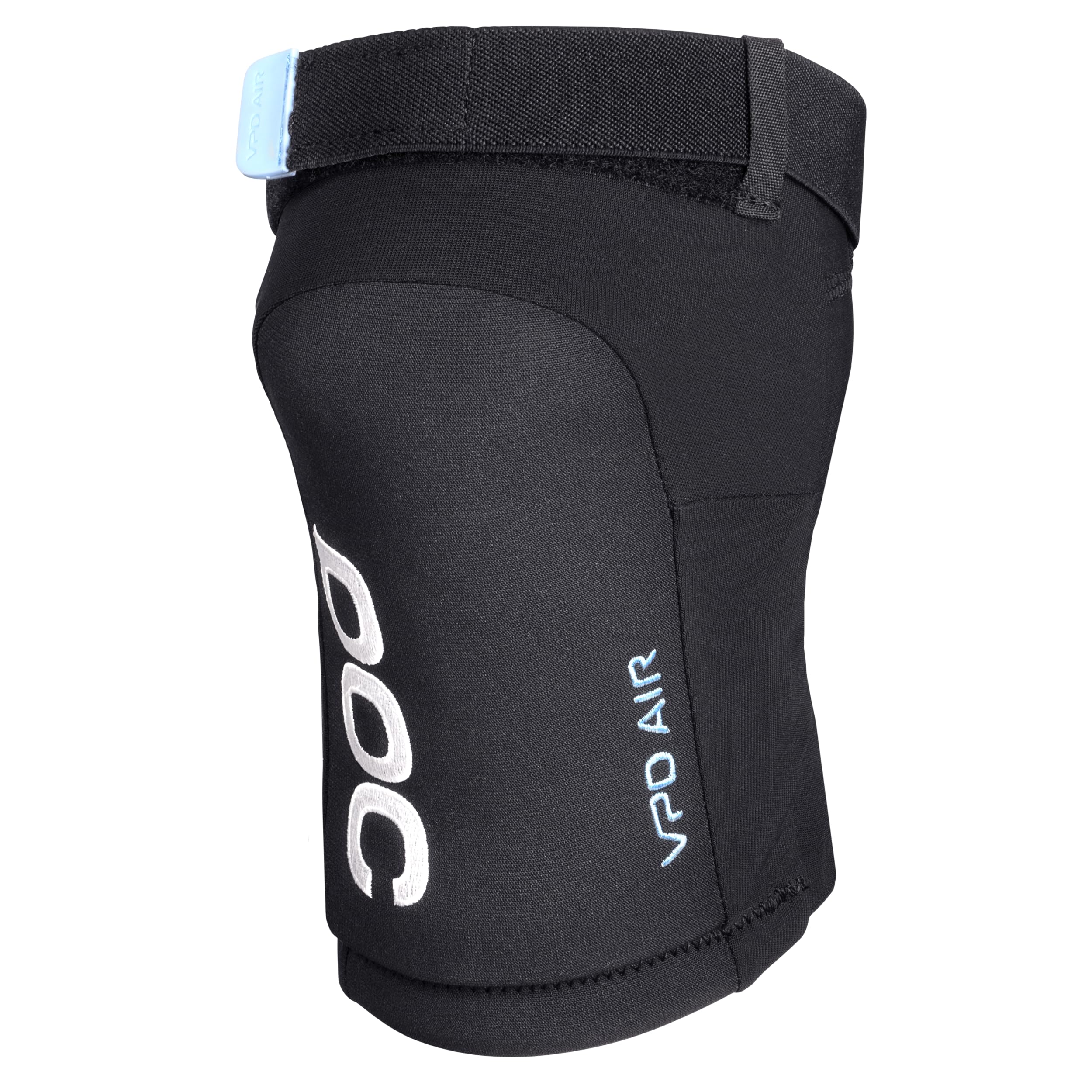
Slimmer and softer than our top pick, the VPD Air is the pad we reach for when a ride is mostly climbing. POC's low-profile VPD Air padding is built to stay flexible through the pedal stroke, and the sleeve is reinforced stretch fabric held by an anti-slip neoprene band and an elastic strap rather than a shell.

That combination works. The neoprene gripper does most of the holding and the strap takes up whatever is left. The strap end is long enough that it likes to catch on loose shorts, which is minor but noticeable every time you pull them on. They come as a pair and carry a two-year manufacturer warranty.

What you trade for the low bulk is armor: there is no hard shell and nothing below the knee, which is right for fast, familiar trail and wrong for learning to jump. Coverage is squarely knee-only, so add separate shin protection if your local trails are sharp. For long days where the climb is the ride, this is the pair that earns its place in the bag.

Bottom line: Our pick for pedal-heavy trail days: low-bulk VPD padding that flexes as you climb, a neoprene gripper that holds it in place, and a two-year warranty.

2

Demon Hyper X D3O V3

Demon Hyper X D3O V3

Rocky, abrasive terrain

Our Score 9.2/10
Check Price

Worth Noting

  • Sizing runs small; order a size up
  • Seams can part with heavy use
Weight
1.3 lb
Closure
Dual hook-and-loop straps
Front Panel
Kevlar
Impact Insert
D3O
Read the full review

Two hook-and-loop straps, a terry-cloth liner and a Kevlar panel across the front: the Hyper X is built like a strap-on guard rather than a sleeve, and that is the point. The straps set tension above and below the knee independently, which is what you want on legs that do not match a size chart neatly.

Abrasive ground is where this pad makes its case. D3O takes the impact and the Kevlar face takes the sliding, so a tumble across rock does not chew through the fabric underneath. The terry liner is the detail we appreciated most, since it keeps the pad from sticking to a sweaty knee and makes it far easier to pull on in a parking lot. Perforated neoprene keeps the heat manageable on all but the hottest days.

Fit is the thing to get right. The two straps are what turn a close fit into a workable one, so slacken both before you pull the pad on and tighten from the top down. It is a more structured pad than the sleeve-style picks here, which is exactly what you are paying for when the ground turns sharp.

Bottom line: The strap-and-Kevlar pick for riders on rocky, abrasive trails, with D3O impact protection and a liner that makes it easy to pull on.

3

IXS Flow Evo+

IXS Flow Evo+

Easy on/off

Our Score 9.2/10
Check Price

Worth Noting

  • Sizing runs small; start a size up
Entry
FlexZip elastic zipper
Weight
10.6 oz
Closure
Hook-and-loop LoopLock strap
Padding
Reactive polymer
Read the full review

Getting a knee pad off without removing your shoes first is the small annoyance every pull-on design shares. The Flow Evo+ answers it with a zip: an elastic FlexZip entry down the sleeve, plus a heavy-duty hook-and-loop strap to set the tension. Pull them on, zip up, ride; at the car you reverse it in seconds.

On the trail they behave like a proper everyday pad. The reactive polymer insert flexes enough that pedaling does not feel like a fight with the sleeve, the mesh backing breathes, and at 0.3 kg they do not weigh your legs down on a long climb. We wore them through a full day of rolling singletrack without wanting them off.

What you are buying is convenience without much of a penalty: the pad is thin enough to forget about, and the zip makes it the easiest pair here to live with on a ride that mixes a climb, a stop and a descent. For riders who want one pad for everything from a lunchtime loop to a weekend in the mountains, this is a comfortable choice.

Bottom line: The easiest pair here to live with: a zip entry that comes off without removing your shoes, plus light, breathable padding for everyday trail riding.

4

Fox Racing Launch D3O Knee Guard

Fox Racing Launch D3O Knee Guard

Trail and enduro

Our Score 9.0/10
Check Price

Worth Noting

  • Seam stitching can pull away with heavy use
Weight
5.29 oz
Closure
Slip-on with hook-and-loop adjuster
Back Panel
Moisture-wicking open mesh
Impact Insert
CE-certified D3O
Read the full review

A CE-certified D3O insert is what makes this the pair we recommend first. Certification means the insert has been tested against a published impact standard rather than just described as protective, and D3O stays soft while you pedal and firms up on impact. Fox builds it into a slip-on sleeve with a hook-and-loop adjuster and an open mesh back, which is the combination that suits trail and enduro riding rather than lift-served downhill.

On the bike the pad asks very little of you. The mesh back moves air on the climbs, there is no hard cap digging into the knee when you are seated and pedaling, and the sleeve does not bunch behind the joint. The adjuster is the part worth understanding: it needs to sit high, above the calf muscle, or the whole guard walks downward on a long descent. Set it once and it holds for the day.

Sizing is where buyers get caught out. The guard is cut to fit snugly and it runs small, so take a size up from your measurement rather than trusting your usual. What you get in return is a genuinely low-profile pad that disappears under baggy shorts and does not fight you on the way up. For one pair that covers trail-center laps, an enduro weekend and the odd park day, start here.

Bottom line: The pad we recommend first for trail and enduro riders: a certified D3O insert, a mesh back that vents on climbs, and a fit you can tune above the calf.

5

Kali Protectives Strike Knee/Shin

Kali Protectives Strike Knee/Shin

Knee and shin

Our Score 9.0/10
Check Price

Worth Noting

  • Sleeve fabric can tear where it meets the pad
Weight
12.8 oz
Closure
Hook and loop
Padding
Xelion with EVA side padding
Coverage
Knee and shin
Read the full review

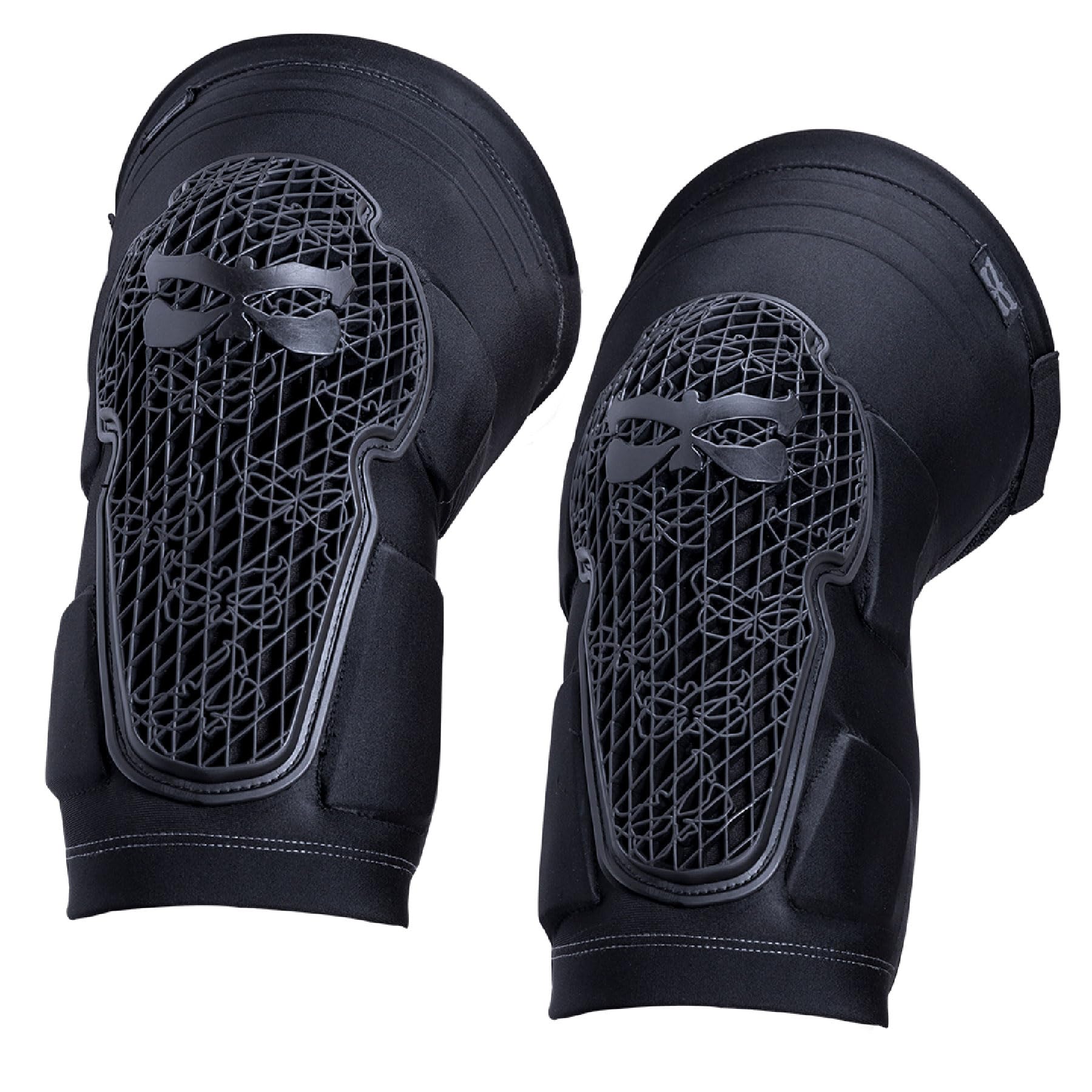
Only one guard in this group covers the shin as well as the knee, and that is the reason to look at the Strike. Kali builds it from Xelion impact material with EVA padding around the sides, lines it with a soft interior, backs it with vented mesh and holds it on with non-slip bands and a hook-and-loop closure. On rocky ground, where the top of your shin keeps finding roots, pedals and stone, that extra panel earns its keep.

It pedals better than a knee-and-shin guard has any right to. The shape is contoured rather than a straight tube, so the shin panel follows the leg instead of flapping, and the soft lining means you can kneel at the trailhead without the pad digging in. At 363 g it is heavier than the knee-only picks here and you feel that on a long climb, though not enough for us to want it off.

Know what it is not: a flexible foam-and-fabric guard rather than a hard-shell downhill cap, so it belongs on trail and enduro rides where the threat is scrapes, pedal strikes and glancing rock. Size by the calf as well as the thigh, because a shin panel that sits wrong drags the whole guard around with it.

Bottom line: The pick for rocky ground and anyone who keeps catching the top of the shin: genuine knee-and-shin coverage that still pedals well.

6

Demon Enduro Ultralight

Demon Enduro Ultralight

Budget trail kit

Our Score 8.8/10
Check Price

Worth Noting

  • Sizing runs small; order a size up
Padding
10 mm EVA foam
Included
Pair
Knee Cap
Kevlar cover
Anti-slip
Silicone bands top and bottom
Read the full review

This is the least expensive pad in the group and it still arrives as a pair. For that you get a slim pull-on sleeve with 10 mm of EVA foam, a Kevlar cover over the knee cap and silicone bands top and bottom to stop it rolling down the leg.

We keep a set of these for the rides where a full pad feels like overkill. They are thin enough to disappear under riding pants, the silicone bands genuinely hold, and the Kevlar cap takes the scuffing that would otherwise go into the fabric. For a first kit, a spare pair in the car or mellow trail-center laps, that is most of what you need.

What you give up is impact depth. EVA is a softer, simpler foam than the D3O and VPD pads here: it is at its best against scrapes, root strikes and low-speed falls, and it is not the pad to trust for a fast, square-edged rock hit. As a second pair for quick evening loops, that trade is easy to make.

Bottom line: The budget pick: a pair of slim, silicone-banded sleeves that fit under pants and handle scrapes and slow falls, not high-speed rock.

7

POC Joint VPD 2.0 Knee

POC Joint VPD 2.0 Knee

Bike park days

Our Score 8.8/10
Check Price

Worth Noting

  • Snug fit leaves little margin on sizing
  • The priciest pad in this group
Weight
1.45 lb
Padding
VPD 2.0
Dimensions
14 x 10 x 6 inches
Read the full review

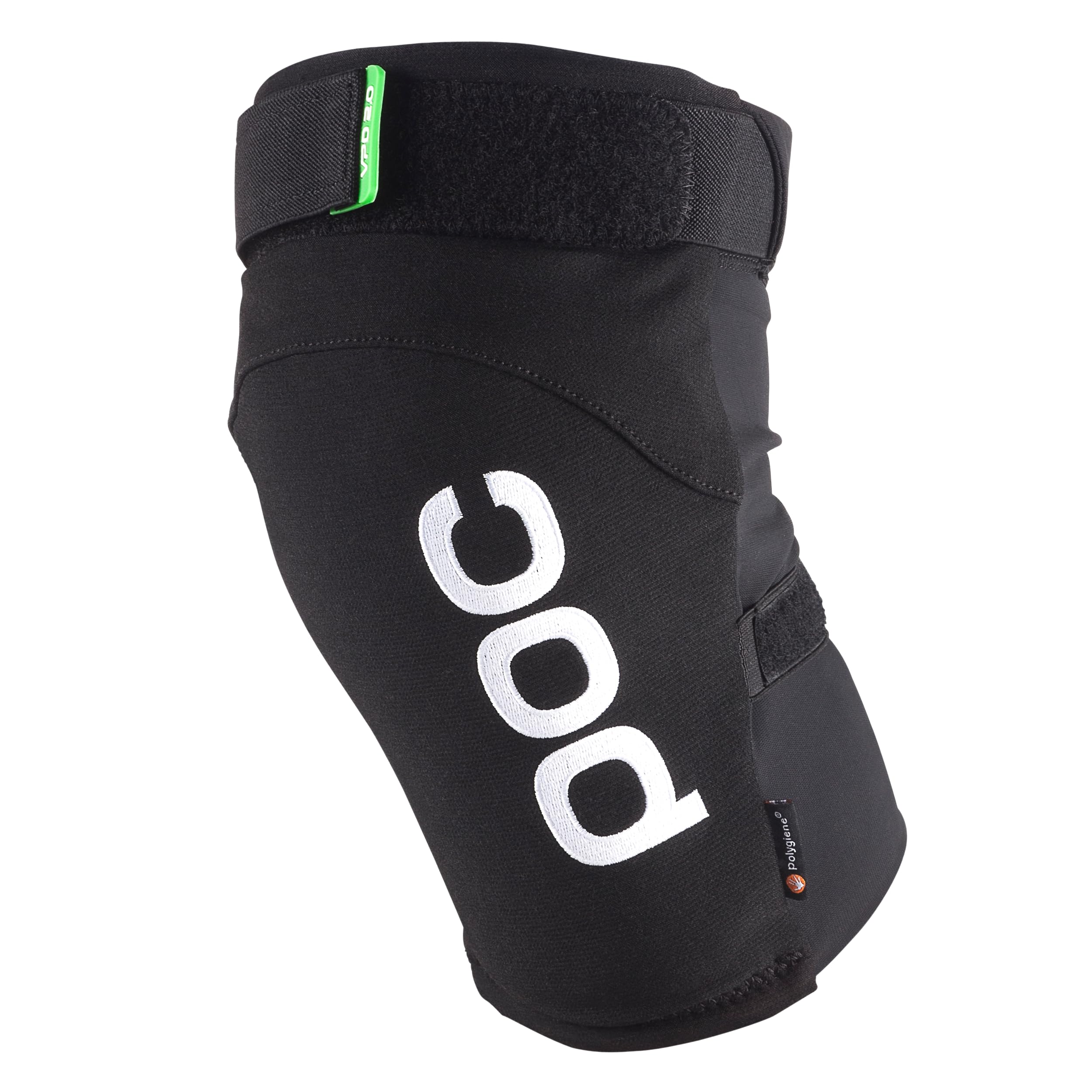
Bulk is the first thing you notice. At 1.45 pounds the VPD 2.0 is the heaviest pad in this group, it stands proud of the knee, and it takes up real room in a pack. None of that is an accident.

What the mass buys is coverage and confidence. The padding is thicker than the VPD Air's and wraps further around the joint, and the fit is a firm, sealed hold rather than a stretch sleeve. On a fast, rocky descent that is the difference between thinking about your knees and not.

Warmth is the trade. Airflow is not this pad's strength, and on a slow, hot climb it runs warmer than anything else here; the same mass that keeps it planted is the mass that holds heat. Riders who only pull pads on at the top will not care. Riders who climb in them all day will.

We take these to the park and to steep, chunky descents, and we leave them home for anything with a long climb in the middle. That is the honest split, and it is why this is a second pair rather than the only one in the bag.

Bottom line: The pick for lift-served days and steep, chunky descents: maximum wrap around the knee, a firm hold, and a weight you notice on the climb.

8

G-Form Pro-Rugged 2

G-Form Pro-Rugged 2

Low-bulk trail rides

Our Score 8.8/10
Check Price

Worth Noting

  • Pull-on design is slow to remove mid-ride
  • Premium price for a knee-only pad
Weight
5.6 oz
Closure
Pull on
Padding
SmartFlex
Outer Layer
DuraTx
Read the full review

SmartFlex is the trick here. Off the knee the pad is soft enough to fold into a jersey pocket; on impact it stiffens. That behavior is why the Pro-Rugged 2 feels like a compression sleeve rather than a guard, and why it moves with the joint instead of sitting on top of it.

The build backs it up. A DuraTx outer layer shrugs off water and abrasion, the back is ventilated mesh, and an adjustable strap takes up slack at the top. At 5.6 ounces it is among the lightest pads here, which matters more than it sounds when you are turning a gear uphill.

Retention held up over a long ride: the sleeve stayed where we put it and did not rotate on the descents, which is the failure that makes a thin pad useless. The compression fit is also what keeps it there, so give it a proper pull into place rather than easing it on.

For riders who want the least bulk possible without giving up a real impact material, this is the one we point to. It is at its best on long, hot rides where a heavier pad would end up in the pack by lunchtime.

Bottom line: For riders who want the least bulk with a genuine impact material: a soft-feeling sleeve that stiffens on impact and stays put on long, hot rides.

How We Tested Mountain Bike Knee and Shin Pads

We started with a spreadsheet: every knee-and-shin set we could find that carried a CE 1621 rating or clearly named its impact material, sorted by coverage type, price, and whether the size run went past XL. From that list we bought 12 sets — knee-only sleeves, knee-and-shin combos, and full hard-shell — and rode them for seven months. Each one went on the same bike, on the same handful of local trails, so the comparisons stayed honest.

Most of the testing happened where pads actually get used: short after-work laps with real climbing, a couple of lift-assisted days, and one miserable hike-a-bike where every strap got tested. We pedaled seated in them on purpose to see which ones bunched behind the knee, then crouched to a 90-degree bend and photographed the gap over the kneecap. On off-camber sections we noted whether the shell stayed centered over the knee or drifted to one side, and we marked strap positions with a Sharpie before a ride to see how far each pad crept.

Durability came down to laundry: every set went through repeated cold machine washes, and we checked straps for stretch, stitching for fraying, and foam for packing out. We weighed each pad on a kitchen scale to see whether the lightweight claims held up against the spec sheet. Warmth got logged too — an 85-degree day tells you fast which liners breathe and which leave the back of your knee swampy — and we asked whether the pricier sets actually delivered more protection and better stay-put, or just nicer packaging.

How to Choose Mountain Bike Knee and Shin Pads

Knee-Only or Knee-and-Shin

If you climb to your descents, start with a knee-only pad. It is lighter and cooler, and there is nothing below the knee to catch on the saddle or bunch up as you pedal. A knee-and-shin guard adds a panel over the top of the shin bone, which is worth having on rocky trails where pedal strikes and thrown stones find that spot; the Kali Strike is the one to look at here.

The trade is weight and warmth, and the extra panel is noticeable on a long climb. Match the coverage to the terrain you actually ride most weekends, not the terrain in the videos you watched before buying.

Match the Padding to the Crash You Expect

There are two kinds of pad in this group. D3O, VPD and SmartFlex are rate-sensitive materials: soft in the hand, stiffer under a sudden impact. EVA foam is a simpler cushioning layer. That difference tells you what a pad is for. An EVA pad handles scrapes, root strikes and slow falls; a rate-sensitive insert is what you want under a fast hit on rock.

Thickness is the wrong thing to shop by. A CE-certified insert is the only protection claim here that you can check against a published standard, so if protection is the priority, look for certification rather than for the beefiest-looking pad on the page.

Sizing Is Where These Pads Go Wrong

Knee pad sizes have nothing to do with your trouser size, and most of the pads here run small. Measure the leg instead of guessing: thigh circumference a few inches above the knee, calf circumference below it, then use the larger of the two to choose a size.

If you land between sizes, go up. A sleeve that is too tight rolls down the leg instead of gripping it, which is worse than a little slack. Strap-based designs are the more forgiving option because you can slacken them, which is why the Demon Hyper X suits riders who sit on a size boundary.

How the Pad Stays On

Retention comes from two things: a silicone or neoprene band that grips, and a strap that adjusts tension. Bands hold well but leave no room to tune the fit; straps are adjustable but easy to overtighten.

A strap cinched hard enough to cut circulation will make your leg ache long before the descent ends, and it will not actually stop the pad rotating. Set the tension so the sleeve cannot twist around the knee, then leave it alone for the rest of the ride.

Check the Seam Where the Pad Meets the Sleeve

The wear point on every pad here is the junction between fabric sleeve and protective pad, and it is the first place a guard fails. Check that stitching when the pad arrives, before you trust it on a mountain.

After a hard season, look at the same spot again. A sleeve separating from the pad is not something you can repair at the trailhead, and it is the most common way a pad that still looks fine quietly stops protecting you.

Frequently Asked Questions

Final Verdict

The Fox Racing Launch D3O is the pair we point most riders to. A certified insert, a mesh back that vents on the climb and an adjuster that lets you set the fit above the calf make it the safest default for trail and enduro riding.

Go lighter with the POC Joint VPD Air if you climb more than you descend. Go to the Kali Strike if your local trails are rocky enough that the top of your shin keeps finding stone.