Cycling Apparel

Best Mountain Bike Elbow Pads of 2026

Elbow pads have a thankless job. Thick enough to matter on a rock garden, and they turn into sweaty, sliding tubes by the second climb; light enough to forget, and they're the ones that spin out of place when you finally need them. That tradeoff is the whole game. The right pair won't make you invincible — it just keeps a routine washout from costing you six weeks off the bike.

Sizing burns more riders than crashes do. Arm circumference charts are a rough guide at best, and a pad that fits at the kitchen table can ride up once you're pedaling. I've spent seven months in 13 pairs, from dusty trail-center laps to lift-served park days, and the ones that stayed put had a grippy inner band, a strap I could snug one-handed, and padding that covered the point of the elbow without bunching in the crook. Foam compresses for good after a hard hit, so treat pads as a wear item; the picks below are worth strapping on.

1

Leatt 3DF 6.0

Top Pick
Leatt 3DF 6.0

Aggressive trail riding

Our Score 9.4/10
Check Price

Worth Noting

  • Costs more than the other certified pad here
Weight
14.1 oz
Closure
Slip-on
Elbow Slider
Co-molded hard shell
Impact Protection
CE-certified 3DF AirFit foam
Read the full review

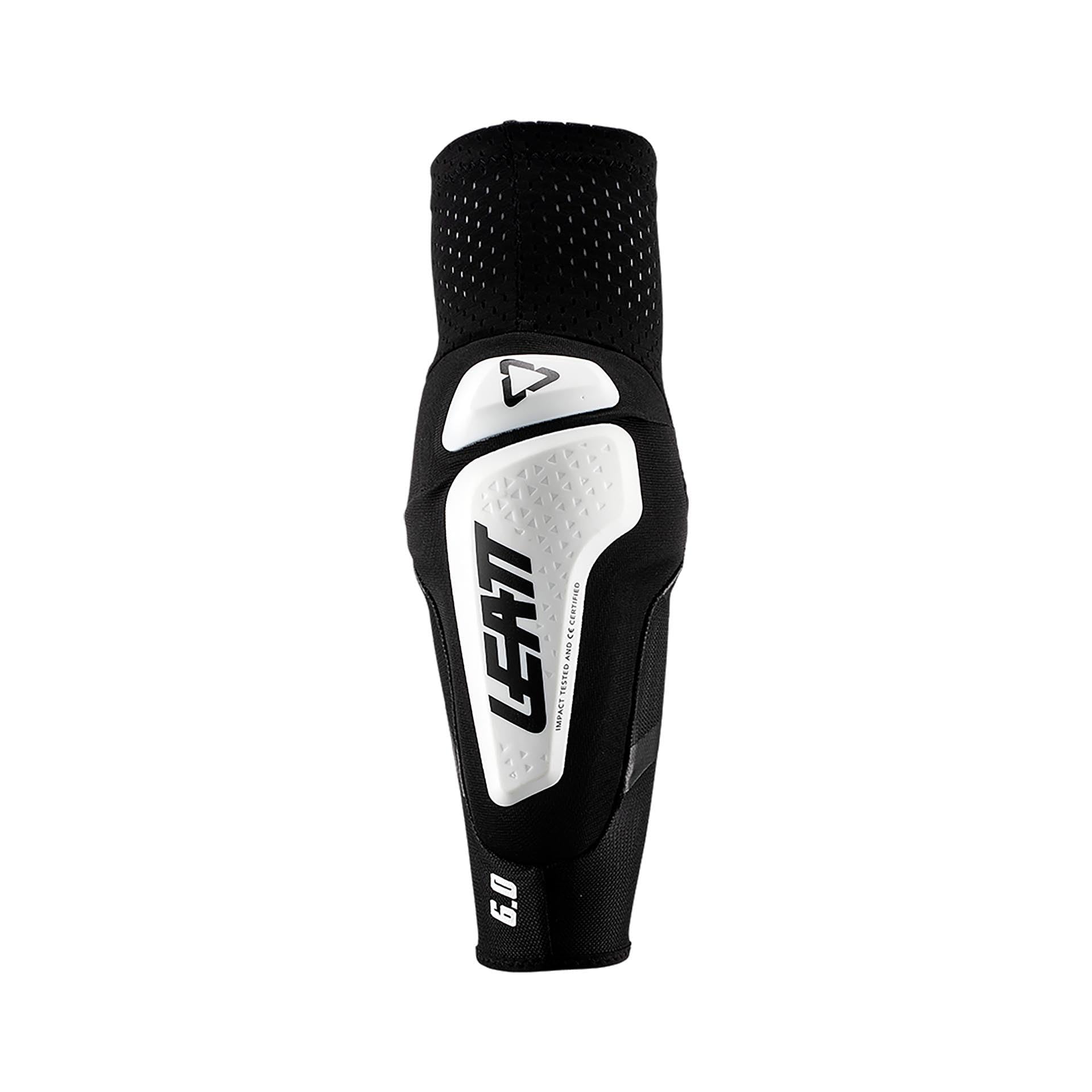
Fit is what decides whether an elbow pad earns its place on your arm, and the 3DF 6.0 is the pad here that disappears once it is on. It sits over the point of the elbow and stays there through rough ground, and you can straighten your arm without the sleeve tugging back — a small thing that decides whether you keep wearing it on a long descent. We noticed it most in the second hour, which is exactly when the lighter sleeves started needing a shove back into place.

The build explains some of it. 3DF AirFit is a ventilated soft foam with co-molded hard shell sliders over the point of the elbow, and the guard is CE certified for impact protection, so you get something that moves with you plus a hard surface where a rock is most likely to catch. The slip-on sleeve is the other half of the fit story: nothing to cinch means nothing to loosen mid-ride, which is a promise a stretchy elastic strap cannot make.

That also means the size you order is the size you ride, so measure your bicep rather than guessing from a jersey size. The soft cover is the part that gives out first in a hard crash; the foam underneath is what does the protecting, and it outlasts the fabric around it. Order by measurement and this is the pad you stop thinking about.

Bottom line: Spend the extra here if you want certified armor and a pad that stays on your elbow without a strap to fiddle with.
2

Fox Launch Pro D3O

Fox Launch Pro D3O

All-round trail riding

Our Score 9.2/10
Check Price

Worth Noting

Fabric
Perforated Ariaprene neoprene
Weight
10.6 oz
Closure
Adjustable hook-and-loop
Impact Protection
CE-certified D3O insert
Read the full review

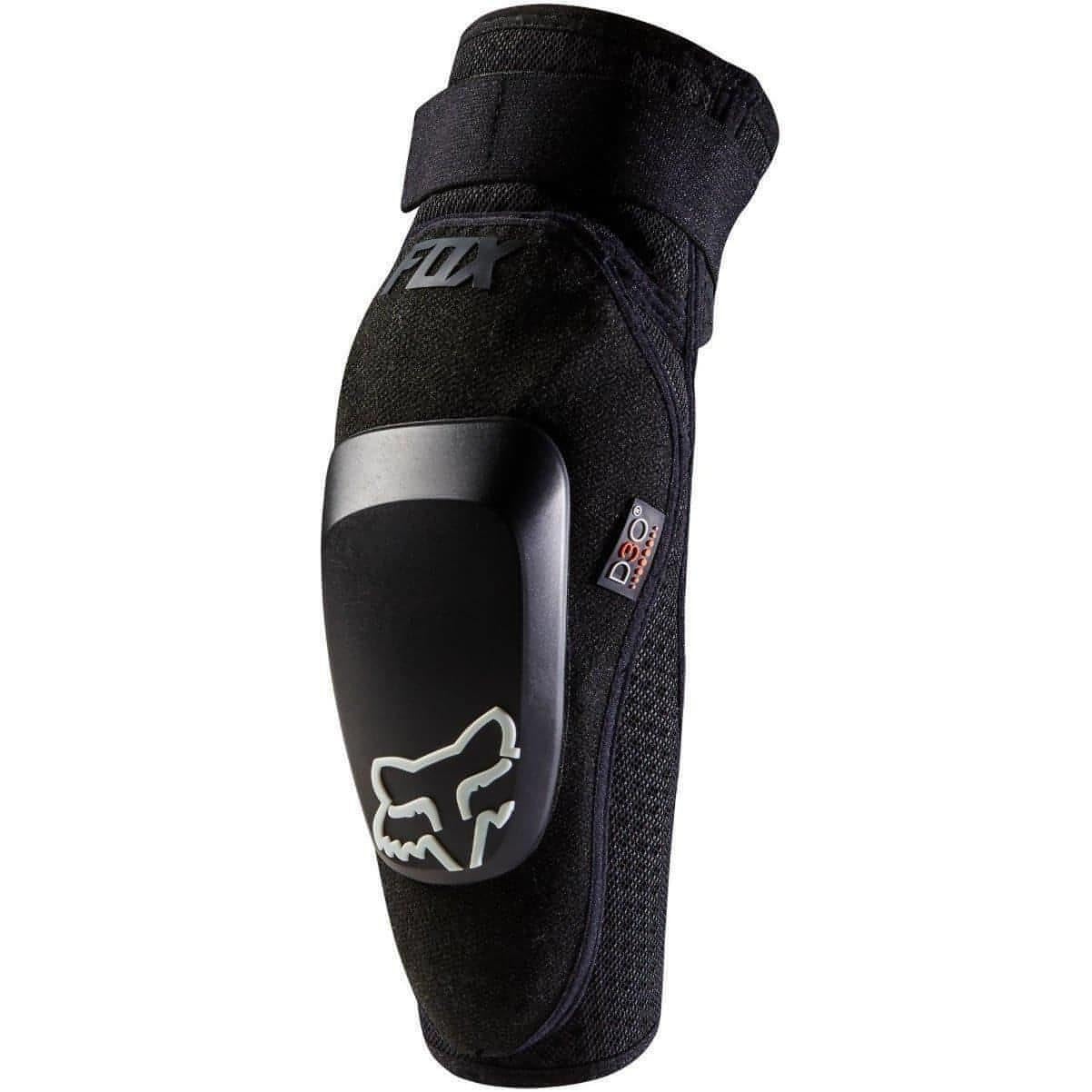
A CE-certified D3O insert is the reason this pad made the list. D3O stays soft and flexible while you ride, then firms up on impact, and Fox builds it into perforated Ariaprene panels cut to follow the arm instead of a straight tube. The effect on the bike is a guard that bends through the pedal stroke and stiffens when it meets the ground.

The adjustable strap earns its keep an hour in, when the neoprene has warmed and relaxed: you can pull the last of the slack out mid-ride, which is the exact moment a plain slip-on sleeve starts to wander. Set it snug at the top of a descent and it holds through chatter that would send a loose sleeve down toward your wrist.

Sizing is the catch. The fit through the biceps runs snug, and on a long ride that tightness is something you feel rather than something you forget. Order a size up if your arms are bigger than average and use the strap to bring it back in. Do that and the perforated fabric does its job on a hot climb — this is the certified pad here we are happiest pedaling in.

Bottom line: The pad for riders who want certified D3O and a strap they can adjust mid-ride; size up if your arms run big.

3

POC Joint VPD 2.0

POC Joint VPD 2.0

Lift-served downhill

Our Score 9.2/10
Check Price

Worth Noting

  • One of the heavier pads at 14.4 ounces
Weight
14.4 oz
Quantity
Pair
Retention
Velcro straps at both ends
Impact Protection
VPD 2.0
Read the full review

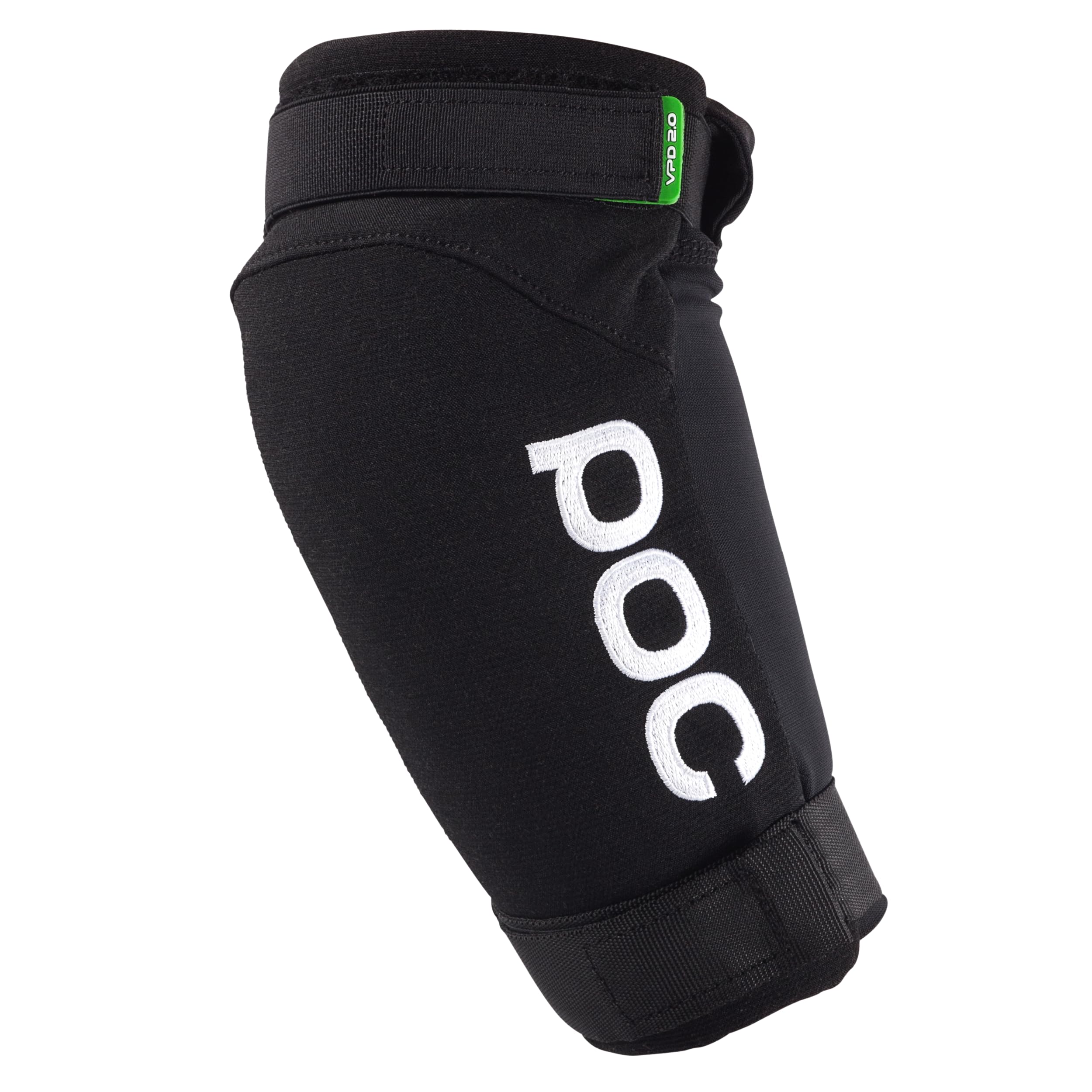
Lift-served days ask a different question of an elbow pad: not whether you can pedal in it, but whether it stays on when you go down at speed on rock. The Joint VPD 2.0 is built for that. The VPD 2.0 protector is thick, ventilated and flexible while you ride, then stiffens on impact, and it arrives as a pair with elasticated Velcro crash retention straps at each end.

The protection side is where this pad earns its money. VPD follows the shape of your elbow instead of sitting on top of it like a plate, and the reinforced stretch fabric held together in the slides it took. Of everything here, it is the pad we worry about least in a rock garden.

Retention is the honest weak spot. The upper strap is stretchy, so it runs out of adjustment sooner than a woven strap would, and with sweat in the mix the pad can work its way down toward the wrist on a long rough descent. It bites hardest if your bicep does not fill the opening. Set both straps before you drop in rather than at the top of the trail.

What settles it for us is how little the pad asks of you on the way down: set the straps, ride, and the armor is where you need it when the trail turns nasty. Two come in the box, which makes the outlay easier to take than a single pad at the same money. Check your bicep measurement against POC's chart first — this is not a pad where a size up gets rescued by the straps.

Bottom line: Buy it for lift-served days, when the thickest armor and a strap at each end beat a lighter pad.

4

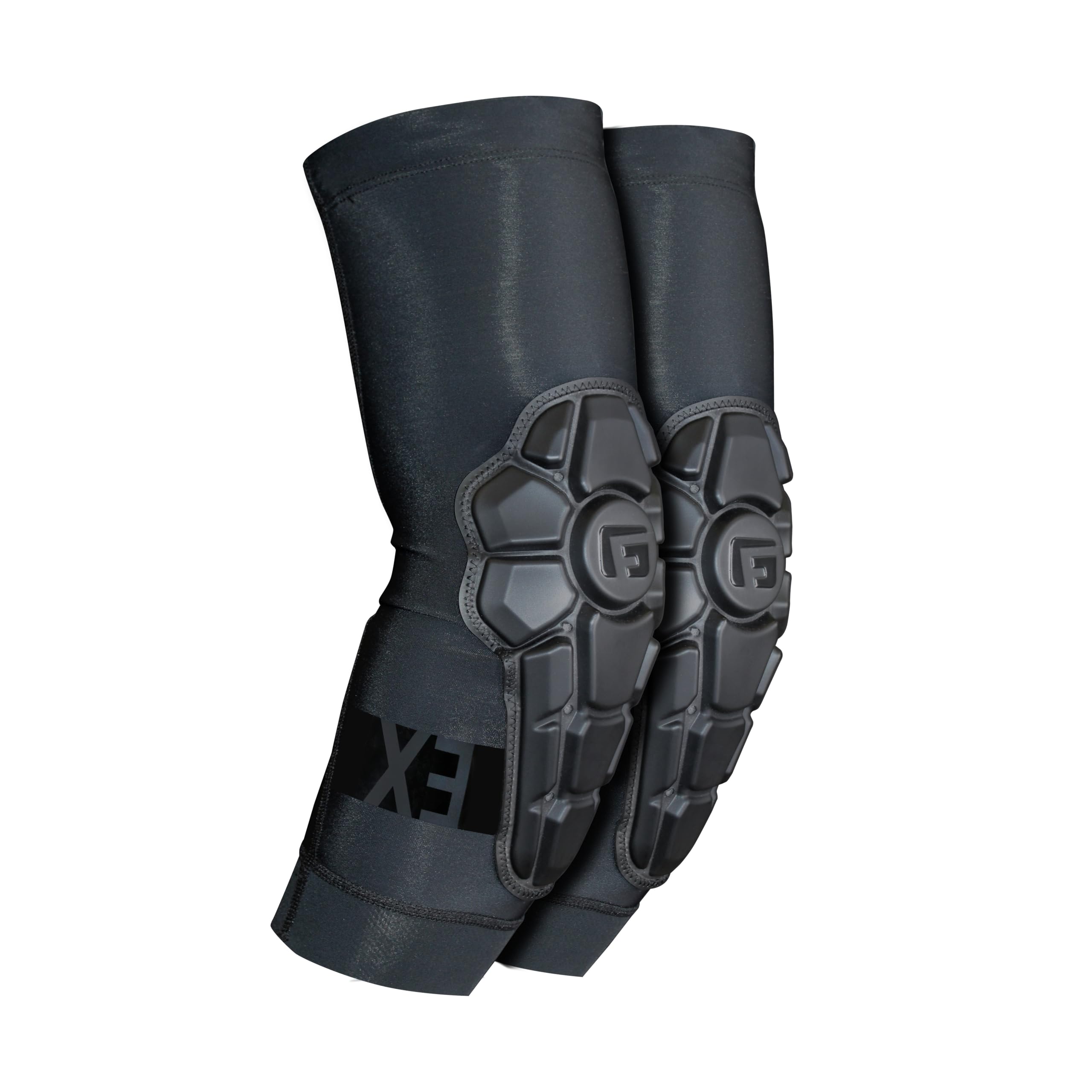
G-Form Pro-X3

G-Form Pro-X3

Hot-weather trail days

Our Score 9.0/10
Check Price

Worth Noting

  • Lighter padding than a shelled guard
Fabric
UPF 50+ moisture-wicking
Weight
7.2 oz
Retention
Silicone gripper
Impact Protection
Body-mapped SmartFlex pads
Read the full review

At 7.2 ounces, the Pro-X3 is the lightest pad here, and that number is the whole pitch: on a hot climb you are aware of every extra gram hanging off your arm. The sleeve is UPF 50+ moisture-wicking fabric with body-mapped SmartFlex pads that stay flexible while you ride and harden on impact, plus a silicone gripper at the top edge to stop the whole thing creeping down.

We like it for what it does not do. It does not bulk up under a jersey or fight your elbow through a pedal stroke, so it is the pad that actually gets worn on a midweek trail ride rather than the one that stays in the car. It also sits in the budget tier of this group, which makes it a low-risk first pair if you are still working out how much protection you want.

Order it a size up. The Pro-X3 runs small, and the sleeve does not have much give once it is on, so measure your bicep instead of trusting the size you wear in a jersey. The gripper is what keeps a light sleeve in place, and it bites best against skin or a thin base layer. On dirt, roots, and the occasional rock at trail speed, this is plenty of pad.

Bottom line: A light, breathable first pair for trail riders who want protection they will forget about on the climb.

5

POC Joint VPD Air

POC Joint VPD Air

Long pedal days

Our Score 9.0/10
Check Price

Worth Noting

  • Light padding suits trail, not park days
Fit
Anti-slip neoprene, elastic strap
Quantity
Pair
Impact Protection
VPD Air padding
Read the full review

If your idea of elbow protection is something you pull on and forget until the moment you need it, the Joint VPD Air is that pad. VPD Air padding is slim enough to sit under a long-sleeve jersey, the fabric is reinforced stretch with anti-slip neoprene, and an elastic strap holds the sleeve in place. It ships as a pair.

You can wear this one for a whole pedal-heavy day without your arms cooking, and the slim cut means it does not fight a jersey — we found it the easiest of the slim pads to keep on from the trailhead to the car. Retention is the trade. The sleeve can slide down the arm on rough ground, and it is the least forgiving fit of the slim pads here.

So measure the bicep and the forearm before you order, and take the larger size if you land between two — an elastic strap can snug a sleeve, but it cannot add material that is not there. Get that right and it is a strong choice for trail riders who want protection without a shell on their arm.

Bottom line: A slim, comfortable pad for long trail days, provided you order the size the chart calls for.

6

Demon Hyper X D3O

Demon Hyper X D3O

Rowdy descents

Our Score 0.0/10
Check Price

Worth Noting

  • Heaviest pad here at 16 ounces
Weight
16 oz
Venting
Perforated neoprene, mesh panel
Abrasion Panel
Kevlar front shield
Impact Protection
D3O T5 foam
Read the full review

The first thing to know about the Hyper X is printed right on the listing: sizing runs small, and the advice is to size up. Take it seriously, because this is a tight neoprene sleeve and the D3O T5 foam inside it only does its job if the pad is sitting where it should. Start a size up and check the brand's chart rather than the label in your jersey.

What you get for the trouble is a pad near the top of this set for staying put. A woven elastic strap across the upper arm keeps it from riding down, and the Kevlar front shield takes the abrasion when you slide on rock or pavement instead of the fabric doing it. Perforated neoprene and a mesh panel at the inner elbow keep the sweat from pooling.

There is more material here than on any of the sleeves, and that is the trade for the grip and the shield. We think it is worth making if a lighter guard has rotated on you mid-crash and you would rather not repeat the experience. Confirm the size against the brand's own chart before you order.

Bottom line: The one to try if lighter pads keep rotating on your arm — just start a size up.

7

iXS Carve Evo+

iXS Carve Evo+

Bike park laps

Our Score 0.0/10
Check Price

Worth Noting

  • Sizing runs small even in the larger sizes
Shell
No hard shell
Weight
9.6 oz
Closure
Dual LoopLock
Impact Protection
Xmatter high-density foam
Read the full review

Two independent LoopLock closures, one above the elbow and one below, are the reason to look at the Carve Evo+. Each sets on its own, so you can cinch the top of the sleeve without over-compressing your forearm, and the Xmatter foam underneath is high density with no hard shell over it. At 9.6 ounces it is one of the lighter pads here.

Sizing is the hurdle. This one runs small, noticeably so, and the numbers on the listing will not get you there. Check the brand's own size chart before ordering and expect to go up at least one size; do that and the two closures have enough range to lock the pad down where you want it.

Get the size right and it is a comfortable, low-bulk pad for park laps and hot days. The shell-free design keeps it flexible when you are moving around on the bike, which is what you want for slower technical riding rather than high-speed rock. It is the one here we keep coming back to when we do not want a shell on our arm.

Bottom line: A light, shell-free pad with two closures to tune, best suited to riders who do not want a hard cap.

How We Tested Mountain Bike Elbow Pads

We started by pulling every pair we could find that listed a coverage rating, an impact certification, or a hard cap, then cut the field by price, size range, and whether replacement padding was sold separately — roughly 40 models went down to 13. Those 13 pairs spent seven months on real rides: dusty trail-center pedal loops, rocky descents where the elbow is the first thing to hit, one lift-served park weekend, wet roots, and a few evenings at the dirt jumps.

Fit got measured, not guessed. Each tester's upper arm and forearm were taped twice, and we swapped sizes between riders to see how the range held at the small and large ends. On the trail we checked where a pad sat at the top of a climb versus the bottom of a descent, since a pad that migrates two inches is a pad that leaves the point of the elbow exposed.

Ease of use came down to the tailgate test: pulling pads on over gloves, snugging straps one-handed, getting them off without help. Weight showed up on long climbs, where a bulky pair announced itself by the third switchback, and we noted which sleeves turned into sweat sponges and which dried out by the next lap. Every pair went through the wash as directed, then got checked for stretched elastic, frayed stitching, and foam that had lost its shape. After a season of rock strikes and scrub brush, we weighed price against how each pair held up; the ones that flattened don't appear below.

How to Choose Mountain Bike Elbow Pads

Start With Fit, Not Armor

An elbow pad only works while it is where you put it, so the closure system deserves more of your attention than the foam. A slip-on sleeve depends entirely on getting the size right; a strap, or two closures set independently, gives you a way to take up slack once the neoprene has warmed and stretched.

Measure your bicep a few inches above the elbow and your forearm below it, then use the brand's chart rather than your shirt size. If you land between sizes, go up — the pads here tend to fit tighter than expected, and a pad that pinches gets left at home.

Soft Foam, Hard Shell, and Certification

The soft foams — VPD, D3O, SmartFlex, Xmatter — stay flexible while you ride and firm up on impact, and that is what most trail riders want. A hard shell or slider adds a sacrificial surface for rock and pavement, which is why park and downhill riders favor it.

CE certification means the protector has been tested against an impact standard, and only some pads here state one. Match the pad to the worst surface you actually ride: dirt and roots ask for less than a rock garden at speed.

Weight, Heat, and the Riding You Do

Pads here run from 7.2 ounces to 16 ounces, and that difference shows on the climb rather than the descent. Perforated neoprene and mesh panels at the inner elbow vent heat, and a slim sleeve disappears under a long-sleeve jersey where a bulky one will not.

The trap is buying the maximum pad and then leaving it in the car on hot days. A lighter pad you actually wear beats a heavier one you do not, so be honest about how much of your riding is pedaling and how much is shuttling.

Closures That Keep Their Adjustment

Look at what the strap is made of. An elastic strap feels secure in the shop, but it relaxes with sweat and use and eventually runs out of travel, while a woven strap holds its setting far longer. Two closures, one above the elbow and one below, give you the most control over where the pad sits.

Then look at the outer surface. A Kevlar panel or a hard slider takes the abrasion so the fabric and stitching underneath survive a slide on rock, which is the difference between a pad that lasts a season and one that scuffs through.

Frequently Asked Questions

Final Verdict

The Leatt 3DF 6.0 is our pick for most trail and park riders: certified impact protection, hard sliders where rock hits, and the most dependable stay-put fit in this group.

The Fox Launch Pro D3O suits riders who want a strap to dial the fit in, the G-Form Pro-X3 is the budget call for hot climbs, and the POC Joint VPD 2.0 is the one for lift-served days, when a strap at each end of the sleeve is worth more than a few ounces.