Components

Best Road Bike Pedals of 2026

A road pedal has one job: hold your foot in the same place for three hours and let you pull up as hard as you push down. The difference between a pair that disappears underfoot and one that clicks, creeps, or wobbles tends to show up around mile sixty, not mile six. Weight gets argued about online; what riders actually keep is a pedal with smooth bearings and a tight cleat interface.

Over nine months my team and I rode 12 pairs through trainer intervals, wet spring rides, and more stoplights than I'd like to count. Two things surprised me: the lightest pedals were rarely the most durable, and the sharpest-looking ones weren't always the smoothest to clip into. I also started writing down what came in the box, since a missing set of cleats quietly changes the real value. The picks below are the ones we'd leave on our own bikes.

1

Shimano 105 PD-R7000

Top Pick
Shimano 105 PD-R7000

Performance value

Our Score 9.6/10
Check Price

Worth Noting

  • Pricier than our top pick
Axle
Sealed cartridge
Weight
9.35 oz
Tension
Adjustable
Cleat System
SPD-SL
Read the full review

The 105 PD-R7000 is the pair we point to when the RS500 starts to feel like extra baggage. Its listed 265 g gives up bulk without turning the pedal into a fragile race-only part; the carbon fiber body and stainless steel contact plate are there to take the wear at the cleat interface.

We rank it the best step-up here because the savings show up in two places: lower rotating weight and sealed cartridge axles that ask less maintenance. The extra-wide platform and adjustable tension keep the fit familiar if you are moving from another SPD-SL pedal. Set both sides evenly before the first ride; the left and right can feel different until the spring tension is balanced.

It uses the same three-bolt SPD-SL cleats, so shoes and replacement cleats carry over. That makes the 105 an easy upgrade rather than a switch of systems. The stainless steel plate is the practical detail we appreciate most: it takes the cleat rub, so the contact face stays consistent instead of wearing into the body.

Bottom line: We see the 105 PD-R7000 as the upgrade for riders who want less weight and lower maintenance without leaving SPD-SL.

2

Shimano PD-RS500

Shimano PD-RS500

First clipless pedals

Our Score 9.4/10
Check Price

Worth Noting

  • Heavier than our race-oriented picks
Weight
1.1 lb
Tension
Adjustable
Cleat System
SPD-SL / 3-bolt
Included Cleats
SM-SH11
Read the full review

The pair that makes clipless feel less like a rite of passage is the Shimano PD-RS500. Its release spring is deliberately light, the entry target is broad, and the box includes SM-SH11 cleats. We rank it first for most road riders because those details remove the two common first-week annoyances: hunting for the pedal and buying cleats separately. The extra-wide platform also gives you a clear place to push, so the pedal feels settled under a road shoe rather than like a tiny target.

Adjustable tension is what keeps the RS500 useful after the first month. Start light enough to unclip without a wrestle, then add tension once the motion is automatic; the same pedal can feel friendly on a weekend path ride and secure on a faster road spin. The three-bolt SPD-SL layout is simple to live with, and the wide body gives you a generous spot to push when you stand on a climb.

The one compatibility check is your shoe: SPD-SL needs a three-bolt road sole, and two-bolt gravel or mountain shoes need a different system. On a road bike, though, that is the only box the RS500 asks you to tick.

Bottom line: We recommend the PD-RS500 as the default road pedal for newer riders: light entry tension, included cleats, and a broad platform make clipless easy.

3

Look Keo Classic 3

Look Keo Classic 3

Keo shoe owners

Our Score 9.2/10
Check Price

Worth Noting

  • Composite body feels less substantial than metal-faced picks
Weight
12.3 oz
Platform
400 mm²
Cleat System
Look Keo
Included Cleats
Keo Grip grey
Read the full review

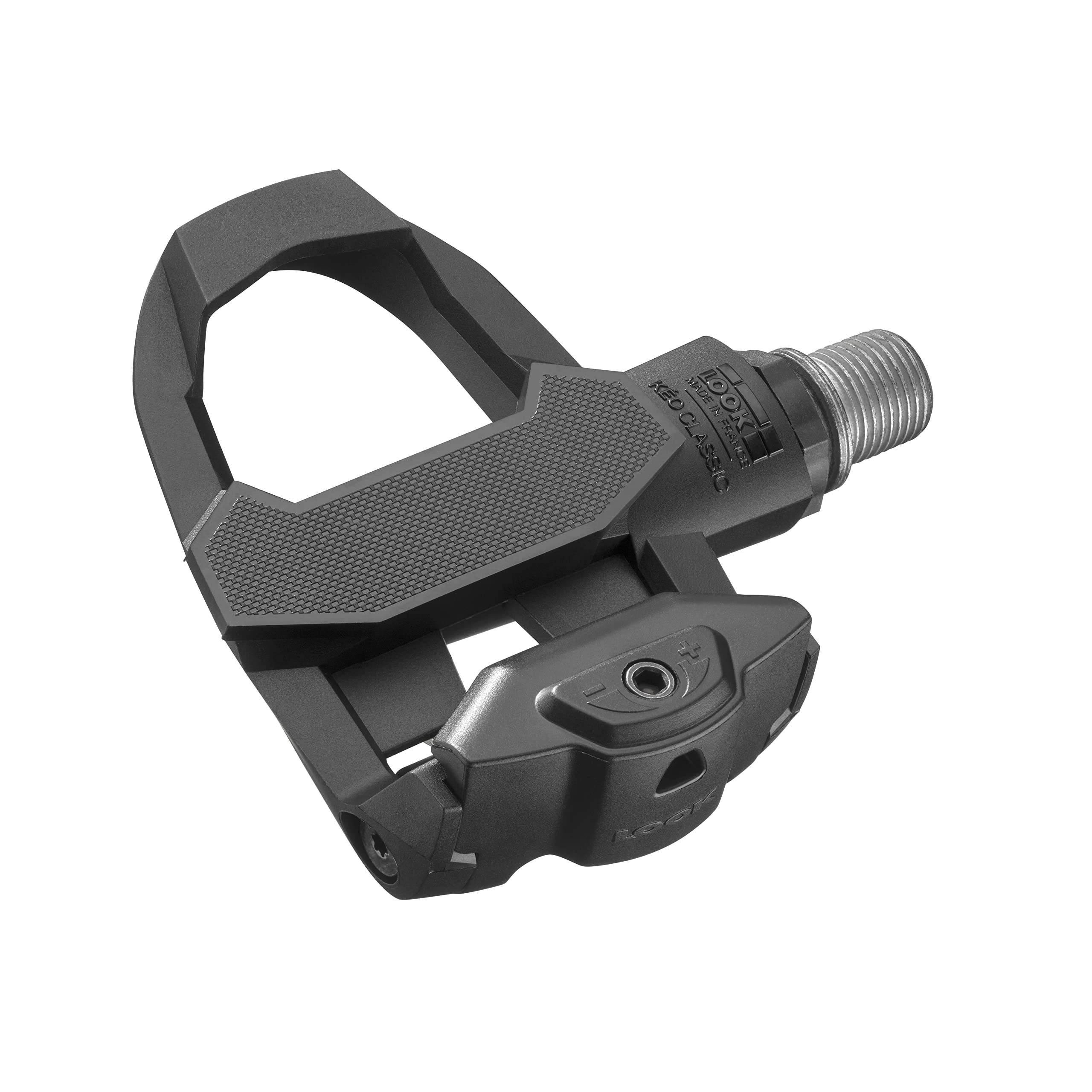
If your road shoes are drilled for Look Keo, the Keo Classic 3 is the least fussy way into the system here. We like that it includes grey Keo Grip cleats, and the chromoly spindle and 350 g listed weight keep it light without race-pedal pricing. Its 400 mm² contact area is smaller than the Keo 2 Max's 500 mm², but it still gives you a defined platform under a road shoe.

The tension range between 8 and 12 is what makes it beginner-friendly: start near the light end if you are new to clipless, then add tension if the cleat feels loose under a hard push. The release is predictable once set, and that matters more than a few grams when you are learning to unclip at a stop sign.

Installation is easier than a spec sheet suggests: the spindle takes an 8 mm Allen key, so you do not need a pedal wrench. That matters if you swap pedals between bikes or tighten them with the tools you already own. Keep an ear on the bearings after wet rides; a click that turns into a grind is the signal to service them.

Bottom line: If your shoes already take Look Keo cleats, we rate the Classic 3 as the low-cost route into clipless road pedals.

4

Look Keo 2 Max

Look Keo 2 Max

Wide-platform power

Our Score 9.2/10
Check Price

Worth Noting

  • Firmer clip-out than the beginner-focused picks
Weight
4.59 oz
Tension
8–12
Platform
500 mm²
Cleat System
Look Keo
Read the full review

The Keo 2 Max makes its case with contact area: 500 mm² of stainless steel under the cleat, a composite body, and a listed 130 g. That combination puts it at the wide, light end of this group, and the broad surface gives you a planted feel under hard efforts rather than a small target that disappears underfoot.

We were surprised by how much the extra width changes the character of the pedal. The Keo 2 Max feels more like a platform you push against than the Classic 3, and the 8–12 tension range gives you room to tune release. Under a hard effort, the wider surface gives your foot more to push against, which is the whole point of this design.

The chromoly+ spindle and stainless steel surface are the durability story, and they suit a pedal that sees hard training miles. A metal contact face is the detail we appreciate in wet weather: it gives the cleat a consistent surface to push against, so the pedal does not feel different after a gritty ride.

Bottom line: The Keo 2 Max is our pick for riders who want a wide, light platform and do not need the easiest possible release.

How We Tested Road Pedals: Bearings, Cleats, and Nine Months of Road Time

We began by gathering every road pedal we could reasonably recommend and cutting the list by cleat system, spindle material, stack height, and whether the bearings could be serviced at home rather than sent back to a warehouse. That left 12 pairs, from composite-bodied models to carbon-bodied ones. Each pair went onto a bike and stayed there for at least six weeks, and several rotated between two bikes so we could feel the difference a swap makes.

Testing happened where pedals actually live: trainer intervals in the garage before work, long weekend rides on chip-seal roads, a rainy spring that turned every ride into a grit test, and the stop-and-go of a city commute. I weighed each pair on a kitchen scale with and without cleats, then clipped in and out dozens of times per ride to see whether engagement stayed crisp or went vague. On slow, hard climbs I watched for the platform rocking side to side under load; in sprints I listened for creaks.

Every couple of months I pulled the spindles, checked for play by hand, and re-greased the ones that allowed it. I noted scuffed bodies and chewed cleat plates, because how a pedal wears after a season says more about material quality than any spec sheet. We also recorded what shipped in the box, from cleats and bolts to printed torque values, and whether the tension screw could be turned with a key you'd actually carry.

How to Choose Road Bike Pedals

Match the Cleat System Before Anything Else

Road pedals are not one universal standard. Shimano's SPD-SL and Look's Keo both use three-bolt road shoes, but their cleats are shaped differently and do not engage each other's pedals. If you already own road shoes, check the sole and buy within that system; if you are starting fresh, choose the system your local shop or favorite shoe brand supports. Our Shimano picks use SPD-SL, and both Looks use Keo.

Set Tension for Your Confidence, Then Revisit It

The spring tension changes how firmly you push to clip in and how hard you twist to release. Light is not only a beginner setting; it is a fit choice for knees and ankles that prefer less resistance. Start where you can unclip without panic, then add tension if the cleat rocks or releases during a hard effort. Set both sides the same. The Shimano RS500 and 105 both adjust, and the Look pedals offer an 8–12 range.

Platform Size Is About Support, Not Speed

A larger contact area spreads load across the sole, which can make a pedal feel more planted under a softer shoe or a big gear. It does not make a slow rider fast on its own. A 400 mm² platform is a sensible road baseline; 500 mm² is for riders who notice hot spots or want a broad target. Shoe stiffness and cleat position matter just as much, so fix those before chasing the widest pedal. Our widest pick is the Keo 2 Max.

Weight, Materials, and What Wears Out

Pedal weight matters most if you race uphill or carry the bike upstairs. Otherwise, a heavier pedal can be the more durable daily choice. Cleats wear faster than pedal bodies, so replacement cleats are a running cost worth checking before you commit to a system. Stainless contact plates resist cleat rub, while composite bodies are the lighter, less expensive route. Listen for bearing click or roughness and address it before play develops.

Thread and Installation Checks

All four pedals here use 9/16-inch threads, the common road crank standard. Check your crank if it is unusual, and check left and right before threading; cross-threading an aluminum crank is an expensive mistake. A pedal wrench is the usual tool, though some spindles take an 8 mm Allen key instead. Follow the crank maker's torque specification and recheck cleat bolts before the first few rides.

Frequently Asked Questions

Final Verdict

Most riders should start with the Shimano PD-RS500. It gives you the useful parts of clipless without a fussy setup: light release tension, a broad entry target, a wide platform, and SM-SH11 cleats in the box. That combination is why it tops this group, and it leaves room for good shoes and a proper fit.

If you want less weight and sealed cartridge axles for long road miles, the Shimano 105 is the step up. Riders already on Look Keo shoes can choose the Classic 3 for a light first set or the Keo 2 Max when a 500 mm² platform matters more than an easy release.