Bikes

Best Road Bikes of 2026

A road bike is a study in trade-offs: the light, eager feel that makes a climb fun can turn chip-seal roads into a jackhammer, while a more forgiving frame can dull the snap. The right one shouldn't force that choice. It should feel quick without punishing you, hold a line through a fast corner, and leave you with enough energy to want another ride tomorrow. A good road bike fixes that by matching fit, gearing, and component quality to the riding you actually do, not just the numbers or the paint job.

Over the past eight months, I've ridden seven road bikes on long weekend loops, short weekday training rides, and one memorably potholed stretch of backroad. We also noted how much assembly each required out of the box, whether shifting stayed crisp after a few weeks, and how the wheels held up under heavier riders. Weight matters, but the best value isn't the cheapest bike—it's the one that fits you, feels composed, and makes you want to ride. The picks below reflect that.

1

SAVADECK SR7.1 Carbon Road Bike

Top Pick
SAVADECK SR7.1 Carbon Road Bike

Fast paved riding

Our Score 9.2/10
Check Price

Worth Noting

  • Only one 56cm frame size listed
Frame
Carbon fiber
Drivetrain
Shimano 105 R7120, 24-speed
Brake System
Hydraulic disc
Listed Weight
19.4 lb
Read the full review

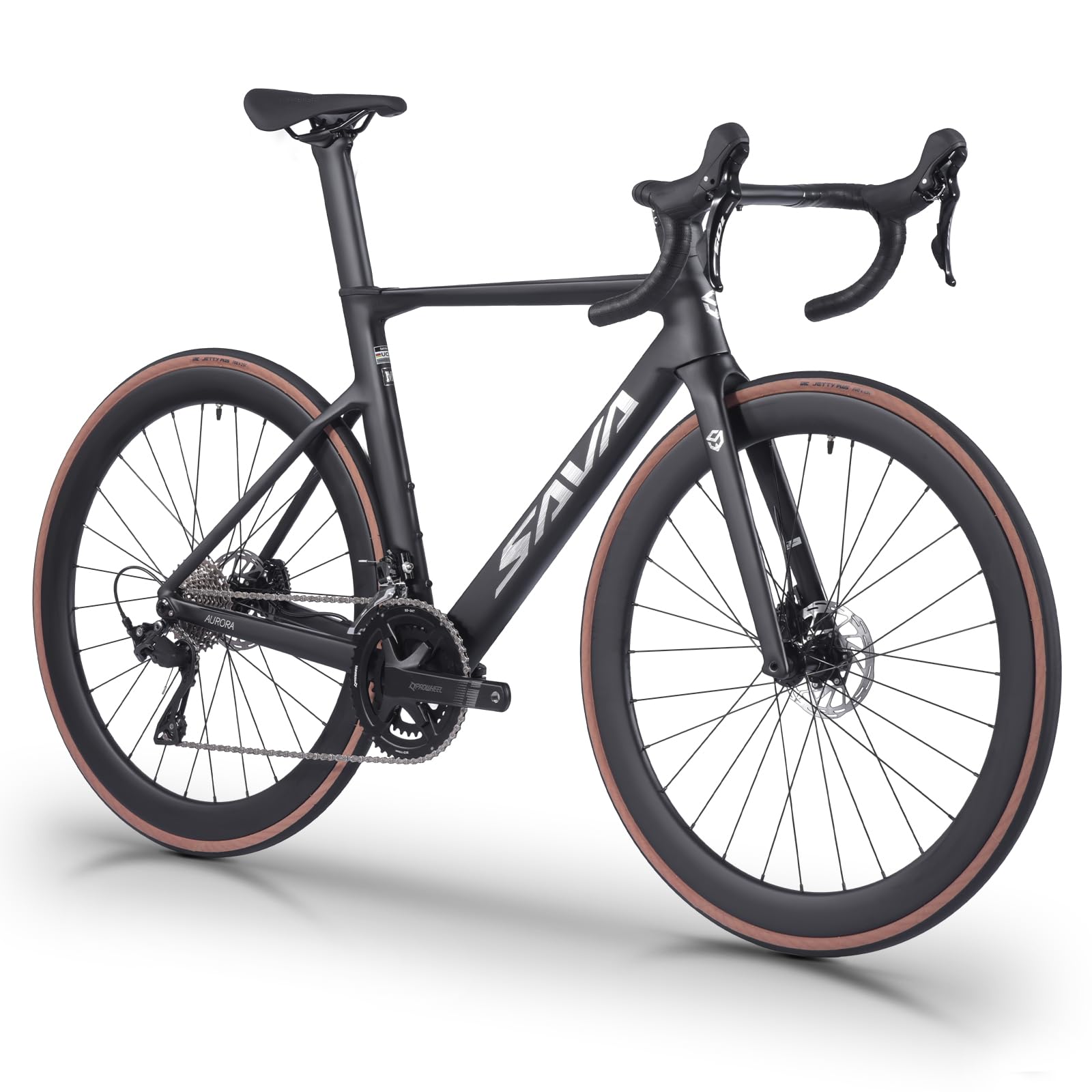
The Shimano 105 R7120 group is the reason this SAVADECK sits at the top of our list. You get 24 gears, hydraulic disc brakes, and a full carbon frame, fork, seatpost, and wheelset in a 19.4-pound package. We expected at least one corner to feel cut; instead the bike reads as a coherent build. The 105 shifters move with a light, positive click, and the hydraulic discs have the kind of controlled bite that makes wet descents less tense.

Weight is the other headline. At 19.4 pounds, the SR7.1 is the lightest bike in this group with a listed weight, and it feels eager when the road tilts up. The 700x25c tires are narrow and fast on smooth pavement, though they transmit more chatter than the 28c or 35c tires on the comfort-oriented picks. Full internal cable routing keeps the front end clean and protects the lines from grit, but it makes a handlebar swap fussier than it needs to be.

The riding position is aimed at speed rather than upright comfort. If you want to watch the scenery or commute in street clothes, the Phocus or Populus is the better shape. For fast training rides and spirited weekends, the geometry makes sense, and the stiff carbon frame keeps the effort going where it belongs.

The stock handlebar tape is the first thing we change; it is thinner and less grippy than the rest of the build deserves. The frame is otherwise ready for fast riding, but check the size chart carefully before you order.

Bottom line: If you want the fastest, most capable road bike here without superbike pricing, this is our pick: 105 hydraulic discs and a 19.4-pound carbon build.
2

SAVADECK Windwar3.0 Carbon Road Bike

SAVADECK Windwar3.0 Carbon Road Bike

Value carbon speed

Our Score 9.0/10
Check Price

Worth Noting

  • Single 56cm frame size
Frame
Carbon fiber
Brake Type
V-brake
Drivetrain
Shimano Sora, 18-speed
Listed Weight
19.6 lb
Read the full review

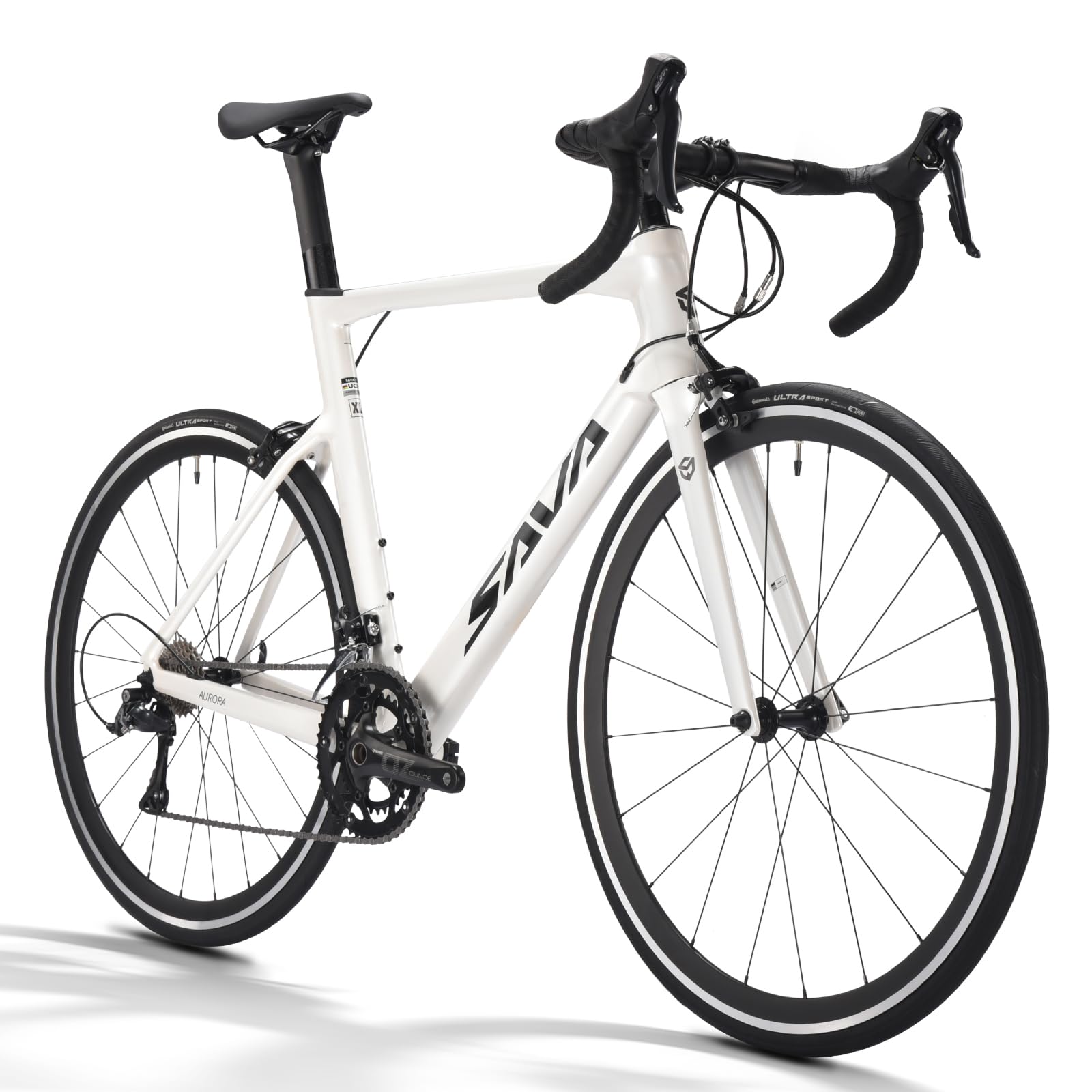
At 19.6 pounds, the Windwar3.0 gives up almost nothing to our top pick on the scale. The carbon frame, fork, and seat tube keep the ride light, and the 700x25c tires roll quickly once you are up to speed. This is the bike that makes carbon feel attainable rather than aspirational.

We recommend it as the value carbon choice. The Shimano Sora 18-speed drivetrain shifts cleanly through the cassette, with a slightly heavier lever feel than the 105 group on the SR7.1. The V-brakes are the real fork in the road: simple, light, and easy to maintain, but they do not have the wet-weather bite of discs. On dry pavement, we did not miss the extra stopping power.

Assembly is mostly done when the box arrives, and the final steps are within reach of a patient home mechanic. The seat post and front wheel are the fussy parts, and the included manual is not much help; a good assembly video is worth the time. Once set up, the bike tracks well and feels more expensive than its parts list suggests.

The pearl white finish is the rare paint job that looks better in person. If you want disc brakes or a wider size range, look at the Phocus or the SR7.1. For dry-road speed on a carbon frame, this is the value move.

Bottom line: The smartest way into carbon we found: it's light, quick, and sensibly geared, with a fixed 56cm frame that won't suit every rider.

3

Tommaso Forcella Aluminum Road Bike

Tommaso Forcella Aluminum Road Bike

Everyday road riding

Our Score 8.8/10
Check Price

Worth Noting

Fork
Carbon
Frame
Aluminum
Drivetrain
Shimano Claris, 24-speed
Read the full review

The Forcella is the Tommaso we recommend to someone who rides a few times a week and wants a simple aluminum road bike with a carbon fork. The matte black paint looks good, the frame has a classic road shape, and the bike arrives mostly assembled with the brakes and shifters close to ready.

Shimano Claris handles the shifting, and the 24-speed spread gives you a wide range for rolling terrain. The ride is lively rather than plush; the aluminum frame transmits more road texture than the carbon bikes, while the carbon fork keeps the front end from feeling harsh. We found the handling predictable and the position comfortable enough for longer fitness rides.

We recommend the Forcella as a fair midrange option, not the value leader. The Monza's Tiagra build is the smoother-shifting choice in the same price neighborhood, and the SAVADECK Windwar3.0 is the lighter carbon alternative. The Forcella makes sense if you want a simple aluminum bike from a brand with a long road-bike history and you prefer the matte finish.

The bike ships without assembly instructions in some boxes, so plan to use a shop or a reliable guide. The stock saddle is basic, and the handlebar tape is not the equal of the frame. Those are small things, but they add to the setup cost.

Bottom line: For riders who want a simple aluminum road bike for weekly fitness rides, the Forcella's Claris shifting and carbon fork make it a fair midrange choice.

4

Schwinn Phocus 1.6 Disc Road Bike

Schwinn Phocus 1.6 Disc Road Bike

First road bike

Our Score 8.4/10
Check Price

Worth Noting

  • Heaviest listed build here at 31 pounds
Brakes
Disc
Warranty
Limited lifetime
Drivetrain
16-speed, Shimano derailleurs
Frame And Fork
Aluminum frame, carbon fork
Read the full review

If you are buying your first road bike and want to keep room in the budget for a helmet, lights, and a shop check, the Phocus 1.6 is the one we point to. The aluminum frame and carbon fork make a stable, planted bike, and the disc brakes are a genuine advantage over the rim-brake picks when the pavement is wet. It is not a race bike, but it does not feel nervous either.

The 16-speed drivetrain uses Shimano derailleurs and an integrated Microshift shifter-brake lever. We found the gearing covers rolling terrain well, with a low enough gear for short climbs and enough top end for fast flats. The jumps between gears are wider than on the 18- and 24-speed bikes here, so a steady cadence takes a little more attention. The disc brakes are the bigger win: they slow with less lever effort and stay consistent in weather that makes caliper brakes feel vague.

Schwinn lists the frame to fit riders from 5'4" to 6'2", which is one of the widest ranges in this group. That makes it an easy recommendation for a household bike or a rider who is between sizes. Assembly is straightforward, though the derailleurs needed a small tweak after the first few rides as the cables settled. The lifetime frame warranty is a meaningful backstop for a first-time buyer.

The Phocus is not the bike for a fast group ride or a hilly century. The stable front end favors steady miles over race pace, and the disc brakes and wide fit range are what keep it in our top tier. For flat fitness rides, commuting, and learning to use drop bars, it is the sensible choice.

Bottom line: For a first serious road bike, we point new riders here: disc brakes, a stable aluminum build, and a lifetime frame warranty.

5

Tommaso Monza Aluminum Road Bike

Tommaso Monza Aluminum Road Bike

Comfortable aluminum rides

Our Score 8.4/10
Check Price

Worth Noting

Fork
Carbon
Frame
6061 aluminum
Drivetrain
Shimano Tiagra
Read the full review

The Monza is the bike we reach for when the carbon picks feel like more bike than the ride needs. Tommaso pairs a 6061 aluminum frame with a carbon fork, and the result is a ride that feels composed rather than harsh. It is not as feathery as the SAVADECKs, but it has a planted quality that suits long, steady miles.

Shimano Tiagra is the star here. The shifting is smooth and light, with none of the graunch that can creep into cheaper groupsets after a few wet rides. The carbon fork takes the edge off chip-seal and small potholes, and the frame has enough stiffness to feel efficient without becoming punishing. We also like the matte black finish, which looks sharp without shouting.

We recommend the Monza to riders who want an aluminum road bike with dependable shifting and a comfortable ride, and who do not want to pay the carbon premium. It is the sensible middle ground in this group: more refined than the budget HILAND, less expensive than the carbon SAVADECKs, and easier to live with than a race-focused build.

The Monza comes in several frame sizes, and the large is the one to check if you are around 6'2". The stock saddle is comfortable enough for long rides, though saddles are personal and the first upgrade for many riders. The frame and fork are the parts that make it worth buying.

Bottom line: We recommend the Monza to riders who want crisp Tiagra shifting and a comfortable aluminum ride without paying carbon money.

6

HILAND Alliance Road Bike

HILAND Alliance Road Bike

Tight budgets

Our Score 8.4/10
Check Price

Worth Noting

  • Component durability is less consistent than on pricier picks
Frame
Aluminum
Brakes
Dual caliper
Drivetrain
14-speed
Frame Sizes
S, M, L
Read the full review

The HILAND Alliance is the bike we recommend when the budget is firm and you still want drop bars. It is a proper road bike shape, not a hybrid with curled bars, and the aluminum frame keeps the price within reach. The 14-speed drivetrain and dual caliper brakes are simple equipment, and that simplicity is the point.

We think it is a real road bike for paved riding. The three frame sizes are a real advantage: S covers 5'3" to 5'6", M covers 5'6" to 6', and L covers 6' to 6'4". That is a wider spread than most bikes here, and it means a rider who falls between sizes has a better chance of finding a fit. The bike arrives 85% assembled, and the final steps are simple.

The 14-speed drivetrain is the main compromise. It shifts through the range, but the steps are wider than on the 18- and 24-speed bikes, and steep climbs will find the limit of the easiest gear. The dual caliper brakes are fine in dry weather; in rain, they need more lever pressure and planning.

For a rider who wants to try road cycling without a large outlay, the Alliance is an easy yes. If you plan to ride in wet weather, race, or keep the bike for years, the disc brakes and better groupsets on the Phocus and Monza are worth the step up.

Bottom line: A remarkably low-cost way onto a drop-bar road bike, and our budget pick, as long as you expect a careful first tune and watch component wear.

7

Populus 700C Step-Through Road Bike

Populus 700C Step-Through Road Bike

Casual paved paths

Our Score 8.4/10
Check Price

Worth Noting

  • Seven-speed gearing runs out on steep climbs
  • Linear-pull brakes are less confident in rain
Frame
6061 aluminum
Drivetrain
7-speed
Fits Riders
5'0"–5'9"
Maximum Weight
300 lb
Read the full review

The Populus is the odd one out here: a step-through aluminum frame, seven speeds, and 700x35c tires. It is a road bike in the sense that it is built for pavement, not a drop-bar race machine. The low frame makes mounting easy, and the upright position is friendly for errands, path rides, and riders who do not want to swing a leg over a top tube.

We recommend it for a casual rider who wants a comfortable, stable bike for paved paths and short commutes. The 35c tires are the best part: they smooth rough pavement and handle a little gravel dust without feeling sluggish. The 300-pound maximum weight is one of the highest here, and the S frame fits riders from 5'0" to 5'9".

The seven-speed drivetrain keeps shifting simple, with a rear derailleur and trigger shifter. The linear-pull brakes are easy to adjust and have a light lever feel. The bike arrives 85% assembled, and the kickstand is included, which is a small thing that makes errands easier.

For a rider who wants to step through rather than swing a leg over, the Populus is the easy choice. The kickstand and 35c tires make it a practical errand bike, and the low frame is the feature that sets it apart.

Bottom line: A comfortable, low-step road-style bike for paved paths and errands, not for fast group rides; we recommend it when easy mounting matters most.

8

Schwinn Volare 1300 Road Bike

Schwinn Volare 1300 Road Bike

Tall budget riders

Our Score 8.2/10
Check Price

Worth Noting

  • Trigger shifters feel less intuitive than drop-bar levers
Frame
Aluminum
Drivetrain
14-speed
Fits Riders
5'8"–6'2"
Listed Weight
29.8 lb
Read the full review

The Volare 1300 is a tall rider's budget bike. The 21-inch frame is sized for riders from 5'8" to 6'2", so if you are shorter, this is not the one. For that rider, the aluminum frame, 700c wheels, and 14-speed drivetrain make a traditional drop-bar starter package.

The 14-speed drivetrain is adequate for rolling pavement, and the 700x28c tires are a little wider than the 25c tires on the SAVADECKs, which takes some of the sting out of rough roads. The 29.8-pound build is not a climber's bike, but it feels planted on descents and stable in a straight line.

Schwinn's lifetime frame warranty is the strongest backstop here, and the brand is easy to find if you need service. The saddle is a weak point; the stock perch is shaped for short rides, and a replacement is the first upgrade we make. Delivery can be uneven, so a local shop purchase is worth considering.

We recommend the Volare for a taller rider who wants a simple, inexpensive road bike and values the Schwinn warranty. The HILAND gives more sizes for less, so the Volare makes the most sense when you can buy it through a shop and want a familiar brand behind the frame.

Bottom line: A traditional drop-bar starter bike for taller riders, with a friendly price and a lifetime frame warranty, though the trigger shifters feel dated.

How We Tested the Best Road Bikes

I started by building a shortlist of road bikes that covered the main frame materials and drivetrain tiers, then filtered for available sizes, stated weight, tire clearance, and price. From that pool, we narrowed it to seven bikes that did not require a custom fit to be rideable and represented a range of values. Over eight months, we rode them on the same weekend loops, weekday training routes, and rough backroad stretch, swapping saddles and pedals where needed so each bike got a fair shot.

Out of the box, I timed how long each bike took to assemble and noted whether the derailleurs, brakes, or headset needed adjustment before the first ride. On the road, I shifted under load on climbs, clicked through every gear on rolling terrain, and watched for skipped chains or vague lever feel. I also adjusted saddle height, stem length, and bar position where the bike allowed it, then took each one on a three-hour ride to see whether the fit could be made comfortable without unusual parts.

To judge ride quality and durability, I rode each bike over chip seal, broken pavement, and potholes, then checked whether the wheels stayed true and listened for creaks from the bottom bracket or seatpost. After months of leaning the bikes against walls, loading them into cars, and washing them, I looked at paint chips, weld quality, and how the finish held up. At the end, we weighed every bike and compared the build sheet with what replacement parts would cost, because value for money is about the whole package—not just the frame.

How to Choose Road Bikes

Fit comes before frame material

Before you compare carbon with aluminum, check whether the bike can put you in a position you can hold for an hour. A road bike should leave a slight bend in your elbows, let you look ahead without craning, and give you clearance over the top tube when you stand astride it. Height charts are a starting point; inseam and reach decide the final call. The HILAND's three sizes and the Phocus's wide fit range make them easier for riders between sizes than the single-56cm SAVADECKs.

What carbon and aluminum actually buy you

Carbon can be molded into lighter frames and forks that take some buzz out of rough pavement; aluminum is stiffer, tougher, and usually less expensive. The lightest bike here, our top pick, is a 19.4-pound carbon build, while the Phocus is a 31-pound aluminum bike with a carbon fork. That difference matters if you climb, carry the bike upstairs, or ride with faster groups. It matters less on flat paths and short commutes, where a stable aluminum frame and wider tires can be the more comfortable choice.

Gearing and brakes for your roads

A 14-speed drivetrain covers rolling pavement, but the steps between gears are wider than on an 18- or 24-speed setup. If your rides include steep climbs or you like a steady cadence, more gears help. For brakes, rim calipers are light and simple; disc brakes, especially hydraulic ones, give more consistent control in rain and on descents. Our top pick uses 105 hydraulic discs, the Windwar3.0 uses V-brakes, and the HILAND uses dual calipers. Match the choice to your weather and terrain, not the spec sheet.

Tires and rider position

Tire width changes the ride as much as the frame. The 25c tires on the SAVADECKs are fast on smooth pavement but transmit more texture; the 28c tires on the Volare take off some edge; the 35c tires on the Populus are the most forgiving on rough paths. Drop bars give you more hand positions and a faster profile, while a step-through frame makes mounting easier for errands and short rides. Choose the position you will actually use.

Assembly, setup, and the first month

Most bikes here arrive 85 to 90 percent assembled, which is not the same as ready to ride. Check that the front wheel is seated, the quick releases are closed, the brakes do not rub, and the derailleurs shift through every gear. Cables stretch in the first month, so plan a follow-up tune. A shop check is money well spent if you are not confident with torque and alignment. Budget for pedals if none are included, and treat the stock saddle as a starting point.

Frequently Asked Questions

Final Verdict

The SAVADECK SR7.1 earns our top recommendation because it puts the parts that change a road bike's character—24-speed Shimano 105 shifting, hydraulic disc brakes, and a 19.4-pound carbon build—into one coherent bike. It is the best default here for fast paved riding and changing weather.

If carbon is more than you need, the Windwar3.0 is the value speed pick; if you are new and want stability, the Phocus 1.6's disc brakes and lifetime frame warranty make more sense. Start with fit, then choose the brakes and gearing your roads demand.