Cycling Apparel

Best Triathlon Suits of 2026

A tri suit has to do three jobs at once, and the compromises show up in different places: a chamois thick enough for 25 miles in the saddle but thin enough that you aren't waddling through the run, fabric that sheds water instead of holding it, pockets that carry a few gels without slapping your back on the bike. Get the balance wrong and you feel it three separate times in a single morning. The right suit is the one you stop noticing somewhere between the swim exit and the finish line.

I've been racing for a decade, and my team and I have now put 10 suits through seven months of training and racing — pool laps, trainer intervals, open-water swims, and a few real race starts. One thing I've learned the hard way: judge the fit when it's wet, not on dry land, because most suits relax once they soak through. The picks below are the ones that held their shape and earned their price.

1

Synergy Elite Sleeveless Trisuit

Top Pick
Synergy Elite Sleeveless Trisuit

All-round racing

Our Score 9.0/10
Check Price

Worth Noting

  • Front zip is the wear point to check
Padding
Chamois seat pad
Pockets
Side and rear zip
Department
Men's
Sleeve Style
Sleeveless
Read the full review

The details that make this suit easy to live with are the ones nobody photographs: side pockets set low on the hip so you can fish out a gel without unzipping, a zip pocket at the back for a key, and a front zip long enough to get the top down in a portaloo. We noticed the pockets first, because most suits in this price range give you one small rear slot and call it storage.

For most age-groupers, this is the suit we point to first. Sleeveless is the forgiving shape — no shoulder seam binding when you reach through a stroke, more airflow on a hot run, and fewer places for the fit to go wrong. It comes up true to size when you work from the chart, it stays put on the bike seat instead of sliding forward, and chafing isn't the issue it is on cheaper suits; at 5-foot-11 and 187 pounds, an XL is the size that fits without rub at the neck or armhole. The padding is generous for a sleeveless suit, and the fabric stays tight to the body in the water instead of ballooning.

Two things to know before you order. The front zip is the wear point — pulls have failed on some suits, and a zip that lets go mid-race ends your day, so check that the slider runs clean before you pack it. And the pad is a sprint-and-Olympic pad: comfortable for a couple of hours in the saddle, thin by the time you are four hours in. Long-course racers should be looking at the sleeved suits on this list instead.

Bottom line: The suit we point most age-groupers to: true-to-size fit, reachable pockets, and no chafing, with a pad that runs out of road past Olympic distance.
2

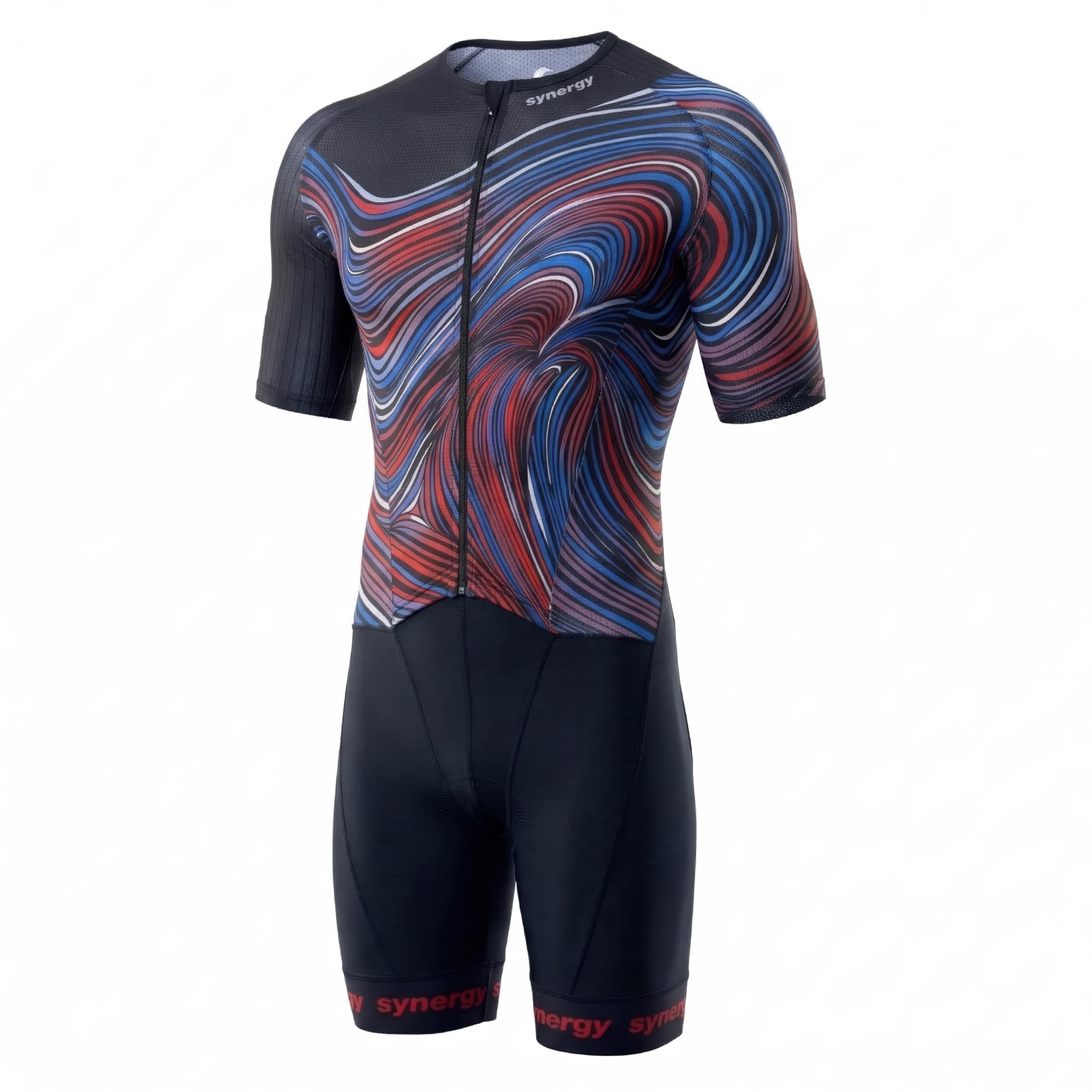
Synergy Pro Short Sleeve Trisuit

Synergy Pro Short Sleeve Trisuit

Long-course comfort

Our Score 9.0/10
Check Price

Worth Noting

  • Highest price in this guide
Closure
Short front zip
Grippers
Arm and thigh
Department
Men's
Sleeve Style
Short sleeve
Read the full review

This is the sleeved version of our top pick, and it costs a good deal more — enough that it only makes sense once you have decided sleeves are for you. The money goes into fabric and finish: it feels like a second skin rather than a suit, the front zip stops above the waist instead of running to the crotch, and arm and thigh grippers keep the legs where you put them.

Breathability is the other thing you are paying for. It keeps you cooler for longer on the bike, it protects from wind on the descents, and it stays put through cycling and long runs without hiking up at the shoulder. Nothing about it rubs, which after two hours is the only thing that matters.

For long-course racing in sleeves, this is the suit we name. The material quality is the best in this group, the fit is snug without restricting movement, and it holds up — it has come through a half-distance race without an issue. The one thing to check is the armhole: the seams sit close, and on a broader chest they can dig in a little. A bit of anti-chafe balm before the gun sorts it, but try the suit on first.

Bottom line: When comfort over a long day matters more than price, this is the sleeved suit to buy, with a second-skin fit and grippers that keep it in place.

3

SLS3 Women's Aero Sleeved Trisuit

SLS3 Women's Aero Sleeved Trisuit

Women's sleeved racing

Our Score 8.8/10
Check Price

Worth Noting

  • Thin fabric can go sheer when wet
Seat
Padded seat
Pockets
Included
Department
Women's
Sleeve Style
Short sleeve
Read the full review

Sleeved suits are where the women's market thins out, and this is the one we are happiest to have found. It is a short-sleeve suit with a padded seat, pockets, and a quick-dry fabric, and the fit is why it is here: it stays in place through all three legs instead of creeping up at the thigh or bunching at the shoulder.

Chafing is what we watch for on a women's suit, because the seams land in different places than they do on a men's cut. Here they sit flat — no rubbing at the neck, under the arm, or at the leg opening whether you are running or riding — and the suit dries quickly enough that you aren't sitting in a wet chamois for the whole bike leg. It has carried riders through a first triathlon and come back for the next one.

Where it earns its price is the top half, and that is why it is the women's sleeved suit we name: real coverage up front, so you aren't adjusting yourself at the mount line, and enough room through the shoulder to swim without the sleeve hauling at the seam. The trade is fabric weight. It is thin, which is lovely in heat and less lovely in full sun, where a pale suit can read slightly sheer when wet. Pick a darker print and the problem goes away.

Bottom line: Women who want sleeves should start here — a stable fit through all three legs and a cut that doesn't need adjusting, as long as thin fabric in bright sun doesn't put you off.

4

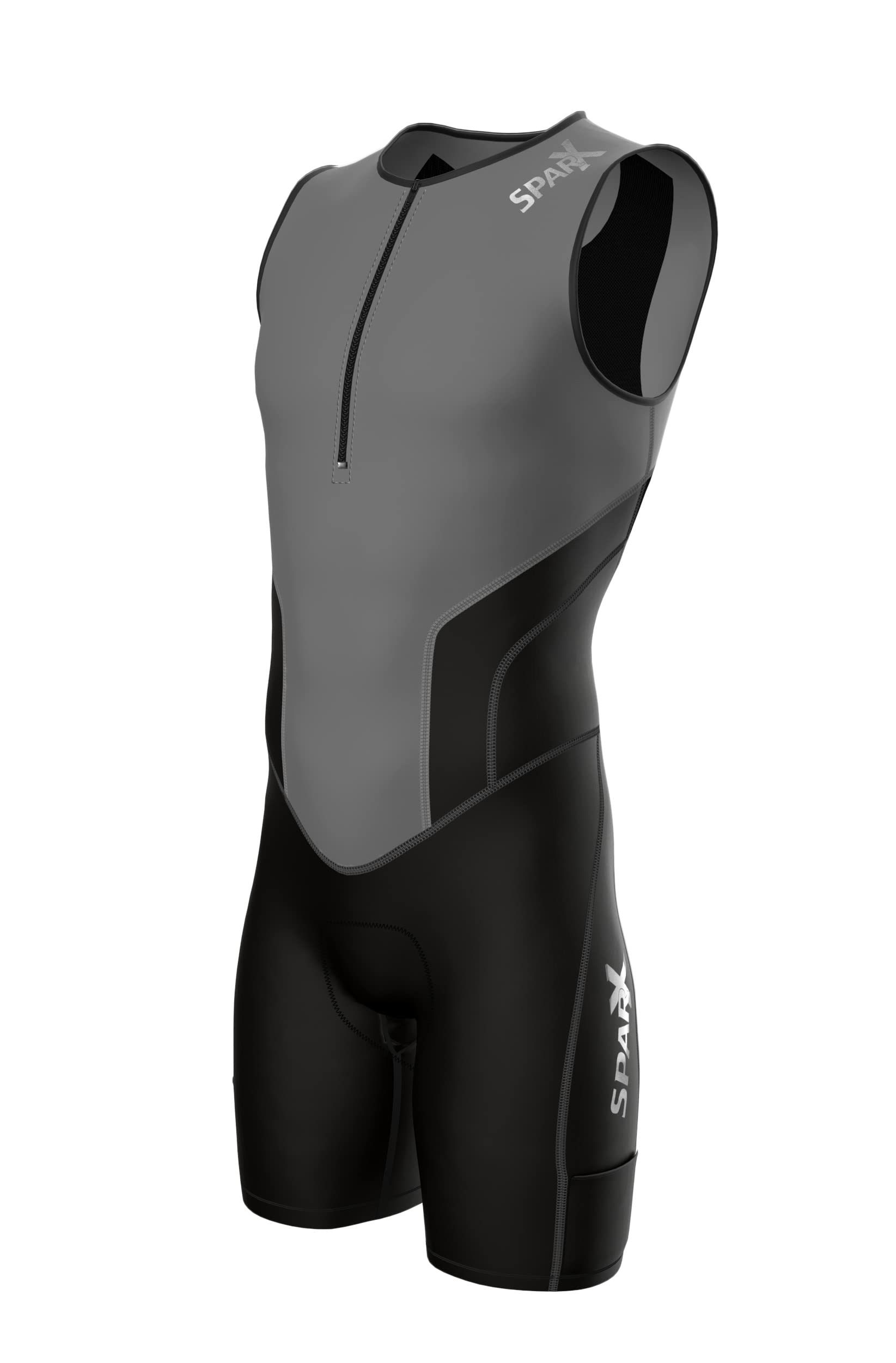
Sparx X Tri Suit

Sparx X Tri Suit

Budget first sprint

Our Score 8.6/10
Check Price

Worth Noting

  • Seams can start coming apart
Closure
Front zip
Pockets
Two rear, two leg
Department
Men's
Fabric Weight
Lightweight
Read the full review

This is the least expensive men's suit here, and it is the one we hand to someone doing a first sprint who isn't ready to spend real money on Lycra. The value holds up: the fabric is light enough for a hot race day, the front zip sits flat once you are in it, and you get two rear pockets plus two leg pockets — the leg ones hold a gel without launching it onto the road.

Sizing is the thing to get right. It runs small for some builds and the legs come up long on others, so size from the chart rather than from your cycling jersey, and don't assume you are a medium because you are a medium everywhere else. Construction is the other caveat: seams have started coming apart and the fabric doesn't hold up for everyone, particularly where it gets stretched pulling the suit on and off.

What you are buying is a training suit that can race. It has been through sprints and Olympic-distance events, it stays cool in real heat, and it dries fast enough that the swim doesn't follow you onto the bike. For a first season, or as the suit you don't mind taking into chlorine and gravel, that is a fair trade. Just don't expect it to be the last suit you buy.

Bottom line: For a first sprint on a tight budget, this is the suit: light, cool, pocketed, and cheap enough that a season of training does not feel like a waste.

5

Santic Women's Sleeveless Trisuit

Santic Women's Sleeveless Trisuit

Budget women's races

Our Score 8.6/10
Check Price

Worth Noting

  • Belly seam can come undone with use
Build
One-piece
Padding
Lightweight pad
Department
Women's
Sleeve Style
Sleeveless
Read the full review

Two things are obvious when you pick this suit up: the top is thin, and the pad is shallow. Neither is a dealbreaker at this end of the market — for a first sprint or a season of pool practice it is exactly the right amount of suit — but it tells you what the suit is for, and it is not the one you buy for a half.

For a woman racing her first triathlon on a budget, this is the one we recommend. It is a one-piece sleeveless cut that doesn't ride up in the water, dries quickly, and flatters a range of body types — not a small thing when you are standing on a start line in Lycra for the first time. It survives training, too: it holds up through a fair amount of swimming and a couple of sprint races.

The thin top is where the money was saved. Chest support is limited, and most women wearing this add a sports bra underneath — decide that before race day rather than at the start line. Sizing runs large on some builds, so work from the chart rather than your usual size, and if you are between sizes, take the smaller one.

Bottom line: It is the cheapest way into a women's trisuit that actually works, and it is honest about it: a shallow pad, a thin top, and a suit that stays put in the water.

6

SLS3 Men's Aero Sleeved Trisuit

SLS3 Men's Aero Sleeved Trisuit

Warm-weather aero

Our Score 8.6/10
Check Price

Worth Noting

  • Shoulders can stay tight a size up
Fabric
80% nylon, 20% spandex
Pockets
Rear pockets
Sleeve Style
Short sleeve
Chest, Size L
39 inches
Read the full review

Eighty percent nylon, 20 percent spandex, and a listed 39-inch chest on the large — this is the one suit in the group whose fabric and measurements you can check against your own before you order. In practice that means a light, high-stretch suit that holds compression without feeling like a girdle, and it is the one we reach for on warm race days when a heavier suit turns into a sauna.

The sleeves are the reason to buy it. They cover the shoulders, which keeps the lower back covered when you are down on the aero bars and takes the underarm friction out of a wetsuit swim. The pad is the thickness we like for Olympic distance — enough for an hour and a half in the saddle, thin enough that you forget it on the run — and the rear pockets hold gels without flapping.

Fit is where to be careful. The chart is accurate; at 5-foot-8 and 150 pounds you are in a small. But the shoulders stay slightly tight even a size up, and a tight shoulder in a sleeved suit is the difference between a good swim and a long one, so try the reach before race day. Wash it cold, tumble it low, skip the bleach, and it keeps its stretch.

Bottom line: Our pick for men's sleeved racing in warm weather: stretchy nylon-spandex, a pad that suits Olympic distance, and a listed chest measurement to size against.

7

Sparx Elite Aerosuit

Sparx Elite Aerosuit

Cheap sleeved training

Our Score 8.2/10
Check Price

Worth Noting

  • Zips have broken during races
  • Stitching underneath can come apart
Pockets
Thigh and rear
Department
Men's
Sleeve Style
Short sleeve
Read the full review

Sizing is the first thing you notice with this one. It runs tight — tighter through the midsection than the chart suggests on some builds — and the sleeves are angled for a road position rather than a full aero tuck. If you are between sizes, go up, and don't plan on layering anything underneath.

What the money buys is the cheapest route into sleeves: thigh and rear pockets for gels, a pad that does its job on the bike seat without turning into a pillow on the run, and gussets in the right places so the chafing you expect from a budget suit doesn't arrive. The pockets are small — a gel fits, a phone doesn't — which is fine for racing and mildly annoying for training.

The moving parts are the weak point. Zips have broken during races, and stitching underneath has come apart on suits that were not old. Both are worth inspecting before your first race: run the slider up and down, and turn the suit inside out to look at the seams.

As a training suit and a first-race suit it earns its place — it is cheap, it is sleeved, and it does all three legs without drama. As the one suit you rely on for a season you care about, put the money into the SLS3 instead.

Bottom line: A cheap way into sleeves for training and a first race, as long as you size up and accept that the hardware is the weak part.

How We Tested the Tri Suits

We started with a shortlist of about 30 suits from brands we've worn ourselves and brands readers keep asking about, then cut it down by fabric, chamois style, pocket layout, and price until 10 were left. Anything that came without a real size chart, or that only ran in unisex sizing, didn't make the cut.

Each suit went through the same brick session: a 1,000-yard pool swim, straight onto the bike for 20 miles, then out the door for a 5K. We weighed every suit dry and again as it came out of the water to see how much it held, then checked at the end of the ride whether it was still damp against the skin. We noted where seams sat under a wetsuit, whether the shoulders pulled during the catch, and whether the leg grippers stayed put through the run.

Fit and sizing got their own pass. We measured ourselves, compared those numbers to each maker's chart, and recorded who had to size up and who didn't — several suits ran a full size small. We also pulled the zipper down one-handed at a run turn, checked it stayed put on the bike, and paid attention to how the pad felt at mile 20 compared with mile two.

After every session each suit went through the wash, and over those seven months we watched the stitching at the shoulders and crotch, the zipper pull, and the grippers for the first signs of wear. We loaded the pockets with three gels, a phone, and keys, then ran a mile to see what bounced. The suits that made the list held up on all of it; value was the last word, not the first.

How to Choose Triathlon Suits

Sleeves or No Sleeves

The sleeve question is about your race, not your taste. Sleeves cover the shoulders and lower back, keep sun off, and stop the suit flapping when you are down on the aero bars. They also cost more and hold heat. Sleeveless is cooler, more forgiving through the shoulder, and easier to pull down in a hurry, which is why we still point most first-timers that way. Racing in serious heat with a shoulder-heavy stroke, stay sleeveless. Chasing bike time in moderate weather, sleeves earn their money. Either way the sleeve has to sit flush — a loose one flaps and is slower than bare arms.

Fit Is a Three-Sport Problem

A tri suit has to work standing, folded into an aero tuck, and running, and those three positions pull on different seams. That is why the better size charts ask for height and weight together rather than chest alone; the SLS3 aero lists both a size range and a 39-inch chest on the large, and that is the standard to hold other suits to. Size from the chart, not from your cycling jersey, then test the reach before race day by swinging your arms forward as if you are on the bars. If the shoulder pulls, go up a size.

Match the Pad to Your Longest Race

The chamois is a compromise you make once and live with all day. A deeper pad saves your sit bones over a long ride but feels like a diaper on the run and drags in the swim. Sprint and Olympic suits run thin, which is right for 25 miles on the bike; half and full-distance suits add depth. Match the pad to the race you are entered in rather than the longest training ride you have done, and remember that a thin pad is fine if your bike fit is good.

Fabric, Drying, and Sun

Everything here is a nylon-spandex blend of one sort or another, and the differences come down to weight and finish. Light fabric dries faster out of the water and is cooler on the run, but thin panels can go sheer when they are wet — a pale suit in full sun is where you notice it. Darker panels and a heavier knit hide more and hold more water. Racing in bright conditions and bothered by it? Choose a darker print. Racing in heat? Take the thin fabric and stop worrying.

Pockets, Zips, and Seams

Storage is the most over-promised part of a tri suit. Rear pockets are easy to reach on the bike and useless in the swim; thigh pockets you can get to while running. Check the depth before you trust one with a phone — several suits here take a gel and nothing more. The front zip matters more than people expect, because a longer zip is what makes a mid-race bathroom stop possible. And run your eye over the seams and the zip slider before your first race: those are the two places this category fails.

Frequently Asked Questions

Final Verdict

For most age-groupers, the Synergy Elite Sleeveless is the suit to buy: true-to-size fit, pockets you can actually reach, no chafing, and a pad that holds up through Olympic distance. That is midrange money spent on the parts that matter rather than on a name.

If you have decided sleeves are for you, the SLS3 Men's Aero Sleeved is the value step up, and the Synergy Pro Short Sleeve is what we choose for long course, where comfort past four hours outweighs the price. Women in sleeves should start with the SLS3 Aero; on a first-race budget, the Santic handles sprint distance fine.