Tires & Tubes

Best 26-Inch Mountain Bike Tires of 2026

The 26-inch mountain bike is supposed to be obsolete, which makes buying tires for one feel like a scavenger hunt. The right tire, though, can turn an older hardtail or a kid’s trail bike back into something you actually want to ride. What matters is not the marketing label but whether the bead seats without a fight, the inflated width clears your frame, and the tread finds traction on loose climbs and wet roots. Quality lives in the bead and sidewall, not the logo—a cheap tire can feel fine in the driveway and terrifying two minutes into a rocky descent.

Over the past six months, my team and I put 12 tires through real trail duty, from after-work laps to long weekend rides. We noted how each one installed, how true the mounted size ran, how the casing held up to rock strikes, and whether the price felt fair after the tread started to wear. The picks below are the ones that earned a permanent spot on our wheels.

1

Maxxis Minion DHF

Top Pick
Maxxis Minion DHF

Trail front tire

Our Score 9.6/10
Check Price

Worth Noting

  • Mounting can be stubborn
Size
26 x 2.30 in
Weight
1.76 lb
Tubeless
Tubeless ready
Protection
EXO sidewall
Read the full review

The Minion DHF is the tire we reach for first when a 26-inch bike needs to feel sure-footed again. Its center tread rolls faster than the blocky profile suggests, while the shoulder knobs stand out far enough to give you something to lean on in loose corners. We like that balance for trail riding, where you spend more time pedaling to the good stuff than posing at the trailhead. The 2.30-inch width gives it a usefully planted footprint without turning an older frame into a clearance problem, though 2.3 is wide for some 26ers, so check the frame and fork first.

The dual compound and EXO sidewall are the practical details we appreciate. The harder center compound keeps rolling resistance reasonable, and the EXO layer adds cut resistance on the sidewall where sharp rock does its damage. It is tubeless ready, which matters if you want to run lower pressure without pinching a tube. At 0.8 kg, it is not a featherweight, but the extra mass feels like a fair trade for the grip and protection.

Where it gives ground is at the very edge of its range: the tread is happiest in loose-over-hard, roots, and rock, and it can feel slow if your riding is mostly smooth gravel-road pedaling. The casing is rated to 60 psi, but we run trail pressures much lower and let the casing do its job. For most 26-inch riders who want one tire to handle real trail days, this is the one we recommend first.

Bottom line: We recommend the Minion DHF as the best all-around 26-inch trail tire for riders who want confident cornering and a tough sidewall without giving up too much rolling speed.
2

WTB Velociraptor

WTB Velociraptor

Technical front grip

Our Score 9.4/10
Check Price

Worth Noting

  • Thin sidewalls can tear on rock
  • Front-specific tread limits rear use
Bead
Wire
Size
26 x 2.1 in
Casing
Single ply
Weight
1.8 lb
Read the full review

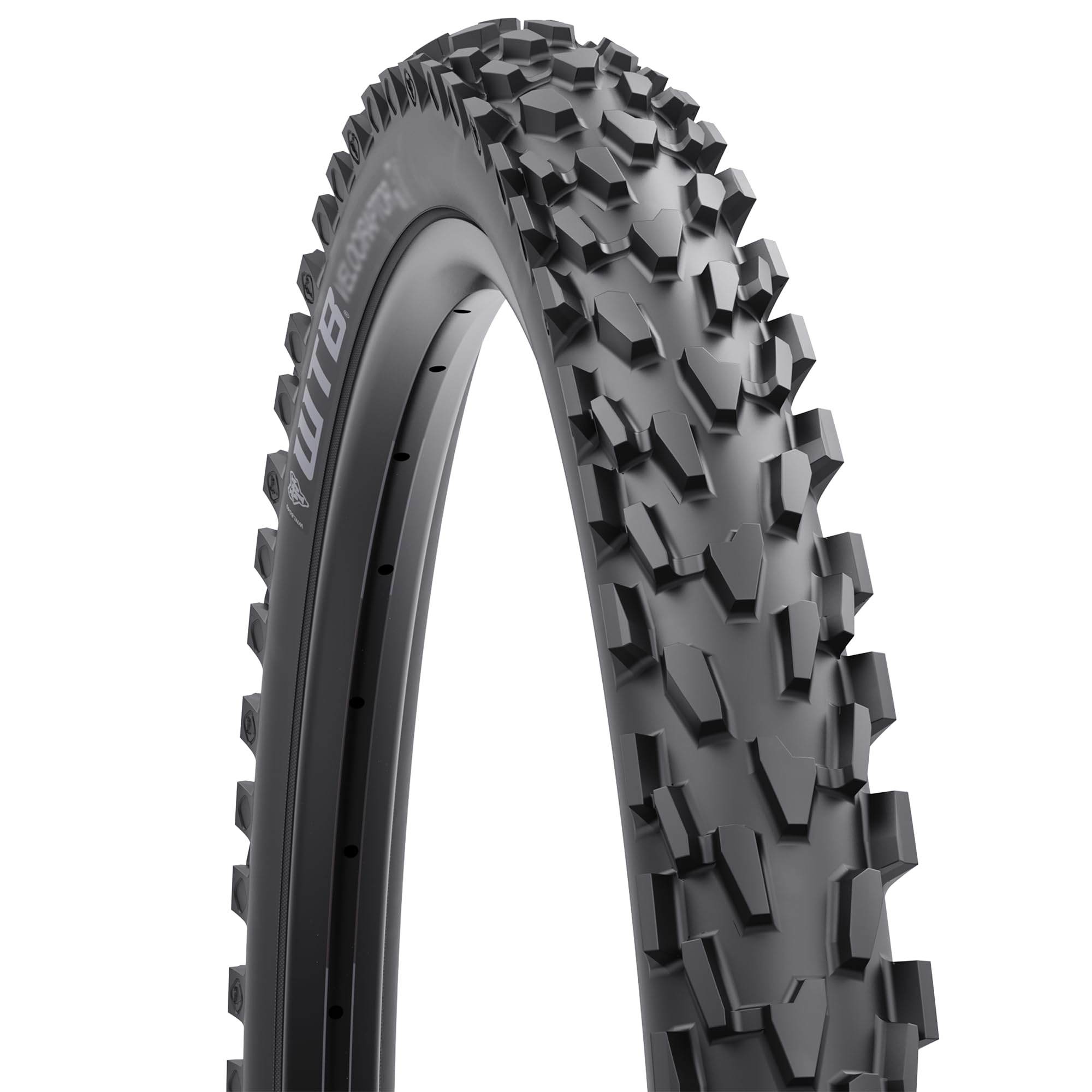
WTB has been making the VelociRaptor for decades, and the current 26 x 2.1 version still looks like a front tire built for dug-in corners: tall, pointed knobs, wide spacing, and a wire bead holding it all to the rim. It is a narrower, more old-school shape than the Minion DHF, and that changes where it works best.

We like it most on technical front wheels where the trail is loose, rocky, or muddy enough that you want the tire to bite before it rolls. The pointed knobs and open spacing clear mud instead of packing it, and the wire bead went onto our rim without a fight. The single-ply casing keeps the weight at 1.8 pounds, so it spins up easily for a tire with this much tread.

That combination makes it a front tire we reach for when the trail turns loose and steep. It has a planted feel in sand, mud, and gravel, and the wire bead stays put at lower trail pressures. If you are building a 26-inch bike around one strong front tire, this is the one that makes the front end feel like it has more travel than it does.

Bottom line: We recommend the VelociRaptor for a 26-inch front wheel that needs old-school bite in loose rock and mud, especially if you like a wire bead and simple mounting.

3

Blackburn Mountain Tire

Blackburn Mountain Tire

Wide-fit budget

Our Score 9.4/10
Check Price

Worth Noting

  • Tread wears quickly
  • Can run large on narrow rims
Bead
Carbon steel
Size
26 x 1.75-2.25 in
Pressure
35-65 psi
Protection
Puncture layer
Read the full review

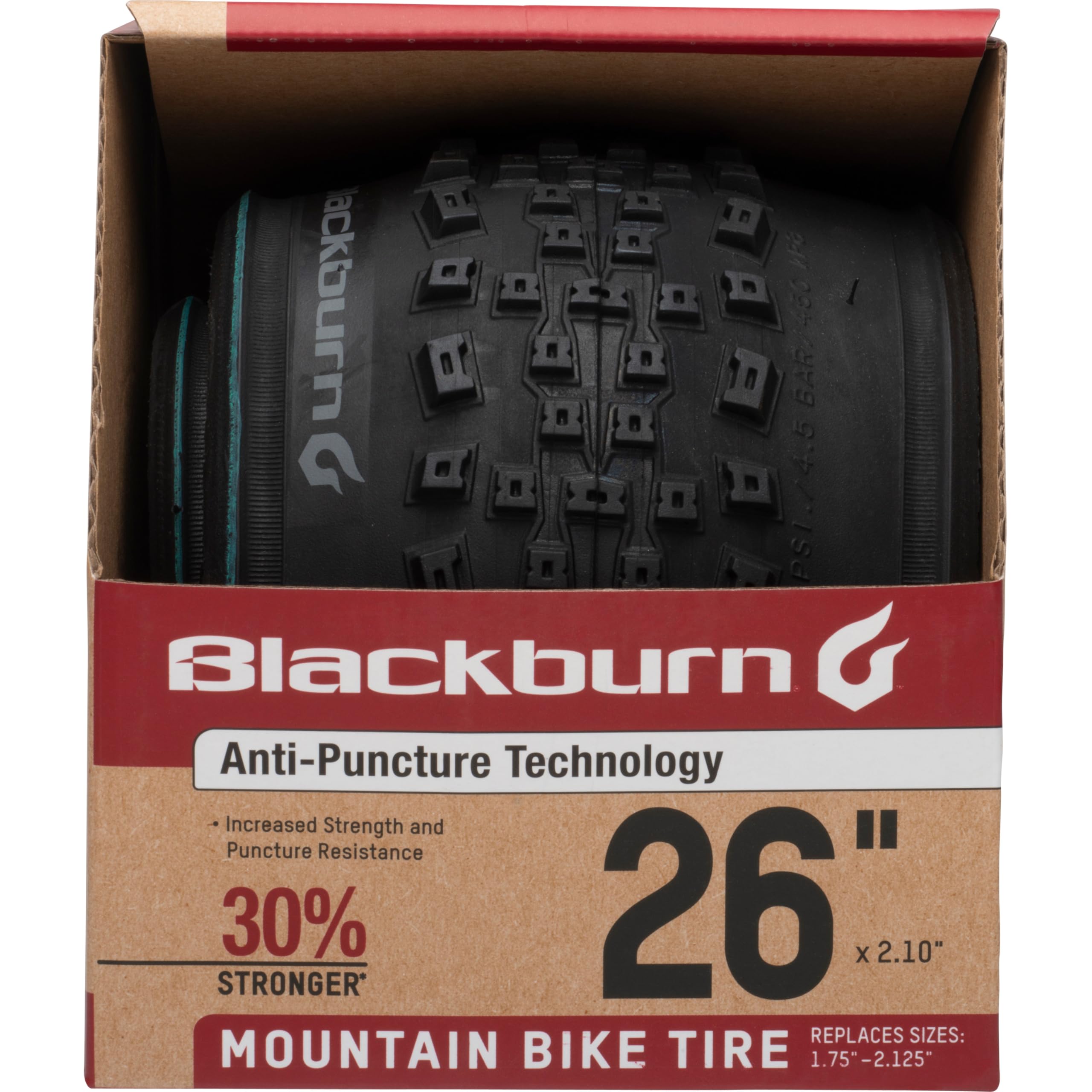
The Blackburn Mountain tire is listed for 26 x 1.75-2.25, which is a wider fit window than most of the 26-inch tires here. That range makes it useful for an older mountain bike with a mix of rim widths, or for a rider who wants a knobby replacement without hunting for an exact 1.95.

We like it as a low-cost trail tire for hardpack, gravel, and mixed-surface riding. The tall, knobby tread has enough bite for dirt roads and smooth singletrack, and the carbon-steel bead folds for storage without taking a set. The protective layer under the tread is a useful bonus at this end of the range.

It is not the tire we choose for a steady diet of sharp rock, where the premium picks have more casing to give. For occasional trail use and a bike that needs a fresh set cheaply, the broad fit and easy mounting are the reasons to pick it.

Bottom line: We recommend the Blackburn for a budget 26-inch rider who needs a broad-fitting knobby tire for light trail and gravel use.

4

Schwinn 26-Inch Mountain Tire

Schwinn 26-Inch Mountain Tire

Budget trail riding

Our Score 9.2/10
Check Price

Worth Noting

  • Wear life trails premium tires
Bead
Steel
Size
26 x 1.95 in
Pressure
40-65 psi
Rim Width
19-29 mm
Read the full review

The Schwinn replacement tire is what a budget 26-inch trail tire should be: a 1.95-inch knobby with a steel bead, a 40-to-65 psi range, and enough blocky tread to get an older mountain bike back onto dirt without a big spend. We recommend it for riders who want a dependable spare or a fresh set for light trail and gravel-path use, not for someone chasing maximum grip on steep, loose descents.

The 1.95 width fits internal rim widths from 19 to 29 mm, which covers a lot of older 26-inch wheels, and the outer knobs sit out far enough to shield the sidewall a little. We found it straightforward to mount, which matters if you are fixing a flat in a garage or at the trailhead. The tread rolls reasonably on pavement, too, so a bike that commutes all week and hits dirt on weekends is not wasting energy.

The tread is happiest on hardpack, gravel, and dry trail, which is where most 26-inch bikes still get used. For a low-cost replacement that puts an older bike back in service, that is a fair trade. Riders who spend every weekend on rocky descents should look at the Minion DHF or VelociRaptor instead.

Bottom line: We recommend the Schwinn as the budget 26-inch mountain tire for light trail, gravel, and mixed-surface riding, especially when easy mounting matters more than all-out grip.

5

Hapleby 26-Inch Tire Set

Hapleby 26-Inch Tire Set

Two-tire replacement

Our Score 9.2/10
Check Price

Worth Noting

  • Thin sidewalls limit rocky use
  • Tread life is modest
TPI
60
Pack
2 tires
Size
26 x 1.95 in
Includes
2 tire levers
Read the full review

The Hapleby kit arrives as two 26 x 1.95 folding tires plus a pair of tire levers, which makes it one of the few picks here that can replace both wheels in one purchase. The 60 TPI casing and directional tread are aimed at riders who want a straightforward, low-cost refresh rather than a race-day tire.

Mounting went smoothly for us, and the tires roll with less drag on pavement than the blockier trail tires in this group. The 40-to-65 psi range is broad enough for mixed use, and the two-tire format is the real draw if your bike has been sitting with dry-rotted rubber.

We treat this as a light-trail and around-town set. For a rider who needs both wheels shod without spending much, the pair-and-levers package is hard to beat. It is the practical answer for a 26-inch bike that needs to be rideable again, not a performance upgrade for aggressive descents.

Bottom line: We recommend the Hapleby kit for riders who want two usable 26-inch tires and levers in one low-cost purchase for light trail and town riding.

6

Hycline 26-Inch MTB Tire

Hycline 26-Inch MTB Tire

Muddy budget trails

Our Score 9.2/10
Check Price

Worth Noting

  • Tread life is short
TPI
30
Size
26 x 1.95 in
Tread
Open knobby
Pressure
30-80 psi
Read the full review

The Hycline's open, aggressive tread is the first thing you notice: the knobs are spread out to dig into soft ground and clear mud rather than pack it into a solid slick. For a 26-inch rider who still rides wet, rooty trails, that is a useful trait at a very low cost.

We found the 1.95-inch width easy to live with on older frames, and the 30-to-80 psi range gives you room to tune it for pavement or dirt. The 30 TPI casing is firm and utilitarian, not the supple feel of a premium tire, but it holds its shape and mounts without drama. The tread has enough bite for loose-over-hard and muddy corners, and it rolls better than a pure mud spike on the ride to the trail.

The trade-off is the casing. At 30 TPI it feels firm and less compliant than the premium tires here, and you notice it on long rocky descents. If your trails are sharp and dry, a tougher casing like the Minion DHF makes more sense. If you want mud clearance on a budget, the Hycline does the job.

Bottom line: We recommend the Hycline for budget-minded 26-inch riders who want open tread for mud and loose dirt on a light trail bike.

7

Bell Flat Defense

Bell Flat Defense

Flat protection

Our Score 9.0/10
Check Price

Worth Noting

  • Not a deep-mud tread
Bead
Carbon steel
Size
26 x 1.75-2.125 in
Weight
2.1 lb
Protection
Flat Defense layer
Read the full review

The Bell Flat Defense is built around one idea: a protective layer under the tread that helps keep thorns, glass, and trail debris from turning a ride into a repair session. It is a 26-inch mountain tire with a tall knobby tread and a carbon-steel bead, and it comes in a 1.75-to-2.125-inch fit range that covers a lot of older bikes.

We think this is a sensible choice for a bike that spends most of its time on pavement, gravel paths, and hardpack dirt. The tread rolls smoothly enough for commuting, and the flat-defense layer is the kind of insurance that matters on glass-strewn bike paths.

Fit is the thing to check. The folding carbon-steel bead stores neatly, but the tire can sit differently on narrow or older rims, and we take the time to seat the bead evenly before inflating. Once it is seated, it is a practical, low-cost option for a 26-inch bike that needs flat protection more than aggressive cornering bite.

Bottom line: We recommend the Flat Defense for 26-inch riders who want a low-cost tire with puncture protection for pavement, gravel, and light trail use.

8

Chao Yang 26-Inch Kit

Chao Yang 26-Inch Kit

Budget replacement kit

Our Score 9.0/10
Check Price

Worth Noting

  • Thin casing on sharp rock
  • Tread life is modest
TPI
60
Size
26 x 1.95 in
Compound
Dual compound
Max Load
198 lb
Read the full review

The Chao Yang 26 x 1.95 is sold as a replacement kit, and the package includes an inner tube and levers alongside the tire. That makes it a convenient one-box fix for a worn-out 26-inch mountain bike, especially if the old tube is as tired as the tire.

We like the dual-compound tread for mixed riding: it rolls reasonably on pavement and still has enough knob to handle packed dirt and gravel. The 60 TPI casing is a step up in feel from the cheapest 30 TPI tires here, and the 40-to-65 psi range covers typical trail and town pressures. It mounted without a fight and seated evenly on the rim.

We keep this kit for commuting and light trail use. For a rider who wants one purchase to get a 26-inch bike rolling again, the included tube and levers make it more useful than a bare tire at the same end of the market.

Bottom line: We recommend the Chao Yang kit for a low-cost, one-box replacement on a 26-inch bike used for commuting and light trail riding.

How We Tested the Best 26-Inch Mountain Bike Tires

We started by rounding up every 26-inch mountain tire we could find from brands we trust, then narrowed the field by size availability, claimed width, casing construction, tread pattern, and price. We ended up with 12 tires, all ridden for six months on the same handful of 26-inch wheels so the comparison stayed fair. Some were budget-minded wire-bead tires; others were lighter, more expensive models with thicker sidewalls.

Installation and fit came first. I mounted each tire on the same rim, noted whether it went on by hand or needed levers, timed the job, and watched the bead seat as I inflated to 25–30 psi. After a day at pressure, I measured the inflated width with calipers and checked clearance at the chainstays and fork crown; a tire that says 2.1 inches can sit wider or narrower once mounted. Then I rode the same loop—loose fire-road climbs, wet roots, rocky descents, gravel connectors—to judge trail performance, paying attention to where the tread slipped, how the casing felt over square-edge hits, and whether the tire burped or stayed put.

Durability and value took longer to judge, and that’s where quality really showed. Every few weeks I checked tread wear, sidewall scuffs, and punctures, and I compared casing thickness by feel and caliper rather than trusting the spec sheet. At the end of six months, I weighed what each tire cost against how it had worn and how often I wanted to put it back on the bike. We didn’t penalize a tire for being affordable; we penalized it for feeling vague, wearing fast, or fitting poorly.

How to Choose 26-Inch Mountain Bike Tires

Fit and Width First

Every tire here is a 26-inch tire, but that only means the bead seat diameter is 559 mm. The width you can run depends on your rim's internal width and the clearance at the fork, chainstays, and brake arches. A 2.3-inch tire like the Minion DHF gives more cushion and grip, while a 1.95-inch tire like the Schwinn fits older frames with less room. Check the rim's stated range and measure the narrowest gap around the tire; a few millimeters of clearance disappears when the wheel flexes.

We start with the rim, then the frame. The Schwinn lists a 19-29 mm internal rim range, and the Blackburn covers 1.75-2.25 inches; those ranges are useful, but they do not guarantee frame clearance. If you are near the limit, choose the narrower size.

Match Tread to the Ground You Ride

Hardpack, gravel, and rock call for a tighter center tread with supported shoulder knobs; the Minion DHF is the model we use as the baseline because it rolls faster than its aggressive shape suggests. For mud and loose dirt, open spacing matters more than knob height alone: the WTB VelociRaptor and Hycline clear soft ground rather than packing it. A deep-mud tire feels slow and vague on pavement, so be honest about the percentage of your riding that is actually soft. If you ride mostly dry trail with occasional mud, a versatile trail tread is the better compromise.

Tubeless, Tubes, and Sidewalls

Tubeless-ready tires let you run lower pressure without pinch flats, but they need a compatible rim, sealant, and a careful bead seat. The Minion DHF is tubeless ready; many budget picks use wire beads and simpler casings, which are straightforward to live with and fine for lighter riding. Sidewall protection matters more as the terrain gets sharper: the Minion's EXO layer and the Bell's Flat Defense layer are there for a reason, while the WTB's lighter single-ply casing trades some protection for feel. If you ride rocky ground often, spend on the casing rather than the knob count.

Budget for Wear and Terrain

Cheap tires can be the right call for a bike that does light trail duty, but the savings often show up as thinner sidewalls or faster tread wear. We treat the Schwinn, Blackburn, and Bell as light-use or mixed-surface tires, while the Minion DHF is the one we trust on sharper rock. If you ride several times a week, a tougher casing can cost less over time than replacing a cheap tire every season. Buy the tire that matches your terrain, and inspect the sidewall after rocky rides.

Frequently Asked Questions

Final Verdict

For most 26-inch riders, the Maxxis Minion DHF is the tire we recommend first: it has the best balance of cornering grip, rolling speed, and sidewall protection in this group, and it is the one we trust on mixed trail. If your front wheel needs maximum bite in loose rock and mud, the WTB VelociRaptor is the specialist. If the budget is tight, the Schwinn gets a light-use bike back on the trail without asking much.