Tires & Tubes

Best 29-Inch Mountain Bike Tires of 2026

Mountain bike tires are a study in compromise: the tread that bites in loose corners drags on the climb, and the casing that shrugs off rock strikes can feel wooden underfoot. The right 29-inch tire quiets that argument. It's the part of your bike that decides whether a rooty chute feels like a challenge or a chore, and whether you finish with a sidewall intact. Over the past eight months, I've ridden a dozen 29-inch tires on hardpack, rock gardens, and wet roots to find the ones worth buying.

The first thing I tell friends shopping for tires is that width and casing matter as much as tread pattern. A 2.4 that measures narrow on your rim can leave you with less grip and traction than you paid for, and a flimsy sidewall turns a sharp rock into a long walk home. Installation is the other tell: a tire that seats tubeless with a floor pump on the first try tends to hold air and hold up. The picks below range from fast-rolling hardpack options to chunky descenders, and they all earned their keep over months of riding.

1

Maxxis Minion DHF

Top Pick
Maxxis Minion DHF

Aggressive trail front

Our Score 9.6/10
Check Price

Worth Noting

  • Heavier than lighter trail casings
  • Bead can be stubborn to seat
Size
29x2.50WT
Casing
EXO
Weight
2.25 lb
Tire Type
Tubeless
Read the full review

The 2.5-inch Wide Trail casing is the first thing that changes your impression of the Minion DHF. We think it's the best front-tire default in this group for aggressive 29er trail and enduro riding: the widened profile puts more of those tall side knobs on the ground when you lean, and the fast-rolling center keeps it from feeling like a drag on the pedally bits.

Maxxis pairs a dual compound with the EXO casing, which is the combination we prefer for rocky trail riding. The harder center holds up on long approaches, while the softer shoulder gives you something to trust in loose-over-hard corners. It's tubeless-ready and E25-rated, so it works on a light-duty e-bike too. The 2.5WT size is aimed at modern 30mm internal rims; on a narrow rim it will sit rounder and you'll lose some of that support.

This is not the tire for a casual rail-trail rider who wants low rolling resistance above all else. It's for the rider who points the bike down chunky singletrack and wants the front end to stay planted. For that rider, the DHF is the front tire we keep on the bike, and the matching DHR II makes a coherent pair.

Bottom line: We recommend the Minion DHF as the default front tire for aggressive 29er trail and enduro riding, thanks to its confident cornering and tough EXO casing.

2

Maxxis Minion DHR II

Maxxis Minion DHR II

Aggressive rear trail

Our Score 9.6/10
Check Price

Worth Noting

  • Rear-specific tread, not an all-position tire
Size
29x2.40WT
Casing
EXO
Weight
1.76 lb
Tire Type
Tubeless
Read the full review

Braking bite and cornering support are the two jobs a rear tire has to do, and the Minion DHR II is shaped around both. Its side knobs borrow from the DHF but widen for more support, so the rear stays planted when you're on the brakes and leaning into a loose corner.

We found the 2.40WT casing a sensible match for modern trail and enduro bikes. It's tubeless-ready, uses the same dual compound and EXO sidewall protection as the DHF, and carries an E25 rating for light e-bike use. At 0.8 kg it's not a flyweight, but the support is the point: run it with the DHF up front and the bike feels balanced rather than front-heavy.

The rear-specific shape also gives the tire a usefully round profile for cornering, and it clears dry dirt without packing the center. It is a purposeful rear tire rather than a do-everything compromise. We pair it with the DHF and leave the combination alone.

Bottom line: For a 29er that sees steep, loose descents, the Minion DHR II is the rear tire we choose: it brakes hard and holds its line.

3

Blackburn Mountain Tire

Blackburn Mountain Tire

Low-cost trail replacement

Our Score 9.4/10
Check Price

Worth Noting

  • Tread wears quickly on mixed surfaces
  • Size can run large on narrow rims
Bead
Carbon steel
Size
29 x 2.10–2.25 in
Tire Type
Clincher
Pressure Range
35–65 PSI
Read the full review

The folding carbon steel bead is the detail that makes the Blackburn tire easy to live with before it's even mounted. It folds for storage without the kink you get from a wire bead, and it's a clincher, so it works with standard tubes.

The tread is a tall, knobby pattern with a protective layer under the rubber. Blackburn lists a 29 x 2.10–2.25 fit and a 35–65 PSI range, which covers a lot of older 29ers and mixed-surface bikes. It's a basic trail tire rather than a performance tire.

We were struck by how much tire this is for the money. It mounts easily on most rims, and the knobs have enough bite for light trail riding and gravel connectors. It is a basic tire, but it does the job.

Our take: the Blackburn is a low-cost replacement for a 29er that needs a knobby tire for light trail and mixed-surface riding. It is not the tire we choose for rocky descents or tubeless setups, but for a budget build it earns its place.

Bottom line: The Blackburn is a low-cost replacement for a 29er that needs a knobby tire for light trail and mixed-surface riding, not a performance upgrade.

4

WTB Trail Boss

WTB Trail Boss

Value trail riding

Our Score 9.2/10
Check Price

Worth Noting

  • Sidewalls can fail on sharp rock
  • Wire bead adds weight
Bead
Wire, 30tpi
Size
29 x 2.25 in
Weight
2.02 lb
Tire Type
Clincher
Read the full review

The Trail Boss is the middle child of mountain bike treads, and that's the point. Its knobs sit between a slick and a full downhill tire, tightly spaced enough to roll and siped for braking bite. We were surprised by how much of a trail tire it feels like for a wire-bead clincher.

The 29 x 2.25 casing is a useful width for general trail riding, and the 30tpi wire bead keeps the price down. The tread works well on dry, mixed surfaces and rolls fast enough for long approaches. It is the kind of tire that makes an older hardtail feel more capable without turning it into a dedicated race bike.

We recommend the Trail Boss to riders who want a dependable all-around tire and don't need tubeless. It is a straightforward, durable-feeling tire for the money, and it makes a sensible upgrade on an older 29er without turning it into a race bike.

Bottom line: The Trail Boss is the value choice for riders who want one tire that rolls well and grips on mixed dirt without a tubeless setup.

5

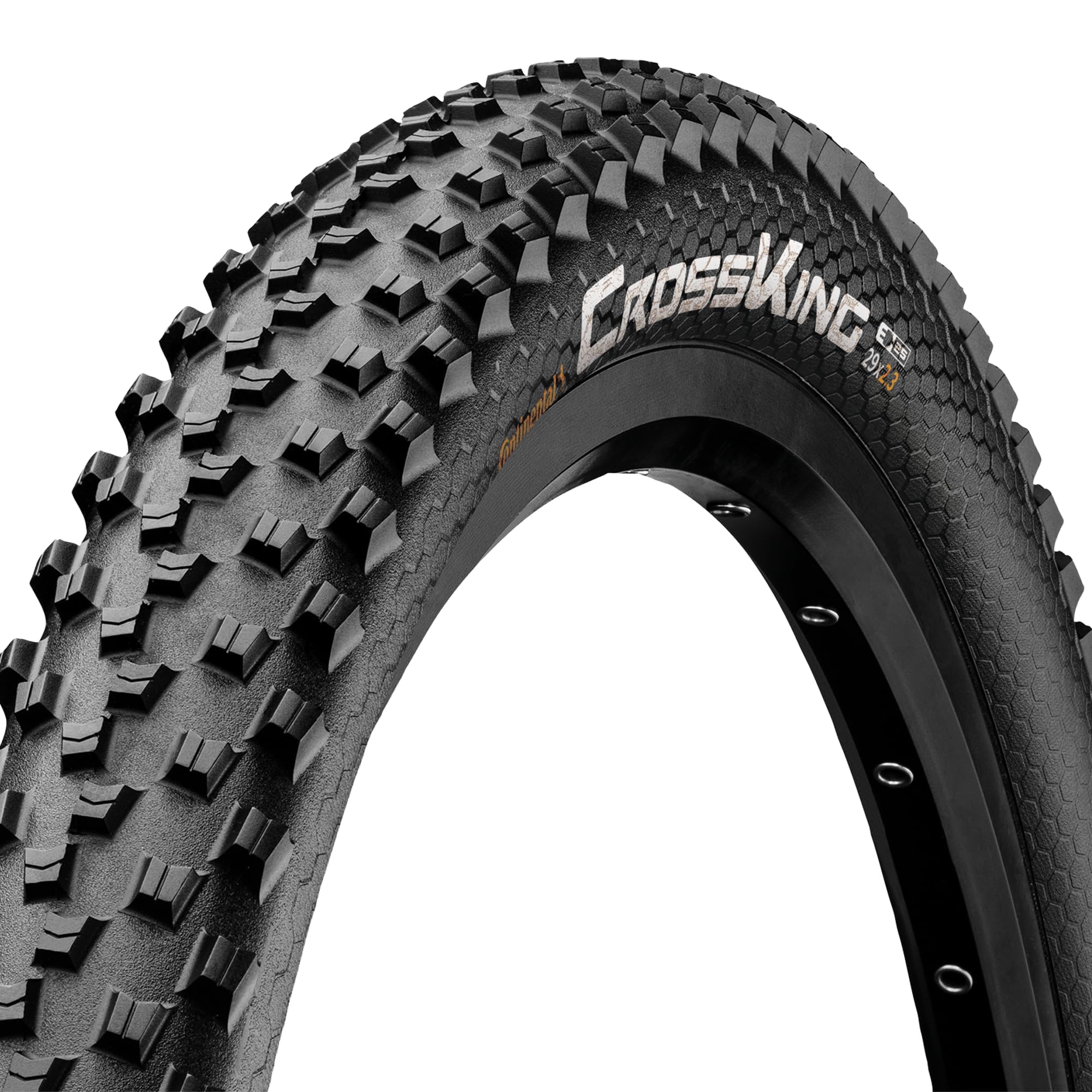
Continental Cross King

Continental Cross King

Budget trail riding

Our Score 9.0/10
Check Price

Worth Noting

  • Clincher-only, so no tubeless setup
  • Knobs can break off under hard use
Size
29x2.20
Casing
3-ply
Tire Type
Clincher, non-tubeless
Pressure Range
26–58 PSI
Read the full review

The Cross King is a wire-bead clincher, which tells you most of what you need to know: this is the budget, tube-type side of the mountain bike aisle. The 29x2.20 casing and three-ply construction are built for trail centers, fire roads, and everyday dirt rather than tubeless conversions.

The tread is a genuine all-rounder. Tight center knobs roll smoothly, the shoulder knobs have enough bite for dry corners, and the 26–58 PSI range gives you room to tune the ride. Continental also rates it for E25 light-duty e-bike use. On wet roots and deep mud it gives up grip earlier than a dedicated trail tire, which is the trade-off for that easy rolling.

What makes the Cross King worth buying is the combination of a tough casing and a predictable tread at a budget price. We recommend it for riders with tube-type rims, or anyone who wants a simple spare set for dry trail and gravel-road connectors. It is not the tire we choose for rocky descents, but it does the everyday job without fuss.

Bottom line: The Cross King is our budget all-rounder for tube-type 29ers, with predictable grip on dry trail and a tough wire-bead casing.

6

Schwalbe Rapid Rob

Schwalbe Rapid Rob

Beginner XC rear

Our Score 9.0/10
Check Price

Worth Noting

  • Not suited to aggressive descents
  • Mounting can be difficult
Size
29x2.25
Tire Type
Clincher
Intended Use
XC rear
Puncture Protection
K-Guard
Read the full review

The Rapid Rob is aimed at riders who are just getting into mountain biking, and its XC profile makes that clear. The center tread rolls easily, the shoulder knobs are there for dry corners, and K-Guard adds a layer of puncture protection without turning it into a heavy trail tire.

We liked the 29x2.25 size for a beginner bike: it's wide enough to take some of the sting out of roots and rocks, but it doesn't overwhelm a basic fork or narrow rim. Schwalbe designs it as a rear tire, ideally paired with a Tough Tom up front. The listed 55 psi is on the low side for pavement, so keep it in the dirt.

This is a sensible first upgrade for a beginner 29er, and the K-Guard casing gives some peace of mind on gravel and hardpack. We recommend it for XC riding and light trail use where low rolling resistance matters more than aggressive tread bite.

Bottom line: The Rapid Rob is a smart first upgrade for a beginner 29er, with easy-rolling XC tread and K-Guard protection at a low price.

7

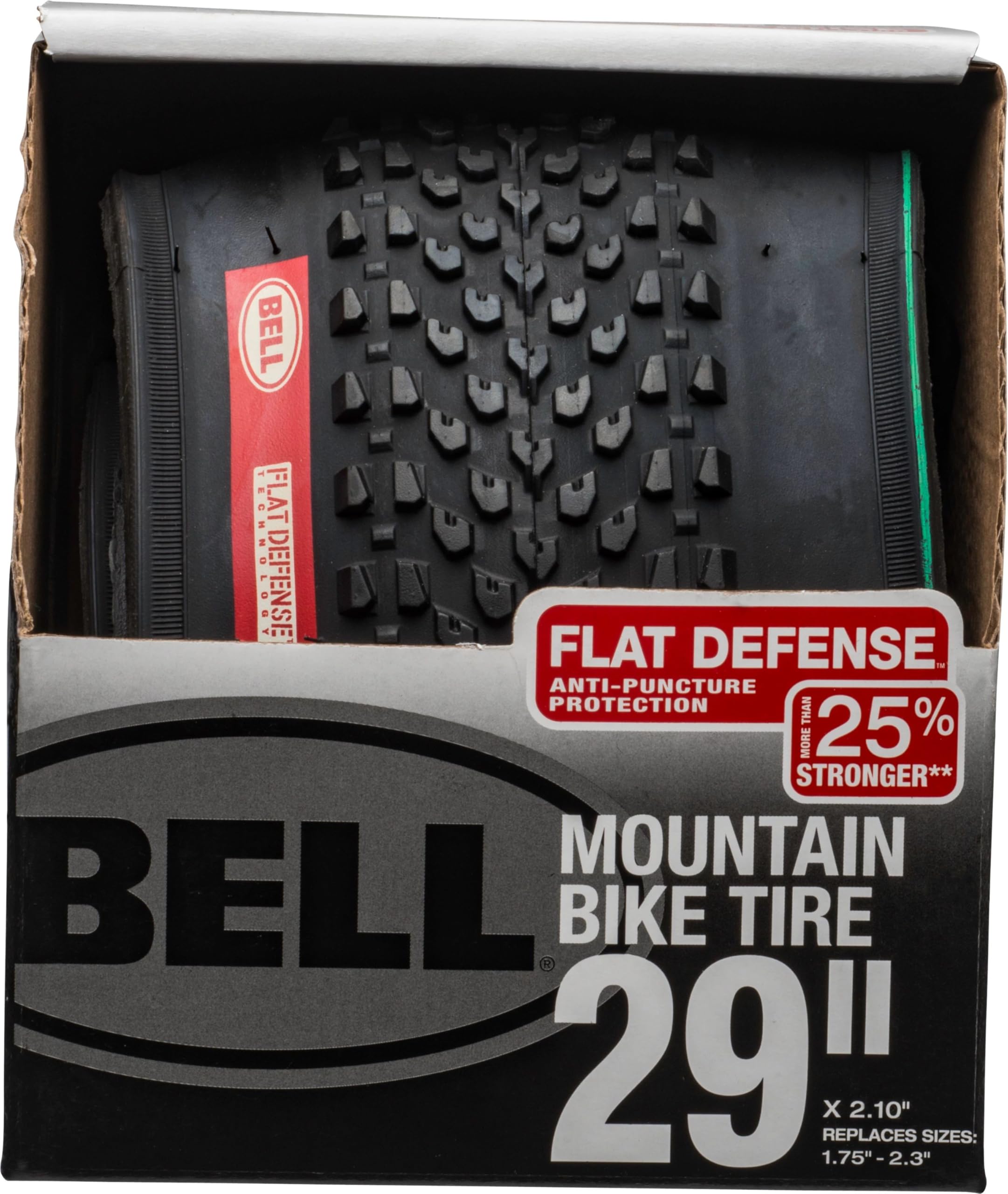
Bell Flat Defense

Bell Flat Defense

Budget flat protection

Our Score 9.0/10
Check Price

Worth Noting

  • Fit varies by rim width
  • Tread wears faster than premium tires
Size
29 x 2.10–2.25 in
Weight
2.1 lb
Tire Type
Clincher
Puncture Protection
Flat Defense
Read the full review

Flat Defense is the reason to look at this Bell tire. A protective layer under the tread adds puncture resistance, and the tall knobby tread is happy on pavement, rail trails, and hardpack dirt. It's a clincher, so it runs with a tube and doesn't ask you to convert your rims.

At 2.1 pounds, it's a substantial tire, and the carbon steel bead makes it easier to fold for storage than a wire bead. The 29 x 2.10–2.25 size covers a range of older 29ers and hybrid-style mountain bikes. We noticed the tread rolls reasonably quietly on pavement for a knobby tire.

This is the budget pick for a rider who wants fewer flats on a commuter or rail-trail bike and isn't chasing trail performance. The flat protection is the feature you're paying for, and it makes a sensible replacement for a worn-out stock tire. We recommend it for pavement-heavy riding with occasional dirt.

Bottom line: The Bell Flat Defense is the budget pick for commuters and rail-trail riders who want a tough, simple clincher and don't need tubeless.

8

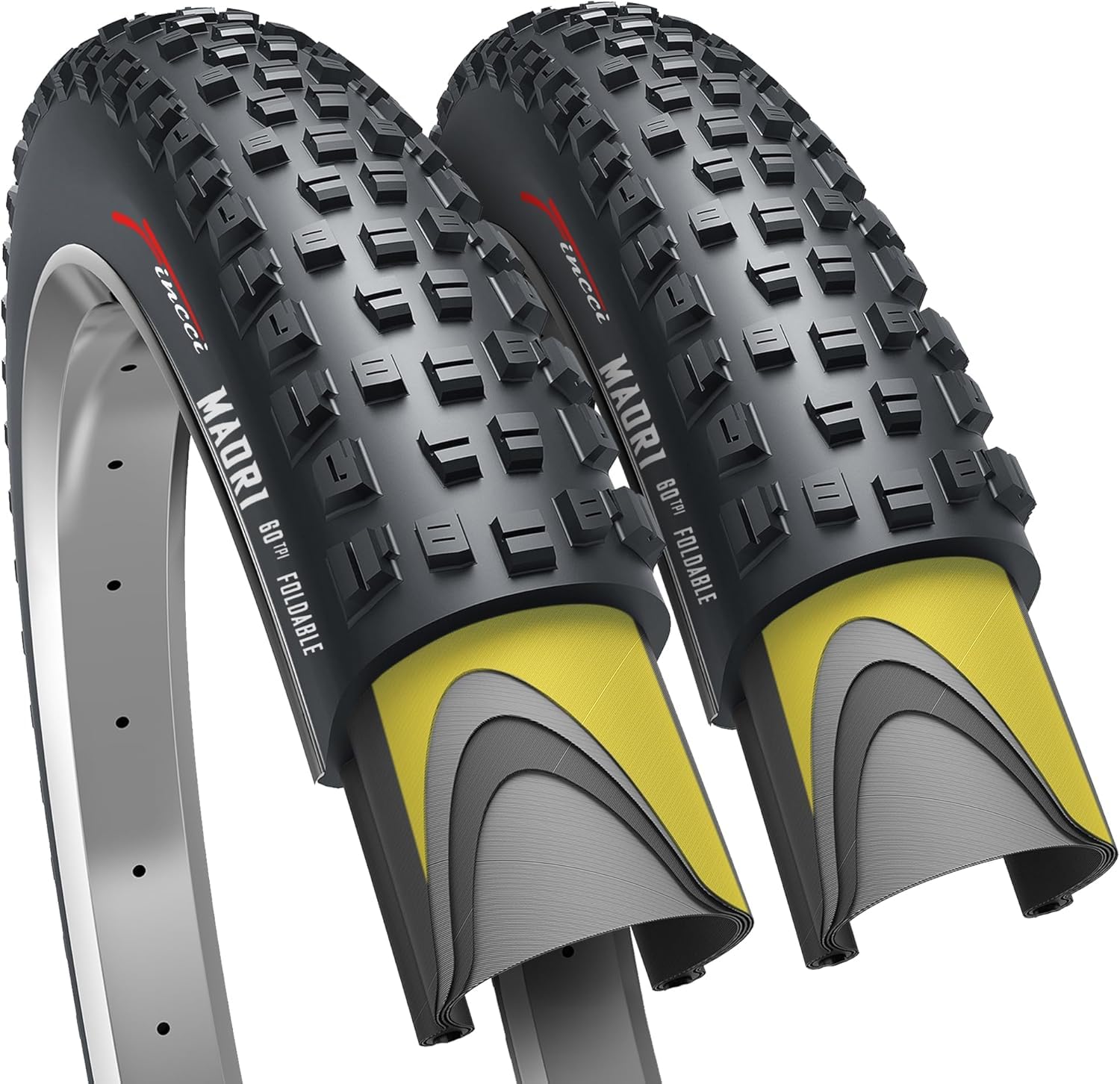
Fincci 29er Tire Pair

Fincci 29er Tire Pair

Two-tire value

Our Score 9.0/10
Check Price

Worth Noting

  • Sidewalls can split under hard use
  • Mounting can be a fight
Pack
Pair
Size
29 x 2.25 in (57-622)
Tire Type
Clincher
Puncture Protection
1 mm nylon
Read the full review

Two tires arrive in one box, which is the first practical advantage of the Fincci pair. The 29 x 2.25 size and 57-622 ETRTO fit a wide range of 29ers, and the foldable Kevlar bead makes them easier to store or carry as spares.

The tread is a fast-rolling, grooved pattern with a 1 mm nylon anti-puncture layer. That's a useful combination for gravel roads, pavement, and easy dirt, where you want a little more cushion and traction than a hybrid tire but don't need a full knobby. Each tire weighs 925 g.

The clincher construction keeps the price down and works with standard tubes. On a budget hybrid or an older 29er used for mixed-surface riding, replacing both tires at once can make the bike feel new again. The pair is also a sensible way to keep a commuter going without spending per-tire money.

We kept coming back to the Fincci pair as the value option for riders who don't need tubeless or aggressive trail grip. For gravel and light trail use, the two-tire package makes more sense than buying one premium tire and living with a worn rear.

Bottom line: The Fincci pair is the practical budget choice for a 29er that sees gravel, pavement, and easy dirt, since one order replaces both tires.

How We Tested the Best 29-Inch Mountain Bike Tires

We started by pulling together the 29-inch tires that show up most often in shop inventories and rider forums, then filtered by width, casing options, and price, keeping a mix of trail, enduro, and fast-rolling models. I mounted each one on my own 29-inch wheels, using the same rim and tire pressure for every ride so the comparison stayed honest. I ran a dozen tires over eight months, rotating them across hardpack, loose-over-hard, rock gardens, and wet roots.

Installation was the first gate: I mounted each tire tubeless with a floor pump, noting whether the bead seated on the first try or needed a compressor, and how much sealant wept before it held. After inflating to my usual pressure, I measured the casing width with calipers to see what the stated size actually delivered on a 30mm rim. A tire that came up narrow or sat crooked on the bead got flagged, because fit matters as much as tread when you're squeezing a 2.4 into a frame with tight clearance.

On the trail, I focused on the moments that decide a ride: cornering grip on loose-over-hard, climbing traction on rooty switchbacks, braking into tight turns, and how the tire felt after a few hours of rock strikes. I checked sidewalls for cuts and tread for wear every few rides, and noted whether the tire held its shape or started to feel vague. That build quality is what separates a tire that lasts a season from one that lasts a few rides. Value came down to how many months of riding each set delivered before the tread dulled or the casing started weeping, because a cheap tire that lasts half as long isn't a bargain.

How to Choose 29-Inch Mountain Bike Tires

Start With Width and Frame Clearance

A 29-inch tire and a 700c tire share the same 622mm bead-seat diameter, so the 29-inch label tells you the wheel size, not the width. Width is what changes how the bike behaves: a 2.1 to 2.25-inch tire suits XC and light trail riding, while a 2.4 to 2.5-inch casing adds volume and cornering support for aggressive trail and enduro use.

Before ordering, check the frame and fork clearance at the widest point of the casing, not just the tread. A 2.5WT tire is designed around a wide internal rim, roughly 30mm, and will sit rounder on a narrow rim. If your bike came with 2.1s, measure before jumping to 2.5.

Decide Between Tubeless and Tube-Type

Tubeless is our default for rocky trail riding: it lets you run lower pressure, seals small punctures, and avoids pinch flats. The catch is that it needs tubeless-ready rims, sealant, and a tire that is actually tubeless-compatible. Several picks here, including the Cross King, Bell, WTB, and Fincci, are clinchers that run with a tube.

Tube-type tires are simpler and usually cheaper, and they suit commuters, rail-trail bikes, and riders who don't want to deal with sealant. If you switch between the two, don't assume a tubeless tire will seat on a non-tubeless rim. Match the tire, rim, and valve setup before you buy.

Match Tread to Terrain and Tire Position

Front and rear tires do different jobs. A front tire needs cornering support and a predictable transition when you lean; a rear tire needs braking bite and traction under power. That's why the Minion DHF and DHR II make a sensible pair: the DHF's side knobs lead the turn, while the DHR II's wider knobs put the braking force down.

For cross-country and gravel-road connectors, a lower-profile tread like the Rapid Rob or Cross King rolls faster. For loose-over-hard trail, look for taller shoulder knobs and more open spacing. Don't buy a downhill tread for a bike that mostly sees pavement; the extra grip comes with drag.

Weigh Casing, Protection, and Weight

Puncture protection and sidewall strength add weight, and that trade-off is the main difference between a budget clincher and a premium tubeless tire. EXO, K-Guard, Flat Defense, and three-ply casings all put more material between you and a sharp edge. The Maxxis tires here are the most trail-focused, but the DHF weighs 1.02 kg and the DHR II 0.8 kg, so they exact a climbing tax.

Choose the protection to match your trails: sharp rock and long descents justify a tougher casing, while smooth hardpack and gravel favor a lighter, faster tire. Cheap tires can be a false economy if the sidewall or tread wears out early, especially on rocky ground.

Plan for Installation and Wear

Bead seating is the part of tire ownership that surprises people. Tubeless tires can need a compressor or a firm lever to pop onto the rim, while some wire-bead clinchers go on by hand. Work within the listed pressure range, and check that the bead is seated evenly before you ride.

Inspect the tread and sidewalls regularly. Replace a tire when the center knobs are worn flat, the casing is cut, or the rubber is cracking. A rear tire usually wears out before the front, so there is no need to replace both at once unless the front is also spent.

Frequently Asked Questions

Final Verdict

If you want one tire to anchor an aggressive 29er build, start with the Maxxis Minion DHF in 2.5WT and pair it with the DHR II out back. The DHF's cornering support and EXO casing make it the most confidence-inspiring front tire in this group. Riders who still run tubes and want a simpler all-rounder should choose the Continental Cross King; it gives up wet-weather bite and tubeless convenience but keeps dry-trail grip predictable.