Bikes

Best Balance Bikes of 2026

A balance bike strips a child's first bicycle down to the two things that teach balance: a seat and two wheels. There are no pedals to distract, no training wheels to prop up, and no chain to fuss with—just a kid scooting, lifting their feet, and learning to coast. That simplicity makes the details matter more. A bike that's too tall, too twitchy, or too flimsy can turn a willing toddler into a reluctant walker; the right one gives them a stable platform, room to grow, and a smoother path to a pedal bike.

Over six months, my team and I tested 12 balance bikes with toddlers and preschoolers in driveways, on sidewalks, and around park paths. We assembled every one, checked how solid they felt after repeated drops, and watched which bikes kids actually wanted to ride. The best values were sturdy, simple, and sized right, not loaded with extras. The picks below are the ones that earned repeat rides—and made the jump to pedals feel less like a leap.

1

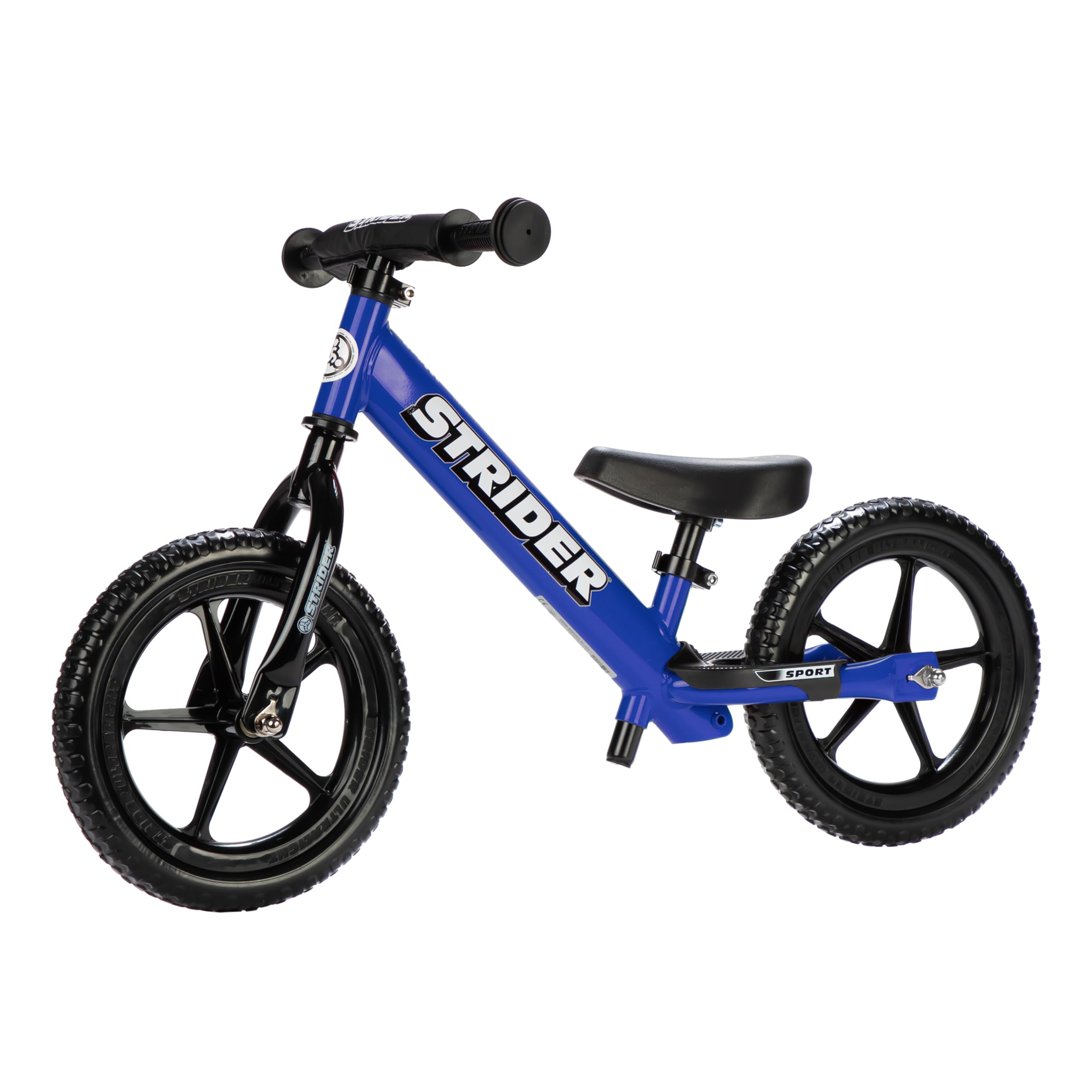
Strider 12 Sport

Top Pick
Strider 12 Sport

Ages 1-4

Our Score 9.6/10
Check Price

Worth Noting

  • The priciest 12-inch bike in this guide
  • Foam tires ride firm over gravel and roots
Tires
12 in. foam rubber
Bike Weight
6.7 lbs. (3.0 kg)
Fits Inseam
12-18 in. (31-46 cm)
Seat Height Range
11-17 in. (28-43 cm)
Read the full review

Eleven inches at the bottom, seventeen at the top. The Strider 12 Sport's seat covers more ground than any other bike in this guide, and it is sized to an inseam of 12 to 18 inches — which is the difference between a child who is just steady on their feet and a four-year-old who is ready to leave the balance bike behind.

That range is why it is our pick. Buy one bike and it does the whole job: a toddler scoots along with both feet flat, and the same frame keeps fitting as the seat creeps up a notch every few months. At 6.7 pounds it is light enough that a two-year-old can wrestle it upright after a tip-over, which in practice is what keeps a bike in use rather than leaning against the garage wall.

The 12-inch foam rubber tires are the other reason we are comfortable recommending it. There is no air to lose, no pump, no flat on the first ride down a gravel path, and they roll well enough on pavement, packed dirt and carpet. The trade-off is firmness: an air tire smooths out roots and chunky gravel in a way foam does not, and a confident four-year-old will feel the difference.

If your child is small for their age, the 12 Classic below is the fit-first choice — its seat stops an inch lower, which is the difference for a two-year-old on the short side. Worth knowing too: the 60-pound rider limit is far more than any child this bike fits will weigh, so the seat range, not the weight rating, is what tells you when it is time to move on.

Bottom line: We recommend it for the 11-to-17-inch seat range: one 6.7-pound bike that fits a one-year-old on day one and a tall four-year-old two summers later.
2

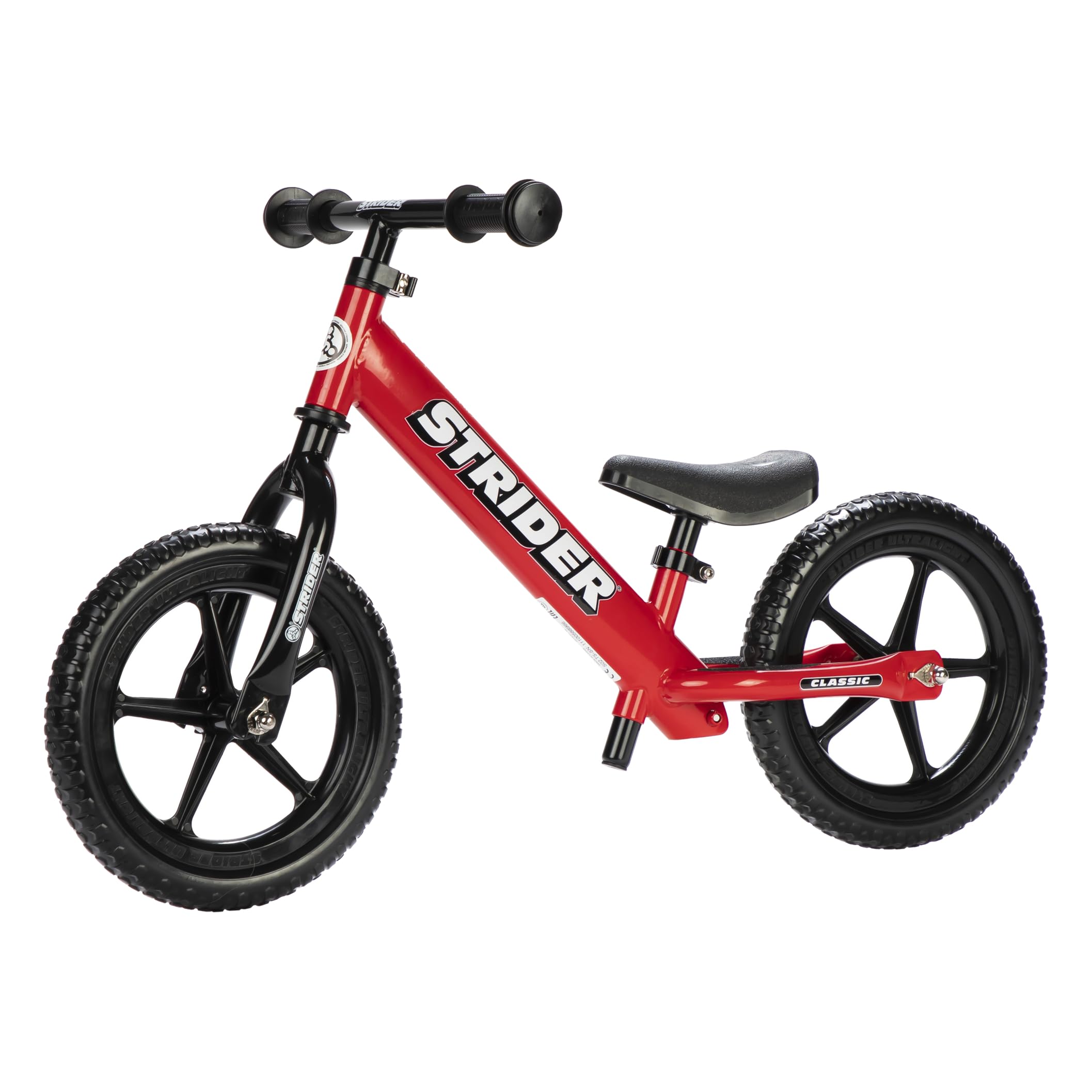
Strider 12 Classic

Strider 12 Classic

Smallest toddlers

Our Score 9.6/10
Check Price

Worth Noting

  • Handlebar clamp can twist if it works loose
Age Range
1-3 years
Bike Weight
6.5 lbs. (2.9 kg)
Fits Inseam
12-17 in. (30-43 cm)
Seat Height Range
11-16 in. (28-40 cm)
Read the full review

The Classic is the 12 Sport with the ceiling lowered. Same steel frame, same 12-inch foam rubber tires, same never-flat promise — and a seat that tops out at 16 inches instead of 17, for a good deal less money. If your rider is on the small side, that is the version to buy.

The 11-inch minimum seat is the number that matters. It is the lowest seat on a two-wheel bike in this guide, and paired with a 12-to-17-inch inseam range it puts a small two-year-old flat-footed on the ground with room to bend their knees. At 6.5 pounds it is also the lightest 12-inch bike we handled, which shows up in the places that count: lifting it over a curb, carrying it home when a ride ends in tears, and a child hauling it upright without help.

Assembly is a few bolts and a few minutes, and the steel frame is covered for two years. The rest is as plain as it looks: a saddle, a set of bars, two foam tires and nothing to adjust except the height of both as your child grows. No gears, no brake, no chain guard to rattle loose.

Bottom line: For a child who will be out of it by their third birthday, this is the smarter buy: the same Strider frame and tires with a lower seat and a lower price.

3

SEREED Baby Balance Bike

SEREED Baby Balance Bike

First birthday

Our Score 9.6/10
Check Price

Worth Noting

  • Runs small for its 12-to-24-month rating
Wheels
4 wheels, 6.7 in.
Bike Weight
3.5 lb
Steering Limit
135 degrees
Rider Weight Limit
55 lb
Read the full review

Four wheels, a 135-degree steering limit and 3.5 pounds of aluminum — the SEREED baby bike is the one we hand to families buying a first birthday present. It is rated 12 to 24 months, and at 3.5 pounds it is light enough that a one-year-old can shove it across a room, which is the whole game at that age.

The stance does the safety work. Four wheels mean it stands up by itself and won't keel over when a toddler leans hard on the bars; the wheels are fully enclosed, so there are no spokes or pinch points for small fingers; and the steering limit stops the bars swinging far enough round to tip the bike when a child turns too sharply — the crash that actually happens at this age.

It is not a long-term bike, and it doesn't pretend to be. The 6.7-inch wheels are small, the seat doesn't rise far, and by two and a half most children are ready for 12-inch wheels and a real saddle range. It also runs small against its own age band, so match the seat-to-floor height to your child's inseam rather than trusting the number on the box. Assembly is a handful of bolts and a couple of minutes, and it carries a two-year warranty.

Bottom line: For a first birthday, this is the one we point to: four wheels, a 135-degree steering limit and 3.5 pounds that a one-year-old can actually move.

4

Yvolution Y Velo Junior

Yvolution Y Velo Junior

Confidence building

Our Score 9.6/10
Check Price

Worth Noting

  • 44-pound rider limit, the lowest here
Rear Wheel
Dual, converts to single
Wheel Size
9 in.
Bike Weight
7.7 lb
Rider Weight Limit
44 lb
Read the full review

It arrives with two rear wheels bolted side by side. Ride it that way and the Y Velo Junior is a three-wheeled scooter that won't fall over; unbolt the outer wheel and it becomes an ordinary balance bike. The handoff between those two states is the whole idea, and it is one no other bike here offers.

The rest of the package is unusually thoughtful. The 9-inch wheels and higher ground clearance clear curbs and broken sidewalk that stall a smaller bike, the front wheel is held to a limited arc so it can't spin right round when a child walks the bike along, and both the seat and the bars adjust as they grow. It is rated 18 months to 3 years and 44 pounds.

We kept coming back to the conversion as the reason to choose it. Most toddlers won't tolerate a wobbly first ride, and the second wheel takes the wobble out of the equation for a few weeks until the child is steering and pushing on their own. It is heavy at 7.7 pounds — about a pound more than the Striders — but that weight is what lets it stand up unaided on the driveway, and a child who can't lift it isn't riding it far from home anyway.

Bottom line: The bike for a nervous first rider: ride it on two rear wheels until confidence arrives, then take the outer one off and let them balance.

5

SEREED Toddler Balance Bike

SEREED Toddler Balance Bike

Bigger toddlers

Our Score 9.4/10
Check Price

Worth Noting

  • 7.8 pounds, heaviest bike in this guide
Bike Weight
7.8 lb
Handlebar Height
19.6-22.5 in.
Seat Height Range
12.6-17.1 in.
Rider Weight Limit
110 lb
Read the full review

An 11-inch wheel and a 110-pound weight rating don't sound like they belong on the same bike, and that is rather the point. The SEREED toddler bike is shaped like a scaled-down BMX, with a front plate for the number stickers in the box and a footrest pad on the frame for a child who is ready to lift their feet.

The seat runs 12.6 to 17.1 inches and the bars 19.6 to 22.5, both on quick releases, so the bike grows through a couple of seasons with a twist of a collar rather than a hunt for the right wrench. The 11-inch EVA tires are airless and quiet enough for a hallway, and the steel frame's 110-pound rating means the limiting factor is the child's height, not the hardware underneath them.

The catch is at the bottom of the range. That 12.6-inch minimum seat is higher than the Striders here, so a small two-year-old will be on tiptoes or waiting a few months for the fit to come to them. For a tall two-year-old, though, the combination of a 17.1-inch seat ceiling, a footrest and a price this low makes it the most bike per dollar among the bigger kids' options.

Bottom line: The pick for a tall two-year-old: 11-inch wheels, a seat that climbs to 17.1 inches and a 110-pound frame, all on quick releases that need no tools.

6

Gamfeiny Baby Balance Bike

Gamfeiny Baby Balance Bike

Light-up fun

Our Score 9.4/10
Check Price

Worth Noting

  • Runs small against its 10-to-36-month range
Assembly
No tools required
Age Range
10-36 months
Bike Weight
4.6 lb
Steering Limit
135 degrees
Read the full review

The rear wheels light up as they turn, and there are no batteries anywhere on the bike: motion does the work. It sounds like a gimmick, and half of it is, but it is the useful half — a hesitant one-year-old who won't sit on a plain bike will sit on one that throws colour across the floor when they push it.

Underneath the lights it is a four-wheel baby bike done competently: a carbon steel frame, a soft PU seat, an EVA handle, fully enclosed wheels and a 135-degree steering limit. At 4.6 pounds it is a bit heavier than the lightest baby bikes here but still easy for a toddler to shove along, and it is rated from 10 to 36 months.

Stability is where it gives ground. The bike is narrow and quick to tip when a new walker leans hard into a turn, and the four wheels do less for a wobbly child than the wider stance of the SEREED above. A child who is already walking and steering a push toy will be fine; one who is still finding their feet is better served by the wider bike.

Where it earns a place is as a gift that lands. Assembly is a buckle-and-click job with no tools, in about three minutes, which matters on a birthday morning with a queue of other boxes to open, and the light-up wheels keep the bike interesting through the months when a plain one gets parked in the corner.

Bottom line: Our pick for a toddler who needs convincing: the wheels light up as they roll, and the bike snaps together without a single tool.

7

Umatoll Baby Balance Bike

Umatoll Baby Balance Bike

Tiny riders

Our Score 9.4/10
Check Price

Worth Noting

  • Short 12-to-24-month fit window
Wheel Size
6 in.
Bike Weight
3.3 lb
Seat Positions
3
Rider Weight Limit
55 lb
Read the full review

Three seat positions and a removable basket are what the Umatoll leads with, and they say a lot about who it is for: a one-year-old who wants to bring a snack along on the ride and whose legs are growing an inch every few months.

The frame is aluminum and the whole bike weighs 3.3 pounds, about as light as a ride-on toy gets before it stops feeling like a bike. The 6-inch EVA wheels are enclosed and quiet, the rear wheel glows as it spins without batteries, and the handle has a soft TPU grip that small hands can actually close around.

The seat adjustment is the detail to get right. It moves through three detents, and a position that isn't fully seated can drop under a child's weight, so set it, listen for the click, then push down hard on the saddle before the first ride. The basket clips off when it needs a wash, and the steering limit is the same 135 degrees the other baby bikes here use.

Weight is what settles it for us. A bike a one-year-old can push across the rug without help is a bike that gets used every day, and at 3.3 pounds this one disappears under them in a way the four-and-a-half-pound bikes don't. The three-height seat buys a little more time as they grow, though not a lot of it.

Bottom line: The lightest bike here at 3.3 pounds, with a seat that clicks through three heights and a basket for whatever a toddler insists on carrying.

8

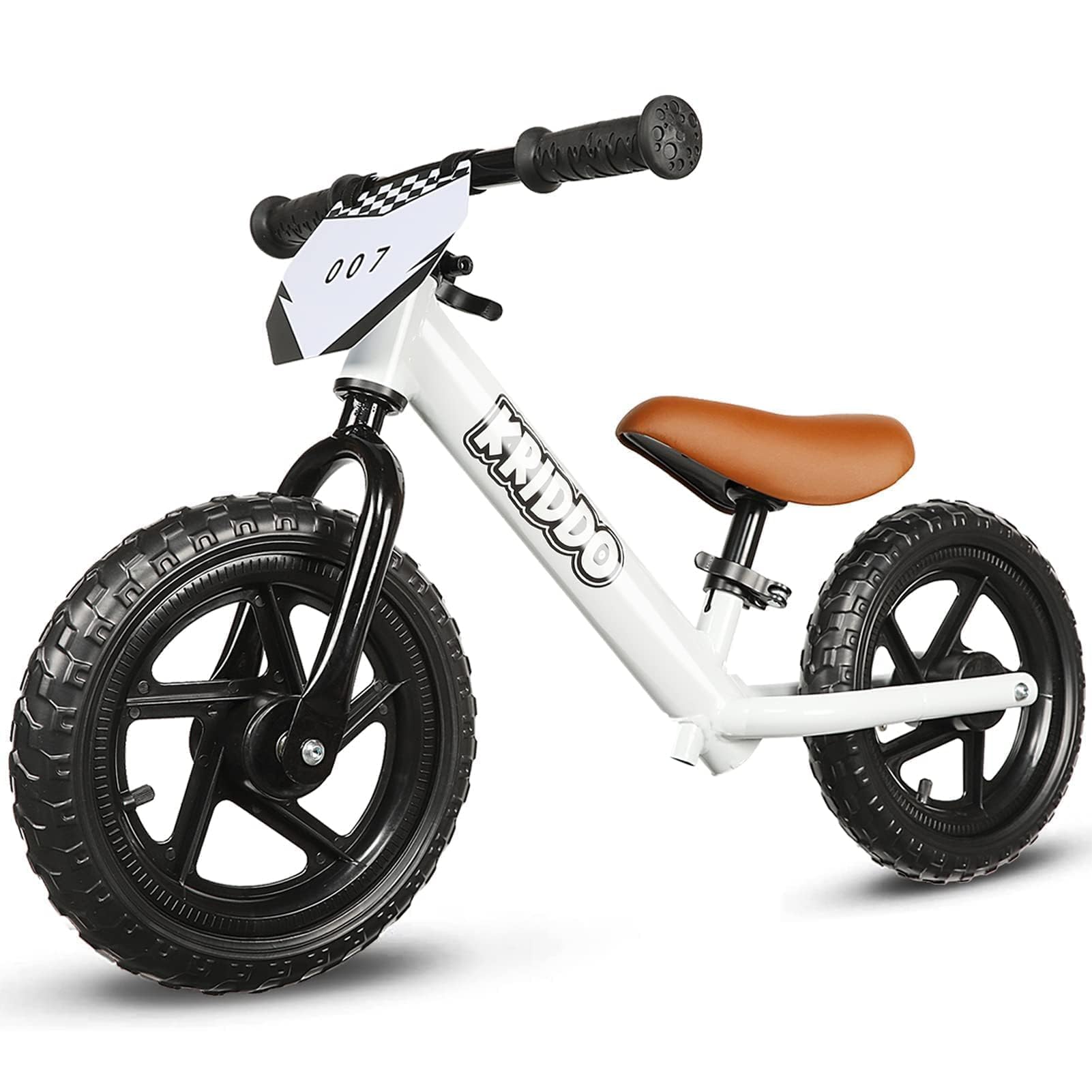
KRIDDO Toddler Balance Bike

KRIDDO Toddler Balance Bike

Growth spurts

Our Score 9.2/10
Check Price

Worth Noting

  • 6.6 pounds, heavy for a small toddler to handle
Age Range
24 months-5 years
Wheel Size
12 in.
Adjustability
Tool-free seat and bars
Rider Weight Limit
110 lb
Read the full review

A flip of a lever moves the seat, and another moves the handlebars. That is the KRIDDO's pitch, and it is a good one: the bike fits a two-year-old in a driveway in April and a five-year-old on a pump track in September without a hex key in sight.

What surprised us is how much bike comes with it. The carbon steel frame is rated to 110 pounds, with a lot of room to spare over any rider this bike will see, and the 12-inch tires are the puncture-resistant never-flat type the more expensive bikes here use. The front plate takes three sets of stickers, which is the kind of thing a four-year-old cares about far more than the frame material, and it makes the bike feel like theirs rather than a hand-me-down.

The lever is also the weak spot. A quick release that isn't cranked down lets the saddle sink under a child's weight mid-ride, so set the height, then lift the whole bike by the saddle to prove it holds before anyone rides it. Do that, and the fit range does the rest.

Bottom line: A tool-free seat and handlebar, a 110-pound frame and 12-inch tires for far less than the Striders: the pick for a family that wants one bike to last four years.

How We Chose and Tested the Best Balance Bikes

We built our shortlist from established kids' bike brands and smaller direct-to-consumer options, then filtered by seat-height range, weight, frame material, price, and whether replacement parts were easy to find. We narrowed that list to 12 bikes and spent six months with them. I timed assembly solo using only the included tools, noted whether the instructions matched the hardware, and checked for wobble in the headset and wheels after the first ride.

Fit came first: we measured each bike's lowest seat height against our testers' inseams and adjusted saddles and handlebars as kids grew. On driveways and sidewalks, we watched whether a child could plant both feet flat, push off without tipping, and steer through a gentle turn without the front wheel washing out. On grass and uneven park paths, we looked for flex in the frame and fork, and whether the bike stayed upright when a toddler stepped off mid-glide.

We kept a simple log of which bikes came out of the garage most often, how long kids stayed on them, and when they started lifting their feet for longer stretches. After each session we checked for loose bolts, scratched paint, and wobbly wheels; a few bikes looked tired within weeks, while others cleaned up like new. Value wasn't about the lowest sticker price—it was whether the bike survived hand-me-down duty and still had room to adjust.

How to Choose Balance Bikes

Fit Begins With Inseam, Not Age

A child rides these bikes with both feet flat on the ground and a slight bend in the knee, so the seat's minimum height has to sit at or just below their inseam measured in the shoes they'll ride in. Our picks bottom out between 11 inches on the Striders and 12.6 inches on the SEREED toddler bike, and that inch and a half is often the difference between riding at 18 months and waiting until two.

Measure the child, then read the seat range. A bike marketed for 1-year-olds tells you who it is sold to; the minimum seat height tells you who can actually sit on it. If the lowest setting is more than about an inch above your child's inseam, the bike will spend its first season in the closet.

Four Wheels or Two?

The four-wheel bikes here — the SEREED baby bike, the Gamfeiny, the Umatoll — are walkers with a seat. They are stable, they teach scooting and steering, and they suit a child between roughly 12 and 24 months who isn't running yet. What they can't teach is balance, because they can't fall.

From about two, a two-wheel 12-inch bike does the job the category is named for: the child pushes, coasts, lifts both feet and learns to correct without thinking about it. The Y Velo Junior splits the difference with a second rear wheel that unbolts once confidence arrives, which is a genuinely useful bridge for a cautious rider.

Tires, Wheels and Weight

Foam and EVA tires dominate this category, and mostly for good reason: they never go flat, need no pump and roll quietly on carpet and pavement. They ride firmer than air tires over roots and loose gravel, which only matters once a child is going fast enough to notice the difference.

Wheel size drives ride quality — 6 to 7 inches on the baby bikes, 9 on the Y Velo, 11 to 12 on the bigger ones — and weight matters just as much. Anything under about 7 pounds is manageable for a toddler, and the 3.3- to 3.5-pound baby bikes are the ones a one-year-old can move without an adult's hand on the bars.

Clamps, Bolts and the First Week

A quick-release seat is a real convenience on a bike a child grows out of in a season, but only if the clamp holds. Set the height, then lift the whole bike by the saddle: if the post slides, tighten the collar before anyone rides it.

Check the handlebar clamp and wheel bolts after the first week as well. New bikes settle, and bars that twist in a fall turn into a bike that steers crooked until someone straightens them. Assembly is usually a handful of bolts with the tools in the box, and nothing here needs a shop visit.

Frequently Asked Questions

Final Verdict

The Strider 12 Sport is the balance bike we point most families to, and the reason is the seat: 11 inches for a child in their first walking shoes, 17 for a four-year-old ready to coast with both feet up. One bike, bought once, covering four years of growing — that's what the premium buys.

If your rider is small for their age, the Strider 12 Classic fits them the same way with a seat that stops an inch lower. And if you're buying for a first birthday rather than a second, start with the four-wheel SEREED instead: a 12-inch bike will simply be too tall, and a baby bike is the only thing a one-year-old can move on their own.