Bikes

Best Comfort Bikes of 2026

After a few years of pretending my old road bike wasn't wrecking my lower back, I finally admitted that a 20-minute ride shouldn't require a recovery nap. Comfort bikes exist for exactly that moment: they swap the hunched-over posture for an upright position, trade skinny saddles for wider ones with actual padding, and add suspension and easy gearing so you can ride without bracing for every bump. That's the promise, anyway—but 'comfort' on a spec sheet doesn't always translate to comfort on the pavement.

Over the past eight months, my team and I have ridden seven comfort bikes on neighborhood streets, paved trails, and grocery runs, and the differences are real. We assembled each one from the box, paid attention to how the seat felt after an hour, and watched for wobbles, creaks, and brake fade as the miles added up—and noted which ones looked as good as they rode. A good comfort bike should feel like an invitation to ride, not a compromise you make for your back—and the seven below are the ones that actually delivered on that.

1

sixthreezero EVRYjourney

Top Pick
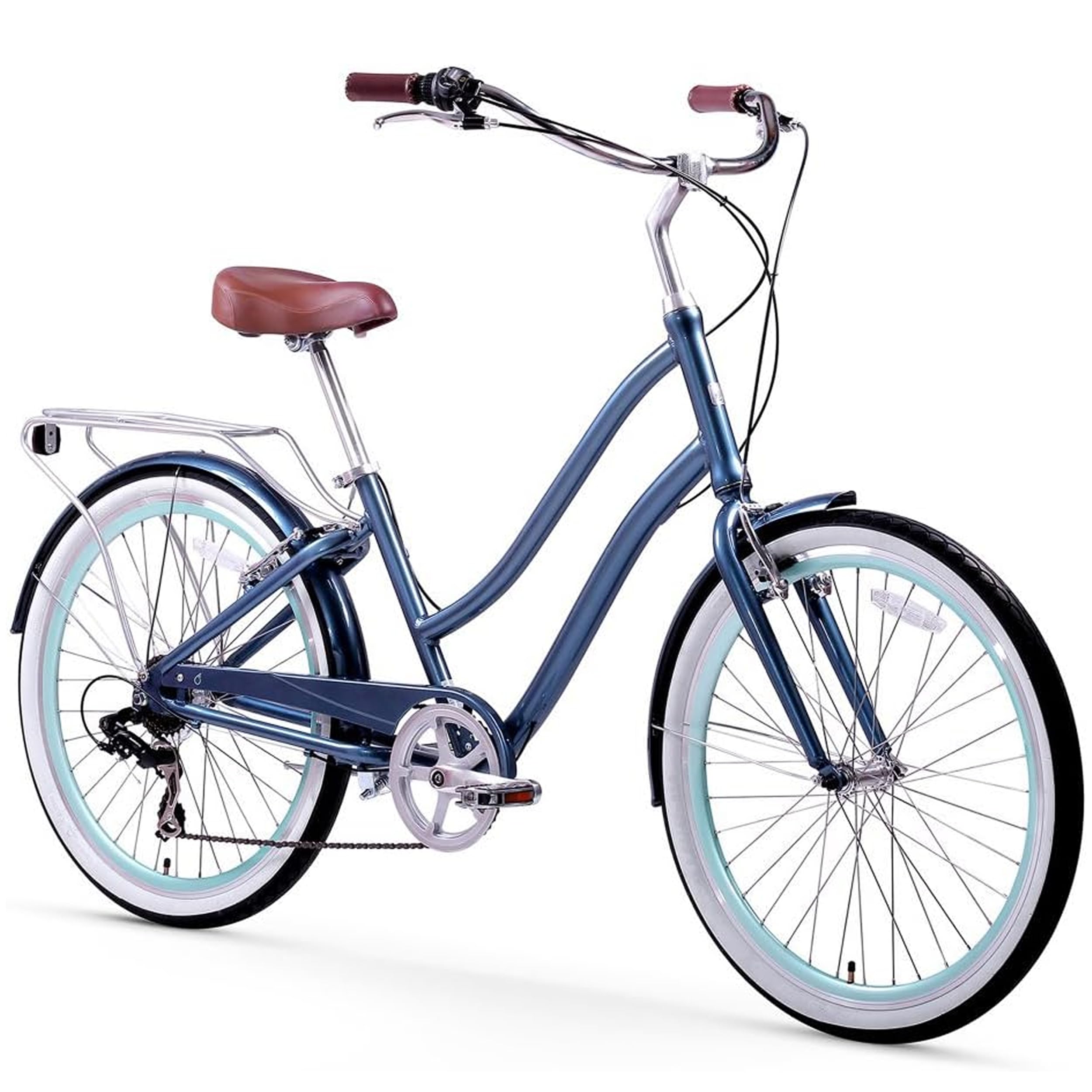
sixthreezero EVRYjourney

Upright everyday riding

Our Score 9.0/10
Check Price

Worth Noting

  • Rigid fork, so the tires do all the cushioning
Frame
Step-through aluminum
Tires
26 x 2-inch semi-slick
Weight
39.7 lb
Gearing
7-speed Shimano derailleur
Read the full review

The pedals sit forward of the saddle on this bike rather than almost underneath it, and that one choice explains most of the comfort. At a stop you stay seated and put a foot flat on the ground; you don't slide off the nose of the saddle or balance on tiptoe. For anyone coming back to riding after a decade away, that's the difference between a bike that gets used and one that leans against the garage wall.

Add a swept-back bar and a wide stitched saddle and you get the pick we recommend first. The 7-speed Shimano drivetrain with a trigger shifter covers rolling streets and rail-trail grades, and the aluminum step-through frame — sold as a women's model, though the geometry suits anyone who wants an easy mount — is light enough to lift onto a hitch rack and simple to get on with your hands full.

The finish is where this one separates from the cheaper cruisers here. Full fenders that match the frame, a rear rack, synthetic leather grips and saddle with visible stitching, and 2-inch semi-slick tires that soak up cracked pavement without dragging. We were also glad to see front and rear hand brakes instead of a coaster brake, because hand brakes give you far more control on a descent.

Two things to know. The fork is rigid, so the tires do all the cushioning — fine on pavement and packed paths, less so on broken asphalt. And the bars and saddle want a real dial-in session; the range is there, but plan on a couple of short test rides with a hex key in your pocket before the position feels right. Neither is a reason to look elsewhere, and the higher price is buying a frame, drivetrain, and finish the cheaper picks can't match.

Bottom line: We recommend it first for most riders: the foot-forward geometry makes stopping and starting easy, and the 7-speed drivetrain, fenders, and rack make it a complete everyday bike.
2

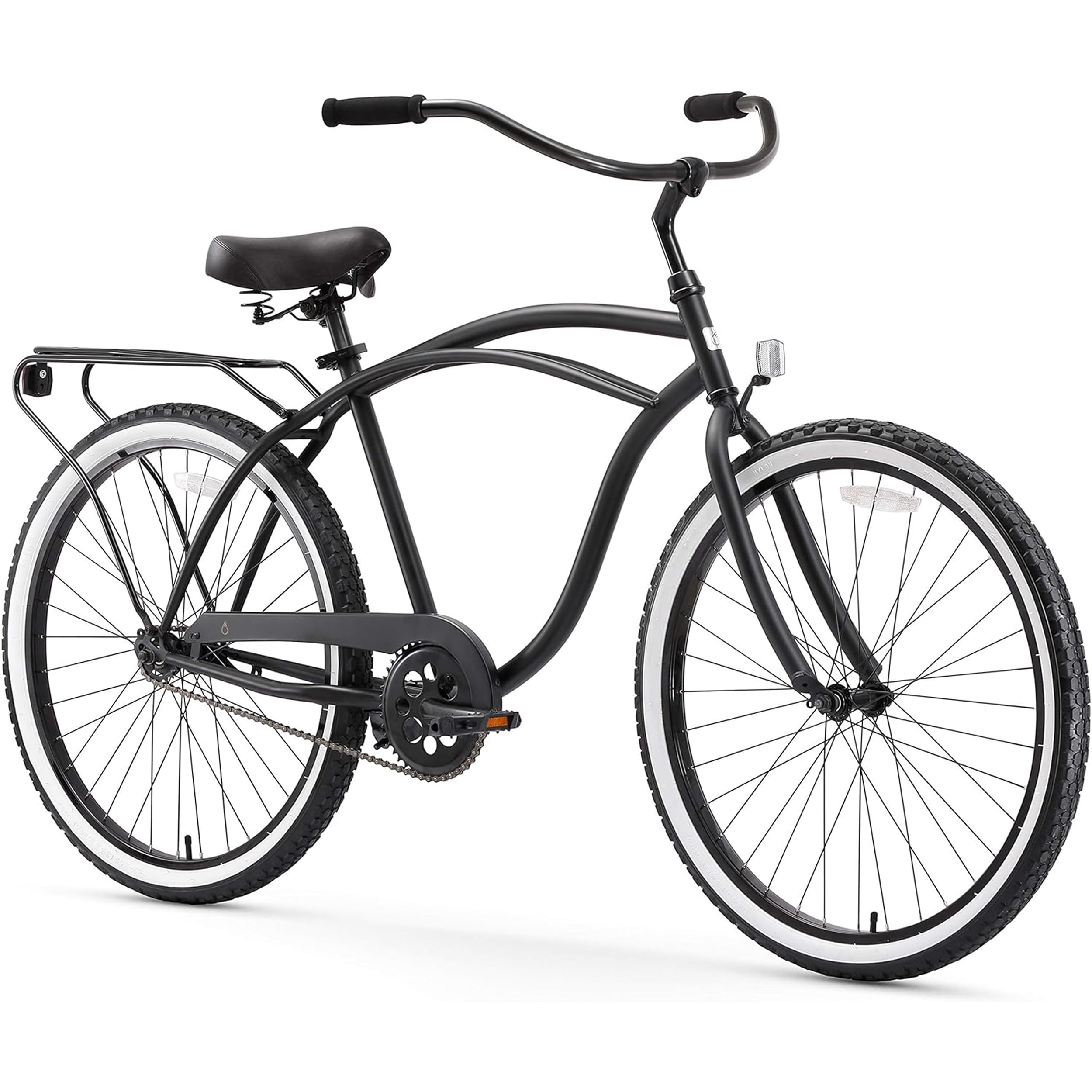
sixthreezero Around The Block

sixthreezero Around The Block

Flat-terrain cruising

Our Score 8.8/10
Check Price

Worth Noting

  • Single gear makes any hill a stand-and-push
  • Rear spokes are the weak point under load
Frame
19-inch steel
Brakes
Rear coaster brake
Weight
40 lb
Gearing
Single-speed
Read the full review

One gear is the whole argument for this bike, and on flat pavement it's a good argument. There's no derailleur to tune, no shifter cable to stretch, no extra hardware hanging off the frame. You pedal, and when you want to slow down you push the pedals backward into the rear coaster brake. We like that for a neighborhood bike that might sit for a month and still be ready to roll the moment you wheel it out.

The build is the other half of the case. Tools come in the box, the chain is already on the sprockets, and the steps are short enough that assembly isn't the obstacle. The 19-inch steel frame puts you upright and a little behind the pedals, the 26 x 2-inch whitewall tires float over chip seal, and the rear rack is already there for a basket or panniers.

At 40 pounds it's no featherweight, but the weight sits low and the steering is calm, which is what you want on a bike you ride in street clothes. The matte black finish hides scuffs better than the glossy colors on the other cruisers here, and the cockpit is roomy, which suits taller riders particularly well.

Where it stops is the first real hill — standing and grinding one gear gets old fast if your route has any grade, and that's the honest boundary of this bike. Rear spokes are the part to watch if you load the rack heavily or ride near the top of the weight limit; a spoke wrench and a check every few months is cheap insurance.

Bottom line: Buy this one if your riding is flat and simple — we think the single gear and coaster brake are a feature on level pavement, not a shortcut.

3

Max4out Beach Cruiser

Max4out Beach Cruiser

Shorter riders

Our Score 8.4/10
Check Price

Worth Noting

  • Seat is narrow and firm for longer rides
  • Instructions are thin for a first build
Brakes
Dual V-brake
Gearing
Single-speed
Wheel Size
24 inches
Fits Riders
4'9" to 5'6"
Read the full review

Twenty-four-inch wheels are the point of this one. The current build fits riders from 4'9" to 5'6", which covers a lot of people that 26-inch cruisers leave standing on tiptoe, and the low frame, low center of gravity, and wide rear axle make it feel planted at walking pace. If you're 5'4" and you've been balancing at stoplights on a bike that's too tall, this is the fix.

It's also the cheapest complete bike here, and we think the money goes to the right places: a woven bamboo basket up front, a soft foam saddle, swept bars, dual V-brakes, and a paint job that looks considerably better than the price suggests. Colors run from pink through purple to black, so you aren't stuck with one finish.

The seat is the first thing to change if you plan to ride farther than the corner store — it's narrow for a cruiser, and it doesn't match the wide sprung saddles on the others. The single gear and small wheels cap what the bike is for, too: flat, short trips rather than long days on a rail trail, and a six-footer will feel perched. Assembly is the other soft spot; the hardware is sound, but the instructions are thin, so plan on a shop tune if you'd rather not sort the brakes yourself.

Bottom line: We point shorter riders here first — the 24-inch build fits 4'9" to 5'6", adds a basket, and costs the least of the group.

4

Schwinn Suburban

Schwinn Suburban

Rough pavement

Our Score 8.2/10
Check Price

Worth Noting

  • Step-over frame takes a leg swing to mount
  • Fussiest assembly in this group
Frame
17-inch alloy steel, step-over
Gearing
7-speed twist shifter
Suspension
Front
Fits Riders
5'5" to 6'3"
Read the full review

The Suburban is the only bike here with a suspension fork, and on the chopped-up asphalt that passes for a lot of neighborhood streets, that fork earns its place. The steel step-over frame and 26-inch tires handle the rest, and the position is upright without being bolt-straight — you're sitting up, but you can still put weight through the pedals on a climb.

Fit is the second reason it's on this list. Schwinn lists it for riders from 5'5" to 6'3", which makes it the tall-friendly option in this set, and the 17-inch frame keeps standover manageable across that spread. The trade-off is the top tube: you swing a leg over rather than stepping through, which is fine on flat ground and less appealing with a loaded rear rack.

We rate it as the pick when the pavement is rough or you're on the tall side. The 7-speed twist shifter is easy to work with gloves on, linear-pull hand brakes front and rear give you real stopping control, and the fenders and wide cushioned seat are the sort of equipment you'd otherwise be buying separately.

Two practical notes. At 37.8 pounds it isn't a bike you'll carry up stairs without thinking about it. And the out-of-box build is the fussiest in this group — the instructions are thin and the brakes and derailleur usually want a genuine adjustment before the first ride, so budget an afternoon or a shop tune. Do that, and there's a lot of bike here for the money.

Bottom line: Our pick for rough pavement and taller riders: the suspension fork is unique here, and the 5'5" to 6'3" fit range covers riders the cruisers don't.

How We Tested Comfort Bikes

We started by pulling together a shortlist of 20 comfort bikes from established brands, filtering out anything with a suspension fork that felt like a pogo stick or a seat that looked like it belonged on a spin bike. We ordered seven that ranged from budget-friendly to mid-range, assembled each one in a garage using only the included tools, and timed how long it took. We noted whether the instructions were clear enough to follow without a YouTube video, whether the brakes needed adjusting out of the box, and how sturdy the kickstand and pedals felt once everything was tightened.

Then we rode them. Each bike logged at least 50 miles over eight months—on paved trails, neighborhood streets, and a few bumpy gravel paths. We paid attention to how the saddle felt after an hour (width matters more than padding), whether the upright position caused any wrist or lower-back strain, and how the brakes performed on steep downhills and in light rain. We also checked for creaks, rust, and loose bolts after each month, and noted which bikes still looked sharp after being parked outside a coffee shop.

Value was the final filter: we compared what each bike cost against the quality of its components, the comfort of its stock saddle, and how well it held up. A bike that needed a new seat and a tune-up within the first month wasn't a bargain.

How to Choose Comfort Bikes

Riding Position Comes Before Saddle Padding

A comfort bike raises the bars and moves the pedals forward, which takes weight off your hands and lets you sit up. The detail worth checking first is where the crank sits relative to the saddle: on the EVRYjourney and the Around The Block it's set forward, so you can stay in the seat at a stop and put a foot flat on the ground. A wide saddle helps, but no saddle rescues bars that are too low. Sit on the bike with one pedal down; if your knee locks straight or your hips rock to reach, the fit is wrong.

Match the Frame to Your Height and How You Get On

A step-through frame is exactly that: you step through it instead of swinging a leg over the saddle, which matters if your hips are stiff, your hands are full, or a rear rack is carrying groceries. Step-over frames are a little stiffer and suit riders who mostly ride unloaded. Choose by how you'll mount at a standstill. Height ranges are printed for a reason — the Schwinn Suburban covers 5'5" to 6'3", while the 24-inch Max4out tops out at 5'6". Check the range, then check standover.

Decide How Many Gears Your Terrain Asks For

A single-speed cruiser isn't a compromise if you ride flat pavement; it's a simplification. There's no derailleur to tune and no shifter cable to stretch, and the Around The Block's rear coaster brake means you stop by pedaling backward. The moment your regular route includes a genuine grade, though, one gear turns into standing and pushing. A 7-speed drivetrain like those on the EVRYjourney and the Suburban handles rolling streets and rail trails. Be honest about the steepest hill on the loop you actually ride.

Budget for Brakes and a Real Setup

Almost every bike in this category ships in a box, partly assembled, and partly assembled is not the same as ready to ride. Before the first trip, spin both wheels and watch the rim at the brake pads, squeeze each lever to confirm the pads meet the rim square, and check that the seat post, stem, and pedals are tight. Cable housings settle in the first few rides, so plan to re-tension the brakes and the derailleur after a week or so. If that's not a job you want, a shop tune is money well spent.

Think About Weight Before You Fall for a Finish

The steel cruisers here run about 37 to 40 pounds, and the aluminum EVRYjourney is listed at 18 kg — close to the same, so on this set the frame material isn't buying you a lighter bike. Weight barely matters if the bike lives at ground level in a garage. It matters a lot if it goes on a hitch rack, up a flight of stairs, or into an elevator. We'd weigh that against the paint job you love. Weigh the lift, not the label.

Frequently Asked Questions

Final Verdict

Start with the sixthreezero EVRYjourney. The foot-forward pedal position is the most useful thing on this page: you stop with a foot down, start again without a wobble, and the 7-speed drivetrain lets the same bike handle a flat greenway and a rolling suburban loop. It's the most expensive of the four, and it's the one that will get ridden.

If your riding really is flat, the Around The Block strips out the maintenance and does the same upright job for less. Rough pavement or a taller rider tips the decision to the Schwinn Suburban and its suspension fork.