Components

Best Bike Bottle Cages of 2026

A bottle cage has one job, and it's caught between two opposite failures: holding a bottle hard enough that it stays put through a pothole, and letting go cleanly when you're reaching down mid-climb without looking. Most cages lean too far one way — thin plastic ones rattle a bottle loose on rough pavement, and the grippiest metal ones make you wrestle for a sip. Then there's fit, which nobody warns you about until they've bought the wrong thing: bottle diameters vary, and a cage that swallows one bottle refuses another. Get it right and the whole thing disappears.

I've ridden the same steel frame for years, and after a cage cracked at the mounting tabs on a set of railroad tracks, I started paying attention. We mounted 14 cages on road, gravel, and commuter bikes and lived with them for four months. The differences in grip, finish, and included hardware showed up within a couple of rides, and price predicted none of it. What's below is sorted by what each cage is actually good at.

1

Pro Bike Tool Aluminum Cage

Top Pick
Pro Bike Tool Aluminum Cage

Everyday road riding

Our Score 9.2/10
Check Price

Worth Noting

  • Matte finish scuffs clear bottles
Mount
Two bolts, oval holes
Weight
1.69 oz
Material
CNC machined aluminum
Bottle Fit
500–950 ml
Read the full review

Forty-eight grams of heat-treated aluminum, machined in one piece and finished in matte black: the numbers are ordinary for the category. What isn't ordinary is the give in the arms. Pro Bike Tool builds in roughly ±0.2 inch of flex, enough to swallow a 24-ounce insulated bottle and still clamp a thin-walled race bottle without rattling. The oval bolt holes matter too, since they let you slide the cage a few millimeters along the tube, which is often the difference between a bottle that clears your frame pump and one that doesn't.

Of the cages we mounted, this is the one we reach for first. A full bottle stayed put through washboard, expansion joints, and a stretch of gravel that has shaken looser cages apart, and the two-bolt install took about as long as threading two screws. It is the best balance of grip, weight, and price in this group, and it is the cage we keep recommending to anyone who has just bought a frame and needs to fill two bosses.

The thing to check before ordering is clearance. On a compact frame with a short seat tube, a tall bottle can foul the cage's shoulder before it seats all the way, and the oval holes only buy a few millimeters. Standard road, hybrid, and gravel frames won't notice. If yours is tight, the side-load cage below solves the problem in one move.

Bottom line: Buy this one first: it grips a full bottle over washboard, weighs 48 grams, and installs with two bolts, the best balance of grip, weight, and price in this group.

2

USHAKE 2-Pack Cage

USHAKE 2-Pack Cage

Two-bike setups

Our Score 9.2/10
Check Price

Worth Noting

  • Bottles under 2.75 inches can slide through
Weight
61 g each
Included
4 bolts, hex key
Material
6061-T6 aluminum
Bottle Fit
2.75–3 in diameter
Read the full review

Two cages, four M5 bolts, and a 4 mm hex key: the USHAKE pack is the lowest cost per cage in this group and the one that hands you the tool as well. We fitted a set to a commuter and a hardtail, and the whole job was under ten minutes including hunting for the key. What you get is heat-treated 6061 aluminum and a traditional wire shape that looks like it came off a bike-shop shelf rather than a discount bin.

The arms bend, and that is the design working as intended. The cage is rated for bottles from 2.75 to 3 inches across, with a 26-ounce bottle fitting snugly, and you close the gap by squeezing the arms in around your own bottle. Do it once and a bottle that would otherwise slide straight through the bottom stays where you put it. Skip that step and the cage is only as good as the bottle you happened to grab.

Rough ground is where it gives ground. On chunky gravel and rooty singletrack we had to re-squeeze the arms to keep a full bottle from working loose, and a heavy bottle will rattle here where the Elite's elastomer won't let it. For commuting, rail trails, kids' bikes, and second mounts, that is a trade we make every time.

Bottom line: Two aluminum cages, four bolts and a hex key for the lowest cost per cage here, our pick when you have two mounts to fill and bottles that fit snugly.

3

Elite Custom Race

Elite Custom Race

Gravel and descents

Our Score 9.2/10
Check Price

Worth Noting

  • Firm grip makes one-handed re-insertion a shove
  • Built for 74 mm bottles only
Grip
Self-adjusting elastomer
Weight
1.83 oz
Material
Fiberglass-reinforced nylon
Bottle Fit
74 mm standard
Read the full review

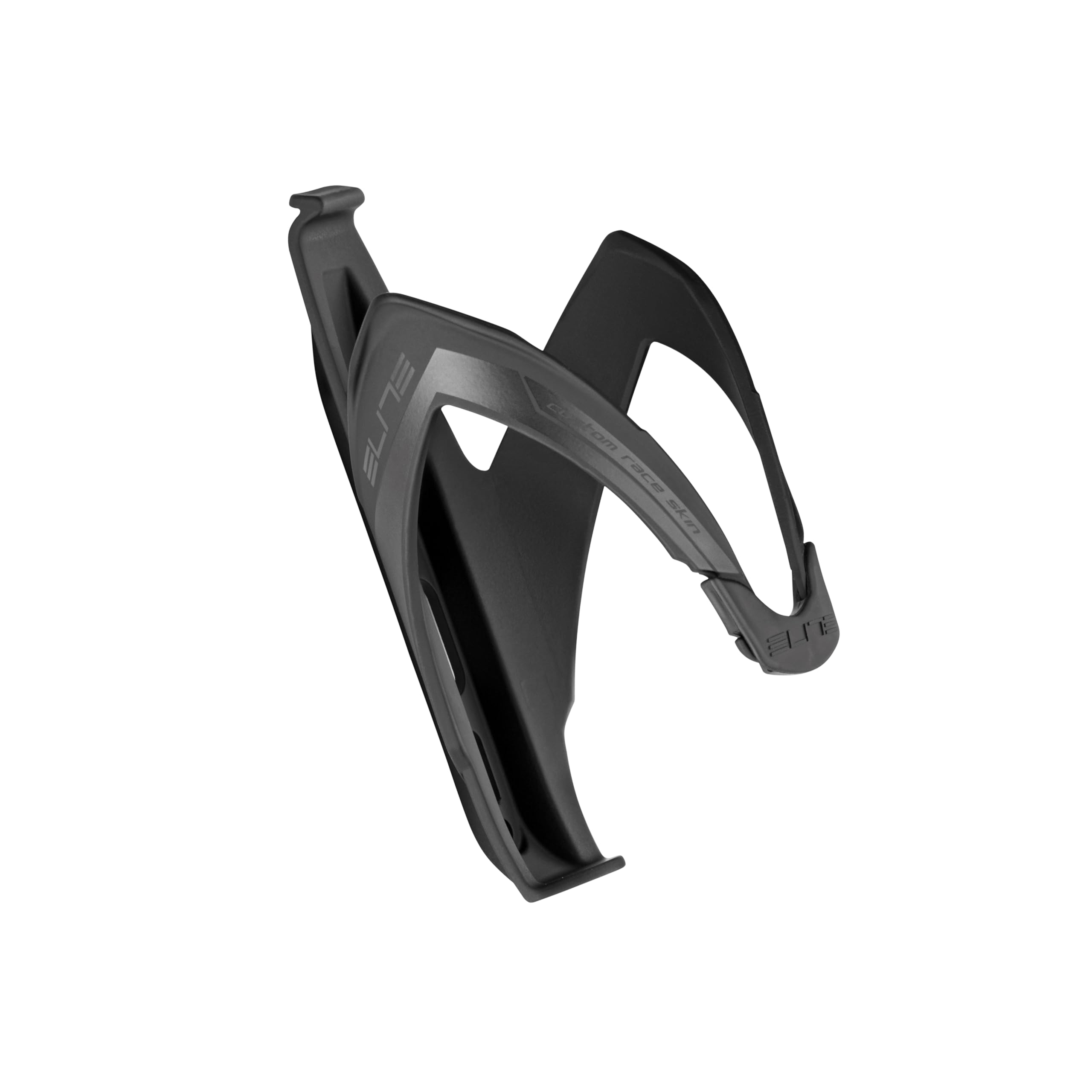
Elite builds the Custom Race around a front insert and a thermoplastic rubber band, and both of them press against the bottle instead of leaving the arms to do all the work. The fiberglass-reinforced body holds its shape; the elastomer does the gripping. It is the cage that turns up on WorldTour bikes, which is a nice thing to know and not really a reason to buy one.

What it buys you shows up on bad surfaces. Chip seal, expansion joints, gravel: the bottle doesn't chatter in the cage and it doesn't creep upward, which is the failure that ends with a bottle in the road behind you. At 52 grams and 145 mm tall it looks like a race part should, and there are enough colors and finishes to match most frames.

This is the cage we fit to any bike that spends real time on broken pavement, and the firm pull is the price of a bottle that never moves. The same grip that keeps a bottle planted makes one-handed re-insertion a shove rather than a slide, and the cage is built around 74 mm standard bottles, so a fat insulated one won't go in at all. On smooth roads with standard bottles, it is simply a very good cage you stop thinking about.

Bottom line: The firmest hold on this list for gravel and broken pavement; if your bottles are 74 mm standard and you don't mind a firm pull, it's worth the step up.

4

Lezyne Flow Cage SL

Lezyne Flow Cage SL

Small, tight frames

Our Score 9.2/10
Check Price

Worth Noting

  • Heaviest cage in this group at 2.88 oz
  • Tight on wide and insulated bottles
Entry
Side-load, left or right
Mount
Oval holes
Weight
2.88 oz
Material
Fiber-reinforced composite
Read the full review

On a small frame, or any frame with a bag strapped to the top tube, a front-load cage asks the bottle to come out the way it went in: straight up. There is often no room for that, which is how riders end up on tiny bottles. The Flow Cage SL takes the bottle out the side instead, and Lezyne sells left- and right-load versions so you can aim the exit away from the seat tube and toward your hand.

We fitted the right-load version to a frame that had been limited to a small bottle, and the difference was immediate: a full bottle comes out cleanly and goes back in without a search. The composite body resists dents the way an alloy cage doesn't, and the oval mounting holes give you room to slide it along the tube for clearance.

Side entry only helps if the bottle has somewhere to go, so check the exit path before you commit to the lower mount. Plenty of frames have the bosses but not the room. The rest of the cage is straightforward: it holds a bottle over bumps, it doesn't rattle, and the finish has shrugged off road grit and hose-offs.

Bottom line: Buy it when a front-load cage can't get a bottle out of your frame: side entry fixes small frames and crowded down tubes, and it still holds on rough ground.

5

ThinkTop Carbon 2-Pack

ThinkTop Carbon 2-Pack

Light road builds

Our Score 9.2/10
Check Price

Worth Noting

  • Carbon arms can crack rather than bend
Pack
2 cages
Weight
About 25 g each
Material
3K T800 carbon fiber
Bottle Fit
71–75 mm
Read the full review

We expected flex. A two-pack of carbon cages at this price usually means a shell that creaks and arms that bow when you push a full bottle home. These didn't. The 3K weave is real and finished in matte, the arms are stiff, and a standard bottle seats with a solid click we did not expect at the price.

At about 25 grams each they are the lightest cages here bar the Pergear pair, and they are shaped for bottles from 2.79 to 2.95 inches across, which is standard cycling bottles and not the fat insulated kind. The arms and base on this version are reinforced, ThinkTop's answer to early breakage, and the pair we mounted has taken potholes and curb hops without a mark.

For a road bike, this is where we spend carbon money: two cages, 50 grams total, and a finish that looks like it cost more than the pair did. The caution is the material. Carbon does not bend the way aluminum does, and a hard knock such as a dropped bike, a crash, or a bottle jammed in at the wrong angle can crack an arm where a wire cage just bends back. On a mountain bike, we take alloy.

Bottom line: A real carbon pair at 25 grams a side, with a firm hold and a finish that looks expensive, best kept for road bikes where a cracked arm is less likely.

6

Pergear Carbon 2-Pack

Pergear Carbon 2-Pack

Wide, big bottles

Our Score 9.2/10
Check Price

Worth Noting

  • Heavy bottles can work loose on rough ground
Pack
2 cages
Weight
23 g each
Material
3K carbon fiber
Bottle Fit
74–90 mm
Read the full review

Most cages here are built around a bottle roughly 74 mm across, and the ones that aren't usually just tolerate a wider bottle. Pergear rates its cage from 74 to 90 mm, which sounds like marketing until you try to carry a big insulated bottle and find that nothing on the bike will hold it.

The rest is conventional carbon-cage work done well. At 23 grams a side these are the lightest cages in this group, the 3K weave is glossy and completely unbranded, and the arms are stiff enough that a standard bottle does not shift. On a frame with no decals to match, the no-logo look is the right call.

Fit is the thing to check, because a wide bottle is a big object to hang off a down tube. Measure it against your crank arm, your frame bag, and the gap between the tubes before a long ride; a wide cage on a small frame can put the bottle exactly where your knee wants to be.

The case for it is specific: a bottle that no other cage in this group will take. Commuters with insulated bottles, tourers who refill a big bottle at the last stop, anyone who has been wedging a fat bottle into a wire cage and watching it creep upward, this is the fix. Standard bottles and smooth roads do not need it.

Bottom line: Buy it if your bottle is wider than a standard cage will take: it's the only one here rated to 90 mm, and it behaves on pavement.

7

Planet Bike Alloy Cage

Planet Bike Alloy Cage

Color-matched builds

Our Score 9.0/10
Check Price

Worth Noting

  • Ships without mounting bolts
Mount
64 mm bolt spacing
Material
6061 aluminum
Color Options
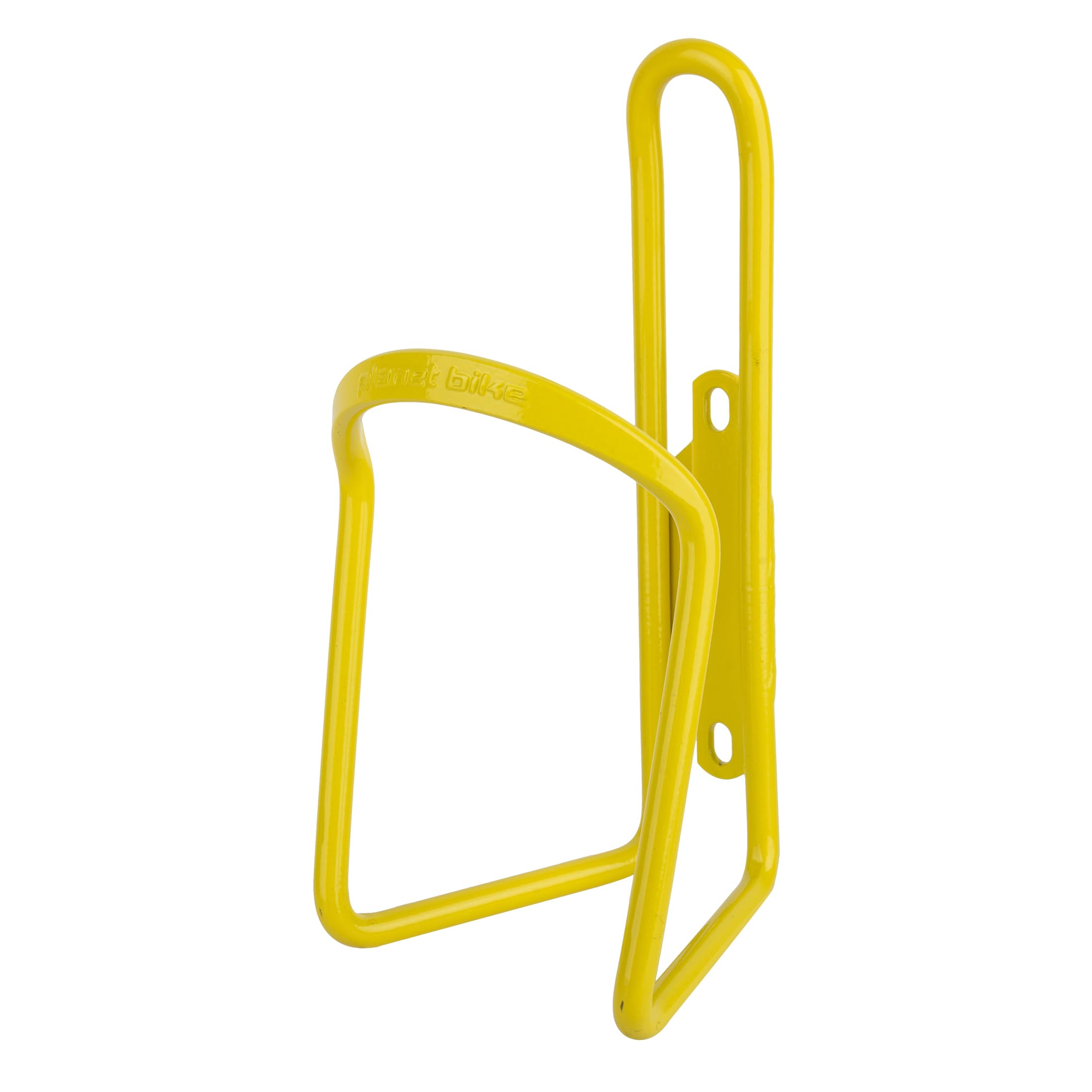
Yellow, celeste green, and more
Read the full review

Celeste green. Yellow. White, silver, and anodized red and blue. Planet Bike sells this cage in a color range nobody else here comes close to, and if you have ever rattle-canned a cage to match bar tape, you know exactly why that matters. We pick it for the bike you look at as much as you ride: a townie, a cruiser, a rebuilt steel frame where the cage is part of the finish.

Under the paint it is a plain 6061 aluminum cage that bolts to standard mounts about 64 mm apart. It held a 24-ounce bottle through errands and rail-trail miles without a rattle, and Planet Bike covers it with a limited lifetime warranty against manufacturing defects, which is a long commitment for a part this small.

It is sold as a single cage, so a two-bottle bike means two orders, and it is the plainest thing here in the hand: no elastomer, no carbon, no logos. That is the point. It holds a bottle, matches the frame, and gives you nothing to adjust or fuss over.

Bottom line: The cage to buy when it has to match the bike: plain aluminum in a color you can actually find, with enough grip for a full bottle and a lifetime warranty.

How We Tested 14 Bike Bottle Cages

We started with a list of roughly 40 cages sold by bike shops and major retailers, then cut it down by material, mounting style, the bottle size each was designed around, and price. We ordered 14, favoring designs with enough owner feedback to suggest a real track record and a spread of styles rather than one material repeated.

Installation came first. Each cage went onto a bike with a multitool and whatever hardware came in the box, and we noted whether bolts and washers were included, whether the mounting slots were long enough to line up with frame eyelets, and how much room the cage left inside a tight frame triangle — one tester's small commuter frame only accepted a side-loading design. We torqued every bolt to spec and rechecked them weekly, since a cage that works loose is usually a hardware problem, not a cage problem.

Then came four months of real riding: a 12-mile commute over railroad tracks and patched asphalt, weekend gravel loops, a mountain bike that swapped cages twice, and long indoor trainer sessions where sweat does its own damage. We ran bottles from three different brands through every cage to see how fit shifted, pulled and replaced them with gloved hands mid-ride, and checked after each rough section whether the bottle had crept upward or launched. At the end we looked at scuffed finish, stress marks around the mounting tabs, and whether the grip had loosened at all.

How to Choose Bike Bottle Cages

Match the Cage to Your Bottle, Not the Other Way Around

Standard cycling bottles are about 74 mm across, and most cages are built around that. Wire-style cages open wider: the USHAKE spans 2.75 to 3 inches, roughly 69 to 76 mm. Carbon cages tend to be stricter, and the ThinkTop is rated for 2.79 to 2.95 inches, so a bottle outside that range sits loosely or not at all. Insulated bottles run fatter, which is where a wide cage like the Pergear, rated to 90 mm, earns its place.

Measure across the base of the bottle you actually ride with before ordering. A cage that is too roomy lets a bottle slide through the bottom on the first bump, and one that is too snug means a fight every time you take a drink. The number on the box is a fit range, not a bottle capacity.

Grip Matters More on Rough Ground

Cages hold bottles one of two ways: the spring of their arms, or something soft pressing against the bottle. Wire and carbon cages rely on the arms, which is fine on pavement and perfectly adequate on gravel once you have squeezed the arms around your own bottle. The Elite Custom Race adds an elastomer insert and a rubber band, and on washboard the difference is obvious, because the bottle neither chatters nor creeps upward.

Grip cuts both ways. The hold that keeps a bottle planted also makes it harder to pull out and push back one-handed, so riders who swap bottles on a climb tend to prefer a cage with more give, while riders on broken surfaces take the firm hold and live with the tug.

Check Clearance and Mounting Before You Buy

Cages bolt to the threaded bosses on the frame, spaced about 64 mm apart on virtually every bike. Oval mounting holes, which the Pro Bike Tool and Lezyne cages both use, let you slide the cage a few millimeters so a bottle clears a frame pump, a bag, or whatever sits on the neighbouring mount.

On small frames and bikes wearing a frame bag, a front-entry cage often cannot get a bottle out at all. A side-load cage such as the Lezyne Flow Cage SL fixes that, and it comes in left and right versions so the bottle exits away from the seat tube. Look at the exit path, not just the mounting holes.

Material, Weight, and What You're Paying For

Aluminum is the default for good reasons: it is inexpensive, it bends to fit a bottle, and a knock dents it rather than destroying it. Composite and nylon cages, like the Elite and Lezyne, shrug off dents and hold their shape. Carbon is the lightest option here at 23 to 25 grams a cage, but it cracks instead of bending, which makes it a better match for road bikes than trail bikes.

For most riders, weight is the least important number in this category. Going from a 61-gram cage to a 25-gram one saves less than the water in the bottle. Buy light if you are counting grams anyway; otherwise put the money into grip and fit.

Frequently Asked Questions

Final Verdict

The Pro Bike Tool cage is what we bolt to the first bike in the garage: 48 grams, a grip that holds a full bottle over washboard, and a two-bolt install that takes about as long as threading two screws. It costs less than most of the field, and nothing else here balances grip, weight, and price as well.

If your riding is mostly gravel or broken pavement and you want the firmest hold on the page, spend the extra on the Elite Custom Race. If your frame is small enough that a bottle cannot come out the top, the answer changes entirely: buy the Lezyne Flow Cage SL.