Lights & Electronics

Best Bike Cameras of 2026

Nobody buys a bike camera because they want a highlight reel. They buy one because of the close pass — the mirror that came within an inch of the bar tape. What you're paying for is a record you can read later: a plate, a face, a timestamp that holds up. Everything else — the mounts, the app, the battery — exists to make sure that clip actually exists when you get home.

First-time buyers tend to fixate on resolution, but the sensor is only half the story. A shaky mount ruins 4K footage faster than a cheaper camera bolted down properly, and one that overheats in the sun or quits at mile 40 is worse than no camera at all. Over eight months, my team and I rode with 12 cameras on commutes, gravel loops, and wet errand runs, comparing footage side by side. The picks below are the ones that kept recording and produced clips we could actually read.

1

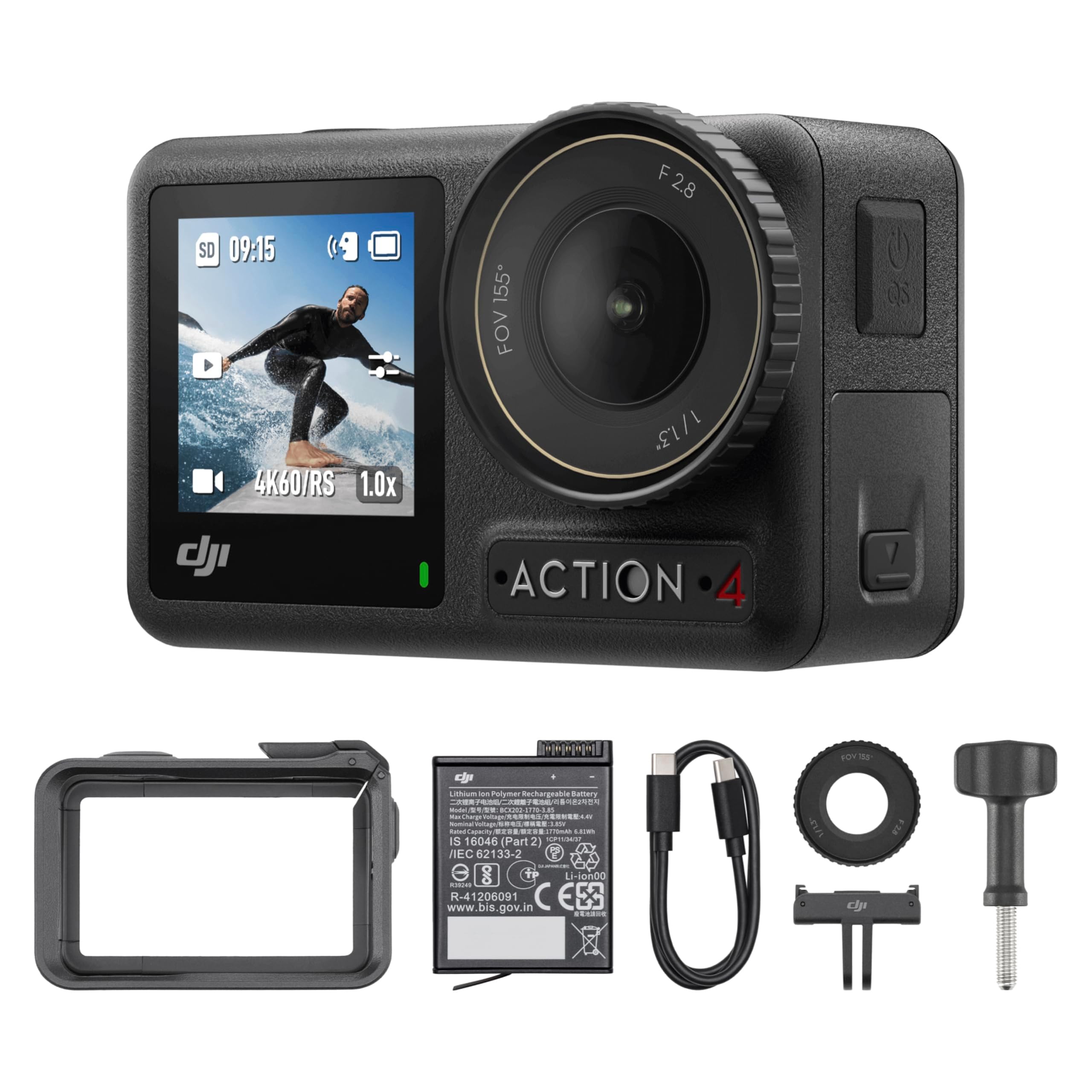
DJI Osmo Action 4

Top Pick
DJI Osmo Action 4

Everyday rides

Our Score 9.4/10
Check Price

Worth Noting

  • App pairing can take a few attempts
Max Video
4K/120fps
Waterproof
Waterproof
Battery Life
Up to 160 minutes
Stabilization
RockSteady+ and HorizonBalancing
Read the full review

The Osmo Action 4 won us over with the way its magnetic quick-release mount and HorizonBalancing work together. A bar mount is only useful if the camera comes off easily when you stop for coffee, and footage is only useful if the horizon stays level when the path turns rough. The Action 4 handles both, which is why it's the camera we reach for first on a mixed-surface ride. The 155-degree lens captures more of the trail without the extreme fisheye look of some budget cams, and 4K at up to 120fps gives you room to slow things down later.

The 1/1.3-inch sensor is the other reason it earns top billing. Low light is where the advantage shows: under trees and at the end of the day, the Action 4 holds color and detail that smaller cameras lose. We also like the 10-bit D-Log M option for grading, though most riders can leave it off and still get footage that looks good straight from the card. The 145-gram body is light enough for a helmet mount, but we prefer it on the bars where the extra mass disappears.

Battery life is listed at up to 160 minutes, which covers most of our rides, and the camera is waterproof. The magnetic release is the detail we miss when we switch to another camera: it makes moving from bars to a chest mount a five-second job. We stopped thinking about the camera and started noticing the ride.

Bottom line: For most riders, the Osmo Action 4 is the camera to buy: steady footage, a useful wide view, and enough battery for a long ride in a compact, waterproof body.

2

Insta360 X5

Insta360 X5

360 ride footage

Our Score 9.2/10
Check Price

Worth Noting

  • Selfie stick sold separately
Weight
1.1 lb
Max Video
8K/30fps 360
Battery Life
Up to 208 minutes
Stabilization
FlowState and Horizon Lock
Read the full review

A 360 camera answers a problem a normal action cam can't: you can't point a fixed lens at the scenery, your riding partner, and the road ahead at the same time. The Insta360 X5 captures all of it in 8K, then lets you choose the frame later with the app. The invisible selfie stick effect is the part that feels like cheating: mount the camera on a stick, and the stick disappears from the footage, leaving a third-person view you could not shoot alone.

We like the X5 for solo rides where the point is the place as much as the pace. FlowState stabilization and 360-degree Horizon Lock keep the footage level even when you lean the bike over, and the dual 1/1.28-inch sensors help in shade. The fisheye look is part of the format; you reframe to a flat clip, so the wide distortion is not baked into the final shot.

The trade-off is workflow. You shoot everything and decide later, which is liberating on the bike and tedious at the desk; a one-hour ride can turn into an editing session. The X5 is also a 0.5 kg bar-mount camera; that mass is fine on the frame, less so on a helmet. For riders who want one ride to yield several angles, that editing step buys flexibility no flat camera here can match.

Bottom line: If you want one ride to yield several angles, the X5 is the best 360 camera here, with 8K footage and horizon lock that make solo ride shots look effortless.

3

GoPro HERO12 Black

GoPro HERO12 Black

High-res flat video

Our Score 9.0/10
Check Price

Worth Noting

  • Short battery life at 5.3K
  • Heavier than the DJI for helmet use
Weight
11.5 oz
Max Video
5.3K/60fps
Waterproof
33 ft without case
Stabilization
HyperSmooth 6.0
Read the full review

Resolution is the HERO12 Black's calling card: 5.3K at up to 60fps, 27MP stills, and HDR that holds highlight detail in bright sun. The 1/1.9-inch sensor and HyperSmooth 6.0 stabilization make the footage look more polished than the numbers alone suggest, and the camera is waterproof to 33 feet without a housing. On a bike, that means you can mount it low on the fork or frame and not worry about a puddle or a sudden shower.

We appreciate the no-case design more than we expected. It's one less thing to seal before a ride, and the standard GoPro mount ecosystem makes it easy to swap between a bar clamp and a helmet. The image is the sharpest flat footage in this group, and HDR is genuinely useful when the sun is in front of you. What keeps it from the top spot is heat: in 5.3K on a warm day, the camera can overheat and shut down, so we don't treat it as the default for long summer rides.

The HERO12 is at its best when you plan a few high-value clips rather than hit record for the whole ride. Point it at a descent, a creek crossing, or a fast bit of singletrack, then put it away. For that kind of shooting, the detail and dynamic range are worth the fuss.

Bottom line: For the sharpest flat bike footage in this group, choose the HERO12 Black: 5.3K HDR detail, excellent stabilization, and a waterproof body that needs no case.

4

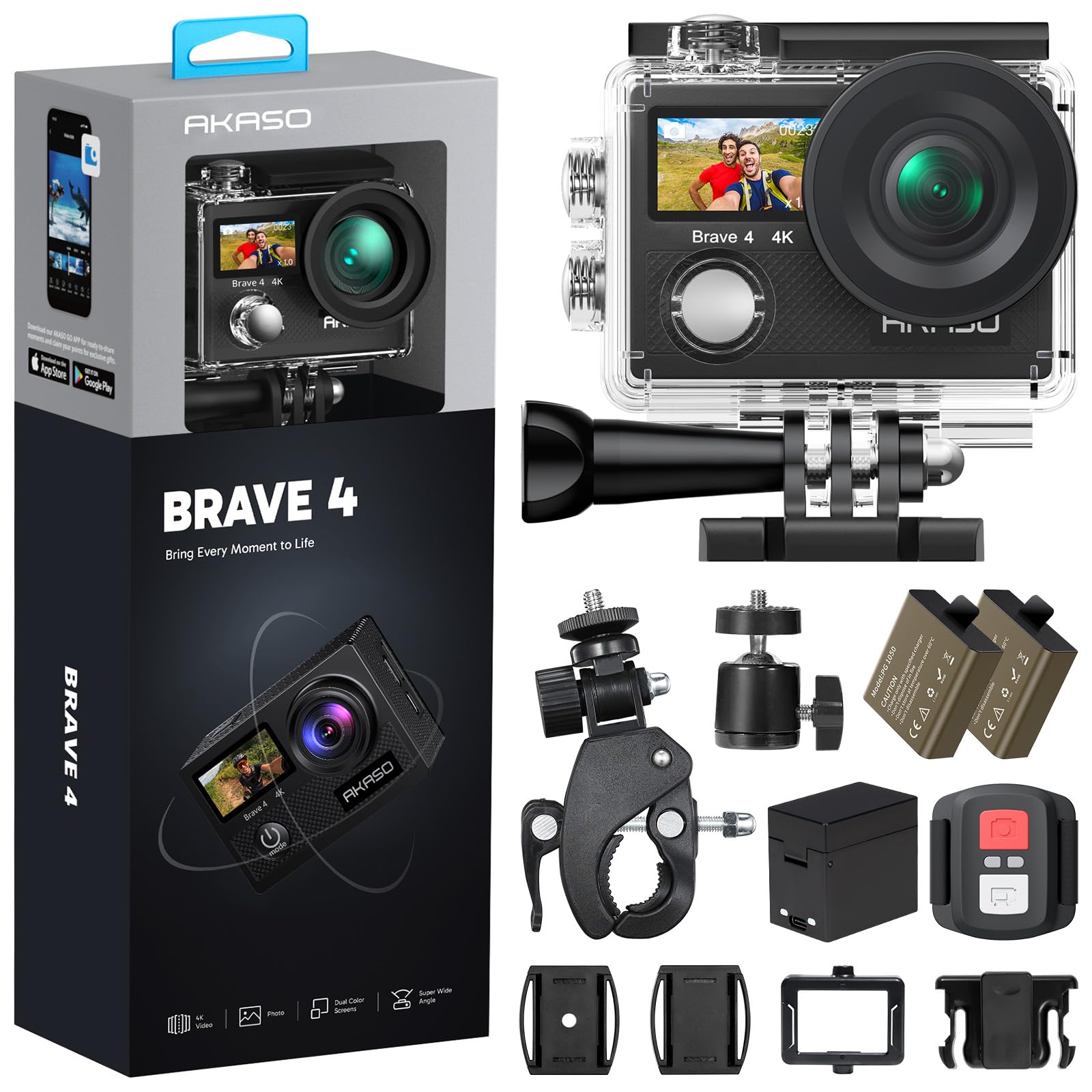
AKASO Brave 4

AKASO Brave 4

Budget bike setup

Our Score 8.8/10
Check Price

Worth Noting

  • Waterproofing depends on the case
  • No horizon lock for tilted footage
Max Video
4K/30fps
Waterproof
131 ft with case
Battery Life
Up to 90 minutes per battery
Stabilization
Electronic image stabilization
Read the full review

The Brave 4 is a budget camera that gets the bike-specific details right. What we appreciate most is the adjustable field of view: 170 degrees is fun for a few shots, but it makes everything look farther away, while 110 or 70 degrees gives you a more natural frame without moving the mount. That's a small feature that makes the camera more useful on a bike than its price suggests.

The kit includes two batteries and a dual charger, which matters because each cell is rated for up to 90 minutes. On a longer ride, you can swap at the halfway point instead of nursing one battery. The 4K30 footage and 20MP stills are good enough for social clips and memory-keeping, and the included mounts get the camera onto bars or a helmet without a trip to the parts bin.

We hand the Brave 4 to a friend who wants to try bike video without committing to a premium setup. It has the batteries and accessories to get started, and the footage is good enough to make the experiment worthwhile. The kit is the point: you can ride with it, drop it in a bag, and not treat it like a fragile investment.

Bottom line: The Brave 4 is our budget pick: a real 4K action camera with flexible field-of-view settings, two batteries, and a full accessory kit for far less than the premium options.

5

Sixmou i3

Sixmou i3

Helmet POV

Our Score 8.4/10
Check Price

Worth Noting

  • Waterproofing requires the included case
  • Tiny body leaves little room for controls
Weight
1.26 oz
Max Video
4K
Waterproof
131 ft with case
Battery Life
150 minutes
Read the full review

The i3 is barely there: 35.7 grams, smaller than a thumb, and light enough that a helmet mount stops feeling like a helmet mount. We like it for point-of-view clips where a full-size camera would be a nuisance—commuting, a casual trail ride, or filming a kid on a balance bike. The magnetic body and included clip make it easy to move from a jersey to a bar, and the 150-degree lens captures a useful width for tight spaces.

The 150-minute battery is the spec that makes it more than a novelty; it can cover a long ride without a swap. It also comes with a 64GB card and a waterproof case, which is a lot of kit for a camera this small. The magnetic clip is genuinely useful, and the low weight means it stays put on a jersey or a helmet.

We treat the i3 as a second camera rather than the one we mount for every ride. It's the one we clip to a chest strap when we want a different angle, or hand to a kid for a lap around the park. The compromise is stabilization: digital only, so smooth paths are its comfort zone; on chunky gravel the footage gets busy. The magnet pendant is the accessory we use most; it lets us move the camera without unscrewing a mount.

Bottom line: The Sixmou i3 is a niche pick: a tiny, light helmet or chest camera with a long battery, a 64GB card, and a magnetic mount for quick angle changes.

How We Tested 12 Bike Cameras on Real Roads

We started by pulling every camera sold as a bike camera rather than a repurposed action cam, then narrowed the field by what came in the box: a bar mount, a spare mount, a card, an app that didn't crash on the first pairing. Twelve made the final cut. Each one had to be set up by someone wearing gloves, in a parking lot, in a hurry — because that's how it actually happens.

From there, every camera went on the same rides over eight months: a daily commute through traffic, a Saturday gravel loop with washboard chatter, a wet-weather errand run, and one long haul designed to drain the battery. I timed setup from opening the box to first recording, then handed the camera to a second rider to see whether the menus made sense without instructions. We noted which mounts held their angle over potholes and which crept downward by mile five, and whether the app paired on the first try or the fourth.

Footage got reviewed side by side on a monitor rather than on a phone screen. We froze frames at 20 and 40 feet to see whether a license plate stayed legible, watched stabilization cope with broken pavement, and checked how much detail survived after dark and in rain. Battery results came from running each camera continuously until it shut down, and we left every unit on a sunny rack during a lunch stop to see which ones overheated, threw a heat warning, or quietly stopped recording.

Reliability was the least glamorous part. We re-mounted each camera a few dozen times, dropped two of them off a workbench, rode through a downpour, and installed every firmware update we were offered. We also timed how long it took to pull a two-minute clip off the camera and onto a phone — the difference between footage you have and footage you meant to have.

How to Choose Bike Cameras

Start With the Mount and the Shake

On a bike, the mount is half the camera. A loose clamp turns every expansion joint into a jolt, and a camera that takes two minutes to remove stays on the bike when you stop for lunch. Look for a secure bar or helmet mount with a quick-release plate, and use a tether as a backup. Stabilization matters just as much: electronic stabilization smooths chatter, while horizon lock keeps the frame level when you lean. The DJI Action 4's HorizonBalancing and the X5's 360-degree horizon lock are the strongest examples here. If your routes are mostly smooth pavement, you can save money here; on gravel, don't.

Match Runtime to Your Ride

Battery claims are usually made in a favorable mode, and 4K, 5.3K, or 360 recording shortens them. A camera rated at 90 minutes may cover a short loop but not a century; one rated at 160 to 208 minutes is a better starting point for longer days. Cold weather cuts runtime further, so carry a spare battery inside a warm pocket. The Brave 4's two 90-minute cells and the X5's 208-minute rating illustrate the two approaches: swap cheap batteries, or pay for a bigger one. Decide which fits your riding.

Resolution, Sensor, and Light

More pixels are not automatically better bike footage. 4K is plenty for most social clips, while 5.3K gives you cropping room and 8K 360 lets you reframe a scene after the ride. Sensor size matters more than the pixel count: the DJI's 1/1.3-inch sensor and the GoPro's 1/1.9-inch sensor are built to gather more light, which shows under trees and at dusk. Frame rate matters for slow motion; 4K at 120fps on the DJI is useful for a fast descent. Choose the resolution you will actually edit, not the biggest number on the box.

Waterproofing, Weight, and Helmet Use

Native waterproofing saves you from a case, but weight changes where the camera belongs. The GoPro is waterproof to 33 feet without a housing; the DJI is also waterproof, while the Brave 4 and Sixmou rely on included cases for their depth ratings. A case adds bulk and another seal to check. On a helmet, the Sixmou's 35.7 grams is barely noticeable; the X5's 0.5 kg belongs on the bars. If you ride in rain or cross streams, prioritize a sealed body or a case you trust.

Do You Need 360?

360 footage is a different way of shooting, not just a wider lens. The X5 records everything around the bike, then you reframe a flat clip in the app; the invisible selfie stick effect gives you a third-person view without a photographer. That flexibility is great for solo rides and scenic routes, but it adds an editing step and larger files. If you want clips you can post straight from the card, a standard action camera is simpler. If you routinely wish you had aimed the camera differently, 360 earns its complexity.

Frequently Asked Questions

Final Verdict

Our default is the DJI Osmo Action 4: it has the best balance here of stabilization, battery, low-light image quality, and quick mounting. Choose the GoPro HERO12 when 5.3K HDR detail matters more than long, hot-weather recording. Choose the Insta360 X5 when you want to reframe one ride into several angles. On a tight budget, the Brave 4 is the one that gets you riding with two batteries and a case.