Lights & Electronics

Best Rear Bike Lights of 2026

The ride that made me care about rear lights was a short one — coasting down a quiet street at dusk when a car pulled out and stopped about a foot from my back wheel. I had a light on, technically: dim, aimed at the pavement, half-hidden under a saddle bag. A rear light isn't there so you can see the road. It's there to put a clear point of light where a driver is already looking, and to keep it there until you're past them.

My team and I have ridden with 14 of them over the past four months — pre-dawn commutes, wet evening rides, a few long weekend loops — and the spread is wide. Claimed lumen counts tell you less than you'd think: a well-shaped 50-lumen beam at eye level beats a scattered 200-lumen one most nights. And a light that's dead when you grab it is worse than no light at all, so charging ports and auto-on behavior got as much of our attention as brightness did. The picks below are the ones still earning their spot in month four.

1

Garmin Varia RTL515

Top Pick
Garmin Varia RTL515

Road awareness

Our Score 9.6/10
Check Price

Worth Noting

  • Premium price for a radar taillight
Weight
2.56 oz
Battery
6 to 16 hours
Radar Range
153 yards
Day Visibility
Up to 1 mile
Read the full review

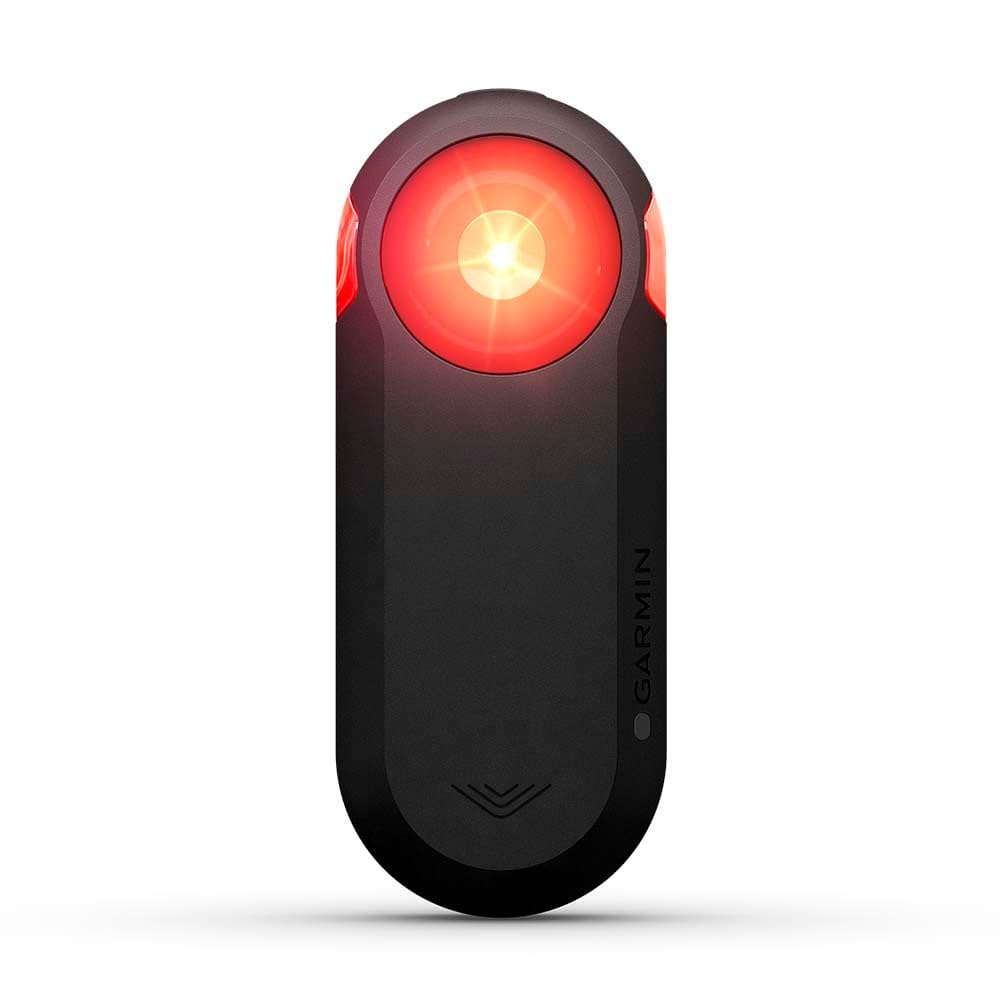
The Varia is the one light here that tells you something you cannot see. Its radar picks up vehicles approaching from behind up to 153 yards away and sends a visual and audible alert to a compatible Garmin computer, watch, or the Varia phone app. We think that extra warning is the reason to choose it: the taillight is bright enough for daylight visibility up to a mile, but the radar is what changes how you ride.

On the road, the light flashes more intensely as a vehicle closes, which is a smart second job for a taillight. We paired it with a phone app and found the alerts easy to read at a glance; the radar also picked up faster cyclists on a trail, not just cars. It does not replace a mirror or a shoulder check, and it will not help if you ignore the screen. Used as an extra layer, it is the most safety-focused pick in this set.

Battery life is the trade-off. The listed runtime runs from 6 hours in solid or night-flash modes to 16 hours on day flash, so a long ride can use a serious share of a charge. We treat it like a device to plug in after every ride rather than a set-and-forget light. If you already ride with a compatible display, that routine is easy to accept; without one, you are relying on the phone app and its own battery.

Bottom line: For riders who already use a compatible Garmin computer or phone, the Varia adds a useful rearward warning and a bright taillight in one unit.
2

Planet Bike Grateful Red

Planet Bike Grateful Red

Rack mounting

Our Score 9.4/10
Check Price

Worth Noting

  • IPX3 is splash-resistant only
Power
Two AAA batteries
Runtime
26 to 150 hours
Max Output
13 lumens
Water Resistance
IPX3
Read the full review

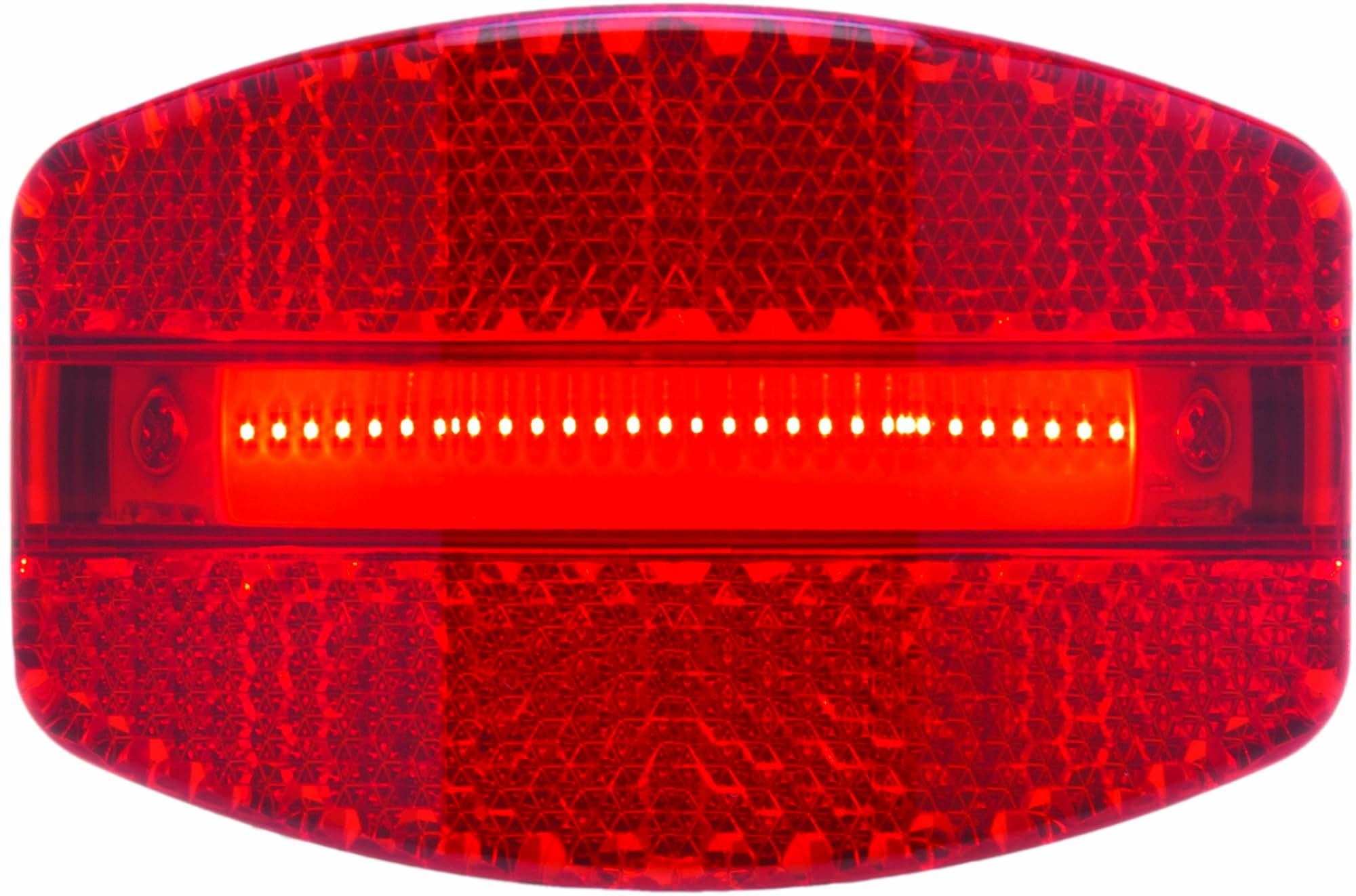
The Grateful Red is a different kind of taillight: 13 lumens from 28 LEDs, three modes, and a pair of AAA batteries that run for 26 hours in steady, 45 in Courtesy, and up to 150 in Superflash. It is also a certified reflector when switched off, and the package includes rack, seatpost, and clip mounts. That combination makes it the light we keep for the bike that sits outside and does not get a charging routine.

We like the big button for gloved hands and the one-hand removal; the rack bracket bolted straight to a common rear rack without adapters. The beam is not a daytime blazer. At 13 lumens, it is a be-seen light for dawn, dusk, and lit streets, and that is how we use it. On a dark path, the Superflash pattern is noticeable, but it does not light the road.

The battery choice is the real advantage. Two AAA cells are easy to stash, and the light keeps working when a rechargeable sits on a cable. We use rechargeable AAAs and keep a spare pair in the bag; the running cost is small and the swap takes seconds.

For a rack-mounted commuter or a bike that lives outdoors, this is our battery-powered pick. It is not the light for a fast daytime road ride, but it is the one we trust to be there after months of neglect. The mount is secure on a rack, and the reflector keeps working when the batteries die.

Bottom line: For a rack-mounted bike that lives outdoors, the Grateful Red is our battery-powered pick: no charging routine, and a reflector when the light is off.

3

NP Night Provision KIT-R1 2-Pack

NP Night Provision KIT-R1 2-Pack

Two-bike value

Our Score 9.4/10
Check Price

Worth Noting

  • IPX4 is splash-resistant only
Battery
330 mAh
Runtime
18 hours
Pack Count
2
Water Resistance
IPX4
Read the full review

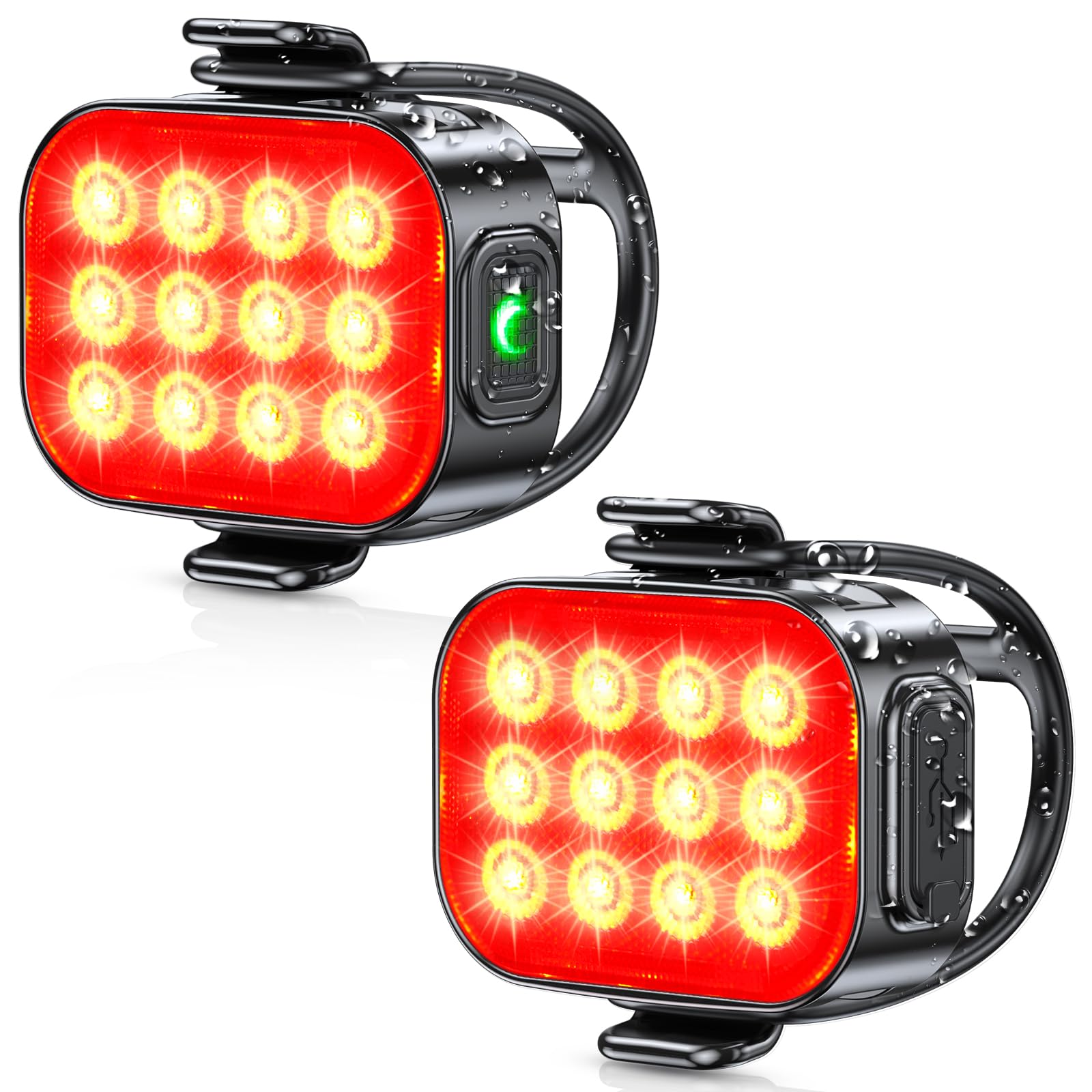
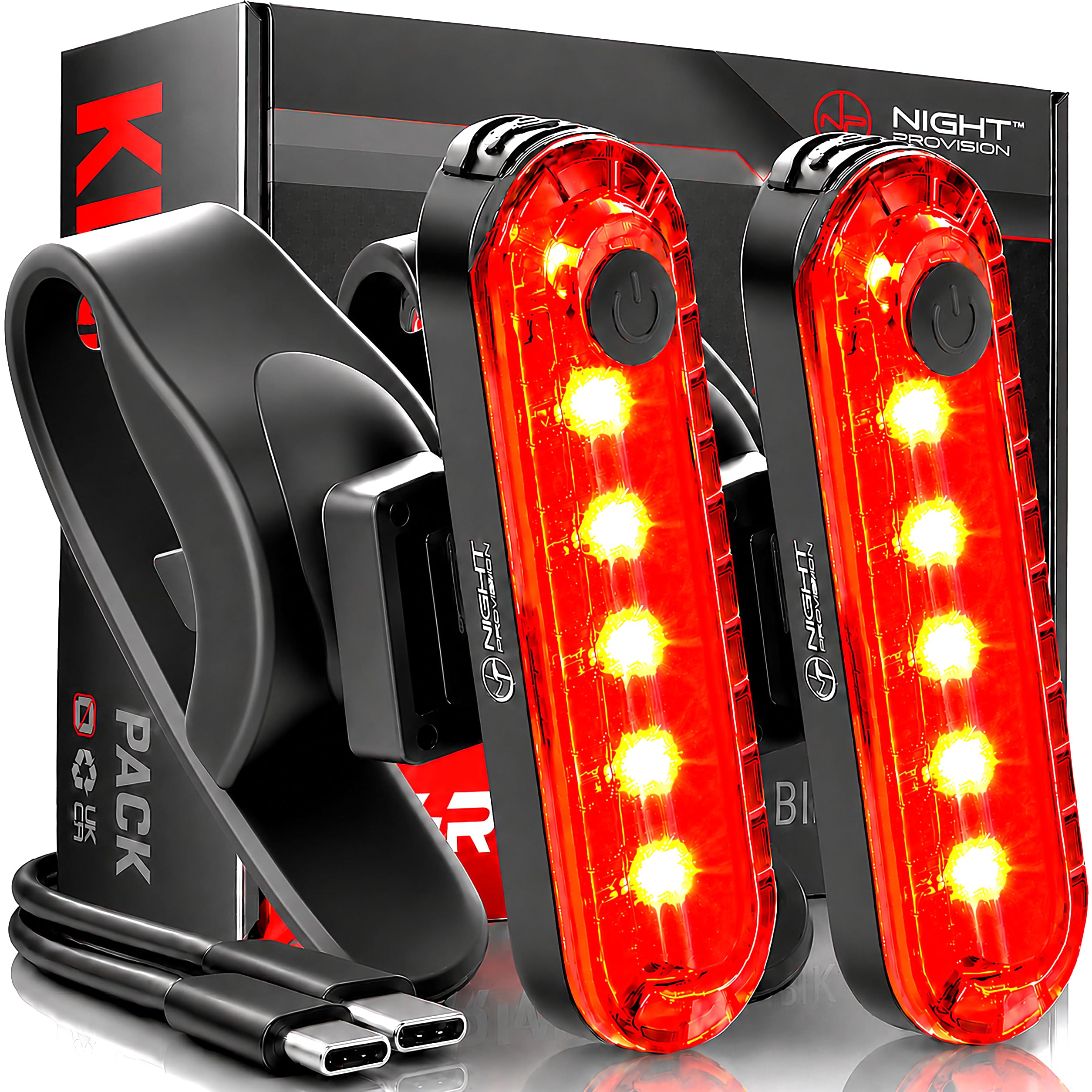
The Night Provision KIT-R1 is sold as a two-light kit, and that is the right way to think about it: two 330 mAh taillights, four modes, USB-C charging, and an 18-hour maximum on the Chaotic Strobe setting. The mount wraps around a seatpost or helmet and has an adjustable tilt, so you can aim it down at traffic or back at a trailer. We used one on a commuter and one on a child's trailer; the pair covered both without a second purchase.

The adjustable tilt is the detail we appreciated most. A lot of taillights sit flat and throw light straight back; this one can be angled toward a following driver or kept level on a seatpost. The rubber strap is easy to move between bikes, and the USB-C port is current. The four modes are simple to cycle, and the light is bright enough for city use and dusk.

For a budget two-bike setup, this is our value pick. It gives you two lights, USB-C, and a long strobe runtime for less than most single lights here. The caveat is consistency: battery life varies between units, and the 18-hour figure is a best-case strobe number. We check both lights before a ride and keep them charged together.

Bottom line: For two bikes on a budget, the Night Provision kit is our value pick, with a long strobe runtime and USB-C charging.

4

Cygolite Hypershot 350

Cygolite Hypershot 350

Day and night

Our Score 9.2/10
Check Price

Worth Noting

  • Micro-USB charging instead of USB-C
  • Premium price for a taillight
Mount
Seat post and stay
Runtime
2 to 200 hours
Max Output
350 lumens
Water Resistance
IP64
Read the full review

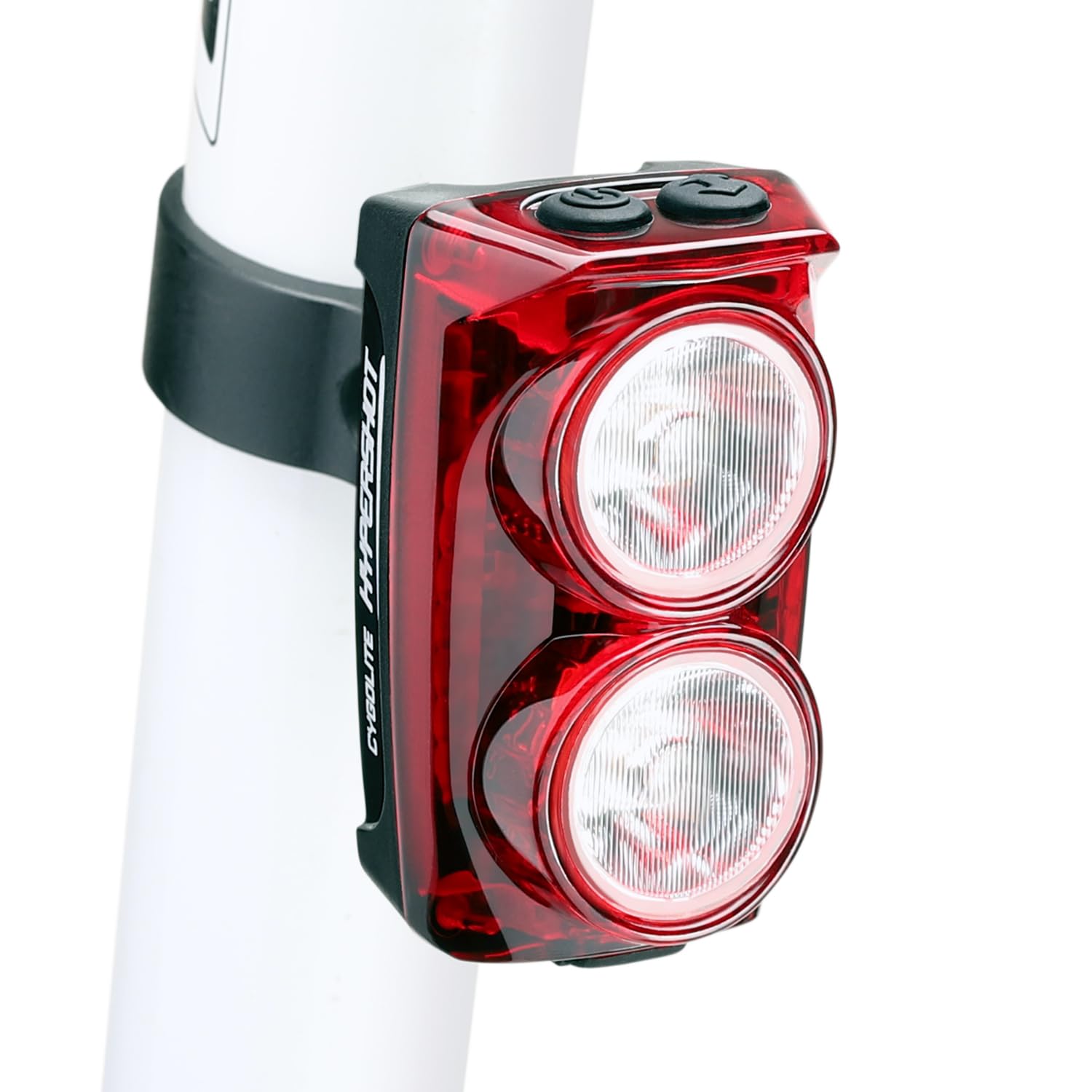
A 350-lumen taillight is not subtle, and that is the point of the Hypershot 350. The compact body is small enough to sit high on a seatpost, and Cygolite includes both a seatpost mount and a seat-stay mount, so it can go where the frame gives you a clear line to traffic. We mounted ours on the post and found the hard bracket less fussy than a rubber band; it holds the light steady instead of letting it tilt after a bump. The seven modes include a steady pulse and several flash patterns, and the adjustable flash speed is a genuinely useful detail for busy roads.

This is the rear light we recommend first for most riders. It has the highest stated lumen output in this set, and the beam is backed by a 2-to-200-hour runtime, so the setting you choose decides how often you recharge. We kept it on a daytime flash for road rides and a lower pulse at night, and the difference in how early drivers seemed to notice us was the reason it stayed on the bike. The 75-gram body and IP64 rating suit daily use; it feels like a tool rather than an accessory.

The one thing we noticed is that 350 lumens is more light than a group ride always wants. Pointed level, it is excellent for daylight visibility; on a shared path after dark, we dropped to a gentler pattern so we did not blind the rider behind us. That flexibility is why it earns the top spot rather than simply winning a brightness contest.

Bottom line: For most riders, the Hypershot 350 is the rear light we recommend first: it has the highest stated output here and the runtime to match.

5

Apace Vision Guard G3X Pro100

Apace Vision Guard G3X Pro100

Long rides

Our Score 9.2/10
Check Price

Worth Noting

  • Aero and oval posts need trial-and-error fitting
Runtime
2 to 45 hours
Beam Angle
180 degrees
Max Output
100 lumens
Water Resistance
IPX5
Read the full review

The Guard G3X Pro100 spreads its light wider than most taillights here: a 180-degree beam from a 100-lumen output, with seven modes and a 950 mAh battery rated for 2 to 45 hours. The package includes four silicone mounts and eight rings in four sizes, which is more fit options than we expect at this level. We used the largest ring on a round seatpost and the smaller ones on a rear rack; the light stayed put and the tool-free swap took seconds.

What we like most is the balance. The 45-hour maximum is a low-output figure, and the brighter flashing modes shorten it; we charged it less often than the budget pairs. The wide angle matters at junctions, where a narrow light can disappear as you lean into a turn. It is not as punchy as the 350-lumen Cygolite in direct sun, but the spread is easier to see from the side.

For long commutes and all-day rides, this is the one we reach for. The USB-C port is current, the mount system is generous, and the light is small enough to leave on the bike without feeling like a target. We also appreciated the simple button; with gloves on, we could cycle through modes without looking down for long.

The caveat is longevity. Some units stop working after a few months, and the switches are the part we watch. We check it before a long ride and keep the receipt. The wide beam and runtime still make it a strong choice for a rider who wants a versatile commuter light without radar complexity.

Bottom line: For long commutes and all-day rides, the Apace is our pick for its wide beam and up to 45-hour runtime.

6

Ascher Bike Tail Lights 2-Pack

Ascher Bike Tail Lights 2-Pack

Budget commuting

Our Score 9.2/10
Check Price

Worth Noting

  • Some units stop working after a few charges
Modes
4
Battery
330 mAh
Pack Count
2
Water Resistance
IPX4
Read the full review

Two rechargeable taillights, four modes, a 330 mAh battery, and a silicone mount for a budget price: the Ascher set is built to put a light on more than one bike. The one-touch release lets you slide the light off the bracket for charging without removing the strap, and the mount rotates so you can set it horizontal or vertical. We used one on a commuter and kept the second as a spare; that alone makes the pair useful.

The value is the headline, and it holds up in use. The light is bright enough for city streets and dusk, the flash patterns are easy to cycle with one button, and the USB charging is simple. We do not treat it as a daytime road light: it lacks the punch of the 100- and 350-lumen picks, and at night the brightest setting is better for short trips than for a long unlit path. For a family with two bikes, or a rider who wants a backup in the bag, this is an easy pair to recommend.

The mount is the part we check. The silicone strap is easy to stretch over a seatpost, but it can slip on a smooth or aero post, and the light can twist off-line after a bump. We keep the second light as a spare and give the strap a tug before a ride. Buy the set for the price and the two-bike convenience.

Bottom line: For two bikes on a tight budget, this pair is the easiest yes here, as long as you treat the lights as consumable rather than lifelong.

7

ISEYOU Q8 2-Pack

ISEYOU Q8 2-Pack

Wide beam

Our Score 9.2/10
Check Price

Worth Noting

  • Long-term durability is unproven
Runtime
5 to 28 hours
Beam Angle
220 degrees
Visibility
200 meters
Water Resistance
IP65
Read the full review

The Q8 set is the lightest pair here at 24 grams each, and it uses that small body to throw a 220-degree beam with visibility up to 200 meters. You get six modes, a 1.5-hour USB-C charge, 5 to 28 hours of runtime, IP65 protection, and a 1.5-meter drop rating. The silicone straps are the entire mount, so there is no bracket to lose.

We put one on a commuter seatpost and one on a kids' trailer, and the wide angle was the difference at side streets; the light showed up earlier from the side than a narrow taillight. The straps wrap around odd tubes and helmet vents, and the light is small enough to leave in a bag. The button is easy to find with gloves, though the six modes take a moment to learn.

The low weight is not just a spec-sheet number; it means the light does not wag on a thin seatpost or pull a helmet strap sideways. We liked that the USB-C port is covered and the charge is quick, so a forgotten light can be topped up before a commute. The 28-hour maximum is a low-output figure, but the flashing modes we used most still lasted several rides.

For a wide, lightweight pair for two bikes, this is a strong budget choice. The straps are the part to check; a loose strap can let the light twist off-line. We give each strap a tug before a ride and keep the spare in the bag. It is not the light for a rider who wants a hard mount and a long warranty, but it covers a lot for the money.

Bottom line: For a wide, lightweight pair for two bikes, the ISEYOU kit is a strong budget choice, with a beam that shows up from the side.

8

G Keni Q5 Smart Tail Light

G Keni Q5 Smart Tail Light

Brake sensing

Our Score 9.0/10
Check Price

Worth Noting

  • Less punch than the brightest daylight lights
  • Some units fail within a year
Battery
400 mAh
Runtime
Up to 50 hours
Max Output
120 lumens
Water Resistance
IPX6
Read the full review

The Q5 is the rare taillight that does something extra without making you open an app: a motion sensor switches it to a brighter mode for five seconds when you brake. We think that is the feature to buy it for, especially in stop-and-go traffic. The rest is solid: 120 lumens, four modes, an aluminum housing, IPX6, USB-C, and a 400 mAh battery rated for up to 50 hours.

We mounted it under the saddle with the threaded mount; it felt more secure than a rubber strap and kept the light high and visible. The auto-on and auto-off feature is clever, turning the light on when it senses motion and off when the bike is parked. We still switch it on manually at the start of a ride because the sensor can stay dark after a pause.

The brake response is quick enough to be useful, and the flash patterns are easy to read in traffic. The aluminum body feels sturdier than the plastic lights here, and the USB-C port is easy to reach. We check the mount and the charge indicator before a long ride, and we keep the receipt because long-term durability is the open question.

Bottom line: For riders who want a taillight that reacts when they brake, the G Keni is the smart pick, provided you check the auto-on before every ride.

How We Tested: Four Months, 14 Lights, a Lot of Rain

We started by gathering every rear light we could find from brands we already trust and several we didn't, then narrowed the field by mount type, price, and whether replacement straps or brackets actually existed — 14 made the cut. Those went onto two commuter bikes and a cargo bike for four months, mounted to seatposts, racks, and in a couple of cases clipped to a bag. Every light rode at dusk, in rain, and at least once down an unlit path where the only other light was a passing car.

To judge brightness honestly, two of us rode a fixed loop on consecutive evenings, one following at 100 feet and then 300 feet, calling out whether the light read as a cyclist from that distance and whether the flash pattern made closing speed hard to judge. We ran every mode, including the brake-sensing ones, and noted which patterns were numbing in a group ride versus genuinely useful in traffic. We also checked aim straight out of the box, since a bright light pointed at the pavement is just an expensive reflector.

Battery life came from running each light on its brightest steady setting until it died, recording the runtime and whether it dimmed first or cut out without warning. We kept a charging log — how long a full charge took, whether the port cover sealed, and whether we could plug in wearing winter gloves. Durability meant a waist-high drop onto pavement and a week of daily mounting and removal, then checking for rattle over broken asphalt. Auto-on got the simplest test of all: a week in a bag, to see whether a motion sensor drained the battery on its own. Value was the last call, weighing what each light cost against how much of this it got right.

How to Choose Rear Bike Lights

Brightness Is a Daylight Decision

A rear light has two jobs: be seen in the dark and stay visible in daylight. The second job takes far more output. In this set, 13 lumens is a dusk and be-seen light, while 100 to 350 lumens is the range that can punch through sun. If you ride at dawn or on bright roads, we prioritize a daytime flash over a higher steady mode. If your riding is mostly after dark, a wide beam and a thoughtful flash pattern matter more than the biggest number.

Read Runtime by the Mode You Use

Headline runtime can mislead because it often belongs to the lowest or flashing mode. The Cygolite spans 2 to 200 hours, the Apace 2 to 45, and the Garmin 6 to 16; those ranges are more useful than a single maximum. We look at the mode we actually ride and treat the top number as a best case. USB-C is convenient, but a removable light with a standard cable matters more than the connector if you charge at work.

Mounting Decides Whether the Light Stays Aimed

A taillight only works if it points at traffic. Seatpost mounts suit most bikes, rack mounts are better for commuters with cargo, and strap mounts move between helmets, trailers, and kids' bikes. Hard brackets hold aim better; rubber straps are more versatile but need checking. Measure the tube or rack before ordering, and choose a mount that lets you remove the light for charging without tools.

Weatherproofing and the Parts That Fail

IP ratings tell you how much water a light can shrug off, but the weak points are often the strap, switch, and charging cover. An IPX3 light is splash-resistant; IPX5 and IPX6 are better for real rain. We prefer a covered USB port and a body that does not trap water. If you ride in salt or grit, rinse the mount and dry the port before charging. A higher rating is useful, but a secure mount and a protected port matter just as much.

Smart Features: Brake Sensing and Radar

Brake sensing brightens the light when you slow, which is useful in traffic; radar goes further and warns you about vehicles behind. The G Keni Q5 adds brake response without a display, while the Garmin Varia needs a compatible computer or phone to show alerts. We treat radar as an extra layer, not a replacement for looking. If you already ride with a Garmin display, it is the most useful upgrade here; if not, a bright self-contained light is the simpler buy.

Frequently Asked Questions

Final Verdict

The Cygolite Hypershot 350 is the rear light we recommend first for most riders. It has the highest stated lumen output in this set, a runtime range that covers everything from a short commute to a long day, and hard mounts that keep it aimed.

If you ride with a compatible Garmin computer or phone and want a warning before a car reaches you, the Varia is the better safety tool. For a battery-powered bike that lives outdoors, the Planet Bike Grateful Red is the simpler answer.