Tools & Maintenance

Best Bike Chain Cleaner of 2026

The chain takes more abuse than any other part of your bike, and it's usually the last thing anyone cleans. Grit works between the plates, mixes with lube, and turns into a grinding paste that eats the drivetrain from the inside — you hear it as a noisy drivetrain and feel it as sluggish shifts. I've spent plenty of Sunday mornings with a toothbrush and a blackened rag, and the difference a real cleaner makes isn't subtle: a quiet chain, crisp shifts, and hands that don't leave prints on the bar tape.

Over the past four months we put 14 chain cleaners — spray degreasers, brush kits, and clip-on machines — through road, gravel, and commuter duty. What surprised me is that strength matters less than delivery: a bottle that seeps into your tool bag, or a machine that needs three hands to attach, never gets used twice. The ones below turned a full clean and re-lube into a twelve-minute Saturday job instead of a chore I kept putting off until the chain started chirping.

1

Muc-Off Drivetrain Cleaner & Degreaser Spray

Top Pick
Muc-Off Drivetrain Cleaner & Degreaser Spray

Spray degreasing

Our Score 9.6/10
Check Price

Worth Noting

  • Sold without a brush or scrubber
Form
Liquid spray
Volume
16.9 fluid ounces
Safe On
Metal, plastic, rubber, seals
Biodegradable
Fully biodegradable
Read the full review

Not every chain clean needs a workstand session. Where the Park Tool kit is a procedure, this is the two-minute version: a 16.9-ounce bottle of biodegradable degreaser you spray on, leave for a moment, and wipe away. For the every-few-weeks kind of maintenance, we think it is the easiest thing on this list to live with.

It is formulated for metal, plastic, rubber and seals and it is silicone-free, so there is no anxiety about what it is doing to a painted frame or a suspension seal while it works. At 16.9 ounces the bottle also outlasts the small aerosols here several times over, which matters the first time you clean two bikes in one afternoon.

Grease cutting is what it is built for, and it earns that on the drivetrain. We did find that a spray alone loosens grime rather than removing it: the rollers still need something to scrub them, and the suggestion to use it with a chain cleaning device is the right instinct. Spray it onto a brush rather than misting the whole drivetrain and you keep it off the rotors, where degreaser has no business being.

That is the one gap worth flagging — it is fluid, not a kit. If your bike hasn't had a proper clean since last season, add a brush or a scrubber to the order. For a drivetrain that gets attention every few weeks, a bottle of this on the shelf is the whole maintenance program.

Bottom line: The spray we keep on the shelf for regular maintenance — biodegradable, safe around seals and paint, and effective on the chain, cassette and chainrings between proper scrubs.
2

Park Tool CG-2.4 Chaingang Cleaning System

Park Tool CG-2.4 Chaingang Cleaning System

Complete chain cleaning

Our Score 9.4/10
Check Price

Worth Noting

  • Refill fluid is a recurring cost
Safe On
Alloy, plastic, rubber, carbon fiber
Kit Contents
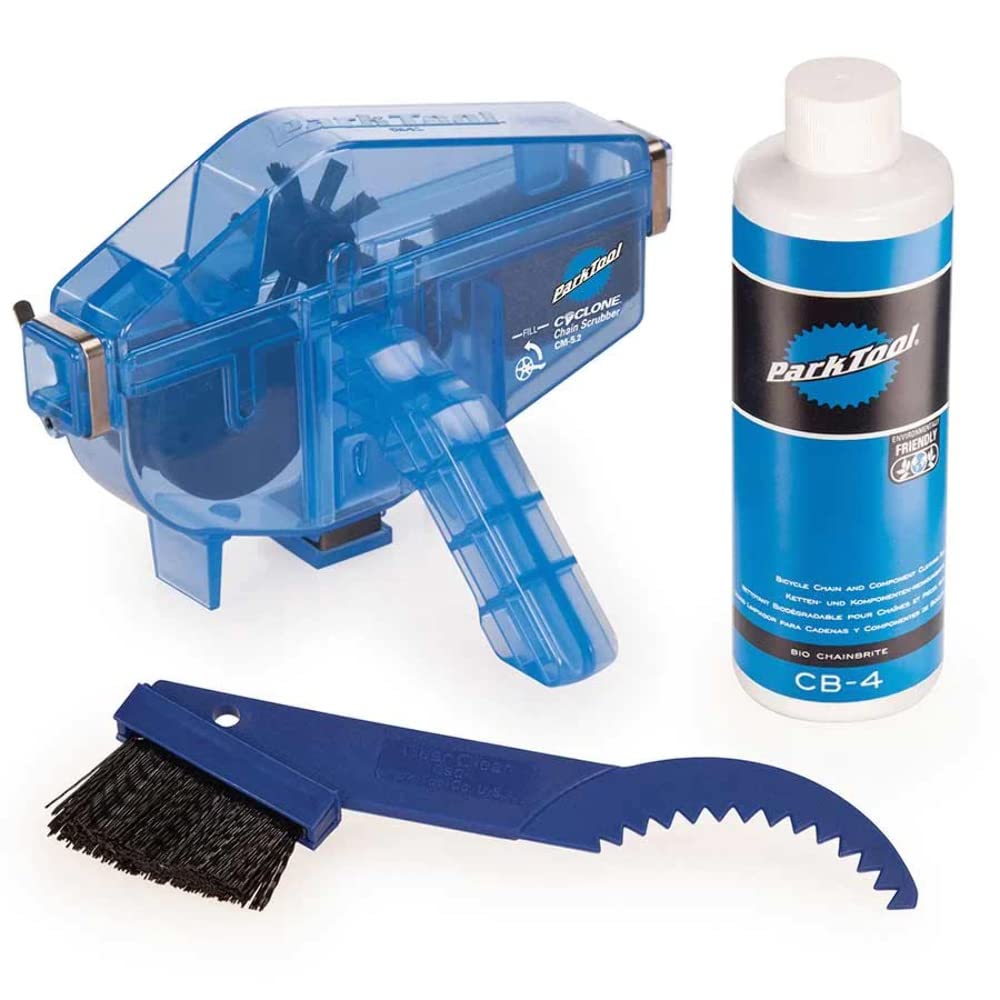
Chain scrubber, gear brush, ChainBrite fluid
Degreaser Type
Plant-based, biodegradable
Read the full review

The box holds a chain scrubber, a gear brush, and a bottle of Park Tool's plant-based ChainBrite fluid, and that combination is why this is our top pick. Most chain-cleaning sessions fail for a boring reason: you have the fluid but nothing to agitate it with, or a brush and no solvent, so the chain ends up half done and you promise to finish it next weekend.

What we appreciate most is how little thinking the job takes. Clip the scrubber over the chain, fill the reservoir, and turn the cranks backward; the brushes rotate and the work happens while you watch. The gear brush then gets in among the cassette and chainrings, which is where a surprising amount of the black gunk actually lives. It is the only pick here that covers the whole drivetrain in one order, and after a winter of commuting that difference is obvious.

ChainBrite is plant-based and formulated not to harm alloy, plastic, rubber or carbon fiber, which is the reassurance you want when the overspray is drifting toward a carbon frame rather than a steel one. The scrubber itself wipes out and goes on a shelf until next time, so it isn't another thing turning into clutter in the garage.

Do lay cardboard down first. The action throws a fine black splatter off the chain, and the difference between a five-minute job and an hour of scrubbing the patio is a piece of flattened packaging. If you already own a degreaser you rate, buying the Cyclone scrubber on its own is the smarter spend; everyone else should start here.

Bottom line: The one we point most riders to — a scrubber, gear brush, and plant-based fluid in a single box — so a genuinely clean chain takes minutes instead of an afternoon.

3

Park Tool CM-5.3 Cyclone Chain Scrubber

Park Tool CM-5.3 Cyclone Chain Scrubber

Scrubbing at home

Our Score 9.4/10
Check Price

Worth Noting

  • Plastic body can crack if dropped
  • Bristles can shed under heavy use
Dimensions
12 x 8 x 2 inches
Drip Control
Wicking sponge
Drivetrain Speeds
5- to 12-speed
Read the full review

If you already own a degreaser you like, a kit is money spent twice, and this is the half of it you actually need. The Cyclone is Park Tool's stand-alone chain scrubber: a plastic body that clips over the chain, a reservoir for solvent, and a sturdy handle that lets you hold it steady while you turn the cranks.

The detail we liked most is one you only notice once the floor stays clean: a wicking sponge draws solvent off the chain as it leaves the scrubber, so the drips that normally end up on the concrete get pulled back instead. It is a small piece of design that turns an icky job into a tolerable one, and it is the detail that settles this pick for us.

Compatibility is broad — it works with 5- through 12-speed drivetrains, which covers essentially everything on the road and most of what is on the trail. It is plastic, and that is the honest caveat: a drop onto concrete can crack the body, and hard use can shed the odd bristle into the chain path, so hang it rather than tossing it in a parts bin.

Paired with a bottle of degreaser, it also lets you choose your chemistry, which the all-in-one kits don't: a no-rinse solvent if you have nowhere to wash down, or a plant-based fluid if you'd rather keep things mild. That flexibility is the real argument for buying the tool on its own.

Bottom line: Buy the Cyclone if you already have a degreaser worth using: broad gearing compatibility, a drip-catching sponge, and the scrubbing action of a full kit without the box.

4

Finish Line Speed Bike Degreaser 3 Pack

Finish Line Speed Bike Degreaser 3 Pack

No-water cleaning

Our Score 9.4/10
Check Price

Worth Noting

  • Costly per clean compared with fluid and a scrubber
Formula
Dry, evaporating
Pack Size
Three cans
Rinse Required
No
Disc Brake Safe
Yes
Read the full review

Some people clean a chain on a driveway; plenty clean one in an apartment hallway with a rag and a guilty conscience. This is the pick for the second group. Finish Line's Speed degreaser is a dry-style solvent that you spray on and walk away from, and it evaporates completely instead of needing a rinse.

The turbo sprayer does the agitation mechanically, so heavy buildup comes off without a brush in most cases, and the formula is specified as disc-brake safe — it is the one product here you can use to decontaminate rotors and pads rather than keeping it away from them. That is a genuinely useful difference if you have ever watched a degreaser soak into a braking surface and wondered whether the pads were finished.

What we appreciate most is how completely it fits a rider with no water: no bucket, no hose, no rinsing a chain over a balcony rail. The force that makes that possible is also the thing to manage, since it goes where you point it and a little beyond, so work outdoors or stand a sheet of cardboard behind the bike.

A three-pack sounds generous until you degrease a cassette and chainrings as well as a chain, which is where a can disappears quickly. For a bike kept indoors, or a race bike wiped down in a car park before the start, that is the only product here that finishes the job without a tap.

Bottom line: For riders with no hose and no driveway, this dry solvent does the whole job in place: spray it on, let it evaporate, and re-lube without ever touching water.

5

WD-40 Specialist Bike Degreaser

WD-40 Specialist Bike Degreaser

Light maintenance

Our Score 9.4/10
Check Price

Worth Noting

  • Ten-ounce can empties fast on a full drivetrain
pH
Neutral
Form
Foam
Volume
10 fluid ounces
Read the full review

The cheapest purpose-made degreaser in this lineup comes in a small aerosol can, and for the sort of clean most of us actually do, that is not a compromise. The WD-40 bike formula is a foam rather than a liquid, and the difference shows the moment you press the nozzle.

Foam is the reason we keep reaching for it. A liquid spray runs down the chain and puddles underneath, working on the frame and the floor as much as on the rollers. This one expands and clings to the chain, cassette and chainrings, so it sits in contact with the grime while you fetch a brush. That dwell time does half the work for you, and it is why a can this size gets a drivetrain clean.

It is pH neutral and formulated to be safe on all bike finishes, which makes it an easy thing to hand a kid or spray near a painted frame without a briefing. It still needs agitation and a rinse or a wipe before you lubricate — foam that has lifted grease has to go somewhere, and leaving it in the rollers just moves the dirt around.

Where it earns its place is in the routine: a spray after a dusty ride, five minutes of work, a wipe and fresh lube. It won't replace a scrubber on a neglected chain, but it is the one here we are least precious about using, and the one we are happiest to leave on a garage shelf.

Bottom line: The cheapest way into a purpose-made bike degreaser, and the foam clings to the chain long enough to do real work on a routine clean.

6

YIMAX Bike Chain Cleaner Set

YIMAX Bike Chain Cleaner Set

First-time buyers

Our Score 9.4/10
Check Price

Worth Noting

  • No reservoir scrubber
Brushes
Four
Lube Volume
100 ml
Cleaner Volume
300 ml
Read the full review

For a rider whose toolkit is a multitool and a floor pump, this is the shortest route to a clean drivetrain. The kit arrives with a 300 ml spray cleaner, 100 ml of wet chain lube and four brushes — two for the chain, one for the sprockets, one general cleaner.

The brushes are the part that earns the kit. A chain brush gets between the plates in a way a rag never will, and the sprocket brush reaches into the gaps between cogs where the black paste collects and stays. You spray, scrub, wipe, and finish with the lube that came in the box, so there is nothing else to order before the first clean.

Nothing in the kit is the best version of its category: the brushes are simple, the bottles are small, and the lube is one step above basic. What you get instead is a complete first clean with no second wait, and an inexpensive way to find out whether you enjoy this side of bike ownership before spending properly on it.

One thing to know before you start: the lube is a wet formula, which is the right call for winter commuting and wet weather but collects grit on dry, dusty trails. If that is where you ride, keep the cleaner and the brushes and buy a dry lube to go with them.

Bottom line: A complete first cleaning kit — spray, wet lube and four brushes — that gets a new rider through the job without a second shopping trip or any guesswork.

7

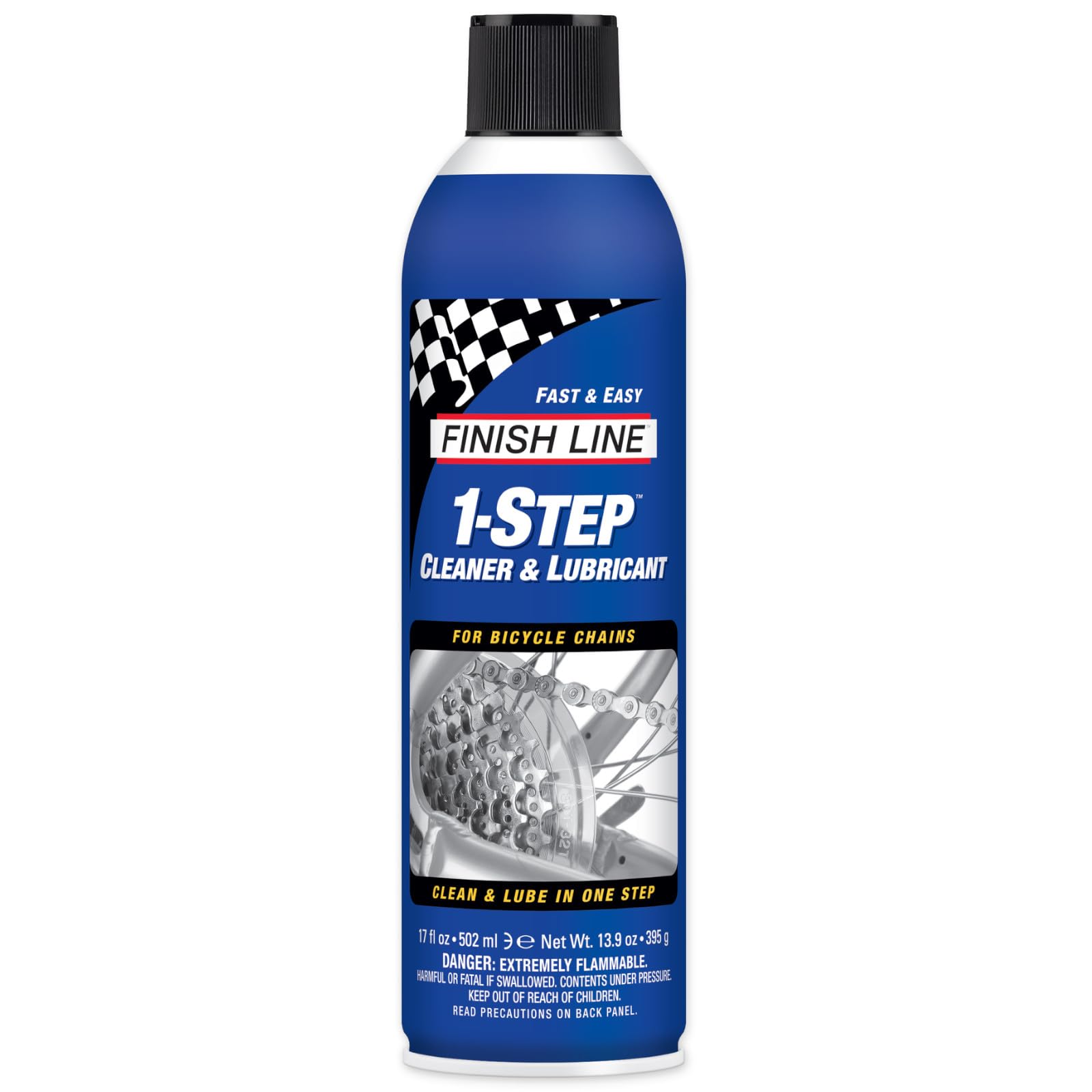
Finish Line 1-Step Cleaner & Lubricant

Finish Line 1-Step Cleaner & Lubricant

Quick touch-ups

Our Score 9.4/10
Check Price

Worth Noting

  • Cap and nozzle can break
Volume
17 fluid ounces
Formula
Cleaner and lubricant in one
Lube Type
Wet-style film
Read the full review

One-Step doesn't strip a chain. It flushes out old lube and grit and leaves a wet-style film behind in the same pass, which is a different job from the deep clean a scrubber and a bottle of degreaser deliver. Read the name as one step, not one solution.

Where it earns its place is between proper cleans: a chain that is noisy rather than filthy, a bike that sat out a damp week, a drivetrain worth protecting before a trip or a season in storage. Apply it, wipe the excess, and ride. It is also the bottle here that doubles as rust protection in salt air, which matters if the bike lives near the coast.

The 17-ounce bottle lasts well for what it is, and the wet-style film quiets a squeaky chain quickly — a small win that keeps a commuter bike from sounding neglected on every ride. We keep a bottle by the door, which is the most honest endorsement we can give a product this modest.

So the verdict is that this is a maintenance product rather than a cleaning one, and it earns its card because plenty of riders need the first far more often than the second. If the plates have visible black paste on them, no one-step product will fix that: start with a degreaser, then come back to this.

Bottom line: A maintenance bottle rather than a cleaner — buy it for the quick clean-and-lube pass between proper degreases, not as a replacement for one.

8

WEFOO Chain Washer Brushes, 2 Pack

WEFOO Chain Washer Brushes, 2 Pack

Budget brush set

Our Score 9.2/10
Check Price

Worth Noting

  • Handle can split under pressure
  • Bristles flatten after a run of cleans
Colors
Blue and red
Length
10 inches
Brush Count
Two
Read the full review

Two molded brushes, ten inches end to end, one blue and one red, no fluid and no instructions. That is the entire product, and at this end of the price range it is also the least risky thing to add to a setup you already own.

The handle length is the point. A short brush puts your knuckles next to the chainrings and the cassette teeth; this one lets you work the chain from a distance and get real leverage into the cogs. They take off the big stuff — mud, dust, the grey paste that builds on a wet-weather commuter — and leave the finer work to a solvent.

The detail worth stealing: keep the blue one for degreaser and the red for lube, so the two never contaminate each other. It sounds fussy until you have spread chain lube with a brush that still had solvent in the bristles, and then you'll never go back to a single anonymous brush in a jar.

Treat them as a consumable rather than a tool for life, and the value holds up. Buy them alongside a can of foaming degreaser and you have assembled a working setup for less than the boxed kits here cost, with the brushes doing the job a scrubber would.

Bottom line: Two cheap, long-handled brushes that supply the scrubbing while you supply the fluid — the least expensive useful thing you can add to a chain-cleaning setup.

How We Tested the Best Bike Chain Cleaners

We started with more than 40 cleaners — pump sprays, aerosol cans, concentrate-and-brush kits, and clip-on machines — and cut that to 14 based on how each one was meant to be applied, whether refills or replacement brushes were available, and what a season of drivetrain cleaning would cost per use.

Every cleaner then went to work on the same three bikes: a road bike ridden on dry weekends, a gravel bike that came home muddy, and a commuter parked outside year-round. We counted the passes it took to turn a black chain silver, and watched whether the grit came off the outside of the plates or out of the pins and rollers where it actually grinds. A stopwatch ran on the whole clean-and-relube, done gloved and one-handed at the work stand the way you'd really do it in a cold garage.

Mess got recorded too. We sprayed from arm's length to see the pattern and whether foam held or collapsed and ran down the chainstay, then checked how much degreaser landed on the floor versus the drip tray. Bottles lived in a tool bag for a month and spent nights lying on their sides so seeping triggers and cracked caps had a chance to show up. After every clean we re-lubed with the same wax lube and listened for how long the chain stayed quiet, which told us whether a cleaner was stripping grit or stripping the lube along with it. Brushes and plastic latches got squeezed week after week to see which bristles shed or clips snapped.

How to Choose the Right Bike Chain Cleaner

Start With the Format, Not the Brand

Everything here does one of three jobs: it loosens grease, it scrubs, or it does both in a single box. A degreaser on its own softens the grime, but something still has to agitate it out of the rollers. If you already own a fluid you trust, the missing half is a scrubber, and the Park Tool Cyclone is the stand-alone version of that tool. If you own nothing, a kit saves you a second order and a second wait.

The trap is assuming a spray finishes the job. It starts it. Buy a can expecting a clean chain and you'll get a chain that is soft, greasy and still gritty.

Decide Whether You Want to Use Water

Water-based degreasers need a rinse and a proper dry before fresh lube goes on, and any water left sitting in the rollers works against the lube you apply next. Dry solvents such as Finish Line Speed evaporate and skip the rinse entirely, which is why they suit anyone cleaning on a balcony, in a hallway, or in a car park.

A third route is a clean-and-lube formula, which tops a chain up rather than stripping it — useful between proper cleans and no substitute for one. Choose by where you clean first, then by how dirty your chain gets.

Check What It's Safe On

Paint, plastic, rubber seals and carbon are the surfaces that matter, and the plant-based fluids — ChainBrite in the Park Tool kit, the Muc-Off spray — are the low-drama choices for a bike you care about. The part that catches people out is the brakes.

A degreaser that shifts chain grease will contaminate a rotor or a pad just as effectively, so spray onto a brush instead of misting the drivetrain and keep the can pointed away from the calipers. Only a product specified as disc-brake safe belongs anywhere near them.

Size the Bottle to Your Habits, and Plan for the Mess

Capacity is really a question about how often you clean. A ten-ounce aerosol is a handful of sessions on one bike; a 16.9-ounce bottle of fluid covers a season of attention every couple of weeks; a three-pack of dry solvent disappears quickly once you start doing cassettes and chainrings as well as chains.

Then decide where the dirty fluid goes. A scrubber with a wicking sponge keeps drips off the floor, a foaming spray stays where you put it, and a flattened cardboard box under the bottom bracket catches everything else. We'd rather see you spend two minutes on setup than twenty on a stained driveway.

Frequently Asked Questions

Final Verdict

The Park Tool CG-2.4 is the one we point most riders to, because it removes the two things that stop people cleaning a chain — no tool and no fluid — in a single purchase. If you already own a degreaser you trust, buy the Cyclone scrubber instead and put the difference toward fluid you like.

And if you have no hose, no driveway and no patience for a bucket, take the Finish Line Speed three-pack. It costs more per clean, and it is the only product here that finishes the job without water.