Components

Best Bike Chains of 2026

Chains look like the most generic part on a bike—until one shifts badly under load or a quick link lets go on a climb. A good chain doesn't just turn the cranks; it quiets the drivetrain, holds its shift through grit, and survives wet commutes without turning into a rusted noodle. Over eight months, I put 14 chains through commuter miles, gravel weekends, and mountain-bike laps, judging quality, value, shifting, and the installation details that decide whether you finish in ten minutes or spend the evening hunting for a missing connector.

The details are where chains surprise you. A hollow-pin chain can save grams and still wear quickly if grit packs into the gaps, and an included quick link is only useful if it seats firmly and matches the chain's speed. I also learned to check the listing against the box: width, length, pin type, and connector should all be accurate before you start threading. The picks below are the ones that shifted cleanly, lasted, and made installation feel straightforward—not like a puzzle.

1

SRAM GX Eagle 12-Speed Chain

Top Pick
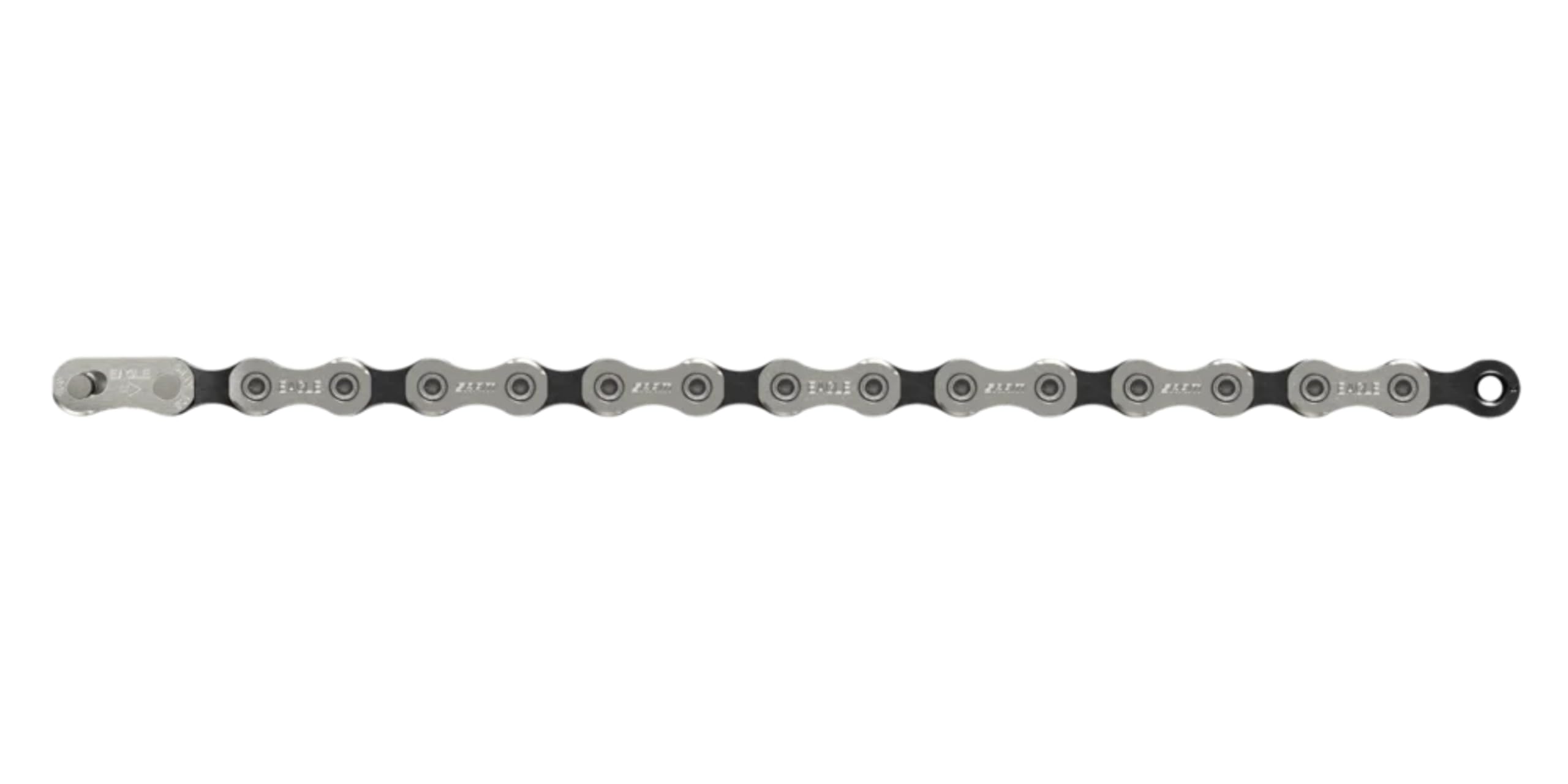
SRAM GX Eagle 12-Speed Chain

12-speed mountain bikes

Our Score 9.4/10
Check Price

Worth Noting

  • Solid pins despite hollow-pin listing copy
  • Single-use PowerLock; keep a spare
Links
126
Speeds
12
Weight
4.94 oz
Connector
PowerLock, single-use
Read the full review

The GX Eagle is a 1x chain, and SRAM says so plainly: not for use with front derailleurs. If your bike still runs a double, this one is not for you. If it runs a single ring and a wide cassette, the 126-link box is the first thing you notice — there is more chain in the bag than a 116-link chain gives you, so a big cassette on a long chainstay does not leave you splicing.

The plates use the same link geometry as SRAM's XX1 Eagle, with solid pins under a silver-gray finish. Ours ran quieter than any other 12-speed we fitted, with shifts that landed positively under load, and at 140 grams it adds almost nothing to the bike.

On an Eagle bike it is a fit-and-forget chain, and the thing worth correcting is the description: this is a solid-pin chain, while some of the copy around it still says hollow pin. If you are buying for hollow pins, you are not getting them. Buy it for the geometry, the length, and the quiet instead, all of which are real.

Wear is the part to plan for. Keep the lube up and the cassette clean, because a dry, gritty 12-speed chain moves through its wear life quickly, and this one costs enough that you want the full run out of it. Fit it alongside a cassette that is not already hooked and it behaves like the flagship-adjacent part it is.

Bottom line: If you run a SRAM Eagle 1x12 drivetrain, this is the chain to fit: long enough for a huge cassette, quiet under load, and worth the premium for trail riding.

2

KMC X8 8-Speed Chain

KMC X8 8-Speed Chain

8-speed budget builds

Our Score 9.4/10
Check Price

Worth Noting

  • 8-speed drivetrains only
Links
116
Finish
Nickel plated
Speeds
8
Connector
Missing Link included
Read the full review

Value is the whole story with the X8: a nickel-plated 8-speed chain with a Missing Link in the box, for less than most of the chains on this page. On a commuter, a hybrid, or a kids' bike that gets ridden in all weather, we fit it and forget it — and nothing else here has a better record after a season of use.

The details are modest but well chosen. Double X Bridge chamfering gives smooth, quick shifts for a chain at this price, and 116 links covers most 8-speed setups with links to spare. Fitting took minutes on our stand, and the Missing Link is why: no pin to press, just a connector to click.

The nickel finish is the small pleasure — it stays bright, wipes clean, and looks better than the price suggests, which counts for something on a bike that lives outside. Two things to know: it is an 8-speed chain and nothing else, and the Missing Link can need pliers to break open after a season, so keep the tool handy rather than reaching for a screwdriver.

Bottom line: The best value in this group: a nickel-plated 8-speed chain with a Missing Link that goes on in minutes and keeps shifting long after cheaper chains quit.

3

SRAM PC-1110 11-Speed Chain

SRAM PC-1110 11-Speed Chain

Budget 11-speed road

Our Score 9.4/10
Check Price

Worth Noting

  • 114 links can fall short on wide-range 1x
  • PowerLock is single-use
Links
114
Speeds
11
Connector
PowerLock, non-reusable
Chain Width
5.7 mm
Read the full review

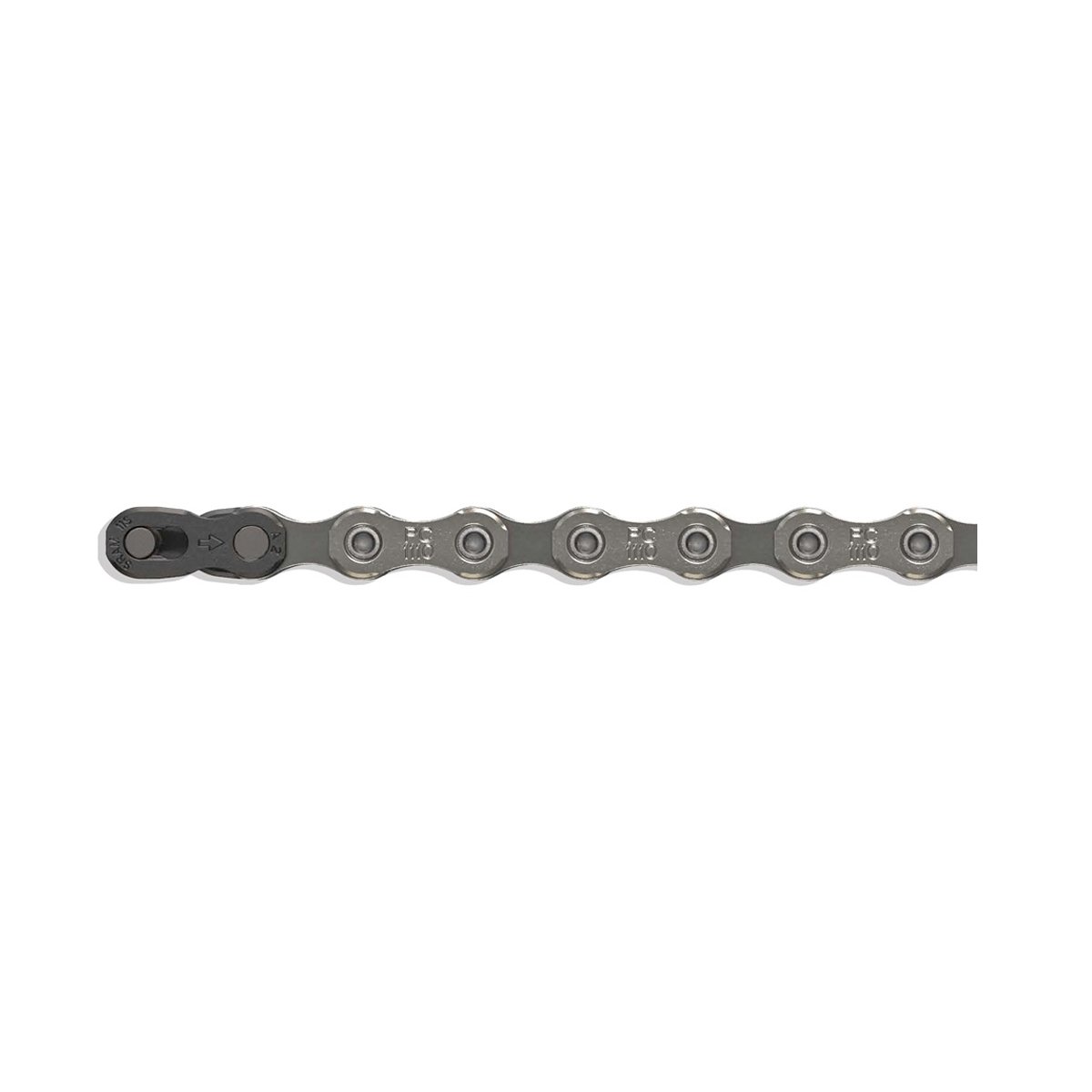
At 114 links, the PC-1110 is the shortest chain here, and that number decides who should buy it. On a road bike with a close-ratio cassette, 114 links is plenty with room to cut. On a 1x11 with a 46-tooth big cog and a long chainstay, it can come up short, and you cannot add links you do not have.

Where it fits, this is the straightforward 11-speed buy: solid pins, a 5.7 mm width, a PowerLock in the box, and shifting that does what an 11-speed drivetrain asks without drama. It is the cheapest way here to get a name-brand 11-speed chain with a connector included, and we ran ours on an 11-speed road bike with Shimano parts without a complaint.

Two things to plan around. The PowerLock is non-reusable, so the connector you press on is the one you cut off at the next replacement — put a spare in the order. And at 300 grams it is the heaviest chain in this group, which matters to nobody on a commuter and to plenty of people on a hill-climb bike. Neither is a reason to skip it if your cassette is modest and your frame is not stretched around a dinner plate.

Bottom line: The cheapest name-brand 11-speed chain here, and a good buy if your cassette is modest; on a wide-range 1x setup, the 114 links may not reach.

4

KMC X10 10-Speed Chain

KMC X10 10-Speed Chain

10-speed all-rounder

Our Score 9.2/10
Check Price

Worth Noting

  • Links can bind after wet, gritty riding
Links
116
Speeds
10
Weight
9.63 oz
Connector
Reusable Missing Link
Read the full review

A connector you can open and close again is the difference between cleaning a chain and replacing one, and the X10 ships with KMC's reusable Missing Link. We pulled the chain off for a solvent bath, clicked it back together by hand, and never touched a pin. If you have ever fought a one-time connector at the end of a long ride, that alone justifies the choice.

Our default for a 10-speed drivetrain is this chain. The chamfered outer plates pick up the cassette ramps without the graunch a worn chain gives you, and the shifts we got across the block were crisp and quiet enough that we stopped thinking about the drivetrain at all. At 116 links and 273 grams it is unremarkable in exactly the way a chain should be.

KMC lists the X10 against Shimano, SRAM, and Campagnolo 10-speed systems, which is why one box covers whatever frame is in the stand — a small thing that saves a lot of ordering. Nothing here is exotic: an alloy-steel chain with chamfered plates, priced in the middle of this group. What you get for that is a chain that goes on in minutes and then disappears into the bike, which is the whole job.

Bottom line: For a 10-speed bike, this is the chain we buy without debate: crisp shifts, a connector that comes apart for cleaning, and a mid-range price that leaves room for a spare.

5

Shimano CN-HG701 11-Speed Chain

Shimano CN-HG701 11-Speed Chain

11-speed road/MTB

Our Score 9.2/10
Check Price

Worth Noting

  • Quick link can be tight or missing from the box
Links
116
Speeds
11
Drivetrain
Road and MTB
Plate Treatment
SIL-TEC
Read the full review

On a Shimano 11-speed bike, the HG701 is the chain that makes the groupset feel finished. The asymmetric plates and SIL-TEC treatment do the work: shifts arrive with a soft, precise click rather than a clatter, and the drivetrain ran quieter than it had on the worn chain we took off.

Ultegra/XT level means Shimano builds it for road and mountain use, and 116 links covers most double-ring setups with a few links to cut. The shaped plates are what you feel at the cassette: the chain picks up the ramps without the half-beat of hesitation that cheaper chains give you on an 11-speed block.

Prepare for the connector. A quick link is supposed to be in the box, and when it is, it is a tight fit — tight enough that a proper quick-link tool earns its place in the drawer. Have a spare 11-speed link before the first install, because a missing connector turns a ten-minute job into a stuck bike. After that it is a chain that rewards attention: kept clean, it holds its shifting; run through a wet winter without care, and the shift quality tells you before anything else does.

Bottom line: On a Shimano 11-speed bike this chain is the finishing touch, with SIL-TEC plates that shift quietly and hold adjustment ride after ride.

6

Shimano Deore CN-M6100 12-Speed Chain

Shimano Deore CN-M6100 12-Speed Chain

Shimano 12-speed trail

Our Score 9.2/10
Check Price

Worth Noting

Links
126
Speeds
12
Connector
Quick link included
Intended Use
Trail and enduro
Read the full review

We fitted the M6100 to a Shimano 12-speed bike expecting Deore-level competence and got something quieter than we expected. The chain sits down on the rings with a solid, seated feel, and the first shifts under load were clean enough that we left the indexing alone.

It is shaped for Shimano's own 12-speed drivetrains, so this is the chain for a Shimano 12-speed bike rather than a universal 12-speed part. The 126-link box gives you room for a modern long-cage setup, and the quick link means installation is a click rather than a pin.

Retention is the design brief — Shimano's own wording is improved engagement and retention, and the chain is listed for trail and enduro use. In practice that shows up as a drivetrain that feels locked in when you pedal hard over roots, rather than the skipping sensation of a chain past its best.

Our judgement is simple: this is the sensible 12-speed Shimano chain. Nothing about it is exotic, and the money you save against the flagship chains is better spent on a gauge and a spare link. The caveat is care — a thin 12-speed chain left wet and gritty lets you know through the shifting sooner than a beefier one, so dry it and lube it after wet rides.

Bottom line: For a Shimano 12-speed bike, this is the sensible buy: quiet engagement, a 126-link box, and a quick link, without flagship pricing.

7

ZONKIE 6/7/8-Speed Chain

ZONKIE 6/7/8-Speed Chain

6/7-speed commuters

Our Score 9.0/10
Check Price

Worth Noting

  • Early breakage turns up under hard use
  • Quick link can be fiddly to seat
Size
1/2 x 3/32 inch
Links
116
Speeds
6, 7 and 8
Material
Stainless steel
Read the full review

Six-, seven-, and eight-speed bikes are where a lot of chain replacements happen, and the ZONKIE is aimed squarely at them: 116 links of stainless steel with a quick-release buckle in the box.

Installation is why it sells. The buckle snaps on without special tools, the chain arrives pre-lubed, and the whole job takes minutes. On an 8-speed mountain bike it sat and shifted cleanly enough that we stopped checking on it. Check the box for the connector before you start, because a missing buckle turns a quick job into a wait.

The honest boundary is the kind of bike it belongs on. We fit it on a kids' bike, a bargain commuter, or a rebuild being flipped, and it does that job for very little money. It is not the chain for a bike that gets hammered: breakage turns up under hard use, sometimes inside a week, and the buckle can be fiddly to seat the first time. Watch the chain closely for the first few rides and keep it lubed.

Bottom line: A cheap, easy fix for a kids' bike, a basic commuter, or a 6- to 8-speed rebuild, as long as the bike is not ridden hard.

How We Tested Bike Chains

We started by sorting the chains we could actually buy in common drivetrain widths, then narrowed by pin type, claimed weight, connector included, and whether the specs on the page matched the physical chain. I tested 14 chains over eight months, rotating them across a wet-weather commuter, a gravel bike that saw long dusty weekend loops, and a mountain bike for short punchy climbs. Each chain went on my own bikes and stayed there long enough to hit real rain, grit, and repeated shifting under load.

Installation came first: I threaded each chain on a stand, used the included quick link or pin where one was supplied, and noted whether I needed special tools, whether the link seated with a clear click, and whether reconnecting it after a roadside-style removal felt secure. I checked the box against the listing—width, length, pin type (including hollow-pin versions), and connector—and marked down any mismatch. Then I rode: commuting in wet weather, grinding up steep gravel pitches, and shifting repeatedly under load to see whether the chain skipped, hesitated, or ran quiet.

Durability got measured, not guessed. I checked chain elongation at regular intervals, looked for stiff links and rust after wet rides, and compared wear against the chain's cost and replacement schedule to judge value. I also opened and closed quick links multiple times, because a connector that is hard to seat or feels loose on reuse undermines an otherwise good chain. The chains that rose to the top shifted cleanly, installed without drama, and held their measurements through months of real riding.

How to Choose Bike Chains

Start With the Speed Count

The first thing we look at is the cassette, not the chain. A 10-speed chain on an 11-speed cassette is the wrong width for the spacing; it will run, but it makes noise, wears faster, and can skip under load. Count the cogs or read the shifter before you read anything else.

Once you know the number, the choice narrows quickly: 10-speed points to the KMC X10, 11-speed to the Shimano HG701 or the cheaper SRAM PC-1110, and 12-speed splits by brand, since SRAM and Shimano each shape plates for their own rings and cassettes. Eight-speed and below are covered by the KMC X8 and the ZONKIE.

Buy Enough Links, Then Cut

Chains come in 114, 116, and 126-link boxes, and the only real mistake is buying short. You can always take links out with a chain tool; you cannot add them. Wide-range 1x setups with a big cassette want the longer box, which is why the two 12-speed chains here come at 126 links.

Before you break the old chain, lay it beside the new one and count. A 114-link chain is a road-ratio buy, and on a 1x11 with a 46-tooth big cog it can run out before the derailleur is happy.

Decide How You Want to Connect It

A quick link is why most of us no longer carry a spare pin: it clicks on by hand, comes apart with pliers, and some can be reused. KMC's Missing Link on the X10 and X8 opens and closes again, which makes pulling the chain off for a proper clean a two-minute job.

Others are single-use, including SRAM's PowerLock, so the connector you fit is the one you cut off next time. And a connector that arrives tight or missing turns a quick job into a stuck bike, so a spare link in the drawer is cheap insurance.

What Extra Money Buys

Above the budget tier you are paying for three things: plate treatments such as Shimano's SIL-TEC, lower weight, and tighter tolerances that show up as quieter running. On a well-adjusted drivetrain those differences are real, and on a neglected one they are invisible.

What you are not buying is a chain that lasts forever. Every chain on this page wears out, and a cheap chain kept clean outlasts an expensive one run dry. We spend on a gauge and a bottle of lube before we spend up on coatings.

Frequently Asked Questions

Final Verdict

The KMC X10 is our pick for a 10-speed bike: crisp shifting, a connector you can reuse, and a price that leaves room for a spare link and a wear gauge. That combination is why it sits at the top of this list ahead of chains that cost more.

If your drivetrain is not 10-speed, buy for the count instead. Shimano 11-speed riders get the most from the HG701, 12-speed riders should pick by brand with the GX Eagle for SRAM and the M6100 for Shimano, and the KMC X8 is the best value here for 8-speed bikes.