Components

Best Bike Headsets of 2026

A headset is a few bearings and cups doing one quiet job: letting your fork turn under load while everything else stays put. When it’s right, you forget it exists. When it’s wrong, every ride comes with a creak, a wander, or steering that never quite settles. I’ve chased those noises on my own bikes, and the fix is rarely just tightening things—the headset has to match your frame, steerer, and the way you ride.

Over the past eight months, my team and I installed and rode a dozen headsets on road, gravel, and mountain bikes. We focused on how smoothly they steered, whether they held adjustment after muddy rides, whether the fit was truly frame-specific, and whether installation was realistic for a careful home mechanic. Weight mattered, but lighter isn’t better if it makes setup fussier or bearing life shorter. The picks below are the ones that felt solid and worth the money.

1

Cane Creek 40-Series EC34

Top Pick
Cane Creek 40-Series EC34

34mm head tubes

Our Score 9.6/10
Check Price

Worth Noting

  • Fits only 34mm head tubes with straight 1-1/8 steerers
Weight
3.52 oz
Bearings
ZN40 sealed cartridge
Cup Material
6061 T-6 aluminum
Head Tube Fit
34mm, 1-1/8 in straight steerer
Read the full review

The most expensive headset in this guide isn't our top pick, and that tells you most of what the Cane Creek 40 is about. A clip-seal closes over the upper bearing and captures the compression ring inside the cap, so there's no thin ring to drop on the garage floor when the fork slides out. That one piece is the difference between assembling a front end calmly and doing it on your hands and knees.

The hardware underneath is equally sensible. The cups are 6061-T6 aluminum with material contoured out of the inside rather than the outside, the crown race is steel with a low-friction face seal, and the bearings are ZN40 cartridges. In use the steering came up smooth and stayed free of the rocking that sends you back to the top cap with a wrench.

Installation is standard work — press the cups square, seat the crown race, slide the fork through — and the included instructions cover the whole job, which matters if this is your first one. What we appreciate most is what happens later: the internals are shared across Cane Creek's 10, 40 and 110 series, so a bearing that goes rough in a few years is one small part rather than a whole new headset.

At 3.52 ounces it disappears on the bike. It costs more than the budget picks here, and the money goes into the seal, the crown race and that replaceable-bearing design rather than into a logo.

Bottom line: For a 34mm head tube and a straight 1-1/8-inch steerer, this is the headset we tell people to buy and stop worrying about.

2

Cane Creek 40 ZS44/ZS56

Cane Creek 40 ZS44/ZS56

Tapered steerer frames

Our Score 9.6/10
Check Price

Worth Noting

  • Bearings excluded from the one-year warranty
Weight
6.7 oz
Bearings
ZN40 sealed cartridge
Standard
ZS44/28.6 | ZS56/40
Upper/lower Stack
8/12mm
Read the full review

Semi-integrated is the word that decides this one. The cups drop into recesses machined into the head tube rather than pressing over the outside of it, and Cane Creek cuts this version for frames with a ZS44 upper and ZS56 lower — the pairing most modern trail, gravel and enduro bikes use so a tapered 1-1/8-to-1.5-inch steerer has somewhere to sit.

It's the same family as our top pick and the same reasoning carries over: a clip-seal top assembly, a steel crown race, and ZN40 cartridge bearings whose zinc coating stands up better than plain steel against water running down the steerer. For a frame built around a tapered fork, this is the version we recommend without much deliberation. The 8mm upper stack helps too, because the bars sit where the frame was designed for them instead of gaining height you then have to lose at the stem.

The wider lower bearing is the reason for the 190 grams, and that weight is doing something: a bigger bottom race is what keeps a long-travel fork from working the front end loose. Set the preload, tighten the stem, and it stays put. What you're paying for over the external-cup headset is the fitment itself, since no adapter turns a 34mm frame into one of these.

Bottom line: Buy this one when your frame is semi-integrated and your fork is tapered; it solves a fitment the external-cup 40 can't touch.

3

Dioche 44mm Headset

Dioche 44mm Headset

44mm head tubes

Our Score 9.4/10
Check Price

Worth Noting

  • Busy lettering across the cups
Material
Aluminum alloy
Frame Fit
44mm straight head tube
Bearing Setup
External cups with sealing ring
Read the full review

A 44mm straight head tube is the fitment that makes a tapered-fork conversion possible: the bore is wide enough for external cups that step the frame down to a 1.5-inch fork crown, so you keep the frame and run the fork you actually want. Dioche builds this one for exactly that job, and it's the cheapest route into it here.

The build is aluminum with a sealing ring at the cups and grease packed behind the bearings, and a top cover is included. Nothing about it feels precious, which is fine at this price: the finish is even, the rotation is free, and the lettering on the cups is loud enough that you'll either find it cheerful or wish it were quieter.

Our take is that this is a fitment part, and it does the fitment job without drama. Grease the cups before they're pressed, set the preload, and check everything again after the first long ride — a conversion is worth one recheck, because that's when you find out whether the cups seated square. If they did, you'll stop thinking about the headset entirely.

Bottom line: For a 44mm straight head tube that needs to take a tapered fork, this is the practical, low-cost way through the conversion.

4

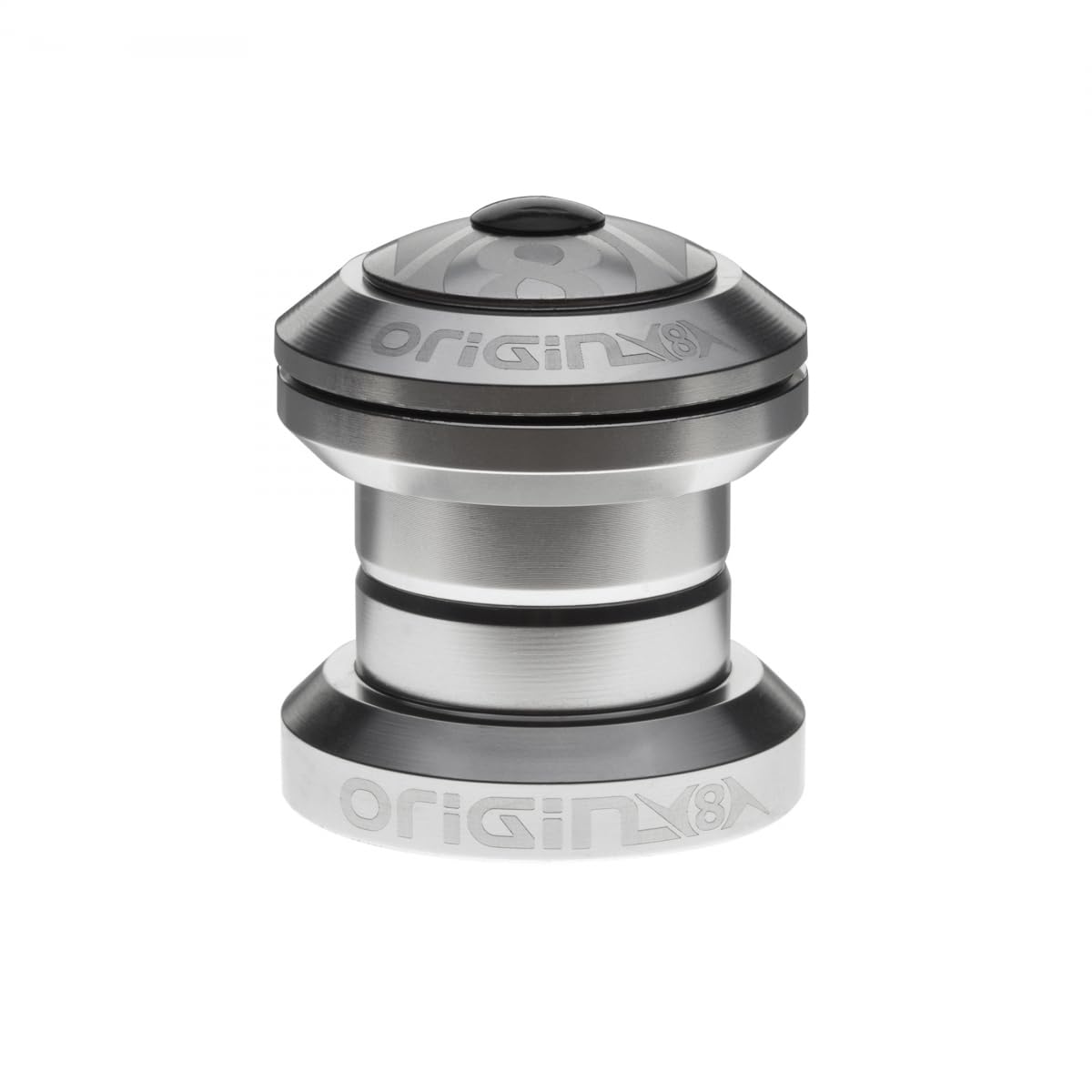
Origin8 Pro Threaded

Origin8 Pro Threaded

1-inch threaded forks

Our Score 9.2/10
Check Price

Worth Noting

  • Taller stack than some 1-inch steerers allow
Cups
CNC 6061-T6 aluminum
Weight
110g including lock nut
Bearings
Sealed cartridge
Steerer Fit
1 in threaded
Read the full review

Threaded headsets are a small, stubborn corner of the market, and if you're working on a 1-inch threaded steerer — an older road frame, a rebuild, a bike that predates threadless — the Origin8 Pro is where we start. Sealed cartridge bearings, CNC-machined 6061-T6 cups, and a machined finish that looks intentional on a steel frame.

Two crown races come in the box, which saves the usual hunt for one that matches your fork, and the adjustment is the old lock-nut arrangement: set the preload by feel, then lock it down. The bearings roll evenly and the front end holds its adjustment instead of creeping loose between rides. At 110 grams including the lock nut it's among the lighter headsets here, which for a threaded build is a pleasant surprise rather than a reason to buy.

The machined finish is a small pleasure on a frame you care about, and the laser-etched logo is subtle enough to disappear under a stem. Fit it once with a proper press and there's nothing else to think about until the cartridges finally go — which, with cartridges, is the only maintenance this one asks for.

Bottom line: The 1-inch threaded headset we start with for older frames: sealed cartridges, machined cups and two crown races in the box.

5

Odyssey Pro Conical

Odyssey Pro Conical

BMX integrated frames

Our Score 9.0/10
Check Price

Worth Noting

  • 12mm dust cap adds stack above the head tube
Stack
12mm
Bearings
Sealed cartridge
Included
Color-matched spacers
Standard
Integrated 1-1/8, 45 x 45
Read the full review

A 12mm dust cap and a handful of 3mm and 2mm spacers sounds like housekeeping until you're setting up a new fork and realize you can dial bar height without a separate order. The Odyssey Pro Conical ships with the cap and spacers in the box, color-matched to the headset, so the front end ends up looking like one assembly rather than three.

This is an integrated headset: Campagnolo 45 x 45, 1-1/8, with the bearings seating directly into machined recesses in the head tube and no cups at all. For a BMX or dirt-jump frame cut for that standard, it's the version we fit — sealed cartridge bearings, laser-etched races, and steering that stays tight through repeated bar spins and hard landings.

The thing to understand about integrated headsets is that the frame does the job the cups do on other bikes. If the bearing seats in the head tube are worn, ovalized or poorly machined, no headset fixes that, so run a finger around the seats and look for movement before you order anything. On a sound frame this one drops in, adjusts like any threadless headset and asks nothing further.

Bottom line: If your BMX frame is cut for a Campagnolo 45 x 45 integrated headset, this is the one to fit and forget.

6

BUCKLOS Threadless

BUCKLOS Threadless

Budget trail builds

Our Score 9.0/10
Check Price

Worth Noting

  • 34mm head tube and 28.6mm straight steerer only
Size
34-34mm
Weight
5.64 oz
Bearings
Double-sealed steel
Included
Headset, star nut, expander plug
Read the full review

This is the least expensive threadless headset in the guide, and it's the one we suggest for the commuter, the winter bike, or a frame you rescued from the back of the garage. Double-sealed steel bearings, aluminum cups, and a kit that includes a star nut and an expander plug.

The expander plug is the detail worth noting, because if you fit a carbon fork you need one and buying it separately is an extra order you don't want mid-build. The split races are the other practical touch — the slits let the cups and bearings settle into place with less fiddling on the way in, which is why this one goes on quickly without a shop's worth of tooling.

It steers smoothly, it holds its preload, and the black-and-red finish looks better on a dark frame than the price suggests. What you're not getting is the Cane Creek's clip-seal and steel crown race. Whether that matters depends on where the bike sleeps: a garage-kept commuter won't notice, and a bike that lives outdoors in a wet climate will.

Bottom line: The budget threadless pick: a complete kit with the expander plug, for a commuter or a frame you're not sentimental about.

7

Ritchey Logic Threadless

Ritchey Logic Threadless

Wet-weather commuters

Our Score 9.0/10
Check Price

Worth Noting

  • Steel cups make it heavier than aluminum options
Cups
Alloy steel
Weight
5.5 oz
Bearings
Retainer ball bearings
Stack Height
28.9mm
Read the full review

Steel cups, retainer ball bearings and deep races: the Ritchey Logic is built the way headsets were built before aluminum cups and sealed cartridges took over, and it's still on the shelf because that construction works.

The bearing sizes are split deliberately — 5/32-inch balls in the upper race to keep weight down, 3/16-inch in the lower where the load sits — and the cups are deep, which gives the bearings more material to sit in over a long life. The steel cups surprised us on unboxing; they're the reason the whole assembly feels more substantial than the alloy alternatives here.

Ritchey lists 28.9mm of stack, and that's the number to check against your steerer before the box comes off the bench. A headset that sits taller than the one it replaces can leave you short of steerer for the stem to clamp, and there's no recovering from a steerer that's already been cut. Measure the old assembly with the stem off and compare.

For a commuter, a tourer or a bike that gets left out in the rain, this is the one we point to: steel cups take knocks that dent thin aluminum, and retainer bearings can be cleaned and repacked instead of replaced whole. It's an old answer, and on a wet-weather bike the old answer still works.

Bottom line: An old-school threadless headset for a wet-weather workhorse, where steel cups and repackable bearings beat saving grams.

8

Origin8 Pro Threadless

Origin8 Pro Threadless

Classic threadless builds

Our Score 9.0/10
Check Price

Worth Noting

Cups
Alloy with laser-etched logo
Weight
136g including top cap and star nut
Bearings
Sealed cartridge
Standard
EC34/28.6 | EC34/30
Read the full review

Same EC34 fitment as our top pick — 34mm head tube, straight 1-1/8-inch steerer — with sealed cartridge bearings and machined alloy cups, for less money. That's the pitch, and it mostly holds.

In the hand it's a tidy piece of machining: the cups are cleanly cut, the laser-etched logo is understated, and the assembly includes a top cap and star nut, so there's no second order for the small parts. Installation is the ordinary press-and-seat routine, and the preload came up easily with no notchiness at the bars.

The numbers that matter are on the cups: EC34/28.6 at the top and EC34/30 at the bottom. The first figure is the steerer, the second is the crown race, and both have to match your fork before anything gets pressed into a frame. It's the same check as any headset, and it's the one worth doing twice.

We rate it the value pick of the EC34 group: cartridges, machined cups and the small parts in the box, for meaningfully less than the Cane Creek, whose extra money goes into the clip-seal and the steel crown race. On a bike that lives in a garage and gets washed when it's filthy, that's a trade worth making.

Bottom line: The EC34 value pick: sealed cartridges, machined cups and the small parts in the box for less than our top pick.

How We Tested Bike Headsets

We started by building a shortlist from shop listings and manufacturer specs, then filtered by head tube diameter, steerer type, bearing style, stack height, and price so we weren’t comparing parts that couldn’t fit the same frames. That left a dozen headsets, which we installed on our own road, gravel, and mountain bikes over eight months. Every install happened on a home workstand, with the same careful routine: measuring, pressing cups where needed, setting the crown race, and adjusting preload by feel rather than by guesswork.

On the road and gravel bikes, I paid attention to steering feel at slow speed and under hard braking—whether the front end tracked straight or wandered. On the mountain bikes, we rode through dust, rain, and at least one muddy weekend, then checked for creaks, grit, and any play that appeared after the first few rides. We also re-torqued and re-adjusted each headset after a week, noting whether the bearings stayed smooth or developed a notch.

We weighed every headset before installation, because a few grams can matter if you’re counting them, but we didn’t reward lightness on its own. The real test was whether a lighter unit still held adjustment and stayed smooth after repeated rides, and whether the installation and fit justified the price. We kept riding the strongest performers beyond the initial test period, and the ones that stayed quiet are the ones that made the list.

How to Choose Bike Headsets

Match the Standard Before You Compare Anything

The bore in your head tube, not the diameter of your steerer, decides which headset you need. A 34mm head tube takes external cups that press over it; a semi-integrated frame is machined for ZS44 and ZS56 bearings that drop into recesses; an integrated frame takes 45 x 45 bearings straight into the head tube; older frames use a 1-inch threaded set. Two headsets both listed for 1-1/8-inch steerers can be completely non-interchangeable, which is the mistake that sends most people back to the returns desk.

Measure the head tube bore, the steerer diameter and the crown seat on the fork before you shop, and read the standard first and the brand second.

Sealed Cartridge or Loose Balls

Sealed cartridges are the sensible default: they arrive packed, they need no repacking, and when one goes rough you replace the bearing rather than the assembly. Retainer ball bearings, like the ones in the Ritchey, are serviceable and cheap to keep alive if you're the sort who strips and greases a headset each winter. Cup-and-cone sets are the least expensive and the most demanding, since they need adjustment and fresh grease to stay smooth.

If the bike sees rain and grit, pay for cartridges; a fair-weather rider can happily run balls and save the money.

Stack Height and the Steerer You've Already Cut

Steerer tubes only get shorter. A headset that sits taller than the one it replaces can leave you without enough steerer for the stem to clamp, and threaded assemblies generally run deeper than threadless ones. That's an unrecoverable mistake on a fork that's already been cut, and it's why a return sometimes has nothing to do with quality.

Measure the old headset's stack with the stem off and compare it with the new part before anything is pressed. A low upper stack, like the 8mm on the semi-integrated Cane Creek, buys you room; deep cups spend it.

Materials, Weight and the Weather

Aluminum cups are lighter and won't rust; steel cups take knocks and shrug off corrosion at the cost of grams. The number on the scale rarely changes how a bike rides, so choose materials for the conditions the bike lives in rather than for weight. Read the warranty too, because bearings are the part that actually wears and they aren't always covered.

Crown Race, Small Parts and the Press

The crown race trips up more first installations than anything else: it has to match the seat on your fork, and fitting it takes a proper setter rather than a screwdriver and optimism. Check what comes in the box — extra crown races, a star nut, an expander plug for a carbon steerer, top cap and spacers. A headset press and race setter cost more than a shop's bench fee, so buy the tools only if you plan to do this again.

Frequently Asked Questions

Final Verdict

The Cane Creek 40 in its external-cup form is the headset we point most people to: a clip-sealed top assembly that keeps the compression ring where you can find it, a steel crown race, and cartridge bearings you can replace without buying the whole thing again. It fits 34mm head tubes with straight 1-1/8-inch steerers, which covers a large share of the frames people are actually rebuilding.

If your frame is semi-integrated and cut for a tapered steerer, the ZS44/ZS56 version is the same purchase in a different shape, and it's worth the step up over adapting anything.