Lights & Electronics

Best Bike Radar of 2026

The scariest part of road riding is the car you never hear coming up behind you. A bike radar watches traffic from behind and sends a warning to your handlebar display or phone, so you know whether to hold your line or edge over. It isn't a substitute for a shoulder check, but a good one turns a blind spot into usable information.

Over eight months, I've ridden 12 bike radars on daily commutes and weekend two-lane loops, comparing them side by side. The keepers shared a few traits: dependable traffic detection, a warning that cut through wind and road noise without becoming a nuisance, and a battery that survived a full week of short rides. The weak ones missed cars until they were uncomfortably close, chirped at parked cars, or had a screen I couldn't read in direct sun. Connectivity and phone notifications varied more than I expected, and setup ranged from painless to fussy. The picks below are the ones I'd trust on my own handlebars, whether you're watching the budget or want the most polished app.

1

Garmin Varia RTL515

Top Pick
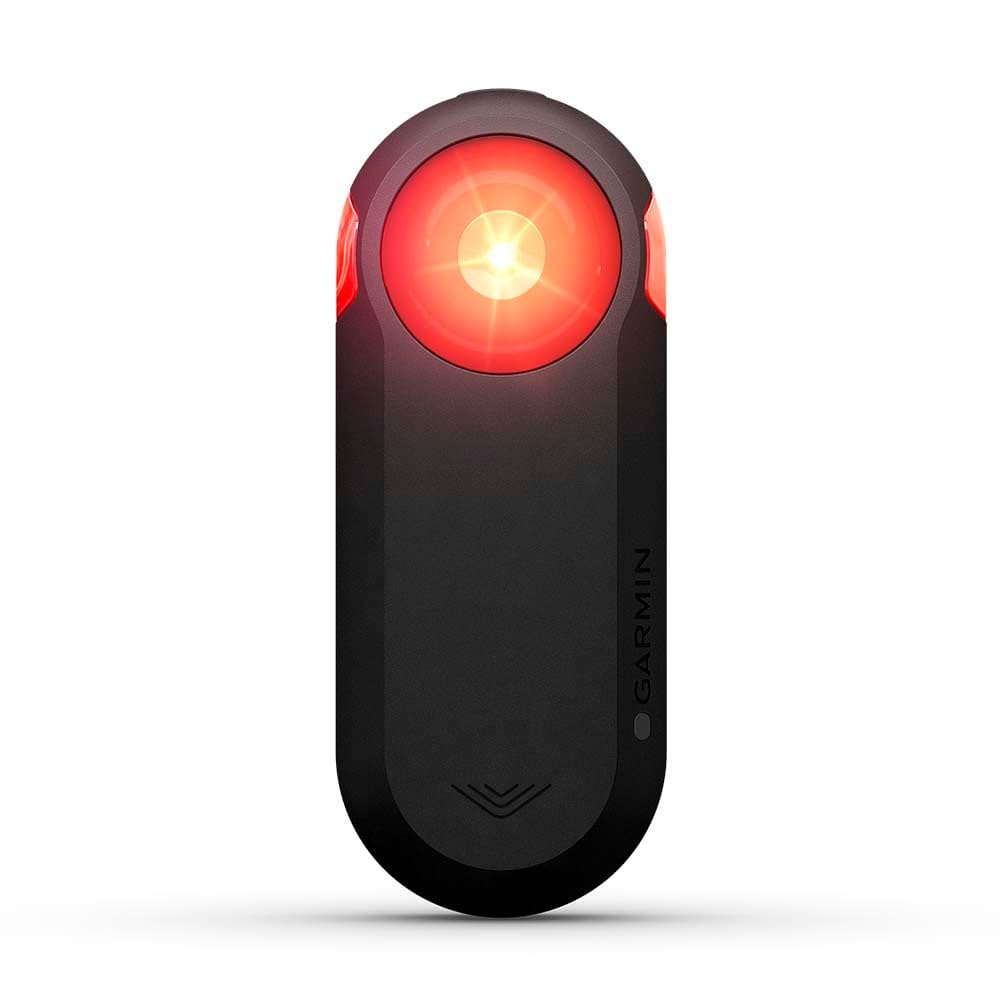
Garmin Varia RTL515

All-round road riding

Our Score 9.6/10
Check Price

Worth Noting

  • Six-hour rating in steady high output
Device Support
Edge computers, watches, phone app
Battery By Mode
6-16 hrs
Detection Range
Up to 153 yd (140 m)
Daylight Visibility
Up to 1 mile
Read the full review

The reason the Garmin Varia RTL515 is our top pick has as much to do with what it talks to as with the radar itself. It pairs with Garmin Edge computers, a phone running the Varia app, a long list of Garmin watches, and third-party apps such as Ride with GPS, and Wahoo head units with radar support pick it up as well. If you already own a screen, this is the radar that plugs into the setup you have rather than demanding a new one.

What that buys you is a rear view that does not cost you a head turn. The unit watches up to 153 yards back and sends a graphic and a tone to your display showing how many vehicles are there and how close they are, while the tail light brightens and changes flash as a car closes. Daylight visibility is rated at up to a mile, which in the moments before a driver registers you matters more than the detection does.

Runtime is the one place the RTL515 asks you to pay attention. The quoted maximum belongs to day flash; the steady settings that make the most sense after dark are the ones that empty the battery fastest, so pick your mode for the length of the ride and charge before anything long. We treat that as a habit rather than a flaw, because the mode you want is usually the mode that lasts.

At 2.56 ounces it adds almost nothing to the seatpost, and it comes in at less than half the weight of the camera-equipped RCT715 below, which matters if you move a single unit between bikes. The mount is a seatpost bracket rather than a permanent fixture, so the radar travels with you rather than staying out in the weather.

Bottom line: The radar we recommend to most riders: it pairs with nearly any head unit or phone, warns you 153 yards back, and disappears on the seatpost.
2

CooSpo TR70

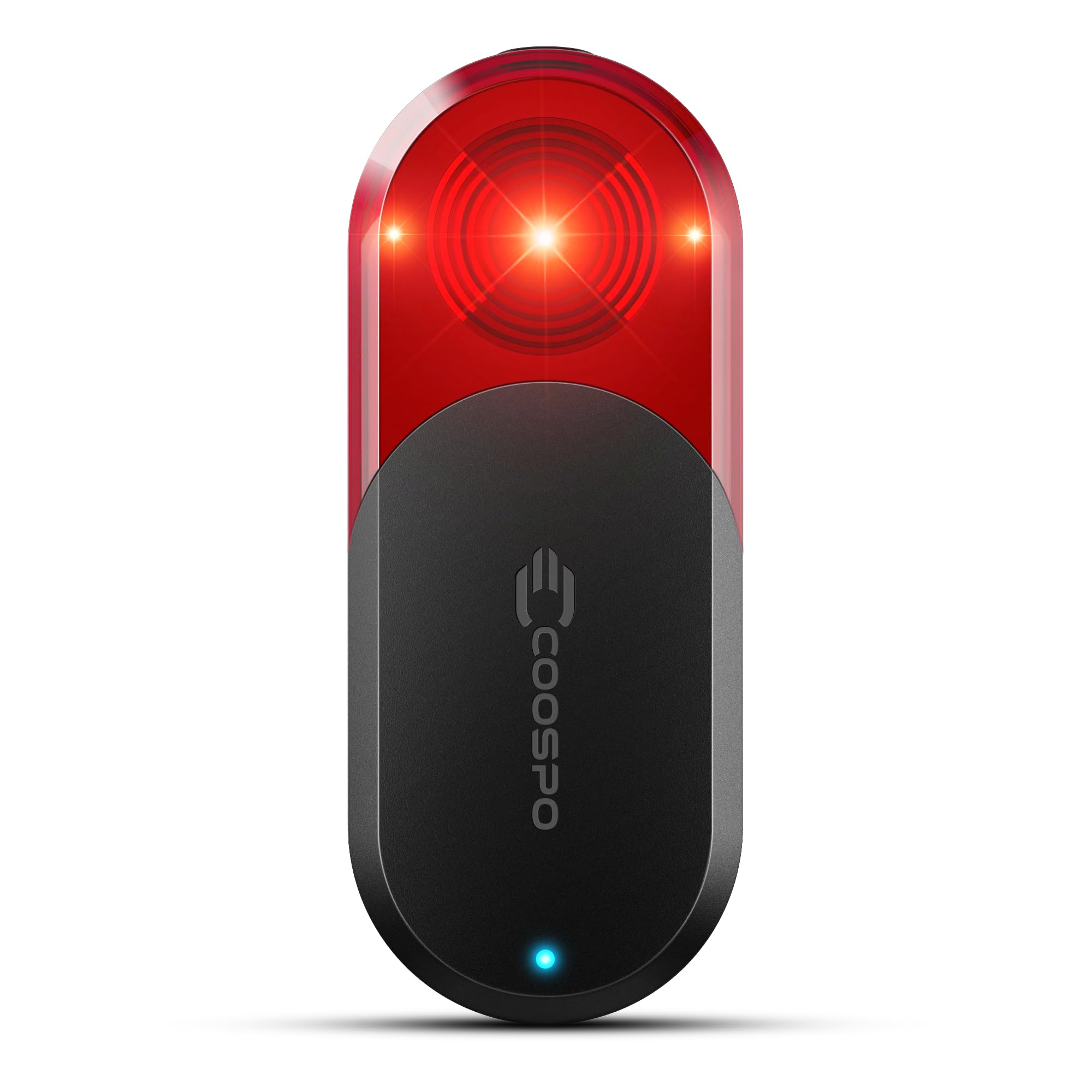
CooSpo TR70

Budget road riding

Our Score 9.2/10
Check Price

Worth Noting

  • Shorter 140 m range than the longest picks
  • On-unit beeps get chatty in traffic
Charging
USB-C
Battery Life
Up to 40 hrs
Light Output
80 lumens
Detection Range
Up to 140 m
Read the full review

The CooSpo TR70 is the least expensive radar in this guide, and we expect a price like that to show up somewhere in the product. It mostly does not. The core numbers sit close to the premium units: detection up to 140 meters, an 80-lumen tail light with seven selectable modes, and USB-C charging rather than the older connector a lot of cycling gear still uses.

The 40-hour battery claim is the headline, and it is worth reading carefully. That figure comes from the least demanding mode, and running the light bright with the radar live will use it up faster than the box suggests. Even so, it asks for a charge less often than anything else here, which is the argument if your rides are long and your charging habits are loose.

Pairing is straightforward. Garmin Edge computers, CooSpo's own CS500 and CS600, and the CooSpoRide app all work, and the app is where you change flash patterns and radar settings. There is also a Radar-Only mode that keeps the detection and drops the light, which stretches the battery further if you already run a taillight you like. At 100 grams it is light enough for a seatpost mount, though a rear rack or a loaded saddlebag can crowd the bracket — check the sightline before you commit.

Bottom line: For riders who want radar without the premium outlay, the TR70 covers detection, a bright light, and USB-C for the least money here.

3

Garmin Varia RCT715

Garmin Varia RCT715

Recording close passes

Our Score 9.0/10
Check Price

Worth Noting

  • More than twice the weight of the RTL515
Camera
1080p at 30 fps or 720p
Weight
5.2 oz
Detection Range
Up to 153 yd (140 m)
Included Storage
16 GB SD card
Read the full review

The Garmin Varia RCT715 is the RTL515 with a camera built in, and the camera is the entire reason to consider it. It records 1080p at 30 frames per second, drops to 720p when you want more ride time, and stores footage on the included 16 GB card. More useful than recording everything is the automatic incident capture: when the unit registers an event, it saves the footage from before, during, and after without you reaching for anything.

We think that makes it a genuinely different product rather than a spec bump. A close pass that goes wrong is exactly the situation where a description is worth less than a video file, and the same 153-yard detection and alert behavior as our top pick comes along with it. The footage is sharp enough to make out the things that matter afterward — a plate, a vehicle type, how close it actually came — when you review it on the phone app.

What it asks in return is weight and charging. At 5.2 ounces it is more than twice the RTL515, and running radar and camera together shortens the gap between charges; the 720p setting is the answer there and is worth using on anything longer than a couple of hours. None of that is a reason to say no if you want a record of your rides. If you don't, the lighter unit is simply the better buy.

Bottom line: Buy this one if you want footage of a close pass; you get the same radar and light as our top pick with a camera added.

4

iGPSPORT SR mini

iGPSPORT SR mini

Phone-first riders

Our Score 8.6/10
Check Price

Worth Noting

  • Head-unit support is clearest with iGPSPORT computers
Mounting
Seatpost or saddle
Visibility
220 degrees, up to 1 mile
Battery Life
Up to 20 hrs
Detection Range
Up to 160 m (525 ft)
Read the full review

The iGPSPORT SR mini is built around a simple proposition: you do not need a bike computer to run a radar. Paired with the iGPSPORT app, your phone becomes the display, showing how many vehicles are behind you and which side they are on, with visual warnings rather than a row of dots on a head unit. It detects up to 160 meters — 525 feet — and the tail light throws a 220-degree spread rated visible from a mile.

Where it fits best is a bike whose computer you do not love, or one with no computer at all. It mounts to the saddle as well as the seatpost, which is the answer for a short post, a dropper, or a frame where the post is already spoken for. Light patterns cover steady, peloton, pulse, day flash, and night flash, plus a brake flash that fires when you slow.

We rate it the better of the two budget units for anyone who rides with a phone on the bars, because the app is clearly the priority in how this one was designed and it makes the setup feel finished rather than improvised. The listing also claims compatibility with Garmin, Wahoo, and Bryton head units alongside iGPSPORT's own computers, so if you already own an Edge it is worth confirming your model before ordering. What you actually get is the same core job the premium units do: a warning before you would otherwise know, and a light bright enough to matter.

Bottom line: A solid radar for riders whose phone is the display: the app shows vehicle count and side, and the saddle mount solves awkward seatposts.

5

Bryton GARDIA R300L

Bryton GARDIA R300L

Aero seatposts

Our Score 8.4/10
Check Price

Worth Noting

  • Alerts can arrive late or fire with nothing behind
  • Bluetooth connections can drop in remote areas
Mounting
27.2, 30.9, 31.6 mm, D-shape, aero
Battery Life
Up to 17 hrs
Light Output
73 lumens
Detection Range
Up to 207 yd (190 m)
Read the full review

Bryton's GARDIA R300L solves a problem nobody mentions until they hit it: seatposts that are not round. The all-in-one mount is built for standard 27.2, 30.9, and 31.6 mm posts plus D-shaped and aero posts, and it goes on without tools. If you ride an aero road bike, that alone puts it on a very short list, because a radar that will not sit straight on your post is a radar you will not use.

The numbers are the strongest in this group: detection up to 207 yards (190 meters), a 73-lumen light rated visible from a mile, and up to 17 hours across six modes over USB-C. We think that is the right order of priorities for a radar, and on paper nothing here beats it. Where it gives ground is in the day-to-day of living with it rather than in the specifications.

Charging is by USB-C, pairing runs over Bluetooth and ANT+, and it shows up on Bryton computers and Garmin head units. The extra 50 meters of range over the 140-meter units is real time you get to use before a car arrives, and on a long descent that is the whole point of carrying one of these. Buy it for the bike that cannot take anything else.

Bottom line: The pick for aero and D-shaped seatposts, with the longest detection range here, provided you can live with alerts that are not always where you expect them.

How We Tested the Best Bike Radars

We started by pulling every current bike radar we could find, then narrowed the field by mount type, claimed detection range, display compatibility, and price. That left 12 units, which we rode for eight months. Each was mounted to a seatpost or handlebar, paired with its app and, where supported, a bike computer, and used on the same daily commute and weekend routes. We noted how long pairing took, whether the connection survived a pocketed phone, and how much setup was required before the first ride.

For traffic detection and radar performance, I rode a set loop while a colleague drove past from behind at roughly 20, 35, and 50 mph, noting when the first alert appeared, how steadily the unit tracked the car, and whether parked cars, signs, or guardrails triggered false alarms. I also rode in real commuter traffic and on quiet two-lane roads to see whether warnings arrived early enough to act safely. For warnings and noise, I listened for mount rattle over rough pavement and judged whether the alert cut through wind without being shrill. Visibility checks happened at noon and dusk: could I read the screen or see the LED in direct sun, and did the alert catch my eye without staring?

Battery life was measured over repeated weeks of commuting, not one long ride; I logged hours per charge and watched whether warning volume or detection changed as the battery drained. For connectivity and notifications, I paired each unit with both iOS and Android phones, walked away to test dropouts, and timed how quickly an alert reached the phone versus the display. To judge value, we compared what came in the box with what each unit demanded from a phone or computer, and cut anything that needed constant fiddling to stay useful.

How to Choose the Right Bike Radar

Start With the Screen You Already Own

A radar is a sensor without a face. It broadcasts to a bike computer, a watch, or your phone, and the unit with the broadest reach in this group is Garmin's Varia line: Edge computers, a long list of Garmin watches, the Varia app, and third-party apps such as Ride with GPS all display it, and Wahoo head units with radar support pick it up too.

The budget options are narrower. CooSpo works with Garmin computers and its own app; iGPSPORT leans on iGPSPORT computers and its app. Look up whether your computer lists radar support before ordering, and if it doesn't, plan on the phone app being your display.

Read Range as Time, Not Yards

Detection distances in this group run from 140 meters to 190 meters, and the difference matters most at speed. Treat the number as reaction time: the further back a radar first sees a closing car, the longer you have to check your line and decide what to do before it arrives.

Range isn't the same thing as reliability. Whether an alert lands when there is a car and stays quiet when there isn't separates these picks more than raw distance does, and it is the hardest quality to judge from a listing. On a twisty road, a bend can hide a vehicle until it is close no matter what the box claims.

Match Runtime to the Mode You Will Actually Use

Every battery figure attached to these units belongs to a particular flash mode. Day flash is nearly always the longest; steady high output is the shortest, and the gap can be more than half. That single distinction explains most of the disagreement about battery life in this category.

If you commute home after dark on a steady beam, assume you will charge more often than the headline number suggests. If your long rides happen in daylight on day flash, the quoted maximum is the one you will live with.

Light Output, Mounting, and Where It Will Not Fit

In daylight the light does as much work as the radar: 73 to 80 lumens with a day-flash pattern is the working range here, and the Garmin units quote visibility of a mile or more. Mounting is where good bikes fall out of contention. Most units clamp to a round seatpost, and the Bryton GARDIA R300L is the one here that also fits D-shaped and aero posts.

A rear rack, a loaded saddlebag, or a very low saddle can sit in the radar's line of sight. Before ordering, put a light where the radar will sit and look at what is behind it.

Frequently Asked Questions

Final Verdict

The Garmin Varia RTL515 is the radar we point most riders toward. It warns you up to 153 yards back, it displays on nearly anything you already own, and at 2.56 ounces it disappears on the seatpost. The one habit it asks for is charging by mode rather than by hope.

If you want a record of what happens behind you, the RCT715 adds a camera for about twice the weight and a much higher price. If the budget is the binding constraint, the CooSpo TR70 does the core job for a fraction of the cost.