Lights & Electronics

Best Bone Conduction Headphones for Cycling of 2026

Bone conduction headphones rest against your cheekbones and send sound through vibration, leaving your ear canals open—so you can hear the car behind you before you see it. That's the whole reason they make sense for cycling, and it's why I've spent the past eight months riding with 12 different pairs, from quick errands to four-hour weekend loops. The trade-off is real: open ears mean thinner bass, more wind noise, and a fit that has to get along with your helmet and sunglasses.

What separates a good pair from a frustrating one usually isn't the spec sheet. Battery life claims are measured at moderate volume, but wind on a descent makes you crank it—so we timed every pair at both levels. We also cared about whether the band stayed put under a helmet, whether sweat made the buttons slippery, and whether the signal held when my phone was zipped in a jersey pocket. The picks below are the ones that handled all of that without asking you to spend a fortune.

1

SHOKZ OpenRun

Top Pick
SHOKZ OpenRun

Lightweight everyday

Our Score 9.2/10
Check Price

Worth Noting

  • Durability is the weak point over months
Weight
0.92 oz
Bluetooth
5.2
Water Rating
Water resistant
Read the full review

The OpenRun is the older, cheaper SHOKZ, and on a bike it gives up less than the price gap suggests. At 26 grams it is the lighter of the two by a margin you notice on a helmeted head — this is the set that disappears, the one we forget about when a ride stretches past the plan. What it does not have is the second driver, so wind asks more of the volume.

Fit is where it earns its keep. The wraparound titanium frame and hook shape held steady for us on broken tarmac, and pulling a helmet on and off did not shift them. It is also the least fiddly set here — one control, no app, nothing to configure before you set off — which on a cold morning with gloves on counts for more than it sounds.

What you give up is features and a little certainty. There is no EQ, Bluetooth 5.2 rather than the newer radios elsewhere in this group, and no runtime figure published on the listing at all, so treat your first long ride as the test and charge it the night before. None of that changed how it felt to ride with: the sound is clear enough for a podcast and the traffic behind it at the same time, which is what most of us actually listen to out on the road.

Bottom line: Our advice for weight and simplicity: this is the lightest set in the group and the least fussy to live with.
2

Otium X20

Otium X20

Long commutes

Our Score 9.0/10
Check Price

Worth Noting

  • IPX6 handles rain but is not rated for immersion
Battery
Up to 12 hours
Bluetooth
6.0
Quick Charge
15 min for 2 hours
Water Rating
IPX6
Read the full review

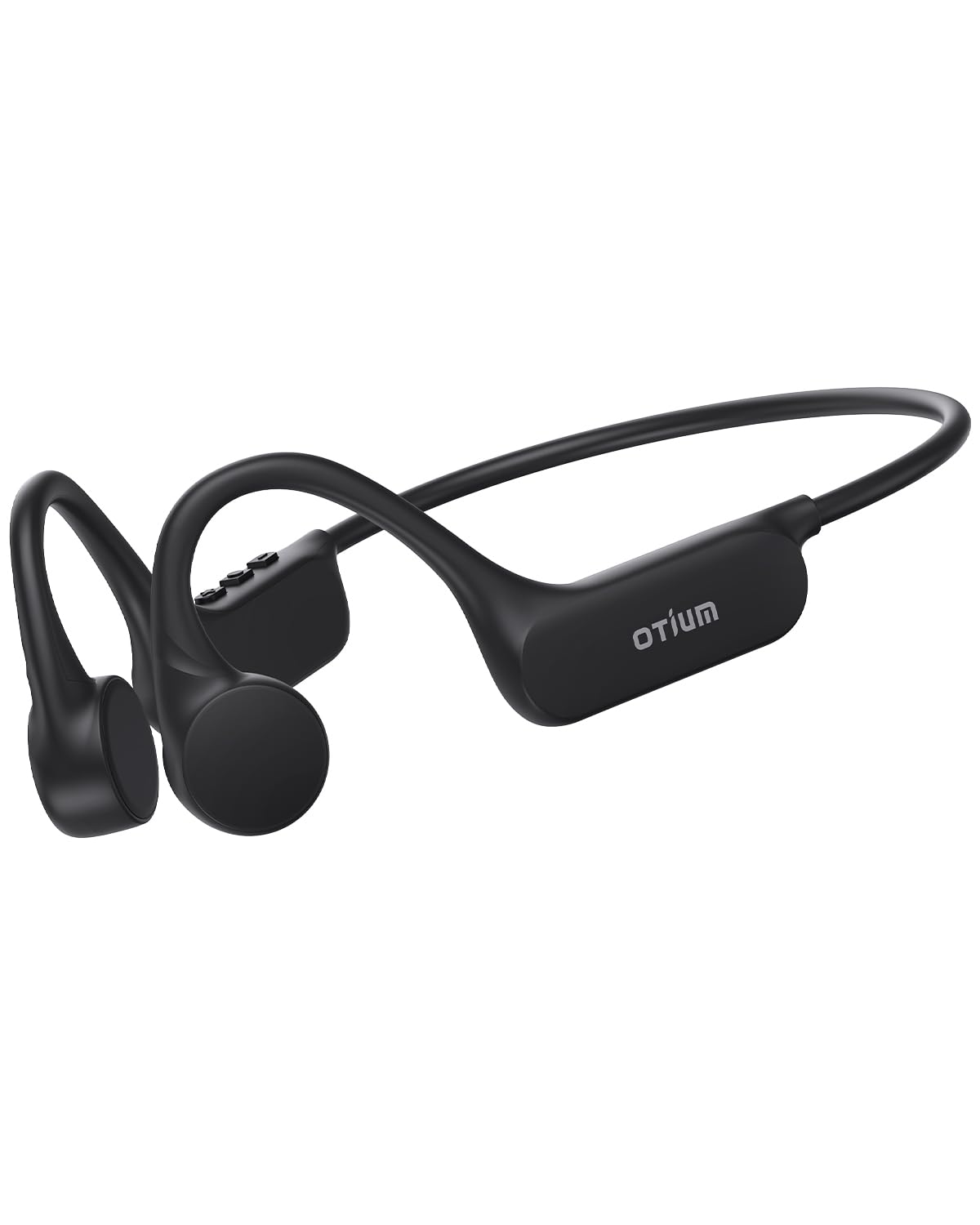
Fifteen minutes on the charger buys two hours of playback, which is the Otium X20's best trick and the one that matters if your headphones live in a bag and get topped up in the ten minutes before you leave. A full charge runs to 12 hours, near the top of this group, and it charges over USB-C.

Like our top pick, it pairs a bone conduction driver with an air-conduction one, and the second driver exists to fill in the low end that a bone driver alone cannot move. It is the difference between a podcast you can hear and music you want to keep listening to. Bluetooth 6.0 is the newest radio here, and the titanium memory frame does the same job as the SHOKZ band.

IPX6 covers rain and sweat, and the price lands in the middle of the group. What it is for is the rider whose rides are long and whose charging habits are bad: 12 hours plus a two-hour top-up in a quarter of an hour means you are rarely caught out mid-week, and the app-driven extras are there if you want them and invisible if you do not.

Bottom line: We like it for long rides and sloppy charging habits: twelve hours, plus two more from a fifteen-minute top-up.

3

CXK X14

CXK X14

Wet commutes

Our Score 8.8/10
Check Price

Worth Noting

  • No dust rating: the X in IPX7 leaves grit untested
Weight
1.06 oz
Battery
Up to 10 hours
Bluetooth
6.0
Water Rating
IPX7
Read the full review

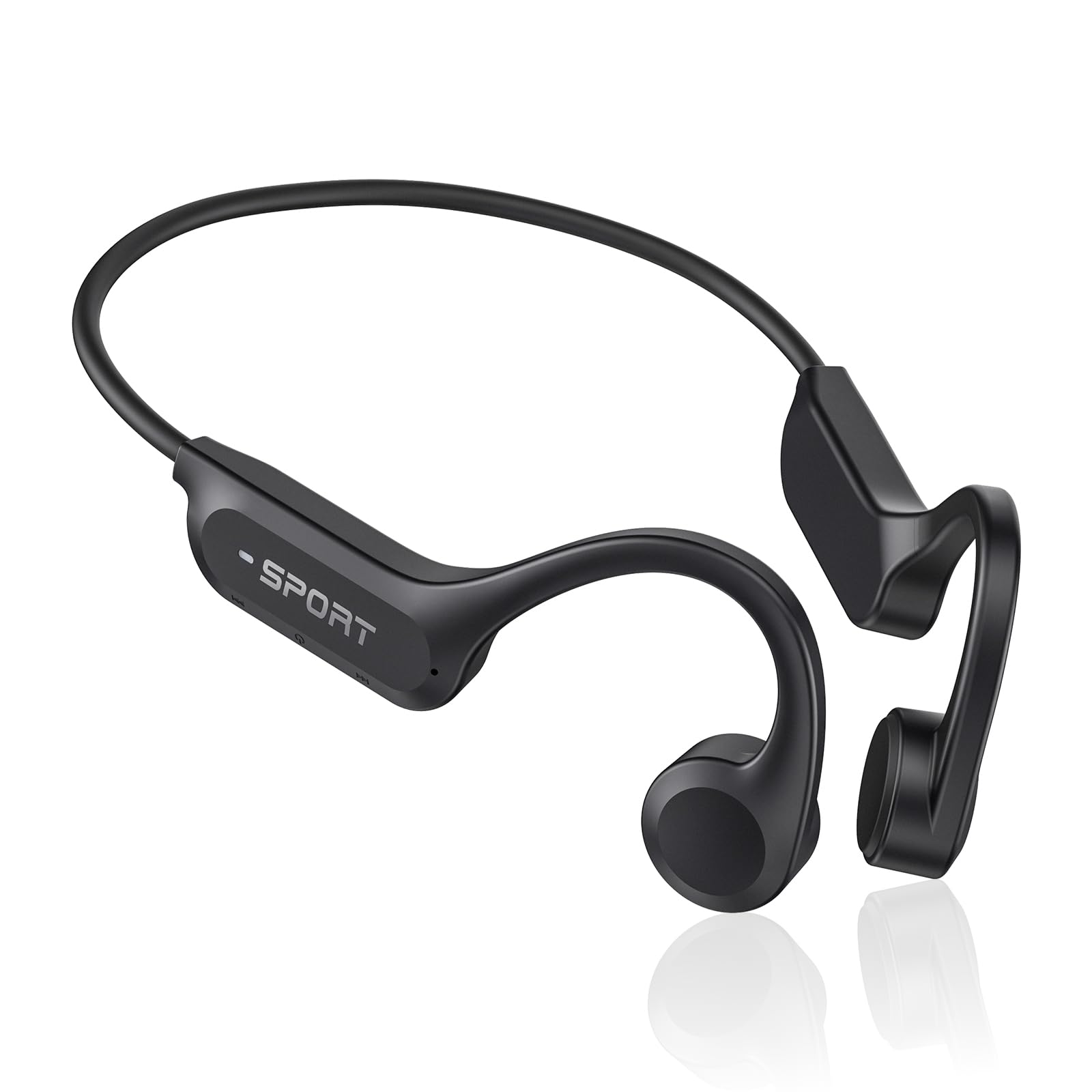
IPX7 is a different promise from the IPX5 and IP55 ratings most of this group carries. It means the set survives being submerged, not just splashed, and on a bike those are the two ways water kills electronics: a downpour that lasts the whole commute, and a jersey pocket soaked through with sweat on a hot day. The CXK X14 is the least expensive set here that makes that promise.

The rest is sensible rather than showy. Ten hours of playback, Bluetooth 6.0, a 12-millimeter driver in a titanium-alloy frame, and a two-hour charge over USB-C — it weighs just over an ounce. The controls are physical buttons, which is what we want on a bike: you can find them through a glove without looking down.

Where it lands is value. You are getting one of two sets here rated for immersion, ten hours between charges, and a price in the middle of the group. The catch is small: CXK pushes a companion app for EQ and extras, and you can ignore it entirely, which is what we did. For a rider who wants one set for wet commutes and does not want to think about it again, this is the pick.

Bottom line: This is the set we reach for when the forecast is bad: an immersion rating, ten hours, and buttons you can work in gloves.

4

SHOKZ OpenRun Pro 2

SHOKZ OpenRun Pro 2

Fast road rides

Our Score 8.6/10
Check Price

Worth Noting

  • Durability is the weak spot over months of use
Weight
1.07 oz
Battery
Up to 12 hours
Sound Design
Bone + air drivers
Water Rating
IP55
Read the full review

Wind is what separates a good bone conduction headset from a bad one, and it is the reason plenty of riders give up on the idea after one gusty commute. The OpenRun Pro 2 handles it better than anything else in this group. Alongside the bone conduction driver there is a small air-conduction driver carrying the low end, and because that second driver does the bass work, you can keep the volume somewhere sensible — which on a bike is the entire point of leaving your ears open. Of the sets here, this is the one we take on a fast road ride.

The frame is a single unibody piece with a nickel-titanium memory wire and hooks that tuck behind the ear, at 30.3 grams. That is heavier than the OpenRun further down this list, and we felt the difference by the end of a long day; what the weight buys is a set that stays exactly where you put it while a helmet goes on and comes off. The hooks sit clear of a retention dial, and the hard shell case is the sort that survives the bottom of a pannier.

Twelve hours of playback and an hour to recharge decide whether a set suits a long day, and IP55 covers sweat and rain without overclaiming. Bluetooth 5.3 held its connection on our rides, the dual mics with wind reduction made a mid-ride call usable, and the EQ modes in the Shokz app are more useful than they sound: Classic trims the bass and pushes voices forward, which is where we left it in traffic.

It is the most expensive set here, and there is no way around that. What the premium buys is the driver array, the hour-long charge and a case that protects the band — things that matter most to somebody riding five days a week. For a Sunday rider, the OpenRun below gets you the same open-ear fit for a lot less; the honest argument for spending more is headroom in wind, not features.

Bottom line: We hand this to the rider who wants music at speed without giving up the sound of the road; the second driver is what earns the premium.

5

PSIER X12

PSIER X12

Tight budgets

Our Score 8.4/10
Check Price

Worth Noting

  • IPX5 covers sweat and drizzle, not a soaking
Weight
0.81 oz
Battery
Up to 10 hours at 50% volume
Bluetooth
6.0
Water Rating
IPX5
Read the full review

Twenty-three grams, a memory-titanium band and a two-year warranty is an unusual package at the bottom of this group's price range, and that is the PSIER X12 in a sentence. It is the lightest set here, and the cheapest one carrying two years of cover — the detail that matters when a budget headset dies in month ten rather than month one.

The 10-hour figure comes with a condition attached: it is measured at 50% volume. Nobody rides at half volume into a headwind, so plan on less than the number on the box, and how much less depends on how loud you ride and how exposed your route is. For a 40-minute commute in each direction none of that matters, and for that rider this is the value pick of the group; for a five-hour day out, charge it at the cafe stop.

Bluetooth 6.0 paired quickly and stayed paired, and the 60 ms latency figure is only relevant if you watch video off the bike. The box includes a set of earplugs, which looks like a contradiction on a safety-first product until you work out they are for using it with the world shut out when you are not riding, plus a strap that keeps the band tidy in a bag.

Bottom line: On a tight budget we have not found a better balance here: 23 grams, ten hours, and two years of cover.

6

KLKE Z3

KLKE Z3

Night rides

Our Score 8.4/10
Check Price

Worth Noting

  • Three-hour recharge rules out a quick top-up
Weight
1.13 oz
Battery
Up to 10 hours
Safety Light
Built-in rear light
Water Rating
IP66
Read the full review

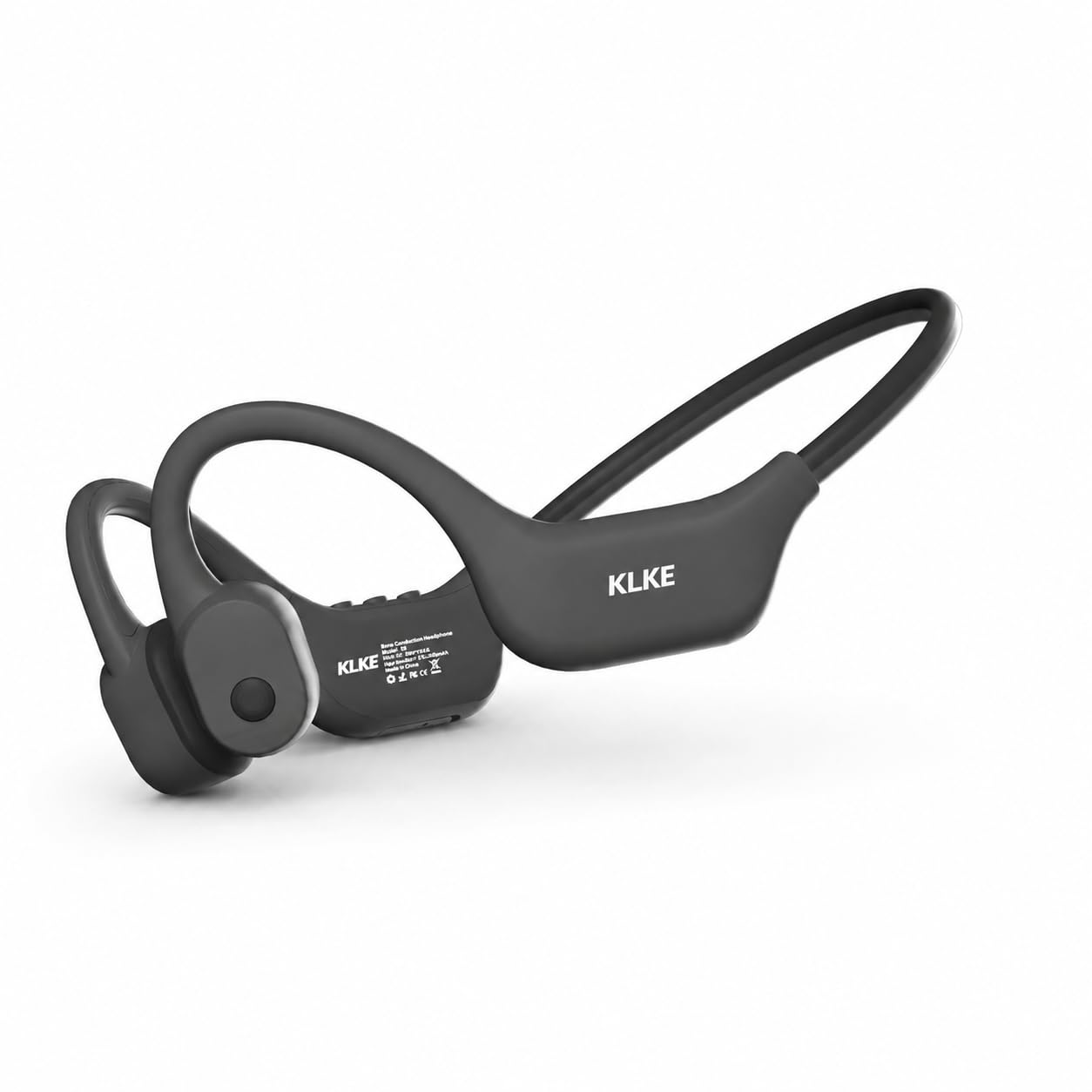
A taillight in the back of a headset sounds like a gimmick until the evening you ride home with a jacket sitting over the light on your seatpost. The KLKE puts a small switchable light in the band behind your head — a double-click turns it on — and it is the reason this set is on the list at all: your head is the highest point a driver behind you sees, and it moves with your line of sight.

The rest is ordinary in a useful way. IP66 covers sweat, rain and the grit that comes off a wet road, USB-C means one cable in the bag, and the adjustable silicone back strap is there for heads that a fixed band leaves loose. At 32 grams it is the heaviest set here, and you feel it on a long ride — on a half-hour commute you will not. Two sound modes switch between a flatter indoor tuning and a fuller outdoor one, and the difference is audible enough to be worth the button press.

Bottom line: For riding after dark, this is the one we recommend — the taillight sits where a driver behind you is looking.

7

Raycon Everyday 2nd Gen

Raycon Everyday 2nd Gen

All-day battery

Our Score 8.0/10
Check Price

Worth Noting

  • One-year warranty where SHOKZ and PSIER give two
Sizes
Regular and Small
Battery
Up to 16 hours
Bluetooth
6.0
Water Rating
IP67
Read the full review

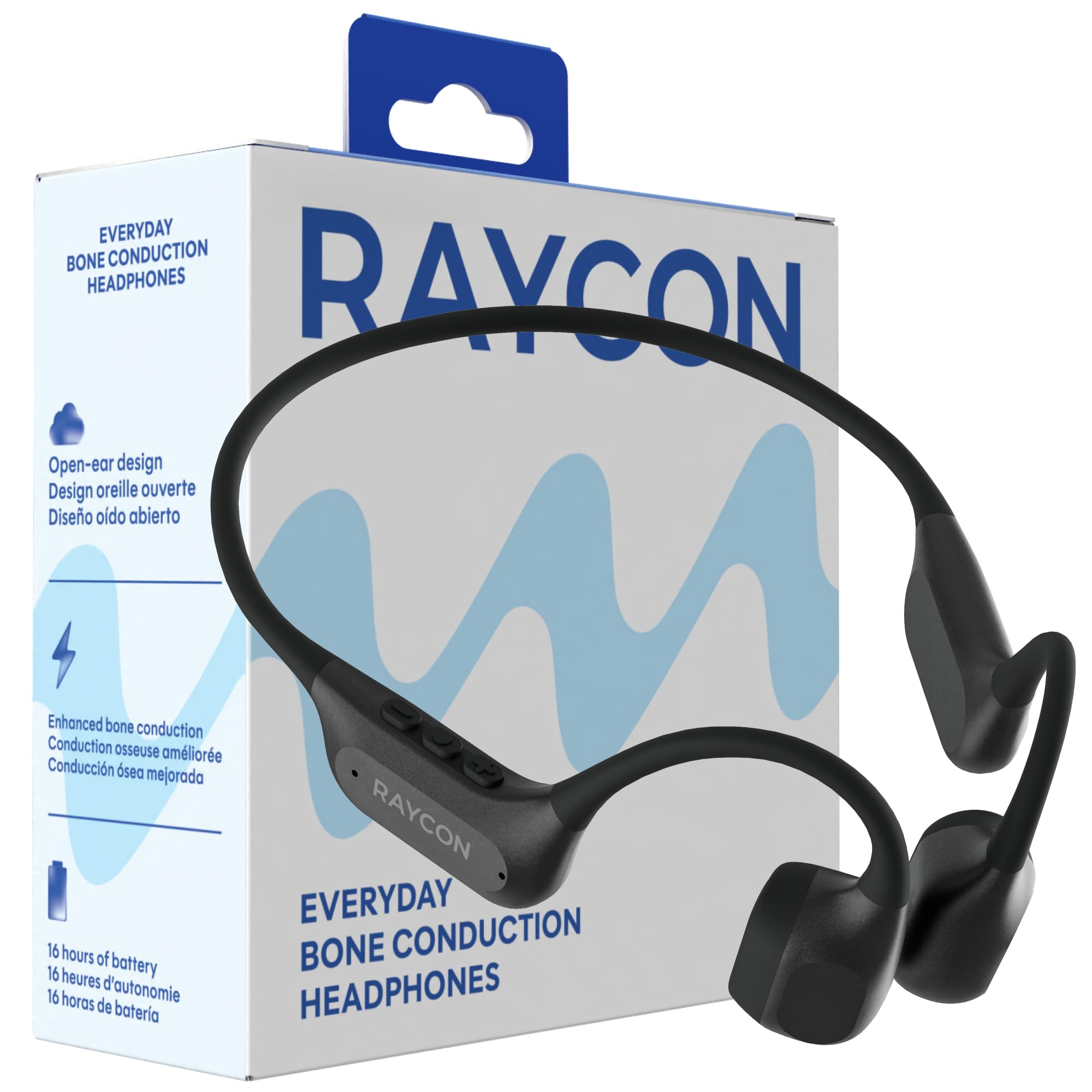
Almost every set on this list comes in one size, which is fine if your head happens to be average and a lottery if it does not. The Raycon Everyday is the exception: it is sold in Regular and Small, and that alone makes it worth a look for anyone who has had a band sit wide at the back of the skull or press at the temples.

Sixteen hours is the longest runtime claimed by anything here, and IP67 adds full dust sealing on top of immersion protection — useful on gravel and in the grit that comes off a wet road in winter. Together those two numbers describe a set built for long days in bad weather.

Bluetooth 6.0, dual mics for calls, physical buttons and USB-C round out a straightforward specification, with no app and no EQ to fiddle with. Nothing here is complicated, and on a bike that is a virtue.

Where it sits for us is as a first open-ear set or a second pair: the sizing takes some of the guesswork out of fit, and the runtime means you charge it weekly rather than nightly. The Regular and the Small are still guesses until they are on your head, so buy from somewhere with a straightforward return policy.

Bottom line: If one-size frames have never sat right, we start here: two sizes, sixteen hours and full dust sealing.

How We Chose and Tested Bone Conduction Headphones for Cycling

We started by rounding up every bone conduction model we could find that was marketed for cycling or outdoor use, then filtered by price, claimed battery life, and whether the fit was compatible with a helmet. That left us with 12 pairs, which we rode for eight months on commutes, long weekend rides, a trainer, and errands around town. Each pair went through the same routine: paired with a phone and a bike computer, worn under a helmet and with sunglasses, and exposed to sweat, rain, and the occasional puddle spray.

We timed battery life from full charge to shutdown at a moderate volume, then repeated the test on a windy day with the volume cranked to fight gusts. Sound quality got judged on a quiet path and again on a busy road—whether podcasts stayed intelligible and whether music had any body. For fit and comfort, we wore each pair for at least two hours straight and checked for pressure points behind the ears or under helmet straps. Connectivity was tested by leaving the phone in a jersey pocket and riding away, then pairing to a second device mid-ride.

Noise level went two directions: we had a friend stand a few feet away to hear how much sound leaked at 70 percent volume, and we noted how much ambient traffic we could still hear—the entire point of bone conduction. Durability meant sweat, rain, and a few accidental drops into a gear bag; we checked whether buttons got mushy or the band loosened. Reliability was simple: did the connection drop, did the battery gauge lie, did it power back on after a week in a bag. And value came down to whether the most expensive pair actually did anything meaningfully better than the ones that cost half as much.

How to Choose Bone Conduction Headphones for Cycling

Volume headroom beats sound quality

The number that matters most on a bike never appears on the box: how much volume is left once wind noise arrives. Pure bone conduction sets run out of headroom at speed, and the fix most riders reach for — turning it up — is exactly the wrong move, because the louder it gets the less of the road you hear. Sets with an added air-conduction driver, like our top pick and the Otium X20, keep more in reserve.

Test any set at your normal riding volume with someone talking beside you. If you cannot hear them, it is too loud, whatever the specification said.

Fit around a helmet, glasses and an ordinary head

The band runs behind your skull, so clearance comes first: the hooks need to sit clear of your helmet's retention dial, and the band must not foul the arms of your glasses. Most sets here come in one size with a fixed-length band, which is a coin flip on a smaller or larger head.

There are two answers to that: an adjustable back strap, as on the KLKE, or a second size, as with the Raycon Everyday. If a borrowed set has ever sat loose at the back or pressed at the temples, buy one of those rather than a one-size band and hope.

What the water rating actually covers

IPX5 survives sweat and drizzle; IPX7 and IP67 survive a soaking, and the 6 in IP67 adds dust sealing that earns its keep on gravel. The rating covers the electronics, not your habits — the charging port and magnetic contacts are where water gets in, so dry them before anything goes on the charger.

Sweat ruins more sets than rain does, which is why a covered port is worth more than a headline number.

Runtime measured the way you ride

Quoted runtimes assume moderate volume, and a windy ride is not moderate volume, so subtract something from every figure before you trust it. Match the number to your longest regular ride rather than your average one.

Quick charge is the real luxury. Fifteen minutes for two hours, as on the Otium, is worth more to a commuter than four extra hours they never use; a one-hour full charge, as on the OpenRun Pro 2, matters if you tend to forget the cable.

Warranty, because something will wear out

The parts that fail on these headsets are the battery and the individual channels, and they fail quietly — a set that plays on one side, or one that stops taking a charge. Warranty length is the clearest signal of what a maker expects to replace: SHOKZ and PSIER list two years, while the CXK, KLKE, Otium and Raycon listings give one.

If you ride five days a week in all weather, that difference is worth more than a couple of grams.

Frequently Asked Questions

Final Verdict

The SHOKZ OpenRun Pro 2 is the set we recommend to most cyclists, because it is the one that stays audible in wind without asking you to shut the road out — which is the whole reason to buy bone conduction in the first place. If the premium does not fit, the OpenRun is lighter and simpler and gives up only the extra driver.

Two requirements change the answer. Riding through a wet winter points at the CXK X14 and its immersion rating; riding home after dark points at the KLKE and its built-in taillight.