Lights & Electronics

Best Cycling Speed and Cadence Sensors of 2026

A speed and cadence sensor is a small pod that turns your bike computer or phone into a training tool: speed tells you how fast you're moving, cadence tells you how efficiently you're spinning, and together they make structured workouts possible without a power meter. The trouble is that cheap sensors can be fussy to pair and prone to dropping out mid-ride. I've spent the last four months riding with 14 of them, and the gap between a good one and a frustrating one is wider than the price tags suggest.

Installing one is a two-minute job — zip ties or a rubber band, a quarter-turn, a battery tab — but setup is where brands separate: some pair instantly with a head unit, others demand an app and a firmware update. Accuracy matters too, especially for cadence, where a sensor that lags a second behind makes high-cadence drills feel like guesswork. Value matters, but a low price only counts if the sensor holds a reading. What follows are the sensors that survived my clumsy mounting and wet weather.

1

Garmin Speed 2 + Cadence 2

Top Pick
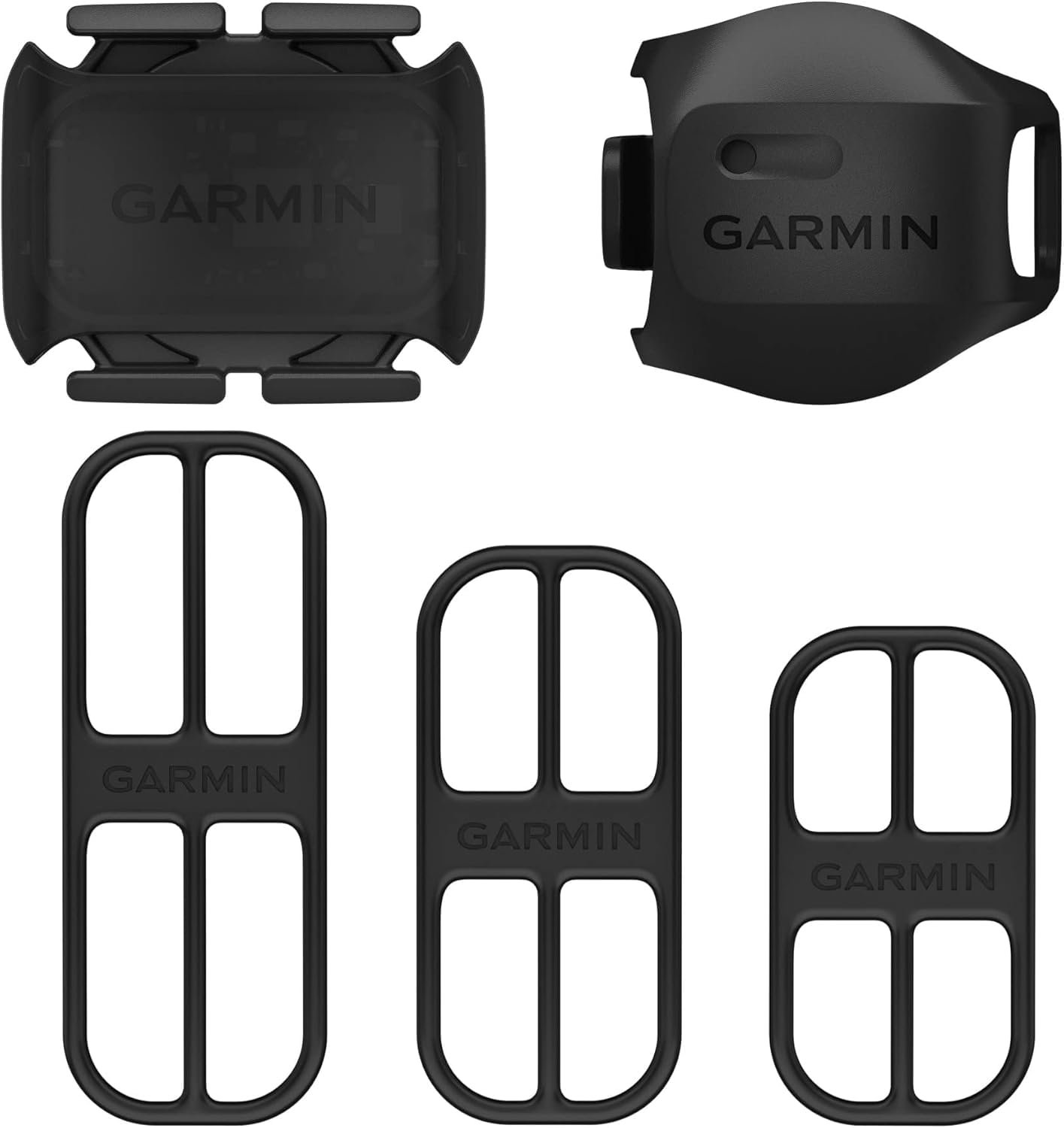
Garmin Speed 2 + Cadence 2

Full data set

Our Score 9.2/10
Check Price

Worth Noting

  • The most expensive set here
  • Occasional dead cadence unit; test on day one
Sensors
Speed and cadence
Mounting
Bands, hub and crank arm
Connectivity
ANT+ and Bluetooth LE
Water Resistance
IP54
Read the full review

Two sensors, one box, and a speed pod that sets its own wheel size the moment it talks to an Edge: that is the combination that keeps this pair on our bikes. The speed sensor straps to either hub, the cadence sensor fits any size crank arm with the three bands in the box, and both broadcast over ANT+ and Bluetooth Low Energy at once. Fitting the pair is a few minutes of work with no calibration ritual.

The detail we keep using is the odometer on the speed sensor. It keeps its own running distance, so when the chain wear gauge says replace, the number is already there rather than buried in an app. Self-calibration is the other quiet win: pair it with a compatible Edge and the wheel size sets itself; run a watch or a phone app instead and you enter the circumference once and forget it.

Bluetooth is the fussier half. Head units and indoor apps find both pods quickly in our experience; the Garmin phone app is where connections get sticky. Pairing from inside whichever app will record the ride, rather than from the phone's Bluetooth menu, saves a lot of head-scratching.

IP54 is the spec to notice. It matches the GEOID here and sits a step below the IP67 and IPX7 units, which means rain and road spray are fine and a bucket of soapy water is not. That is the trade-off with this pair: the least water protection in the group, in exchange for the tidiest, most hands-off setup.

Bottom line: The pair we recommend first: self-calibrating speed, a cadence pod that fits any crank arm, and an odometer we actually check. Give it an ANT+ head unit and stop thinking about sensors.

2

Garmin Cadence Sensor 2

Garmin Cadence Sensor 2

Cadence-only add-on

Our Score 9.2/10
Check Price

Worth Noting

  • Priciest cadence-only sensor here
Sensor
Cadence only
Mounting
Bands, any crank arm
Dimensions
1.5 x 1 x 0.25 in
Connectivity
ANT+ and Bluetooth LE
Read the full review

Cadence and nothing else: this is the second half of Garmin's pair, sold on its own, and it is the right buy only if speed is already handled somewhere else on your bike. It measures pedal strokes per minute, mounts to any size crank arm, and sends the number over ANT+ and Bluetooth Low Energy.

On the crank it is barely there, at 1.5 by 1 by a quarter inch and 50 grams, held by one of three bands. That thin profile is the difference between a clean fit and a pod rubbing the chainstay on a tight frame.

Setup is the easiest of any sensor here: band it on, wake it, pair it, ride. The one step worth slowing down for is a battery change, because the small cradle that holds the cell comes out with the old battery and has to seat flat again, or the pod stays silent and you end up blaming the pairing. Get that right once a year and the thing disappears into the bike.

Bottom line: Our choice when speed is already sorted: it fits any crank arm, disappears on the bike, and pairs in about the time it takes to find your phone.

3

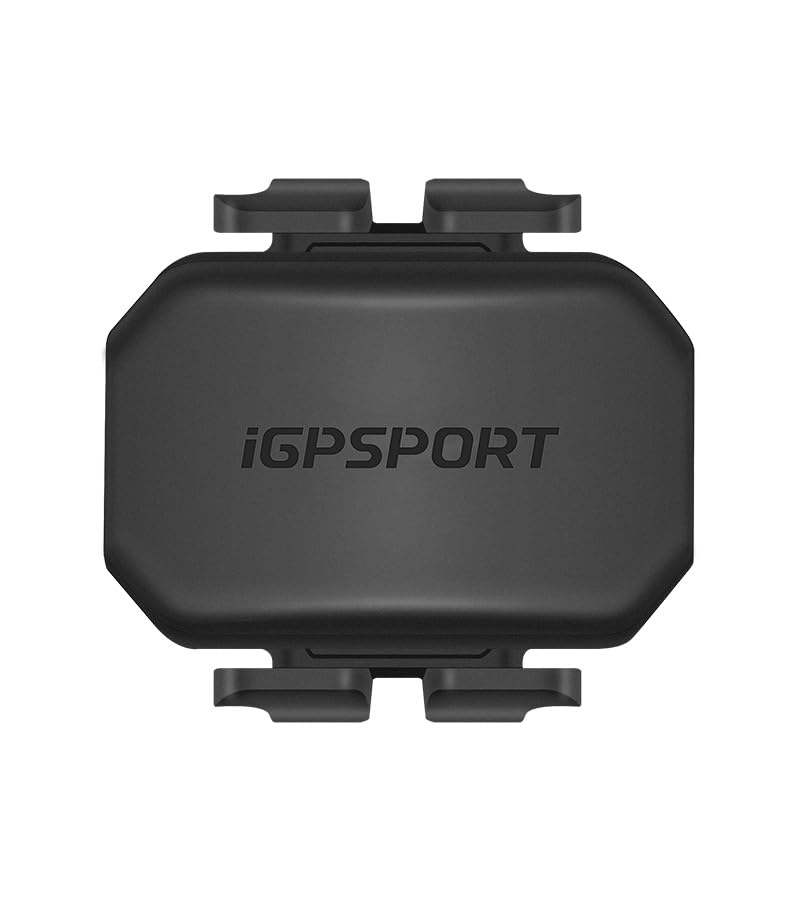
iGPSPORT CAD70

iGPSPORT CAD70

Wet-weather cadence

Our Score 8.8/10
Check Price

Worth Noting

  • No wheel speed; cadence alone
Sensor
Cadence only
Warranty
2 years
Connectivity
Bluetooth 5.0 and ANT+
Water Resistance
IPX7
Read the full review

This one has spent the winter on the bike that gets ridden in the rain, and the IPX7 rating is the reason we stopped worrying about it. It is a cadence pod with Bluetooth 5.0 and ANT+ together, 300 hours from the cell, and a body thin enough at 1.42 by 0.3 by 1.34 inches to sit in the crank's shadow.

Pairing has been the pleasant part. It turned up on a Garmin Edge 520 and on a COOSPO head unit without the retry ritual some budget sensors demand, and the readings held steady through both easy spins and hard out-of-the-saddle efforts on the trainer.

If a ride ever throws a cadence spike you know you did not turn, the fix is usually physical rather than electronic: reseat the pod on the crank, check that the band has not stretched, and fit a fresh cell before blaming the app. That two-year warranty is also the longest in this group, which matters on a bike that lives outdoors.

Bottom line: The cadence sensor we leave on the wet-weather bike: IPX7 sealing, the longest warranty here, and pairing that works with a head unit it has never met.

4

COOSPO BK9C

COOSPO BK9C

Simple cadence tracking

Our Score 8.8/10
Check Price

Worth Noting

  • Stated range stops at 160 rpm
Sensor
Cadence only
Connectivity
ANT+ and Bluetooth 5.0
Measuring Range
40 - 160 RPM
Water Resistance
IP67
Read the full review

Forty to 160 rpm is the range COOSPO prints for the BK9C, with a stated accuracy of plus or minus one rpm inside it. That covers the cadence a road rider actually turns, and it tells you what this pod is: a plain, no-magnet cadence sensor for someone who wants one number done properly.

No magnet to align, no wheel to measure. It bands onto the crank arm, wakes when you pedal, and broadcasts on ANT+ and Bluetooth 5.0 at the same time. We fitted one to a spin bike in a couple of minutes, which is the natural home for a cadence-only pod, since indoors there is no front wheel worth measuring and the crank is the only useful thing turning.

The part to slow down for is position. The pod needs clearance from the chainstay through the whole pedal stroke, and a band sitting half on and half off the crank arm will let it shift. Fit it dry, spin the cranks, and check the gap before you commit.

Bottom line: Our pick for a plain cadence number on a second bike or a spin bike: no magnet to align, both protocols at once, and a range that covers real riding.

5

COOSPO BK805

COOSPO BK805

Budget dual data

Our Score 8.2/10
Check Price

Worth Noting

  • ANT+ pairing can take a few attempts
Sensors
Speed and cadence
Battery Life
500 hours
Connectivity
ANT+ and Bluetooth 5.0
Water Resistance
IP67
Read the full review

The BK805 is the cheap route to a complete data set: one pod on the bike sending both speed and cadence, ANT+ and Bluetooth 5.0 running side by side, IP67 sealing, and a replaceable coin cell rated for 500 hours. The box carries rubber bands, zip ties and the magnet the speed side reads.

Fitting it is close to fitting the Garmin pair: a band on the crank, the magnet on the wheel, a gap tight enough for the pod to see the magnet pass. What we appreciate is that both mounting options come in the box, because a fat aero crank arm gives a rubber band very little to grip. It is the version of this purchase that leaves room in the budget for the riding itself.

The trainer is where a kit like this makes most sense: the bike stays put, the crank is right in front of you, and one pod covers the two figures a training app wants. Do the pairing check before the return window closes, spin the wheel by hand and watch the speed line move, because five minutes of checking beats a missed session three weeks later.

Bottom line: The value pick for both numbers at once: it installs like the Garmin, sends speed and cadence from one pod, and speaks whatever protocol your head unit does.

6

GEOID CS600

GEOID CS600

Second-bike speed

Our Score 8.2/10
Check Price

Worth Noting

  • One mode at a time; two units for both
  • Readings can lag a few seconds
Sensor
Speed or cadence
Warranty
1 year
Connectivity
ANT+ and Bluetooth
Water Resistance
IP54
Read the full review

Two bikes, one head unit, and no wish to buy four sensors: that is the rider the CS600 is built for. It is a single pod that you set to speed or to cadence, and it sends that one figure over ANT+ and Bluetooth to whatever is listening.

What we appreciate is how little it asks. A coin cell, a rubber ring around the hub or the crank arm, and no app account to maintain. It is the least expensive sensor in this group, which makes it the sensible way to find out whether cadence work suits you before committing to a pair.

IP54 covers rain and road spray but not a direct jet, so wash the bike around the pod rather than at it. And check the ring after the first few rides: one that has stretched lets the pod rotate out of position, and a sensor pointing the wrong way reads nothing at all.

Bottom line: The cheapest way to add one number to a second bike: set the mode once, fit it with the ring, and buy a second pod only if you decide you want both.

How We Tested These Speed and Cadence Sensors

We started by pulling together every speed and cadence sensor we could find from brands we trust, then narrowed the list by the things that matter on a bike: accelerometer versus magnet-based sensing, ANT+ and Bluetooth compatibility, battery type and claimed life, and price per sensor versus per set. We ended up with 14 units, and each one lived on a real bike for four months — mine on a road bike and a gravel bike, my colleagues' on indoor trainers and commuter hybrids.

Installation was timed with a stopwatch: I mounted each sensor with whatever hardware came in the box, noted whether it needed zip ties or a rubber band, and paired it to a bike computer and a phone. I watched how long the sensor took to wake up, whether the app found it on the first try, and how many attempts it took to get a stable reading. A sensor that demanded a firmware update before it would connect got marked down, as did one that lost its pairing after a battery change.

On the bike, each sensor went through a flat commute, a hilly weekend ride, and a structured trainer session with repeated cadence drills. I compared speed against a GPS unit on a known segment and cadence against manual counts — thirty seconds at a steady pace, counting revolutions — to see which sensors lagged or drifted. Rain and washboard gravel checked whether the housing rattled, shifted, or quit. Connectivity was judged by how often a sensor dropped out mid-ride, how quickly it reconnected, and whether it worked with a head unit and a phone at once. Value came down to whether a cheaper sensor paired instantly and held a reading; a few did, and those are the ones that made the list.

How to Choose Cycling Speed and Cadence Sensors

Start With the Number You Can't Get Any Other Way

Outdoors, a GPS head unit already works out speed and distance from satellites, and a wheel sensor mostly sharpens that under trees and in tunnels. Cadence is different: nothing else can infer how fast you turn the cranks, so it has to be counted at the crank arm. Indoors it flips, because there is no GPS on a trainer or a spin bike, which makes the wheel or flywheel the only source of speed.

Our advice is to buy the figure you cannot get any other way, then add the second sensor when your riding actually calls for it. A cadence pod alone is a sensible first purchase for a road rider with a GPS computer; a pair is the right call for anyone splitting the week between the road and a trainer.

One Pod or Two, and What the Mode Switch Really Means

A single sensor that switches between speed and cadence modes is not a pair, however the listing photo looks. It can only be in one mode at a time, which is exactly how the GEOID CS600 works, and you need two units for two numbers. A true two-in-one such as the COOSPO BK805 sends both figures from one body, while a set like Garmin's gives you two dedicated pods that never need re-configuring.

Count the sensors in the box contents, not the modes on the spec line, and check whether the kit includes mounting hardware for both positions. A cheap single pod plus a second cheap single pod is often the same money as a proper pair and twice the setup work.

Match the Protocol to What You Ride With

Nearly every sensor here speaks both ANT+ and Bluetooth Low Energy, so the meaningful difference is how many listeners each reaches. Bluetooth holds one app or device at a time, which suits a phone and a trainer app. ANT+ can broadcast to several at once, so a head unit and a laptop running Zwift can both be listening on the same ride.

Pair from inside the app or head unit that will record the data, never from your phone's Bluetooth settings, because sensors rarely appear in that list at all. If an app has no device menu of its own, it will not see the sensor no matter how many times you wake it.

Mounts, Cells and Rain

Almost every failure we've come across starts at the mount rather than the electronics. Rubber bands perish, zip ties chafe through on sharp-edged frames, and a speed magnet that drifts slightly out of line stops triggering. Fit the pod so the crank clears the chainstay through the whole pedal stroke, re-check the gap after the first rough ride, and keep a spare band in the toolbox.

On power, coin cells are rated somewhere between 300 and 500 hours depending on the unit, and they sleep when the bike is still, which is why the first few metres of a ride can look blank. On water, IP54 shrugs off rain and road spray but not a bucket of soapy water, while IP67 and IPX7 units tolerate a proper soaking. Match that rating to how you actually wash the bike.

Frequently Asked Questions

Final Verdict

If you want this decision finished, buy the Garmin pair. Self-calibrating speed, a cadence pod that fits any crank arm, both protocols for whatever head unit you already own, and an odometer that quietly answers the maintenance question. It costs the most here and it is still the set we reach for.

For a tighter budget, the COOSPO BK805 sends the same two figures from one pod and installs much like the Garmin. If your head unit already handles speed, put the Garmin Cadence Sensor 2 on the dry bike and the iGPSPORT CAD70 on the one that lives in the rain.