Components

Best Carbon Road Bike Handlebars of 2026

Carbon handlebars promise two things an alloy bar can't: less weight under your hands and less road buzz coming back up through them. What the spec sheet leaves out is that a badly made carbon bar delivers neither, and it costs several times what the aluminum you're replacing did. The bar is also the one part of the bike your whole upper body leans into, so drop shape, reach, and width need to suit your frame and your shoulders before a single gram matters.

I rode the same alloy bar for years out of pure stubbornness, and swapping it was the first change I actually felt on rough pavement — the front end stopped chattering into my wrists. Over nine months, my team and I put seven sets of carbon road bars through real miles, from chip-seal county roads to smooth climbs, comparing how each felt on long days and out of the saddle. A few were beautifully finished and lighter than claimed; a couple made my hands go numb by hour three. The ones worth your money are below.

1

Alfa Pasca Carbon Drop Bar

Top Pick
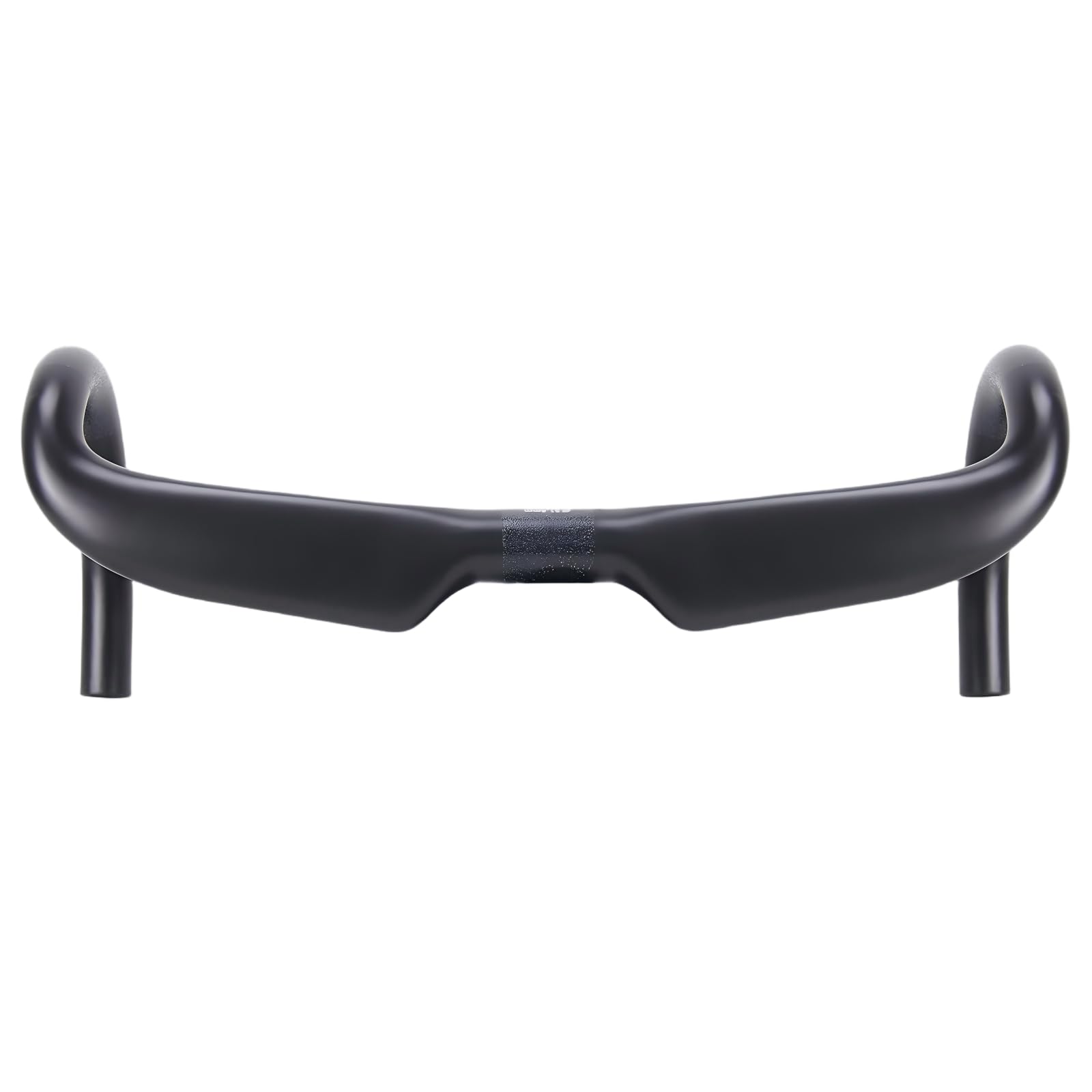
Alfa Pasca Carbon Drop Bar

Wide, short reach

Our Score 9.0/10
Check Price

Worth Noting

  • Heaviest conventional bar here at about 270g
  • 130mm drop is the deepest in this group
Drop
130mm
Reach
80mm
Weight
Approx. 270g
Widths
400 / 420 / 440mm
Read the full review

Reach is the spec most riders ignore until their hands go numb, and at 80mm this bar has the shortest of the group — 24mm less than the RXL, 9mm less than the PLATT. That's exactly why we kept it in the roundup. Pair it with a 130mm drop and you get hoods that come back toward you while the drops still offer a real tuck, which is the shape riders who feel stretched out keep hunting for.

The trade is weight. At about 270 grams it's the heaviest of the three conventional bars here, roughly 50 grams up on the PLATT and 60 on the RXL, and that's the price of the geometry. It's a fair price if the alternative is a new stem and a fresh fit session, and a much easier one to swallow than another season of numb hands.

At 440mm it's the widest way to get that short reach, and the no-logo UD matte finish means nothing on the bar competes with the frame. The one-year warranty matches the other bars in this guide.

The thing to test on your first hard ride is stiffness. A 130mm drop puts more of your weight over the front when you're in it, and that's where a heavier bar usually shows its manners. Sprint on it and corner on it before you decide — that check matters more than any finish.

Bottom line: For riders who feel stretched on a long-reach bar, 80mm of reach and a 440mm width fix the fit; the extra weight is the cost of the shape.

2

PLATT Full Carbon Road Handlebar

PLATT Full Carbon Road Handlebar

Classic round tops

Our Score 8.6/10
Check Price

Worth Noting

  • No 440mm width available
Drop
128mm
Reach
89mm
Weight
Approx. 220g
Widths
380 / 400 / 420mm
Read the full review

Where the RXL flattens its tops, this one stays round, and for plenty of riders that settles it. Round tubes give you the grip you already know for climbing, and a surface that tape, clamps and bar-mounted accessories were designed around. The other number worth staring at is reach: 89mm, a full 15mm shorter than the RXL, which brings the hoods closer without touching your stem.

We came away impressed by how direct it feels for the money. Stand up and sprint and the bar answers without a hint of mush, and it stays comfortable enough over chipped tarmac that you aren't bracing for every crack. That balance is what we look for in a bar at any price, and finding it on one of the least expensive bars here was the surprise of the test.

The 380mm size is the narrowest in this group, which is the reason some riders end up here rather than at the top pick. Nothing on the bar carries a logo or a finish that will date, and the one-year warranty matches what the rest of these carry.

Two things to handle before the tape goes on. The inside diameter at the ends can run tight, so a standard bar-end plug may need a firm push or a plug with a smaller shoulder. And measure from the center of the clamp to each end before you wrap anything — if the two sides don't match, send it back rather than building around it.

Bottom line: Round tops with a short 89mm reach and real stiffness under power — the bar we point riders to when the aero-top shape isn't what they want under their palms.

3

RXL SL Carbon Aero Road Bar

RXL SL Carbon Aero Road Bar

Light aero road

Our Score 8.4/10
Check Price

Worth Noting

  • Only offered in a glossy 3K finish
Drop
127mm
Reach
104mm
Weight
Approx. 210g (±10g)
Widths
400 / 420 / 440mm
Read the full review

About 210 grams is the figure that put this bar at the top of our list. It's the lightest of the group, and it's the kind of weight you feel every time you lift the bike off the rack by the hoods rather than the saddle. The rest of the numbers hold up: T800 carbon, a 31.8mm clamp, 104mm reach and a 127mm drop that lands about where most road riders expect it.

We ended up appreciating the flattened aero tops more than we thought we would. They give your palms a place to sit that a round tube doesn't, and between that perch, the hoods, the curve and the drops you keep shifting on a long ride, which is what saves your hands. The trade is accessory mounting — a round-clamp light or computer bracket has less to bite on up there, so an out-front mount or a stem-mounted light works better than clamping to the flat.

Widths run 400, 420 and 440mm with the housing routed inside the bar, so the front end stays as tidy as the frame deserves. The 400mm version we set up suits narrower shoulders; if you already ride a 42, order the 42 rather than sizing down because the bar is light. Put the bar on a scale when it arrives if the last gram matters — the weight is quoted with ten grams either way, which is enough to close the gap to the next bar here.

Bottom line: It's the lightest bar here, it hides the cables, and it comes in all three widths — our default for a road rider who wants a faster front end for modest money.

4

RXL SL Integrated Carbon Cockpit

RXL SL Integrated Carbon Cockpit

One-piece cockpit

Our Score 0.0/10
Check Price

Worth Noting

  • Stem length is fixed once you order
  • Internal routing turns installation into a shop job
Weight
Approx. 360g
Widths
400 / 420 / 440mm
Stem Lengths
90 / 100 / 110 / 120mm
Steerer Clamp
1-1/8 in (28.6mm)
Read the full review

This isn't a handlebar you swap on a Saturday morning — it's a cockpit, with the stem molded into the bar. That changes the job entirely. The 360 grams on the scale covers both pieces, so don't read it as a bar a third heavier than the others; against a separate bar and stem it's roughly a wash, and you lose the face plate, the four bolts and the clamp that never quite lines up straight.

What you get for the trouble is the cleanest front end in this guide. Two internal routing paths let you choose how the hoses travel, and the shape matches the RXL drop bar — same 104mm reach, same 127mm drop. We're more careful about the finish than the shape: the routing ports and the stem hardware are the two places to inspect closely before anything goes on the bike.

Fit is fixed at the point of sale. You pick a width from 400, 420 or 440mm and a stem from 90 to 120mm, and it clamps a 1-1/8 inch steerer rather than a 31.8mm bar, so your current stem comes off. Measure the stem you're running now — 10mm either way is the difference between the position you have and the one you're shopping for.

Worth knowing before you commit: a warranty claim here means re-cabling the whole front end, not sliding a new bar into an existing stem. Factor that in if you're paying a shop by the hour.

Bottom line: A clean, light cockpit for a rider who is already changing stems — not a bar swap for a bike that's dialed in.

How We Tested Every Carbon Bar

We started by pulling spec sheets from the brands that actually build cockpits, then filtered on claimed weight, width availability, published reach and drop figures, and whether the bar could handle internal routing or a mechanical groupset. Anything that came in only one width got cut, and so did anything whose geometry looked wildly out of step with the rest of the field.

Each bar went onto one of two road bikes, with a stint on a third frame to check fit across different stem lengths and head tube angles. Out of the box, every bar hit a kitchen scale so we could compare real weight against the claim, and we measured actual center-to-center width, reach, and drop with calipers rather than trusting the sticker. Stem and lever clamps were torqued to spec, then re-checked after a week and again after a month, watching for slippage, crush marks in the clear coat, or hairline cracks around the clamp zone.

On the road we logged long endurance days, fast descents, and out-of-the-saddle sprints, noting where our hands landed naturally on the hoods, whether the drop let us stay low without craning, and whether wrists or palms went numb before the ride was over. We also paid attention to how easy each bar was to wrap and how the finish — weave, decals, clear coat — held up after months of sweat, sun, and road spray.

Finally, we weighed what each bar asked for against what it gave back in finish quality, measured weight, and all-day comfort, because a light bar that hurts your hands is a bad bargain at any price.

How to Choose Carbon Road Bike Handlebars

Start With Width, Reach and Drop

Width, measured center to center, should follow your shoulder width, and the bars here run from 380mm to 440mm, so there's a size for most riders. Reach is what decides whether you feel stretched: it ranges from 104mm on both RXL bars down to 80mm on the Alfa Pasca, and that 24mm is a bigger change than most riders get from swapping a stem. Drop is the depth of the curve below the hoods — 127mm to 130mm here. If you never ride in the drops, a deep one is just weight.

If you're between widths, match the bar you already ride rather than guessing. Sizing down for weight is the most common mistake we see in this category.

What Weight Actually Buys

The spread between the lightest and heaviest conventional bar in this group is about 60 grams. That's real, and you'll notice it lifting the bike off the rack, but it isn't the difference between a fast ride and a slow one — once you're moving, fit and stiffness matter more than the last 30 grams. We'd rather see a rider get the reach right than shave weight.

The integrated cockpit is where weight gets misread. Its 360 grams includes the stem, so comparing it straight with a 210g bar compares two different things. Count the whole front end if you're counting grams.

Round Tops, Flat Tops and Cable Routing

Aero bars flatten the top section into a perch you can rest your palms on, and they usually run the housing inside the bar. That keeps the front end clean and makes installation slower, and on a hydraulic setup it turns a hose swap into a bleed. Round tops take standard clamps, tape and lights without a workaround.

The trap with a flat top is accessory mounting. A round-clamp computer or light has less to bite on, so check how much round tube you get either side of the clamp, or plan on an out-front mount.

Clamp, Torque and the Installation Trap

Every conventional bar here uses a 31.8mm clamp, which is what nearly all modern road stems take — check yours before ordering, because an older 26.0mm stem means a new stem as well. The integrated RXL is the exception: it clamps a 1-1/8 inch steerer and replaces your stem entirely, so its length is fixed at the point of sale.

Carbon's real vulnerability is clamp force. Use a torque wrench set to the 4Nm these bars specify, a little carbon assembly paste, and tighten the face plate in small alternating steps. A bar crushed by an over-tightened bolt is a cracked bar.

Frequently Asked Questions

Final Verdict

The RXL SL aero bar takes the top spot because it's the lightest thing here, it hides the cables, and it comes in all three widths without asking cockpit money. If flat tops aren't the shape you want under your palms, the PLATT is the round-profile answer, with a shorter reach and a stiffer feel under power.

Go to the Alfa Pasca when 440mm of width or 80mm of reach is what fixes your position, and only choose the integrated RXL if a stem change is already on your list.