Components

Best Road Bike Shifters of 2026

A crisp shift mid-climb is one of cycling's small pleasures—a missed one can wreck your rhythm. Road bike shifters are the levers that tell your derailleurs where to go; the difference between a set that responds to a light touch and one that needs a firm shove is the difference between flowing with the road and fighting your bike. Over the past eight months, I've ridden with ten sets, and the best ones disappear under your hands and just work.

Here's what first-time buyers often miss: the shifter is only half the story. Cable housing, routing, and compatibility with your drivetrain matter just as much as the lever itself—a premium set paired with gritty cables will feel worse than a modest one with fresh housing. We paid attention to build quality and long-term durability, reach adjustment for different hand sizes, and whether the extra spend actually translated to better shifting performance. The picks below are the ones that made every shift feel intentional, not like a negotiation.

1

Shimano Claris ST-R2000-L

Top Pick
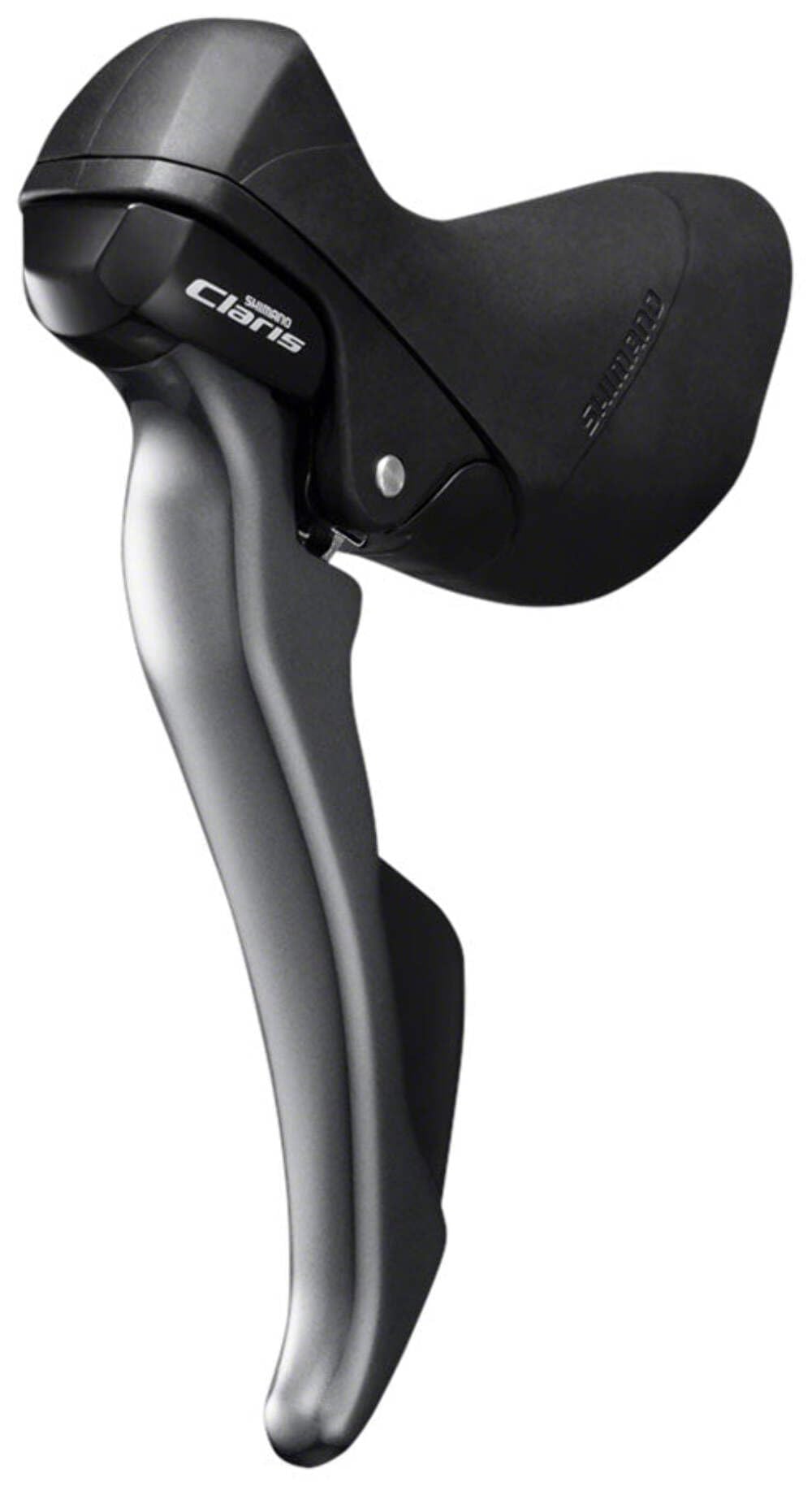
Shimano Claris ST-R2000-L

Left-lever replacement

Our Score 9.8/10
Check Price

Worth Noting

  • Costs more than several complete pairs here
Shift Cable
1800 mm inner, pre-assembled
Speed Count
2-speed front
Reach Adjust
Yes
Levers Included
Left only
Read the full review

This is a left lever, not a pair, and it moves the front derailleur only. That is not a fault in the part, it is what a replacement lever is, but it decides who should keep reading: someone whose left Claris lever is broken, worn out or missing, and who wants the bike back to standard without buying both halves.

For that job it is the tidiest option here. The lever arrives with an 1800 mm shift inner already threaded through the body, plus OT-SP41 housing, so there is no fishing a cable through the mechanism on the kitchen table. Reach adjustment lets you set the blade distance for smaller hands, and the brake side uses Shimano's Super SLR design, which lightens the pull and improves modulation at the caliper.

Two checks before it goes in the basket. The brake side is short-pull, which suits standard road calipers and not the long-pull brakes on a converted hybrid or anything with V-brakes. And the lever only makes sense if the right-hand shifter on your bike is still healthy; if both sides are gone, buy a pair. What the money buys is a genuine Shimano part that matches the other lever on the bar instead of almost matching it, which is exactly what you want on a bike you are keeping.

Bottom line: Buy it when one lever has failed and you want the bike back to standard: we rate it as the neatest single-lever replacement here, with the shift cable already threaded.

2

Shimano 105 ST-R7000

Shimano 105 ST-R7000

11-speed road builds

Our Score 9.4/10
Check Price

Worth Noting

  • Needs a complete 11-speed drivetrain to be worth it
  • The most expensive set in this guide
Speed Count
2 x 11
Reach Adjust
Yes
Levers Included
Left and right pair
Shift Actuation
Mechanical cable
Read the full review

Two levers in one box, matched in shape and finish, both built to index an 11-speed Shimano road drivetrain: that combination is why this is the pair we point most riders to first. The left lever moves a double chainring, the right steps through eleven cogs, and because Shimano builds the clicks around its own cassettes and derailleurs, the gears land where the drivetrain expects them. On a road bike that is the difference between shifting and hoping.

The lever bodies are slim and compact, and the shape gives your fingers a better leverage ratio against the brake blade, so you get more braking from less hand pressure. That is the sort of thing you notice halfway down a long descent with your hands up on the hoods. Both levers also carry a wide reach adjustment range, so if your hands are small, or you like the levers rolled forward, you can bring the blade closer to the bar instead of stretching for it. That single adjustment often decides whether a bike still feels right after four hours.

Two things need settling before you order rather than after. The first is the drivetrain: these are built for a double chainring and eleven cogs, so they only make sense once the cassette, rear derailleur and chain are on the same 11-speed footing. The second is brakes. Shimano's road lever families run to several near-identical part numbers for different brake systems, so match the number to the calipers already on your bike instead of trusting the name on the box. Get both right and this is a set you install once, adjust once, and stop thinking about.

Bottom line: Buy this if your road bike is going 11-speed: a matched pair with Shimano indexing and wide reach adjustment, and the one set here we trust to be fitted once and left alone.

3

Micronew SB-R473 3x7

Micronew SB-R473 3x7

Budget 7-speed revivals

Our Score 8.8/10
Check Price

Worth Noting

  • Long, heavy shift throw next to Shimano
  • Plastic body panels feel cheap up close
Drivetrain
Shimano-compatible
Speed Count
3 x 7
Levers Included
Left and right pair
Read the full review

The case for the SB-R473 is simple: it puts the shifting under your hands on a bike that was built before integrated levers were affordable. It is a 3 x 7 set, triple chainring and seven cogs, which covers the 21-speed road frames and converted hybrids still doing commuter duty, and it is the least expensive complete pair here.

We were struck by how ordinary they feel once they are on the bar. The right lever clicks through the seven cogs with a firm, audible stop at each one, the left swings a triple, and the brake blades pull with enough authority for standard road calipers. The bodies are mostly plastic, with metal where the brake cable anchors, which is the one place you want it.

Setup is where the price shows. The throw is longer than a Shimano lever's, and the front derailleur is unforgiving of cable tension, so a slightly slack cable means the chain rubs the cage in the middle ring. The body is not threaded for a barrel adjuster, so put an inline adjuster in the cable run before the bar tape goes on; you will want it the first time the cable stretches. On some bars the clamp also struggles to stop the lever body rotating, and a shim under it fixes that in five minutes.

For a commuter or a steady weekend bike, none of that is a real burden, because it is fiddling you do once and forget. Where we stop short is racing: the long throw and the plastic bodies are fine for getting to work and not what we want in a bunch sprint.

Bottom line: Our budget pick: a complete 3x7 pair that brings integrated shifting to an old road frame, as long as you are ready to fettle the setup.

4

Micronew SB-R493 3x9

Micronew SB-R493 3x9

Older 9-speed bikes

Our Score 8.8/10
Check Price

Worth Noting

  • Clicks are softer and less positive than Shimano's
  • Triple front trim needs careful derailleur setup
Warranty
One year
Drivetrain
Shimano-compatible
Speed Count
3 x 9
Levers Included
Left and right pair
Read the full review

Nine speeds is the awkward middle of the used road bike market: too new for the bargain 7-speed levers, too old to justify an 11-speed rebuild. The SB-R493 is aimed straight at that bike, and it is the pair we reach for when the drivetrain is 9-speed and the budget is not. It is a 3 x 9 set built for Shimano indexing, and it carries a one-year manufacturer warranty, which is more cover than the other budget levers here offer.

The feel is lighter than the price suggests. Shifting runs through a press of a button on the body plus a swing of the brake lever, which is its own layout rather than a Shimano copy, and the effort at the lever is low enough to shift with two fingers halfway up a climb. What you trade for that is definition: every click lands, but it is softer than a Shimano lever's, so you sometimes glance down to confirm the shift instead of feeling it.

Budget a little patience for the front. A triple gives the left lever three positions to work through, and the window between a clean shift and a rubbing cage is narrow, so set the limit screws and cable tension carefully once and it holds. Bring the rear derailleur into the same 9-speed Shimano family and the right lever does its job without drama. That is the whole pitch, really: a working 9-speed cockpit for a bike that is not worth a groupset.

Bottom line: If your road bike is on 9-speed, this is the pair we fit and move on from: correct indexing for the drivetrain, a light lever action, and a one-year warranty.

How We Tested the Best Road Bike Shifters

We started by researching the market for road bike shifters, filtering by drivetrain compatibility, price, and build materials. We ruled out models with known reliability issues or limited spare parts, and we made sure each set could be paired with common 9- to 12-speed systems. That left us with ten sets, ranging from budget mechanical options to high-end electronic models.

Over eight months, we installed each set on test bikes and rode them through city commutes, weekend group rides, and hilly training loops—including a few soggy spring days. We routed fresh cable housing for every install to rule out worn cables, and we adjusted reach for riders with small and large hands to check fit.

To assess shifting performance, we noted whether shifts were crisp or mushy, if the lever required more than a light push, and whether chain rub appeared under load. Compatibility was checked by pairing each shifter with its intended derailleur and, when possible, mixing with alternate drivetrains. We also inspected build quality—lever materials, play after months of use, and any corrosion—and compared price to performance to judge value.

How to Choose Road Bike Shifters

Count the Speeds Before You Shop

An indexed lever pulls a set amount of cable per click, and the rear derailleur turns that into a set amount of sideways travel. If the lever and the cassette disagree about how many steps there are, the chain either runs past the end of the block or skips a cog in the middle, and no amount of barrel adjusting rescues it. Count the cogs, count the chainrings, and buy the lever whose numbers match: 2 x 11 for a modern road double, 3 x 7 for an older 21-speed.

Keep the rear derailleur in the same brand family as the lever as well. The speed count alone does not guarantee the pull ratio lines up, and a mixed pairing is one of the reasons a brand-new set of levers can shift badly on the very first ride.

Pair or Single Lever

Plenty of listings sold as shifters are one lever, usually the left, intended as a replacement part. Read the box contents before you compare prices: a single lever at mid money can cost more than a complete budget pair, and it will not help if the right-hand shifter is the broken one.

Buy a pair when you are upgrading an old frame or when both levers are worn. Buy the single lever when one side has failed and you want the bike to look and work exactly the way it did.

Reach Adjustment and Bar Fit

Reach adjustment moves the brake blade closer to the bar without touching the brake setup at all. It is the feature that makes a drop bar workable for smaller hands, and it is worth choosing a lever for.

The clamp deserves a look too: drop-bar levers are built for the fatter centre section of a road bar, so they will not clamp straight onto a flat or riser bar. And a body that rotates forward under hard braking needs a shim under the clamp, not a tighter bolt.

Match the Lever to Your Brakes

Levers are built for either a short cable pull, which suits standard road calipers, or a longer pull for V-brakes and similar. Pair them the wrong way and the lever feels wooden, or it comes back to the bar before the brake has done much.

Hydraulic discs need a different lever body altogether, so a cable lever is not a workaround there. Model names rarely make any of this obvious, because one lever family can run to a handful of part numbers that look almost identical. Check the number against what is on the bike rather than the name on the box.

Where the Extra Money Goes

Past a certain point you are not buying more gears, you are buying definition. A better lever clicks into gear with a stop you can feel through a glove, and its front derailleur forgives a cable that has stretched by a millimetre. The cheaper sets here shift perfectly well, but the throw is longer and the front end needs more careful setting.

That precision is worth paying for if you ride in traffic and shift constantly, or if you race. For weekend miles on quiet roads, a budget pair does the same job for a fraction of the cost, and the money is better spent on cables, housing and bar tape.

Frequently Asked Questions

Final Verdict

Across this set, the Shimano 105 ST-R7000 pair is what we point to for a road bike already committed to 11 speeds: both levers in the box, indexed properly, and reach adjustment that makes the hoods usable for smaller hands. It is the most expensive set here, and it earns that by being the one you fit once and stop thinking about.

If your bike runs an older drivetrain, buy to the speed count instead. A 3x7 frame with down-tube shifters is a job for the Micronew SB-R473, provided you set the front derailleur carefully and fit an inline cable adjuster before the bar tape goes on.