Cycling Shoes

Best Commuter Cycling Shoes of 2026

Commuter cycling shoes are a compromise you feel at both ends of the ride: stiff enough to push against the pedals, flexible enough that you aren't clomping through the office like a duck. I've done the wrong-shoe shuffle after a 20-minute ride—sore arches, scuffed floors, a spare pair of sneakers in my bag—and it's avoidable. Over the past six months, my team and I rode and walked in 12 pairs, and the good ones make the bike-to-desk handoff feel almost seamless.

What separates them isn't a single spec but a balance: a sole that stays firm on the pedals yet rolls when you walk, a fit that holds your heel without pinching across the toes, and an upper that looks ordinary enough for a casual office. I also care about value in the plain sense—straps that still tighten after months of daily use, tread that doesn't vanish by spring. The picks below were chosen for that everyday grind, not for race-day speed.

1

Giro Code Mountain Bike Shoe

Top Pick
Giro Code Mountain Bike Shoe

Everyday commuting

Our Score 9.0/10
Check Price

Worth Noting

  • Narrow last pinches wide feet
  • Laces take two hands at the office door
Weight
1.55 lb
Cleat Recess
Recessed
Pedal Interface
2-bolt SPD
Read the full review

The cleat sits recessed into the sole, so you walk on rubber rather than on metal — no click, no skating across a tiled lobby. That single detail is why this shoe gets our top recommendation for commuting: it clips into a two-bolt pedal like a mountain bike shoe and then behaves like a casual sneaker, and it doesn't read as cycling kit when you walk into a shop. Of everything we rode for this guide, it's the pair we reached for on days when the ride came with errands at the other end.

Underfoot, a nylon plate keeps the pedal from digging into your arch without turning the shoe into a plank. There's enough give that a flight of stairs or a walk to the platform doesn't become a shuffle, and the rubber outsole holds on wet pavement and a painted ramp. It is on the stiff side compared with a trainer, which is the point — you feel the pedal rather than the shoe flexing around it — and the upper breathes well enough for a summer commute.

Sizing is where you have to pay attention. These run small, so take the larger size if you're on the fence, and check the brand's chart against a measured foot rather than the number on your running shoes. Get that right and there's very little to complain about: the shoe has been the least fussy thing in our commuting kit, and it's the one we hand to friends who ask what to buy.

Bottom line: If you want one shoe for the ride and everything after it, this is the pair we recommend: the cleat sits below the tread, so the walk into work is normal.

2

Giro Rincon

Giro Rincon

Night, wet rides

Our Score 8.8/10
Check Price

Worth Noting

  • Thin, vented upper is the first thing to wear
Closure
BOA L6 dial
Cleat Pattern
3/2-bolt
Water Resistance
Water resistant
Reflective Details
Yes
Read the full review

A dark, wet ride home is where this shoe earns its place. Reflective details across the upper throw light back at drivers, the upper is water resistant rather than merely ventilated, and the whole thing closes with a BOA L6 dial and a forefoot strap instead of laces. On a winter commute that combination is worth more than the few grams the dial saves.

The dial is what we appreciate most day to day. It tightens in small steps, so you can dial pressure over the instep with one hand at a red light, and it releases instantly when you're standing in a lobby trying to get changed. The 3/2 cleat pattern is the quiet bonus: the same pair takes two-bolt or three-bolt cleats, so changing pedals doesn't retire the shoes.

The last is narrower than the Code's and runs slightly small, so size up if you're between and look elsewhere if your feet are broad. What you get for the money is a light, breathable shoe with over-molded heel and toe pads, so the parts that meet the ground are the parts built to take it, plus a dial that stays the easiest thing about your morning.

Bottom line: Worth the upgrade if you ride in the dark or the wet: reflective trim, a water-resistant upper, and a dial you can tighten one-handed at a red light.

3

Crankbrothers Stamp Lace

Crankbrothers Stamp Lace

Flat-pedal riders

Our Score 8.8/10
Check Price

Worth Noting

  • Snug toe box leaves wide feet out
  • Sole-to-upper seam can fail under hard use
Closure
Laces
Pedal Type
Flat
Lace Storage
Hide-away pocket
Read the full review

Flat pedals live or die by the rubber, and this shoe has the best grip of anything in this guide. Put your foot down and it stays — the compound and tread bite into pedal pins instead of skating across them, which is the difference between a confident start in traffic and a shin full of pedal. If you don't want to clip in at all, start here.

The sole is stiff enough to pedal through without a hot spot, but it isn't a plank: the walk from the rack to your desk is comfortable, and the laces tuck into a pocket so the bow never ends up in the chain line. We were also struck by how normal they look, because a flat-pedal shoe that reads as a casual sneaker is one you'll actually wear to the shop after work.

Fit needs care. These run small, so go up at least a half size and a full size if you're between sizes. Past that the shoe is unfussy: it hoses off, dries without holding much water, and comes back looking like it did the week you bought it, which is more than we can say for most light-colored soles.

Bottom line: Our pick for flat pedals: the grip is the best here, and the sole is stiff enough to pedal without turning the walk into a shuffle.

4

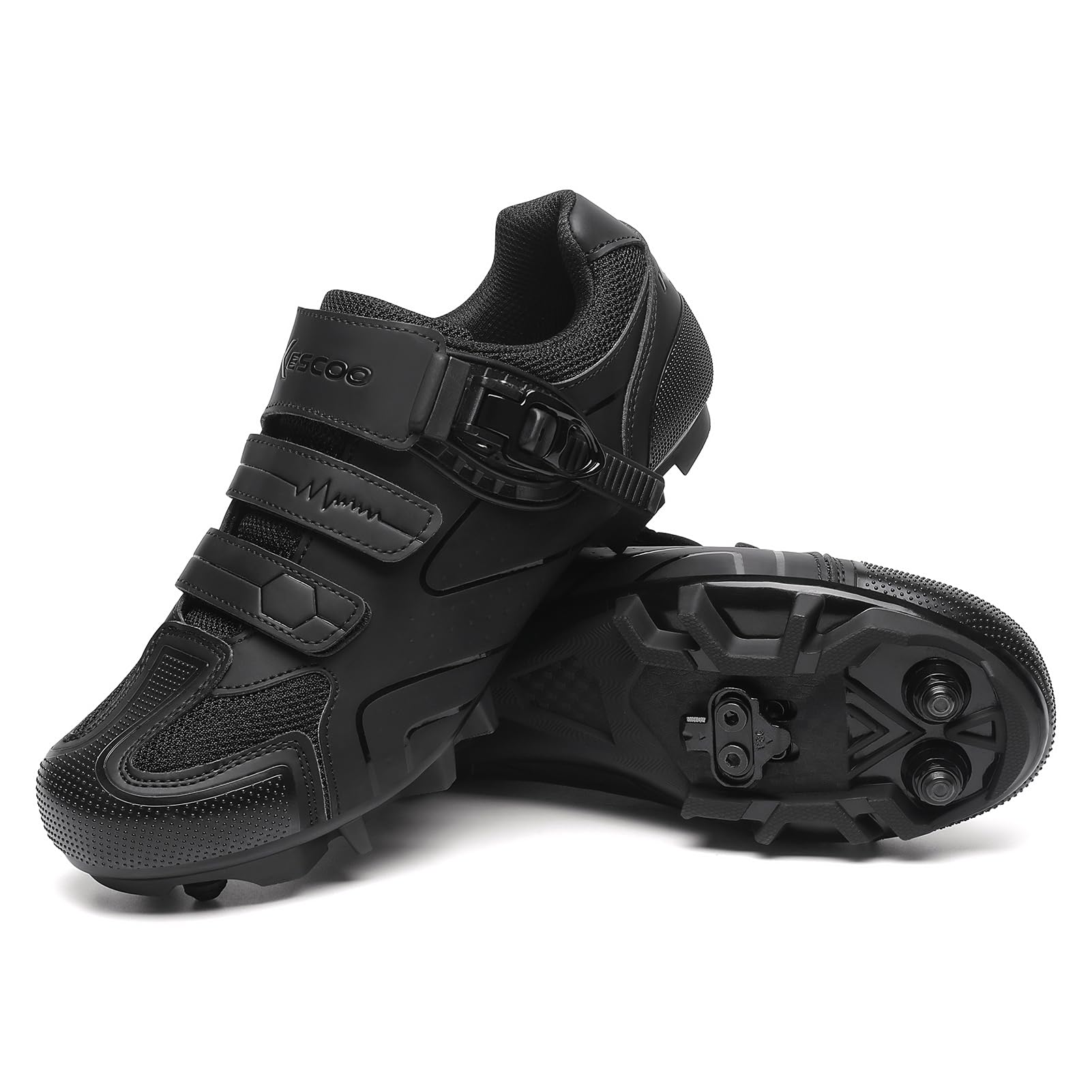
KESCOO SPD Cycling Shoe

KESCOO SPD Cycling Shoe

First clipless pair

Our Score 8.6/10
Check Price

Worth Noting

  • Top ratchet strap can jam or slip
  • Sole-to-upper bond can fail over time
Cleats
Included
Closure
Ratchet and velcro
Pedal Interface
2-bolt SPD
Read the full review

This is the least expensive way into clipless pedals in this guide, and the only pair here that arrives with cleats in the box — which matters if you're still deciding whether clipping in is for you at all.

The fit is the surprise. The toe box is genuinely roomy, roomy enough for riders who can't get comfortable in a narrow cycling last, and the two lower velcro straps spread pressure across the top of the foot instead of concentrating it in one spot. It isn't a stiff shoe; you'll feel the pedal through it on a longer ride, and for a short urban commute that's a fair trade for the comfort.

Where it asks for attention is the fasteners. The toe studs are worth checking and re-tightening before your first ride, and a dab of thread-locker on those bolts saves you from losing one at a junction. We treat it as a trial pair: ride a season, learn what you actually want from a cycling shoe, and put the money into the second pair knowing what matters.

Bottom line: The low-risk way to find out whether clipless commuting suits you: cleats included, a roomy toe box, and hardware that needs a check.

5

Tommaso SPD Cycling Shoe

Tommaso SPD Cycling Shoe

Budget clipless

Our Score 8.4/10
Check Price

Worth Noting

  • Narrow fit leaves wide feet out
  • Ratchet buckle can slip or jam
Cleats
Not included
Closure
Ratchet and velcro
Pedal Interface
2-bolt SPD
Read the full review

Tommaso's sizing is the first thing to sort out. The shoe runs small, so order a size up from your sneaker size rather than trusting the number on the box, and expect a close fit through the instep rather than a roomy one. Get that right and the rest of the shoe falls into line.

What you get is a sensible, unfussy commuter. The cleat recess is deep enough that you can walk into a café without sounding like a tap dancer, the sole has enough tread for a gravel path or a wet station floor, and the straps give a broad range of adjustment without needing to be retied in the cold. It's the pair we point at when someone wants to try clipless without spending much, and nothing about it feels like a compromise at the price.

Cleats aren't in the box, so add a pair in the right bolt pattern before your first ride — that's the only hidden cost. Past that, the shoe is plain in a good way: the upper wipes clean, the straps work with cold hands, and nothing on it is precious, which is the right attitude for something that lives by the front door.

Bottom line: A lot of clipless shoe for the money, as long as your feet are average width and you order up a size.

How We Tested 12 Pairs of Commuter Cycling Shoes

We started with a shortlist of commuter-specific shoes—lace-up and strap models, low-profile uppers, recessed cleats for walking—and filtered out race-only fits, limited size runs, and soles that felt like planks before we even clipped in. That left 12 pairs, which we wore for six months.

Testers with narrow, wide, and high-volume feet tried their usual size and one half-size up, and we noted heel slip, toe pressure, and where the strap crossed the instep. We rode to work, caught trains, walked through lobbies and up office stairs, and stopped at grocery stores on the way home. At red lights and ticket machines, we fastened and adjusted each pair one-handed to judge ease of use and strap placement.

On the bike, we paid attention to whether the sole flexed under steady pushes or held firm; off the bike, we walked several blocks and climbed stairs to see if it rolled naturally or forced us onto our toes. We logged hot spots, numbness, and whether we wanted to keep the shoes on at our desks, then checked stitching, tread, and strap hardware after rainy rides and weeks in a work bag. We also wore each pair with jeans and casual office clothes, and compared how they looked and held up after six months against their cost.

How to Choose Commuter Cycling Shoes

Match the Shoe to Your Pedals

Almost every city commute runs on one of two setups: a two-bolt SPD cleat that snaps into a matching pedal, or a flat pedal with a sticky rubber sole and no cleat at all. The shoe follows the pedal, not the other way around. The trap is the third category — three-bolt road shoes put the cleat proud of the sole, which is fine for a ride that ends at your own door and miserable for one that ends at a train platform. Decide whether you want to clip in at all before you shop, then buy accordingly.

Walkability Comes Down to the Cleat Recess

The difference between a commuter shoe and a mountain bike race shoe is mostly how deep the cleat sits. Recessed, and you walk on tread with the metal tucked inside the sole: fine on tile, stairs, and a supermarket floor. Proud, and every step clicks and skates. Sole stiffness matters too, but less than it's made out to — a very stiff sole pedals efficiently and feels wooden on a long walk, and a little flex is what makes stairs bearable. The Giro Code is the clearest example here: recessed cleat, rubber tread, and just enough give.

Fit and Sizing Catch More Buyers Than Anything

Cycling shoes are built on narrower lasts than sneakers, and several of the shoes here run small on top of that. Measure your foot and compare it with the brand's own chart rather than the number on your running shoes, and size up when you land between two. Width is the harder problem: a narrow last can't be laced into comfort, so broad feet should start with the roomier options and skip the trim ones. No closure — laces, velcro, or dial — fixes a shoe that's the wrong shape.

Closure, Weather, and Daily Wear

Closure is a commuting decision rather than a racing one. Velcro and dials go on and off in seconds with cold hands; laces adjust more precisely and take longer at the office door. For winter, reflective details on the upper are nearly free and show up in headlights, and water resistant means exactly that: spray and road wet, not a sustained downpour. Expect the thin, vented uppers and the sole-to-upper bond to be what ages first on a shoe worn five days a week, so look at both before you look at anything else.

Frequently Asked Questions

Final Verdict

Buy the Giro Code first. It solves both halves of a commute: the recessed cleat makes the walk normal, and the upper doesn't look like cycling kit once you're off the bike.

If you ride in the dark and the wet, the Rincon's reflective trim and dial are worth the extra. On flat pedals, take the Crankbrothers pair for the grip. And if the budget is tight and your feet are average width, the Tommaso does the job for a lot less.