Cycling Shoes

Best SPD Cycling Shoes of 2026

SPD is the two-bolt cleat system that lets you clip in and still walk like a human when you stop — which is why it shows up on commuters, gravel bikes, and spin bikes alike. The wrong pair makes itself known around mile ten: a hot spot under the ball of your foot, a heel that slips, a strap that digs in. I've ridden SPD for years, and over eight months my team and I put 12 pairs through daily commutes, weekend gravel loops, and indoor trainer sessions.

Comfort is the one thing you can't fix later, so we started with fit and noted how each shoe felt after an hour in the saddle. Then we watched durability over months of riding, how easy they were to get on and off, and whether the closure — laces, dials, straps — stayed put. Appearance counts off the bike, value comes down to what you get for the money, and every pair here takes two-bolt SPD cleats. The list below covers racing, commuting, and the coffee stop in between.

1

TIEM Slipstream

Top Pick
TIEM Slipstream

Spin class

Our Score 9.2/10
Check Price

Worth Noting

  • Narrow, sock-like entry is hard to pull on
Sizing
Women's
Intended Use
Indoor cycling
Cleat Compatibility
2-bolt SPD
Read the full review

Walking into a spin studio in the Slipstream, what you notice is the quiet. There's no cleat clack on the hardwood and no waddle to the bike — they feel like a gym sneaker until the moment you clip in, and that's the entire pitch.

We like them best for the rider doing a class or two a week who doesn't want a second pair of shoes for the locker room floor. The fit is snug and supportive across the instep, the sole has enough give to walk comfortably, and the 2-bolt SPD pattern takes standard studio pedals. They also look like sneakers, which matters more than it should when you're stopping at the store on the way home.

Sizing is the thing to settle before you order. These run snug, so half a size up is the safer call if you're between sizes. They're also indoor shoes through and through: the sole is built for studio floors and gym carpet rather than gravel or a wet commute, so don't buy them as a do-everything SPD shoe.

Bottom line: Our pick for regular spin classes: comfortable for a full hour, quiet on the studio floor, and SPD-ready as delivered.

2

Giro Rincon

Giro Rincon

All-round SPD riding

Our Score 8.8/10
Check Price

Worth Noting

  • Upper fabric has worn through early on high-mileage pairs
Upper
Vented Synchwire, water resistant
Closure
BOA L6 dial
Outsole
Nylon and glass fiber
Cleat Compatibility
2-bolt SPD or 3-bolt road
Read the full review

Two cleat standards in one sole is what earns the Rincon the top spot here. It's drilled for both 2-bolt SPD and 3-bolt road cleats, so the shoe doesn't turn into a shelf ornament the day you change bikes or borrow a road bike for a weekend. Only one other shoe in this group takes a road cleat, and none does it with a dial closure.

That dial is the detail we keep coming back to. The BOA L6 tightens in small increments and releases in clicks, so you can snug the instep on a climb and back it off at a stop without touching a strap. Underfoot, the injection-molded nylon and glass-fiber plate is stiff enough that effort goes into the pedal instead of into flexing the sole, and the over-molded heel and toe pads hold the cleat below the tread so a coffee stop isn't a skating rink.

Giro builds this one narrow. If you're between sizes or you have wide feet, go up half a size or look at the Ranger or the KESCOO 606 instead — the upper is not going to stretch into a roomy fit. The vented Synchwire upper does breathe well in heat, and the water-resistant finish plus reflective heel detail are worth having if your rides end after dark.

The price is the honest objection: this is the most expensive trail-oriented shoe in the group, and if your bike never leaves a trainer, that money buys stiffness and a road-cleat drilling you won't use. For anyone riding gravel, singletrack, or a commute in all weather, the combination of a stiff plate and a cleat you can walk on is the whole argument.

Bottom line: The SPD shoe we recommend by default: stiff under power, quiet on the walk, and drilled for a road cleat if you ever need one.

3

Giro Ranger

Giro Ranger

First clipless shoes

Our Score 8.6/10
Check Price

Worth Noting

  • Stiff tongue presses on the instep until broken in
Upper
Water-resistant Synchwire
Closure
Three velcro straps
Outsole
Nylon plate, rubber tread
Cleat Compatibility
2-bolt SPD
Read the full review

At the bottom of this group's price range, the Ranger is still a real cycling shoe: a tough nylon plate underfoot, a dual-injected rubber outsole with tread that bites, and a one-piece upper that keeps spray out. That plate is why it's here. The cheaper shoes in this group tend to be a soft upper bolted to a slab that flexes, and this one isn't.

Three velcro straps are the old answer to closure and they still work: you can adjust them mid-ride with gloves on, and there's enough range to cinch over a thin summer sock or a thick winter one. The fit runs narrow through the midfoot, so wide-footed riders should start half a size up rather than hoping it loosens.

Where it lands for us: this is the right first clipless shoe, and the right shoe for a wet, gritty commute you don't want to baby. The Rincon is genuinely the better shoe — the dial, the lighter build, the road-cleat option — but the Ranger gets a beginner through a first season and the muddy ones after it, and it does that for a lot less.

Bottom line: For a first clipless season or a scruffy commute, the Ranger gives you a stiff plate and real tread at the lowest price here.

4

Tommaso Strada

Tommaso Strada

Peloton plus outdoor

Our Score 8.6/10
Check Price

Worth Noting

  • Quick-lace and ratchet tab are the weak point
Sizing
Men's
Cleats Included
No
Cleat Compatibility
2-bolt SPD and 3-bolt Delta
Read the full review

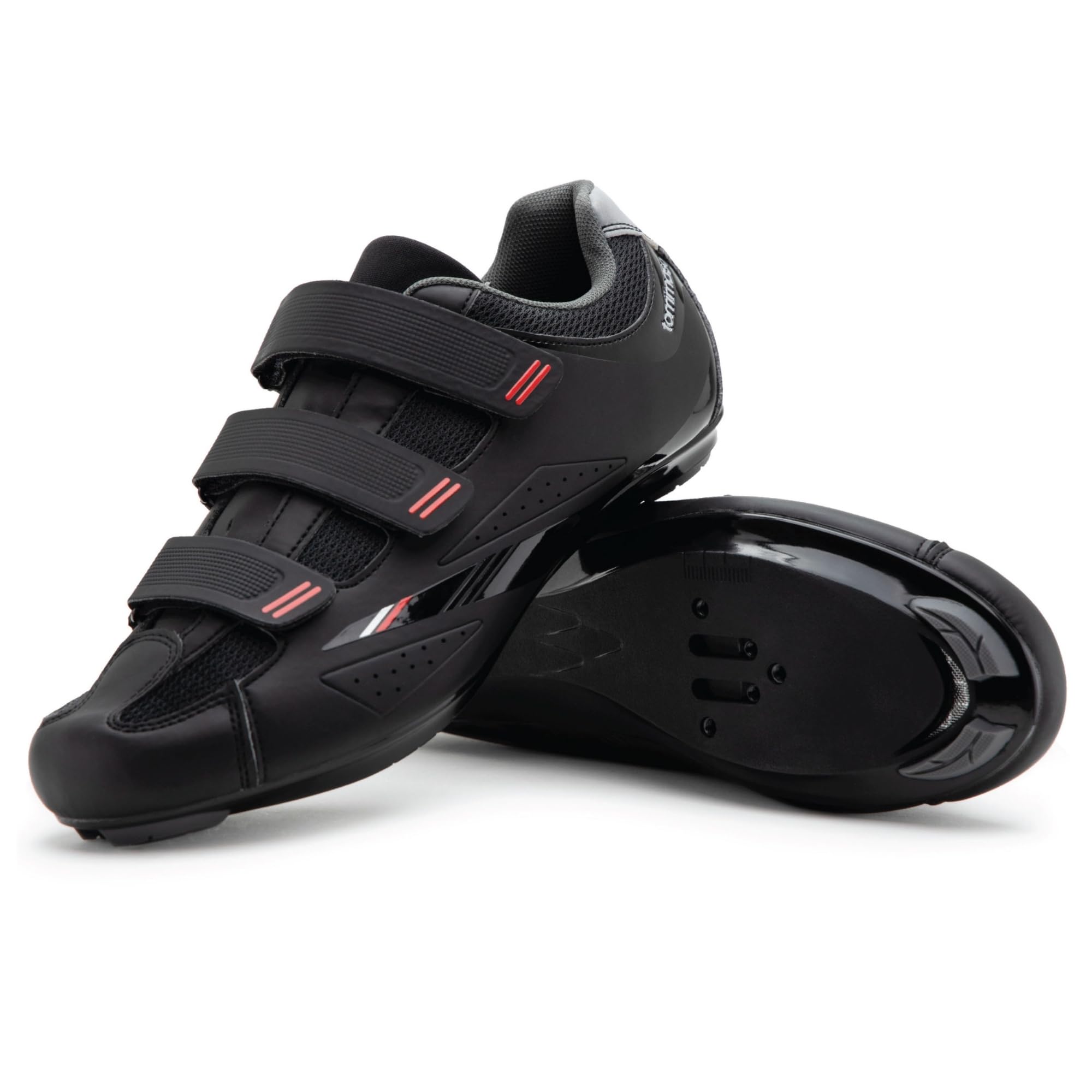
The Strada answers a specific and common annoyance: a Peloton at home with three-bolt pedals, a bike in the garage with SPD, and no interest in owning two pairs of shoes. The sole is drilled for both, and you mount whichever cleats you need — none come in the box, which is worth knowing before the shoe arrives.

Comfort is the part that surprised us. The toe box doesn't squeeze, the shoe is light enough to forget on the bike, and it opens wide enough that getting in and out isn't a fight. For mid-range money you get one shoe that works on two different bikes, which is a better deal than it first looks.

The hardware is where to keep an eye. The quick-lace and the plastic tab that holds the ratchet strap are the parts that give out, and when they do the shoe is finished rather than repairable. If you ride four or five days a week, that's the argument for spending more on a dial closure; at a class or two a week, the Strada is fine.

Bottom line: Buy the Strada if one shoe has to work on a Delta-equipped spin bike and an SPD bike outdoors.

5

Kyedoo SPD Shoes

Kyedoo SPD Shoes

Budget indoor bike

Our Score 8.6/10
Check Price

Worth Noting

  • Top strap can dig into a high instep
Upper
Vented mesh
Closure
Velcro straps
Cleat Compatibility
2-bolt SPD and Peloton
Read the full review

Sizing is where cheap indoor shoes usually go wrong, and it's where the Kyedoo gets it right: true to size, with room at the toe for feet that swell through a long class. That sounds like faint praise until you've paid for return shipping twice.

For a first indoor setup we think that reliability is worth more than any feature on the box. The velcro straps are easy to adjust mid-class, the mesh upper ventilates well, and the sole takes the 2-bolt SPD cleats most studio bikes run. Wide feet fit too, which is not something every shoe in this group manages.

There are two things to expect. The top strap can dig into a high instep, and the release takes practice if your pedals are set tight — back the tension off before you blame the shoe. Beyond that, they do the job without drama.

Bottom line: The indoor shoe we point first-time Peloton owners to: true to size, roomy at the toe, and drilled for standard SPD cleats.

6

KESCOO 606 MTB

KESCOO 606 MTB

Trail walking

Our Score 8.6/10
Check Price

Worth Noting

  • Ratchet top strap is fiddly to lock and release
  • Sole has separated from the upper on some pairs
Closure
Ratchet and velcro straps
Outsole
Rubber with toe studs
Cleat Compatibility
2-bolt SPD
Read the full review

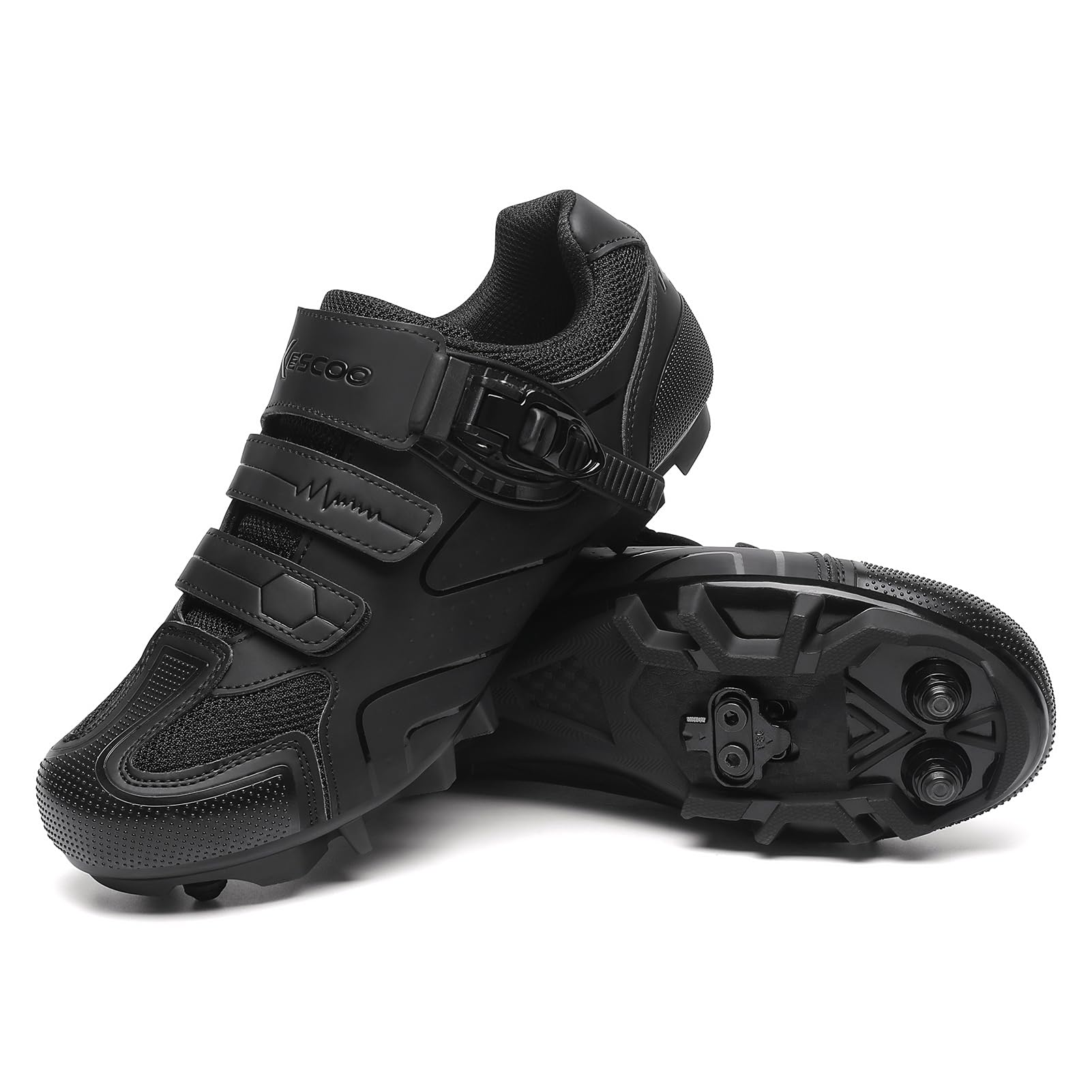
Toe studs are the surprise here. The 606 has rubber lugs at the front that bite into dirt when you're off the bike and pushing, and that single detail puts it ahead of the smoother-soled budget shoes in this group for real trail use.

The fit is the friendliest part: a wide toe box, room for a thicker sock, and a shape that suits riders who usually have to size up in cycling shoes. Two velcro straps plus a ratchet hold the foot without pinching, and the toe box stays wide enough that a long descent doesn't turn into a squeeze.

One piece of housekeeping: the toe studs are screwed in, and they will walk out. A dab of threadlocker on each, plus the same on your cleat bolts, saves you hunting through the grass for a lug you already paid for.

For a first off-road SPD shoe on a tight budget, this is the one we point to. It takes a beating, grips when you're walking, and costs little enough that you won't baby it. Just budget ten minutes with a hex key when the box arrives.

Bottom line: A studded, roomy trail shoe at the bottom of the price range — the one we suggest when the budget decides.

7

FOTGOAT MTB Shoes

FOTGOAT MTB Shoes

Cheap trail rides

Our Score 8.4/10
Check Price

Worth Noting

  • Stiff platform is clunky to walk in
Outsole
Rigid platform with tread
Intended Use
Mountain bike
Cleat Compatibility
2-bolt SPD
Read the full review

Fit is the first thing to settle here, because it's the most variable thing about them. Some pairs come up small and narrow through the toe, others sit loose around the ankle, and going up a size doesn't reliably fix either. Order with the return in mind.

When the fit lands, they're easy to live with. The opening is wide, so they go on and off without a fight, the sole is rigid enough to pedal without a hot spot, and the tread is deep enough for a gravel shoulder or a muddy push. The cleat bed takes Crankbrothers Eggbeater cleats as readily as SPD, which isn't guaranteed on shoes at this price.

The way we think about the FOTGOAT is as a second pair: the ones that live in the car for a trailhead ride, or the first off-road shoe you're willing to scratch. The hardware is basic and the sizing is a gamble, but when a pair lands right it does the job without asking for much.

Bottom line: A cheap, rigid trail shoe for a second pair — order ready to swap sizes.

How We Tested SPD Cycling Shoes

We started by pulling together a shortlist of 30 SPD-compatible shoes from brands we know, then filtered by price, cleat compatibility, and whether they were actually available in a range of sizes. From that list we bought 12 pairs and rode them for eight months. Each pair saw the same rotation: daily commutes on wet pavement, weekend gravel loops, indoor trainer sessions, and plenty of stop-and-go city riding. We also walked in them — through a coffee shop, across a parking lot, up a flight of stairs — because SPD shoes are supposed to be livable off the bike.

We started with fit. I wore each pair for a 90-minute ride and then checked for hot spots, heel lift, and toe pinch, adjusting cleat position and closure as needed. For durability, we inspected the uppers, tread, and cleat pockets every few weeks, noting scuffs, separation, and worn lugs. To judge ease of use, we timed how long it took to get each shoe on and off, and whether the closure stayed put: laces that came untied, dials that crept, straps that needed re-tightening mid-ride. Compatibility was checked against three different SPD pedals, and we noted any play or difficulty clipping in.

Appearance and value came last, but they counted. We looked at how each shoe cleaned up after muddy rides and whether it looked scuffed after a month of daily wear. For value, we compared what you get — sole stiffness, closure quality, tread — against what each pair costs. The shoes that made the list were the ones that stayed comfortable past hour two, held their shape, and didn't make us think about our feet until we stopped.

How to Choose SPD Cycling Shoes

Start With the Cleat, Then the Sole

SPD means a two-bolt cleat, and every shoe here takes one. What separates them is what surrounds it: mountain-style shoes cut a channel so the cleat sits below the tread, which lets you cross a parking lot or push a bike without skating. Three-bolt road and Delta cleats need a different drilling, and only the Giro Rincon and the Tommaso Strada offer one. If you own one set of pedals and no plans to change it, a two-bolt-only shoe is simpler and usually cheaper.

The trap is the word compatible. A hard, flat sole with the cleat sitting proud of it will clip in fine and still click and slip the moment you step onto tile. Look for rubber or molded pads at the heel and toe, and expect the cleat to sit recessed between them.

Closure: Dials, Straps, and Ratchets

A BOA dial is the nicest thing you can buy in this category. It tightens in small steps and releases in clicks, so you can take up slack across the instep at a stop without undoing anything. Three velcro straps are nearly as adjustable, cost far less, and spread pressure better than two. A ratchet sits between the two, and on the budget shoes here the locking tab is the part that fails.

Whatever the system, check the shoe opens wide enough to get your foot in before you start tightening. A closure that only just clears your heel is a fight every morning once you're wearing winter socks.

Fit and Sizing: Assume Nothing

Almost every shoe in this group runs small or narrow somewhere, and sizing doesn't travel cleanly between brands, so treat the size you wear in running shoes as a starting point rather than an answer. Half a size up is the safer default. Wide-footed riders should pick a shoe described as having a roomy toe box instead of hoping a narrow one gives.

Shoes like these don't break in much. A pressure point across the instep in the first minute is still there in the third hour, and it is far easier to change the shoe than to change your foot.

Stiff Sole or Walkable Sole

Stiffness is a straight trade. A rigid plate spreads pedal pressure across the whole foot and stops the arch flexing on a long ride, and the same plate makes every step off the bike feel like a ski boot. If you mostly spin indoors, or ride road to a cafe and back, you want stiff. If you commute, bikepack, or walk a washed-out section, you want a rubber outsole with some give and a recessed cleat.

Pick the side you'll actually use. Buying the stiffest shoe you can afford and then walking a mile in it is an easy way to end up disliking a pair that was right for the pedals.

Frequently Asked Questions

Final Verdict

The Giro Rincon is the shoe we recommend to most people shopping for SPD: a stiff nylon plate for the ride, a recessed cleat and rubber pads for everything off it, and a BOA dial you can adjust one-handed in gloves. The road-cleat drilling also means it stays useful if your riding changes.

If money is the constraint, the Giro Ranger does the same job with velcro straps and a stiffer tongue. If the bike never leaves the studio, the TIEM Slipstream is the more comfortable answer, and the Kyedoo covers that same ground for a lot less.